
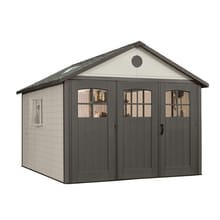
About Our Plastic Garages
We stock Lifetime plastic garages built from double-wall high-density polyethylene (HDPE) panels on powder-coated steel frames. These garages are engineered for UK gardens where timber rots and metal rusts. The HDPE panels resist UV damage, oil stains and garden chemicals. You never need to paint, treat or sand them.
Lifetime garages suit vehicle storage, workshop space, garden equipment and ride-on mowers. The tri-fold door models give you full-width opening for easy vehicle access. Smaller single-door models work well as lockable garden stores. Every model includes screened vents to prevent condensation build-up inside.
For timber construction, see our wooden garages from Palmako. For galvanised steel builds, browse our metal garages. If you only need covered parking without walls, our carports start from under £500.
Why We Chose This Range
"We added Lifetime to our range after testing their panels against British weather for a full winter. No warping, no discolouration, and the steel frame underneath stayed bone dry. The assembly is straightforward too. Two people can build the 11x11 in a weekend with basic tools. I recommend these to anyone who wants a garage they can forget about for 15 years."
— Matt, Greenhouse Stores
Plastic vs Metal vs Wooden Garages
| Feature | Plastic (Lifetime HDPE) | Metal (Galvanised Steel) | Wooden (Nordic Spruce) |
|---|---|---|---|
| Maintenance | None — wipe clean | Check for scratches annually | Stain every 2-3 years |
| Rot resistance | Immune | Immune | Needs treatment |
| Condensation | Low — screened vents | High without insulation | Low — timber breathes |
| Security | Padlock-ready steel doors | Integral locking | Depends on door spec |
| Insulation | Double-wall HDPE helps | Poor without lining | Good at 44mm+ |
| Best for | Zero-maintenance storage (Matt's Pick) | Budget large-span builds | Workshops and year-round use |
Matt's Installation Tip
Always build your Lifetime garage on a level concrete or paving slab base. The HDPE panels sit flush against the ground so any unevenness shows up as gaps under the walls. I use a spirit level across the base in both directions before starting. If the slab slopes more than 10mm across the footprint, use self-levelling compound first. Also anchor the frame to the base using the supplied anchor kit — wind uplift is real in exposed UK gardens.
Frequently Asked Questions
Do plastic garages need planning permission in the UK?
Most plastic garages fall under permitted development rules. The building must be single-storey, under 2.5m high at the eaves within 2m of a boundary, and not cover more than half the garden. Listed buildings and conservation areas have extra restrictions. Always check with your local planning authority before ordering.
How long do Lifetime plastic garages last?
Lifetime garages typically last 15-20 years in UK conditions. The double-wall HDPE panels are UV-stabilised and will not rot, rust or crack. Lifetime includes a manufacturer warranty on all models. The powder-coated steel frame inside resists corrosion. We have customers with Lifetime buildings over 10 years old that still look new.
Can I insulate a plastic garage for workshop use?
Yes, but the double-wall construction already provides basic insulation. For heated workshop use, fit 25mm rigid foam board between timber battens on the interior walls and ceiling. This creates a dry, warm workspace for year-round projects. The built-in vents handle condensation from temperature changes.
What base does a plastic garage need?
A flat, level concrete slab or compacted paving is required. The base must be at least the same dimensions as the garage footprint. Lifetime garages sit directly on the slab with no sub-frame. Use the supplied anchor kit to bolt the frame to the concrete. Grass or gravel bases are not suitable as they shift and let moisture pool.
Are plastic garages secure enough for storing tools?
Yes, Lifetime garages include steel-reinforced doors with padlock hasps. The double-wall HDPE panels are rigid enough to resist forced entry. For high-value items like power tools and bicycles, add a ground anchor inside for cable locks. The windowless rear and side panels mean nobody can see what you are storing.