Garden Rooms UK: The Ultimate Buyers Guide to Garden Rooms
Garden rooms in the UK cost between £2,200 and £29,000 depending on size, insulation, and materials. Most fall under permitted development and do not need planning permission if they are single-storey, under 2.5m high within 2m of a boundary, and cover less than 50% of the garden. A properly insulated garden room with 100mm walls, double glazing, and an EPDM roof can be used as a home office, gym, or guest room 365 days a
Garden rooms in the UK cost between £2,200 and £29,000 depending on size, insulation, and materials. Most fall under permitted development and do not need planning permission if they are single-storey, under 2.5m high within 2m of a boundary, and cover less than 50% of the garden. A properly insulated garden room with 100mm walls, double glazing, and an EPDM roof can be used as a home office, gym, or guest room 365 days a year.
Key takeaways
- Prices start at £2,200 for a basic timber cabin and reach £29,000 for a fully insulated luxury pod with electrics.
- No planning permission needed for most garden rooms under permitted development rules (single-storey, not sleeping accommodation, under height limits).
- Insulation is what separates a garden room from a shed. Look for 100mm+ wall thickness and double-glazed windows.
- Foundation matters. A concrete slab or paving base keeps the building level and dry for decades.
- Allow 4-12 weeks lead time from order to delivery, depending on manufacturer and spec.
Installer's Note
We started selling garden buildings because customers kept asking for something better than a shed but cheaper than a house extension. The market has changed a lot since 2020. Remote working turned garden rooms from a luxury into a genuine alternative to commuting. The buildings we sell now have 100mm insulated walls, toughened double glazing, and EPDM rubber roofing as standard. They are closer to a small house than a garden shed. The one thing I tell every buyer: spend the money on insulation, not on fancy cladding. A well-insulated building with basic timber finish will be comfortable in January. A poorly insulated building with expensive cedar cladding will be freezing.
What is a garden room and how is it different from a shed?
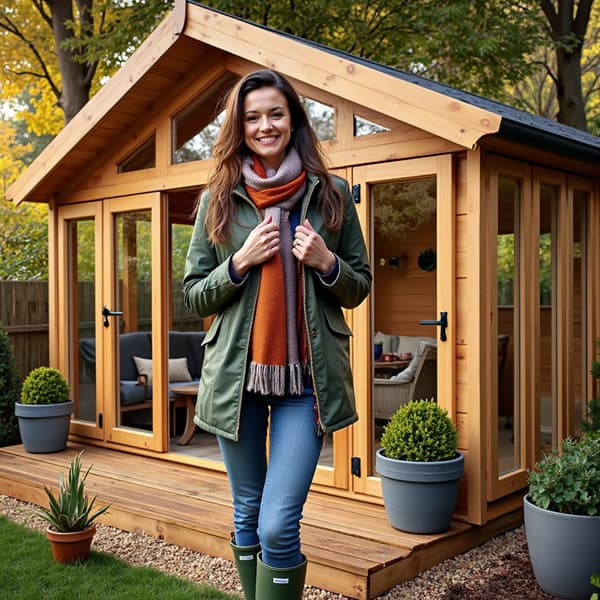
A garden room is an insulated, weatherproof building designed for daily use throughout the year. A shed stores tools. A summerhouse is pleasant on warm days. A garden room works in February when it is 2°C outside because the walls, floor, and roof are properly insulated, the windows are double-glazed, and you can run a small heater off a mains electricity supply.
The construction is different at every level. Shed walls are typically 12-15mm single-skin timber. Garden room walls are 44-100mm thick with insulation sandwiched between an outer and inner skin. That thickness keeps heat in during winter and out during summer. Our insulated garden rooms all meet this standard.
What can you use a garden room for?
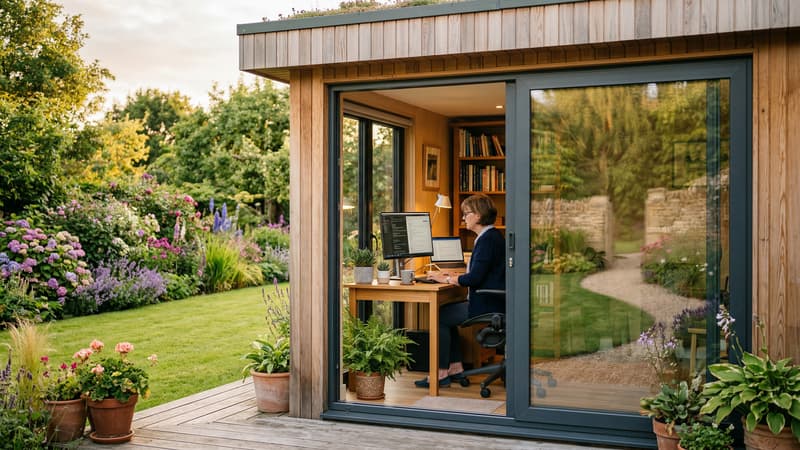
The most common use we see is a home office. Since 2020, roughly 40% of our garden room customers have bought specifically for remote working. After that, the split is roughly equal between gyms, hobby rooms, and guest accommodation.
A few things to know about specific uses:
- Home office: You need mains electricity for lighting, heating, and equipment. Budget £500-£1,500 for a qualified electrician to run an armoured cable from your consumer unit.
- Gym: Reinforce the floor if you are using heavy weights. Standard garden room floors handle 150-200kg/m², which is fine for cardio equipment and lighter weights.
- Guest bedroom: Technically counts as sleeping accommodation, which may need building regulations approval and possibly planning permission. Check with your council before buying.
- Music studio or workshop: Consider acoustic insulation (different from thermal insulation) if noise to neighbours is a concern.
How much does a garden room cost?
Prices vary enormously depending on what you are actually buying. Here is what each budget level gets you:
| Budget | What you get | Wall thickness | Insulation | Example |
|---|---|---|---|---|
| £2,200-£4,000 | Basic log cabin, 8x6 to 10x8 | 28-44mm single wall | None or minimal | Palmako log cabins |
| £4,000-£8,000 | Thicker cabin with double glazing | 44mm+ double wall | Partial (walls only) | Power 44mm chalet cabins |
| £8,000-£15,000 | Fully insulated pod or cabin | 80-100mm composite | Full (walls, floor, roof) | Calmpod insulated pods |
| £15,000-£29,000 | Premium build with luxury finishes | 100mm+ with vapour barrier | Full + underfloor heating | Lichfield Crown range |
On top of the building cost, budget for a concrete base (£500-£1,500 depending on size), electrics (£500-£1,500), and any groundwork to level the site. Total installed cost for a usable year-round office is typically £5,000-£15,000. That compares well against a house extension at £20,000-£50,000 or renting office space at £200-£500 per month.
Planning permission: what you need to know
Most garden rooms fall under permitted development, which means no planning application is needed. The rules in England are straightforward:
- Single-storey only. No sleeping accommodation (technically).
- Maximum 2.5m high if within 2m of any boundary.
- Maximum 4m high (dual pitch) or 3m (flat/pent roof) if more than 2m from a boundary.
- Must not cover more than 50% of the garden area.
- No building forward of the front wall of the house.
Scotland, Wales, and Northern Ireland have slightly different rules. Listed buildings and conservation areas have extra restrictions that usually require a formal application. Our planning permission guide covers the detail for each nation.
One point that catches people out: if you want to use the building as a self-contained living space with plumbing and sleeping, it is no longer permitted development. That needs a full planning application and building regulations approval. A home office or gym does not have this problem.
Matt's Tip: Get a lawful development certificate
Even if your garden room does not need planning permission, I recommend applying for a Lawful Development Certificate from your council. It costs around £100-£200 and gives you a legal document confirming your building is permitted. This matters when you come to sell the house. Estate agents and solicitors will ask for it, and not having one can delay a sale by weeks. It takes 8 weeks to process, so apply early.
Insulation: the difference between usable and unusable
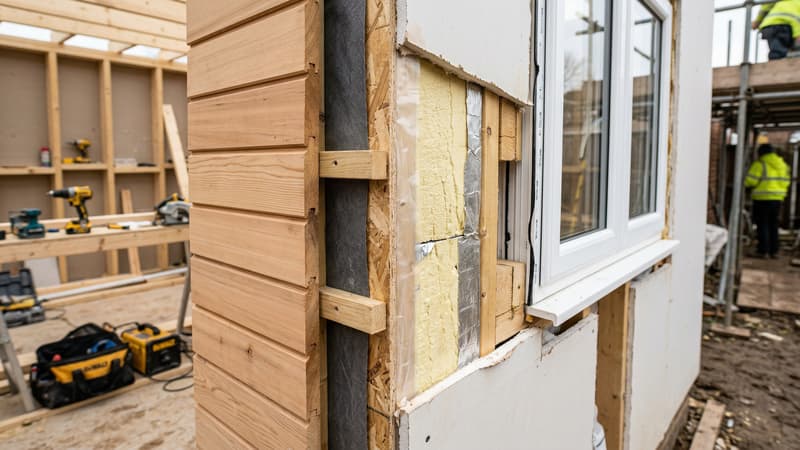
A garden room without proper insulation is a summer house. It will be pleasant from May to September and miserable the rest of the year. If you plan to use the building year-round, insulation is not optional.
What to look for:
- Walls: Minimum 50mm insulation between double-skinned timber. 80-100mm is better. Our Calmpod range uses 100mm composite panels that achieve U-values comparable to a modern house wall.
- Floor: Insulated floor panels with a damp-proof membrane underneath. Cold rises from the ground, and an uninsulated floor will make the room uncomfortable even if the walls are perfect.
- Roof: EPDM rubber or felt with insulation underneath. A poorly insulated roof loses heat faster than any other surface because warm air rises.
- Windows: Double-glazed as a minimum. Toughened safety glass is standard on all our buildings.
Roof types: apex versus pent
The two main options are apex (traditional pitched) and pent (single slope). The choice affects looks, headroom, and drainage.
| Feature | Apex roof | Pent roof |
|---|---|---|
| Look | Traditional, cottage-style | Modern, clean lines |
| Headroom | Tallest at centre ridge | Even height throughout |
| Drainage | Water runs to both sides | Water runs to one side (angle it away from boundaries) |
| Height limit | Up to 4m (if 2m+ from boundary) | Up to 3m (if 2m+ from boundary) |
| Best for | Larger buildings, loft storage | Sites near boundaries, modern homes |
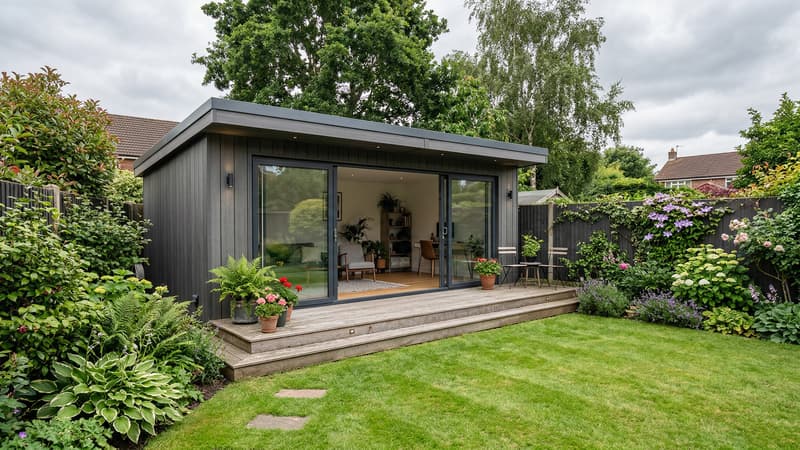
Browse our full range of apex garden rooms and pent garden rooms to compare styles and sizes.
Foundation and base requirements
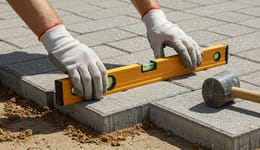
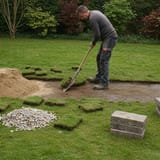
Every garden room needs a level, solid base. The most common options are a concrete slab (£500-£1,500 for a typical 3x3m pad) or paving slabs on a compacted sub-base (£300-£800). Timber bearer frames on concrete pads are a cheaper alternative but less durable long-term.
The base must be dead level. A 10mm error across a 3m span will cause doors to bind, windows to seal poorly, and water to pool on the roof. If your garden slopes, you may need a stepped base or retaining wall, which adds £500-£2,000 to the groundwork cost. Our concrete base guide covers the DIY method step by step.
Electrics and heating
Running electricity to a garden room requires a qualified electrician. The standard approach is an armoured SWA cable buried at 450mm depth from your house consumer unit to a small consumer unit in the garden room. Expect to pay £500-£1,500 depending on cable run length and the number of circuits.
For heating, a 2kW convector heater or oil-filled radiator costs £30-£80 and keeps a well-insulated 8x8 room comfortable through winter. Running cost is roughly £0.50-£1.00 per hour at current electricity rates. Underfloor heating is more comfortable but costs £1,000-£3,000 installed. In a well-insulated building, you may only need heating from November to March.
Maintenance: what to do and when
Timber-clad garden rooms need re-treating with a wood preservative every 2-3 years. Use a microporous stain or paint that lets moisture escape rather than trapping it under a film. Pressure-treated timber (which comes standard on all our buildings) has a 10-year rot-free guarantee, but the surface finish still needs refreshing.
Check gutters and downpipes twice a year, before and after autumn. Clear leaves and debris. Inspect roof felt or EPDM for cracks or lifting edges, especially after winter storms. Clean windows and door seals annually with soapy water. These checks take 30 minutes and prevent expensive repairs.
How a garden room compares to alternatives
| Option | Typical cost | Planning needed? | Build time | Year-round use? |
|---|---|---|---|---|
| Garden room | £5,000-£29,000 | Usually no | 1-5 days install | Yes (if insulated) |
| House extension | £20,000-£50,000+ | Usually yes | 8-16 weeks | Yes |
| Loft conversion | £15,000-£40,000 | Sometimes | 4-8 weeks | Yes |
| Rented office space | £200-£500/month | No | Immediate | Yes |
| Shed conversion | £2,000-£5,000 | Usually no | DIY weekends | Depends on insulation |
A garden room pays for itself against rented office space within 2-4 years. Against a house extension, it costs less, builds faster, and does not need planning permission in most cases. The trade-off is size: garden rooms top out at around 20-25m² before they start needing planning applications.
|
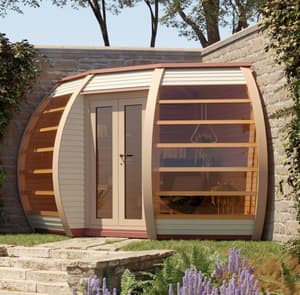
Matt's Pick for Year-Round Garden OfficeBest For: Home workers who need a comfortable, quiet space every day of the year Why I Recommend It: The Calmpod has 100mm insulated composite panels, toughened double glazing, and a sliding glass door. It arrives flat-packed and goes up in a day. I have had customers using these through two winters with nothing more than a small fan heater. The insulation does the hard work. Price: £9,799 |
Frequently asked questions
Do I need planning permission for a garden room in the UK?
Most garden rooms fall under permitted development and do not need planning permission. The building must be single-storey, under 2.5m high if within 2m of a boundary, and cover less than 50% of the garden. Listed buildings, conservation areas, and buildings intended for sleeping need separate approval from your local council.
How much does a garden room cost in 2026?
Prices range from £2,200 for a basic log cabin to £29,000 for a fully insulated luxury pod. A typical insulated 8x8 garden office costs £8,000-£12,000 for the building, plus £1,000-£3,000 for the base, electrics, and groundwork. Total installed cost for a year-round office is usually £10,000-£15,000.
Can I use a garden room as a bedroom?
You can, but sleeping accommodation may require building regulations approval and planning permission. A home office, gym, or hobby room does not have this restriction. If you plan to use the room as a guest bedroom, check with your local council before ordering to avoid problems when you sell the house.
How long does a garden room last?
A well-maintained timber garden room lasts 15-25 years. Pressure-treated timber with a 10-year rot guarantee forms the baseline. Regular re-staining every 2-3 years, gutter maintenance, and annual roof checks extend the lifespan further. Composite-panel buildings like the Calmpod range are expected to last 25+ years with minimal maintenance.
Do I need a concrete base for a garden room?
A solid, level base is essential. Concrete slabs and paving slab bases are the most common options. Timber bearer frames on concrete pads work for smaller buildings. The base must be perfectly level: a 10mm slope across 3m will cause doors and windows to bind. Budget £300-£1,500 for the base depending on size and method.
Will a garden room add value to my house?
Estate agents estimate a quality garden room adds 5-10% to a property's value, though this depends on the local market. A Lawful Development Certificate (£100-£200 from your council) proves the building is permitted, which removes a common concern for buyers. A poorly built or unpermitted structure can reduce value.
How do I heat a garden room in winter?
A 2kW electric heater keeps a well-insulated 8x8 room comfortable at around £0.50-£1.00 per hour. In a properly insulated building, you only need heating from November to March. Underfloor heating costs £1,000-£3,000 installed but is more even and comfortable. Without insulation, heating costs triple and the room never feels warm.
Related guides
- Best Garden Rooms 2025: Our Top Picks
- Summerhouse Buying Guide
- Planning Permission UK: Do You Need It?
- How to Build a Concrete Base: DIY Guide
- How to Build a Paving Slab Base: Step-by-Step Guide