Growing Lettuce in a Greenhouse: UK Guide to Year-Round Harvests
Lettuce grows year-round in a UK greenhouse when you choose the right varieties for each season. Sow Little Gem or Lollo Rossa from March to September for harvests in 4-8 weeks. Winter varieties like Winter Density and Arctic King crop from October to February at greenhouse temperatures of 5-10°C. A 6x4ft greenhouse produces enough lettuce for a family of four.
Lettuce grows year-round in a UK greenhouse when you choose the right varieties for each season. Sow Little Gem or Lollo Rossa from March to September for harvests in 4-8 weeks. Winter varieties like Winter Density and Arctic King crop from October to February at greenhouse temperatures of 5-10°C. A 6x4ft greenhouse produces enough lettuce for a family of four. We stock raised beds from £119 and cold frames from £249 for extending the season further.
Key Takeaways
- Year-round harvests: Sow summer varieties March to September, switch to cold-hardy types October to February.
- Fast crop: Leaf lettuce is ready in 4-5 weeks, butterheads in 6-8 weeks, romaine in 8-10 weeks.
- Succession sow every 2 weeks: This avoids the feast-or-famine pattern and gives steady harvests.
- Temperature is everything: Lettuce bolts above 24°C. Vent your greenhouse when it hits 20°C.
- Cut-and-come-again: Harvest outer leaves only and each plant produces for 6-8 weeks.
- Raised beds work best: They warm faster in spring, drain better in winter, and save your back. Kits from £119.
Installer's Note
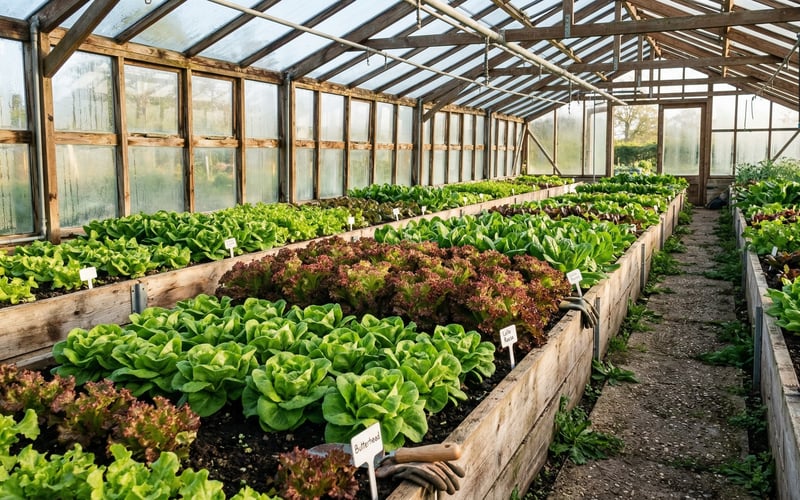
We fit greenhouses for customers who grow lettuce more than any other single crop. The biggest mistake we see is not enough ventilation. Lettuce bolts fast above 24°C, and a closed greenhouse in May will hit 35°C by lunchtime. We always recommend at least two roof vents and a louvre vent in the door panel. If you are growing lettuce through summer, fit an automatic vent opener on every roof vent. It costs about £30 per vent and saves every crop you grow.
What are the best lettuce varieties for a UK greenhouse?
The best greenhouse lettuce varieties for the UK are Little Gem, Lollo Rossa, Buttercrunch, and Winter Density. Each suits different seasons and growing styles. Little Gem is the workhorse: it matures in 50-60 days, forms compact heads, and handles both cool and warm conditions. Lollo Rossa adds colour and texture, and its frilly leaves resist slugs better than flat-leaved types.
For winter cropping, Winter Density is the standout. It is a semi-cos type that tolerates temperatures down to -5°C inside an unheated greenhouse. Arctic King is another reliable winter choice. Both produce usable leaves from October through to March when sown in September.
If you want the fastest harvests, try leaf lettuce varieties like Salad Bowl and Red Salad Bowl. These are ready for cut-and-come-again picking in just 4-5 weeks from sowing. You can grow them in trays, raised beds, or even window boxes inside the greenhouse. For advice on what else to pair with your lettuce, our companion planting guide covers the best combinations.
How to sow lettuce seeds in a greenhouse
Sow lettuce seeds 6mm deep in moist compost at 10-15°C for germination in 7-10 days. Lettuce seeds need light to germinate, so cover them with only a thin dusting of vermiculite or fine compost. Do not bury them. Water the compost before sowing, not after, to avoid washing seeds too deep.
Start seeds in module trays or small pots, then transplant when seedlings have four true leaves. This gives you more control than direct sowing and reduces waste. Space transplants 15cm apart for leaf types, 25cm for butterheads, and 30cm for romaine and crisphead varieties.
Succession sowing is the single most important technique for steady lettuce supply. Sow a short row or half a tray every two weeks from March through September. This prevents the common problem of 30 lettuces maturing at once, followed by nothing for six weeks. Our seed sowing month by month guide has the full calendar.
Shop the Access 4x2 Raised Wooden Bed Kit →
When to sow lettuce in a greenhouse month by month
| Month | What to sow | Growing notes |
|---|---|---|
| January-February | Winter Density, Arctic King (sow in heated greenhouse at 10°C+) | Use fleece on cold nights. Harvest from spring sowings begins late March. |
| March-April | Little Gem, Buttercrunch, Lollo Rossa, Salad Bowl | Main sowing season starts. Germination is reliable at 12-15°C. |
| May-June | Batavia, Iceberg, heat-tolerant varieties (Concept, Sunstar) | Ventilate heavily. Shade cloth if temperature exceeds 25°C. |
| July-August | Lollo Rossa, Red Salad Bowl (bolt-resistant types) | Sow in the evening. Keep compost moist. Lettuce seeds go dormant above 25°C. |
| September-October | Winter Density, Arctic King, Valdor, Winter Gem | Last outdoor sowings. Greenhouse extends harvest to Christmas and beyond. |
| November-December | Harvest winter sowings. No new sowing unless heated. | Pick outer leaves only to extend the crop. Water sparingly in cold weather. |
What temperature does lettuce need in a greenhouse?
Lettuce germinates best at 10-15°C and grows fastest at 15-20°C. Above 24°C, most varieties bolt within days. This makes lettuce a cool-season crop that thrives in spring, autumn, and mild winters inside a greenhouse. Summer growing is possible but needs active management.
In winter, an unheated greenhouse typically stays 3-5°C above outside temperature. That is enough for Winter Density and Arctic King, which tolerate brief dips to -5°C. Growth slows dramatically below 5°C but the plants survive. If you add a single layer of fleece over the crop on freezing nights, you gain another 2-3°C of protection. Our winter greenhouse care guide covers insulation options in detail.
In summer, ventilation is non-negotiable. Open every vent and door when the greenhouse hits 20°C. If you are away during the day, fit automatic vent openers. Shade netting (40-50% density) reduces temperature by 5-8°C on sunny days and prevents the bitter flavour that heat-stressed lettuce develops.
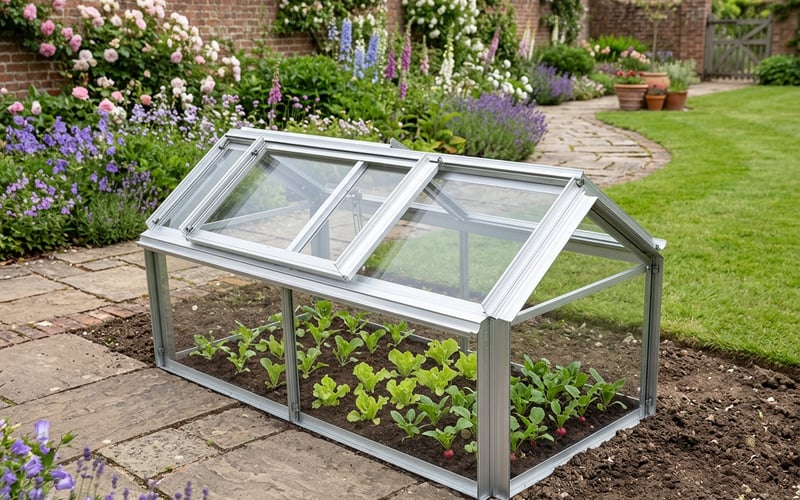
Shop the Elite Min E Lite 4x2 Cold Frame →
How to grow lettuce in raised beds inside a greenhouse
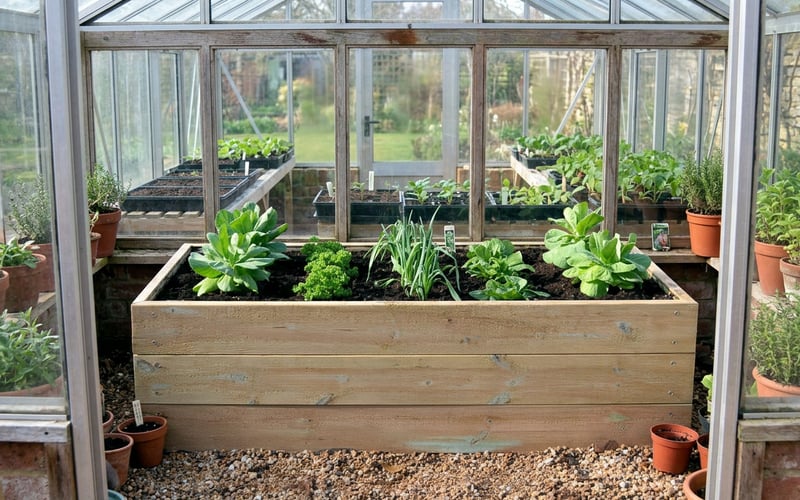
Raised beds are the best way to grow lettuce in a greenhouse because they warm up faster in spring and drain better in winter. A bed 15-20cm deep is enough for lettuce because the roots are shallow. Fill with a mix of 60% multipurpose compost, 30% garden soil, and 10% perlite or sharp sand for drainage.
A standard 4x2ft raised bed fits roughly 16 butterhead lettuces or 24 leaf lettuce plants when spaced correctly. That is enough for a weekly salad harvest for two people. Double up to two beds in an 8x6ft greenhouse and you have lettuce for a family of four. Our raised beds in a greenhouse guide covers setup and soil mixes in full.
The Access 4x2 Raised Wooden Bed Kit at £119 is purpose-built for this. The timber is pressure-treated to handle the damp greenhouse environment, and the flat-pack design means it fits through a standard greenhouse door. We have fitted dozens of these for customers and they last 10-15 years inside a greenhouse.
Matt's Tip: Cut-and-Come-Again
I grow all my lettuce as cut-and-come-again. Instead of waiting for full heads, I pick the outer leaves when they are 10-15cm long and leave the centre to keep producing. One sowing gives me 6-8 weeks of continuous harvest instead of a single pick. The trick is to never take more than a third of the plant at once. Take too much and recovery stalls. I get through a lot less seed this way too.
How to prevent lettuce bolting in a greenhouse
Lettuce bolts when daytime temperatures exceed 24°C for more than two consecutive days. Once the flowering stem starts to rise, the leaves turn bitter within 48 hours. Prevention is the only cure because bolting cannot be reversed once it starts.
The four rules for bolt prevention are: ventilate early (open vents at 20°C, not 25°C), shade the crop (40% shade netting from May to September), water consistently (dry roots trigger bolting), and choose bolt-resistant varieties for summer sowings. Batavia types and Lollo Rossa are the most bolt-resistant in our experience.
If a plant does bolt, pull it immediately. It will not recover and it signals neighbouring plants to bolt too. Replace it with a fresh transplant from your succession sowing tray. This is why fortnightly sowing matters so much.
Common lettuce pests and diseases in a greenhouse
Slugs, aphids, and grey mould are the three most common lettuce problems in UK greenhouses. Each is manageable with good practice.
Slugs love the damp, sheltered environment inside a greenhouse. Copper tape around raised bed edges is the most effective barrier we have found. Beer traps work but need emptying every few days. Nematode biological controls (Nemaslug) are effective from March to October when soil temperature is above 5°C. Our slug control guide covers every method.
Aphids cluster on the underside of leaves and multiply fast in still greenhouse air. Good ventilation slows them down. Introduce ladybird larvae in spring as a biological control, or blast small infestations off with a water spray. Our greenfly guide has the full treatment plan.
Grey mould (Botrytis) appears when humidity is high and air circulation is poor. Space plants correctly, water at the base (never over the leaves), and ventilate on dry days even in winter. Remove any affected leaves immediately to stop the spread.
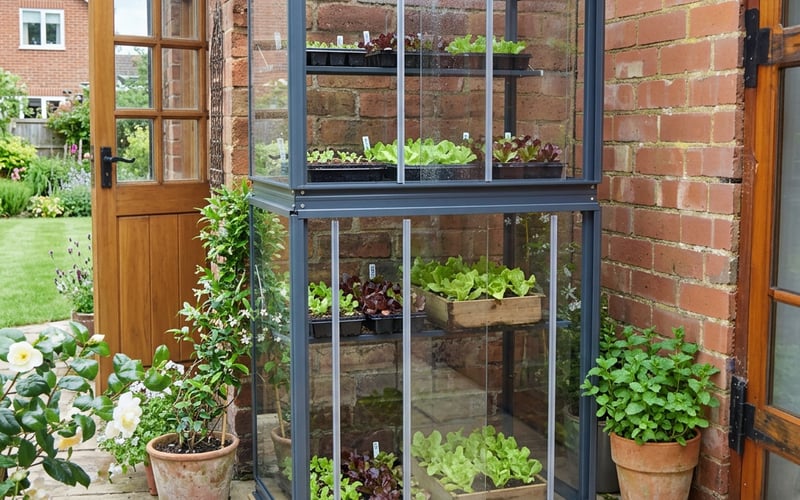
Shop the 2x3 Access City Growhouse →
Lettuce variety comparison table
| Variety | Type | Days to harvest | Spacing | Bolt resistance | Best season |
|---|---|---|---|---|---|
| Little Gem | Semi-cos | 50-60 | 20cm | Medium | March-September |
| Lollo Rossa | Leaf | 45-55 | 20cm | High | March-September |
| Buttercrunch | Butterhead | 55-65 | 25cm | Medium | March-August |
| Winter Density | Semi-cos | 60-70 | 25cm | High | September-March |
| Salad Bowl | Leaf | 40-50 | 15cm | Medium | March-August |
| Webb's Wonderful | Crisphead | 70-85 | 30cm | Low | March-June |
| Arctic King ★ | Butterhead | 60-70 | 25cm | High | September-February |
★ Matt's Pick for winter greenhouse growing
|
Matt's Pick for Greenhouse Lettuce GrowingBest For: Growing lettuce year-round in a greenhouse raised bed Why I Recommend It: I use this exact bed in my own greenhouse. It fits through a standard door, holds enough compost for 16 butterhead lettuces, and the treated timber handles the damp without rotting. After 5 years mine is still solid. Price: £119 |
Frequently asked questions
How do you stop lettuce going bitter in a greenhouse?
Keep the greenhouse below 24°C and water consistently. Bitter lettuce is caused by heat stress, irregular watering, or harvesting too late. Pick leaves in the early morning when they are coolest. Shade netting (40% density) from May to September keeps temperatures manageable. If bitterness has set in, soak leaves in cold water for 15 minutes before eating.
Can you grow lettuce in a greenhouse all year round?
Yes, with the right varieties for each season. Sow summer types (Little Gem, Lollo Rossa) from March to September. Switch to winter-hardy varieties (Winter Density, Arctic King) for September to February sowings. An unheated greenhouse stays 3-5°C above outside temperature, which is enough for winter lettuce. Growth slows in December and January but the plants survive.
How often should you water lettuce in a greenhouse?
Water daily in summer, every 2-3 days in spring and autumn, weekly in winter. Lettuce has shallow roots that dry out quickly in raised beds and containers. Water at the base of the plant, never over the leaves. Wet leaves in still greenhouse air invite grey mould. A drip irrigation line is the most efficient method and reduces water use by 30-50%.
What is the best soil mix for greenhouse lettuce?
Use 60% multipurpose compost, 30% garden soil, and 10% perlite. This gives good moisture retention, nutrients, and drainage. Lettuce is not a heavy feeder but benefits from a liquid feed every two weeks once leaves start to develop. Avoid high-nitrogen feeds late in the season as they produce soft, floppy growth that is more disease-prone.
How much space do you need to grow lettuce in a greenhouse?
A single 4x2ft raised bed grows 16-24 lettuce plants at a time. That is roughly one salad per day for two people when harvesting cut-and-come-again. A 6x4ft greenhouse has room for two beds plus a path. Lettuce does not need full sun, so it grows well in the slightly shaded areas under staging or at the edges of the greenhouse where taller crops block direct light.
Do you need to heat a greenhouse to grow winter lettuce?
No, if you choose hardy varieties like Winter Density and Arctic King. These tolerate temperatures down to -5°C. An unheated greenhouse provides enough frost protection for most UK winters. Adding a single layer of horticultural fleece over the crop on the coldest nights gives another 2-3°C of protection. Heating is only needed if you want to maintain growth speed through December and January.
Start growing greenhouse lettuce today
Lettuce is the easiest crop to grow in a greenhouse and the fastest to harvest. A packet of seed, a raised bed, and two weeks of patience gives you better leaves than anything in the supermarket. Browse our full range of greenhouse accessories to set up your growing space. We deliver free across mainland UK.