How to Grow Orchids In Your Greenhouse
A UK greenhouse keeps orchids alive through winter if you hold daytime temperatures at 18-24C for warm types like Phalaenopsis, 13-18C for intermediate Cymbidiums, and 10-13C for cool-growing Masdevallias. Humidity needs to stay between 60% and 80%. A 6x4 greenhouse fits 10-15 orchids on staging; a 6x8 handles 30 or more. Heating costs start at around 1p per hour with a 2kW electric heater on a thermostat.
A UK greenhouse keeps orchids alive through winter if you hold daytime temperatures at 18-24C for warm types like Phalaenopsis, 13-18C for intermediate Cymbidiums, and 10-13C for cool-growing Masdevallias. Humidity needs to stay between 60% and 80%. A 6x4 greenhouse fits 10-15 orchids on staging; a 6x8 handles 30 or more. Heating costs start at around 1p per hour with a 2kW electric heater on a thermostat.
Key Takeaways
- Temperature is everything. Warm orchids need 18-24C daytime and 15-18C at night. Cool types survive down to 10C. A max-min thermometer is essential.
- Humidity must stay between 60% and 80%. Water-filled gravel trays under the staging are the simplest method. Mist in the morning, never at night.
- Never pot orchids in soil. Use a bark-based mix (70% bark, 20% perlite, 10% sphagnum moss) for epiphytic types like Phalaenopsis and Oncidium.
- Raise orchids off the ground. Greenhouse staging keeps plants above cold floor drafts and improves airflow around the roots.
- A 2kW electric heater with thermostat costs about 1p per hour and keeps a 6x4 greenhouse at 15C through a mild UK winter night.
- Ventilate even in winter. Open a vent for 30 minutes on dry days to prevent botrytis and grey mould.
Installer's Note
We have fitted greenhouses for several orchid growers over the years, and the single biggest mistake I see is not insulating early enough. Bubble wrap on the inside of the glass by mid-October makes a real difference to heating bills. The other thing orchid growers always ask for is extra staging — two tiers minimum, because orchids need to be up off the floor where the cold air pools. We now recommend the Vitavia 2-tier staging as standard for anyone growing orchids or other tender plants.
What temperature do orchids need in a greenhouse?
Orchids fall into three temperature groups: warm (18-24C daytime, 15-18C night), intermediate (13-18C daytime, 10-13C night), and cool (10-13C daytime, 7-10C night). The night-time drop is critical. Orchids use the cooler period to trigger flower spike production. Without a 5-8C difference between day and night, many species refuse to bloom.
| Orchid Type | Examples | Day Temp | Night Temp | UK Heating Needed |
|---|---|---|---|---|
| Warm | Phalaenopsis, Vanda, Dendrobium | 18-24C | 15-18C | October to April |
| Intermediate | Cattleya, Oncidium, Paphiopedilum | 13-18C | 10-13C | November to March |
| Cool | Cymbidium, Masdevallia, Odontoglossum | 10-13C | 7-10C | December to February |
In a UK greenhouse, warm orchids need heating from October through April. Cool-growing types like Cymbidiums only need frost protection during the coldest months. Most growers mix types, so aim for an intermediate range of 13-15C minimum at night and you will keep the majority happy.
A max-min thermometer is not optional — it is the single most important tool for orchid growing. The Vitavia Max-Min Thermometer (£30) records the highest and lowest temperatures over 24 hours so you can check that your heater is doing its job overnight.
How much humidity do orchids need?
Most greenhouse orchids need 60-80% relative humidity. In a UK greenhouse, summer humidity often sits naturally at 70% or above. Winter is the problem — heating dries the air to 30-40%, which causes bud drop and leaf tip browning.
The simplest fix is gravel trays filled with water placed under the staging. As the water evaporates, it raises the humidity in the immediate growing area. Mist the orchids in the morning so the leaves dry before nightfall — wet foliage overnight invites botrytis. A battery-powered hygrometer costs under £10 and tells you exactly where you stand. For a full guide, read our article on how to maintain greenhouse humidity.
Matt's Tip: The Wet Floor Trick
On hot summer days when humidity drops, I dampen the greenhouse floor with a watering can around 10am. The water evaporates through the day and lifts the humidity by 10-15%. It costs nothing, takes 30 seconds, and orchid growers swear by it. Just make sure the floor dries by evening.
What is the best potting mix for greenhouse orchids?
Never pot orchids in garden soil or standard compost. Epiphytic orchids (Phalaenopsis, Cattleya, Dendrobium, Oncidium) grow on tree bark in the wild. Their roots need air. A potting mix of 70% medium-grade bark chips, 20% perlite, and 10% sphagnum moss gives the right balance of drainage and moisture retention.
| Component | Proportion | Purpose |
|---|---|---|
| Medium bark chips | 70% | Drainage and root anchorage |
| Perlite | 20% | Aeration and prevents compaction |
| Sphagnum moss | 10% | Holds moisture between waterings |
Terrestrial orchids (Cymbidium, Paphiopedilum) need a denser mix. Add 30% fine bark, 30% perlite, 20% loam-based compost, and 20% coarse grit. Repot every two years when the bark breaks down and stops draining. The best time to repot is spring, just as new growth starts.
What size greenhouse do you need for orchids?
A 6x4ft greenhouse is the minimum for orchid growing. A 6x8ft greenhouse is ideal for a collection of 20-30 plants. Orchids need space between them for airflow, and you need room for staging, a heater, and a small work area for repotting.
| Collection Size | Minimum Greenhouse | Staging Tiers | Heating Needed |
|---|---|---|---|
| 5-15 orchids | 6x4ft (1.8 x 1.2m) | 1-2 tiers | 2kW heater |
| 15-30 orchids | 6x8ft (1.8 x 2.5m) | 2-3 tiers | 2kW heater |
| 30-50 orchids | 8x10ft (2.5 x 3.0m) | 3-4 tiers | 3kW+ heater |
Do not pack a small greenhouse to capacity. Leave 15-20cm gaps between pots for air to circulate. Overcrowding causes fungal problems faster than any other mistake. If you are starting out, our small greenhouses range includes models from 4x4ft upwards that work well for a starter orchid collection.
Why should you raise orchids off the ground?
Cold air sinks. The floor of a greenhouse is always the coldest spot, often 3-5C colder than staging height. Orchid roots are sensitive to cold, and leaving pots on the ground through a UK winter risks root damage even if the heater is running. Staging also improves airflow around the base of the pots, which reduces root rot and fungal problems.
Two-tier aluminium staging is the standard setup for orchid growers. The top tier holds the plants at waist height for easy inspection and watering. The lower tier holds gravel trays filled with water for humidity. Read our full greenhouse staging and shelving guide for detailed buying advice.
How do you control light for greenhouse orchids?
Most orchids need bright, indirect light — around 15,000-30,000 lux for Phalaenopsis and up to 40,000 lux for Cymbidiums. In a UK greenhouse, direct summer sunlight through clear glass will scorch orchid leaves within hours. Shade netting or greenhouse shading from April to September is essential.
Use 50% shade cloth for most orchid types. Hang it inside the greenhouse, 15cm below the roof glass, so air still circulates above the fabric. In winter, remove the shading entirely — UK daylight hours are short enough that orchids need every photon they can get. Supplement with a grow light on a timer (12-14 hours total light per day) if your greenhouse is north-facing or shaded by buildings.
How do you water orchids in a greenhouse?
Water orchids thoroughly, then let the bark mix dry almost completely before watering again. In summer, this means watering every 3-5 days. In winter, every 7-14 days. The single best test: push your finger 2cm into the bark. If it feels dry, water. If it feels damp, wait.
Always water in the morning so excess moisture evaporates during the day. Never let water sit in the crown (the centre of the leaf rosette) as this causes crown rot, which kills Phalaenopsis faster than any pest. Use rainwater if possible — orchids dislike the calcium in hard tap water, and most of the UK has hard water.
How do you avoid common orchid problems?
The three biggest killers of greenhouse orchids in the UK are overwatering, poor ventilation, and cold damage. All three are preventable with basic monitoring.
| Problem | Signs | Cause | Fix |
|---|---|---|---|
| Root rot | Black, mushy roots | Overwatering or poor drainage | Repot in fresh bark, cut dead roots |
| Botrytis (grey mould) | Grey fuzzy patches on petals | High humidity + poor airflow | Remove affected parts, ventilate daily |
| Bud blast | Buds yellow and drop before opening | Temperature swings or dry air | Stabilise temp, increase humidity |
| Thrips | Silver streaks on leaves, tiny insects | Warm, dry conditions | Sticky traps, neem oil spray |
| Scale insects | Brown bumps on stems and leaves | Brought in on new plants | Wipe with methylated spirit on cotton bud |
| Sunburn | Brown/white patches on leaves | Direct summer sun through glass | Add shade cloth immediately |
For a detailed guide to identifying and treating all common greenhouse pests, see our greenhouse pest control guide.
How do you get orchids to bloom again?
The key trigger for orchid re-blooming is a consistent 5-8C temperature drop between day and night. Most Phalaenopsis will initiate a new flower spike within 4-6 weeks of experiencing this drop. In a UK greenhouse, autumn provides this naturally — warm days and cool nights in September and October are ideal.
Feed with a high-potassium fertiliser (like tomato feed diluted to quarter strength) every two weeks during the growing season (April to September). Stop feeding in winter. Cut the flower spike back to just above the second node from the base after the last flower drops — Phalaenopsis often produces a secondary spike from that node.
How do you care for greenhouse orchids in winter?
Winter is when most UK greenhouse orchids die. The combination of short daylight hours, cold nights, and low humidity is brutal. Here is the winter care checklist:
- Insulate by mid-October. Line the inside of the glass with bubble wrap. This cuts heat loss by up to 50% and halves your heating bills. Our guide on how to insulate a greenhouse covers the full process.
- Run a thermostat-controlled heater. Set it to 13-15C for a mixed collection. The heater only fires when the temperature drops, so running costs stay low.
- Reduce watering to every 10-14 days. Cold, wet roots rot fast. Let the bark dry out more than you would in summer.
- Ventilate on dry days. Open one vent for 30 minutes around midday. This flushes stale air and prevents grey mould.
- Stop feeding from November to February. Orchids are semi-dormant and cannot process fertiliser.
- Add supplemental light. A basic grow light on a timer extends the photoperiod to 12 hours, which prevents premature leaf drop on Phalaenopsis.
For the full winter greenhouse care strategy, read our winter greenhouse care guide. For heating options and running costs, see how much does it cost to heat a greenhouse.
|
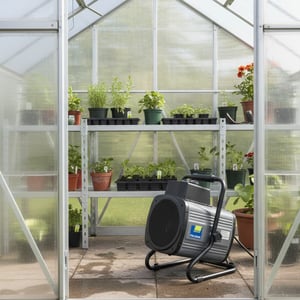
Matt's Pick for Orchid GrowersBest For: Maintaining precise overnight temperatures in a 6x4 to 8x6 greenhouse Why I Recommend It: Orchids need a thermostat-controlled heater, not a fan heater you switch on and forget. This 2.4kW Palram heater has a built-in thermostat that holds the temperature within 1-2C of your target. Set it to 15C and it only fires when the greenhouse drops below that. Running costs work out at roughly 1p per hour in mild weather, more on freezing nights. Price: £199 |
Frequently asked questions
Can you grow orchids in an unheated greenhouse in the UK?
Only cool-growing types like Cymbidium survive in an unheated UK greenhouse. They tolerate temperatures down to 5C for short periods. Warm orchids like Phalaenopsis die below 10C. If you want to grow a mixed collection, you need a heater with a thermostat set to at least 13C overnight from October to April.
How often should you water orchids in a greenhouse?
Every 3-5 days in summer and every 7-14 days in winter. Push your finger 2cm into the bark mix. If it feels dry, water thoroughly until it drains from the bottom. If it still feels damp, wait another day. Overwatering kills more orchids than any pest or disease.
What is the best orchid for beginners in a greenhouse?
Phalaenopsis (moth orchid) is the easiest greenhouse orchid for beginners. It tolerates a wider temperature range than most species (15-28C), blooms for 8-12 weeks, and re-blooms reliably when given a 5C night-time temperature drop in autumn. Cymbidiums are the second-best choice for UK growers because they handle cool conditions.
Do orchids need direct sunlight in a greenhouse?
No. Direct sunlight through glass burns orchid leaves within hours. Most orchids need bright, indirect light. Use 50% shade cloth from April to September. Remove it in winter when UK daylight is limited. A south-facing greenhouse with shade cloth is ideal. North-facing greenhouses may need supplemental grow lights.
How do you increase humidity for orchids in a greenhouse?
Place gravel trays filled with water underneath the staging. As the water evaporates, it raises humidity in the growing area by 15-20%. Mist the orchids in the morning (never at night). Dampen the greenhouse floor on hot days. A battery-powered hygrometer costing under £10 lets you monitor levels accurately.
What temperature should a greenhouse be for orchids in winter?
13-15C minimum overnight for a mixed collection. Warm types like Phalaenopsis need 15C minimum. Cool types like Cymbidium survive at 7-10C. Set your thermostat to the minimum safe temperature for your most sensitive plant. Insulate with bubble wrap by mid-October to cut heat loss and reduce running costs by up to 50%.