How to Grow Lavender: Complete UK Guide
Lavender is a hardy perennial that thrives in UK gardens with minimal care. English lavender varieties Hidcote and Munstead are the most reliable for British conditions, surviving temperatures down to -15°C. Plant in March to May in free-draining soil with at least 6 hours of direct sun. Prune twice a year and a single plant will last 10 to 15 years.
Lavender is a hardy perennial that thrives in UK gardens with minimal care. English lavender varieties Hidcote and Munstead are the most reliable for British conditions, surviving temperatures down to -15°C. Plant in March to May in free-draining soil with at least 6 hours of direct sun. Prune twice a year and a single plant will last 10 to 15 years.
Key Takeaways
- Plant lavender in spring (March to May) in a sunny spot with free-draining soil
- Hidcote and Munstead are the hardiest UK varieties, surviving -15°C winters
- Prune twice a year: light trim in spring, hard cut after flowering in August
- Never cut into old wood or the plant will not recover
- Lavender hates wet feet: improve clay soil with grit or grow in raised beds
- Take cuttings in July and August to multiply your plants for free
- Well-pruned lavender lives 10 to 15 years vs 4 to 5 years if left unpruned
Installer's Note
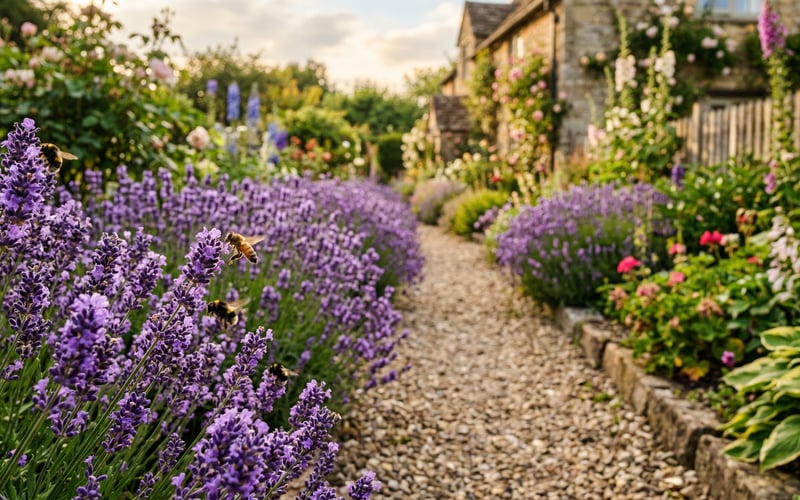
We have been growing lavender in our display greenhouses and customer gardens for over a decade. The number one killer of lavender in the UK is not cold, it is wet soil. I have seen perfectly healthy plants rot over a single wet winter because they were planted in heavy clay without drainage. Every lavender planting we do starts with a bucket of grit mixed into the planting hole. Get the drainage right and lavender will look after itself for years.
When should I plant lavender in the UK?
Plant lavender between March and May once the soil has warmed up and the worst frosts have passed. You can also plant in early September, but spring planting gives roots five months to establish before winter. Avoid planting between November and February when cold wet soil rots fresh roots before they can grow.
Pick a spot that gets at least 6 hours of direct sun daily. South-facing borders against a wall are ideal because the wall reflects heat and the ground drains faster. Avoid north-facing beds and anywhere that puddles after rain. Space plants 45 to 60cm apart for hedging or 60 to 90cm apart as individual specimens.
Dig a hole twice the width of the root ball and mix a generous handful of horticultural grit into the excavated soil. Plant so the top of the root ball sits level with the surrounding soil. Water once to settle the roots, then leave it alone. Lavender establishes faster when it is not overwatered. For more on starting plants from scratch, see our seed starting guide.
What soil does lavender need?
Lavender needs free-draining, slightly alkaline soil with a pH of 6.5 to 8. It evolved on rocky Mediterranean hillsides where water never sits around the roots. In the UK, this means most clay soils need amending before planting. Sandy and chalky soils are perfect without any work.
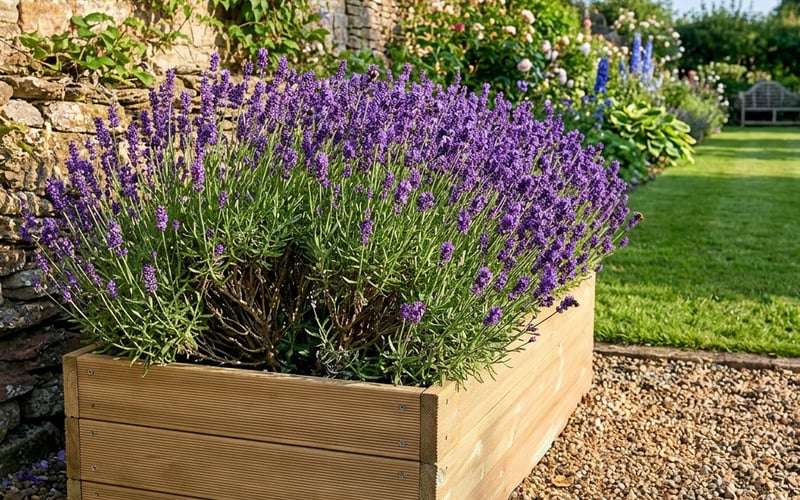
For clay soil, dig in two or three handfuls of coarse grit or perlite per planting hole. Better still, grow lavender in a raised bed filled with a 50/50 mix of multipurpose compost and sharp grit. The raised position keeps roots above the water table and the grit prevents waterlogging. This is the single most effective thing you can do for lavender on heavy ground.
Never add manure or rich compost to a lavender planting hole. Rich soil produces lots of soft leafy growth with fewer flowers and less scent. Lavender flowers hardest when it is slightly stressed and nutrient-poor. A gravel mulch around the base keeps the crown dry and reflects heat upwards, which lavender loves.
Which lavender varieties grow best in the UK?
English lavender (Lavandula angustifolia) is the toughest group for UK gardens, hardy to -15°C. Within that group, Hidcote and Munstead are the two varieties that professional growers recommend for British conditions. Both survive exposed sites, heavy rain, and late frosts that kill French and Spanish types.
| Variety | Type | Height | Hardiness | Best For |
|---|---|---|---|---|
| Hidcote | English | 45-60cm | -15°C | Hedging, edging, cooking |
| Munstead | English | 30-45cm | -15°C | Compact borders, pots |
| Grosso | Lavandin | 75-90cm | -10°C | Essential oils, drying |
| Phenomenal | Lavandin | 60-75cm | -15°C | Hedging, large borders |
| Provence | Lavandin | 60-75cm | -10°C | Dried flowers, sachets |
| Matt's Pick: Hidcote | English | 45-60cm | -15°C | All-rounder for UK gardens |
Lavandin types (hybrids of English and Portuguese lavender) grow larger and produce more oil, but they are slightly less hardy. Grosso and Provence survive most UK winters in sheltered southern gardens but can die back in exposed northern sites. French lavender (Lavandula stoechas) with its distinctive rabbit-ear petals is borderline hardy and best treated as a pot plant you can move under cover in winter.
How do I prune lavender properly?
Prune lavender twice a year: a light trim in April and a hard cut after flowering in August. The spring trim removes winter-damaged tips and shapes the plant. The summer cut is the important one. Cut back about two-thirds of the current year's growth, shaping the plant into a neat dome. This prevents the woody, leggy growth that kills lavender plants prematurely.
The critical rule is never cut into old wood. Old wood is the thick grey stems below the green growth. If you cut into it, those stems will not produce new shoots and the plant develops dead patches. Always leave at least 2 to 3cm of green growth above the old wood.
A well-pruned lavender plant lives 10 to 15 years. An unpruned plant becomes woody and bare in the centre within 4 to 5 years and needs replacing. Five minutes with a pair of hedge shears in August is the difference between a decade of flowers and a bare stick. For more seasonal garden care, see our September gardening jobs guide.
Matt's Tip: take free cuttings every summer
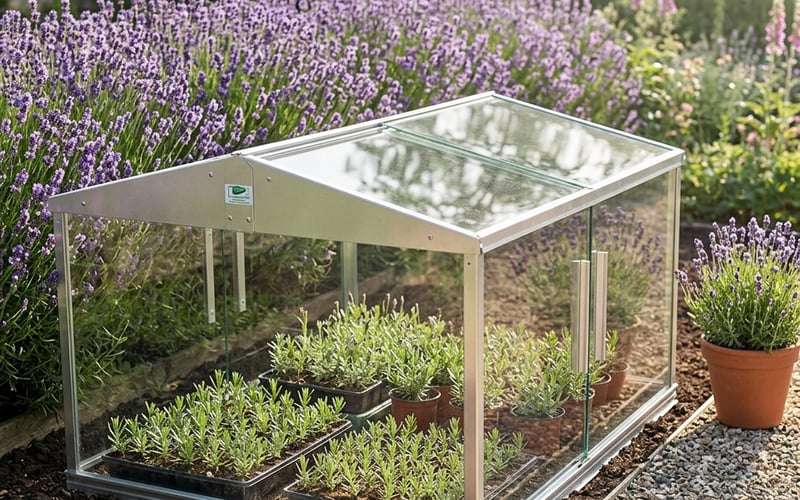
Every July I take 20 or 30 lavender cuttings from our display plants. It costs nothing and takes 10 minutes. Pull a non-flowering side shoot away from the main stem so it comes off with a heel of older wood. Strip the lower leaves, dip in rooting powder, and push into a pot of 50/50 grit and compost. Keep them in a cold frame or on a greenhouse bench and they root in four to six weeks. By next spring you have free plants for hedging, gifts, or gap-filling. I have never bought a lavender plant in 10 years.
Shop the 4x4 Access Aluminium Coldframe →
Can I grow lavender in a greenhouse?
A greenhouse is perfect for starting lavender from cuttings and overwintering tender varieties. The protected environment gives cuttings the warmth and humidity they need to root quickly. Start cuttings in July in a greenhouse and they will be ready to plant out the following spring.
Tender varieties like French lavender can spend winter in an unheated greenhouse where they avoid the worst rain and frost. Keep them on the dry side through winter. Overwatering dormant lavender in a greenhouse causes root rot faster than outdoor cold does. Our greenhouse herbs guide covers growing lavender and other Mediterranean herbs under glass.
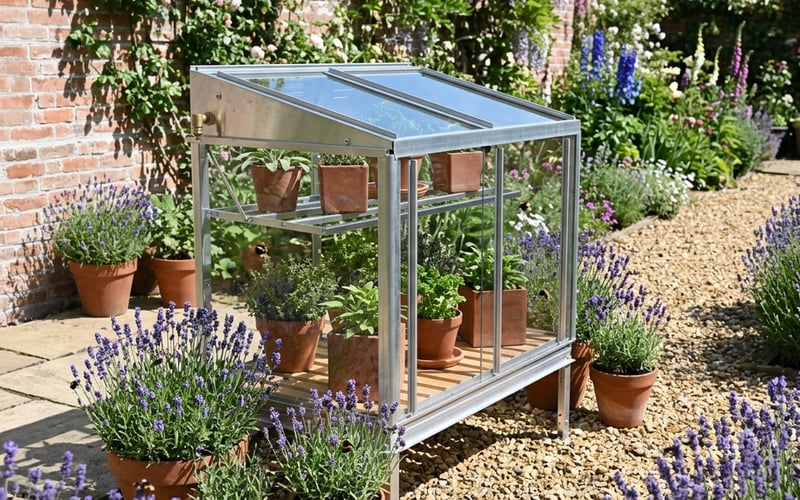
A compact mini greenhouse is all you need for lavender propagation. Set it against a south-facing wall and it stays warm enough for cuttings without heating. The Access Herb House is ideal for this, with enough bench space for 30 to 40 cuttings at a time.
How do I care for lavender through the year?
| Season | Watering | Pruning | Key Jobs |
|---|---|---|---|
| Spring (March-May) | Water new plantings only | Light trim to shape | Plant new lavender, add gravel mulch |
| Summer (June-August) | Only during extended dry spells | Hard cut after flowering | Harvest flowers, take cuttings |
| Autumn (September-November) | Stop watering | None | Move tender types under cover |
| Winter (December-February) | None | Remove dead stems only | Check for frost damage, plan spring planting |
Feeding is minimal. A light dusting of pelleted chicken manure in April is enough for the whole year. Avoid liquid feeds and anything high in nitrogen. Too much food produces lush green growth with fewer flowers and weaker scent. Lavender flowers best when it is lean and slightly hungry.
Watch for rosemary beetle from autumn through spring. These metallic green and purple striped beetles eat lavender leaves and buds. Pick them off by hand into soapy water. They are slow-moving and easy to spot. A heavy infestation left unchecked will strip a plant bare over winter.
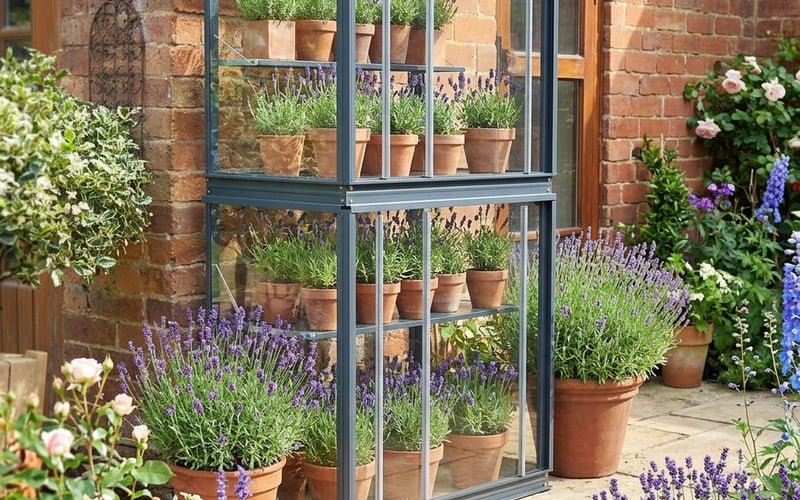
Can I grow lavender in pots on a patio?
Lavender grows well in pots as long as the container drains freely and sits in full sun. Choose a pot at least 30 to 40cm wide with drainage holes in the base. Use a mix of John Innes No. 2 and horticultural grit in roughly equal parts. This provides weight to stop the pot blowing over and the sharp drainage lavender demands.
Water pot-grown lavender when the top 3cm of compost feels dry. In summer this might mean every three to four days. In winter, once a fortnight at most. The biggest mistake with potted lavender is keeping it too wet. If the leaves go grey and limp, root rot has started and the plant rarely recovers.
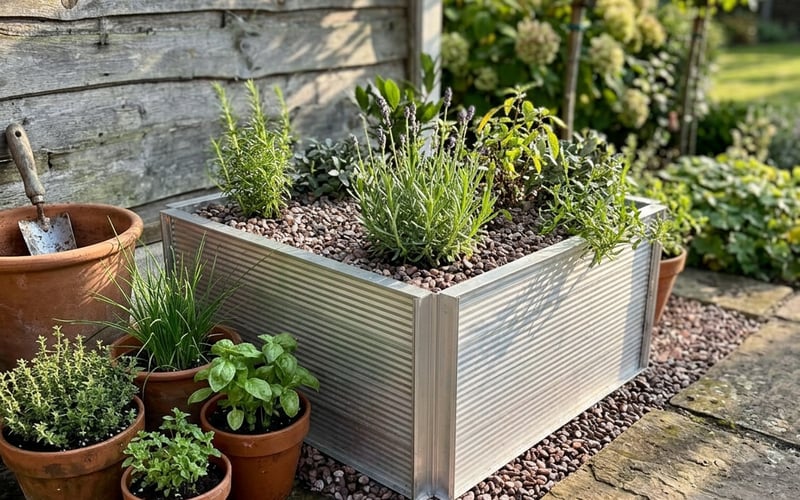
Repot every two to three years in spring, going up one pot size. Shake off old compost and trim any circling roots. Add fresh grit-rich compost and water once. For a dedicated growing space, a herb garden setup with raised beds and pots together gives the best display.
|
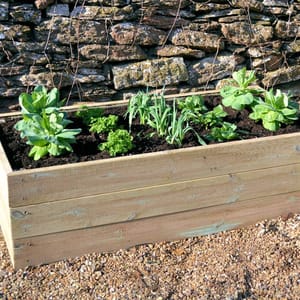
Matt's Pick for Growing LavenderBest For: Growing lavender in gardens with heavy clay soil Why I Recommend It: The Access 4x2 raised bed is the simplest solution to the drainage problem that kills more lavender than frost ever does. Fill it with a 50/50 mix of compost and grit and your lavender sits above the water table on perfect free-draining soil. At 4 feet long you can fit three Hidcote plants in a row for an instant mini hedge. The timber is pressure-treated so it lasts 15 years outdoors without rotting. Price: £119 |
How do I harvest and dry lavender?
Cut lavender stems for drying just as the first flowers on each spike begin to open. This is when the oil content is highest and the scent is strongest. Cut in the morning after the dew has dried but before the midday heat. Take stems as long as possible, cutting into the green growth above the old wood.
Bundle 20 to 30 stems together with a rubber band (they shrink as they dry and string lets them fall out). Hang bundles upside down in a dark, dry, well-ventilated room. An airing cupboard, garden shed, or greenhouse bench all work. The lavender is fully dry in two to three weeks. Strip the dried flower buds from the stems by running your fingers down the spike over a bowl.
Use dried lavender in sachets, potpourri, baking, or homemade cleaning products. English lavender (Lavandula angustifolia) is the only type safe for cooking. Use it sparingly. A quarter teaspoon of dried buds is enough for a batch of shortbread. Too much gives a soapy taste. Lavender sugar, lavender honey, and lavender shortbread are the three easiest culinary uses to start with.
Frequently asked questions
When is the best time to plant lavender in the UK?
Plant lavender between March and May for the strongest establishment. Spring planting gives roots five full months to grow before winter. You can also plant in early September, but give plants at least six weeks before the first frost. Avoid planting between November and February when cold wet soil causes root rot in fresh plantings.
Why is my lavender turning grey and dying?
Grey, wilting lavender is almost always caused by root rot from waterlogged soil. Lavender cannot tolerate wet feet. If the soil stays damp around the roots for extended periods, the roots suffocate and die. Improve drainage by adding grit to the planting hole, growing in a raised bed, or moving the plant to a sunnier, better-drained position.
Can I cut lavender back hard to old wood?
No, lavender rarely recovers if you cut into old wood. Old wood is the thick grey stems below the green foliage. Unlike plants like box or yew, lavender does not produce new buds from old wood. Always leave at least 2 to 3cm of green growth when pruning. If a plant has become bare and woody, it is better to replace it than attempt a hard renovation.
Is lavender safe for dogs and cats?
Lavender is mildly toxic to both dogs and cats if eaten in quantity. Occasional contact with the plant is not harmful. Eating large amounts of leaves or flowers can cause stomach upset in dogs and vomiting in cats. Lavender essential oil is more concentrated and should be kept away from pets entirely.
How long does a lavender plant live?
A well-pruned lavender plant lives 10 to 15 years in UK gardens. Without regular pruning, plants become woody and bare in the centre within 4 to 5 years. The annual hard prune after flowering is what keeps the plant compact, bushy, and productive. Replace plants when they become too woody to recover, usually after 12 to 15 years.
Does lavender spread and take over the garden?
No, lavender does not spread aggressively. Each plant grows slowly into a wider bush, gaining 5 to 10cm in diameter per year. It does not send out runners, suckers, or underground stems. Lavender only spreads by self-seeding, and seedlings are easy to pull up or transplant. It is one of the best-behaved perennials in the garden.
Can I grow lavender from seed?
Yes, but cuttings are faster and more reliable. Lavender seed germinates slowly and unevenly, taking 14 to 21 days in warm conditions. Seed-grown plants may not come true to the parent variety. Cuttings root in four to six weeks, produce identical plants, and flower a year earlier than seedlings. Take heel cuttings in July for the best results.