When Do Gladioli Flower in UK Gardens?
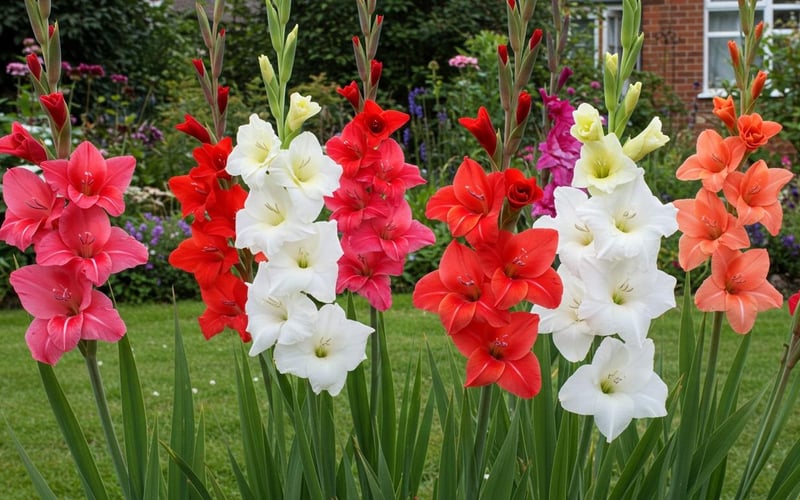
Gladioli flower from July to September in UK gardens, roughly 10 to 14 weeks after planting corms in spring. Hardy varieties like Gladiolus byzantinus flower earlier from June. Succession planting every two weeks from April to July extends the display from late June through October. Starting corms in a greenhouse from March gives a four-week head start over outdoor planting.
Key Takeaways
- Peak flowering runs July to September with individual spikes lasting 2 to 3 weeks each
- Plant corms 10 to 15cm deep in well-drained soil once temperatures reach 10°C
- Succession plant every fortnight from April through July for continuous colour
- Start corms in a greenhouse from March to flower four weeks earlier than outdoor plantings
- Gladiolus byzantinus is fully hardy and can stay in the ground year-round in most UK gardens
- Lift tender varieties in autumn and store frost-free over winter
Installer's Note
We have grown gladioli in our display greenhouses for nine years. The single biggest difference between a good display and a great one is timing. Customers who start corms in a greenhouse in March and succession plant fortnightly get flowers from late June right through to the first frost. Customers who plant everything outdoors in April get two good weeks in July and then nothing. I will walk you through exactly how we do it.
When should I plant gladioli in the UK?
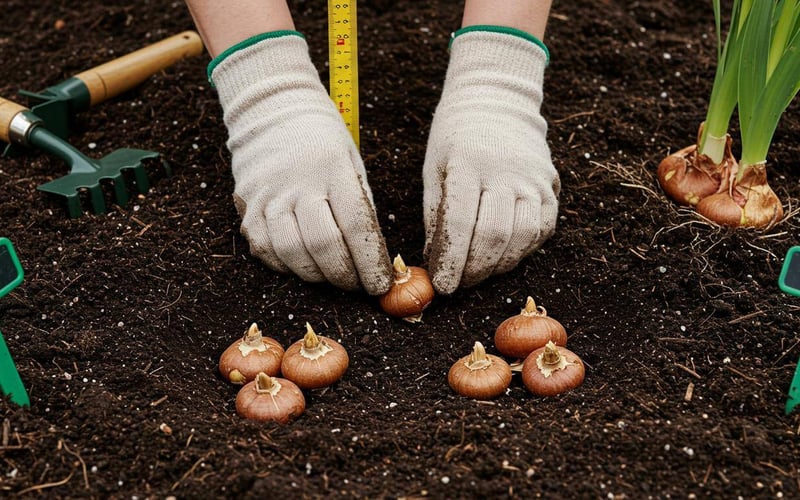
Plant gladioli corms from April through July once your soil temperature sits above 10°C. Push a soil thermometer 10cm deep in the morning to check. In southern England this is usually mid-April. In Scotland and northern England, wait until early May.
Plant each corm 10 to 15cm deep and 10cm apart in well-drained soil. If your garden has heavy clay, dig in sharp sand or grit to a spade's depth before planting. Waterlogged corms rot rather than grow. A raised bed with added grit gives the best drainage for heavy soils.
The exception is Gladiolus byzantinus, which performs better planted in autumn. This hardy Mediterranean species handles UK winters and rewards autumn planting with flowers from June, a full month before spring-planted varieties.
Can I start gladioli early in a greenhouse?
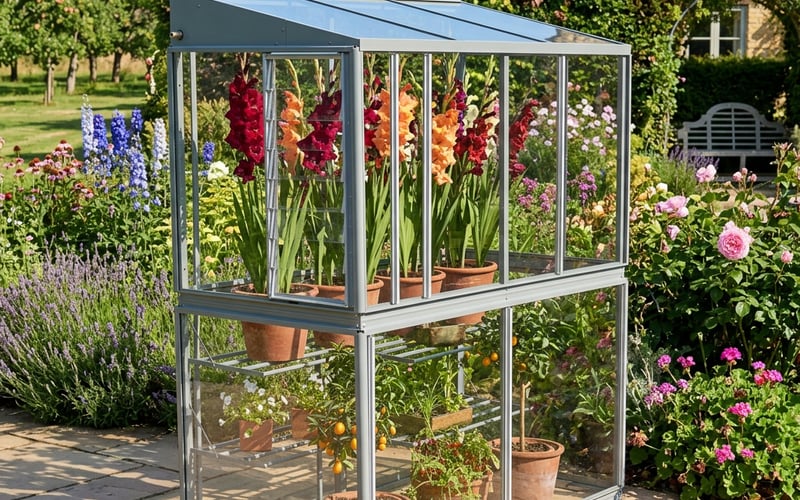
Starting gladioli corms in a greenhouse from March gives them a four-week head start over outdoor planting. Pot corms individually in 9cm pots of multipurpose compost mixed with perlite. Keep them in a frost-free greenhouse at 10 to 15°C and water sparingly until shoots appear.
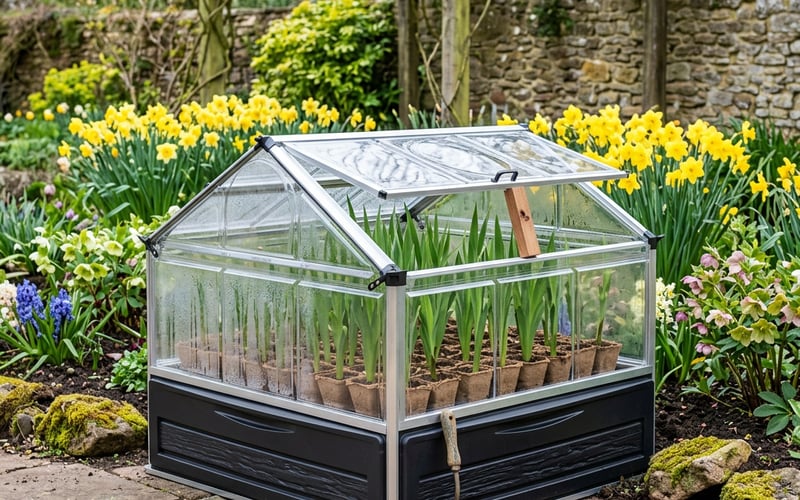
Once shoots reach 10 to 15cm and all frost risk has passed, harden them off over a week. Move pots outside during the day and back under cover at night. A cold frame is perfect for this stage. Then plant out into their final positions in the border.
We use this method in our display greenhouses every year. The March-started corms flower in late June while April outdoor plantings do not bloom until mid-July. That four-week gap means you get colour a full month earlier.
When do gladioli flower in the UK?
Gladioli flower 10 to 14 weeks after planting, putting the main UK season between July and September. April plantings bloom in July. May plantings flower in August. June plantings produce September colour. The exact timing shifts by a week or two depending on your location and the weather that year.
Early varieties like Nanus hybrids and Gladiolus colvillei 'The Bride' bloom in 8 to 10 weeks. Standard large-flowered hybrids take 12 to 14 weeks. Late varieties can push into October if planted in July. This variation lets you plan a succession display that covers four months or more.
| Planting Month | Expected Flowering | Weeks to Bloom |
|---|---|---|
| March (greenhouse) | Late June | 12-14 |
| April | July | 12-14 |
| May | August | 12-14 |
| June | September | 10-12 |
| July | October | 10-12 |
How long do gladioli flowers last?
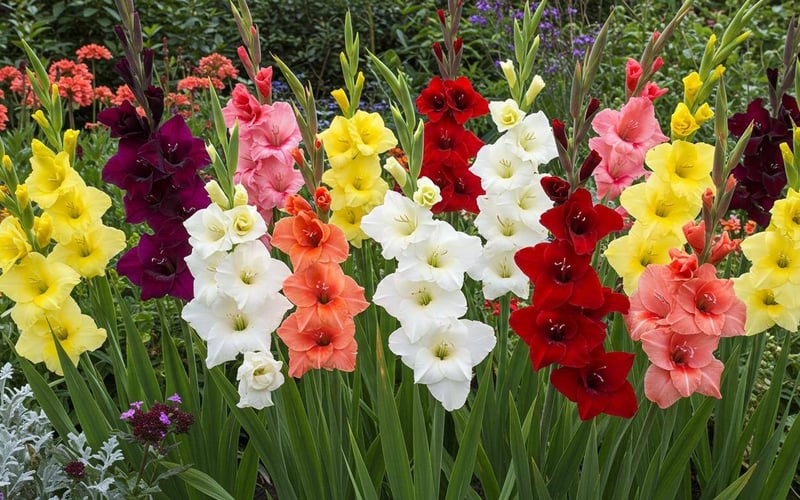
Individual gladioli spikes last 2 to 3 weeks once they begin opening. The flowers open from bottom to top along the spike, giving you a gradual display rather than everything appearing at once. Each spike produces 10 to 20 individual florets depending on variety and growing conditions.
For cut flowers, harvest in early morning when stems are fully hydrated. Cut when the first two or three bottom florets have opened. The remaining florets will open in sequence over the following week in a vase. Leave at least four leaves on the plant after cutting to help the corm build energy for next year.
Deadhead spent florets individually to keep the display tidy. Once the last floret on a spike has faded, cut the spike back but leave all foliage intact. The leaves continue feeding the corm underground for six to eight weeks after flowering finishes.
How do I get gladioli to flower all summer?
Succession planting is the answer. Plant a batch of 10 to 15 corms every two weeks from April through July. This staggers flowering so you get fresh spikes opening every fortnight from July right through to October. Without succession planting, everything flowers in the same two-week window and then you are left with nothing.
Keep a planting diary. Note the variety, planting date, and when the first flower opens. After one season you will know exactly which varieties suit your garden's microclimate and how to space plantings for continuous colour. Mixing early, mid-season, and late varieties within each batch extends the display further.
We keep a chart in the greenhouse office tracking 15 years of planting dates and first-flower dates. The pattern is consistent: every two weeks of delayed planting shifts flowering by roughly 10 to 14 days. It works like clockwork once you have your own data.
What affects when gladioli bloom?
Six factors control exactly when your gladioli will flower. Understanding them helps you predict timing and troubleshoot poor displays.
| Factor | Effect on Flowering | What to Do |
|---|---|---|
| Temperature | Cool springs delay by 2-3 weeks | Start in a greenhouse to bypass cold soil |
| Sunlight | Full sun produces the strongest spikes | Plant in a south-facing spot with 6+ hours direct sun |
| Soil drainage | Waterlogged corms rot or grow weakly | Add grit to clay soils, use raised beds |
| Watering | Drought stress reduces floret count | Water consistently during active growth |
| Corm size | Larger corms (12cm+) flower earlier | Buy the biggest corms you can find |
| Variety | Early types bloom in 8-10 weeks, late in 12-14 | Mix early, mid, and late for longest display |
Feed every two to three weeks once growth begins. Use a balanced fertiliser during the vegetative phase, then switch to a high-potash feed when buds form. This improves flower quality and colour intensity noticeably.
Matt's Tip: stake before you need to
Stake your gladioli when the flower spike is just starting to emerge from the leaves, not once it is fully developed and leaning. A 90cm bamboo cane and a soft tie per spike is all you need. By the time the spike is loaded with open flowers it is too heavy to straighten without snapping. I have seen people lose entire displays to one windy afternoon because they staked too late. Do it early and you will never have the problem.
Which gladioli varieties flower earliest in the UK?
Gladiolus byzantinus flowers earliest of all UK-grown gladioli, blooming from late May to early June. This hardy species can be planted in autumn and left in the ground permanently in most of England and Wales. It naturalises in borders and meadow planting, spreading slowly each year.
Gladiolus colvillei 'The Bride' produces delicate white flowers from late spring into early summer. Nanus hybrids are compact varieties reaching 60 to 80cm that flower in early summer, a full month before standard large-flowered types. These smaller varieties work well in pots and at the front of borders where full-size gladioli would look too tall.
If you want the classic tall gladioli spikes as early as possible, start standard corms in a mini greenhouse in March. You will have full-size blooms by late June while your neighbours' outdoor plantings are still a month away from flowering.
How do I overwinter gladioli in the UK?
Hardy varieties like Gladiolus byzantinus stay in the ground year-round. Mulch the area with 5 to 8cm of bark or leaf mould in late autumn for extra frost protection. In sheltered gardens in southern England, some gardeners leave standard hybrids in the ground and get away with it in mild winters. But one hard frost kills them.
Tender varieties must be lifted in autumn. Wait until the foliage yellows naturally, usually six weeks after the last flower. Dig up the corms carefully, shake off soil, and cut back foliage to 5cm. Dry them on a tray in a well-ventilated shed for two to three weeks. Then store in paper bags in a cool, dry, frost-free place at 5 to 10°C.
A greenhouse is ideal winter storage for gladioli corms. The temperature stays frost-free without heating in most of southern England. Our overwintering plants guide covers the full process for bulbs, corms, and tubers. For similar corm-growing techniques, see our potted dahlias guide.
|
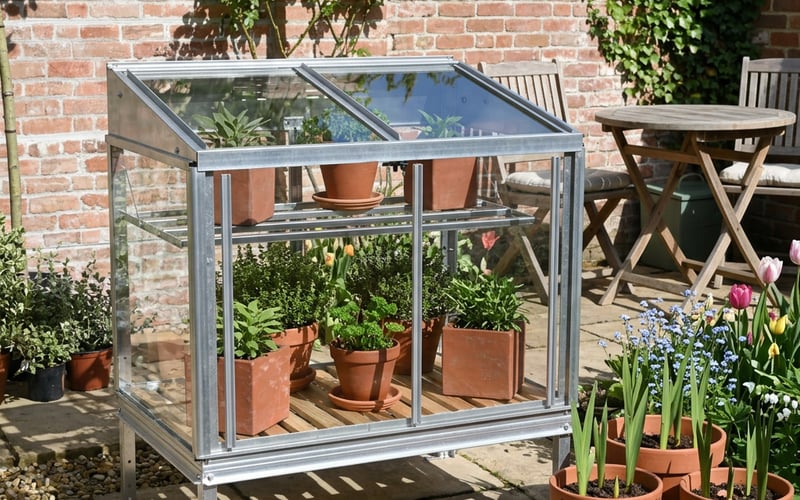
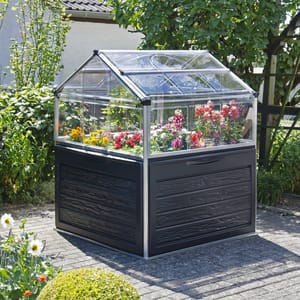
Matt's Pick for Growing GladioliBest For: Hardening off greenhouse-started gladioli corms before planting out Why I Recommend It: The Plant Inn sits at table height so you are not bending down to tend your corms. The twin-wall lid holds heat better than single glass, and the wide opening gives you full access. I use ours every spring for hardening off gladioli, dahlias, and sweet peas before they go into borders. At £329 it is the best value cold frame we sell for the size. Price: £329 |
Growing tips for the best gladioli display
Choose a sheltered spot protected from strong winds. Tall gladioli spikes act like sails and snap in exposed positions. A south-facing border against a wall or fence is ideal. The wall reflects heat and blocks wind from behind.
Water consistently during the growing season. Gladioli are thirsty plants during active growth and flower development. Reduce watering once flowering finishes to help corms mature and harden off for storage. Never let corms sit in waterlogged soil at any stage.
If you are growing gladioli in a greenhouse for cut flowers, our seed starting guide covers the basics of greenhouse propagation that apply equally to corms. For month-by-month planting schedules, see our seed sowing calendar.
Frequently asked questions
What month do gladioli flower in the UK?
Gladioli flower primarily from July to September in the UK. Early varieties like Gladiolus byzantinus can flower from late May, and late plantings push colour into October. The exact timing depends on when you planted the corms and your local climate. Greenhouse-started corms flower roughly four weeks earlier than outdoor plantings in the same area.
Why are my gladioli not flowering?
The most common causes are late planting, too little sun, or undersized corms. Gladioli need at least six hours of direct sunlight daily. Corms smaller than 10cm in circumference may not have enough stored energy to produce flowers in their first year. Poor drainage, drought stress, and pest damage from thrips can also prevent flowering.
Can I leave gladiolus bulbs in the ground over winter in the UK?
Only hardy species like Gladiolus byzantinus survive UK winters reliably. Standard large-flowered hybrids need lifting in autumn and storing frost-free until spring. In very sheltered gardens in southern England, some gardeners leave them in the ground with a thick mulch, but one hard frost will kill them. It is safer to lift and store.
Should I cut gladiolus down after flowering?
Cut the flower spike after the last floret fades, but leave all foliage intact. The leaves continue photosynthesising for six to eight weeks after flowering, feeding the corm underground. This is how the corm builds enough energy to flower again next year. Only cut back foliage once it has yellowed naturally.
How deep should I plant gladioli corms?
Plant gladioli corms 10 to 15cm deep and 10cm apart. Deeper planting gives better anchorage for tall varieties and reduces the need for staking. In light sandy soils, go to 15cm. In heavier clay, 10cm is enough as long as drainage is good. Always plant with the pointed end facing upwards.
Can I grow gladioli in pots?
Yes, gladioli grow well in pots at least 30cm deep and wide. Use a mix of multipurpose compost and perlite for drainage. Plant five to seven corms per 30cm pot. Pot-grown gladioli need more frequent watering than those in borders. Feed fortnightly with a liquid tomato fertiliser once shoots appear. Bring pots into a greenhouse in spring for the earliest flowers.
When should I buy gladioli corms?
Buy gladioli corms in January to March for the best selection. Garden centres and online suppliers stock fresh corms from late winter. Buy the largest corms you can find. Corms 12cm or larger in circumference produce the strongest flower spikes in their first season. Smaller corms may take an extra year to reach flowering size.