How to Build a Concrete Base for a Greenhouse
A concrete base is the strongest, most durable foundation for any greenhouse, lasting 25+ years with no maintenance. Pour 100-150mm of concrete over 75-100mm of compacted MOT Type 1 hardcore. DIY cost runs from £150 for a 6x4ft base to £800 for a 12x10ft slab. Allow 1-2 days of active work plus 3-7 days curing before building. Concrete is the right choice for lean-to greenhouses bolted to house walls, large models over 10x8ft, and any site with soft or unstable ground.
Key Takeaways
- A concrete base lasts 25+ years and provides the most stable, maintenance-free foundation for any greenhouse
- 100-150mm depth for most greenhouses, plus 75-100mm of compacted hardcore underneath
- DIY cost: £150-£800 depending on size — professional labour adds £300-£400 on top
- Allow 2-3 days total: one day for prep and pouring, then 3-7 days curing before you build on it
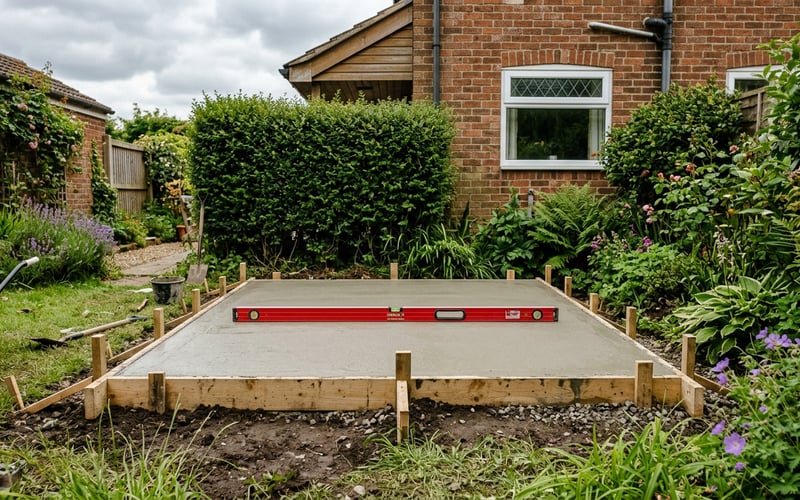
- 5mm matters: even a small levelling error across a 3m base will stop greenhouse doors closing properly
- Order ready-mix for anything over 1m³ — saves a full day of back-breaking mixing for roughly the same cost
Installer's Note
Matt Ward, 12 years installing greenhouses across the UK
I built my first greenhouse base about eight years ago and made every mistake in the book. The second one was textbook perfect. After helping over 150,000 customers choose and install greenhouses, I can tell you concrete bases cause fewer long-term problems than any other foundation type. They don't shift, they don't settle, and they don't rot. One customer in Leeds built a gravel base for a 10x8 Vitavia and called us within nine months because the frame had twisted and two panes cracked. We helped him pour a concrete slab and reinstall. That greenhouse is still standing perfectly six years later.
Why Choose a Concrete Base for Your Greenhouse?
Concrete is the strongest greenhouse foundation you can build — it won't shift, rot, or need re-levelling for 25+ years. After fitting greenhouses for over a decade, I've seen what happens when people skip the base. The frame twists, doors won't close, glass cracks, and within a year you're dealing with a wonky mess.
Concrete does three things no other base type matches:
- Keeps everything level — glass doesn't like movement, and concrete doesn't move
- Blocks weeds and pests — no more rats setting up shop under your tomatoes
- Lasts 25+ years — with zero maintenance once it's cured
The downsides? It's the most expensive base option (£25-40/m² vs £8-12 for gravel). It takes 3-7 days to cure before you can build. Drainage is poor compared to paving slab bases. If you plan to grow directly into the soil, concrete isn't the right choice. But for staging, container growing, and maximum long-term stability, concrete wins every time.
Shop the Stali 10x10 Dwarf Wall Greenhouse →
What You'll Need: Materials and Tools
Budget £200-£400 for a standard 8x6ft base if you're doing it yourself, or £500-£800 with professional labour.
Materials
- Concrete mix — either ready-mix bags or separate cement, sharp sand, and gravel (1:2:3 ratio, or 1:5 ballast)
- Hardcore/MOT Type 1 — about 75-100mm depth for the sub-base
- Timber for formwork — 150mm wide boards work well. Treated softwood is fine
- DPC membrane — damp proof course sheeting to stop moisture rising through the slab
- Wooden stakes — to hold your formwork in place. One every 600-800mm
Tools
- Spade and shovel
- Spirit level (get a long one — 1,200mm minimum)
- Wheelbarrow
- Rake
- Wooden float or steel trowel
- Tape measure (5m minimum)
- String line and pegs
- Hammer
- Vibrating plate compactor (hire for about £40/day)
Planning Your Concrete Greenhouse Base
Your concrete base must be 20-50mm larger than the greenhouse base plinth on all sides — measure the actual dimensions from the manufacturer's spec sheet, not the name on the box.
A "6x8" greenhouse typically measures closer to 1,930mm x 2,560mm externally. A "10x8" can be 3,170mm x 2,560mm. Always check the spec sheet. If you're not sure what size greenhouse you need, sort that out before you pour concrete.
Most domestic greenhouses don't need planning permission. But if you're near a boundary or in a conservation area, give your council a ring. Five-minute call now beats a five-figure enforcement notice later.
Matt's Tip: Order Ready-Mix for Anything Over 1m³
For a small 6x4ft base (0.22m³), ready-mix bags from a builders' merchant are fine — you'll need about 9-10 bags. But for anything 8x6ft or larger, get a delivery from a ready-mix supplier. It costs roughly £65-85 per m³ delivered, which is only slightly more than buying bags, and it saves you an entire day of back-breaking mixing. Ring ahead and book a specific delivery window — you need to pour and level within about 2 hours of it arriving.
Size, Depth, and Cost Guide
| Greenhouse Size | Base Depth | Concrete Volume | Approx. DIY Cost | With Labour |
|---|---|---|---|---|
| 6 x 4 ft | 100mm | 0.22m³ | £150-£250 | £400-£550 |
| 8 x 6 ft | 100mm | 0.45m³ | £250-£400 | £500-£700 |
| 10 x 8 ft | 125mm | 1.0m³ | £400-£600 | £700-£900 |
| 12 x 10 ft | 150mm | 1.8m³ | £600-£800 | £900-£1,200 |
Costs are approximate and include hardcore, DPC, formwork timber, and concrete. Prices vary by region and supplier (2025/2026).
Step-by-Step: Building Your Concrete Greenhouse Base
The full process takes 1-2 days of active work, plus 3-7 days of curing time before you can build on it.
Step 1: Mark Out and Dig
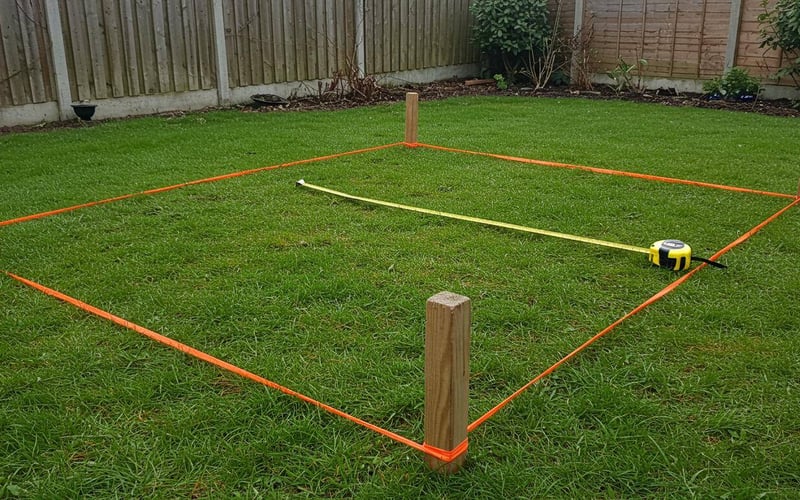
String lines are your best friend here. Mark your corners with pegs, run string between them, and check your diagonals are equal. If they don't match within 5mm, you've got a wonky rectangle — adjust until both diagonals agree.
Dig out to about 200-250mm deep total. That's roughly a spade depth plus a bit. You want 75-100mm for hardcore, then 100-150mm for concrete on top. Keep the sides fairly straight. Check for buried services (gas, water, electric) before you start.
Step 2: Compact Your Hardcore

Tip in your MOT Type 1 or hardcore and spread it level with a rake. This sub-base stops the concrete cracking and sinking into soft ground.
Compact it properly. I once skipped the compacting step. Six months later, one corner had dropped 20mm. Hire that plate compactor — your back will thank you, and your greenhouse won't look drunk. Go over it three or four times until you can walk on it without leaving footprints.
Step 3: Build Your Formwork
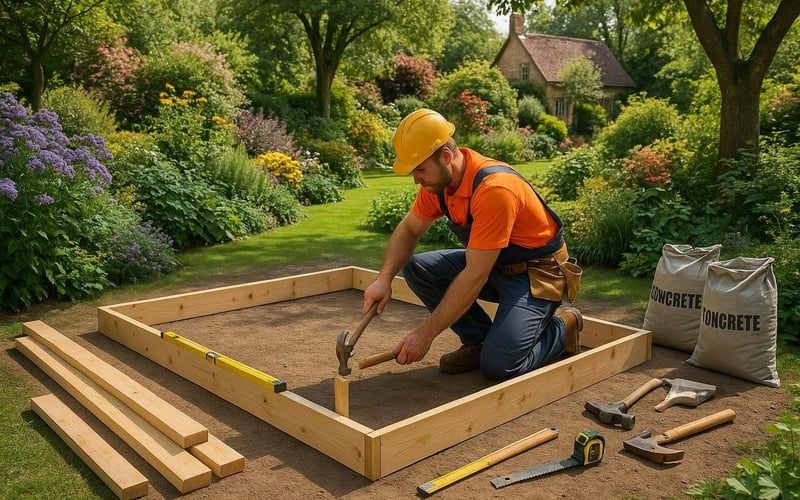
Nail together a rectangle from your timber boards. The inside measurements should match your base size exactly. Use stakes every 600-800mm driven into the ground outside the boards.
Get your spirit level out. Check every side. Check the diagonals. This is where "level" happens — once the concrete's in, you're stuck with what you've got. Brush a little old engine oil on the inside faces to make removal easier later.
Step 4: Lay Your DPC Membrane
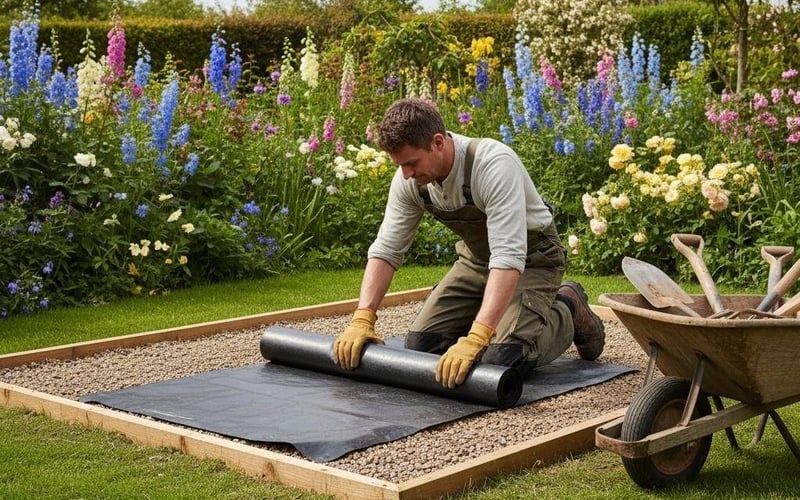
Roll out your damp proof membrane over the hardcore. Overlap joins by 150mm minimum. Bring it up the inside edges of your formwork.
This stops moisture creeping up through the concrete into your greenhouse frame. Aluminium corrodes faster with constant ground moisture, and wooden base rails will rot within a few years without a DPC barrier.
Step 5: Mix and Pour Your Concrete
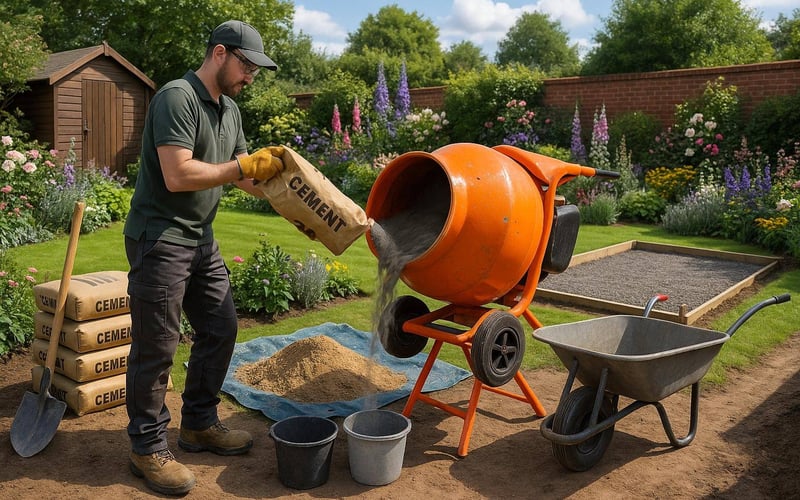
If you're doing a small base (under 1m³), ready-mix bags are manageable. Bigger than that? Get a concrete truck — it's not much more expensive and saves your entire weekend.
The mix: If mixing yourself, use 1 part cement : 2 parts sharp sand : 3 parts gravel (or 1:5 ballast). Add water gradually until it's like thick porridge. Too wet and it'll be weak; too dry and you can't work it. Pour from one corner and work it into the edges. Fill roughly 20mm higher than your final level — it settles as you screed.
Step 6: Level and Finish
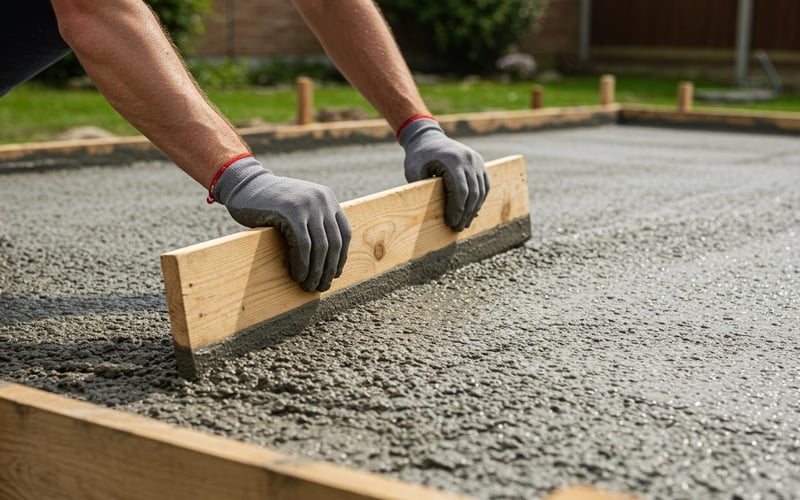
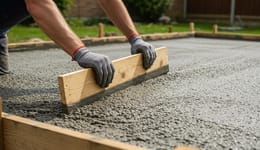
This is where that long spirit level earns its keep. Drag a straight timber board (a "screed board") across the top of your formwork, sawing back and forth. This strikes off the excess and leaves a flat surface.
Fill any low spots and screed again. Check with your spirit level across different directions. Smooth with your wooden float — you don't want mirror-smooth (that's slippery when wet), just a slightly textured finish for grip.
Step 7: Curing
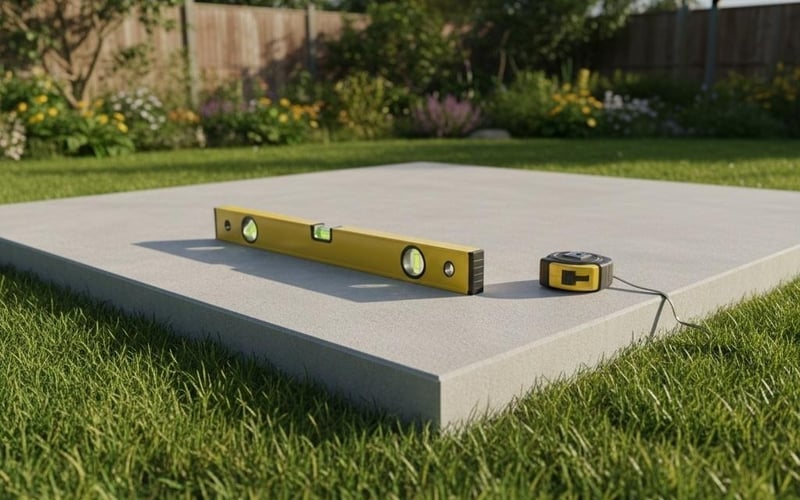
Concrete doesn't "dry" — it cures. It needs moisture to cure properly. Concrete that dries too fast cracks.
Cover your base with plastic sheeting. Leave it alone for at least 3 days. A week is better. In hot weather (above 20°C), lift the plastic and spray it with water once a day. After 7 days, you can build on it. Full strength takes 28 days, but seven is plenty for a greenhouse. Don't pour if temperatures are below 3°C or frost is forecast — cold-damaged concrete cracks and crumbles.

|
Matt's Pick for a Concrete Base BuildBest For: Serious growers who want a permanent, full-size greenhouse that justifies the concrete investment Why I Recommend It: The Apollo 6x10 is our most popular full-size greenhouse. At 6x10ft it's the ideal size where concrete starts making real sense over paving slabs. I've installed dozens of these on concrete and they sit perfectly for years. Price: £829 |
Common Mistakes (I've Made Them So You Don't Have To)
Most concrete base failures come down to five avoidable errors — I've personally made three of these.
| Mistake | What Happens | The Fix |
|---|---|---|
| Skipping the hardcore | Concrete sinks and cracks within 6-12 months | Always lay and compact a 75-100mm hardcore sub-base first |
| Not checking level | 5mm out across 3m means greenhouse doors won't close | Check with a spirit level across every direction |
| Pouring in hot sun | Concrete cures too fast and cracks | Pour early morning or late afternoon, keep damp under plastic |
| Wrong depth | Under 75mm cracks under weight; too thick wastes money | 100mm for greenhouses up to 10x8, 150mm for larger |
| Forgetting expansion joints | Concrete expands with temperature and cracks | Cut a 10mm joint for bases longer than 3m in any direction |
Concrete vs Other Greenhouse Base Types
Concrete is the best option for permanent greenhouses, lean-to models, and anything over 10x8ft — but it's not always necessary for smaller structures.
| Base Type | Cost per m² | DIY Difficulty | Drainage | Durability | Best For |
|---|---|---|---|---|---|
| Compacted gravel | £8-12 | Easy | Excellent | 5-10 years | Budget/temporary setups |
| Paving slabs | £15-25 | Moderate | Very good | 20-30 years | Most greenhouses under 10x8ft |
| Poured concrete | £25-40 | Difficult | Poor | 25-30+ years | Large, permanent, lean-to models |
| Timber frame on gravel | £10-18 | Easy-Moderate | Good | 8-15 years | Wooden greenhouses |
Paving slabs are a strong alternative for most small greenhouses under 6x4ft. They're cheaper, drain better, and individual slabs can be lifted for repairs. For lean-to greenhouses, concrete is the strongest choice because the structure attaches to your house wall and must be perfectly level against an existing building.
Shop the Elite Kensington 6x8 Lean To →
Is a Concrete Greenhouse Base Worth the Effort?
If you're spending £500-£2,000+ on a greenhouse you plan to keep for 10+ years, a concrete base is a sound investment. Spending roughly £300 and a weekend to make sure your greenhouse lasts 25 years is straightforward maths. I've seen too many expensive greenhouses destroyed because someone tried to save £200 on the base.
That said, be honest about whether you actually need concrete. A well-built paving slab base lasts 20-30 years too, costs less, and is far easier to DIY. Concrete makes the most sense for large greenhouses (10ft+ wide), lean-to structures, and sites with particularly soft or unstable ground.
Professional vs DIY: Which Should You Choose?
Concrete bases are harder to DIY than paving slabs — if you're not confident with formwork and levelling, hiring a professional is worth the extra £300-£400. The work is physically demanding and time-sensitive. Once you start pouring, you have roughly 2 hours to get everything level before the concrete starts setting. There's no "lift it and adjust" option like with paving slabs.
If you'd prefer professional help with the greenhouse assembly itself, our nationwide installation service handles everything from base-frame anchoring upwards. The base must be completed and fully cured before our team arrives. Read our new greenhouse setup checklist so you know exactly what to prepare.
Frequently Asked Questions
How deep should a concrete base be for a greenhouse?
100mm is the right depth for most garden greenhouses up to 10x8ft. Go deeper — 125-150mm — for anything larger or if your soil is particularly soft clay. The compacted hardcore sub-base underneath adds another 75-100mm, so you're digging 200-250mm total.
Can you put a greenhouse directly on soil?
You can, but it will cause problems within months. Soil shifts with moisture and temperature, leading to twisted frames and cracked glass. Doors won't close properly, weeds grow up through the floor, and pests can burrow underneath. A proper base (concrete, paving slabs, or at minimum compacted gravel) prevents all of these issues.
What is the cheapest way to build a greenhouse foundation?
Paving slabs on compacted sand-cement cost around £80-150 for a 6x4ft base. Gravel is cheaper still but causes problems long-term. For roughly £100 more, a concrete base gives you decades of maintenance-free stability.
Is a concrete base the best option for a greenhouse?
Concrete is the strongest and most durable option, but paving slabs work well for most greenhouses under 10x8ft. Concrete is the best choice for permanent installations, large greenhouses, lean-to models attached to house walls, and sites with soft or unstable ground. For smaller freestanding greenhouses, paving slabs offer similar longevity with better drainage.
How long before I can build on a concrete base?
Wait at least 3 days — 7 days is better. You can walk on it carefully after 24-48 hours, but the concrete reaches about 70% of its strength at seven days. Full cure takes 28 days. In cold weather (below 10°C), add an extra 2-3 days to be safe.
Do I need steel reinforcement in a greenhouse base?
No, for domestic greenhouses under 12x10ft the concrete thickness provides enough strength without reinforcement. You'd only consider mesh reinforcement for very large structures (over 14m² of base area) or particularly unstable ground.
Can I pour a concrete greenhouse base in winter?
Yes, but don't pour if temperatures are below 3°C or frost is forecast within a week. Cold concrete takes much longer to cure and can be permanently damaged by freezing before it sets. Spring through autumn is ideal. If you must do it in winter, use a winter-grade concrete mix and cover with insulating blankets while it cures.