
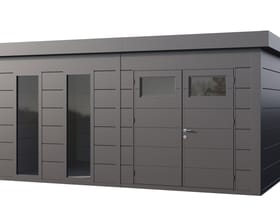


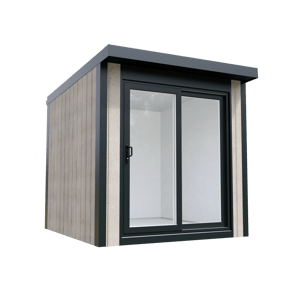
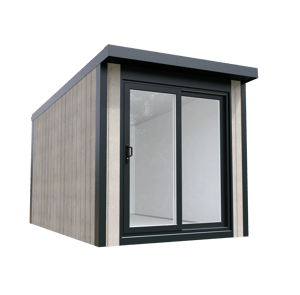
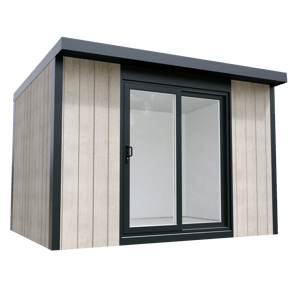
About Metal Garden Rooms
Metal Garden Rooms are the ultimate modern solution for homeowners seeking a stylish, durable, and low-maintenance extension to their living space. Constructed from high-grade galvanised steel and insulated composite panels, these buildings offer the comfort of a traditional Garden Office without the ongoing chore of painting and treating timber.
Our collection features the premium Lichfield Crown range, designed to meet the strict demands of UK building standards. With inherent fire resistance and exceptional thermal efficiency, these Insulated Garden Rooms are perfect for use as home businesses, gyms, or secure storage for high-value equipment.
Key Features of Steel Garden Rooms
- Fire Retardant: Non-combustible materials make them safer for boundary installations.
- Rot Proof: Galvanised steel frame is impervious to damp, rot, and rodents.
- High Security: Multi-point locking systems and steel doors offer superior theft protection.
- Modern Aesthetic: Crisp lines and smooth finishes suit contemporary garden designs.
Why We Chose This Range
“We selected the Lichfield Crown collection because it solves the biggest headache of garden room ownership: Maintenance. Wood expands, contracts, and needs painting. These steel buildings are dimensionally stable; doors never stick, and the powder-coated finish simply needs a wipe down with soapy water once a year. Crucially, the wall panels are pre-insulated in the factory, ensuring no cold spots or 'thermal bridging' that can cause condensation in cheaper metal structures.”
— Matt, Founder of Greenhouse Stores🔧 Matt's Installation Tip: The "Zero Tolerance" Base
Timber cabins can sometimes "settle" onto a slightly uneven base. Metal Garden Rooms cannot. The steel frames are incredibly rigid.
If your concrete base is out of level by even 5mm across the width, the bolt holes for the wall panels will not align. You absolutely must have a laser-level concrete pad or a professionally installed ground screw base. Do not attempt to build these on paving slabs laid on sand; they will shift and twist the frame.”
Frequently Asked Questions about Metal Garden Rooms
-
Will the metal walls block my WiFi?
Metal can act as a partial Faraday cage, weakening wireless signals. We strongly recommend running a CAT6 ethernet cable to the room for a hardwired internet connection, or installing a mesh WiFi booster inside the room to ensure reliable connectivity.
-
Are metal garden rooms cold in winter?
Not if they are insulated. Our Metal Garden Rooms use "sandwich panels" with a thick foam core between the steel sheets. This offers U-values comparable to (or better than) timber logs, keeping the heat in during winter and blocking solar gain in summer.
-
Do they rust?
No. We use hot-dipped galvanised steel which is then powder-coated. This creates a chemical bond that prevents rust. Most of our metal rooms come with a 15-20 year anti-rust warranty.
-
Do I need planning permission?
Metal rooms are treated the same as timber ones. If they are under 2.5m high, they usually fall under Permitted Development. Their main advantage is their non-combustible nature, which often makes it easier to comply with Building Regulations if you want to place a large building close to a boundary.