How to Clean the Glass in Your Greenhouse
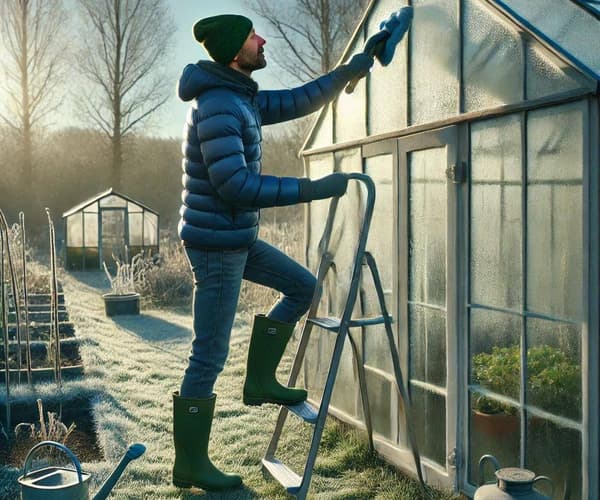
Clean greenhouse glass twice a year — once in late February before the growing season and again in late September after summer. Use warm water with a few drops of washing-up liquid, a soft sponge for scrubbing, and a squeegee for streak-free results. A 6x8ft greenhouse takes 2-3 hours to clean inside and out.
Clean greenhouse glass twice a year — once in late February before the growing season and again in late September after summer. Use warm water with a few drops of washing-up liquid, a soft sponge for scrubbing, and a squeegee for streak-free results. A 6x8ft greenhouse takes 2-3 hours to clean inside and out. Dirty glass blocks up to 40% of available light, which directly reduces plant growth, seed germination rates, and winter warmth retention. This guide covers glass and polycarbonate cleaning methods, the products to use and avoid, and a step-by-step process based on 12 years of maintaining greenhouses across the UK.
Key Takeaways
- Clean twice a year: late February (before spring sowing) and late September (after summer algae growth)
- Warm soapy water is all you need. A few drops of washing-up liquid in a bucket of warm water cleans glass and polycarbonate safely
- Never use a pressure washer on greenhouse glass — the force cracks panes and blows out glazing clips
- Polycarbonate needs different care. No abrasive sponges, no solvents, no glass cleaner — just soft cloths and soapy water
- Dirty glass costs you crops. A layer of algae and grime blocks up to 40% of light transmission in winter when your plants need every lumen
- Clean the inside too. Condensation residue, mould spores, and pest eggs collect on interior glass throughout the growing season
Installer's Note
We install and maintain greenhouses every week. The greenhouses that perform best year after year are the ones where the owner cleans the glass properly twice a year. It is not glamorous work, but the difference in light levels is immediately obvious — you can feel it when you step inside. I have seen greenhouses where the glass has not been cleaned for three or four years and the interior is so dim that seedlings stretch and topple. Two hours with a bucket and squeegee in February transforms the growing season that follows.
Browse our full Greenhouse range →
Why does clean greenhouse glass matter?
Dirty greenhouse glass reduces light transmission by up to 40%, directly limiting photosynthesis and plant growth. In the UK, winter daylight is already short — as few as 7-8 hours in December. If your glass is covered in algae, moss, bird droppings, and hard water deposits, your plants receive a fraction of the light they need to grow and fruit.
Clean glass also retains heat more efficiently. Solar energy passes through clean glass and warms the interior surfaces, which radiate heat back. A dirty pane reflects more sunlight before it enters the greenhouse. In our experience, a clean greenhouse can be 3-5°C warmer on a sunny winter day than a dirty one of the same size and orientation. That temperature difference determines whether tender overwintering plants survive or not.
Clean glass also reduces the risk of fungal disease. Mould spores, botrytis, and powdery mildew settle on the inside of glass during the humid summer months. If you do not clean the interior in autumn, those spores sit waiting for the following spring. A thorough autumn clean breaks the disease cycle. For more on winter greenhouse management, read our winter greenhouse care guide.
When is the best time to clean greenhouse glass?
Clean in late February and late September, ideally on a dry, overcast day when the temperature is above 5°C. These two dates bookend the growing season perfectly. The February clean maximises light for spring sowing. The September clean removes summer algae and kills overwintering pest eggs before you close up for winter.
| Timing | Why | What to Focus On |
|---|---|---|
| Late February | Maximise light before spring sowing season | Exterior: algae, moss, bird droppings, hard water marks |
| Late September | Remove summer grime, break pest and disease cycles | Interior: condensation residue, mould, pest eggs on glass |
| Mid-summer (optional) | Only if heavy pollen or tree sap buildup | Exterior upper panes only — quick rinse |
Avoid cleaning in direct sunlight. The solution dries before you can rinse it off and leaves white streaks that are harder to remove than the original dirt. An overcast morning is ideal. Avoid windy days — dust blows back onto wet glass immediately.
What products should I use to clean greenhouse glass?
Warm water with a few drops of washing-up liquid is the safest and most effective cleaner for both glass and polycarbonate. You do not need specialist greenhouse glass cleaner. Household washing-up liquid (Fairy or similar) cuts through algae, bird droppings, and hard water deposits without damaging the glass, the frame, or any sealant.
| Product | Safe for Glass? | Safe for Polycarbonate? | Notes |
|---|---|---|---|
| Warm water + washing-up liquid | Yes | Yes | Best all-round option. A few drops per bucket. |
| White vinegar solution (1:4 with water) | Yes | Yes (diluted) | Good for hard water scale. Rinse thoroughly after. |
| Jeyes Fluid (diluted) | Yes | Use with caution | Disinfects frames and staging. Keep off plants and polycarbonate. |
| Bleach | No | No | Damages aluminium frames, kills plants, corrodes clips. |
| Window cleaner (Windolene etc.) | Yes | No | Solvents in spray cleaners cloud polycarbonate permanently. |
| Pressure washer | No | No | Cracks glass, blows out clips, damages polycarbonate UV coating. |
Matt's Tip: The Vinegar Soak for Hard Water
If your greenhouse is in a hard water area and the glass has white calcium deposits that will not shift with soap, soak a cloth in undiluted white vinegar and hold it against the deposit for 5 minutes. The acid dissolves the calcium without scratching. Then scrub gently with a soft sponge and rinse with clean water. I use this trick on every greenhouse I clean in the South East where the water is especially hard. It works every time.
How to clean greenhouse glass: step by step
This method works for both horticultural glass and toughened glass greenhouses. For polycarbonate, see the separate section below. You will need: a bucket, washing-up liquid, a soft sponge (not a scouring pad), a squeegee, a long-handled soft brush or mop for the roof, a hosepipe, and dry microfibre cloths.
Step 1: Remove loose debris
Brush leaves, cobwebs, and loose dirt off the glass with a dry soft brush. Pay attention to the overlaps between panes where debris collects. On the inside, remove any shading paint residue from last summer with a dry cloth first — it comes off more easily when dry.
Step 2: Rinse the exterior
Hose down the entire exterior with clean water. This loosens bird droppings, pollen, and surface grime. Start at the top and work down so dirty water runs off the glass below.
Step 3: Wash with soapy water
Fill a bucket with warm water and add a few drops of washing-up liquid. Using a soft sponge, wash each pane in a circular motion. For roof panes, use a long-handled soft brush or a sponge on an extension pole. Do not press hard — let the soap do the work. Work in sections, washing 3-4 panes at a time before rinsing.
Step 4: Rinse each section immediately
Rinse with clean water from the hose before the soap dries. Soap residue left to dry is harder to remove than the original dirt. On a warm day, you may need to wash and rinse one pane at a time.
Step 5: Squeegee for a streak-free finish
Starting at the top of each pane, draw the squeegee down in a single stroke. Wipe the squeegee blade with a dry cloth between strokes. This removes 95% of the water and prevents drip marks.
Step 6: Clean the inside
Repeat the process on the interior glass. The inside typically has condensation residue, mould spots, and a thin film of humidity deposits. In autumn, this is also where pest eggs and fungal spores sit. A thorough interior clean in September is as important as the exterior clean. Our spring preparation guide covers the full end-of-winter routine including glass cleaning.
Step 7: Clean between overlapping panes
This is the step most people skip and the one that makes the biggest visual difference. Algae and grime build up in the overlap between glass panes. Slide a thin plastic plant label or a strip of microfibre cloth between the overlapping panes and work it back and forth. On badly clogged overlaps, spray soapy water into the gap first and let it soak for a few minutes.

View the Vitavia Apollo 6x10 Black Greenhouse →
How to clean polycarbonate greenhouse panels
Polycarbonate scratches more easily than glass and is damaged by solvents, so it needs a gentler approach. Never use abrasive sponges, scouring pads, window cleaner sprays, or any product containing ammonia or alcohol on polycarbonate. These cloud the surface permanently and strip the UV-protective coating.
- Rinse with clean water to remove loose dirt
- Wash with warm water and a few drops of washing-up liquid using a soft microfibre cloth only
- Rinse thoroughly with clean water
- Dry with a clean, dry microfibre cloth in straight lines — no circular motions
For green algae inside twin-wall polycarbonate channels, remove the panel if possible and flush the channels with a hose. If the panel cannot be removed, use a long thin bottle brush. Algae inside twin-wall channels is the most common complaint we hear about polycarbonate greenhouses. Sealing the open ends with aluminium tape after cleaning prevents regrowth. For a full comparison of the two glazing types, read our glass vs polycarbonate guide.
| Cleaning Factor | Horticultural / Toughened Glass | Polycarbonate |
|---|---|---|
| Sponge type | Soft sponge (non-scratch) | Microfibre cloth only |
| Cleaning solution | Soapy water, vinegar OK | Soapy water only — no solvents |
| Window cleaner spray | OK on glass | Never — clouds the surface |
| Pressure washer | No — cracks panes | No — strips UV coating |
| Scrubbing pressure | Moderate | Very light — scratches easily |
| Algae in overlaps/channels | Plant label between panes | Bottle brush inside channels, seal ends |
What NOT to do when cleaning greenhouse glass
These common mistakes cause permanent damage or make the job harder than it needs to be.
- Never use a pressure washer. The force cracks horticultural glass, blows glazing clips out of aluminium frames, and strips the UV coating off polycarbonate. We have replaced dozens of panes after customers used a jet wash.
- Never use bleach. It corrodes aluminium greenhouse frames, damages rubber seals, and kills any plants inside. It also does not clean glass any better than soapy water.
- Never use scouring pads or wire wool. These scratch both glass and polycarbonate. Scratched glass diffuses light instead of transmitting it cleanly. Scratched polycarbonate clouds permanently.
- Never clean in direct sunlight. The solution dries before you can rinse it, leaving white streaks that require a second clean to remove.
- Never leave Jeyes Fluid on aluminium frames. It is a useful disinfectant for staging and paths but it stains and corrodes aluminium if left in contact for more than a few minutes. Rinse frames immediately if they get splashed.
How often should I clean my greenhouse?
Twice a year is enough for most greenhouses. If you are surrounded by trees that drop pollen, sap, or leaves onto the roof, add a quick exterior rinse in midsummer. If you grow tomatoes or other crops that create high humidity, the interior may need a wipe-down in midsummer too.
| Situation | Cleaning Frequency | Focus |
|---|---|---|
| Standard greenhouse, open site | Twice a year (Feb + Sep) | Full inside and out |
| Greenhouse under trees | Three times a year | Extra exterior rinse in July for sap and pollen |
| High-humidity growing (tomatoes, cucumbers) | Twice a year + interior wipe in July | Interior condensation film and mould |
| Coastal location | Three times a year | Salt spray builds up on exterior glass |
A regular cleaning routine also gives you a chance to inspect the frame for loose clips, cracked sealant, and damaged panes. Catching a loose pane in February is far easier than dealing with a smashed panel in a March storm. For more on storm-proofing, see our wind damage prevention guide.

|
Matt's Pick: Best Greenhouse for Easy Glass CleaningBest For: Growers who want maximum light and easy-clean toughened glass panels Why I Recommend It: The Vitavia Apollo uses large toughened glass panes that are stronger, safer, and faster to clean than horticultural glass. Fewer pane overlaps means less algae buildup in the joints. The wide-opening roof vents and integral gutters also keep the exterior cleaner between washes. Toughened glass handles a firmer scrub without any risk of cracking. Price: £829 |
Frequently asked questions
What is the best thing to clean greenhouse glass with?
Warm water with a few drops of washing-up liquid and a soft non-scratch sponge. This cuts through algae, bird droppings, and hard water deposits without damaging the glass or the aluminium frame. For stubborn calcium scale in hard water areas, soak with white vinegar for 5 minutes before scrubbing. A squeegee gives a streak-free finish. You do not need specialist greenhouse cleaners.
Can I use vinegar to clean greenhouse glass?
Yes. White vinegar diluted 1 part vinegar to 4 parts water is safe for glass and polycarbonate. Vinegar is especially effective at dissolving hard water calcium deposits that soap alone cannot shift. Apply with a soft cloth, let it sit for a few minutes on stubborn marks, then rinse thoroughly with clean water. Do not use malt vinegar — the brown colour can stain frames and sealant.
Can I jet wash my greenhouse?
No. A pressure washer cracks glass panes, blows out glazing clips, and strips the UV coating from polycarbonate. We have replaced panes for customers who used a pressure washer thinking it would save time. A garden hose on a normal spray setting provides enough rinsing pressure. If you need more force for stubborn dirt, increase the soak time with soapy water rather than increasing water pressure.
How do I clean green algae from inside polycarbonate panels?
Remove the panel if possible and flush the channels with a garden hose. If the panel cannot be removed, use a long thin bottle brush pushed through the channels. After cleaning, seal both open ends with aluminium tape to prevent moisture entering and algae regrowing. This is the single most common maintenance issue with twin-wall polycarbonate greenhouses.
How often should I clean my greenhouse glass?
Twice a year: once in late February and once in late September. The February clean maximises light before spring sowing. The September clean removes summer algae and kills overwintering pest eggs and mould spores. If your greenhouse sits under trees, add a quick exterior rinse in midsummer to remove pollen and tree sap before they harden.
Is Jeyes Fluid safe for cleaning greenhouse glass?
Jeyes Fluid is useful for disinfecting greenhouse staging, paths, and concrete floors, but keep it off the glass and frames. It stains and corrodes aluminium if left in contact for more than a few minutes. If it splashes on the frame, rinse immediately with clean water. It is not necessary for cleaning glass — soapy water cleans glass more effectively and is safer for the structure.
Does dirty glass really affect plant growth?
Yes. A layer of algae and grime can block up to 40% of light transmission. In the UK where winter daylight hours are already limited, this directly reduces photosynthesis, slows seedling growth, and lowers the interior temperature. Clean glass in February can mean the difference between seedlings that grow straight and strong versus seedlings that stretch towards the light and fall over.