Glass vs Polycarbonate Greenhouses: Which?
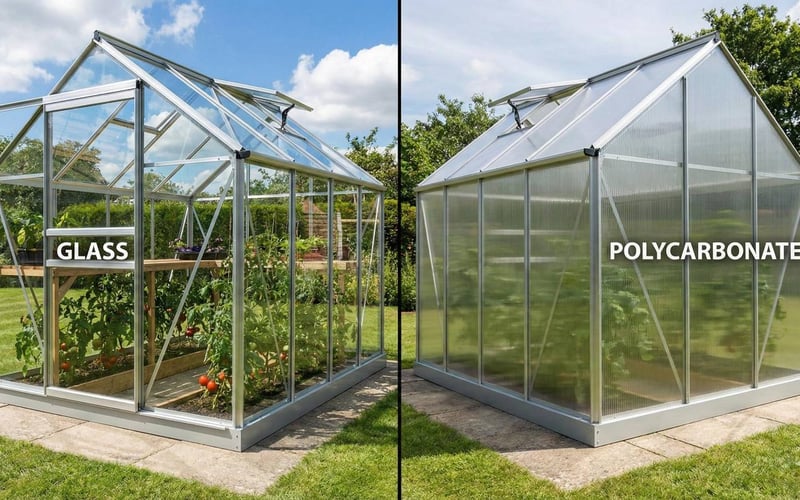
Choose greenhouse glazing by how you use the garden, your site and the plants you want to grow. Toughened glass gives clear views and a traditional finish. Polycarbonate is lighter and impact-resistant; twin-wall panels also provide more insulation than single glazing. For an exposed garden, judge the complete greenhouse, its fixings and anchoring rather than assuming the glazing material alone decides its strength.
Key Takeaways
- Toughened glass and horticultural glass behave differently when broken.
- Twin-wall polycarbonate insulates; clear single-wall panels are a different construction.
- Neither material makes a greenhouse storm-proof or permanently frost-free.
- Check restrictions on glazing if buying for an allotment, school or shared site.
- Look at frame strength, panel retention and anchoring alongside the glazing.
Installer's Note
For a windy garden, tell us about the exposure before choosing a greenhouse. We can discuss the frame, bracing, glazing retention and base together. Even a strong frame needs correct assembly and secure anchoring.
When is polycarbonate a useful choice?
Polycarbonate suits situations where low panel weight and resistance to accidental impact matter. It avoids the long glass shards associated with broken horticultural glazing. It can still scratch, suffer damage or come loose if the retaining system fails.
Check whether the greenhouse uses clear single-wall sheets or twin-wall panels. Twin-wall material contains air spaces and usually gives a more diffused view. Clear single-wall material can look closer to glass, but it does not offer the same insulating construction.
Read the specific panel warranty and care instructions. UV protection, thickness and maintenance affect longevity; a fixed yellowing date is not a useful rule for every product.
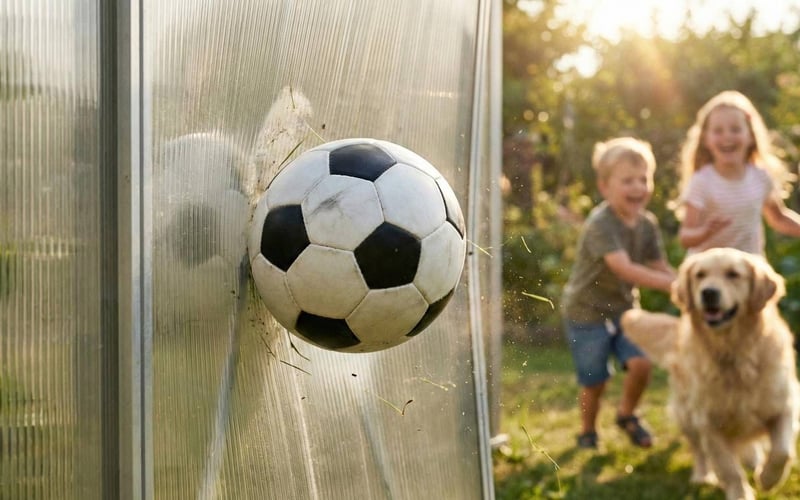
Polycarbonate's impact resistance can be useful in busy gardens. This illustration is not a product impact test.
Is toughened glass better than horticultural glass?
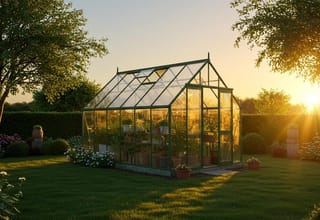
Toughened glass is the safer glass option where accidental breakage is a concern. It breaks into many smaller pieces rather than the long shards associated with ordinary horticultural glass. Those fragments can still cause injury, especially when falling from a roof.
Glass gives a clear view of the plants and does not yellow like some plastics can. Clean it with suitable products and inspect seals and clips as part of normal maintenance. Toughened panes must be ordered at their finished size; they cannot be cut later.
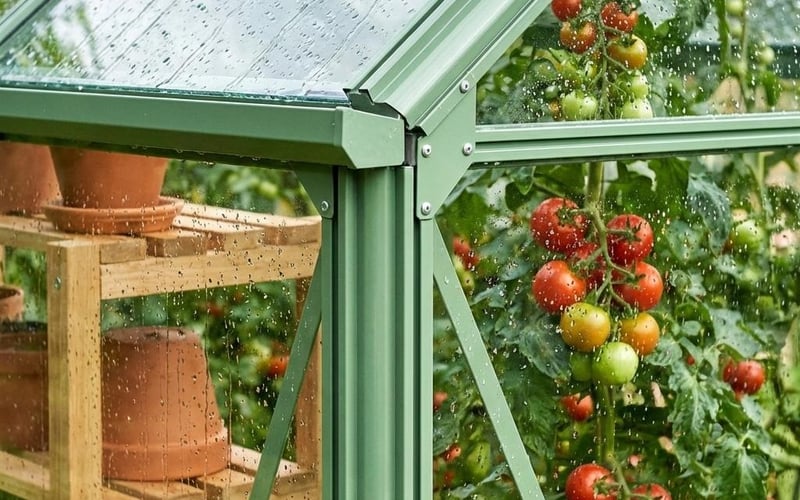
For an existing structure, our replacement-glass guide explains how to identify the pane and fixing system before buying.
Which greenhouse is suitable for a windy site?
Wind suitability belongs to the complete structure, not just the glazing. The frame, bracing, panel retention, base, anchoring and surroundings all affect how it performs.
For the Palram Canopia Hybrid model shown below, Greenhouse Stores recommends a sheltered position and advises against windy or exposed sites. That is a recommendation for this range, not a universal failure speed for every polycarbonate greenhouse.
If you are considering a more heavily braced structure, compare the exact specifications and discuss the site with us. The wind-damage guide covers practical preparation and checks.

Elite Titan 8x6 Greenhouse - Toughened Glazing costs £1,759. Its current specification includes Core-Vect framing, cantilever bracing, bar capping and 4mm toughened glazing. Confirm suitability for your location before ordering.
How much warmer is twin-wall polycarbonate?
Twin-wall panels reduce heat loss through the glazing compared with a single sheet, but there is no fixed overnight temperature advantage. Frame design, gaps, wind, sunshine and heating all change the result.
An unheated greenhouse can still freeze. If you overwinter tender plants, check their minimum temperature and record actual overnight lows. A heater's running cost depends on its output, thermostat setting and the heat escaping from the structure.
Insulation may help a suitable glass greenhouse retain heat, though it also reduces light. Keep ventilation available and follow heater clearances. Our greenhouse insulation guide explains those choices.
Do you still need shading with polycarbonate?
Yes, if plants are overheating or receiving more direct light than they can tolerate. Diffused light can be helpful, but it does not remove the need to monitor temperature and ventilate.
Glass can need shading too. Use only as much as your plants need, and reduce it when duller weather returns. Our greenhouse ventilation guide explains how vents, doors and shading work together.
What is a hybrid greenhouse?
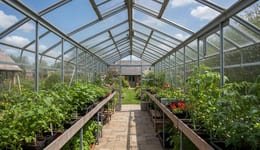
The Palram Canopia Hybrid combines twin-wall polycarbonate roof panels with clear polycarbonate sides. Both are plastic glazing; the clear sides are not glass.
The roof diffuses light while the sides provide a clearer view. Choose it for that combination and its suitability for your garden, rather than a promised percentage saving on heating.
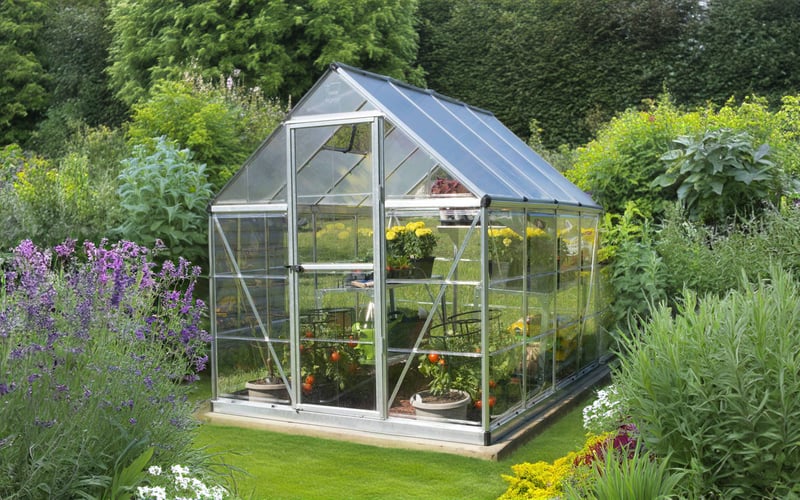
Palram Canopia Hybrid 6x8 Silver Polycarbonate Greenhouse costs £464. Check its base requirements and sheltered-site recommendation when comparing it with other models.
What does a typical glass option offer?
The Venus 5000 is a useful example of a conventional aluminium greenhouse with toughened glass. Compare its access, growing height and ventilation as well as its appearance.

Vitavia 8x6 Green Venus 5000 Greenhouse - Toughened Glass costs £649. The current model has 3mm full-length toughened glass, one roof vent and a 12-year frame warranty. Check the base option and doorway dimensions against your needs.
Glass and polycarbonate compared
| Question | Toughened glass | Polycarbonate |
|---|---|---|
| Can I see the plants clearly? | Clear views through the panes | Clear single-wall or more diffused twin-wall panels |
| What happens with impact? | Can break into small fragments | Impact-resistant, but still needs secure retention |
| Does it insulate? | Single glass loses heat readily | Twin-wall construction reduces panel heat loss |
| What about maintenance? | Clean glass and inspect fixings and seals | Use compatible cleaners and check panel condition |
| What decides wind suitability? | The full model specification, assembly, anchoring and site | |
Browse our greenhouse range once you have chosen the glazing that suits your use. For the next decision, the greenhouse size guide helps you plan the growing space.
Frequently asked questions
Is glass or polycarbonate better for a greenhouse?
Choose around your site, safety needs and preferred glazing. Toughened glass gives clear views; polycarbonate is light and impact-resistant. Compare the full greenhouse specification before deciding.
How much warmer is twin-wall polycarbonate?
There is no fixed temperature advantage for every greenhouse. Twin-wall panels reduce glazing heat loss, but weather, gaps, frame design and heating affect the actual temperature.
Can polycarbonate greenhouses withstand wind?
Suitability depends on the particular greenhouse and its site. Check the manufacturer’s specification, anchoring and panel retention. Our Palram Hybrid recommendation is for sheltered gardens, not exposed positions.
Does polycarbonate always go yellow after eight years?
No, there is no universal yellowing date. Panel quality, UV protection, cleaning and exposure affect ageing. Read the specific warranty and maintenance advice.
Does a Palram Hybrid greenhouse have glass sides?
No, its clear sides and twin-wall roof are both polycarbonate. The different panel constructions balance a clearer side view with a diffusing roof.