How to Grow Strawberries in a Greenhouse
Growing strawberries in a UK greenhouse lets you harvest up to four weeks earlier than outdoor crops. The forcing technique brings dormant plants into warmth during February for ripe fruit by May. Five proven varieties suit greenhouse conditions, but all need hand-pollination with a soft brush. Plants require 200+ chill hours below 7°C before forcing. We have been installing greenhouses for over 16 years and strawberries remain the most popular first crop our customers grow.
Key Takeaways
- Force for early fruit – bring dormant plants inside in February to harvest by May
- Chill hours matter – strawberries need 200+ hours below 7°C before forcing
- Hand-pollinate every flower – no bees inside the greenhouse means you do it with a brush
- Water the soil, not the crown – wet crowns cause grey mould (Botrytis)
- Grow vertically – shelves and hanging baskets let you grow above other crops
Installer's Note
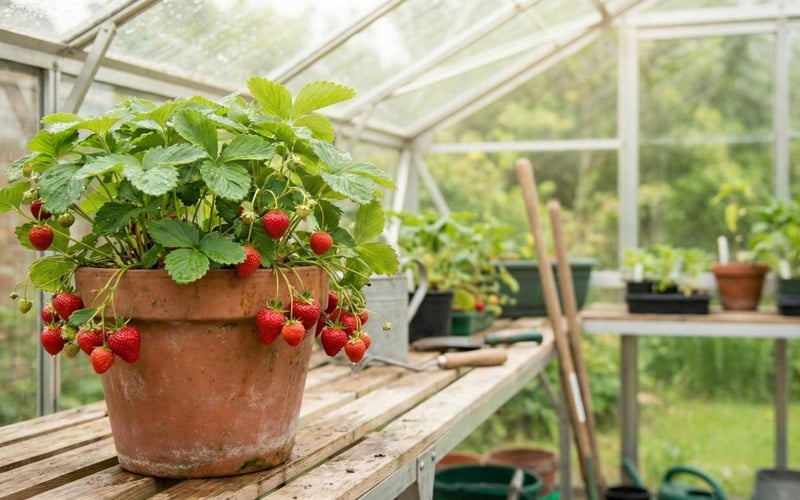
Strawberries are one of the first things customers grow after we install their greenhouse. A standard 6×8 greenhouse has room for 30+ plants on shelves and hanging baskets. We see growers filling every spare inch of staging with pots by their second season. If you have the space, you have the strawberries.
Why Grow Strawberries in a Greenhouse?
While strawberries thrive in outdoor beds, moving them into one of our aluminium greenhouses offers clear advantages.
- Earlier Harvests: You can advance cropping by up to a month through forcing.
- Pest Protection: Glass and staging keep plants away from slugs, snails, and birds.
- Clean Fruit: Hanging baskets or staging prevent soil splash. No grit to wash off before eating.
- Climate Control: You maintain the ideal ripening temperature for sweeter fruit.
Choosing the Right Variety
Not all strawberries suit greenhouse growing. Choose early varieties to maximise the protection, or everbearers for a long season.
Here are the five varieties that perform best under UK greenhouse glass:
| Variety Category | Recommended Strain | Best For | Harvest Window (Greenhouse) |
|---|---|---|---|
| Early Season | Honeoye | High yields and disease resistance. | Early May – June |
| Mid-Season | Cambridge Favourite | The reliable classic with great flavour. | Mid May – June |
| Early Season | Elsanta | Supermarket favourite that stores well. | Early May – June |
| Everbearing | Flamenco | Long harvest period into autumn. | June – September |
| Alpine/Wild | Mignonette | Small berries with intense flavour. Shade tolerant. | June – October |
Matt's Tip: Choose Compact Varieties
If you have limited space, avoid vigorous runner-heavy types unless you plan to propagate. Stick to compact varieties like Honeoye. They produce fewer runners and channel energy into fruit instead.
The Winter Strategy: Chilling and Forcing
This is the section most beginners miss. You cannot keep strawberry plants warm all winter and expect a good crop. Strawberries need a chill period of 200–400 hours below 7°C to break dormancy. Without this cold rest, yields drop sharply. Check our seed sowing month by month guide for wider seasonal timing.
Step 1: Winter Preparation (December – January)
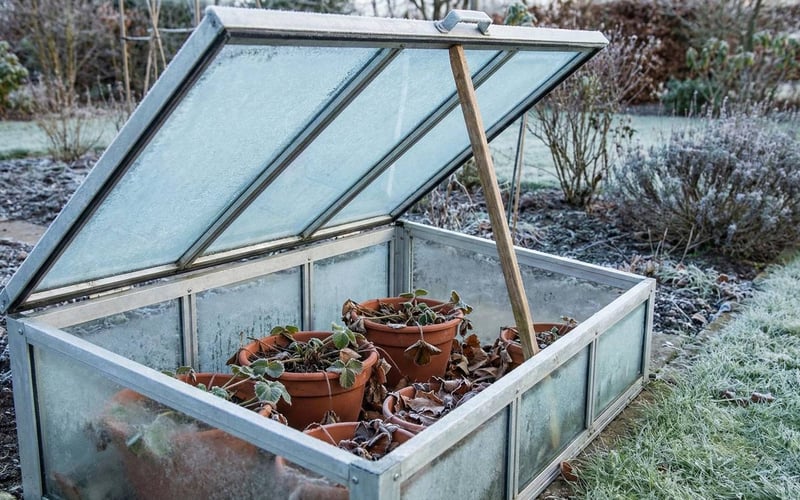
Leave existing potted plants outside or in a cold frame during early winter. They need to feel the cold. If you are buying bare-root runners, pot them up but keep them cool.
A cold frame is the ideal tool here. It protects roots from freezing solid but lets foliage get the necessary chill hours.
Step 2: The Forcing Phase (February)
Once your plants have had their winter rest, it is time to wake them up. Read our guide to preparing your greenhouse for spring before you begin.
- Bring them in: Move your pots into the greenhouse in mid-February.
- Clean up: Remove any dead or brown leaves to improve airflow.
- Gradual warmth: Aim for 10°C initially, rising to 15°C as leaves develop. An unheated greenhouse still wakes plants weeks earlier than outdoors.
Potting and Soil Requirements
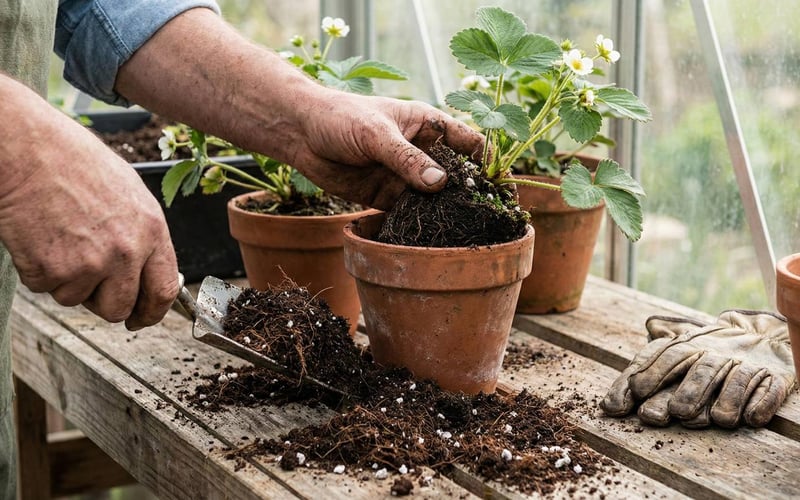
Strawberries are hungry plants, but they hate wet feet. The work you do in your potting shed before bringing them inside matters. Our guide to growing seeds in a greenhouse covers general potting best practice too.
The Mix
Use a high-quality general-purpose compost mixed with 20% perlite or grit. Strawberries prefer slightly acidic soil at pH 6.0–6.5. Do not add lime.
Pot Size
- Single Plants: A 3-litre pot (roughly 15cm diameter) is ideal.
- Grow Bags: You can fit 6–8 plants in a standard grow bag.
- Hanging Baskets: A 30cm basket holds 3–4 plants comfortably.
Warning: Do not bury the crown. The crown is the central point where stems emerge. Bury it and it rots. Leave it too high and the roots dry out. It must sit exactly at the surface level.
Care and Maintenance: The Greenhouse Routine
Growing under glass means you provide everything nature usually supplies.
Watering
Pots dry out fast in a greenhouse. Check them daily. Water in the morning so foliage dries before nightfall. This reduces fungal problems. Always water the soil, never the leaves.
Feeding
Once you see the first flowers, begin feeding with a high-potash liquid feed. Tomato feed works well every 7–10 days. This encourages fruit rather than leafy growth. We follow a similar schedule when planting tomatoes in an unheated greenhouse. The two crops make good rotation partners.
Temperature Control
Strawberries do not like extreme heat. If your greenhouse rises above 25°C in late spring, fruit becomes soft and mushy. Use your roof vents and louvres to manage airflow. If you grow in a small greenhouse, keep the door open on sunny days.
The Pollination Challenge
This is the most common reason for failure with greenhouse strawberries. Outdoors, wind and bees handle pollination. Inside a closed greenhouse in March or April, those insects are absent.
The Symptom: Misshapen, lumpy, or very small fruit.
The Fix: You must be the bee.
How to Hand Pollinate:
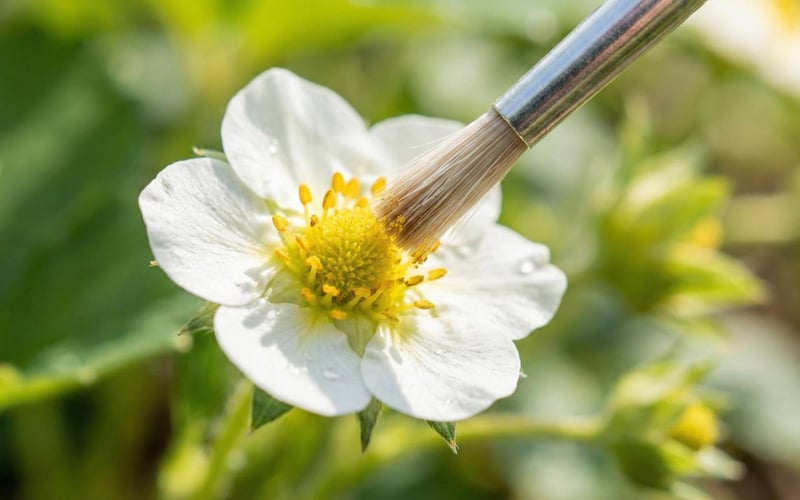
- Wait until midday when the pollen is dry and fluffy.
- Use a soft artist's paintbrush or a cotton bud.
- Gently brush the centre of every open flower. Transfer pollen from one bloom to another.
- Repeat every 2 days until flowering finishes.
According to RHS research, poor pollination is the leading cause of fruit deformation in protected crops. Do not skip this step.
Troubleshooting Common Problems
Greenhouse environments suit plants but also suit pests. Keep an eye out for these four issues. Our full greenhouse pest control guide covers prevention in more detail.
| Problem | Symptoms | Solution |
|---|---|---|
| Red Spider Mite | Yellow mottling on leaves, fine webbing. | Mist foliage regularly. Introduce Phytoseiulus persimilis as biological control. |
| Botrytis (Grey Mould) | Grey fuzzy mould on fruit or stems. | Reduce humidity. Remove infected material. Water only at the base. |
| Slugs/Snails | Holes in leaves and eaten fruit. | Check under pot rims. Use copper tape around pots. Handpick at night. |
| Vine Weevil | Plant suddenly collapses; white grubs in soil. | Apply parasitic nematodes (Steinernema kraussei) in late summer or autumn. |
Maximising Space: Vertical Growing
Strawberries are compact plants. They do not need to occupy valuable staging space meant for seed trays.
- Shelf Edges: Place pots along the edge of your staging. Leaves and fruit hang over the side with good light and airflow.
- Hanging Baskets: Use the roof bars. Baskets dry out faster than ground-level pots. You may need to water twice daily in warm weather.
- Guttering: Attach lengths of guttering to the greenhouse sides. This grows dozens of plants in dead space. It is a similar approach to growing mushrooms in a greenhouse under benches.
|
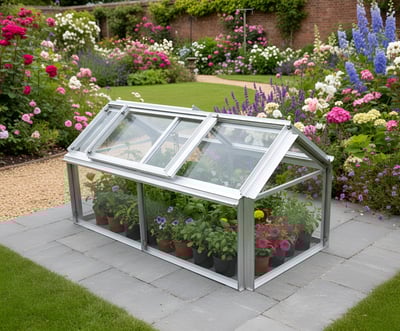
Matt's Pick for Strawberry ForcingElite Min E Lite 4×2 Cold Frame Best For: Winter chilling phase before bringing plants into the greenhouse Why I Recommend It: Every strawberry plant needs 200+ chill hours before forcing. This cold frame holds 12–15 pots and protects roots from freezing solid while letting the foliage get cold. The toughened glass lid lifts easily for checking plants. We recommend one of these to every customer growing strawberries. £249 View This Cold Frame → |
When should I put strawberries in the greenhouse?
Bring potted strawberries inside in mid-February to force an early crop. They must spend December and January outside or in a cold frame first. This gives them the required chill hours (200+ hours below 7°C) to break dormancy properly. Without this cold period, the plants flower weakly and yield drops.
Do greenhouse strawberries need to be pollinated?
Yes, you must hand-pollinate every flower with a soft brush. Greenhouses exclude wind and most pollinating insects in early spring. Brush the centre of each open flower every two days. Without this, fruit grows misshapen, lumpy, or very small.
Can strawberries stay in the greenhouse over winter?
They can, but a warm greenhouse is not ideal over winter. Strawberries need a cold dormant phase to crop well. Move them to a cold frame or sheltered spot outside for mid-winter. Bring them back into the greenhouse in February when you want growth to restart.
What is the best compost for strawberries in pots?
Use soil-based compost mixed with multi-purpose compost and grit. John Innes No. 2 is a solid base. Strawberries need sharp drainage and slightly acidic conditions at pH 6.0–6.5. Avoid alkaline soil and mushroom compost.
How do you force strawberries in a greenhouse?
Forcing means tricking the plant into thinking spring has arrived early. Bring dormant plants into a greenhouse at 10–15°C in February. Provide water and light. They flower and fruit roughly four weeks earlier than outdoor plants.
How many strawberry plants can I fit in a greenhouse?
A 6×8 greenhouse can hold 30 or more strawberry plants. Use shelves, hanging baskets, and guttering to grow vertically. Single plants need a 3-litre pot each. You can also fit 6–8 plants per grow bag laid on staging.
Related Articles
- Growing Chillies in the Greenhouse
- How to Grow Herbs in Your Greenhouse
- Growing Tomatoes in a Greenhouse
- What Can I Grow in the Greenhouse in Winter
- How to Grow Melons in Your Greenhouse
Questions about growing strawberries in a greenhouse? Email us at info@greenhousestores.co.uk