Growing Tomatoes in a Greenhouse
Grow greenhouse tomatoes in a bright position with suitable support, enough root space and steady watering. Sow indoors in late winter or early spring, then wait for safe overnight temperatures before planting into an unheated greenhouse. Remove side shoots on cordon varieties, but leave bush types to branch. Start fruiting feed as directed and ventilate before the greenhouse overheats.
Key Takeaways
- Start early: sow seeds in February or March on a heated propagator or warm windowsill at 20°C. Germination takes 7-10 days with bottom heat.
- Watch heat and cold: check overnight lows before planting and ventilate before daytime heat builds. Prolonged extremes can affect growth and fruit set.
- Allow enough root space: use suitable large containers and keep watering steady. Pot size alone cannot prevent splitting.
- Check flower set: tomatoes are self-fertile. Gentle vibration can help in still air, but temperature and watering matter too.
- Keep air moving: space plants and avoid foliage staying wet overnight.
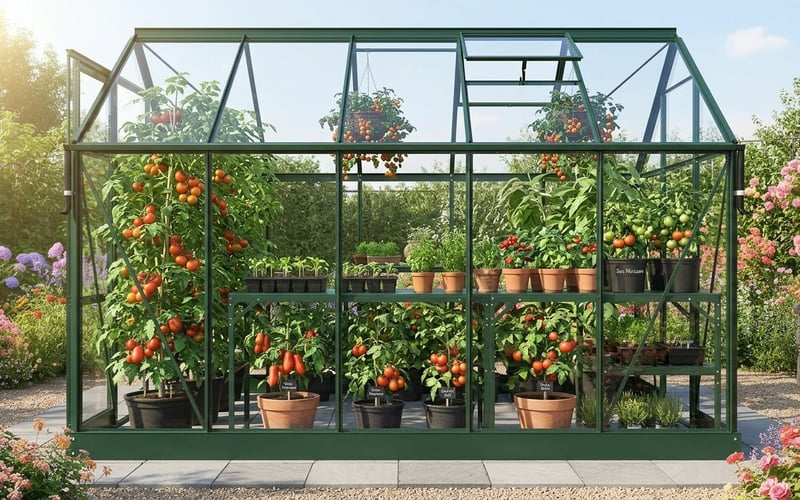
Shop the Vitavia Apollo 5000 in Green →
Expert Tip
Check the greenhouse temperature before moving young plants out. A sunny afternoon does not tell you how cold it becomes overnight. Once plants are established, keeping up with ventilation and watering is more useful than chasing a promised yield.
A greenhouse can give tomatoes a longer, more sheltered season. The amount of extra growing time depends on weather, variety and heating. It does not make plants immune to blight or other diseases.
This guide covers varieties, sowing, containers, support and everyday care.
Choosing your varieties: cordon vs bush
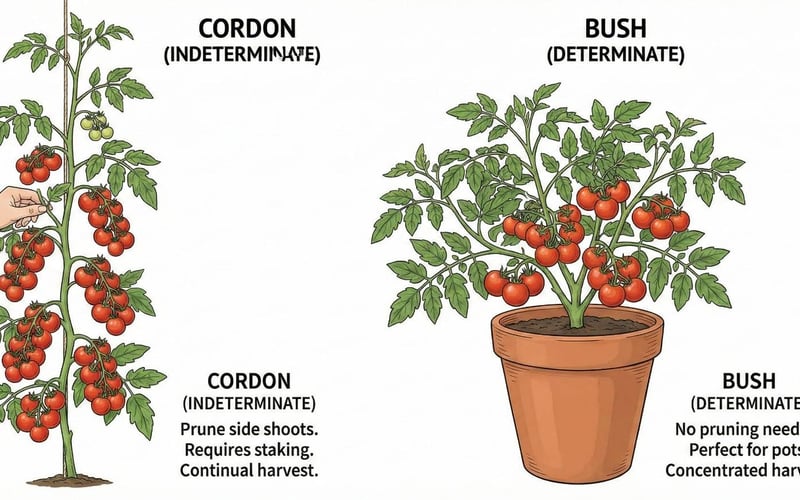
Before you sow a single seed, choose the right plant for your space. Tomatoes fall into two categories with very different pruning needs.
Cordon (indeterminate)
These are the most common greenhouse varieties. They grow as a single stem up to 2m or more and need support.
- Cropping: cordons can crop over a long season when trained and cared for well.
- Pruning: High maintenance. You must pinch out side shoots (the small shoots between the main stem and leaf branches). Remove lower leaves as the plant grows to improve airflow.
- Popular varieties: Gardener's Delight, Moneymaker, Sungold.
Bush (determinate)
These stop growing at a set height and form a bushy habit.
- Cropping: bush varieties often ripen a more concentrated crop. Mature size varies, so check spacing on the seed packet.
- Pruning: Low maintenance. No pinching out needed.
- Popular varieties: Tumbler, Red Alert, Tiny Tim.
The UK growing timeline
Getting your timing right matters. Start too early without heat and seedlings turn leggy and weak. Start too late and you miss the best sun.
Timing: work back from when your greenhouse will be warm enough, allowing time to raise sturdy seedlings.
| Month | Activity | Location |
|---|---|---|
| Feb-Mar | Sow seeds in trays or modules. | Heated propagator or warm windowsill (20°C). |
| April | Pot on into 10cm pots. | Greenhouse (if heated) or indoors. |
| Late April | Plant into final position. | Heated greenhouse only. |
| May | Plant into final position. | Unheated greenhouse (check for frost). |
| Jul-Oct | Harvest time. | Greenhouse. |
A manageable start: sow enough plants for your available space, with a few spares. Cordon tomatoes can keep cropping without fortnightly replacement sowings.
For a detailed breakdown on timing, read our guide on when to plant tomatoes in an unheated greenhouse.
Getting started: sowing and propagation
We recommend starting seeds in a propagator. Fill small pots or seed trays with high-quality seed compost. Sow seeds thinly and cover with a light dusting of vermiculite or compost.
Warmth: a suitable propagator or heat mat can help maintain germination conditions. Check temperature and give emerging seedlings enough light; extra heat alone cannot prevent weak, stretched growth.
Once seedlings show their first pair of true leaves, move them into 10cm individual pots on your greenhouse staging. Keep them at 15-18°C and water from below to encourage strong roots. Our seed starting guide covers propagation in more detail.
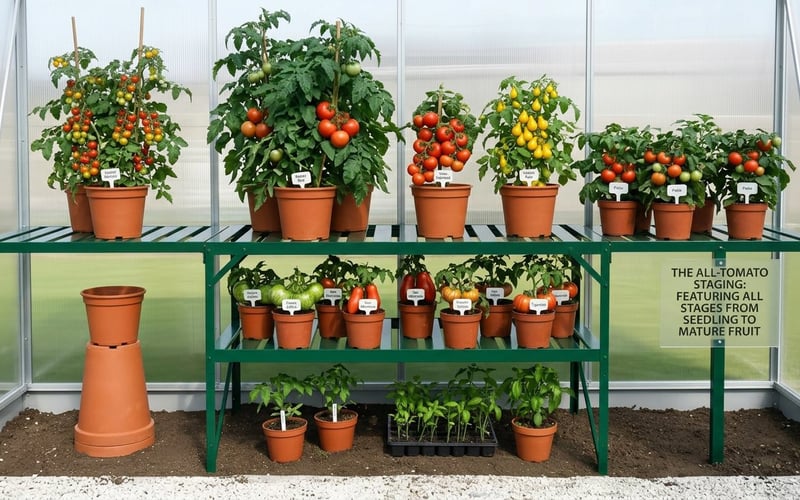
Shop the Vitavia 2 Tier Green Staging →
Planting out and support strategies
Once frost risk has passed and the first flowers appear, plant your tomatoes into their final positions. Your choice of container and compost matters for the long season ahead.
Containers and compost
- Large pots: choose containers with drainage and enough compost for the variety. Check the stated capacity; width alone does not tell you the volume.
- Growbags: follow the bag and variety guidance for planting numbers. Two plants in a suitable large bag can give more room than three. Our ring-culture guide explains another way to provide root space.
- The compost: Use a high-quality peat-free, loam-based, or multi-purpose compost. Loam-based options like John Innes No. 2 or 3 retain moisture better than standard multi-purpose. You can also learn how to make your own compost for a cost-effective growing medium.
Vertical support
Cordon varieties need strong support from planting day.
- Canes: The traditional method. Push a bamboo cane into the compost next to the root ball.
- String training: attach supports only to suitable fittings or a support structure. Allow for mature crop weight and keep loops loose around stems.
The perfect environment: temperature and airflow
This is where many beginners struggle. A greenhouse traps heat well, but you must manage the microclimate to prevent disease and ensure pollination.
Temperature targets
Tomatoes need suitable warmth, but prolonged heat or cold can slow growth and affect fruit set.
- Daytime conditions: provide warmth, but ventilate and shade as needed to prevent excessive heat.
- Ideal night temp: 15-18°C.
- Flower set: prolonged heat can reduce pollination and fruit set. A brief reading of 30°C does not mean every flower has become permanently sterile.
Ventilation and humidity
- Ventilation: open suitable vents as conditions require. Air exchange helps reduce persistent dampness, but does not prevent every disease. Compatible automatic vent openers can help while you are away. See our ventilation guide for planning the air route.
- Humidity: reduce persistent condensation and leaf wetness. Check our humidity advice for measuring conditions and making useful adjustments.
- Fans: a greenhouse-suitable circulation fan may improve air movement. It does not sterilise the air or replace ventilation.
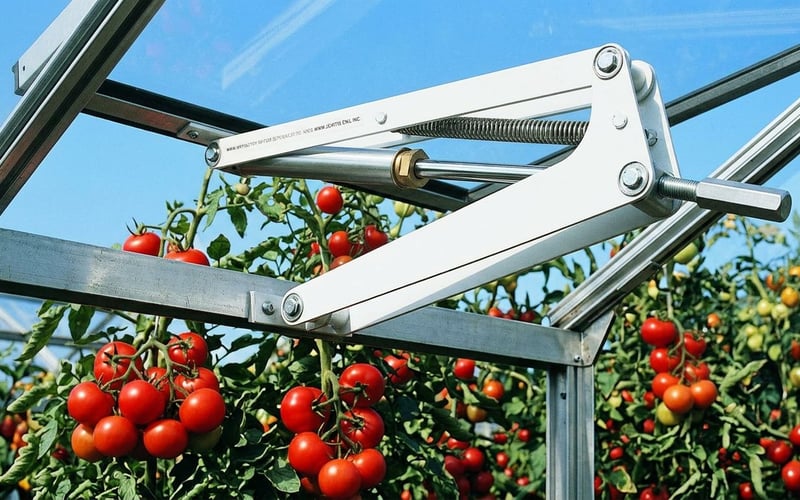
Shop the Bayliss MK7 Automatic Roof Vent Opener
The "greenhouse tap"
Tomatoes are self-fertile. Gentle vibration of a support can help pollen move in still air, but daily hand-pollination is not compulsory. If flowers fail to set, review temperature, watering and plant health as well. Avoid handling delicate flowers roughly.
Feeding and watering: the secret to flavour
Consistency is the secret to perfect tomatoes.
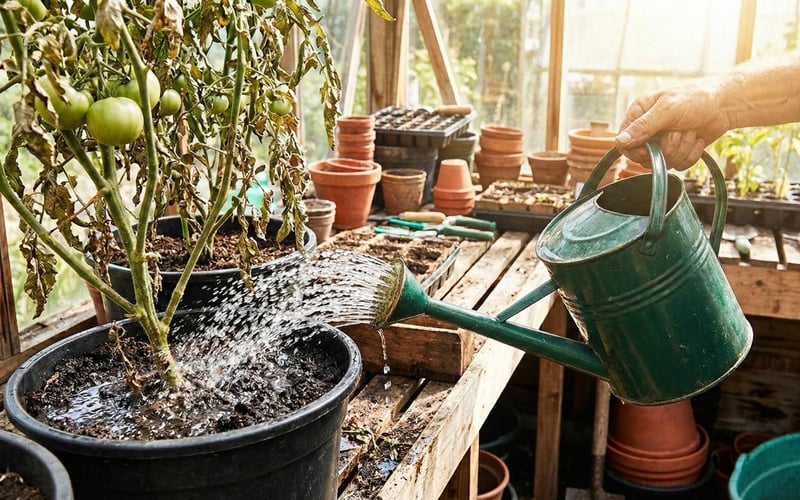
Watering: Water thoroughly after planting. Tomatoes hate erratic watering. If the compost dries out and is then flooded, fruit swells too fast and the skin splits.
Maintain a regular schedule. Some growers let the compost surface dry slightly between waterings in early weeks. This encourages deep root growth. Once fruit sets, consistency is everything. Our watering and irrigation guide covers drip systems and capillary matting if you want to automate.
Use a suitable tomato feed according to its label and the compost’s existing nutrient supply. Start at the recommended crop stage and avoid making up a stronger mixture.
Follow the feed manufacturer’s interval and dilution. Adjust watering to conditions; more feed is not a remedy for every leaf problem.
Companion planting for tomatoes
Basil and other suitable herbs can share the greenhouse when there is enough space. Do not depend on companion plants to prevent pests or change tomato flavour. Keep inspecting plants and act on a confirmed problem.
Can you grow tomatoes and cucumbers together?
Yes, provided both have enough space and suitable care. Protect cucumbers from cold draughts without leaving tomato foliage persistently wet. A small greenhouse cannot maintain separate controlled humidity zones.
Plan around mature foliage and the access path rather than a fixed plant count. Our cucumber growing guide explains support, watering and variety-specific flower care.
Extending the season: winter growing
Late-summer and autumn tomatoes ripen more slowly as daylight declines. Remove late flowers when they are unlikely to make a useful crop, and harvest usable fruit before damaging cold arrives.
Heating and lights can extend growing in a suitable setup, but do not assume a small tube heater can hold summer temperatures. Consider the energy cost and available light first. Our grow-light guide explains why fruiting crops need more than an ordinary room light.
Frequently asked questions
When should I sow greenhouse tomatoes in the UK?
Sow indoors in late winter or early spring. Timing depends on whether the final greenhouse is heated. Keep seedlings warm and bright, and check nights before planting into an unheated greenhouse.
What pot size do greenhouse tomatoes need?
Use a large container with drainage and enough compost for the variety. Check its capacity as well as dimensions, and follow the growbag guidance if using bags.
How do I prevent mould on greenhouse tomatoes?
Reduce prolonged leaf wetness and improve ventilation between plants. Water the compost, avoid crowding, remove diseased material and check the cause before treating.
Why do greenhouse tomatoes split?
Irregular water uptake can make fruit swell faster than its skin. Check moisture consistently and avoid allowing containers to become very dry before soaking them.
Do greenhouse tomatoes need hand-pollination?
Usually not, although gentle vibration can help in still conditions. Tomatoes are self-fertile. If flowers fail to set, also review temperature, moisture and plant health.
Can tomatoes and cucumbers share a greenhouse?
Yes, with adequate space and ventilation. Water both appropriately, avoid cold draughts on cucumbers and keep tomato foliage from staying wet overnight.