Ultimate Guide to Destroying Greenfly
Greenfly (green aphids) breed at a rate of up to 12 nymphs per day per female, producing 600 offspring in a fortnight. They attack roses, broad beans, lettuce, tomatoes, cucumbers, and most greenhouse crops. This guide covers 14 methods to kill and prevent them, from washing-up liquid spray and garlic tea to biological controls like ladybirds and parasitic wasps. Every method listed here has been tested in UK greenhouses and gardens.
Greenfly (green aphids) breed at a rate of up to 12 nymphs per day per female, producing 600 offspring in a fortnight. They attack roses, broad beans, lettuce, tomatoes, cucumbers, and most greenhouse crops. This guide covers 14 methods to kill and prevent them, from washing-up liquid spray and garlic tea to biological controls like ladybirds and parasitic wasps. Every method listed here has been tested in UK greenhouses and gardens.
Key Takeaways
- Act fast. A single greenfly becomes 600 in two weeks. Check plants daily from April onwards and deal with the first sighting immediately.
- Washing-up liquid spray is the quickest DIY kill. One teaspoon of liquid in a litre of water, sprayed directly on the aphids, blocks their breathing pores. Dead within 24 hours.
- Ladybirds are the best biological control. One adult ladybird eats 50 aphids per day. Buy them online and release in the greenhouse from May onwards.
- Ventilation prevents infestations. Greenfly thrive in still, warm, humid air. Open louvre vents and roof vents daily to keep air moving.
- Companion planting works as a repellent. Marigolds, chives, garlic, and nasturtiums planted alongside crops deter greenfly with their scent.
- Never ignore ants near aphids. Ants farm greenfly for honeydew. Control the ants and the aphid colony collapses.
Installer's Note
Every greenhouse we install, the first question in spring is about greenfly. They get in through open doors and vents, hitch rides on new plants from the garden centre, and breed before you notice them. The single best prevention I have seen over 16 years is good airflow. Customers who fit automatic louvre vents and keep the roof vent cracked open have far fewer pest problems than those who seal everything shut. Still air is an aphid's best friend.
What are greenfly and why are they a problem?
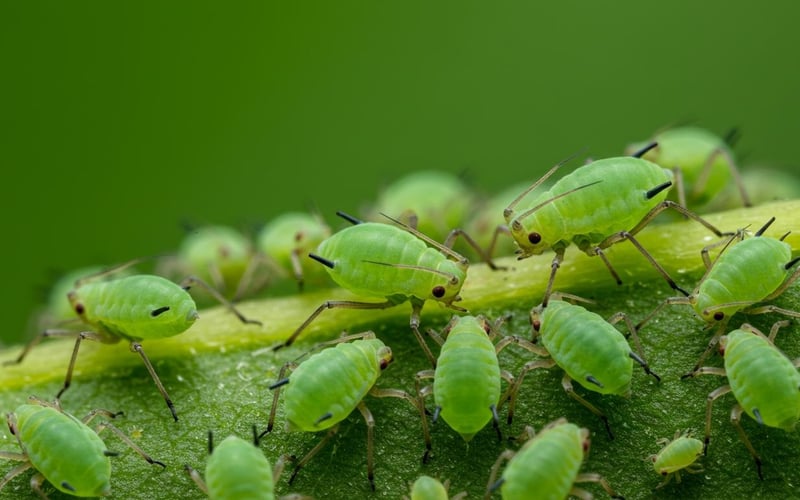
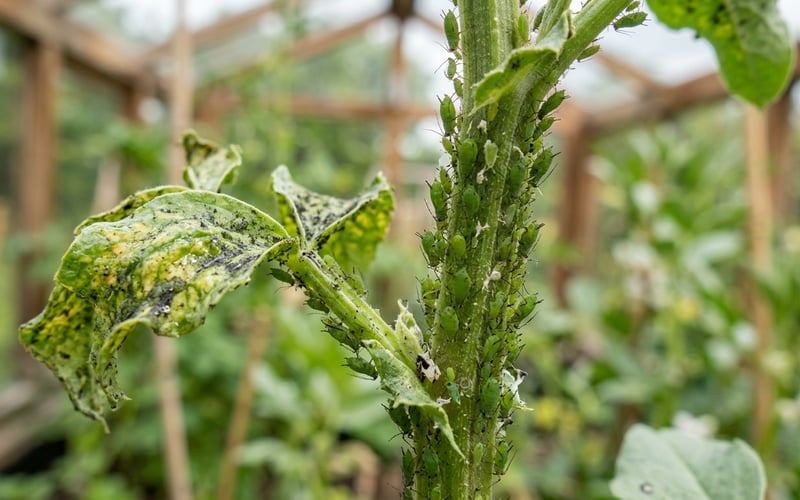
Greenfly are green aphids (Aphididae family), soft-bodied sap-sucking insects measuring 1-2mm long. They pierce plant stems and leaves with needle-like mouthparts, draining sugary sap and weakening the plant. A heavy infestation causes curled, yellowing leaves, stunted growth, and reduced fruit or flower production.
The real danger is their breeding speed. Greenfly reproduce asexually in spring and summer. A single female produces live young without mating, and those nymphs are themselves reproducing within seven days. One aphid becomes a colony of hundreds in under a fortnight. They also excrete honeydew, a sticky residue that attracts sooty mould and ants. The ants then protect the aphids from predators, making the problem worse.
In UK greenhouses, greenfly appear from March or April and peak in June and July. Outdoor infestations follow the same pattern but start a few weeks later. Roses, broad beans, lettuce, tomatoes, and cucumbers are their favourite targets.
How do you get rid of greenfly naturally?
Natural greenfly control works in three stages: physical removal, biological predators, and homemade sprays. Start with the simplest method and escalate only if the colony is large.
Water blast
A strong jet of water from a hose knocks greenfly off leaves and stems. Most cannot climb back. Do this every morning for three to four days to break the breeding cycle. It works best on sturdy plants like roses and broad beans. Avoid using high pressure on delicate seedlings.
Hand picking
For small infestations, crush aphids between your finger and thumb. Check the undersides of leaves and the tips of new growth where they cluster. Wearing rubber gloves makes this less unpleasant. Inspect daily from April onwards and deal with the first few before they multiply.
Ladybirds
One adult ladybird eats around 50 aphids per day. You can buy native UK ladybirds (Adalia bipunctata) online and release them into the greenhouse from May. Close the vents for a few hours after release so they settle on the plants rather than flying out. Ladybird larvae are even more effective than adults, eating up to 200 aphids per day during their two-week larval stage.
Lacewings and parasitic wasps
Green lacewing larvae (Chrysoperla carnea) consume aphids, thrips, and whitefly. Parasitic wasps (Aphidius colemani) lay eggs inside individual aphids, killing them from the inside. Both are available as biological controls by mail order. Release them when you first see aphids rather than waiting for a full infestation. For a full guide to all greenhouse pests and biological controls, read our greenhouse pest control guide.
What homemade sprays kill greenfly?
Three DIY sprays work reliably against greenfly: washing-up liquid, garlic, and neem oil. All are non-toxic to humans and pets, and break down quickly in the environment.
Washing-up liquid spray
Mix one teaspoon of washing-up liquid into one litre of water. Spray directly onto the greenfly, coating every visible aphid. The soap disrupts the waxy coating on their bodies, causing dehydration. Dead within 24 hours. Reapply every three days until the infestation clears. Use a plain, unscented liquid rather than antibacterial or fragranced versions.
Garlic tea spray
Crush four cloves of garlic into one litre of boiling water. Leave overnight, strain, and add half a teaspoon of washing-up liquid. Spray onto affected plants. The sulphur compounds in garlic repel aphids and the soap kills any that are already present. This also works as a deterrent when sprayed on unaffected plants.
Neem oil spray
Mix 5ml of cold-pressed neem oil with one litre of warm water and a few drops of washing-up liquid (as an emulsifier). Shake well and spray onto plants. Neem disrupts the aphid's hormonal system, preventing feeding and reproduction. It takes 3-5 days to show full effect but provides longer-lasting protection than soap alone. Spray in the evening to avoid leaf burn in direct sunlight.
Matt's Tip: The Overnight Test
Before spraying an entire greenhouse full of plants, test any homemade spray on two or three leaves first. Wait 24 hours and check for scorching or discolouration. Some plants, particularly young seedlings and ferns, react badly to soap-based sprays. I have seen customers spray an entire batch of lettuce seedlings and lose the lot. Test first, spray second.
How do you get rid of greenfly on roses?
Roses are the number one target for greenfly in UK gardens. Aphids cluster on the soft new growth at the tips of rose stems and around unopened buds, distorting the flowers and spreading viral diseases between plants.
Start with a daily finger-and-thumb check in April and May. Pinch off heavily infested shoot tips and drop them in a bucket of soapy water. For larger infestations, spray with washing-up liquid solution every three days. Plant garlic cloves and chives at the base of rose bushes as a permanent repellent. Lavender planted nearby attracts hoverflies, whose larvae eat aphids. Our complete guide to roses covers feeding, pruning, and disease prevention in more detail.
How do you get rid of greenfly on vegetables?
Broad beans, lettuce, and cucumbers are the most vulnerable greenhouse vegetables. Greenfly attack broad bean tips from May onwards. The classic remedy is to pinch out the growing tips once the lowest pods have set, removing the soft growth that aphids prefer and forcing the plant to put energy into pod development instead.
For lettuce, prevention matters more than cure. Grow under fine insect mesh (0.6mm aperture) from sowing to harvest. The mesh stops adult aphids landing on the crop while still allowing light, water, and air through. In a greenhouse, mesh over open vents serves the same purpose. For tomatoes and cucumbers, companion plant with marigolds (Tagetes) between rows. The scent confuses aphids and the flowers attract hoverflies.
How do you stop greenfly coming back?
Prevention is cheaper and easier than cure. Once you have cleared an infestation, these five measures stop it returning:
- Ventilate daily. Open louvre vents and roof vents every morning from April onwards. Moving air makes it harder for flying aphids to land and discourages the still, humid conditions they prefer.
- Companion plant. Marigolds, chives, garlic, mint, and nasturtiums all deter greenfly. Plant them around the greenhouse door and along the staging. Read our companion planting guide for full pairings.
- Inspect new plants. Check every plant you bring into the greenhouse from a garden centre or nursery. Look under leaves and along stems. Quarantine suspicious plants for a week before placing them near your collection.
- Avoid excess nitrogen. Over-feeding with high-nitrogen fertiliser produces the lush, soft growth that greenfly love. Use a balanced feed and let plants grow steadily rather than pushing rapid growth.
- Clean the greenhouse in autumn. Remove dead plant material, wash the glass inside and out, and scrub the staging. Aphid eggs overwinter in crevices and on debris. A thorough autumn clean removes them before spring.
Greenfly control methods compared
| Method | Type | Speed | Cost | Best For |
|---|---|---|---|---|
| Water blast | Physical | Immediate | Free | Sturdy plants, light infestations |
| Hand picking | Physical | Immediate | Free | Small colonies, daily maintenance |
| Washing-up liquid spray | DIY spray | 24 hours | Pennies | All plants, quick knockdown |
| Garlic tea spray | DIY spray | 24-48 hours | Pennies | Deterrent + kill, roses |
| Neem oil spray | DIY spray | 3-5 days | ~£8/bottle | Longer-lasting protection |
| Ladybirds | Biological | 3-7 days | ~£10-15 | Greenhouse, sustained control |
| Lacewing larvae | Biological | 5-10 days | ~£10-15 | Greenhouse, multiple pests |
| Parasitic wasps | Biological | 7-14 days | ~£15-20 | Greenhouse, long-term prevention |
| Companion planting | Prevention | Ongoing | Seed cost | Year-round deterrent |
| Insect mesh | Prevention | Immediate | ~£10-20 | Vegetables, vent covers |
| Ant control | Indirect | 3-7 days | Varies | Where ants are farming aphids |
| Ventilation (louvre vents) ☆ Matt's Pick | Prevention | Ongoing | From £59 | All greenhouse crops, year-round |
|
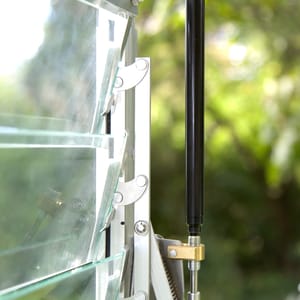
Matt's Pick for Greenfly PreventionBest For: Automatic greenhouse ventilation that keeps air moving and aphids out Why I Recommend It: This automatic opener fits to your louvre vent and opens it when the temperature rises, without any electricity. Moving air through the greenhouse is the single most effective long-term greenfly deterrent. Customers who fit these have noticeably fewer aphid problems than those relying on manual venting. Price: £59 |
Frequently asked questions
What causes greenfly infestations in a greenhouse?
Warm, still air and lush plant growth attract greenfly. They fly in through open doors and vents, or arrive on new plants brought in from garden centres. High nitrogen feeding produces the soft, sappy growth they prefer. Poor ventilation creates the humid, still conditions where colonies explode. Regular airflow and balanced feeding reduce the risk significantly.
Will greenfly kill my plants?
A severe infestation can kill young seedlings and weaken established plants. Greenfly drain sap, causing wilting, curled leaves, and stunted growth. They also transmit viral diseases between plants, which cause permanent damage. Established roses and shrubs survive moderate attacks, but soft crops like lettuce and broad beans can be destroyed. Early action prevents serious damage.
Do greenfly come back every year?
Yes, greenfly return annually in the UK from March or April. They overwinter as eggs on plant stems and in greenhouse crevices. Some species produce winged females in autumn that fly to different host plants to lay eggs. A thorough greenhouse clean in October or November removes overwintering eggs. Biological controls need re-introducing each spring.
Is washing-up liquid safe to use on all plants?
Most plants tolerate dilute washing-up liquid spray, but test first. Use one teaspoon per litre of water and spray two or three leaves 24 hours before treating the whole plant. Young seedlings, ferns, and some herbs (particularly basil) can be sensitive. Use plain, unscented liquid. Rinse edible crops with water before harvesting if sprayed within a few days of picking.
What is the fastest way to get rid of greenfly?
Washing-up liquid spray kills greenfly within 24 hours. Mix one teaspoon into a litre of water and spray every visible aphid, including the undersides of leaves. For a severe infestation, combine the spray with hand removal of the worst-affected shoot tips. Follow up with a second spray three days later to catch any nymphs that hatched after the first treatment.
Can you prevent greenfly without chemicals?
Yes, every method in this guide is chemical-free. Companion planting with marigolds and chives deters greenfly. Ladybirds and lacewing larvae provide ongoing biological control. Good ventilation and hygiene prevent colonies establishing. Commercial insecticides are unnecessary for most UK greenhouse and garden greenfly problems.