When to Scarify Your Lawn UK
By Matt W — Greenhouse Stores — Updated February 2026
Lawn scarifying removes dead grass, moss, and thatch that suffocate healthy growth. The best UK timing is September to October or April to May, when soil stays above 7°C. Recovery takes 4-6 weeks in autumn, 6-8 weeks in spring. Professional scarifying costs around £150 for a 100m² lawn. Most UK lawns need scarifying once a year, with fine turf benefiting from twice-yearly treatment.
Key Takeaways
- Best timing: Late spring (April-May) and early autumn (September-October) when grass grows actively.
- Temperature matters: Soil needs to be 7°C or warmer for successful recovery.
- Avoid winter and drought: Never scarify during frost or dry spells as grass cannot recover.
- Check thatch depth: Scarify when thatch layer exceeds 1cm thickness.
- Professional costs: Average £150 for 100m² lawn in UK (2024 figures).
- Recovery time: Allow 4-6 weeks for full lawn recovery after scarifying.
- Frequency: Most UK lawns need scarifying once yearly, some twice annually.
Expert Tip
From our work with Greenhouse Stores customers since 2012, I spend a lot of time preparing garden sites. That means dealing with lawns before, during, and after installation. Scarifying is one of those jobs that looks brutal but pays off within weeks. I have seen customers put off scarifying because the lawn looks rough afterwards. Trust the process. Healthy grass recovers fast when you time it right.
What is lawn scarifying?
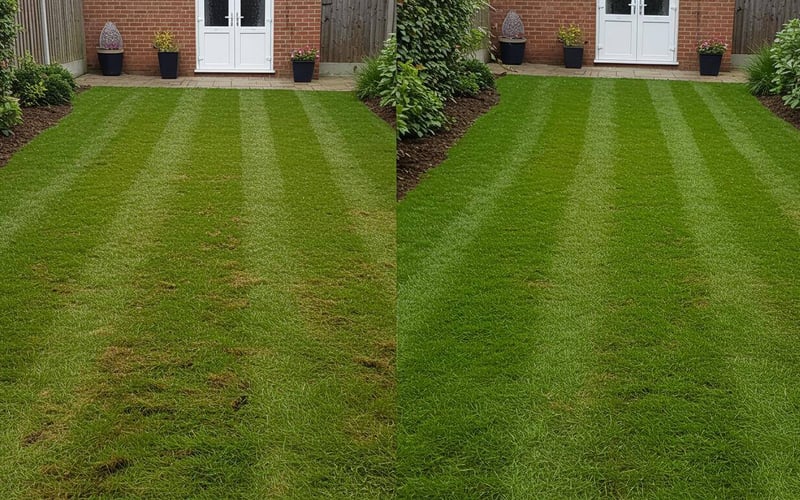
Lawn scarifying is the process of mechanically removing dead grass, moss, and organic debris from your lawn's surface. Think of it as a deep cleanse for your turf.
This layer of material, called thatch, acts like a thick blanket over your grass. When thatch exceeds 1cm in depth, it blocks nutrients, water, and air from reaching the roots.
The scarification process uses sharp blades or tines that cut through this matted layer. They pull it to the surface where you can rake it off and bag it.
Your lawn will look worse before it gets better. That is normal. I have seen homeowners fill multiple garden waste bags from a modest-sized lawn.
The process also helps control moss growth. Moss thrives in the damp conditions created by thick thatch layers.
Modern scarifiers work by cutting vertically through the lawn surface. They penetrate just a few millimetres into the soil. This creates space for new grass shoots to emerge.
The result is a denser, healthier lawn that competes better with weeds and moss.
Fine lawns containing fescues and bents need more frequent treatment. These grasses produce rhizomes that readily build up thatch. Understanding your UK soil types helps you plan scarifying frequency and timing.
When should you scarify a lawn in the UK?
Timing can make or break your results. Rushing this process often leads to stressed grass and disappointing outcomes.
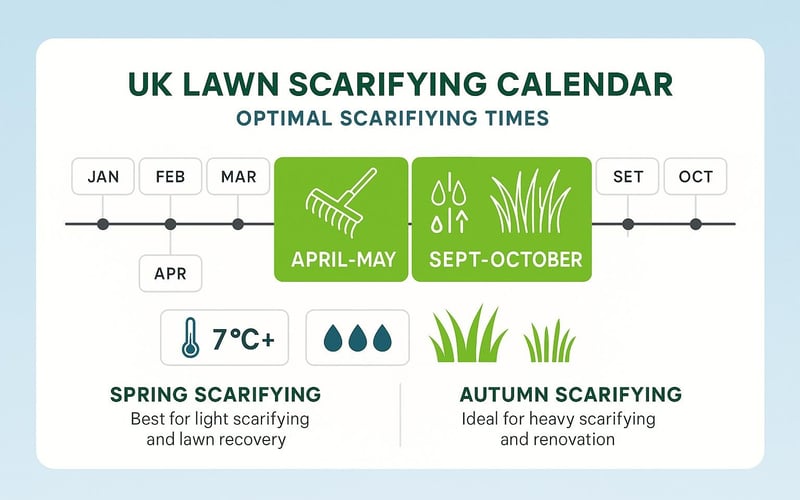
UK climate patterns create two optimal windows: late spring (April to May) and early autumn (September to October). These periods coincide with the grass's natural growth cycles.
Spring scarifying works best when soil temperatures consistently reach 7°C or higher. That is typically around mid-April. April showers provide the moisture needed for recovery.
I have found that waiting for at least three consecutive warm days before scarifying gives the best results.
Autumn presents the ideal window for heavy scarification work. September and October offer warm soil combined with increasing moisture and cooling air temperatures. This is the prime time for September gardening tasks including scarifying.
Regional variations across the UK affect timing significantly. Scottish gardeners might need to wait until early May. Those in Cornwall could start in late March during mild years.
Always check local soil temperatures rather than relying solely on calendar dates.
Weather patterns have become increasingly unpredictable. The unusually wet spring of 2024 delayed scarifying for many homeowners until late May. The warm autumn extended the working season into November in some areas.
Use a soil thermometer to check ground temperature at 5cm depth. When readings stay above 7°C for a week, grass enters active growth mode.
How to scarify a lawn
Proper preparation and technique prevent damage to your grass. Too many gardeners rush in without preparing, ending up with patchy, damaged lawns.
Start preparation two weeks before scarifying. Gradually lower your mowing height over several cuts rather than scalping it in one session.
Choose a dry day with no dew present. Wet conditions make the process harder and can damage soil structure. Morning dew should completely evaporate before you begin.
Set your scarifier to the correct depth. That is typically 2-3mm into the soil surface. Shallow settings miss the thatch. Deep settings damage grass roots.
Most rental scarifiers have adjustable depth settings. Test on a small area first.
Work methodically across the lawn in parallel strips. Overlap slightly to ensure complete coverage. Maintain a steady walking pace. Professional operators cover about 100m² per hour.
Change direction for the second pass, working perpendicular to your first direction. This cross-pattern ensures thorough thatch removal.
Collect the removed material promptly after scarifying. Leaving dead thatch on the surface blocks light and air, slowing recovery. The collected material is excellent for making your own compost when mixed with other garden waste.
For moss problems, treatments like those in our homemade weed killers guide can complement your scarifying efforts.
When to scarify different lawn surfaces
Different lawn surfaces and grass types have specific requirements for timing and frequency.
Fine ornamental lawns containing bentgrass and fescue species need more frequent attention. These premium grass types produce dense root systems that create thatch rapidly. I recommend scarifying fine lawns twice yearly.
Sports turf and heavily used family lawns benefit from autumn scarifying when foot traffic decreases. Reduced wear allows grass time to recover before winter dormancy.
Shaded lawn areas require special consideration. Under tree canopies, autumn scarifying can weaken already stressed grass. These areas respond better to spring treatment when bare branches allow maximum light.
New lawns need at least twelve months to establish before their first scarification. Younger grass lacks the root development needed to survive the stress.
Clay soils remain waterlogged longer in spring. That delays suitable working conditions until late April or May. Sandy soils drain faster, allowing earlier spring scarifying but requiring careful moisture monitoring.
Slope gradient matters too. Steep slopes scarified in late autumn risk erosion from winter rains. Spring treatment allows grass time to re-establish before heavy rainfall.
How often should you scarify your lawn?
Most homeowners either scarify too often or wait too long. Both cause problems.
For typical UK family lawns, annual scarifying provides adequate maintenance. One treatment in early autumn removes accumulated thatch while allowing recovery before winter.
Premium lawns and fine turf areas often benefit from twice-yearly scarifying. Spring and autumn treatments keep thatch levels minimal. Golf clubs and sports venues follow this schedule.
Heavy clay soils and poorly draining areas may need attention every eight to ten months. These conditions promote moss growth and thatch accumulation.
Newly established lawns should avoid scarifying for at least twelve months. Sometimes longer for slow-growing fine grass varieties.
Wet summers promote moss growth, potentially requiring additional treatments. Dry years reduce organic matter breakdown, leading to faster thatch accumulation.
Over-fertilised lawns, particularly those receiving excessive nitrogen, often need more frequent scarifying. High nitrogen levels promote rapid top growth that becomes thatch.
Tree-covered areas and shaded lawns need less frequent scarifying. Grass growth rates are naturally slower in shade.
Neglected lawns might need intensive initial treatment. Well-maintained lawns can extend intervals between treatments. For persistent garden pest issues affecting lawn health, our slug control guide offers complementary lawn care strategies.
What tools do you need?
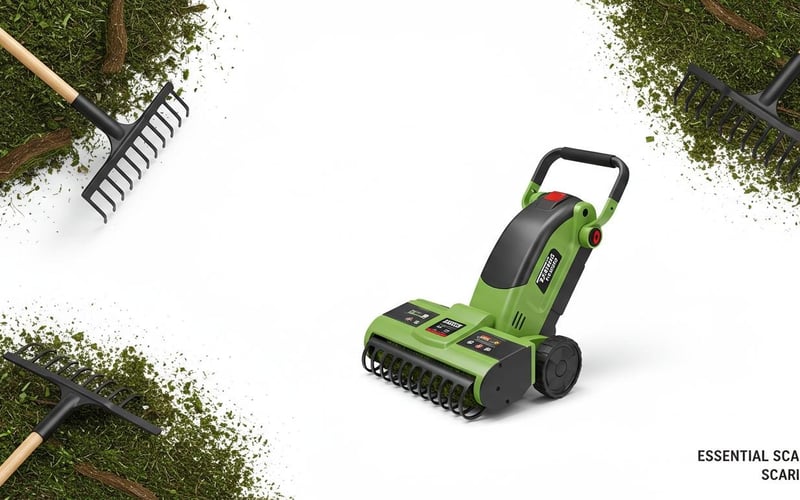
The right tool makes the difference between professional results and a damaged lawn.
Manual spring-tine rakes are the most basic option. They work on small lawns up to 50m² but require significant physical effort. Expect a serious workout.
Electric scarifiers suit most domestic situations. They provide adequate power for regular maintenance while remaining relatively quiet.
Petrol scarifiers deliver more aggressive action for heavy thatch problems. They create more noise and require fuel storage.
Professional-grade scarifiers cost £2,000-£5,000 new. Rental options make them accessible at £40-60 per day from garden centres and tool hire companies.
Depth adjustment is essential regardless of tool type. Fixed-depth tools risk scalping grass or missing thatch. Quality scarifiers offer multiple depth settings.
Collection systems vary between models. Basic scarifiers leave material on the surface for manual collection. Premium models incorporate collection boxes that save time on larger lawns.
Blade configuration affects results. Fixed blade scarifiers provide aggressive thatch removal. Spring-tine models are gentler on grass while still removing moss effectively.
Electric models need minimal maintenance beyond cleaning. Petrol machines require regular oil changes, air filter cleaning, and seasonal servicing.
UK lawn scarifying calendar
| Month | Scarifying Suitability | Soil Temperature | Grass Growth | Recovery Time | Notes |
|---|---|---|---|---|---|
| January | Not suitable | Below 5°C | Dormant | N/A | Frost risk, slow recovery |
| February | Not suitable | 2-6°C | Minimal | N/A | Still too cold, limited growth |
| March | Use caution | 5-8°C | Starting | 8-12 weeks | Wait for consistent warmth |
| April | Good | 7-12°C | Active | 6-8 weeks | Ideal spring window opens |
| May | Excellent | 10-15°C | Peak growth | 4-6 weeks | Prime spring scarifying time |
| June | Risky | 12-18°C | Slowing | 6-10 weeks | Heat stress risk, avoid if dry |
| July | Avoid | 15-20°C | Slow | 10+ weeks | Too hot, drought stress likely |
| August | Use caution | 14-18°C | Starting | 8-10 weeks | Late summer opportunity |
| September | Excellent | 12-16°C | Active | 4-6 weeks | Prime autumn window |
| October | Good | 8-14°C | Active | 6-8 weeks | Last chance before winter |
| November | Use caution | 5-10°C | Slowing | 12+ weeks | Risk of winter damage |
| December | Not suitable | Below 8°C | Dormant | N/A | Grass entering dormancy |
When is it too early to scarify?
Timing mistakes can set your lawn back by months. I have seen it happen on customer sites when they scarify before conditions are right.
Soil temperature below 7°C consistently means it is too early. Cold soil keeps grass roots inactive. They cannot generate the new growth needed for recovery.
Use a soil thermometer to check temperature at 5cm depth for accurate readings.
Frost warnings in weather forecasts signal unsuitable conditions. Even light frost after scarification can damage newly exposed grass crowns. Wait for a stable pattern with no frost predicted for at least two weeks.
Waterlogged soil makes scarifying counterproductive. Working wet soil causes compaction and structural damage. The soil should feel firm underfoot and not leave footprints.
Grass showing minimal growth signs indicates insufficient energy reserves. Look for active green shoots and regular mowing requirements before scarifying.
New lawn areas less than twelve months old should not be scarified regardless of season. Young grass plants lack the root development to survive mechanical stress.
Spring scarifying becomes risky when May temperatures exceed seasonal averages. Hot, dry conditions after scarification can severely stress recovering grass.
Northern Scotland might not reach suitable conditions until late May. Cornwall could be ready by early April. Local knowledge beats generalised timing advice. October is the last realistic window for autumn scarifying, and fits well alongside other October gardening jobs.
What to do after scarifying
Post-scarification care determines whether your lawn recovers quickly or struggles for months. This is where many homeowners make costly mistakes.
Remove all debris immediately. Rake up pulled thatch, moss, and organic matter promptly. Leaving it on the surface blocks light and air, causing fungal problems.
Assess bare patches after cleanup. Areas showing soil need immediate overseeding to prevent weed invasion. Light overseeding fills gaps before weeds colonise.
Apply fertiliser within 24-48 hours to fuel grass recovery. Use a balanced lawn fertiliser with adequate nitrogen for growth. Autumn scarifying benefits from potassium-rich feeds that strengthen grass for winter.
Adding coffee grounds for plants and lawns provides a gentle nitrogen boost during recovery.
Aeration following scarification maximises treatment benefits. Use a fork to spike heavily trafficked areas. This relieves soil compaction and improves drainage.
Monitor soil moisture carefully during recovery. Scarified lawns need consistent moisture but not waterlogged conditions. Deeper, less frequent watering promotes stronger root systems.
Restrict foot traffic for 4-6 weeks. Heavy use during this vulnerable period damages emerging shoots and compacts soil around weakened plants.
Resume mowing when grass reaches 5-6cm height. That is typically 3-4 weeks after autumn scarifying or 2-3 weeks after spring treatment. Use sharp blades and avoid removing more than one-third of grass height.
Watch for pest and disease issues during recovery. Stressed grass is more susceptible. Early intervention prevents minor issues becoming major setbacks.
Temperature drops below 5°C mean you should avoid walking on scarified areas. Consider covering newly seeded patches with fleece if severe weather threatens.
Matt's Tip: Scarifying Around Greenhouses
When we prepare sites for greenhouse installation, the lawn around the base always needs attention. Scarify right up to the greenhouse edge in autumn, but leave a 15cm buffer strip. Scarifier blades can nick aluminium base rails and damage plastic edging. I use a manual spring-tine rake for the last 15cm. This keeps the lawn tidy where it meets the greenhouse path without risking expensive damage to the frame. The same applies around cold frames, raised beds, and garden edging.

|
Matt's Pick for Lawn RecoveryBest For: Starting grass seed patches after scarifying Why I Recommend It: I start replacement grass seed in a cold frame after scarifying. It germinates faster than broadcasting onto bare patches. Price: £249 |
Frequently Asked Questions
Should I cut grass before scarifying?
Yes, cut grass to 2-3cm height 2-3 days before scarifying. This shorter length allows the scarifier blades to reach the thatch layer more effectively. It also makes debris collection easier. Do not scalp the grass completely, as this creates additional stress. Use sharp mower blades to avoid tearing grass that will already face stress from scarification.
What is the best month to scarify a lawn?
September is generally the best month to scarify UK lawns. The soil remains warm from summer while air temperatures cool and moisture levels increase. This creates ideal recovery conditions. April is the second choice for spring scarifying when soil temperatures consistently exceed 7°C. Avoid July and August due to heat stress risk. Avoid December through February due to cold, dormant conditions.
Can you scarify a lawn in October in the UK?
Yes, October scarifying works well in most UK regions. Timing depends on local weather patterns. Early October is preferable to ensure 4-6 weeks of recovery before winter dormancy. Monitor soil temperature and postpone until spring if it drops below 7°C consistently. Southern regions often have suitable conditions through mid-October. Northern areas might need to finish by early October.
What to put on a lawn after scarifying?
Apply balanced lawn fertiliser within 48 hours of scarifying. Use autumn feeds high in potassium for September/October treatments. Use nitrogen-rich spring feeds for April/May scarifying. Overseed bare patches with appropriate grass seed mixture for your conditions. Light top dressing with compost improves soil structure. Sharp sand helps drainage on clay soils.
How long does it take for grass to recover after scarifying?
Recovery typically takes 4-6 weeks for autumn scarifying. Spring treatments take 6-8 weeks. Factors affecting recovery include grass type, soil conditions, aftercare quality, and weather patterns. Fine grasses recover faster than coarse varieties. Good soil preparation and consistent moisture speed the process. Full thickness recovery may take 8-12 weeks in challenging conditions.
Is it better to scarify in spring or autumn?
Autumn (September-October) is generally better for UK lawns. Warm soil, cooling air, and increasing moisture create optimal recovery conditions. Spring scarifying (April-May) works well too but carries higher risk if followed by hot, dry weather. Autumn allows grass to thicken before winter. Spring scarifying must compete with summer stress. Choose autumn for heavy moss problems or major renovation work.
Can I scarify wet grass?
No, avoid scarifying wet grass and soggy soil conditions. Wet scarifying creates soil compaction, damages grass roots, and produces poor results. Wait for dry conditions when grass is not dewy and soil feels firm underfoot. Choose a day with no rain forecast for 24-48 hours after treatment. Dry thatch and moss remove more easily and cause less mess during collection.
Should I feed my lawn after scarifying?
Yes, feeding after scarifying is essential for quick recovery. Apply fertiliser within 24-48 hours of treatment to provide nutrients for new growth. Use autumn feeds (high potassium) for September/October scarifying to strengthen grass for winter. Spring treatments benefit from balanced feeds with adequate nitrogen. Avoid excessive nitrogen that produces soft, disease-prone growth.
Related Articles
- April Gardening Jobs
- Top Gardening Jobs for Autumn UK
- Autumn Tips for Preparing Your Garden
- May Gardening Jobs
- How to Grow Seeds in a Greenhouse
Need lawn care advice? Email us at info@greenhousestores.co.uk