A Greenhouse Grower's Guide to Cucumbers
Cucumbers thrive in greenhouse temperatures of 20-25°C and need a minimum of 15°C at night. Sow seeds on their edge 2cm deep from April. Train plants up a vertical string or cane, pinching out side shoots after two leaves. Water daily in summer and feed weekly with a high-potash liquid fertiliser once fruits start forming. A single cucumber plant produces 15-20 fruits per season. Harvest when fruits reach 15-20cm for the best flavour.
Greenhouse cucumbers need a steady 21°C to germinate and produce fruit from June to October in the UK. All-female F1 varieties like Bella yield 20–30 cucumbers per plant when trained vertically on strings. Sow in 7–9cm pots from February (heated) or late April (unheated). Water the soil rather than the stem and remove male flowers to prevent bitter fruit.
Key Takeaways
- Temperature matters: Seeds need a constant 21°C to germinate. In unheated greenhouses, wait until late April.
- Vertical training: Use string or canes to train vines upward to maximise space in smaller structures.
- Watering rule: Water little and often, targeting the soil and never the stem to avoid rot. Inconsistent watering is the top cause of bitter fruit.
- The male flower mistake: Unless you are growing a ridge variety, remove all male flowers immediately to prevent bitter crops.
- Succession sowing: Sow a second batch in July for harvests that last until October.
Installer's Note
When we fit greenhouses for customers who plan to grow cucumbers, we always recommend adding extra roof vents. Cucumbers thrive in humidity, but they also need good airflow to prevent powdery mildew. A 6x8 or larger greenhouse with at least two roof vents and a louvre vent works best. That gives you the right balance of warmth and ventilation.
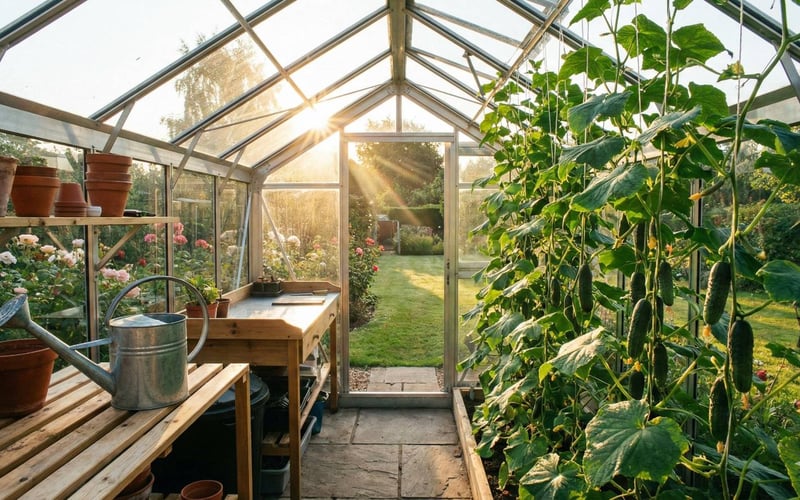
How to Grow Cucumbers in a Greenhouse
Growing your own cucumbers is one of the most rewarding experiences for a UK gardener. The difference between a store-bought cucumber and one picked fresh from your own greenhouse is striking. Home-grown cucumbers are crisp, intensely flavourful, and can be harvested at the perfect size for your needs.
In our 16+ years helping UK gardeners, we have found cucumbers outperform tomatoes per square foot when treated right. They are a bit more temperamental, though. They hate the cold, they resent having their roots disturbed, and they can turn bitter if stressed.
If you are currently looking at greenhouses for sale or planning your winter maintenance, you are already well prepared. Successful cucumber growing starts with choosing the right variety and preparing your environment before a single seed is sown.
Getting Started: Choosing Your Varieties
The first step to success is understanding that not all cucumbers are the same. In the UK, we generally divide them into two categories: Greenhouse (All-Female) and Ridge (Outdoor). For a greenhouse environment, you almost always want the former.
Greenhouse vs. Ridge Cucumbers
| Feature | Greenhouse (All-Female F1) | Ridge (Outdoor) |
|---|---|---|
| Skin Texture | Smooth, thin skin | Rough, prickly, thick skin |
| Pollination | Do NOT require pollination | Require insect pollination |
| Male Flowers | Remove immediately (causes bitterness) | Keep them (needed for fruit) |
| Yield | Higher yield, faster growth | Lower yield, hardier |
| Best Varieties | Bella F1, Carmen F1, Passandra | Marketmore, Burpless Tasty Green |
Matt's Tip: Start with All-Female Varieties
If you are a beginner, stick to an All-Female F1 Hybrid variety like Bella. These have been bred to produce only female flowers, saving you the hassle of identifying and removing male blooms. I have grown Bella in our display greenhouses for years. It consistently produces 25+ cucumbers per plant with very little fuss.
Sowing Seeds: Timing is Everything
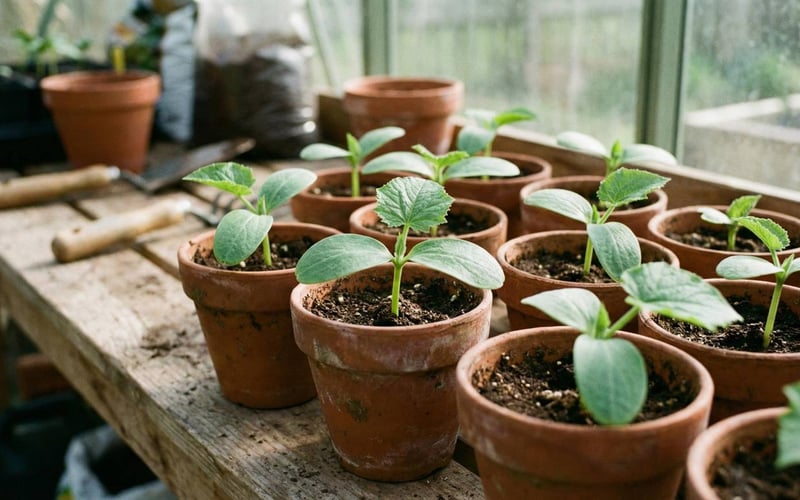
One of the biggest mistakes we see is sowing too early. Cucumbers are tropical plants and they sulk in cold compost.
The Heat vs. Light Balance
According to the Royal Horticultural Society (RHS), cucumber seeds require a minimum temperature of 21°C (70°F) to germinate successfully.
- Heated greenhouse or propagator: You can sow as early as mid-February to March. You must be able to maintain that heat 24/7.
- Unheated greenhouse: Wait until mid-April. If you sow earlier without heat, the seeds will likely rot in the cold compost.
How to Sow
- Pot size: Use small 7–9cm pots filled with high-quality seed compost.
- Sowing depth: Plant seeds on their side (not flat) about 1–2cm deep. This prevents water from sitting on the flat seed coat and causing rot.
- Germination: Place in a propagator or on a warm, sunny windowsill. Keep moist but not sodden.
Troubleshooting Leggy Seedlings
If your seedlings have shot up with long, thin, wobbly stems due to low light, do not panic. When you transplant them into their final pots, bury the stem deeper than it was before. Go right up to the first set of leaves (cotyledons). The buried stem will sprout new roots, anchoring the plant and making it stronger.
The Succession Sowing Secret
Most growers stop sowing in May. For a harvest that lasts until late October, sow a second batch of seeds in early July. These plants will take over just as your first batch starts to tire and succumb to mildew in late summer. This gives you fresh cucumbers well into autumn.
Preparing Your Greenhouse Environment
Before you move your precious seedlings into their final home, your greenhouse needs to be ready. Cucumbers thrive in high humidity and consistent warmth. These conditions can be tricky to manage in a standard 8x6 greenhouse.
Soil vs. Containers
While you can grow cucumbers in greenhouse borders, we highly recommend growing them in containers or grow bags.
- Disease control: It avoids soil-borne pests like nematodes.
- Temperature: Pots warm up faster than the ground in spring.
- Drainage: It is easier to ensure the moist but not wet soil conditions cucumbers love.
Use pots that are at least 30cm (12 inches) wide. If using grow bags, plant two cucumbers per bag, not three, to ensure they have enough root space.
Positioning
Cucumbers need light, but scorching direct mid-summer sun can damage the leaves. Position them where they get plenty of light but are shielded from the fiercest midday rays. If you are unsure about the best layout for your structure, our Greenhouse Buyers Guide has useful tips on positioning for light and shade.
If you are growing tomatoes in the same space, read our guide on when to plant tomatoes in an unheated greenhouse to coordinate your planting schedule.
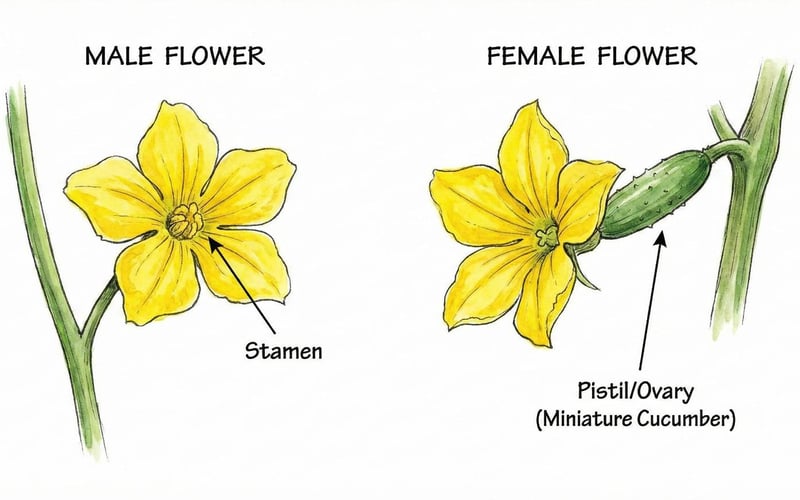
The Male Flower Rule
This is the detail that trips up many beginners. Most modern greenhouse cucumbers are parthenocarpic, meaning they produce fruit without pollination.
If a bee pollinates a greenhouse cucumber flower, the resulting fruit will be bitter and filled with hard seeds. To prevent this, you must identify and remove male flowers unless you are growing an all-female F1 variety.
How to Spot the Difference
- Female flower: Has a tiny, miniature cucumber visible behind the yellow bloom. Keep this.
- Male flower: Has a thin, plain stalk behind the bloom. Remove this.
Action: Check your plants weekly. Pinch off male flowers as soon as you see them. If you are growing F1 All-Female varieties, you can skip this step. Keep an eye out just in case a rogue male flower appears due to plant stress.
Vertical Training and Pruning
To get the most out of small greenhouses, vertical training is essential. It keeps fruit straight, clean, and saves a large amount of floor space.
The Single Stem Method
- Support: Run a vertical string from the roof of your greenhouse down to the base of the plant. Loosely tie it to the base of the main stem.
- Twist: As the plant grows, gently twist the main stem around the string.
- Stop: Once the main stem reaches the roof, pinch out the growing tip.
- Side shoots: Pinch out the growing tip of side shoots two leaves beyond a fruit. This focuses the plant's energy on filling the fruit rather than growing more leaves.
This method improves airflow significantly. Good airflow is your best defence against fungal diseases in humid aluminium greenhouses.
Care and Maintenance: Water and Feed
Watering: The Golden Rules
Cucumbers are thirsty plants, but they are prone to stem rot.
- Target: Water the soil, never the base of the stem. Sink a small plastic pot into the soil next to the plant and water into that instead.
- Consistency: Inconsistent watering causes moisture stress, which leads to bitter fruit. Keep the soil evenly moist.
- Humidity: They love humid air. On hot days, damp down the greenhouse floor by watering the path.
Feeding
Start feeding with a high-potash liquid fertiliser (tomato feed works well) once the first fruits begin to swell. Feed once every 10–14 days.
Companion Planting for Cucumbers
Smart companion planting can help deter pests and improve growth.
| Companion Plant | Benefit to Cucumber | Planting Tip |
|---|---|---|
| Dill | Attracts hoverflies (which eat aphids) and improves growth rate. | Plant close to cucumbers but avoid letting it flower too early. |
| Nasturtiums | Acts as a trap crop. Aphids attack them instead of your vines. | Plant near the greenhouse door or vents. |
| Marigolds | Strong scent confuses and deters whitefly. | Pot them up and place them on staging between your cucumber pots. |
| Potatoes | AVOID. Releases substances that inhibit cucumber growth. | Keep in a separate area of the garden. |
| Sage | AVOID. Aromatic oils can stunt cucumber vine development. | Keep in the herb garden, not the greenhouse. |
Troubleshooting Common Problems
Even in a well-maintained greenhouse, issues can arise. Here are the most common problems and how to fix them.
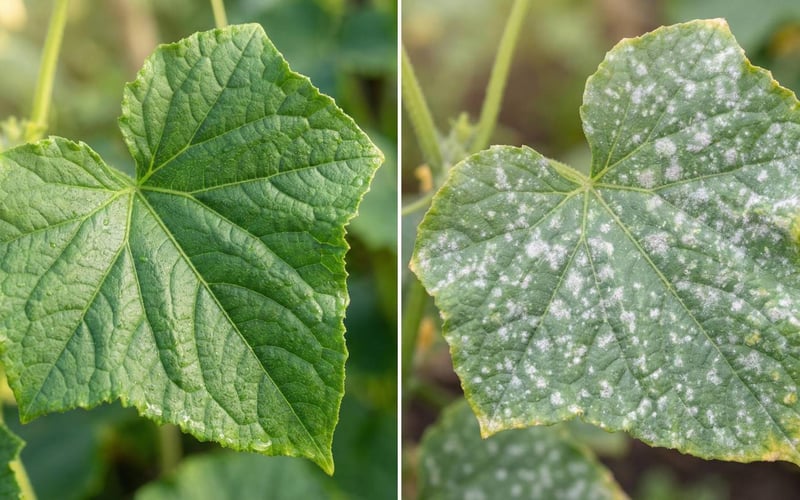
| Problem | Symptom | Cause | Solution |
|---|---|---|---|
| Powdery Mildew | White, dusty coating on leaves | Poor airflow or dry roots | Remove affected leaves, increase ventilation, keep roots moist. |
| Red Spider Mite | Yellow mottling on leaves, fine webbing | Hot, dry air | Increase humidity by misting daily. Introduce biological controls. |
| Bitter Fruit | Unpleasant taste | Water stress or pollination | Water more consistently. Remove male flowers immediately. |
| Yellowing Leaves | Lower leaves turning yellow | Magnesium deficiency or age | Feed with Epsom salts (foliar spray) or simply remove old leaves. |
Harvesting: The Size Guide
Harvesting is the best part. Timing is key. Letting cucumbers grow too large is a common mistake. They become bitter and the plant thinks its job is done, stopping production of new fruit.
Harvest at these specific lengths:
- Standard greenhouse (e.g. Bella): 25–30cm (supermarket size).
- Mini or snack (e.g. Passandra, Mini Munch): 10–15cm. Do not let them get larger.
- Ridge or outdoor: 15–20cm. Harvest before they turn yellow.
How to harvest: Always use sharp secateurs or a knife. Pulling the fruit can damage the brittle vines.
Store them in the fridge crisper drawer where they should last 1–2 weeks.
Summary and Next Steps
Growing cucumbers in a greenhouse is a productive way to make the most of your space. Choose the right variety, manage humidity, and keep on top of watering. You will enjoy a strong harvest from June through to October.
Once your cucumber season winds down in late autumn, plant garlic or overwinter salad crops. This keeps your greenhouse productive through winter.
If you have mastered cucumbers, strawberries make an excellent next crop. They thrive in the same warm, sheltered conditions and fruit earlier under glass than outdoors.
Matt's Pick for Cucumber Growing
|
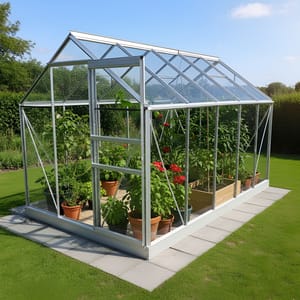
Vitavia Venus 6200 6x10 Greenhouse Best For: Dedicated cucumber growers who want enough space for 4–6 plants trained vertically alongside other crops. Why I Recommend It: I have fitted dozens of these Venus 6200s. The 10ft length gives you a proper run for vertical strings. You can train 4 cucumber plants on one side and still have room for tomatoes on the other. The integrated roof vents provide the airflow cucumbers need to stay mildew-free. Price: £599 |
Frequently Asked Questions
When should I plant cucumber seeds in a greenhouse in the UK?
Sow from late February in heated greenhouses or mid-April in unheated ones. Seeds need a constant 21°C to germinate. Early sowing without heat usually results in the seeds rotting in cold compost. A propagator lets you start earlier on a windowsill. Move plants into the greenhouse once overnight temperatures stay above 15°C.
Do you pinch out side shoots on greenhouse cucumbers?
Yes, pinch out side shoots two leaves beyond any fruit. This stopping technique ensures the plant puts energy into filling the cucumber rather than growing unnecessary foliage. It also keeps the greenhouse tidy and improves airflow around the vines, reducing the risk of powdery mildew.
What is the difference between male and female cucumber flowers?
Female flowers have a miniature cucumber behind the petals; males do not. Male flowers just have a thin, plain stalk behind the bloom. Unless you have an All-Female F1 variety, you must remove male flowers to prevent pollination. Pollinated greenhouse cucumbers become bitter and full of hard seeds.
Why are my greenhouse cucumbers bitter?
Bitterness comes from cucurbitacin, triggered by stress or pollination. Irregular watering and temperature swings are the most common causes. Keep soil consistently moist and remove male flowers from greenhouse varieties. Choosing an All-Female F1 hybrid like Bella eliminates the pollination risk entirely.
What can I plant next to cucumbers in a greenhouse?
Dill, marigolds, and nasturtiums are the best cucumber companions. Dill attracts hoverflies that eat aphids. Nasturtiums act as a trap crop, drawing aphids away from your vines. Marigolds deter whitefly with their strong scent. Avoid planting potatoes or strong aromatic herbs like sage nearby.
Related Articles
- Growing Tomatoes in a Greenhouse
- How to Grow Strawberries in a Greenhouse
- How to Grow Garlic in a Greenhouse
- What to Grow in a Greenhouse: Beginners Guide
- How to Grow Seeds in a Greenhouse
Questions about growing cucumbers or choosing a greenhouse? Contact our team at info@greenhousestores.co.uk