Best Position for a Greenhouse UK: Expert Placement Guide 2026
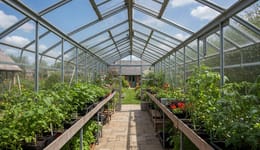
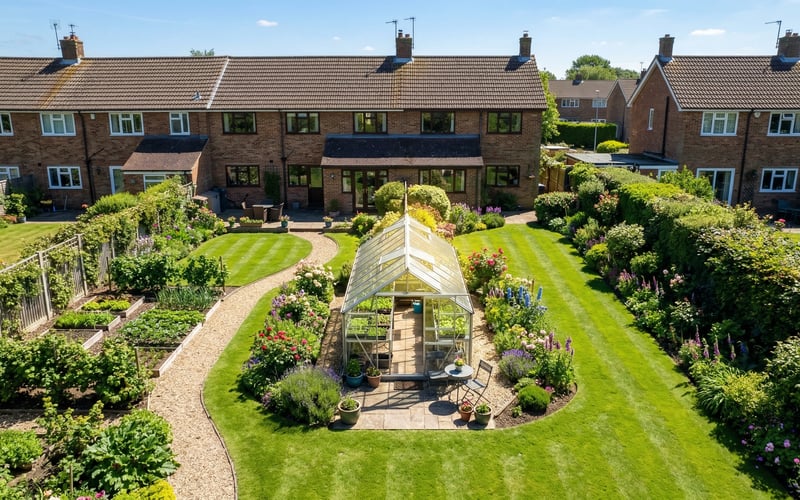
The best position for a greenhouse in the UK is south-facing with the ridge running east to west. Keep at least 2 metres from buildings and trees, on level ground with good drainage. This captures maximum winter sunlight when UK daylight drops to 8 hours per day. A south-facing 6x8 greenhouse runs 3-5°C warmer than the same model facing north. That cuts heating costs by up to 40%. We have installed over 10,000 greenhouses since 2012 and position is the single biggest factor in growing success.
Key Takeaways
- South-facing is best: Captures the most winter sunlight. South-east is even better for morning warming that dries condensation.
- Ridge east to west: The longest glass side faces south, gaining 25% more winter light than a north-south ridge.
- 2 metres minimum from structures: Keep clear of walls, fences, and buildings. Stand further from trees than their full height.
- Level ground prevents frame damage: A 10mm slope across 6ft stresses every glazing bar. Doors and vents jam.
- Narrow end into the prevailing wind: South-west in most of the UK. Halves wind resistance during storms.
- Close to water and power: Within hose reach of an outdoor tap. Electricity for heaters and auto-vents costs less if the run is short.
Installer's Note
We have installed over 10,000 greenhouses across the UK since 2012. The single biggest mistake we see is positioning a greenhouse against a north-facing fence. That greenhouse will sit in shadow from October to March. Those are the exact months when you need every scrap of light. Customers call us every spring wanting to move their greenhouse after one winter of poor growth. Moving it costs as much as buying it did. Spend 20 minutes with a compass app and a tape measure before you commit. That is the cheapest upgrade you will ever make.
Which direction should a greenhouse face?
South-facing gives you the most sunlight hours across the year. In midwinter, the sun barely clears the rooftops in northern England, and a south-facing greenhouse catches every available hour. From our records, south-facing greenhouse owners start their growing season 3-4 weeks earlier than those facing east or west.
If true south is not available, south-east is the next best option. Morning sunlight warms the greenhouse after a cold night, dries overnight condensation, and gets plants photosynthesising early. We have fitted lean-to greenhouses on south-east walls where the owner harvested tomatoes into late November without any supplemental heating.
West-facing works for evening gardeners who want warmth after work. North-facing is the weakest option but can suit ferns, shade salads, and propagation. The table below breaks down what each direction actually gives you.
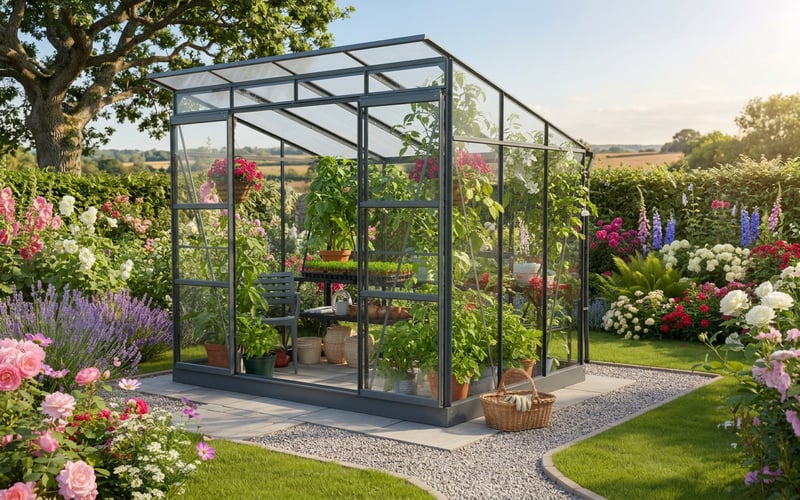
Shop the Vitavia 8x6 Grey Freya 5900 Greenhouse →
Orientation comparison: what each direction delivers
| Direction | Winter sunlight | Summer heat risk | Best for | Heating cost impact |
|---|---|---|---|---|
| South | Maximum (6-8 hrs) | High (needs vents) | Tomatoes, peppers, cucumbers, year-round growing | Lowest |
| South-east | Good (5-7 hrs) | Moderate | Mixed crops, morning growers, lean-to on house wall | Low |
| East | Moderate (4-5 hrs) | Low | Orchids, seedlings, cool-season crops | Medium |
| West | Moderate (4-5 hrs) | High (afternoon sun) | Mediterranean plants, cacti, evening gardeners | Medium |
| North | Minimal (1-3 hrs) | Very low | Ferns, shade salads, propagation, summer lettuce | Highest |
Should the ridge run east-west or north-south?
East-west gives the best winter performance. When the ridge runs east to west, the long south-facing side catches the low winter sun all day. A 6x8 greenhouse oriented this way has 8ft of glass facing south. Turn it 90 degrees and you drop to 6ft of south-facing glass, losing around 25% of winter light.
For summer growing, orientation matters less because the sun is high enough to light the greenhouse from all angles. In a UK winter the sun barely rises above 15 degrees. That south-facing glass wall does most of the work. We always recommend east-west for rectangular greenhouses. Hexagonal greenhouses are the exception, as their six sides catch light from every direction regardless of orientation.
How far from buildings, fences, and trees?
Keep at least 2 metres between the greenhouse and any solid structure. Buildings and fences cast shadows that move through the day, and in winter those shadows are long. A 1.8m fence to the south will shade the entire greenhouse from November to February. The winter sun stays below 20 degrees in most of the UK.
Trees need more clearance. The rule is: stand back at least as far as the tree is tall. A 6m oak needs 6m of clearance. Even bare deciduous trees block 30-40% of available light through their branch structure in winter. Evergreens are worse. And root systems from large trees can crack concrete bases and disrupt drainage.
From our installation experience, falling leaves are almost as big a problem as shade. Leaves block gutters, sit on glass panels, and create damp patches that encourage algae. If you cannot avoid trees entirely, position the greenhouse so the wind blows leaves away from it.
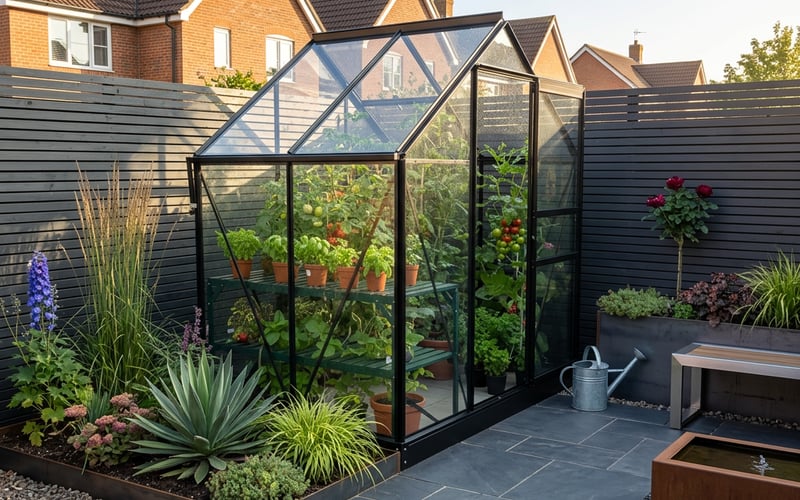
Shop the Vitavia 6x4 Black Venus 2500 Greenhouse →
Matt's Tip: The Shadow Test
Before you commit to a position, check it on a clear day in December or January between 10am and 2pm. If any part of the intended area is in shadow during those hours, your greenhouse will struggle in winter. I do this test for every installation we quote, and it has saved dozens of customers from a bad position. If you are buying in summer, use the Sun Surveyor app on your phone. It shows where the winter sun will fall months before you need it.
Freestanding versus lean-to: positioning differences
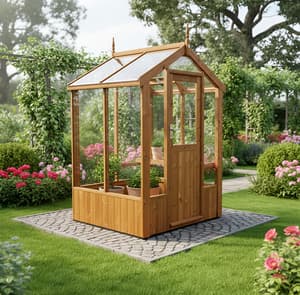
Freestanding greenhouses give you complete freedom to pick the sunniest, most sheltered spot in the garden. Position them with the ridge east-west and the narrow gable end facing the prevailing south-west wind. Leave at least 1 metre of clearance on all sides for access and maintenance.
Lean-to greenhouses lose one wall to the building they attach to, but that wall gives back something valuable: thermal mass. A brick or stone house wall absorbs heat during the day and releases it slowly at night. We have measured lean-to greenhouses holding 3-5°C above freestanding models in the same garden overnight. That difference means less frost damage and lower heating bills. Our full lean-to greenhouse guide covers wall selection, fixings, and what to grow.
For a lean-to, a south-facing wall is ideal. East-facing walls work well for morning growers. West-facing suits evening gardeners. Avoid north-facing walls unless you specifically want a cool, shaded growing space for ferns or overwintering dormant plants.
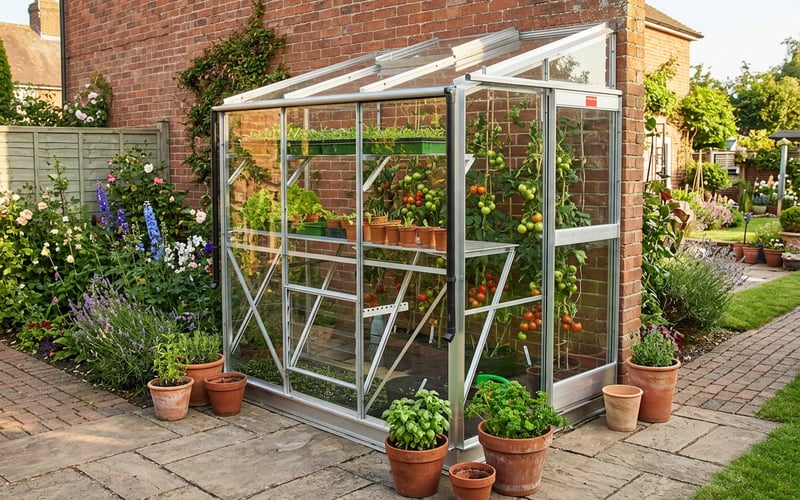
Shop the Elite Windsor 4x6 Lean-to Greenhouse →
Level ground: why 10mm matters
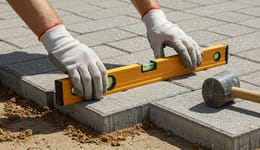
A greenhouse frame relies on every bar, every glazing clip, and every bolt being square and plumb. If the base is out by even 10mm across a 6ft span, the frame flexes. Glass panels bind, doors jam, and roof vents stick. We see this on 1 in 5 installations where the customer has prepared their own base.
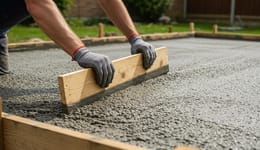
Check your proposed site with a 1.2m spirit level in both directions. If the ground slopes, level it with a concrete or paving slab base. You can also build up the low side with a timber or brick perimeter. Our guides on building a concrete base and laying a paving slab base walk you through both methods step by step.
Drainage matters too. Avoid low spots where rainwater collects. A greenhouse in standing water will rot timber sills and corrode aluminium base rails. Damp conditions also encourage botrytis and fungal diseases.
Matt's Installation Tip
We carry a 1.2m spirit level to every installation. Before we even unbox the greenhouse, we check the base in both directions. If the customer's base is out by more than 5mm, we shim it with packers before we bolt the first rail down. Skipping this step is the number one cause of cracked glass panels in the first year. The frame goes up looking fine, but the first hot day expands the bars unevenly and a panel pops. I have replaced glazing on greenhouses that were only six months old because the base was 15mm out. Check the base twice. It takes five minutes and saves hundreds of pounds.
Wind protection without blocking light
The UK's prevailing wind comes from the south-west. Position the narrow gable end of your greenhouse into this wind. A 6ft-wide gable presents half the wind resistance of an 8ft-long side wall. That means less structural stress during storms.
Solid walls and close fences are poor windbreaks because they create turbulence on the leeward side. A 40mph gust hitting a solid fence creates swirling eddies that can be worse than the open wind. Hedges and 50% permeable fencing filter the wind instead, reducing speed by up to 50% without the turbulence. Position any windbreak at a distance of 3-4 times the greenhouse height. For a 2.5m greenhouse, that is 7.5-10 metres away.
Our wind damage prevention guide covers storm preparation and replacement glazing.
Water and electricity access
Position your greenhouse within hose reach of an outdoor tap. Carrying watering cans across a 30m garden gets old fast in summer. A greenhouse near the house also makes running a power cable cheaper. Electricity lets you run a propagator, a heater, and automatic vent openers.
If mains water is not practical, plan for rainwater collection from the greenhouse roof. A 6x8 greenhouse collects around 2,500 litres of rainwater per year in average UK rainfall. That is enough for most hobby growers through the summer if you have a decent-sized water butt. For more on getting started, our new greenhouse setup checklist covers everything from base to first planting.
Positioning for different greenhouse types
| Greenhouse type | Best position | Key consideration | Example model |
|---|---|---|---|
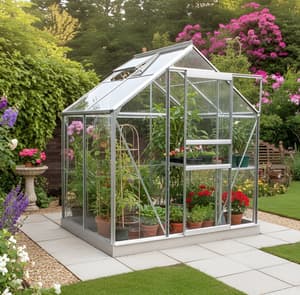
| Freestanding rectangular | Open spot, ridge E-W, gable into SW wind | Needs level base and all-round access | Vitavia Freya 5900 (£1,239) |
| Lean-to | South or south-east facing house wall | Check wall condition and roof overhang drainage | Elite Windsor 4x6 (£479) |
| Hexagonal | Open spot, orientation less critical | Multi-sided design catches light from all angles | Vitavia Hera series |
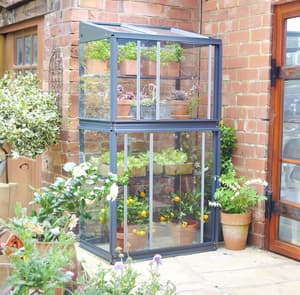
| Mini/growhouse | Against south-facing wall or fence | Needs wind shelter due to light weight | Access City Growhouse (£799) |
| Small starter ★ | South-facing, sheltered, near the house | Maximise sun and convenience for daily visits | Venus 2500 6x4 (£519) |
★ Matt's Pick for first-time greenhouse buyers on a budget
|
Matt's Pick for Most Versatile GreenhouseBest For: First-time buyers wanting the most from any garden position Why I Recommend It: The Freya 5900 has roof vents on both sides and toughened glass as standard. It handles south-facing heat and exposed positions equally well. The grey frame suits modern gardens without standing out. We fit more Freyas than any other 8x6 model because it works in every position we put it. Price: £1,239 |
Greenhouses for Every Garden Position
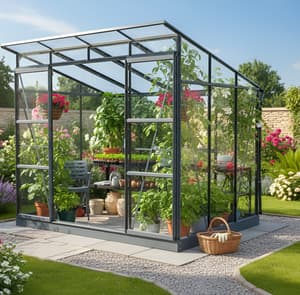
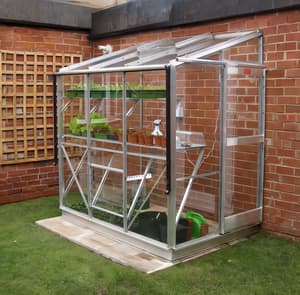
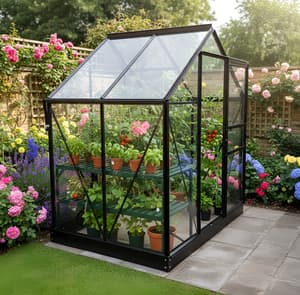
"Position is the one thing you cannot change after the greenhouse goes up. I have moved greenhouses for customers who got it wrong and it costs as much as the original installation. South-facing, ridge east-west, level ground, and away from trees. Get those four things right and the rest is easy. Every greenhouse we sell will grow brilliant crops if you give it the right spot."
— Matt W, Greenhouse Stores
Frequently asked questions
What is the best direction for a greenhouse to face in the UK?
South or south-east is best for most UK gardens. A south-facing greenhouse gets maximum winter sunlight, when UK daylight drops to 8 hours. The slight south-east angle adds faster morning warming, which dries condensation and gets plants growing earlier. Avoid north-facing unless you specifically want shade conditions for ferns or propagation.
How far should a greenhouse be from trees and buildings?
Keep at least 2 metres from buildings and fences. Stand further from trees than their full height. A 6-metre tree needs 6 metres of clearance. Even bare deciduous trees block 30-40% of light through their branches. Falling leaves also block gutters and sit on glass panels, creating damp and algae.
Should a greenhouse ridge run east-west or north-south?
East-west gives the best winter performance. The long south-facing glass wall catches the low winter sun all day. Turning the ridge north-south reduces south-facing glass by around 25% on a typical 6x8 model. Summer orientation matters less because the high sun lights all sides.
Can I position a greenhouse on a slope?
Yes, but you must level the base first. A 10mm slope across a 6ft span stresses every glazing bar. Doors and vents will jam. Level the site with a concrete or slab base, or build up the low side with brick. Check with a spirit level in both directions before you start.
Will a south-facing greenhouse overheat in summer?
It can reach 40°C+ on hot days without ventilation. Roof vents, louvre vents, an open door, and shade netting bring temperatures down to a manageable 25-30°C. Automatic vent openers cost £20-30 and open the vents for you on hot days. We fit them to almost every greenhouse we install.
Is it better to put a greenhouse on concrete or grass?
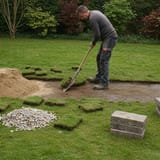
Concrete or paving slabs give a stable, level base. They last decades and stay weed-free. Grass seems easier but the ground shifts, weeds grow through, and the frame sinks unevenly over 2-3 years. If you must use grass, lay a proper perimeter foundation and compact the soil inside.
How close to the house should a greenhouse be?
Most customers find 3-5 metres from the back door ideal. Close enough for easy hose and power access, far enough to avoid shading. A greenhouse visible from the kitchen window gets visited more often. That means problems get spotted early and plants get better care.
Find the right greenhouse for your garden
Position is everything, but the right greenhouse makes the most of whatever position you have. Browse our full range of greenhouses to find the right size and style, or read our sizing guide to work out what fits your space.