Greenhouse Pest Control Guide UK
UK greenhouses face 8 common pests that thrive in warm, sheltered conditions. One aphid produces 6,000+ offspring in a single month. After 16 years of greenhouse installations, we have dealt with every pest on this list. This guide covers natural control methods, beneficial insects, companion planting, organic sprays, and a month-by-month prevention calendar. We focus on methods that work in real UK conditions without chemicals on your crops.
Key Takeaways
- UK greenhouses breed pests fast – mild, damp weather creates perfect conditions for rapid multiplication
- Prevention beats treatment every time – basic cleanliness and good habits stop most problems before they start
- Natural pest control is safer for food crops – beneficial insects and organic sprays protect your harvest without chemicals
- Weekly checks during growing season are essential – catching a few aphids early saves hours of work later
- Different pests peak at different times – use our month-by-month calendar to stay one step ahead
Installer's Note
We have fitted hundreds of greenhouses over 16 years. Every single installation teaches us something about pests. We once fitted a greenhouse in May and found aphids on the customer's staging plants within 48 hours. That taught us to always recommend a deep clean and quarantine routine before moving plants into any new structure. The pests covered here are the ones we see again and again on site visits.
One aphid can produce 80 offspring in a week. In a warm greenhouse, that means 6,000+ aphids in a month. For UK gardeners, pest control protects months of work from bugs that love our mild climate.
UK greenhouses differ from outdoor gardening. Outside, cold winters kill most pests and natural predators handle the rest. Inside your greenhouse, it stays warm, sheltered, and full of food. Those are perfect conditions for pests.
The RHS estimates UK gardeners lose over £500 million worth of crops each year to greenhouse pests. Most of these losses could be prevented.
I will show you how to identify common troublemakers and stop them before they start. We cover natural methods that work in real UK conditions. No harsh chemicals and no complicated procedures.
Common UK Greenhouse Pests: What You Are Dealing With
Most UK greenhouse pests are predictable. The trick is catching them early – before they multiply.
Quick Pest Identification Reference
| Pest | Size | Appearance | Location on Plant | Damage Signs | Peak Season |
|---|---|---|---|---|---|
| Aphids (Green) | 2–4mm | Pear-shaped, green, soft body | New growth, flower buds | Yellow/curled leaves, sticky honeydew | April–June |
| Aphids (Black) | 2–4mm | Pear-shaped, black, soft body | Young shoots, leaf undersides | Yellow/curled leaves, sticky honeydew | April–June |
| Whitefly | 1–2mm | White, moth-like, flies in clouds | Leaf undersides (larvae) | Yellow leaves, sticky honeydew, stunted growth | May–September |
| Red Spider Mites | 0.5mm | Nearly invisible, red/brown | Leaf undersides | Fine webbing, yellow stippling on leaves | June–August |
| Slugs | 2–3cm | Grey/brown, slimy | Ground level, under staging | Irregular holes, slime trails | Year-round |
| Vine Weevil (Adult) | 9mm | Dark grey-black beetle | Leaf edges (night feeding) | Notched leaf edges | April–October |
| Vine Weevil (Larvae) | 8–10mm | White, C-shaped grubs | Soil/compost | Sudden plant collapse, root damage | Year-round |
| Caterpillars | 2–4cm | Green, segmented body | Leaves, stems | Clean holes, severed stems | April–May, July–August |
| Fungus Gnats | 2–3mm | Dark flies around soil | Compost surface | Hovering flies, larvae in soil | October–March |
Sap Suckers: They Drain Your Plants
Aphids – Green and Black Bugs
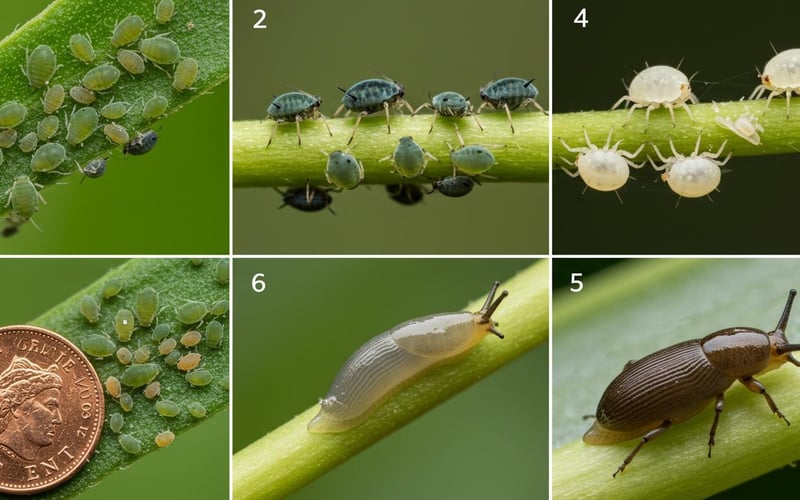
You have probably seen these already. Tiny, soft green or black bugs cluster on new shoots. In the UK, we mainly get green peach aphids and black bean aphids. Both are about 2–4mm long.
They are pear-shaped with long antennae and two small tubes on their back. They gather on the youngest, most tender growth. New leaves, flower buds, and anywhere sap flows easily.
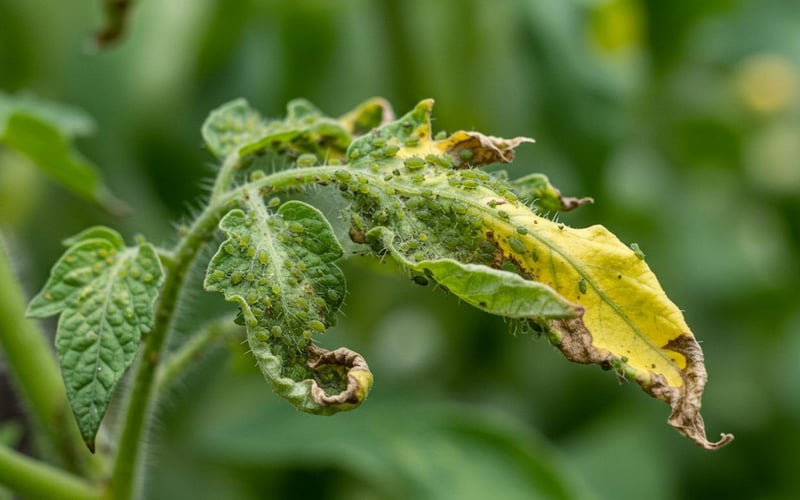
You will know you have them when leaves turn yellow and curl. There will be sticky honeydew all over everything. Sometimes black mould grows on that sticky mess.
In UK greenhouses, aphids get going in spring when heating keeps things warm. They are a particular problem when growing tomatoes in a greenhouse. They breed fast in warm conditions.
Whitefly – Tiny White Flying Insects
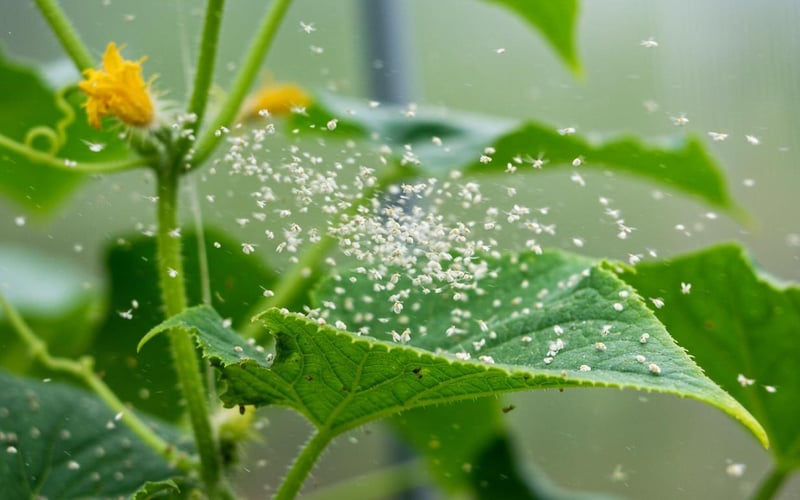
Easy to spot. Touch an infected plant and clouds of tiny white insects appear. They look like mini moths, about 1–2mm long.
The adults are not the main problem. Their larvae – tiny, clear, scale-like things stuck under leaves – do most damage.
Whitefly damage looks like aphid damage: yellow leaves, stunted growth, sticky honeydew. They love tomatoes, cucumbers, and fuchsias.
In UK greenhouses, outdoor populations die in winter. But heated greenhouses keep them going year-round. One female lays 400 eggs. They go from egg to adult in 3–4 weeks when warm.
Red Spider Mites – Nearly Invisible Plant Suckers
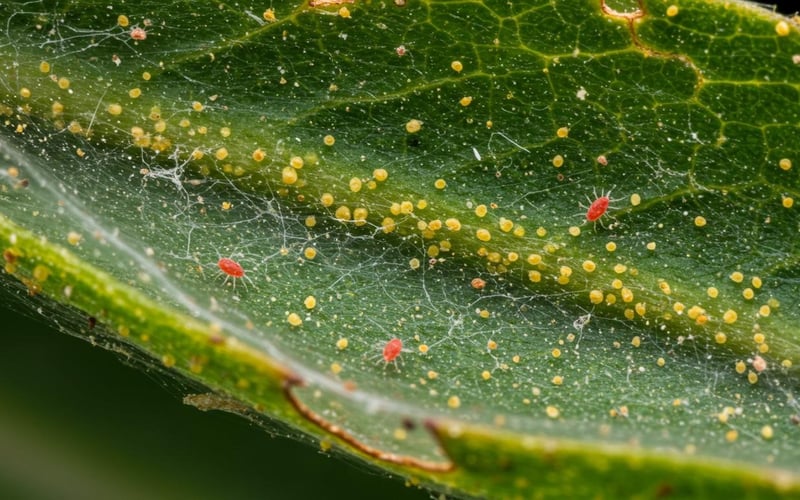
These are sneaky. At 0.5mm long, you need a magnifying glass to see them. But their damage is obvious.
Look for tiny yellow or white spots on leaves where they have sucked out sap. Then leaves go bronze and drop off.
The giveaway is fine webbing on leaves and stems. Bad infestations can cover whole plants in webbing.
Red spider mites love hot, dry conditions. That is exactly what many greenhouse crops prefer. They are worst during summer when humidity drops.
Chompers: They Eat Everything
Slugs and Snails – Night Feeders
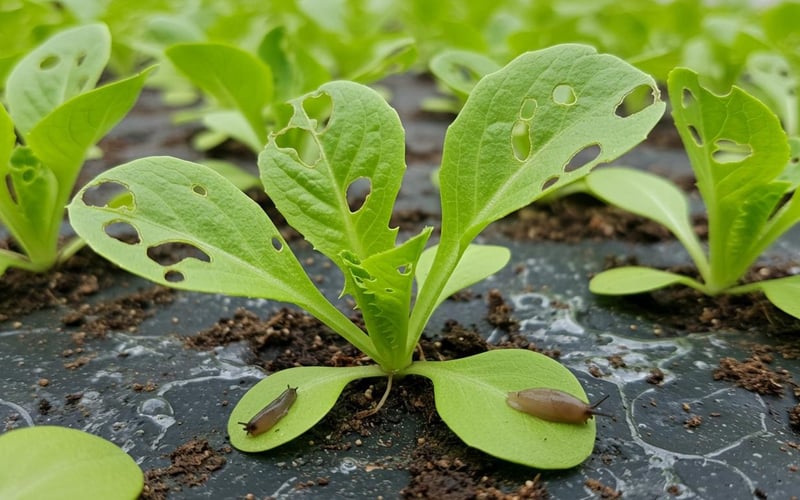
Garden slugs are bad enough. But greenhouse ones never stop for winter. They get in through door gaps, vents, and on new plants.
Greenhouse slugs are usually smaller than outdoor ones – about 2–3cm. But they are hungry.
You will see irregular holes in leaves, destroyed seedlings, and silver slime trails. Because your greenhouse stays warm, they are active all year.
They hide during the day under staging, in drainage holes, and under plant debris. They feed at night.
Caterpillars – Fast Destroyers
Several UK moths use your greenhouse as a nursery. Cabbage moth caterpillars (green, up to 4cm) are most common. Cutworms cut seedlings at ground level.
Caterpillar damage happens fast – clean holes in leaves, cut stems, sometimes whole plants stripped overnight. Unlike aphids that gradually weaken plants, caterpillars destroy crops while you sleep.
UK greenhouse caterpillars usually appear twice yearly. Spring arrivals come from pupae that survived winter. Summer ones fly in through vents to lay eggs. They are especially damaging to plants like growing chillies and brassicas.
Underground Attackers: Root Destroyers
Vine Weevil – Double Trouble
This might be your worst pest. Adult vine weevils are dark grey-black beetles about 9mm long. They nibble notches around leaf edges.
But their larvae – fat, white, C-shaped grubs – destroy root systems. Above ground you see notched feeding marks. Below ground, grubs quietly destroy roots.
Plants suddenly collapse even though they looked fine yesterday. Container plants are especially vulnerable.
Vine weevils are tricky because adults hide during the day. Larvae stay hidden in compost for months. By the time you see plant damage, root destruction is often severe.
Fungus Gnats – Overwatering Indicators
These tiny flies (2–3mm) look like fruit flies. But they actually signal your watering habits. If you have fungus gnats, you are probably overwatering.
Adult flies are just annoying. Their larvae live in soggy compost and eat organic matter and fine roots. They damage seedlings and young plants most.
You will see them hovering around plant bases and compost surfaces, especially after watering. They peak in winter when reduced light keeps compost wet longer.
Natural Pest Control That Works
Natural pest control often works better than chemicals. It lasts longer and will not harm you, your family, or beneficial insects. If you grow food, you do not want chemicals on your dinner.
Natural Treatment Quick Reference Guide
| Pest Problem | First Choice Treatment | Application Method | Frequency | When to Use |
|---|---|---|---|---|
| Few Aphids | Soap spray | Spray all surfaces, focus on undersides | Every 3–5 days | As soon as spotted |
| Many Aphids | Ladybirds + Neem oil | Release beneficials, spray weekly | Release once, spray weekly | When >10 per plant |
| Whitefly | Encarsia wasps | Release near affected plants | Every 2–3 weeks | Early in season |
| Red Spider Mites | Phytoseiulus mites | Release on affected plants | Once (they establish) | When webbing appears |
| Slugs | Copper tape + traps | Apply around pots/staging | Tape lasts years | Year-round prevention |
| Vine Weevil Adults | Nematodes (soil) | Water into compost | Once per year | April–May, August–September |
| Caterpillars | Hand picking + Bt spray | Remove by hand, spray if severe | Daily picking, spray weekly | As soon as spotted |
| Fungus Gnats | Reduce watering + yellow traps | Allow soil to dry, position traps | Ongoing | When flies appear |
Get Nature to Do the Work
Beneficial Insects – Your Bug Army
You can buy good bugs that eat bad bugs. It is like hiring pest control that works for food instead of money.
Beneficial Insect Release Planner
| Beneficial Insect | Target Pest | Best Release Time | Temperature Needed | How Many to Release | Where to Buy |
|---|---|---|---|---|---|
| Ladybirds | Aphids | April–May | 15°C+ | 50–100 per greenhouse | Garden centres, Defenders |
| Encarsia Wasps | Whitefly | April–June | 18°C+ | 3–5 per m² | Dragonfli, Biological Services |
| Phytoseiulus Mites | Red Spider Mites | May–August | 18°C+ | 2–5 per plant | Specialist suppliers |
| Lacewing | Aphids, Thrips | April–September | 15°C+ | 1000 eggs per greenhouse | Online suppliers |
| Predatory Mites | Soil pests | March–October | 12°C+ | 50–100 per m² | Specialist suppliers |
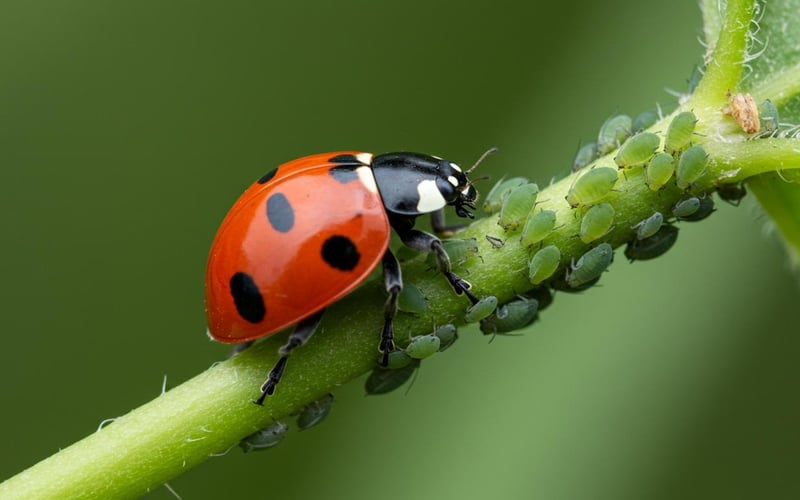
Ladybirds are the stars here. One ladybird eats 5,000 aphids in its lifetime. Their larvae are even hungrier. UK-bred ladybirds adapt well to greenhouse conditions and often stay permanently.
For whitefly, get Encarsia wasps. They are tiny parasitic wasps (0.6mm) that could not sting you if they tried. They lay eggs inside whitefly larvae, killing them before they reproduce. Use them early before whitefly populations explode.
Red spider mites get controlled by Phytoseiulus mites. These predatory mites move faster than spider mites and eat 20 per day. They thrive in slightly humid conditions that UK greenhouses naturally maintain.
UK suppliers like Defenders, Dragonfli, and Biological Services sell these with proper instructions. Most work best when greenhouse temperatures stay 18–25°C – easy in UK conditions.
Companion Planting – Strategic Plant Placement
Some plants naturally repel pests or attract beneficial insects.
Companion Planting Quick Guide
| Companion Plant | Repels | Plant With | Spacing | Additional Benefits |
|---|---|---|---|---|
| French Marigolds | Aphids, Whitefly | Tomatoes, Peppers | 30cm apart | Edible flowers |
| Basil | Aphids, Flies | Tomatoes | 20cm from plants | Fresh herbs |
| Nasturtiums | Aphids (trap crop) | Cucumbers | Edge of beds | Edible leaves/flowers |
| Chives | Aphids | Anywhere | 15cm apart | Culinary use |
| Mint | Ants, Mice | In pots only | Contained | Culinary/tea use |
| Lavender | Many flying insects | Near doorways | 40cm apart | Fragrance |
Marigolds release compounds that deter aphids, whiteflies, and soil pests. French marigolds work particularly well. Compact varieties fit easily around larger crops.
Plant basil near tomatoes for two benefits. Aromatic oils repel aphids and flying insects. Plus you get fresh herbs. Both plants like similar conditions.
Nasturtiums work as trap crops. Aphids prefer them to most other plants. They attack nasturtiums first, giving you time to spot problems.
Physical Barriers
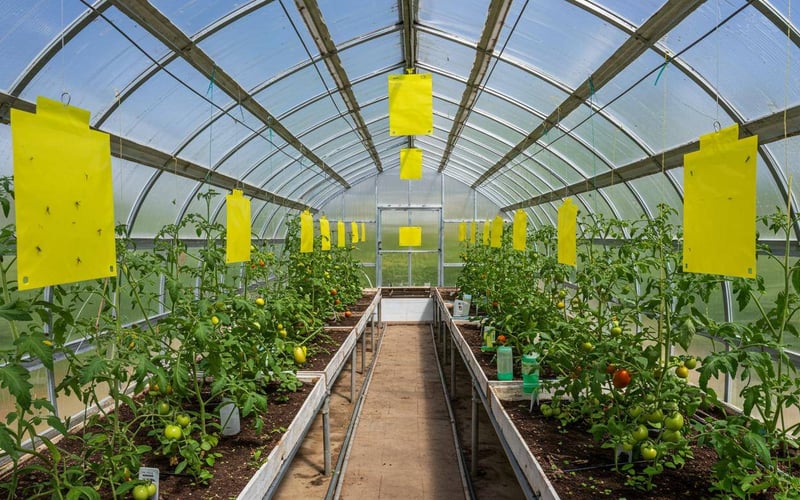
Sticky Yellow Traps – Early Warning System
Most flying greenhouse pests are attracted to yellow. Yellow sticky traps work for monitoring and population control.
In a standard 8×6 foot greenhouse, use 4–6 traps at plant height. Focus on vents where pests typically enter. Replace when 80% covered or monthly during growing season.
UK tip: keep using traps through winter in heated greenhouses. Mild winter periods can activate overwintering pests.
More than 10–15 flying insects per trap per week means you need stronger control measures.
Copper Tape – Slug Stopper
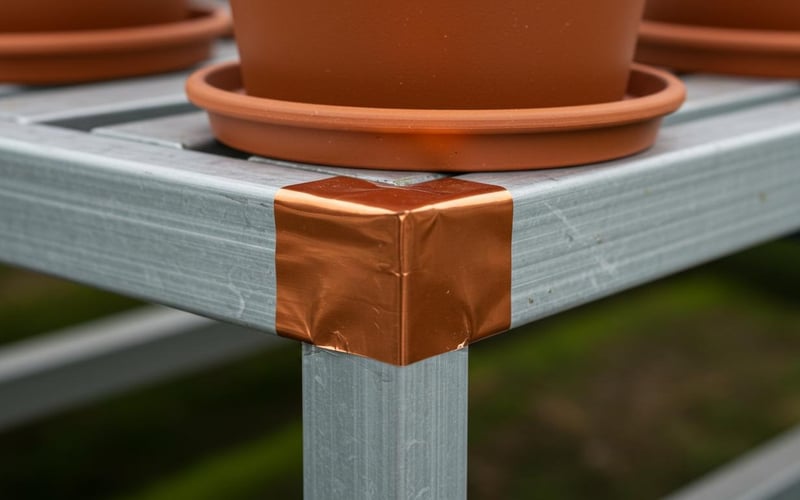
Copper tape creates a mild electrical charge when slug slime touches it. It is one of the most reliable slug deterrents.
Apply copper tape around pot rims, staging legs, and door frames. It needs to be at least 2cm wide. Narrower strips can be bridged by determined slugs.
UK suppliers now offer greenhouse-specific copper tape that will not tarnish in humid conditions. It costs more upfront than slug pellets but lasts years.
Fine Mesh – Pest Exclusion
Install 0.6mm mesh over vents to keep flying pests out while maintaining airflow. This size excludes most greenhouse pests.
Focus on roof vents and lower wall vents where pests typically enter. Do not screen everything – you need some unscreened vents for maximum airflow during hot weather.
Organic Sprays
Neem Oil – Multi-Purpose Natural Pesticide
Neem oil comes from the Indian neem tree. It works differently from chemical pesticides. Instead of killing pests instantly, it disrupts their feeding and reproduction.
That makes it safer for beneficial insects and food crops. UK-approved products like Neudorff or SB Plant Invigorator work against aphids, whiteflies, and other soft-bodied pests.
Apply during cooler parts of the day – early morning or evening – to prevent leaf scorch. Mix according to instructions, usually 5–10ml per litre of water.
Spray all plant surfaces. Repeat every 7–14 days during infestations. Reduce frequency as pest numbers drop.
Neem oil works well in UK greenhouse conditions. It stays effective at lower temperatures than many other organic treatments.
Soap Spray – Simple and Safe
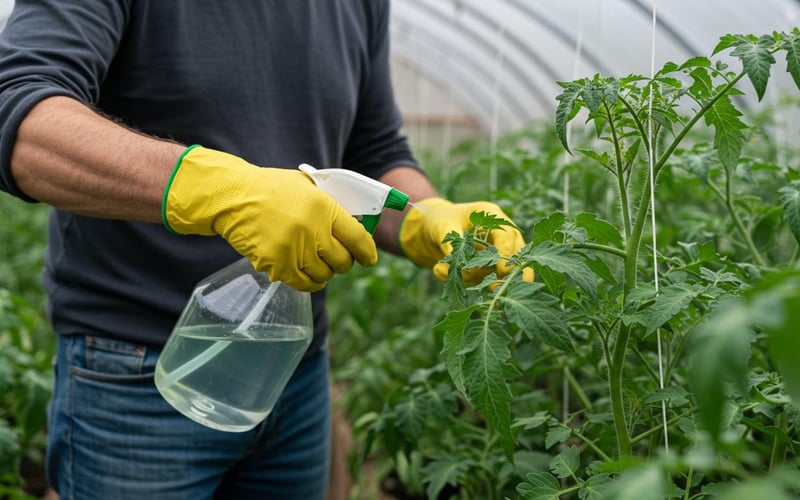
Basic soap spray kills soft-bodied pests immediately. It is completely safe for food crops. Use proper soap though – not washing-up liquid with additives.
Mix 5ml of pure castile soap or horticultural soap per litre of water. In hard water areas, add a pinch of bicarbonate of soda. Spray thoroughly, hitting leaf undersides where pests hide.
Soap works by disrupting pest cell membranes. It only affects pests it touches directly. You need thorough coverage and repeat treatments every 3–5 days.
UK suppliers like Vitax and West Riding Organics offer ready-mixed organic soap sprays.
Diatomaceous Earth – Natural Pest Powder
Food-grade diatomaceous earth is made from fossilised algae. It works mechanically by damaging soft-bodied insects' protective coating, causing dehydration.
Dust lightly around plant bases, on staging surfaces, and anywhere crawling pests travel. Reapply after watering or high humidity periods.
It works best during drier periods in well-ventilated areas. Particularly effective around staging bases and corners where pests shelter.
Buy food-grade diatomaceous earth from UK suppliers like Dragonfli. Avoid pool-grade products with harmful additives.
Prevention: Stop Problems Before They Start
Prevention is ten times easier than treatment. Get prevention right and you will rarely need to worry about serious pest problems.
Keep It Clean
Annual Deep Clean – February Fresh Start
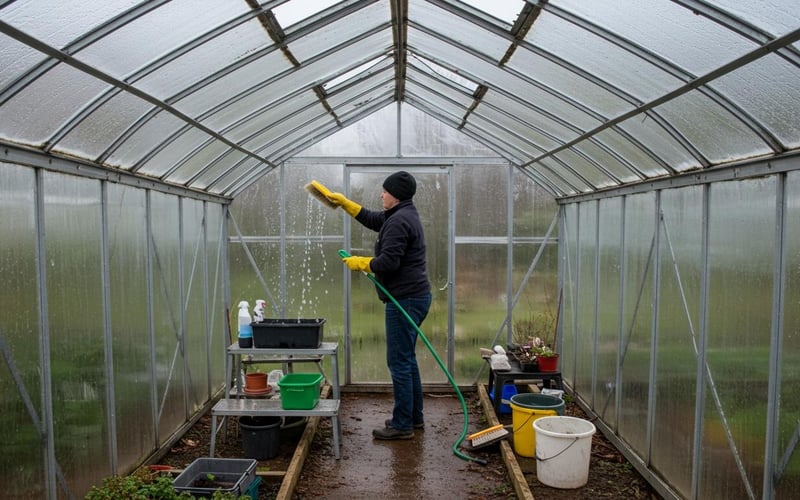
Time your annual greenhouse clean for late winter (February–March). Eliminate overwintering pests before they wake up. A thorough guide to cleaning your greenhouse makes this easier.
Empty everything – plants, pots, staging, tools. Brush down all surfaces to remove debris, cobwebs, and pest hiding spots. Pay attention to crevices around doors, vents, and staging.
Wash everything with 1 part household bleach to 10 parts water. Or use specialised greenhouse disinfectants. This kills pest eggs, fungal spores, and bacteria without harmful residues.
Let everything dry completely before putting it back. That usually takes 24–48 hours in UK conditions.
Quarantine New Plants – Two-Week Rule
New plants are the biggest risk for bringing pests into your clean greenhouse. Proper quarantine prevents most pest introductions.
Matt's Tip: The Two-Week Quarantine Rule
I learned this the hard way. A customer once brought a beautiful fuchsia from a car boot sale straight into their greenhouse. Within two weeks, whitefly had spread to every tomato plant. Now I tell everyone the same thing: isolate new plants for 14 days minimum. Set up a small cold frame or use a bright indoor spot. Check every 2–3 days for sticky honeydew, unusual leaf damage, or tiny insects on leaf undersides. It saves you weeks of treatment later.
UK garden centres vary hugely in pest management. Specialist nurseries usually have cleaner stock than general retailers. But quarantine everything regardless.
Clean Tools Between Jobs
Tools can transfer pest eggs and diseases between plants faster than you think.
Keep a container of diluted bleach solution (1:10 ratio) or methylated spirits near your working area. Dip tools between uses, especially when moving between different plant types.
Pay extra attention when working with plants showing pest or disease signs. Replace sterilisation solution weekly during busy periods.
Control the Environment
Humidity Management
Most UK greenhouse pests thrive in specific humidity ranges. Get this right and you discourage pests while supporting plants.
Aim for 50–70% humidity for most crops during growing season. This is too dry for many fungal problems. It is also slightly low for optimal red spider mite breeding.
Use digital hygrometers at plant level throughout your greenhouse. UK conditions often see big humidity swings between day and night.
Reduce morning humidity spikes through strategic ventilation. Automatic vent openers help maintain consistent conditions.
Small fans positioned for gentle air movement prevent stagnant conditions. This naturally moderates humidity.
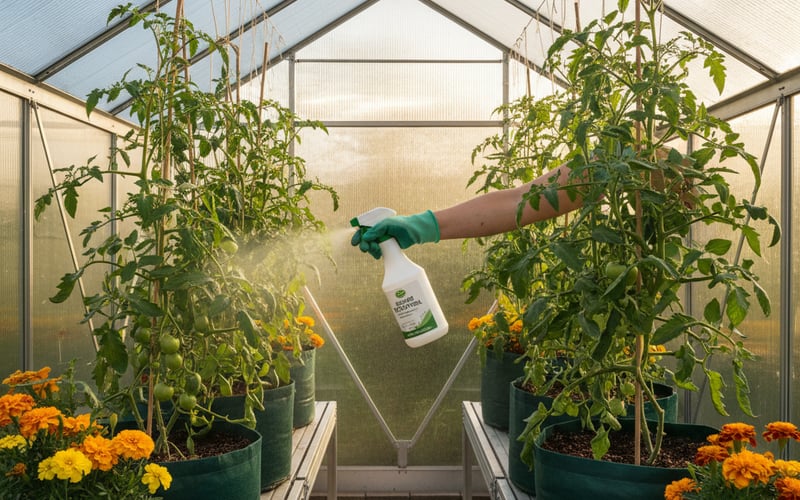
Temperature Control
Consistent temperature management disrupts pest breeding cycles. Most pests need specific temperature ranges for reproduction.
Maintain 18–25°C during the day for most crops. Drop 3–5°C at night. This natural temperature cycle stresses many pests while supporting plants.
Avoid temperature spikes above 30°C. These stress plants and make them more vulnerable to pest attack. Summer cooling through ventilation or shading your greenhouse is often necessary.
Use thermal screens or insulation during cold periods. Our guide to insulating a greenhouse covers this in detail. Avoid creating hot spots that some pests prefer.
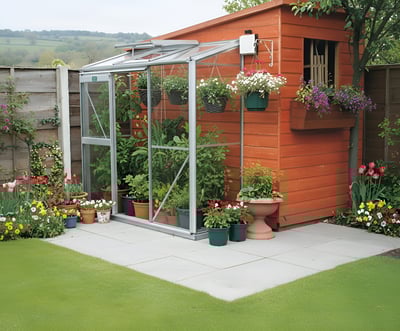
Interestingly, lean to greenhouses benefit from the house wall's thermal mass. This keeps temperatures more stable – and stable temperatures mean fewer pest outbreaks.
Monitor temperature variations using min-max thermometers at different locations.
|
Matt's Pick for Pest-Resistant GrowingElite Easygrow 2x6 Lean to Greenhouse – 6mm Polycarbonate Best For: Pest prevention with excellent ventilation and easy cleaning access Why I Recommend It: This lean-to fits against your house wall for stable temperatures. Stable temperatures mean fewer pest outbreaks. The 6mm polycarbonate panels handle cleaning without breakage. We have fitted dozens of these. The compact 2×6 footprint makes weekly pest inspections quick. £579 View This Greenhouse → |
Month-by-Month Pest Prevention Calendar
Different pests become active at different times. Know when to expect them and you can be ready. If you are new to greenhouse growing, our guide to greenhouse growing tips for beginners covers the basics first.
Monthly Pest Activity Calendar
| Month | High Risk Pests | Medium Risk Pests | Low Risk Pests | Key Actions |
|---|---|---|---|---|
| January | Fungus Gnats | Slugs, Vine Weevil | – | Monitor traps, plan spring cleaning |
| February | Fungus Gnats | Slugs, Vine Weevil | – | Deep clean, service equipment |
| March | Slugs, Vine Weevil | Aphids | – | Set up monitoring, seal gaps |
| April | Aphids, Vine Weevil | Whitefly, Slugs | Red Spider Mites | Release beneficial insects, increase monitoring |
| May | Aphids, Whitefly | Red Spider Mites, Caterpillars | Slugs | Daily monitoring, organic sprays if needed |
| June | Whitefly, Red Spider Mites | Aphids, Caterpillars | Vine Weevil | Peak monitoring, environmental controls |
| July | Red Spider Mites, Whitefly | Caterpillars, Aphids | – | Heat management, continue controls |
| August | Red Spider Mites, Whitefly | Caterpillars, Vine Weevil | – | Sustained monitoring, harvest regularly |
| September | Vine Weevil, Aphids | Whitefly, Red Spider Mites | Slugs | Begin autumn cleanup |
| October | Vine Weevil, Slugs | Aphids | – | Winter prep, final treatments |
| November | Slugs, Vine Weevil | – | Fungus Gnats | Complete winter prep |
| December | Fungus Gnats | Slugs, Vine Weevil | – | Minimal monitoring, planning |
Seasonal Task Checklist
Spring Tasks (March–May)
- March: Complete annual deep clean
- March: Check and seal structural gaps
- March: Set up sticky trap monitoring system
- March: Service heating and ventilation systems
- April: Increase monitoring to twice weekly
- April: Order beneficial insects for May release
- April: Plant companion plants (marigolds, basil)
- May: Switch to daily monitoring
- May: Apply first organic treatments if needed
- May: Release beneficial insects
Summer Tasks (June–August)
- June: Daily pest monitoring during peak season
- June: Install shading to prevent heat stress
- June: Begin weekly spray rotations if needed
- July: Monitor temperature/humidity closely
- July: Increase watering frequency (but ensure drainage)
- July: Continue beneficial insect releases
- August: Harvest regularly to remove overripe fruit
- August: Remove finished plants promptly
- August: Plan autumn prevention strategies
Autumn Tasks (September–November)
- September: Reduce monitoring to twice weekly
- September: Begin removing finished plants and debris
- September: Assess and repair greenhouse structure
- October: Complete major cleaning before winter
- October: Treat any remaining pest problems
- October: Install winter insulation carefully
- November: Final greenhouse inspection
- November: Minimise plants for winter
- November: Order next year's beneficial insects
Winter Tasks (December–February)
- December: Weekly trap monitoring
- December: Adjust watering for dormant season
- January: Monthly plant inspections
- January: Plan next year's pest management strategy
- February: Begin preparing your greenhouse for spring
- February: Service pest control equipment
Spring Setup (March–May)
March – Big Cleanup
March is fresh start month. Complete your annual deep clean before warming temperatures wake up overwintering pests. Remove all plant debris and organic matter where pests might have spent winter.
Check greenhouse structure for damage that could let pests in. Seal gaps around doors, vents, and glazing.
Start monitoring with sticky traps throughout your greenhouse. Service ventilation, heating, and automatic controls.
April – Early Detection
April warming triggers rapid pest reproduction. Many UK greenhouse pests complete their first generation during April. Populations are still manageable at this stage.
Increase monitoring to twice weekly. Check both traps and plant material. Focus on new growth, flower buds, and leaf undersides.
Release beneficial insects if monitoring shows emerging problems. Soil needs 15°C consistently for ground-dwelling beneficials. Air temperatures above 18°C suit flying beneficial insects.
Start companion planting with marigolds and herbs.
May – Active Management
May brings the first serious pest challenges. Overwintering populations mature and new generations emerge.
Switch to daily observation during routine activities. Early May detection allows targeted treatments while populations remain small.
Apply organic sprays at first sign of activity. May's moderate temperatures provide ideal conditions for treatment effectiveness.
Adjust watering to avoid conditions that encourage fungus gnats.
Summer Vigilance (June–August)
June – Peak Season Management
June is peak breeding season for most UK greenhouse pests. Intensive management prevents population explosions.
Daily monitoring matters most now. Tomatoes, cucumbers, and peppers often show first serious infestations.
Implement weekly organic spray rotations if pest pressure exceeds acceptable levels.
Manage environment carefully to prevent heat stress. Provide adequate ventilation and air circulation.
Remove heavily infested plant material promptly.
July – Heat and Stress Management
July heat creates ideal conditions for spider mites while stressing plants. Environmental management is as important as direct pest control.
Monitor temperature and humidity closely. Maintain air circulation to prevent hot, dry conditions that favour spider mite reproduction.
Increase watering frequency while ensuring good drainage. Continue beneficial releases if needed, focusing on heat-tolerant species.
Harvest regularly to remove overripe fruits that attract pests.
August – Sustained Effort
August maintains peak pest pressure while you prepare for autumn transition.
Maintain intensive monitoring and treatment routines. Begin planning autumn management by identifying problem areas.
Remove finished plants promptly to eliminate breeding sites.
Autumn Preparation (September–November)
September – Transition Time
September cooling begins slowing pest reproduction. This creates opportunities for overwintering prevention.
Reduce monitoring frequency to twice weekly. Maintain vigilance for late-season infestations that might overwinter.
Begin autumn cleanup by removing finished plants and organic debris. Assess and repair infrastructure before winter.
October – Winter Prep
October begins serious winter preparation. Focus shifts from active control to overwintering prevention.
Complete major cleaning projects before cold weather limits working conditions. Inspect and treat remaining plants for existing problems.
Install winter insulation carefully to avoid creating pest hiding places.
November – Final Preparations
November completes winter prep with final prevention measures.
Conduct a final greenhouse inspection. Address remaining pest problems before cold weather makes treatment difficult.
Minimise plant material to reduce overwintering habitat. Position monitoring traps for winter surveillance.
Winter Watching (December–February)
December–January – Quiet Monitoring
Winter cold dramatically reduces pest activity. Reduced intervention is fine, but maintain surveillance.
Check traps weekly, noting any activity. Maintain minimal watering to prevent both plant stress and fungus gnat conditions.
Inspect plants monthly, particularly near heating systems. Plan next season's strategies.
February – Spring Prep Begins
February starts spring preparation. Increasing daylight stimulates both plant growth and pest activity.
Begin planning major spring cleaning. Order materials and schedule work.
Increase monitoring frequency as warming conditions may activate overwintering pests. Service pest control equipment.
When You Need Professional Help
Sometimes DIY pest control is not enough. Know when to call professionals to save your crops.
Emergency Action Decision Tree
| Situation | Immediate Action | Next Steps | When to Call Professionals |
|---|---|---|---|
| Few pests spotted | Increase monitoring | Apply soap spray if spreading | Not needed |
| Moderate infestation | Soap spray + beneficial release | Monitor daily, repeat treatments | If no improvement in 2 weeks |
| Heavy infestation | Immediate organic spray treatment | Release multiple beneficial species | If >50% plants affected |
| Multiple pest types | Identify all species first | Coordinate multiple treatments | If more than 2 species |
| Valuable plants at risk | Isolate affected plants | Intensive treatment programme | Consider immediately |
| Recurring problems | Review prevention measures | Check for underlying causes | If problems persist after 3 treatments |
Cost-Effective Treatment Comparison
| Treatment Method | Initial Cost | Ongoing Cost | Effectiveness | Duration | Best For |
|---|---|---|---|---|---|
| Soap Spray | £3–5 | £2 per month | Good | 3–5 days | Small infestations |
| Neem Oil | £8–12 | £5 per month | Very Good | 7–14 days | Multiple pest types |
| Ladybirds | £15–25 | £15 per season | Excellent | 3–6 months | Aphid problems |
| Sticky Traps | £10–15 | £20 per year | Good | 4–6 weeks | Monitoring/flying pests |
| Copper Tape | £20–30 | None | Excellent | 2–3 years | Slug prevention |
| Professional Treatment | £100–300 | Variable | Excellent | Variable | Severe infestations |
When You Are Out of Your Depth
When pests cover more than half your plants despite consistent natural control, call a professional. The intensive treatment they provide is worth the cost.
Multiple pest species attacking at once create complex problems. Coordinated strategies go beyond typical home management.
Valuable collections including rare varieties justify professional treatment. When pest pressure threatens significant losses, do not hesitate.
Recurring issues that return despite proper management may indicate underlying problems. Professionals have diagnostic tools for identifying hidden sources.
Some species, including certain vine weevil populations, require professional-grade treatments not available to home growers.
UK Professional Services
Look for BPCA (British Pest Control Association) certification. This demonstrates competency in modern pest management techniques.
Request detailed plans explaining identification, methods, expected outcomes, and follow-up procedures.
Professional greenhouse pest control typically costs £100–300 for initial consultation and basic treatment. Compare this against potential crop losses and time investment.
Common Mistakes That Make Things Worse
Many well-meaning gardeners accidentally create bigger problems. Here are the mistakes we see most often.
The Chemical Treatment Trap
Reaching for pesticides at first sign of pests often backfires. It disrupts natural predator-prey balances, creating worse problems than the original infestation.
Repeated applications select for resistant pest populations. Meanwhile, susceptible beneficial insects get eliminated. Even organic pesticides disrupt ecosystems when used inappropriately.
Ignoring Early Warnings
Small populations detected early need minimal intervention. The same pests can overwhelm crops if allowed to establish.
Sticky traps provide clear early warning. But many gardeners check irregularly or ignore moderate captures. Plant symptoms appear weeks after establishment when damage is already done.
Create monitoring routines that integrate with your regular greenhouse activities. Document observations systematically.
Poor Hygiene Practices
Leaving debris provides overwintering sites and breeding habitat. Using garden soil or unsterilised compost introduces eggs and larvae directly.
Sharing tools between outdoor and greenhouse areas transfers pests. Establish separate "clean" and "dirty" tool sets. Create quarantine procedures for all incoming materials.
Timing Errors
Many treatments work best during specific pest life stages or seasons. Beneficial releases need proper conditions and prey availability.
Organic sprays work best during moderate temperatures when pests are active. Learn pest cycles specific to UK conditions. Plan around weather rather than calendar dates alone.
Your Questions Answered
What are the most common greenhouse pests in the UK?
Aphids, whitefly, red spider mites, slugs, and vine weevil. These five pests thrive in UK greenhouse conditions. Aphids usually appear first in spring. Red spider mites become problematic during hot summer weather. Slugs stay active year-round in heated greenhouses. Vine weevil attacks both leaves and roots throughout the growing season.
Do natural pest control methods actually work?
Yes, they often work better than chemicals. Our temperate climate is perfect for many biological controls. Beneficial insects like ladybirds and parasitic wasps love UK greenhouse conditions. They often set up permanent residence. Organic sprays work well in moderate temperatures. The controlled environment means your beneficial insects stay put.
When should I be most worried about pests?
Spring (March–May) is your critical prevention period. Overwintering pests wake up and start breeding. Summer (June–August) is when populations can explode. Warm conditions let pests complete life cycles very quickly. Stay alert year-round in heated greenhouses.
How often should I check for pests?
At least twice weekly during growing season (April–October). Daily observation while doing other greenhouse tasks is even better. Winter can drop to weekly checks unless you keep things heated. Catching a few aphids in week one beats dealing with thousands in week four.
How do I stop pests getting in?
Fine mesh (0.6mm) on vents is your best defence. It keeps flying pests out while letting air flow. Keep the area around your greenhouse clean and weed-free. Always quarantine new plants for two weeks. Seal gaps around doors and glazing. Consider copper tape around staging to deter slugs.
Where can I buy beneficial insects in the UK?
Defenders, Dragonfli, and Biological Services are the main suppliers. Many garden centres stock basics like ladybirds too. You can order online and suppliers time delivery for optimal release conditions. The biological control market has really grown in the UK.
What is the biggest mistake with greenhouse pest control?
Waiting too long to act is the single biggest mistake. People ignore early warning signs from sticky traps or minor plant symptoms. Then they face a full infestation that could have been stopped with a soap spray weeks earlier. The second biggest mistake is jumping straight to chemicals.
Frequently asked questions
What are the most common greenhouse pests in the UK?
Whitefly, red spider mite, aphids, slugs and vine weevil are the top five. Whitefly and red spider mite thrive in warm, dry conditions. Aphids peak in spring and early summer. Vine weevil larvae attack roots from autumn to spring.
How do I get rid of whitefly in my greenhouse?
Introduce Encarsia formosa biological control wasps in April or May. Yellow sticky traps catch adult whitefly. For heavy infestations, spray with organic pyrethrum at dusk when bees are inactive. Remove worst-affected leaves by hand.
Are greenhouse pest controls safe for edible crops?
Biological controls and organic sprays are safe for food crops. Nematodes, predatory mites and parasitic wasps leave no chemical residue. Organic sprays like pyrethrum and neem oil have short pre-harvest intervals of 1-3 days.
When should I start pest control in my greenhouse?
Start preventive measures in March before pest populations build. Hang yellow sticky traps from mid-March. Introduce biological controls when daytime temperatures hold above 15C. Check plants weekly from April through October.
Does ventilation help control greenhouse pests?
Good ventilation reduces red spider mite, botrytis and damping off. Red spider mite thrives in hot, dry, still air. Opening vents and doors improves airflow and raises humidity through damping down. Misting foliage deters spider mite.
Related Articles
- How to Grow Seeds in a Greenhouse
- Growing Vegetables in a Greenhouse All Year Round
- How to Maintain Humidity Inside a Greenhouse
- Keep Your Greenhouse Cool During Summer
- What Can I Grow in the Greenhouse in Winter?
Questions about greenhouse pest control? Email us at info@greenhousestores.co.uk