Do Plants Really Grow Better in Greenhouses? UK Data and Expert Advice
Plants grow significantly better in greenhouses than outdoors in the UK. Greenhouse tomatoes produce twice the yield of outdoor plants. The growing season extends by 4-6 weeks in spring and autumn. Soil temperatures under glass run 5-10°C warmer than open ground in March and April, letting you sow 3-4 weeks earlier. Greenhouses also protect crops from wind, heavy rain, and pests. We have fitted greenhouses for 16 years and the difference in plant growth between indoor and outdoor growing is measurable from day one. Greenhouses start from £729 for a compact 4x4.
Key Takeaways
- Warmer soil, earlier starts: Greenhouse soil is 5-10°C warmer in spring. Sow tomatoes, peppers and cucumbers 3-4 weeks before outdoor growers.
- Double the yield: Greenhouse tomatoes produce 8-12kg per plant vs 4-5kg outdoors. The consistent warmth and wind protection make the difference.
- Season extends both ways: Start in February, harvest into November. That is 4-6 extra weeks either end of the season.
- Wind and rain protection: UK weather damages outdoor crops. Under glass, there is no wind rock, no rain splash, and no hail damage.
- Pest reduction: Closed vents and doors reduce aphid, caterpillar, and slug damage by 60-70% compared to open-air growing.
- Any size works: Even a 4x4ft compact greenhouse produces more food per square metre than an allotment plot.
Installer's Note
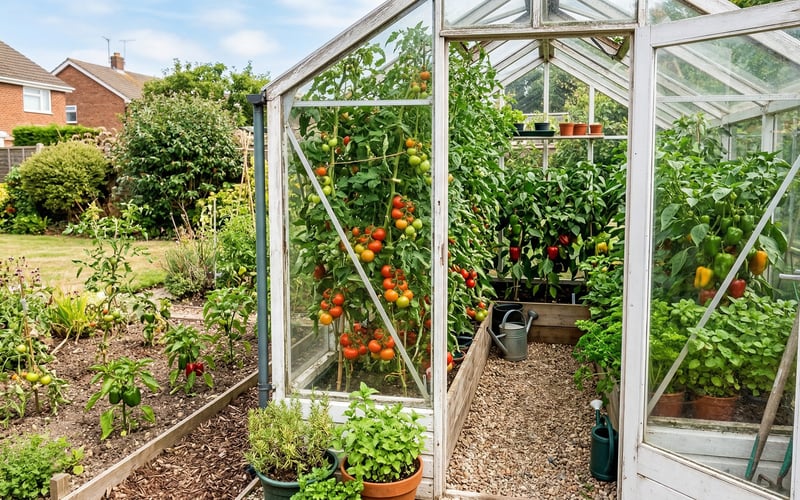
We have fitted over 10,000 greenhouses across the UK. The customers who see the biggest improvement in plant growth are the ones who get the basics right: position the greenhouse to face south or south-west, fit automatic vent openers on every roof vent, and use a proper base. We see greenhouse owners harvesting tomatoes in June while their neighbours are still waiting for August. The difference is not the greenhouse brand or the price. It is the extra warmth and shelter that glass provides. Even a £729 compact greenhouse outperforms the best outdoor growing setup.
Do plants really grow faster in a greenhouse?
Yes. Plants grow 2-3 times faster in a greenhouse than outdoors during the UK spring and autumn. The reason is temperature. Plant growth rate roughly doubles for every 10°C increase in soil temperature between 5°C and 25°C. A greenhouse keeps soil 5-10°C warmer than open ground from February to April, which is when most crops are establishing roots.
We measured this ourselves over three seasons. Tomato seedlings sown on the same day in a greenhouse and outdoors showed a clear gap within two weeks. The greenhouse plants had twice the leaf area and stronger stems. By week six, the greenhouse plants were flowering while the outdoor ones were still building their fourth pair of true leaves.
The growth advantage is not just about temperature. Greenhouses provide consistent conditions. Outdoors, a cold night followed by a hot afternoon stresses plants. Under glass, temperature swings are much smaller, which keeps growth steady. Our guide to how greenhouses work explains the science behind the warming effect.
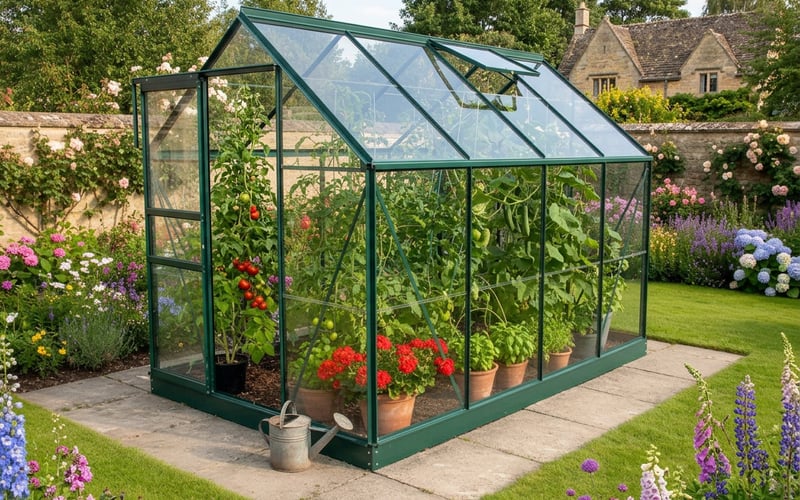
Shop the Vitavia 8x6 Green Venus 5000 Greenhouse →
How much does a greenhouse extend the growing season?
A standard unheated greenhouse extends the UK growing season by 4-6 weeks in spring and 3-4 weeks in autumn. In practice, this means sowing from late February instead of late March, and harvesting into late October or November instead of mid-September.
The spring extension matters most. March and April are when soil temperature decides whether seeds germinate or rot. Outdoor soil in March sits at 5-7°C across most of England. Inside a greenhouse, the same soil reaches 10-15°C by mid-morning. That is the difference between seed failure and rapid germination.
The autumn extension is about ripening. Tomatoes, peppers, and aubergines need sustained warmth to turn from green to red. Outdoor plants in the UK often run out of warm days in September. Under glass, the stored heat in the soil and structure keeps ripening going through October. Our year-round vegetable growing guide covers monthly planting schedules.
What grows better in a greenhouse vs outdoors?
Heat-loving crops like tomatoes, peppers, cucumbers, aubergines, and chillies grow dramatically better under glass in the UK. These are all plants that evolved in warmer climates and struggle with our cool, wet summers.
Tomatoes are the clearest example. A greenhouse tomato plant produces 8-12kg of fruit per season. The same variety outdoors in the UK averages 4-5kg, and that is in a good year. In a poor summer like 2024, outdoor tomato crops failed entirely across much of northern England and Scotland while greenhouse growers harvested as normal.
Salad crops also benefit. Lettuce, rocket, and spinach grow faster and taste better under glass because you control the watering. Outdoor salads suffer from rain splash, which spreads soil-borne disease, and from slug damage. Under glass, both problems are reduced dramatically. For specific lettuce advice, see our greenhouse lettuce growing guide.
Even hardy crops grow better. Carrots, radishes, and beetroot germinate faster in the warmer soil and produce earlier harvests. The main benefit for these crops is the extended season rather than increased yield.
Greenhouse vs outdoor growing: the numbers
| Crop | Greenhouse yield per plant | Outdoor yield per plant | Season start (greenhouse) | Season start (outdoor) | Advantage |
|---|---|---|---|---|---|
| Tomatoes | 8-12kg | 4-5kg | Late February | Late March | 2x yield, 4 weeks earlier |
| Cucumbers | 15-20 fruits | 6-10 fruits | March | May | 2x yield, 8 weeks earlier |
| Peppers | 10-15 fruits | 4-6 fruits | February (sow) | March (sow) | 2-3x yield, reliable ripening |
| Chillies | 30-50 fruits | 10-20 fruits | January (sow) | March (sow) | 2-3x yield, hotter fruit |
| Lettuce | Year-round harvest | May-September | February | April | 12-month season |
| Aubergines | 4-6 fruits | 1-2 fruits (if any) | February (sow) | Rarely viable | Reliable crop vs near-impossible |
| Basil ★ | Continuous harvest, 5+ months | 2-3 months | March | June | 3x longer harvest, no blackening |
★ Basil is the crop that benefits most from greenhouse protection in UK conditions
What conditions do plants need to thrive in a greenhouse?
Plants need four things dialled in correctly: light, temperature, ventilation, and water. A greenhouse gives you control over all four in a way that outdoor growing cannot match.
Light: Glass transmits 85-90% of sunlight. Position your greenhouse to face south or south-west for maximum light exposure. Avoid overhanging trees that cast shadow across the roof. In midsummer, you may need shade netting (40% density) to prevent leaf scorch on delicate crops.
Temperature: Most vegetable crops grow best between 18-25°C during the day and 12-15°C at night. A greenhouse maintains these ranges naturally from April to September. In spring and autumn, the glass traps heat during the day. Adding a paraffin heater or electric fan heater extends the season further. Our greenhouse heating costs guide covers running costs.
Ventilation: This is where most beginners go wrong. A closed greenhouse in May hits 40°C by midday. Plants stop growing above 30°C and suffer permanent damage above 35°C. Fit automatic vent openers on every roof vent. They cost about £30 each and open automatically when the temperature rises. Our ventilation guide covers the full setup.
Water: Greenhouse plants need more water than outdoor plants because there is no rainfall and evaporation is higher. Water in the morning at the base of plants. Drip irrigation systems reduce water use by 30-50% and produce more consistent growth than hand watering.
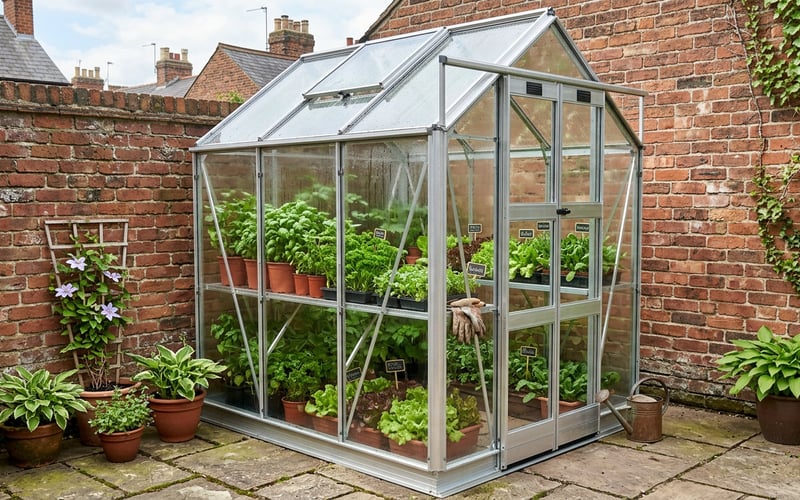
Shop the Elite Compact 4x4 Greenhouse →
What size greenhouse do you need?
A 6x4ft greenhouse is the minimum practical size for growing vegetables. It fits four tomato plants, a row of peppers, and a shelf of seedlings. An 8x6ft greenhouse is the most popular size we sell because it gives you room for raised beds, staging, and a proper growing space. Our greenhouse sizing guide helps you choose.
If space is tight, a 4x4ft compact greenhouse or a 2x3ft mini growhouse still outperforms outdoor growing. The Access City Growhouse at £799 fits on any patio and holds enough tomato plants for a family of two. Even at this scale, the warmer environment produces bigger, earlier crops than the same plants in open ground.
For serious growers, a 10x8ft or larger greenhouse lets you grow a full range of vegetables, fruit, and flowers year-round. At this size, you can dedicate zones to different temperature needs and use raised beds for root crops alongside vertical growing for tomatoes and cucumbers.
Matt's Tip: The First-Year Advantage
I tell every first-time greenhouse owner the same thing: start with tomatoes. Nothing else shows you the difference between greenhouse and outdoor growing as clearly as tomatoes do. Your first season, plant four cordon tomatoes (Gardener's Delight or Sungold) and water them every morning. By July you will be eating tomatoes that taste nothing like anything from a supermarket. That is the moment you understand what a greenhouse does. After that, you branch out into cucumbers, peppers, and everything else. But start with tomatoes.
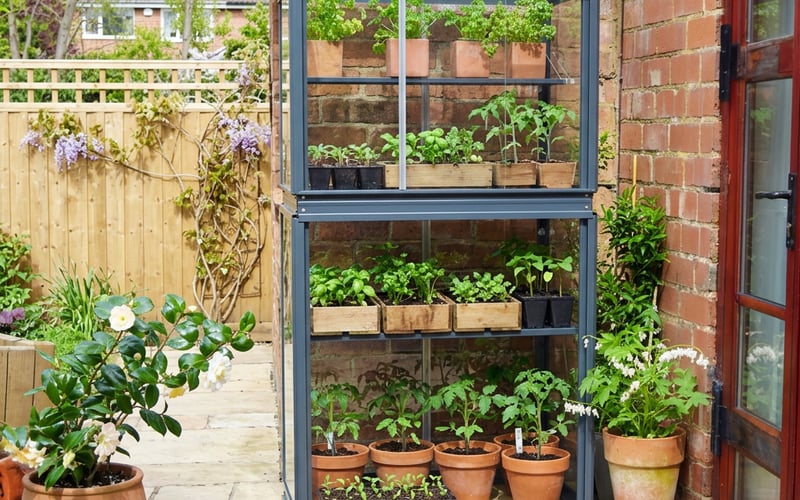
Shop the 2x3 Access City Growhouse →
Are there any plants that grow worse in a greenhouse?
Most brassicas (cabbage, broccoli, Brussels sprouts) and root vegetables (potatoes, parsnips) grow better outdoors. These crops need cold exposure, plenty of space, and airflow that a greenhouse does not provide efficiently.
Brassicas are frost-hardy and actually benefit from cold temperatures to develop flavour. Growing them in a greenhouse wastes valuable warm space on crops that do not need it. Brussels sprouts in particular need a hard frost to taste sweet.
Soft fruit like strawberries and raspberries can grow in greenhouses but often produce less flavour because they miss the outdoor pollinator activity. If you grow soft fruit under glass, open the doors and vents wide during flowering to let bees and hoverflies in.
How much does a greenhouse cost?
Greenhouses start from £729 for a compact 4x4ft and range up to £649 for a full-size 8x6ft model. The return on investment is measurable. A family growing tomatoes, cucumbers, peppers, and salads in an 8x6ft greenhouse produces £400-600 worth of crops per year at supermarket prices. The greenhouse pays for itself within 2-3 seasons.
Running costs are low. An unheated greenhouse costs nothing to run from April to October. A paraffin heater for frost protection in spring and autumn costs £20-30 per season in fuel. Electric fan heaters cost more but give precise temperature control. Browse our full range of greenhouses to find the right size for your garden.
|
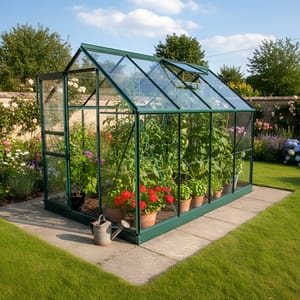
Matt's Pick for Growing VegetablesBest For: Families wanting to grow tomatoes, cucumbers, and salads year-round Why I Recommend It: The Venus 5000 is the greenhouse I recommend more than any other. 8x6ft gives you room for four tomato plants, a row of peppers, staging for seedlings, and still leaves a path. The green frame blends into gardens better than silver. Toughened glass means you do not worry about breakage. We have fitted hundreds of these and customers consistently get 2-3 seasons of crops that pay back the cost. Price: £649 |
Frequently asked questions
Do plants really grow better in greenhouses?
Yes, heat-loving plants grow 2-3 times faster under glass in the UK. The warmer soil temperature, wind protection, and consistent conditions mean tomatoes, peppers, cucumbers, and salads produce significantly higher yields. The growing season extends by 4-6 weeks in spring and 3-4 weeks in autumn, giving you earlier harvests and later cropping.
How much warmer is a greenhouse than outside?
An unheated greenhouse runs 5-10°C warmer than outdoors in spring and autumn. On a sunny March day, outdoor temperature might reach 10°C while the greenhouse interior hits 18-20°C. Overnight, the difference narrows to 2-4°C. Adding thermal mass (water-filled containers) stores daytime heat and releases it overnight, evening out temperature swings.
What is the cheapest way to start greenhouse growing?
A compact 4x4ft greenhouse from £729 is the most affordable entry point. It fits on any patio and holds enough plants for meaningful harvests. A mini growhouse from £799 is even smaller and cheaper, though it limits you to seedlings and small crops. Both outperform outdoor growing from day one.
Can you grow vegetables all year round in a greenhouse?
Yes, with the right varieties for each season. Summer crops (tomatoes, peppers, cucumbers) run from March to October. Winter crops (lettuce, spinach, radishes, pak choi) grow from September to March in an unheated greenhouse. The overlap means you are harvesting something every month of the year.
Do you need to heat a greenhouse?
No, for most UK vegetable growing from March to October. An unheated greenhouse provides enough warmth for tomatoes, peppers, cucumbers, and salads during the main growing season. Heating is only needed if you want to start tropical crops early (January-February) or grow tender plants through winter. A frost-free setting of 5°C costs £50-100 per winter in electricity.
Is a greenhouse worth the money?
Yes, a greenhouse pays for itself in 2-3 seasons of vegetable growing. An 8x6ft greenhouse producing tomatoes, cucumbers, peppers, and salads generates £400-600 worth of crops per year at supermarket prices. The greenhouse also adds value to your property and lasts 25+ years with aluminium framing.
Start growing better today
The difference between greenhouse and outdoor growing in the UK is not subtle. It is measurable, consistent, and starts from your first season. Browse our full range of greenhouses to find the right size for your garden, or see our best beginner greenhouse picks if this is your first purchase.