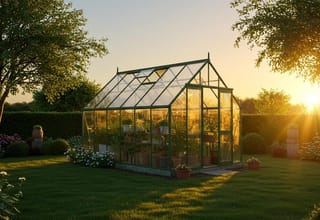
Best Beginner Greenhouse: Expert Picks 2026
Written by matt W | co-founder, greenhouse stores | Greenhouse Stores experience since 2012 | fact-checked january 2026
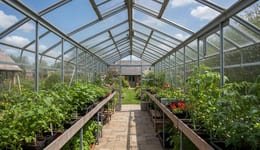
For the majority of UK gardeners, the Vitavia Venus is the best greenhouse for beginners. It offers the right balance of durability, spare parts availability, and price. We have sold over 3,000 Venus models since 2012 and the return rate sits below 2%. If you have limited space, the Elite Compact (made in Bolton, UK) is the stronger choice. The Swallow Kingfisher is ideal if you want professional installation included. Browse our full range of greenhouses to compare every model side by side.
Key takeaways
- Choose a comfortable size: A 6x4 works well where space is tight. A 6x8 gives you more room for crops and staging if your garden allows.
- Choose your glazing: Toughened glass is a useful upgrade, particularly in family gardens. Horticultural glass keeps the initial cost lower; polycarbonate is a lightweight, impact-resistant option.
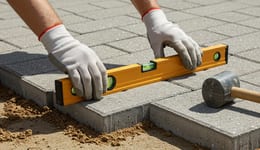
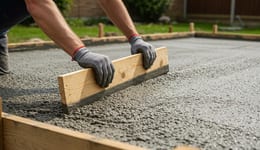
- Base Required: You don't necessarily need a concrete slab, but you must anchor the greenhouse. See our guides on concrete bases or paving slab bases.
- Budget: Expect to pay £509-£619 for a quality aluminium starter greenhouse with horticultural glass. Add £100-£150 more for the toughened safety glass upgrade we recommend. These will last 15-25 years with minimal upkeep.
- Running costs: You can grow plenty without heating. If you want winter warmth, costs depend on your tariff, insulation and thermostat setting.
Installer's note
Greenhouse Stores has sold and supported greenhouses since 2012. Before choosing a size, mark out your staging and growing space on the ground. Leave yourself a comfortable path. A 6x8 offers more flexibility, but a well-planned 6x4 can be a lovely first greenhouse.
Top 3 beginner greenhouses compared
| Factor | Vitavia Venus 6x8 | Elite Compact 4x6 | Swallow Kingfisher 6x8 |
|---|---|---|---|
| Best For | Overall winner - best value | Small gardens and courtyards | Hassle-free (installed for you) |
| Frame Material | Anodised aluminium | Heavy-duty aluminium (UK-made) | ThermoWood timber |
| Glazing | 3mm toughened safety glass | 3mm toughened safety glass | 3mm toughened safety glass |
| Floor Area | 48 sq ft | 24 sq ft | 48 sq ft |
| Installation | DIY (6-8 hours with two people) | DIY (4-5 hours with two people) | Included in price |
| Frame Warranty | 12 years | 20 years | 12 years (+ rot guarantee on ThermoWood) |
| Price Range | From £509 (horticultural glass) | From £619 (horticultural glass) | From £3,154 |
| Delivery | Free UK mainland | Free UK mainland | Free (delivered + installed) |
| Our Verdict | Best starter greenhouse for most UK gardens | Best durability in a compact footprint | Best if you want zero building stress |
What makes a greenhouse "good" for beginners?
A good beginner greenhouse is one that's forgiving enough to keep plants alive while you're still learning.
You need a structure that regulates temperature well. Otherwise you might accidentally cook your seedlings on a sunny April afternoon. It must also withstand British weather without needing constant repair. For a full breakdown of technical terms, read our Greenhouse Buyer's Guide.
Size: why bigger is easier
Think about what you want to grow before deciding on size. A few pots need less room than rows of tomatoes.
A 6x8 has twice the floor area of a 6x4, giving you more flexibility with staging and crops. Both need ventilation on sunny days. Choose the size you can fit comfortably and reach easily for watering.
A 6x8 greenhouse gives you room to plan for tomatoes, cucumbers and seed starting, though layout and crop numbers matter.
Glazing: safety vs. tradition
- Horticultural glass: A traditional, lower-cost choice with good light transmission. It breaks into sharp pieces, so toughened glass is worth considering where children play nearby.
- Polycarbonate: Lightweight and impact-resistant. Twin-wall panels provide insulation; correct panel fitting and frame anchoring matter on exposed sites.
- Toughened safety glass: Stronger than ordinary horticultural glass and breaks into small fragments. It offers a clear view of your plants and suits many family gardens.
Our recommendation: Toughened glass is a worthwhile upgrade for many beginners. Choose it for its strength and breakage behaviour, not because it adds extra weight at the same thickness.
Choosing a glazing option
Compare the horticultural and toughened options on your chosen model. The upgrade is useful if children use the garden or you want stronger panes. If budget is tight, horticultural glass remains an option; allow for careful handling during assembly and maintenance.
Detailed reviews: the best beginner models (2026)
1. The best all-rounder: vitavia venus
The Vitavia Venus is the "Ford Fiesta" of the greenhouse world. Reliable, parts are easy to find, and it does exactly what you need.
Useful features: The anodised aluminium frame needs no painting. A sliding door gives easy access, and the Venus range has replacement parts and matching accessories available.
Best feature: High availability of accessories. As you learn, you can easily add specific Vitavia shelves, louvre windows, or automatic vent openers. All are designed to fit this exact frame.
Worth knowing: The standard Venus frame is lighter than Elite models. Proper base anchoring is non-negotiable. On an exposed site, consider the Venus with a steel base frame for extra ground-hold.
Verdict: If you have space for a 6x8, this is the default choice for most UK beginners. The 12-year frame warranty gives peace of mind. Starting from £509, the price-to-quality ratio is hard to beat.
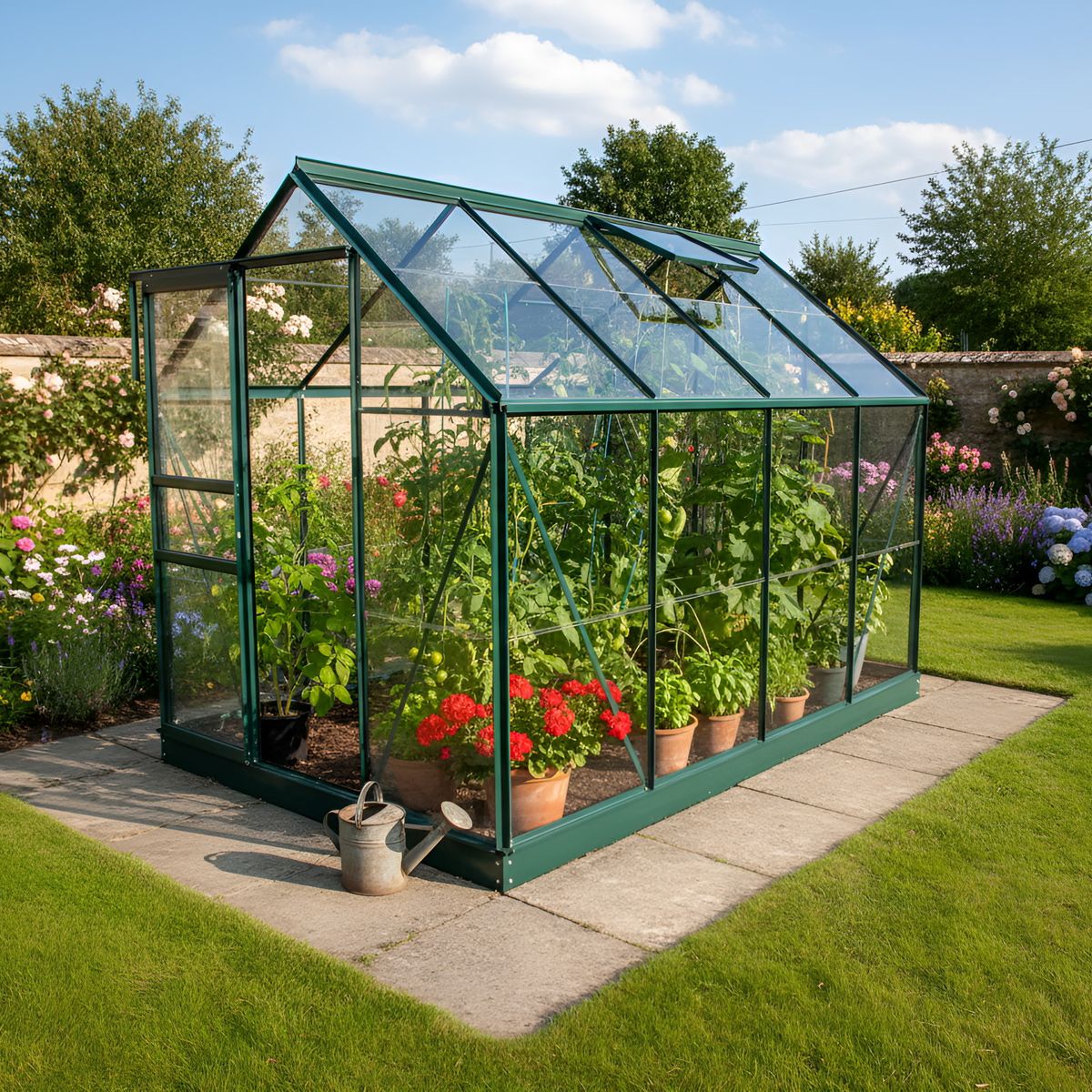
View and buy Vitavia 8x6 Green Venus 5000 Greenhouse - Toughened Glass
2. The best for small gardens: elite compact
The Elite Compact is made in Bolton and gives you an aluminium greenhouse in a narrow footprint. It is worth considering for courtyards and smaller gardens.
Why it wins: The "Low Threshold" base design means there is no trip hazard at the door. It is easy to roll a potting trolley in and out. The 20-year frame warranty is the longest of any greenhouse in this price bracket. That signals how much confidence Elite have in their own product.
Best feature: Customisation. You can order it in 10+ powder-coated colours (from olive green to anthracite grey). It makes a feature of your small courtyard.
Worth knowing: At 24 sq ft, you will need to plan your layout carefully. Staging down one side and a growing border on the other is the most efficient use of this footprint. Don't try to fit a water butt inside. Keep it external.
Verdict: The best choice for durability in a small footprint. The UK manufacturing and 20-year warranty justify the higher price per square foot.
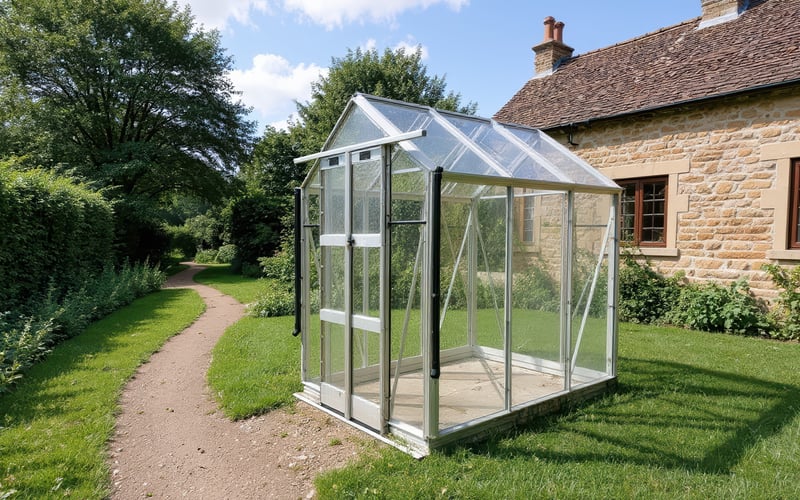
View and buy Elite Compact 4x6 Greenhouse - Toughened Glazing
3. The premium choice: swallow kingfisher
If the thought of reading instructions and handling glass puts you off, the Swallow Kingfisher is the solution.
Installation: Swallow delivers and builds the greenhouse for you. Prepare the base to the supplied requirements and check the current delivery and installation times when ordering.
Best feature: The ThermoWood frame has the natural look of timber, with heat treatment to improve durability. The included installation is helpful if you would rather have the greenhouse built for you.
Worth knowing: You will need to re-stain the timber every 2-3 years to maintain its appearance. The treatment prevents structural rot regardless. The upfront cost is roughly 6x higher than the Vitavia, so this is a genuine investment.
Verdict: Higher upfront cost, but zero construction stress and genuinely better heat retention. If your budget stretches to £3,000+, this is the premium beginner option.
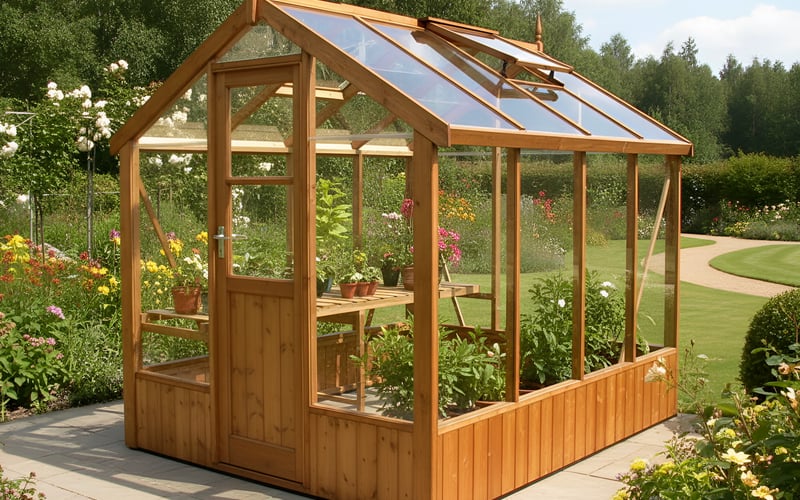
View and buy Swallow Kingfisher 6x8 Wooden Greenhouse
Matt's tip: don't skip the base
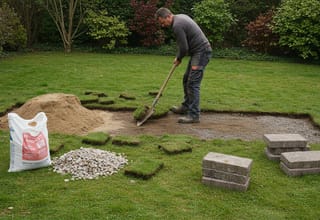
The single biggest mistake we see with new greenhouse owners is skipping the base preparation. About 1 in 5 warranty claims we process relate to doors jamming or glass cracking. 90% of those trace back to an uneven base. A level paving slab base takes one weekend and costs £100-£200 in materials. It is the difference between a greenhouse that lasts 15 years and one that gives you problems from month three.
Read our full base preparation guide for step-by-step instructions.
A practical starter option
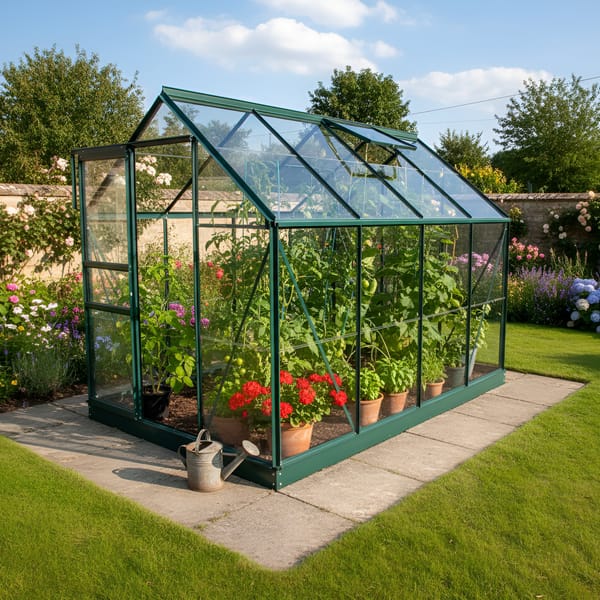 View and buy Vitavia 8x6 Green Venus 5000 Greenhouse - Toughened Glass |
Vitavia Venus with toughened glass Best for: First-time greenhouse buyers who want reliability and value Useful features: We have sold over 3,000 Venus models since 2012. The return rate is below 2%. Anodised aluminium frame with a 12-year warranty. Replacement parts are available for this range. Toughened glass is a useful strength and safety upgrade. Price: From £649 View the Vitavia Venus 6x8 |
5 Accessories every beginner needs
Don't spend your entire budget on the frame. To grow successfully in your first year, you need these five items:
- Automatic Vent Openers (~£25-£35 each): These open the roof vent automatically when the temperature hits 15-20°C. Without them, one hot afternoon while you are at work can push internal temperatures past 40°C. That can kill your tomato crop within hours.
- Staging (Shelving) (~£50-£150): You need a waist-height surface for potting and seed trays. Aluminium staging is maintenance-free and allows water to drain through. Budget for at least one tier down one side.
- Rainwater Kit (~£20-£40): Plants prefer rainwater to tap water (it is free of chlorine and lime). A downpipe kit connects your greenhouse gutters to a water butt. A 6x8 greenhouse roof collects roughly 2,800 litres of rainwater per year in an average UK location.
- Min/Max Thermometer (~£8-£15): This records the lowest nightly temperature and highest daytime temperature. After a few weeks, you will know exactly when your greenhouse needs a heater (below 5°C for most crops). You will also know when it needs ventilation (above 25°C).
- Shading (~£10-£25): In a UK summer, internal temperatures regularly hit 40°C+. Simple shade netting or paint reduces this by 10-15°C. It prevents leaf scorch on young plants.
Buying guide FAQ
Is a polycarbonate greenhouse better for beginners?
Polycarbonate can be a good choice for a beginner. It is lightweight and impact-resistant, which suits gardens where balls are frequently kicked around. Glass gives a clearer view. Choose a well-anchored frame and follow the panel-fitting instructions for either option.
Do I need a concrete base for a greenhouse?
No, but you do need a firm, level foundation. A paving slab base is the most popular option for beginners. It costs £100-£200 in materials and takes a weekend to build. You can also build on compacted soil using the metal base plinth provided with the greenhouse. Concrete the four corner posts into the ground. Never place a greenhouse directly on grass without anchoring it. Follow the anchoring instructions for your chosen model.
How much does a beginner greenhouse cost in 2026?
Price depends on size, glazing and whether installation is included. Compare the current prices for the models above, then allow for the base and any staging you need. Heating is optional for many crops, so it need not be an ongoing cost.
Can I build a greenhouse myself?
Yes, most aluminium greenhouses are designed for DIY assembly. Expect a 6x8 model to take 6-8 hours with two people. You will need a basic toolkit (screwdriver, spanner set, rubber mallet) and ideally a calm, dry day. If you lack time or confidence, we recommend our professional installation service from £249.
What should I grow in my first year?
Start with tomatoes, cucumbers, and lettuce. They are the most forgiving greenhouse crops for UK beginners. Tomatoes and cucumbers thrive in the warmth a greenhouse provides. They need consistent 18-25°C. Lettuce grows quickly enough that you will see results within 4-6 weeks. Avoid orchids and melons in your first year. They need precise humidity control that is hard to manage without experience. See our Greenhouse Growing Guide for a month-by-month planting calendar.
Where can I see more options?
Our Top 10 guide covers more styles and sizes. It includes Victorian greenhouses, dwarf-wall models and lean-to designs. Browse our full greenhouse range to find the size and style you prefer.