Greenhouse Succulents UK: Growing and Care Guide
Growing succulents in a UK greenhouse protects them from wet winters, sudden frosts and poor light. Hold daytime temperatures at 18 to 24 degrees C and humidity below 50%. That lets you grow over 40 varieties year-round. Heating costs run £150 to £400 a year for a standard 6x8 ft greenhouse.
Key Takeaways
- Temperature control: Maintain 18 to 24 degrees C by day and 10 to 13 degrees C at night. Never let it drop below 4 degrees C in winter.
- Humidity management: Keep humidity between 30 and 50% with proper ventilation to prevent rot.
- Heating costs: Budget £150 to £400 annually. Gas heaters are cheaper to run than electric.
- Best UK varieties: Echeveria, Sempervivum, Sedum and Haworthia give reliable results in British conditions.
- Seasonal care: Water once every 6 to 8 weeks in winter. In summer, water 2 to 3 times per week with full ventilation.
Installer's Note
We fit greenhouses for succulent growers several times a year. The single biggest mistake we see is poor ventilation. Succulents handle cold far better than damp. We always recommend automatic vent openers and at least one side louvre. That airflow makes the difference between a thriving collection and a rotting one.
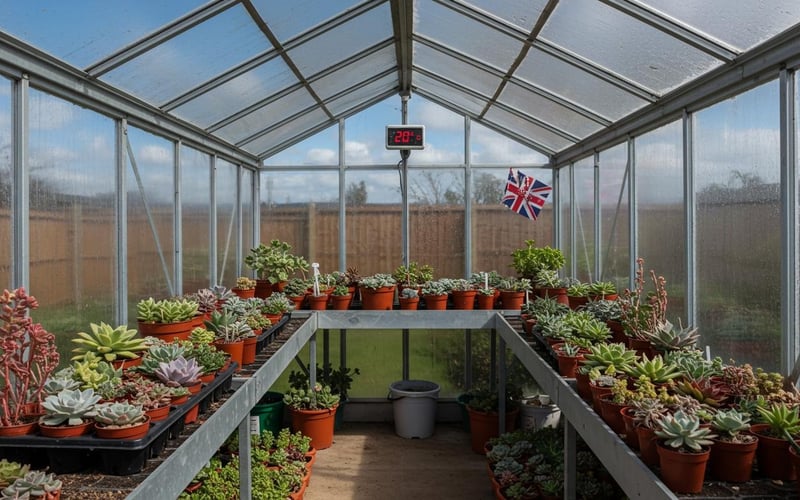
Quick Reference: UK Greenhouse Succulent Care
| Season | Temperature | Watering Frequency | Ventilation | Heating Required |
|---|---|---|---|---|
| Spring (Mar to May) | 15 to 22 degrees C | Weekly | Moderate | Minimal |
| Summer (Jun to Aug) | 18 to 24 degrees C | 2 to 3 times per week | Maximum | None |
| Autumn (Sep to Nov) | 12 to 18 degrees C | Every 2 weeks | Reduced | Begin heating |
| Winter (Dec to Feb) | 4 to 12 degrees C | Every 6 to 8 weeks | Minimal | Essential |
Why Do UK Gardeners Need Greenhouses for Succulents?
The UK's maritime climate is the opposite of what succulents need. Average winter temperatures sit at 2 to 7 degrees C, with humidity often above 80%. For plants that evolved in dry, sunny regions, this causes three problems.
Moisture damage: Prolonged wetness causes root rot. High humidity encourages fungal diseases. Waterlogged soil in winter can kill plants within weeks.
Temperature swings: Sudden frost destroys tender varieties overnight. Limited winter sunlight reduces natural warmth. Inconsistent temperatures stress growth cycles.
Low light: UK winter days provide only 7 to 8 hours of weak daylight. Cloud cover cuts light intensity further. Even south-facing positions fall short for optimal growth.
A greenhouse solves all three by creating a controlled microclimate. We position the longest side facing south and shelter from prevailing south-west winds. That orientation alone can raise internal temperatures by 5 to 8 degrees C above ambient on a clear day.
What Temperature Should You Maintain for UK Greenhouse Succulents?
Optimal Temperature Ranges
Growing season (March to September):
- Daytime: 18 to 24 degrees C for active growth
- Night-time: 10 to 13 degrees C for healthy development
- Maximum tolerance: Up to 29 degrees C with adequate ventilation
Winter period (October to February):
- Minimum safe temperature: 4 degrees C (the critical threshold)
- Ideal winter range: 8 to 12 degrees C for frost-tender varieties
- Hardy varieties: Can tolerate 0 degrees C if kept dry
UK Heating Solutions
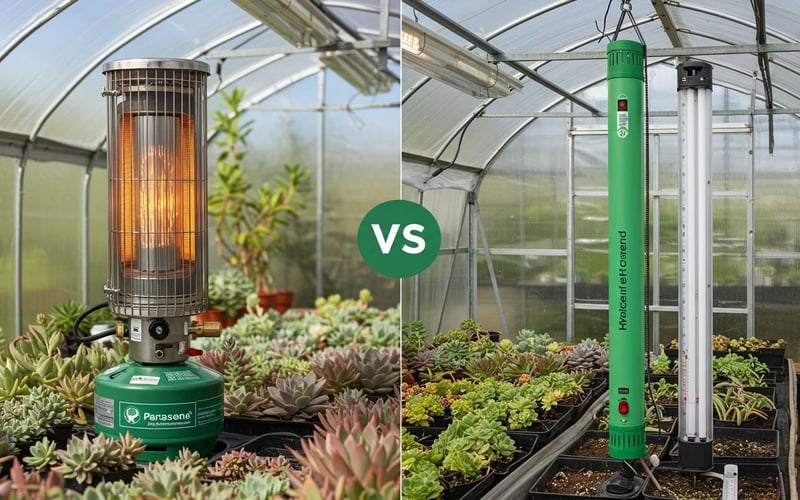
Gas heating (most cost-effective): Annual cost of £150 to £250 for an average 6x8 ft greenhouse. Propane heaters with flame failure devices work well. When we install these, we always check that ventilation is adequate for gas combustion.
Electric heating (most controllable): Annual cost of £250 to £400, depending on local energy prices. Tube heaters are ideal for frost protection. Thermostatic control gives precise temperature management. Off-peak tariffs can cut costs by 30 to 40%.
Thermal mass solutions: Water barrels or large stones absorb daytime heat and release it at night. Bubble wrap insulation reduces heating costs by up to 40%. Horticultural fleece provides additional frost protection. For more ideas, read our heating a greenhouse without electricity guide.
Regional Growing Conditions
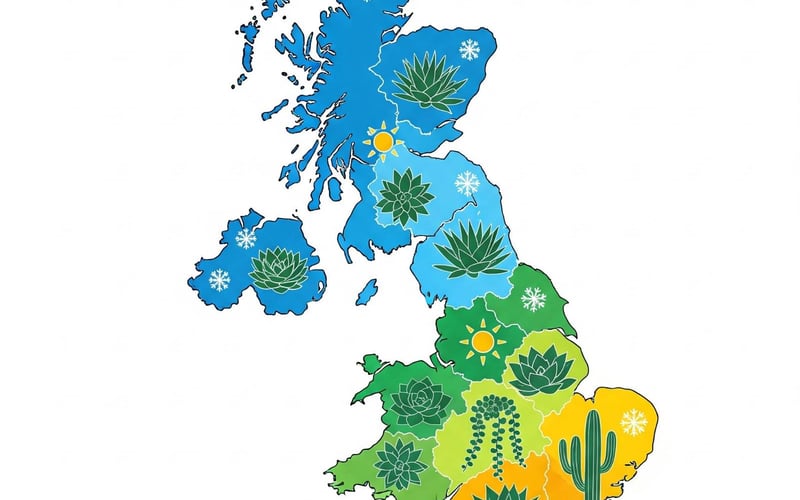
Heating costs and variety choices vary across the UK. Here is what we see in the regions we install most often.
Southern England: Shorter heating season from November to March. Met Office data shows winter temperatures 2 to 3 degrees C higher than the north. Wider tender variety selection is possible. Focus on ventilation during unexpected warm spells.
Northern England and Scotland: Longer heating season from October to April. Hardy variety selection is essential. Higher insulation levels pay for themselves within two winters. Sempervivum and hardy Sedum perform best here.
Coastal areas: Humidity runs 15 to 20% higher than inland. Salt exposure matters when choosing greenhouse materials. Wind protection is more critical. Enhanced ventilation is a must to manage the extra moisture.
Humidity Control: Managing Britain's Damp Climate
Maintain greenhouse humidity between 30 and 50% for healthy succulents. The UK's natural humidity often exceeds 70%, so active management is essential.
Ventilation Strategies
Roof vents: Install louvre vents at the highest points. Automatic vent openers remove the need for daily management. Aim for 20% of floor area in total vent space.
Side vents: Position near ground level for air circulation. Mesh screens prevent pest entry while allowing airflow.
Circulation fans: Small oscillating fans prevent stagnant air pockets. Solar-powered options reduce running costs. Position them to avoid blowing directly onto plants.
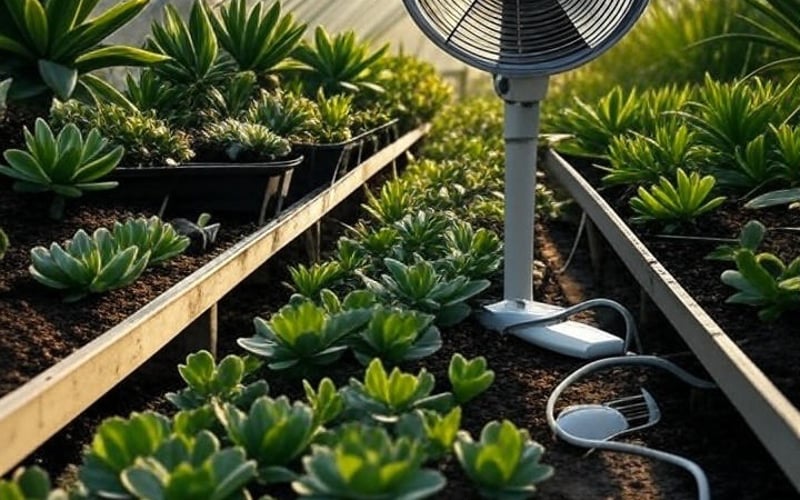
Seasonal Humidity Management
Autumn and winter (high humidity): Open vents briefly even on cold days for air exchange. Use a dehumidifier in sealed greenhouses. Cut watering frequency right back. Our winter greenhouse care guide covers this in detail.
Spring and summer (lower humidity): Watch for over-drying conditions. Maintain some humidity through gravel trays. Increase ventilation during hot spells.
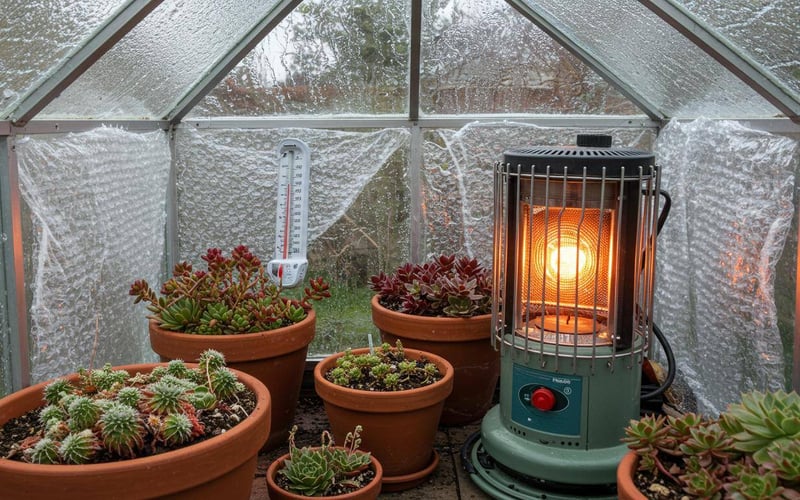
Best Succulent Varieties for UK Greenhouses
Hardy Varieties for British Conditions
Sempervivum (Houseleeks): Cold-tolerant down to minus 15 degrees C. Native to European mountains. Minimal heating needed. Try 'Commander Hay' and 'Cobweb Houseleek'.
Sedum species: Excellent for beginners. Many UK-hardy varieties available. Self-propagating and low-maintenance. We recommend Sedum spurium and S. kamtschaticum.
Echeveria (rosette succulents): Beautiful colour variations. Need temperatures above 4 degrees C. Popular picks include 'Perle von Nurnberg' and 'Black Prince'. Excellent for display arrangements.
Haworthia: Tolerates lower light levels, making them perfect for shadier greenhouse areas. Minimal space needed. Look for H. cooperi and H. fasciata (Zebra Plant).
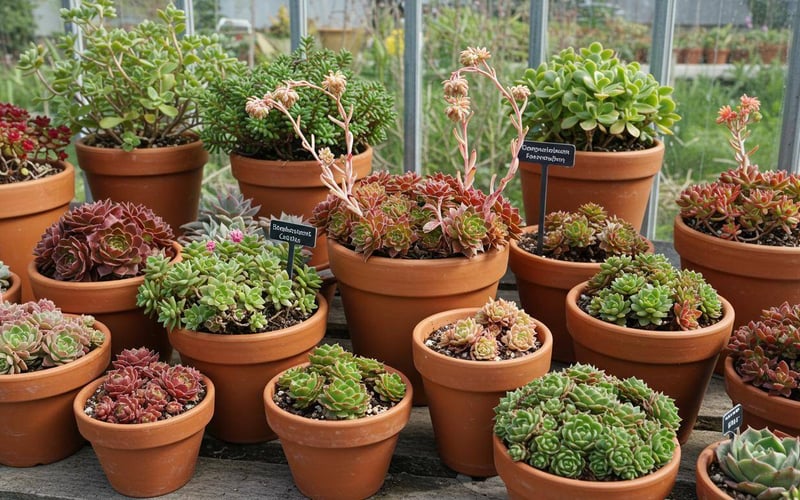
Tender Varieties for Heated Greenhouses
Aeonium: Dramatic architectural forms. Require consistent frost protection. Go dormant in winter but look spectacular when mature.
Crassula: Diverse range of forms and sizes including the popular jade plant family. Easy propagation. Some varieties flower in UK conditions.
Lithops (Living Stones): Unique appearance that attracts collectors. Specific watering requirements. A rewarding challenge for experienced growers.
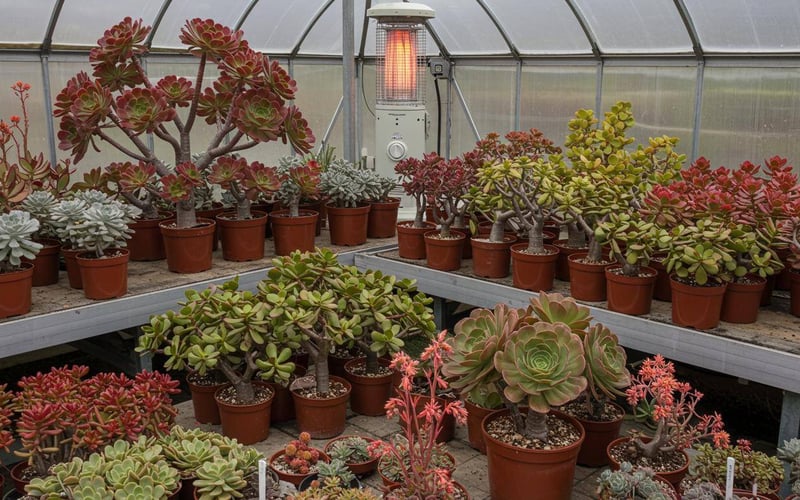
Seasonal Care Calendar for UK Greenhouse Succulents
Spring (March to May)
Begin gradual heating reduction as days lengthen. Resume watering as new growth appears. Check for winter damage or pests. Remove insulation materials and open greenhouse doors on mild days. Start a light feeding programme with balanced fertiliser monthly. Move hardy varieties outside during warm spells to harden them off.
Summer (June to August)
Maximum ventilation is essential. Water 2 to 3 times per week during peak growing season. Install shade cloth (30 to 40% shade) if temperatures exceed 30 degrees C. Monitor for heat stress: stretched growth, colour fading, and wilting despite moist soil. Continue monthly feeding through July, then reduce in August to prepare for autumn.
Autumn (September to November)
Gradually reduce watering frequency. Bring tender varieties back inside. Clean the greenhouse thoroughly and inspect for pests. Install winter heating and add insulation. By November, water only every 4 to 6 weeks and seal the greenhouse for the cold months ahead.
Winter (December to February)
Minimal to no watering for most varieties. Maintain your minimum temperature setting. Keep ventilation to brief daily air exchanges only. This is the time to plan your spring propagation projects and order any new varieties. Reading our greenhouse insulation guide will help you cut heating costs before the coldest weeks.
Practical Setup Guide for UK Conditions
Greenhouse Selection and Positioning
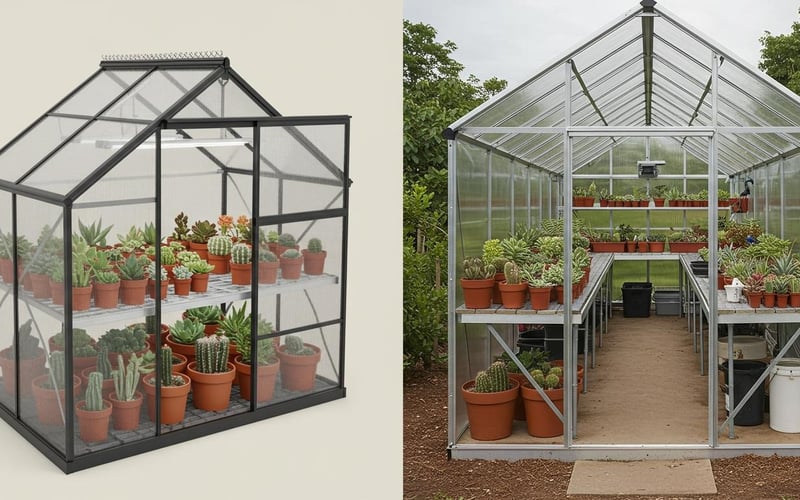
Orientation: Position the longest side facing south for maximum winter light. Shelter from prevailing south-west winds. Ensure good drainage around the base. Keep it close to a power supply if you plan to use electric heating.
Size: A 6x4 ft structure works for a small starter collection. A 6x8 ft greenhouse suits most growers, holding 50 to 100 plants with room for benching and walkways. If you plan to expand, consider large greenhouses for better temperature stability and space for themed displays.
A lean-to greenhouse against a south-facing wall borrows thermal mass from the house. This cuts heating costs and makes the most of limited garden space. For balconies or patios, a mini greenhouse gives beginners a low-cost entry point.
Essential Equipment
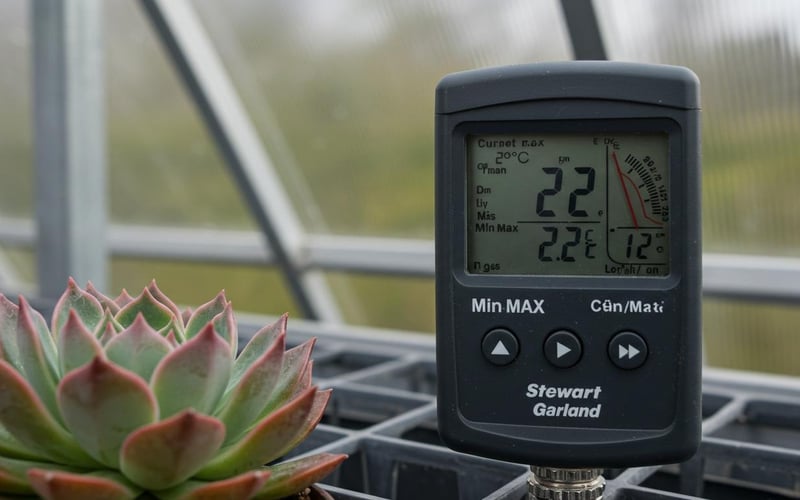
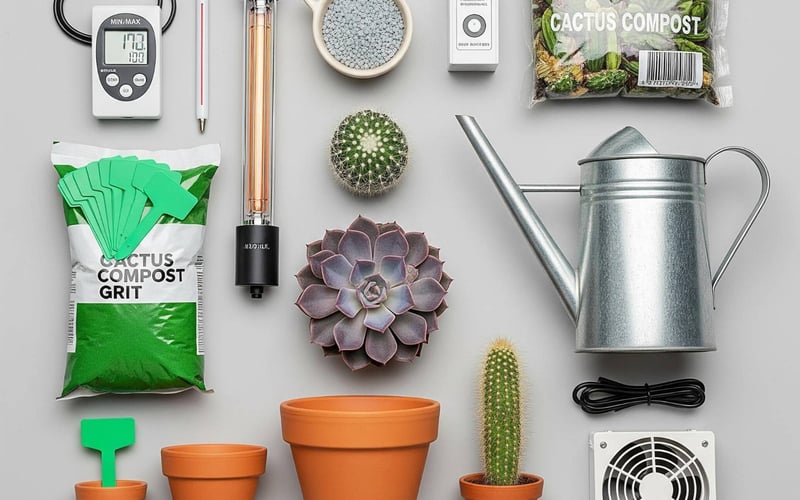
Temperature monitoring: A min/max thermometer is non-negotiable for overnight monitoring. Wireless models with app alerts let you respond to temperature drops from anywhere.
Watering gear: A long-spout watering can for precision. A moisture meter takes the guesswork out of soil checks. Collection trays under pots prevent overwatering.
Growing supplies: Specialist cactus and succulent compost. Horticultural grit (2 to 6 mm). Terracotta pots with drainage holes. Labels for plant identification.
Drainage and Growing Medium
UK-adapted soil mix:
- 40% multipurpose compost
- 30% horticultural grit (2 to 6 mm)
- 20% sharp sand or perlite
- 10% fine bark chips
This mix drains well in the UK's damp climate while holding enough moisture for roots.
Container selection: Terracotta pots offer the best drainage and airflow. Make sure every pot has drainage holes. Shallow, wide pots suit most succulents. Avoid saucers except during the driest summer weeks.
Cost Analysis: Running a Succulent Greenhouse in the UK
Initial Setup Costs
A basic setup costs £700 to £1,450 in total. The greenhouse itself runs £400 to £800 for a 6x8 ft aluminium model. Heating adds £150 to £300. Benching and shelving cost £100 to £200. A starter plant collection adds £50 to £150.
Annual Running Costs
Ongoing costs run £270 to £630 per year. Heating is the biggest expense at £150 to £400. Compost and growing materials add £40 to £60. New plants cost £30 to £80. General maintenance runs £20 to £40.
UK Greenhouse Heating Cost Comparison
| Heating Type | Initial Cost | Annual Running Cost | Pros | Cons |
|---|---|---|---|---|
| Gas Heater | £100 to £200 | £150 to £250 | Most economical, reliable heat | Requires ventilation, gas supply |
| Electric Heater | £80 to £150 | £250 to £400 | Precise control, clean | Higher running costs |
| Solar + Electric | £300 to £500 | £100 to £200 | Low long-term cost | High initial investment |
| Thermal Mass Only | £50 to £100 | £0 to £50 | Very low cost | Limited in severe cold |
Cost-Saving Tips
Invest in automatic vent openers. Use bubble wrap insulation to cut heating costs by up to 40%. Group plants by heating needs so you can zone your greenhouse. Solar-powered ventilation fans remove the cost of running mains power. Buy compost and grit in bulk.
Troubleshooting Common UK Greenhouse Problems
Overheating During Warm Spells
Symptoms: Stretched growth, colour fading, wilting despite moist soil.
Solutions: Install automatic vent openers set to open at 17 degrees C. Use 30 to 40% shade cloth during peak summer. Run circulation fans. Add thermal mass (water barrels) to buffer temperature swings.
Condensation and High Humidity
Symptoms: Water droplets on glass, mould growth, plant rot.
Solutions: Increase ventilation even in cold weather. Use a dehumidifier in sealed structures. Avoid watering late in the day. Space plants to allow air circulation around each one.
Pest Problems in a Protected Environment
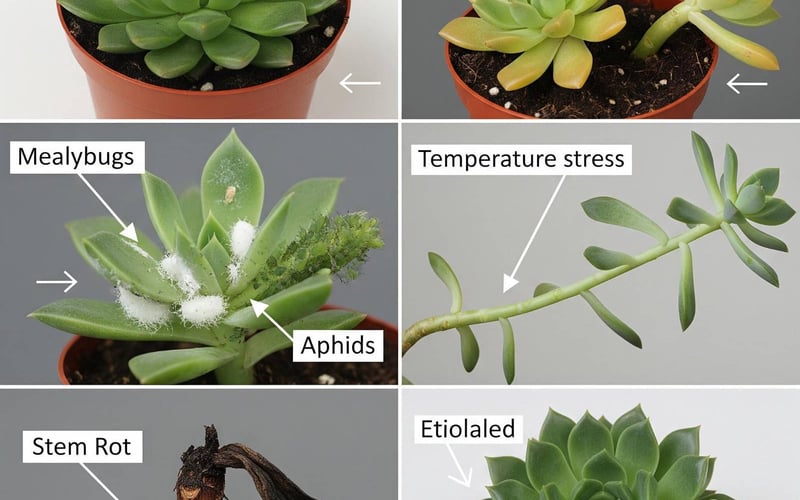
Common greenhouse pests affecting succulents include mealybugs, aphids, and spider mites. Our greenhouse pest control guide covers identification and treatment in detail.
Prevention: Quarantine new plants for 2 to 3 weeks. Keep the growing environment clean. Avoid overwatering, which attracts pests. Inspect plants regularly.
Winter Survival Issues
Symptoms: Soft, mushy plants. Yellowing leaves. Collapse.
Solutions: Maintain minimum temperature. Cut watering frequency hard. Improve container drainage. Remove dead plant material immediately to stop rot spreading.
Propagation and Displays
Propagation in Greenhouse Conditions
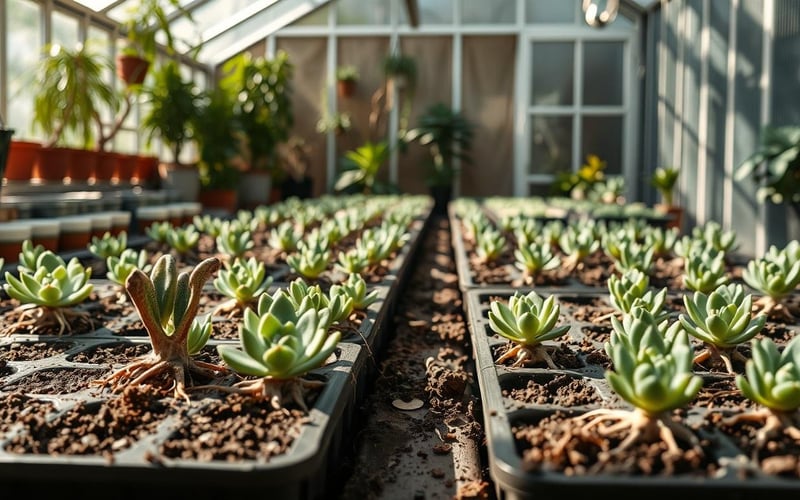
Leaf propagation: Greenhouses give the best success rates. Maintain around 20 degrees C for optimal rooting. Use propagation trays with drainage. Mist very lightly once weekly.
Division and offsets: Spring is the best time to divide. Let cut surfaces callus for 24 to 48 hours before replanting. Use rooting hormone on difficult varieties. Quarantine newly propagated plants.
Creating Displays
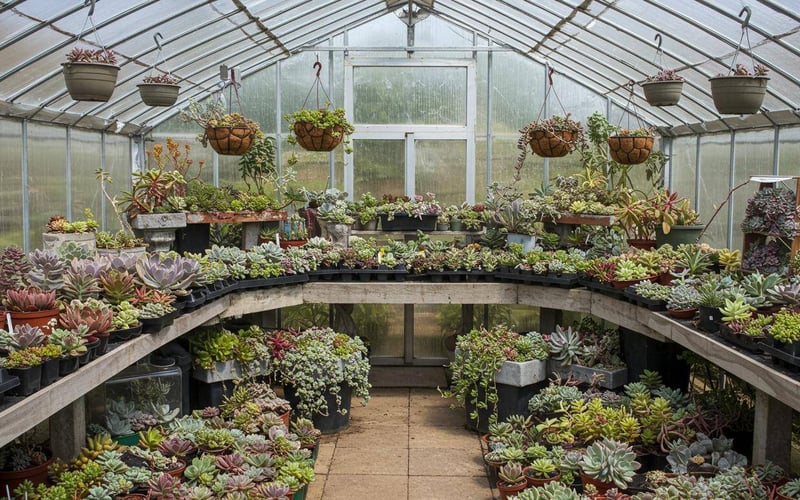
Maximise vertical space with multi-level benching. Group plants by size and light needs. Create focal points with architectural varieties like Aeonium. Themed collections work well: desert recreations, colour-coordinated groupings, or botanical family displays.
For more growing inspiration, explore our guide to 25 unusual and exotic things to grow in a greenhouse.
Matt's Tip: Overwinter Protection
I always tell customers to invest in a thermostatically controlled electric heater for their first winter. Gas heaters save money long-term, but they need you to manage ventilation carefully. An electric heater with a built-in thermostat holds temperature within 2 degrees C all night without any fuss. Once you have one winter under your belt, you can switch to gas if you want to cut costs. That first year is about keeping plants alive while you learn the rhythm of your greenhouse.

|
Matt's Pick for Succulent Overwinter HeatingBest For: Keeping succulents above 4 degrees C through UK winters Why I Recommend It: We fit these in customer greenhouses regularly. The built-in thermostat holds temperature within 2 degrees C, which is exactly what succulents need. Price: £140 |
Frequently Asked Questions
Do succulents need a heated greenhouse in the UK?
Most succulents need frost protection, making heating essential for tender varieties. Hardy types like Sempervivum survive in an unheated greenhouse. However, holding a minimum of 4 degrees C improves success rates across your whole collection. Heating costs run £150 to £400 per year depending on system and greenhouse size.
What temperature should a succulent greenhouse be in winter?
Keep a minimum of 4 degrees C for frost-tender succulents. The ideal winter range is 8 to 12 degrees C for most varieties. In spring and summer, aim for 18 to 24 degrees C by day. Night temperatures should drop to 10 to 13 degrees C. A min/max thermometer lets you track fluctuations.
How often should I water greenhouse succulents in winter?
Water once every 6 to 8 weeks from November through February. Some hardy varieties need no water at all during this period. Always check soil moisture before watering. Make sure the temperature is above 5 degrees C when you water to prevent root damage.
What is the best greenhouse size for a beginner succulent collection?
A 6x8 ft greenhouse suits most beginners well. It holds 50 to 100 plants with room for benching, thermometers and a walkway. Smaller 6x4 ft structures work for limited collections. Larger sizes offer better temperature stability for serious growers.
How do I prevent humidity problems in my UK greenhouse?
Keep humidity between 30 and 50% with adequate ventilation. Install automatic vent openers and circulation fans. Avoid watering late in the day. In very humid conditions, a dehumidifier helps. Space plants so air moves freely around each one.
Which succulents are best for beginners in UK greenhouses?
Start with Echeveria, Sedum, Haworthia and Sempervivum. These four genera tolerate minor care mistakes and handle brief temperature drops. Avoid Lithops and Conophytum until you have mastered basic care and seasonal watering adjustments.
How much does it cost to run a succulent greenhouse in the UK?
Annual running costs range from £270 to £630. Heating accounts for £150 to £400 of that total. Growing supplies add £40 to £60. Initial setup costs sit between £700 and £1,450 for a complete system. Gas heating is more economical than electric, and good insulation cuts ongoing bills.
Related Articles
- Best Beginner Greenhouse: Expert Picks 2026
- What to Grow in a Greenhouse: Beginners Guide
- How to Prepare Ground for a Greenhouse Base
- How to Clean a Greenhouse: Step-by-Step
- How to Clean Greenhouse Glass
Need advice on the right greenhouse for succulents? Our team has 16 years of experience fitting greenhouses across the UK. Email sales@greenhousestores.co.uk or call us to discuss your setup.