How to Grow Garlic in a Greenhouse
Garlic needs a cold period of 4-6 weeks below 10°C to form proper bulbs, making autumn planting ideal in the UK. Plant individual cloves 2.5cm deep, pointed end up, spaced 15cm apart from October to December. A greenhouse extends the growing season and protects against wet winter rot. Hardneck varieties produce stronger flavour but store for shorter periods. Softneck types store for 6-9 months. Harvest when the lower leaves turn yellow, typically June to July.
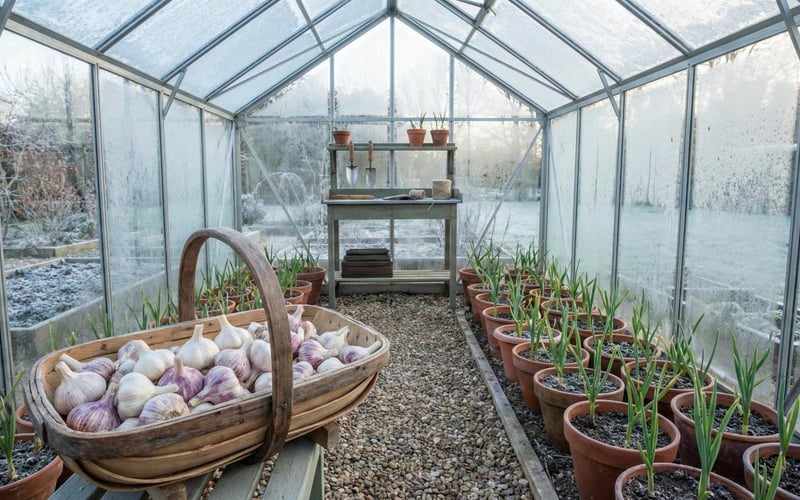
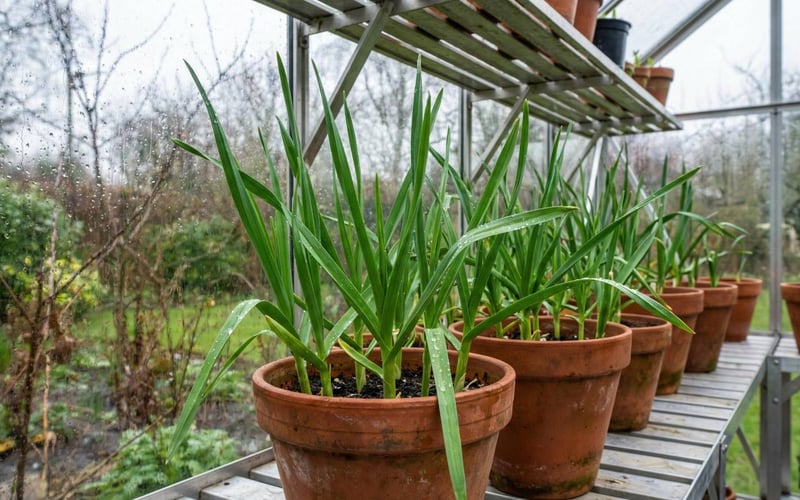
Growing garlic in a UK greenhouse prevents garlic rust, the most damaging fungal disease for British garlic crops. Plant cloves between October and December into pots at least 20cm deep. Garlic needs 30 to 60 days of cold between 0 and 10 degrees Celsius to split into cloves. Under glass, you harvest 3 to 4 weeks earlier than outdoor plantings. The glass roof eliminates the rain splash that spreads rust spores.
Key Takeaways
- Rust protection: Glass eliminates the rain splash that spreads garlic rust spores to foliage.
- Vernalisation required: Garlic needs 30 to 60 days at 0 to 10 degrees Celsius to form individual cloves.
- Container depth: Use pots at least 20cm (8 inches) deep for strong root development.
- Planting window: October to December gives roots time to establish before spring growth.
- Cold frames: A useful alternative when your main greenhouse is full of winter crops.
Installer's Note
I have grown garlic in my own greenhouse for over ten years. It is one of the easiest winter crops under glass. I see customers' garlic crops when we fit new greenhouses and cold frames each autumn. The difference between greenhouse-grown and outdoor garlic is striking. Under glass, leaves stay clean and green right through to harvest. Outside, rust spots appear by February in most UK gardens. If you have spare staging space over winter, garlic is the best use of it.
Why Grow Garlic Under Glass?
Many UK gardeners treat garlic as a purely outdoor crop. They push cloves into cold soil in November and hope for the best. British winters are wet. Rain splashes fungal spores onto foliage and heavy clay soil waterlogs the roots. A greenhouse changes this entirely.
The Rust Solution
Garlic rust is the most common fungal disease affecting UK garlic. It spreads through water splashing onto leaves. Growing inside an aluminium greenhouse keeps the foliage dry. This single change dramatically reduces infection risk. Healthy leaves photosynthesise for longer, producing larger bulbs at harvest.
Moisture Control
Garlic hates wet feet. In heavy clay or a waterlogged garden, cloves rot before they sprout. In a greenhouse, you control exactly how much water the compost receives. No more losing cloves to winter rain.
Earlier Harvest
Greenhouse garlic warms up faster in spring. You can harvest 3 to 4 weeks earlier than outdoor plantings. This frees up space in time for summer tomatoes and cucumbers.
Hardneck vs Softneck Varieties
Before planting, choose between the two main garlic types. Your decision depends on flavour preference and storage needs.
| Feature | Softneck | Hardneck |
|---|---|---|
| Flower stalk (scape) | No | Yes, edible and delicious |
| Cloves per bulb | 10 to 20 (smaller cloves) | 4 to 10 (larger cloves) |
| Storage life | Up to 9 months | 3 to 5 months |
| Flavour | Mild to medium | Bold and complex |
| Best UK variety | Solent Wight | Red Duke |
| Cold hardiness | Good | Excellent |
| Best for | Long-term kitchen storage | Gourmet cooking, early eating |
Softneck varieties are the ones you find in supermarkets. They store well and tolerate British weather. Solent Wight is the top performer for UK greenhouse growing.
Hardneck varieties produce fewer but larger cloves with a more intense flavour. They also produce edible scapes, the curling flower stalks that taste superb in stir-fries. Red Duke is a reliable UK hardneck with a fiery kick.
Matt's Tip: The 70/30 Split
I plant 70% softneck for storage and 30% hardneck for that intense early-season flavour. The softneck keeps us in garlic right through to the following spring. The hardneck gives us scapes in June and the best roast garlic you will ever taste. This split works well for most households.
The Vernalisation Trap
This is where many greenhouse growers go wrong. Most gardening guides miss this critical fact.
Garlic needs a period of cold called vernalisation. The bulb must experience 30 to 60 days between 0 and 10 degrees Celsius. Without this cold, the cloves do not separate. You end up with a "round," a single solid bulb that looks like an onion. It tastes like garlic, but you lose the clove structure.
How to Manage Vernalisation in a Greenhouse
Do not heat too early. If you use heaters for frost-sensitive plants, keep garlic pots in the coldest part of the greenhouse. Near the door or louvre vents is ideal.
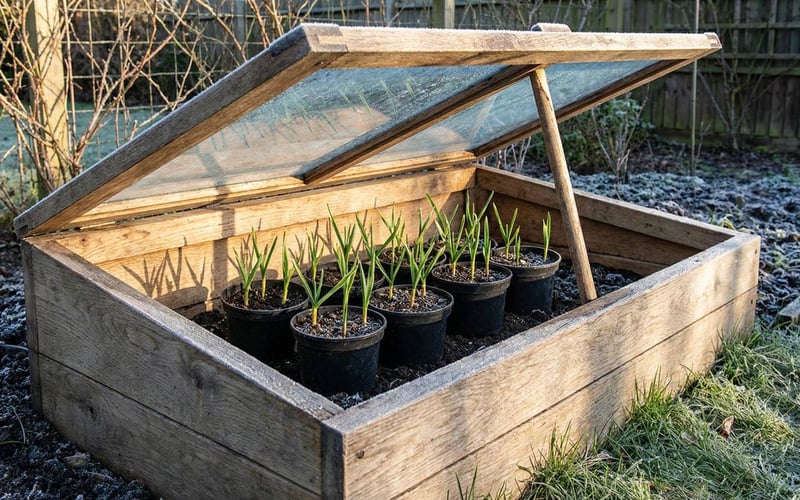
Use a cold frame. If your greenhouse is heated for exotic plants, start your garlic in a cold frame outside. Once the cold spell of January and February passes, move the pots into the greenhouse for spring growth.
The refrigerator method. If you are planting late in February or March, put your bulbs in the fridge for 3 weeks first. This simulates the winter cold period they missed.
Planting in Containers vs Borders
You have two options for growing garlic under glass. Both work, but containers offer more flexibility.
Growing in Containers (Recommended)
Containers are the better choice for most growers. You can place pots on staging, tuck them into corners, or move them outside for vernalisation.
The depth rule: Garlic roots extend 60cm in open soil. In pots, you need a minimum depth of 20cm (8 inches). Standard seed trays are too shallow. Deep terracotta pots, plastic long toms, or purpose-made deep containers all work.
The compost mix: Use multi-purpose compost mixed with 20% grit or perlite for drainage. Garlic despises soggy compost. Home-made compost works well as a base.
Growing in Greenhouse Borders
If you have soil borders, dig in well-rotted manure a month before planting. If you previously grew tomatoes there, add blood, fish, and bone fertiliser. Tomatoes deplete nutrients heavily.
A dedicated workspace makes clove prep and soil mixing easier. Our potting sheds offer the right combination of storage and light for winter planting.
Step-by-Step Planting Guide
The best time to plant garlic in a greenhouse is October to December. Planting before Christmas lets roots establish while the soil is still warm. The plant is then ready to grow rapidly when spring arrives.

Break the bulb. Carefully separate the bulb into individual cloves. Do this just before planting to keep them fresh. Do not soak or pre-treat the cloves.
Select the best cloves. Only plant the large, fat outer cloves. Use the small inner ones for cooking. Small cloves produce small bulbs if planted.
Leave the skin on. Do not peel the papery skin. It protects against rot during establishment.
Position correctly. Plant the clove flat end down, pointed end up. The flat end is where roots emerge. Getting this wrong delays sprouting by weeks.
Set the depth. In pots, cover the tip of the clove with about 2 to 3cm of compost. In greenhouse borders, plant slightly deeper at 3 to 4cm.
Spacing in pots: Allow 10 to 12cm between cloves. Greenhouse conditions allow tighter spacing than outdoor beds.
Spacing in borders: Allow 15cm between cloves and 30cm between rows for good airflow.
Water lightly after planting. The compost should be moist but not wet. You should see green shoots within 2 to 3 weeks.
Watering and Feeding
Greenhouse garlic is low maintenance, but getting the watering and feeding right matters. It makes the difference between average and outstanding bulbs.
Watering Through the Seasons
Overwatering is the biggest enemy. In winter, your greenhouse garlic will hardly need water at all. Check the compost with your finger. If it is dry an inch down, give it a light drink.
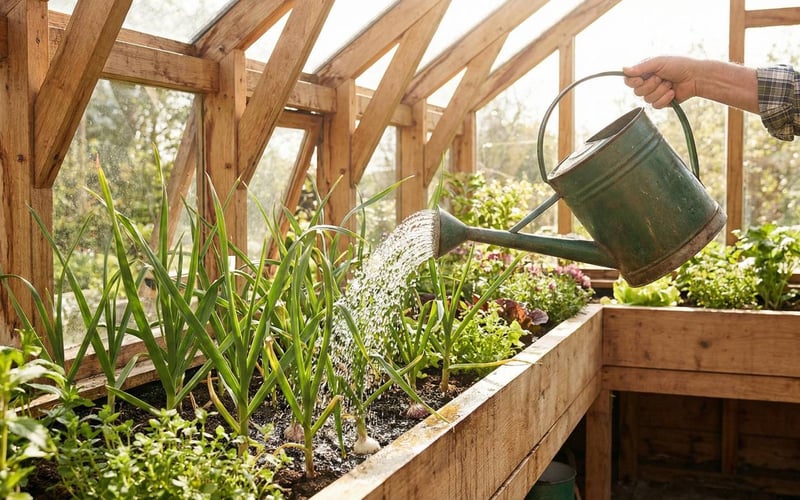
As days lengthen in March and April, increase watering. This is when bulb formation happens and the plant needs moisture to swell. Water at the base, not over the foliage. Wet leaves invite fungal problems even under glass.
Feeding Schedule
Winter (November to February): No feed required. The plant is establishing roots and experiencing its cold period. Feeding now encourages soft growth that frost can damage.
Early spring (March): As soon as you see fresh green growth, apply a nitrogen-rich fertiliser. Chicken manure pellets work well. This boosts leaf growth, and bigger leaves mean bigger bulbs.
Late spring (April to May): Switch to a high-potash feed. Tomato fertiliser is perfect for this stage. It promotes bulb swelling rather than leaf growth. Our seed sowing calendar can help you plan this alongside your other greenhouse crops.
Weeding
Garlic does not like competition. It has narrow leaves that do not shade out weeds. Keep pots and borders weed-free so nutrients go to the bulb.
Pest and Problem Solving
Greenhouses protect against rust but can introduce other issues. Good ventilation and spacing solve most problems before they start.
Managing Humidity
High humidity leads to fungal issues like white rot, downy mildew, and grey mould. These thrive in still, damp air.
Ventilation is essential. Keep vents open on mild winter days. Good airflow is the best defence against fungal disease. On cold days, crack a vent for an hour during the warmest part of the afternoon.
Spacing matters. Do not pack pots tightly together. Air needs to circulate between the leaves. Leave at least 5cm between pots on staging.
Aphids
Aphids target soft new growth as it emerges in spring. Check the base of leaves regularly. Squash them by hand or use a mild soapy water spray. Our greenhouse pest control guide covers organic solutions in detail.
White Rot
White rot is a soil-borne fungus that causes white fluffy growth at the base of the bulb. The spores survive in soil for 20 years. If you find it, remove and destroy affected plants immediately. Do not compost them. This is another advantage of container growing. You can dispose of infected compost without contaminating your borders.
Birds
Pigeons and blackbirds pull newly planted cloves out of pots. Cover fresh plantings with mesh until the shoots are 10cm tall.
Harvesting and Curing
Greenhouse garlic finishes 2 to 4 weeks ahead of outdoor crops. Timing matters. Pull too early and the bulbs are undersized. Pull too late and the wrapper skins split, reducing storage life.
When to Harvest
Hardneck varieties: Harvest when the bottom 3 to 4 leaves have turned yellow. The top 5 to 6 leaves should still be green. Each green leaf represents one wrapper layer on the bulb.
Softneck varieties: Wait until the foliage goes floppy and lies flat. The leaves will not stand upright once the bulb has finished swelling.
Do not wait until the leaves have completely died back. The bulb wrappers may split open. Split wrappers mean shorter storage life and mould risk during curing.
The Curing Process
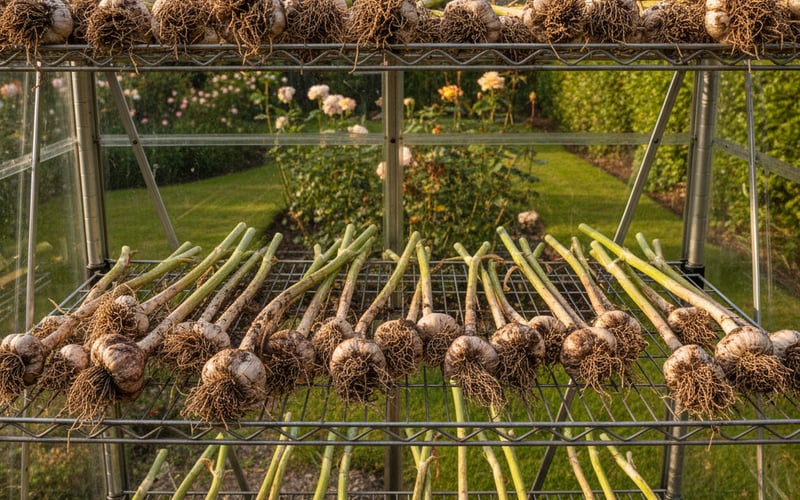
You cannot store fresh garlic straight away. It needs to cure for 2 to 3 weeks in a dry, airy place.
Lift carefully. Use a fork to lever bulbs out of pots or borders. Do not pull by the stems. A torn stem lets moisture into the bulb.
Brush off soil. Remove excess compost with a soft brush. Do not wash the bulbs. Surface water invites mould.
Lay out to dry. Place bulbs on wire staging or a mesh rack in a dry, ventilated spot out of direct sunlight. Your greenhouse works well with the vents open. Greenhouse accessories like slatted shelving aid airflow around the bulbs.
Check after 2 to 3 weeks. The skins should be papery and the roots dry and brittle. Trim the roots and cut stems to 3cm above the bulb. Braid softneck stems into garlic plaits for hanging storage.
Store cured garlic in a cool, dry place between 10 and 15 degrees Celsius. A ventilated shed, garage, or cool kitchen cupboard works well. Softneck varieties stored correctly last until the following spring.
|
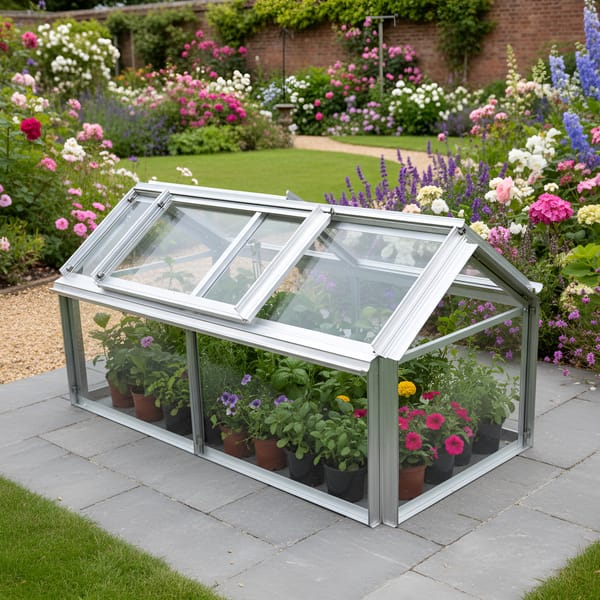
Matt's Pick for Starting Garlic When the Greenhouse is FullBest For: Giving garlic the cold period it needs while your greenhouse grows winter crops Why I Recommend It: I use this cold frame every autumn when my greenhouse is full of winter salads. The garlic sits outside from November to February getting its vernalisation. Then I move the pots into the greenhouse for the spring growth spurt. The low profile and 4x2 footprint fits four deep pots perfectly. Price: £249 |
Frequently Asked Questions
Can you grow supermarket garlic in a greenhouse?
Supermarket garlic is not recommended for greenhouse planting. Most supermarket garlic comes from warmer climates like Spain or China. It may carry diseases that infect your soil. It is also treated with growth inhibitors to prevent shelf sprouting. These inhibitors delay or prevent proper root development. Always buy certified disease-free cloves from a garden centre or seed merchant. UK-bred varieties like Solent Wight and Red Duke are adapted to our climate and outperform imported bulbs.
What should I do with garlic flower stalks (scapes)?
Snip scapes off as soon as they start curling. Scapes are the flower stalks produced by hardneck varieties. Removing them redirects energy back into swelling the bulb. Left on, the plant puts resources into seed production instead. Do not throw the scapes away. They have a mild garlic flavour and work well chopped into stir-fries, blended into pesto, or roasted whole. Many growers consider scapes a bonus harvest.
Why are my garlic leaves turning yellow in winter?
Slight tip yellowing in deep winter is normal cold stress. Garlic is dormant during the coldest months and some discolouration is expected. If the yellowing is extensive or the leaves are soft, the problem is likely waterlogging. Check your drainage immediately and reduce watering. In late spring, yellowing from the bottom leaves upward signals that harvest time is approaching. Count the green leaves remaining to judge when to lift.
Can I grow garlic in grow bags?
Standard grow bags work but they are often too shallow. Most tomato grow bags are only 10 to 12cm deep. This restricts garlic root development. Cut the bag in half crosswise and stand each half on end like a tall pot. This doubles your depth and gives roots the 20cm minimum they need. Punch drainage holes in the bottom. Deep pots or purpose-made planters are a better option.
Do I need to heat my greenhouse for garlic?
No, garlic does not need a heated greenhouse. Garlic is fully hardy and survives freezing temperatures without damage. Heating your greenhouse too much actively harms garlic production. The bulbs need 30 to 60 days between 0 and 10 degrees Celsius for vernalisation. Without this cold period, cloves do not separate. You get a solid round instead of a proper bulb. Keep the greenhouse frost-free if you wish, but do not heat above 10 degrees through winter.
Related Articles
- How to Grow Shallots in a Greenhouse
- Growing Tomatoes in a Greenhouse
- How to Grow Seeds in a Greenhouse
- How to Grow Herbs in Your Greenhouse
- How to Make Your Own Compost
Need advice on greenhouse growing? Our team has been fitting and advising on greenhouses since 2007. Email us at team@greenhousestores.co.uk.