How to Grow Peony Flowers: UK Planting and Care Guide
Peonies (Paeonia) flower from May to July in the UK, producing blooms 10-20cm across in white, pink, red, coral, and yellow. They grow in USDA zones 3-8, which covers all of mainland Britain. A bare-root peony planted in October or November at the correct depth — eyes 2-5cm below the soil surface — will produce its first flowers in the second or third spring.
Peonies (Paeonia) flower from May to July in the UK, producing blooms 10-20cm across in white, pink, red, coral, and yellow. They grow in USDA zones 3-8, which covers all of mainland Britain. A bare-root peony planted in October or November at the correct depth — eyes 2-5cm below the soil surface — will produce its first flowers in the second or third spring. Peonies are among the longest-lived garden perennials, with established plants flowering reliably for 50 years or more without division.
Key Takeaways
- Plant bare-root peonies in October or November. This gives the roots four months to establish before spring growth starts. Container-grown peonies can go in at any time, but autumn is still best.
- Planting depth is critical. Set the eyes (pink buds on the crown) exactly 2-5cm below the soil surface. Too deep and the plant will not flower. This is the number one reason peonies fail to bloom.
- Full sun and well-drained soil. Peonies need at least 6 hours of direct sunlight per day and a soil pH of 6.5-7.0. Heavy clay needs grit and organic matter worked in before planting.
- Do not move established peonies. They resent disturbance and can take 2-3 years to recover from transplanting. Choose the right spot first time.
- Support stems before the buds open. Peony blooms are heavy. A grow-through ring or peony cage placed over the plant in early April stops the stems bending to the ground after rain.
- Cut flowers when the bud feels like a soft marshmallow. At this stage they open fully in a vase within 24-48 hours and last 7-10 days indoors.
Installer's Note
We get asked about growing peonies in greenhouses more often than you would expect. The honest answer is that peonies do not suit greenhouse growing. They need a cold winter dormancy period — at least 6-8 weeks below 5C — to trigger flowering the following spring. A heated greenhouse denies them that cold spell. Where a cold frame or unheated greenhouse helps is in protecting newly divided plants over their first winter and starting bare-root stock in pots before planting out. That is the only greenhouse connection that genuinely works.

When should you plant peonies in the UK?
Plant bare-root peonies between October and March, with October to November being ideal. Autumn planting gives the roots a full dormant season to establish before spring growth. The ground is still warm from summer, which encourages root development, and autumn rain keeps the soil moist without waterlogging.
Container-grown peonies from garden centres can technically go in at any time of year, but avoid planting in summer when the soil dries out quickly and the plant is under heat stress. If you buy a potted peony in spring, plant it straight away and water weekly through the first summer. It will not flower much in year one — that is normal. Read our soil types guide to check whether your garden soil needs amending before planting.
What soil do peonies need?
Peonies need well-drained soil with a pH of 6.5-7.0 and plenty of organic matter. They will not tolerate waterlogged ground — standing water around the crown causes root rot and kills the plant within a season. If you have heavy clay, dig in coarse grit (about one bucketful per planting hole) and a generous amount of garden compost or well-rotted manure.
Test your soil pH with a simple kit from any garden centre. Most UK garden soils sit between 6.0 and 7.5, which is fine for peonies. If your soil is acidic (below 6.0), add garden lime at the rate recommended on the packet and retest after a month. Sandy soils drain well but lack nutrients — work in a 10cm layer of homemade compost to improve moisture retention and feed the roots.
How deep should you plant a peony?
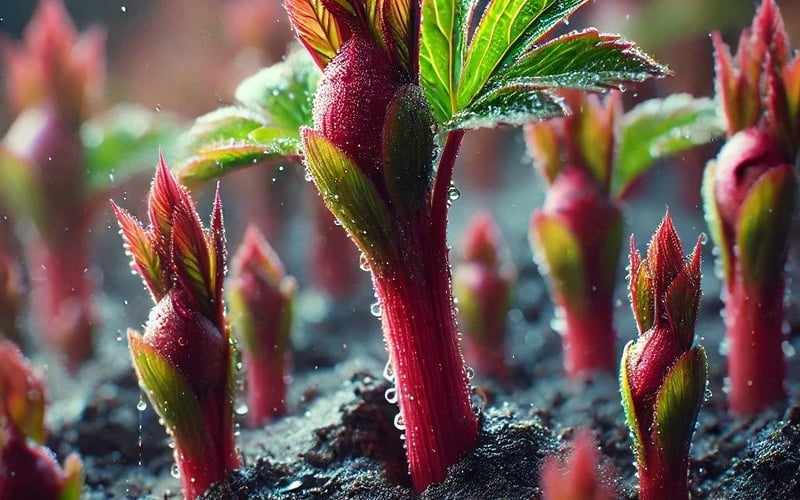
Set the eyes (the pink or red buds on top of the root crown) exactly 2-5cm below the finished soil surface. This is the single most important measurement in peony growing. Plant too deep and the peony produces leaves but no flowers, sometimes for years. Plant too shallow and frost can damage the crown in harsh winters.
Dig a hole 30cm wide and 30cm deep. Mix the excavated soil with a handful of bonemeal and a spadeful of garden compost. Build a small mound of this mix in the bottom of the hole and set the root crown on top, spreading the roots outward. Backfill so the eyes sit at the correct depth. Firm the soil gently and water well. Do not add mulch directly over the crown in the first winter — this adds depth that can push the eyes too far below the surface.
What are the three types of peony?
Peonies divide into three groups: herbaceous, tree, and intersectional (Itoh). Each behaves differently in the garden and has different pruning and care requirements.
| Type | Height | Habit | Bloom Time | Lifespan | Best For |
|---|---|---|---|---|---|
| Herbaceous | 60-90cm | Dies to ground in autumn, regrows in spring | May-June | 50+ years | Borders, cutting gardens |
| Tree | 1-2.5m | Woody stems, deciduous but framework stays | April-May | 100+ years | Specimen planting, sheltered spots |
| Intersectional (Itoh) | 60-90cm | Herbaceous habit with tree peony flowers | May-July | 30+ years | Borders, containers, long season |
Herbaceous peonies are the most common in UK gardens and the easiest to grow. Sarah Bernhardt (double pink) and Duchesse de Nemours (double white, scented) are the two most widely available varieties and both perform well across all UK regions. Tree peonies need a sheltered spot away from early morning sun, as spring frosts can damage the flower buds if they thaw too quickly. Itoh peonies are the newest group and the most expensive, but they combine the best qualities of both parents — large flowers, strong stems, and a long flowering season.
How do you care for peonies through the year?
Peonies need very little maintenance once established. The annual routine covers four tasks spread across the seasons:
| Month | Task | Detail |
|---|---|---|
| March | Feed | Apply a handful of bonemeal or general-purpose fertiliser around each plant as new shoots appear |
| April | Support | Place peony rings or grow-through supports over the plant before stems reach 30cm |
| May-July | Deadhead | Remove spent blooms to keep the plant tidy and prevent seed formation draining energy |
| June | Water | Water deeply once a week during dry spells in the first two summers after planting |
| October | Cut back | Cut herbaceous peony stems to 5cm above ground level once foliage has turned brown |
| November | Mulch | Apply a 5cm layer of garden compost or well-rotted manure around (not over) the crown |
Do not cut the foliage down in summer, even if it looks untidy after flowering. The leaves are photosynthesising and feeding the root crown for next year's blooms. Cutting foliage too early is the second most common cause of poor flowering after incorrect planting depth.
Matt's Tip: The Ant Question
Every year someone asks me about the ants crawling all over their peony buds. The ants are not harming the plant. They are feeding on the sugary nectar that peony buds produce naturally. The old wives' tale that ants help peonies open is not true either — they are just there for the sugar. Leave them alone. They will move on once the flowers open and the nectar dries up.
Why is my peony not flowering?
The five most common reasons a peony fails to flower are: planted too deep, not enough sun, too young, recently moved, or over-fed with nitrogen. Work through this checklist before assuming the plant is faulty.
- Planted too deep. Dig carefully around the crown and check the eye depth. If the eyes are more than 5cm below the surface, lift the plant in October and replant at the correct depth.
- Not enough sun. Peonies need a minimum of 6 hours of direct sunlight per day. If surrounding trees or shrubs have grown and now shade the plant, move the peony in autumn or cut back the competing growth.
- Too young. A newly planted bare-root peony typically flowers in its second or third year. Container plants may flower in year one but often skip a year while they settle.
- Recently moved. A transplanted peony can take 2-3 years to flower again. This is normal. Do not move it again.
- Excess nitrogen. High-nitrogen feeds (like lawn fertiliser) produce lush foliage at the expense of flowers. Switch to a high-potash feed like tomato fertiliser from March to June.
How do you deal with peony pests and diseases?
Botrytis (peony wilt) is the most serious disease for UK peonies. It causes stems to collapse at the base, buds to turn brown and fail to open, and grey fuzzy mould to appear on foliage in wet weather. Cut affected stems to ground level immediately and dispose of them in household waste, not the compost heap. Spray remaining growth with a copper-based fungicide if the problem is severe.
Peony leaf blotch (Cladosporium paeoniae) causes purple-red spots on leaves from midsummer. It is cosmetic rather than fatal. Remove affected foliage in October when cutting back. Slugs and snails attack emerging shoots in spring — use beer traps or nematode biological control. For a full guide to dealing with slugs, read our slug control guide. Greenfly occasionally colonise flower buds — a blast of water or a soap spray clears them. Our greenfly guide covers every natural removal method.
How do you divide and propagate peonies?
Divide herbaceous peonies in September or October when the plant is dormant. Lift the entire root clump with a garden fork, wash off the soil with a hose, and cut the crown into sections using a sharp knife. Each division needs at least 3-5 eyes (buds) and a good portion of root. Smaller divisions with fewer eyes take longer to flower — sometimes 3-4 years.
Replant divisions immediately at the correct depth (eyes 2-5cm below soil surface). Water well and mulch around, not over, the crown. Do not divide peonies that are less than five years old — they need that time to build a strong enough root system. Tree peonies are not divided the same way. They are propagated by grafting, which is best left to specialist nurseries.

How do you cut peonies for a vase?
Cut peony stems when the bud is at the "marshmallow stage" — when it feels soft and squishy like a marshmallow when squeezed gently. At this stage, the bud is 2-3 days from opening naturally. Cut in the early morning when stems are fully hydrated. Use sharp, clean secateurs and cut at a 45-degree angle, leaving at least two sets of leaves on the plant to feed the roots.
Place stems in cool water immediately. To speed opening, move the vase to a warm room. To slow opening (useful if cutting for an event a few days away), wrap the stems in newspaper, seal in a plastic bag, and store upright in a fridge at 2-4C. Peony buds stored this way keep for up to two weeks and open within 24 hours when removed to room temperature. Cut peonies last 7-10 days in a vase.

|
Matt's Pick for Peony PropagationBest For: Overwintering newly divided peony roots and starting bare-root stock in pots Why I Recommend It: When you divide a peony in October, the small divisions with 3-5 eyes are vulnerable to frost in their first winter. Potting them up and placing them in a cold frame gives them the cold dormancy they need while protecting the crown from waterlogging and hard frost. The 4x4 Access cold frame has toughened glass and enough space for a dozen pots. Price: £439 |
Frequently asked questions
Can you grow peonies in pots?
Yes, but they perform better in the ground. Use a pot at least 40cm wide and deep, with drainage holes. Fill with a mix of John Innes No.3 and perlite. Peonies in pots need watering more often than those in the ground, and they are more vulnerable to frost damage in winter. Wrap the pot in bubble wrap from November to March to protect the roots.
How long do peonies take to flower from planting?
Bare-root peonies flower in their second or third spring after planting. Container-grown plants may flower in year one. A divided plant with 3-5 eyes typically takes 2-3 years to flower. Patience is essential — peonies build their root system in the early years and reward you with decades of blooms once established.
Do peonies need staking?
Most double-flowered varieties need support. The heavy blooms weigh the stems down, especially after rain. Place a grow-through peony ring or wire cage over the plant in early April before the stems reach 30cm. The foliage grows through the support and hides it. Single-flowered varieties like Krinkled White have stronger stems and usually stand without support.
When should you cut back peony foliage?
Cut herbaceous peonies to 5cm above ground in October or November. Wait until the foliage has turned brown naturally. The green leaves photosynthesise after flowering and feed the root crown for next year's blooms. Cutting back too early — in summer or while leaves are still green — reduces flowering the following year.
Are peonies deer resistant?
Peonies are largely deer resistant in the UK. Deer generally avoid them due to the bitter taste of the foliage. However, deer may nibble new shoots in early spring when other food is scarce. If deer are a problem in your area, protect emerging shoots with a temporary cage or netting until the stems are 30cm tall.
What are the best peony varieties for UK gardens?
Sarah Bernhardt (double pink) and Duchesse de Nemours (double white) are the two most reliable UK varieties. Both are herbaceous, fully hardy, heavily scented, and widely available as bare-root plants from October. For a red, choose Karl Rosenfield. For a coral shade, try Coral Charm (an Itoh hybrid). Bowl of Beauty (pink with cream centre) is the best-known Japanese-form peony and performs well across all UK regions.