How to Make Your Greenhouse Environmentally Friendly
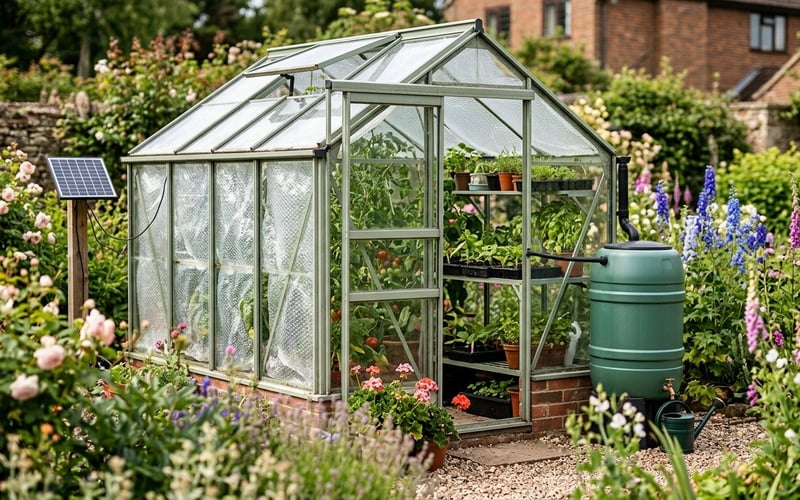
A greenhouse can be made environmentally friendly by cutting winter heat loss 40-50% with bubble wrap, collecting 600 litres of rainwater per square metre of roof every year, switching to peat-free compost after the 2024 retail ban, and using biological pest controls such as Encarsia formosa instead of sprays. These five changes typically halve running costs and wipe out most of the plastic, peat and mains water associated with greenhouse growing.
Key takeaways
- Bubble wrap cuts heat loss 40-50%. Line the inside from November to March with horticultural-grade polythene and insulation clips.
- Rainwater harvests free. A 6ft x 8ft greenhouse roof captures around 3,000 litres a year in typical UK rainfall.
- Peat-free is the law now. Retail peat sales ended in 2024. Coir, wood fibre, and composted bark all outperform peat in raised beds.
- Biological controls beat sprays. Encarsia, Cryptolaemus, and nematodes clear whitefly, mealybug, and sciarid flies without residues.
- Thermal mass buffers temperature. Ten 5-litre water bottles release 200kJ of stored heat overnight per 6x8 greenhouse.
- LED grow lights use 60% less power. Modern LED strips cost 30 pence per day vs 80 pence for equivalent HID lamps.
Installer's Note
I have fitted eco kits to hundreds of greenhouses across the UK in sixteen years. The single change with the biggest effect is a proper bubble wrap liner installed before the first frost. The second is a rainwater downpipe connected to a butt. Most growers who call us about high winter heating bills do neither, then wonder why a 15-watt tube heater runs flat out for weeks. Get those two jobs done first and you cut running costs in half without changing anything else.
How do you insulate a greenhouse without using plastic?
Horticultural bubble wrap is still the lowest-carbon way to insulate a UK greenhouse. The roll you buy for £15-£25 lasts 4-5 winters and keeps internal temperatures 3-5C higher on freezing nights. Once replaced, old liner can be recycled at most council tips under soft plastic schemes.
Clip the wrap to glazing bars with reusable plastic insulation clips. These cost around 22 for a pack of ten on an Elite greenhouse. A 6x8 greenhouse needs about 40 clips for a full internal liner. See our guide on how to insulate a greenhouse for the fitting sequence.
Avoid domestic bubble wrap with small bubbles. It yellows within one season and does not last. Horticultural grade uses UV-stabilised polythene with 20mm bubbles that hold more trapped air.
How much rainwater can a greenhouse roof collect?
A 6ft x 8ft greenhouse roof has roughly 5 square metres of catchment. UK average annual rainfall is 1,100mm. That gives about 5,500 litres of free water per year, minus 10-15% lost to splash and evaporation, leaving around 3,000 litres actually reaching a connected water butt.
A guttered greenhouse with a downpipe and 200-litre butt is the starting point. Elite and Vitavia both sell ready-made kits that bolt onto the existing eaves. A 49 Elite Standard Downpipe Kit connects one side; a 75 six-foot rainwater kit does both sides of a small greenhouse.
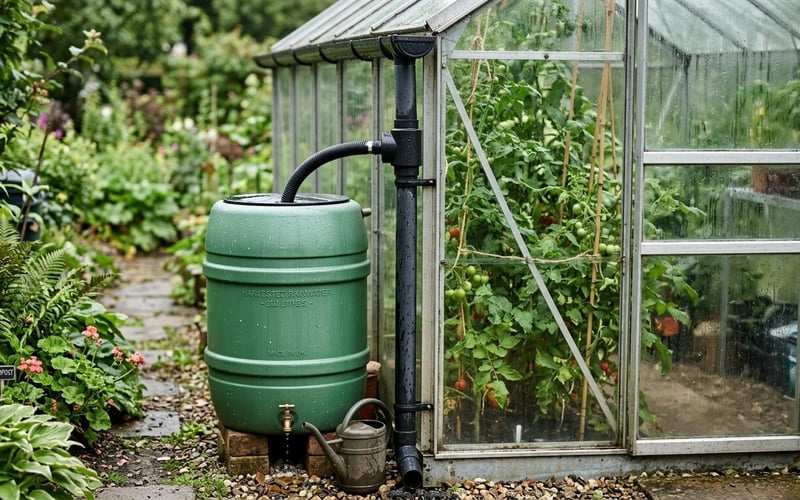
Keep the butt lidded to block mosquito larvae and clean the inside every spring to remove algae. Rainwater is slightly acidic and suits tomatoes, peppers, and ericaceous plants better than tap water, which is usually alkaline in southern England.
What is the most eco-friendly greenhouse heating?
The greenest heat is the heat you do not lose. An insulated greenhouse with draught-proofed door seals, double-doored vestibule, and thermal mass (water-filled containers) often needs no active heating at all above -2C outside.
When heat is unavoidable, modern thermostat-controlled 2kW electric tube heaters pair well with a renewable-tariff electricity supplier. Running cost is low because the thermostat cycles on only for the coldest hours of coldest nights. A full season in a 6x8 greenhouse typically costs £30-£60 on a variable tariff.
| Heating method | Cost per night at 0C | CO2 per kWh | Suitable for |
|---|---|---|---|
| Thermostat electric tube | £0.40-£0.80 | 207g grid / 0g renewable | All greenhouses |
| Paraffin heater | £0.90-£1.20 | 264g per kWh | Short cold snaps only |
| Compost heap heat | Free | 0g (closed loop) | Cold frames, lean-to |
| Thermal mass (water) | Free | 0g | Frost protection to -2C |
A compost heap built against the north wall of a greenhouse produces genuine heat through decomposition. A 1m cube heap sustains internal temperatures 5-8C above ambient for 6-8 weeks in early spring. Our heating running costs guide compares every option in detail.
Which growing media replaces peat in a greenhouse?
UK retail sales of peat for amateur gardeners ended in 2024. All major brands now sell peat-free multipurpose compost based on coir, wood fibre, composted bark, and green waste. Performance is as good or better once you adjust watering.
Peat-free composts hold water differently. The top surface dries fast while lower levels stay moist longer. Water in short bursts with 10 minutes between applications rather than one long soak. This prevents run-off and matches the plant's actual uptake rate.
Matt's Tip: peat-free fertiliser schedule
Peat-free compost runs out of nitrogen about 4 weeks after potting. I start liquid feeding at week 3 with half-strength tomato feed, then full strength from week 5 onward. Skip this and leaves yellow by early summer. It is the single most common peat-free problem I see.
How do I control greenhouse pests without chemicals?
Biological controls are cheaper, more effective, and residue-free compared to chemical sprays. Three cover 90% of UK greenhouse problems.
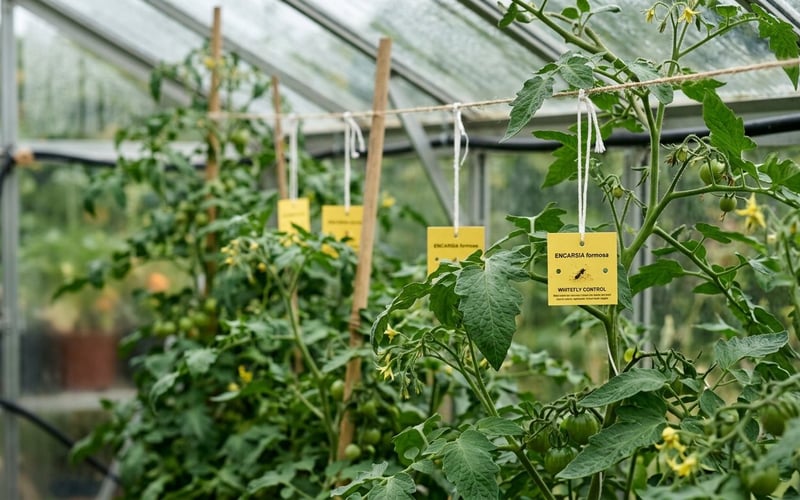
- Encarsia formosa wasp for whitefly. Release 5 cards per 10m² every 2 weeks from April to September. Cost £8-£12 per pack from UK biocontrol suppliers.
- Cryptolaemus montrouzieri beetle for mealybug. One release clears heavy infestations within 6-8 weeks above 20C.
- Steinernema feltiae nematodes for sciarid fly, vine weevil, and leaf miner. Apply as a soil drench from April onward.
Companion planting supports the biological approach. French marigolds at the greenhouse entrance repel whitefly by 40-60% in research trials. Basil planted between tomatoes reduces aphid colonies and attracts pollinators.
Matt's Pick: the rainwater kit every greenhouse needs
| Matt's Pick for eco-friendly greenhouse upgrades | |
| Best for | 6ft to 10ft wide greenhouses wanting both-sides rainwater capture |
| Why I recommend it | Collects around 3,000 litres a year, cuts mains water use to nearly zero, and installs in under an hour with standard tools. |
| Price | From £75 |
| Link | View the Elite Rainwater Kit |
What are the best eco-friendly greenhouse cleaners?
White vinegar diluted 1:4 with water cleans glazing of green algae without harming plants or insects outside. Citric acid powder (from brewing suppliers) dissolved at 30g per litre handles heavier limescale. Both rinse away with clear water.
Avoid copper sulphate and chemical algicides. They kill beneficial insects, run off into soil, and persist in rainwater butts. A scrub brush, 20 minutes of work, and vinegar solution cleans a 6x8 greenhouse at the end of the season. Our greenhouse cleaning guide walks through the whole process.
Frequently asked questions
Can I heat a greenhouse without electricity?
Yes, through thermal mass, compost heat, and paraffin heaters. Water-filled containers absorb daytime heat and release it overnight, typically holding temperatures 2-4C above outside air. A compost heap against one wall adds biological heat through decomposition for 6-8 weeks. Paraffin provides emergency cold-snap heat but produces moisture that must be vented. Combine all three and an unheated greenhouse stays frost-free to roughly -2C outside.
Is peat-free compost really as good as peat?
Yes, once you adjust watering and feeding. Modern peat-free mixes based on coir and wood fibre outperform peat for most greenhouse crops. They drain better, warm faster in spring, and support stronger root growth. The difference is that they dry from the surface down, so short frequent watering works better than one long soak. Start liquid feeding at week 3 to match peat-free nitrogen release rates.
Do solar panels work for a UK greenhouse?
Small 20-50W solar panels run lights, fans, and drip irrigation reliably from April to October. Winter output drops 80% in December and January, so solar-only heating is not practical. Pair a 30W panel with a 12V leisure battery and a timed irrigation pump to automate summer watering while you are away. Installation cost runs £120-£200 and pays back through mains water savings within 3-4 years.
How much rainwater does a 6x8 greenhouse collect?
About 3,000 litres per year in average UK rainfall. The 5-square-metre roof catches 5,500 litres of rain annually, with 10-15% lost to splash and evaporation before reaching the butt. A 200-litre water butt fills 15 times over a year, enough to irrigate a full greenhouse of tomatoes, peppers, and seedlings from April to October without any mains water.
What is the most eco-friendly greenhouse frame material?
Aluminium, surprisingly. Modern greenhouse aluminium is 75% recycled content and fully recyclable at end of life. A 20-year greenhouse lifespan amortises the embodied carbon to roughly 15kg CO2 per year. Wooden frames have lower manufacturing carbon but need replacement every 12-15 years due to rot, doubling the lifetime footprint. See our wooden vs aluminium comparison for details.
Do biological pest controls really work?
Yes, when applied correctly. UK commercial growers have used biological controls since the 1970s with kill rates matching or beating chemical sprays. Encarsia wasps clear 95% of whitefly within 4 weeks when released every 2 weeks at correct density. The catch is temperature and timing. Most biocontrols need temperatures above 18C and work preventively, not as emergency sprays when pests already dominate.
Can greenhouse cleaning products harm plants?
Strong chemical cleaners like copper sulphate and sodium hypochlorite damage nearby plants and kill pollinators. Soil contamination persists for months. Use white vinegar at 1:4 dilution or citric acid at 30g per litre instead. Both rinse clean, break down in hours, and leave no residue in rainwater butts. Avoid pressure-washing onto planted borders and flush any accidental overspray with plain water within the hour.
Related articles
- How to insulate a greenhouse: materials, methods and heat savings
- Heating a greenhouse without electricity: what actually works
- Greenhouse ventilation guide: vents, fans and preventing overheating
- Greenhouse watering and irrigation guide: manual vs automatic systems
- Greenhouse aftercare: seasonal UK maintenance checklist