Plant Winter Radishes in December and Harvest Them in February
By Matt W | Updated March 2026
Winter radishes like Black Spanish, China Rose, and Mooli thrive when sown in December under a cold frame. Sow seeds 1cm deep in rows 15-20cm apart. A cold frame raises soil temperature by 3-5°C, triggering germination when open ground is too cold. Expect to harvest in 8-10 weeks.
Key takeaways
- Timing is Everything: Sow in December for a crisp, spicy February harvest.
- The Right Variety: Choose dedicated winter types like Black Spanish or Mooli. Summer radishes will not thrive now.
- Protection is Key: You must use a cold frame or greenhouse to keep the soil workable.
- Water Sparingly: Winter damp kills more plants than the cold. Keep ventilation high.
- Gear Up: A cold frame is the most cost-effective tool for this specific crop.
Expert Tip
When we fit cold frames for customers growing winter veg, I always recommend south-facing placement against a wall or fence. The brickwork stores heat during the day and releases it overnight. That extra warmth makes a real difference for December sowings. Angle the frame so the lid slopes towards the sun for maximum light capture.
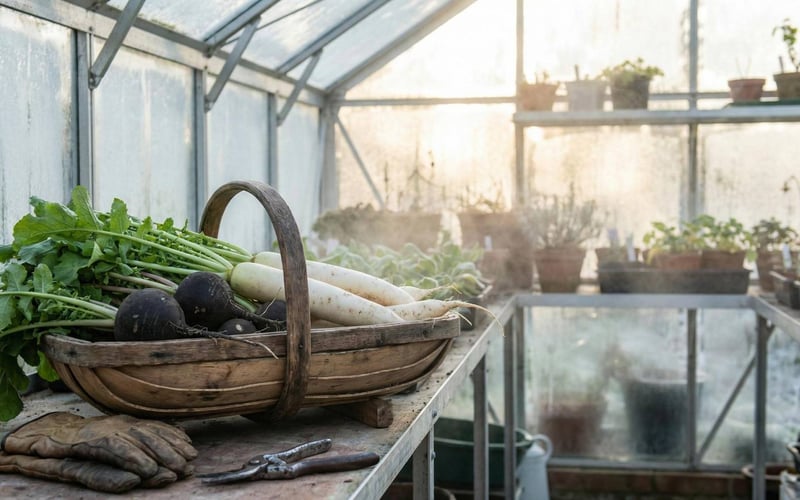
If you think the vegetable patch goes to sleep in December, think again. In my the years since Greenhouse Stores began trading in 2012, the biggest myth I hear is that frost means downing tools.
The truth? You can absolutely plant winter radishes in December. Doing so sets you up for a brilliant "hungry gap" harvest in February. Fresh crunch is hard to find then. While summer varieties are quick and mild, winter radishes are the heavyweights of the root world. They are peppery, sturdy, and perfectly suited to the UK's cooler climate, provided you give them a little help.
Here is exactly how we do it, so you get a crop rather than just a patch of frozen mud.
Why grow winter radishes now?
Most gardeners know the small, red salad radishes like French Breakfast. Those take four weeks in spring. Winter radishes are a different beast entirely.
Botanically, they are bred to mature more slowly and withstand lower light levels. They produce much larger roots, sometimes the size of turnips or long carrots. The denser texture stores incredibly well. If you are already growing in a greenhouse in winter, radishes are an easy addition.
The flavour profile
The flavour is the real winner here. Winter varieties tend to be punchier and earthier. They are superb in winter stir-fries, roasted alongside Sunday joints, or sliced paper-thin into winter salads for a serious kick.
By planting in December, you are utilising "dead time" in your garden. It keeps your soil active. You get fresh produce when supermarket veg prices climb in late winter.
Essential equipment: protecting your crop
I will be honest with you. You cannot scatter seeds into soggy, frozen ground in December and expect a miracle. To succeed with a December sowing, you need to create a microclimate.
The cold frame advantage
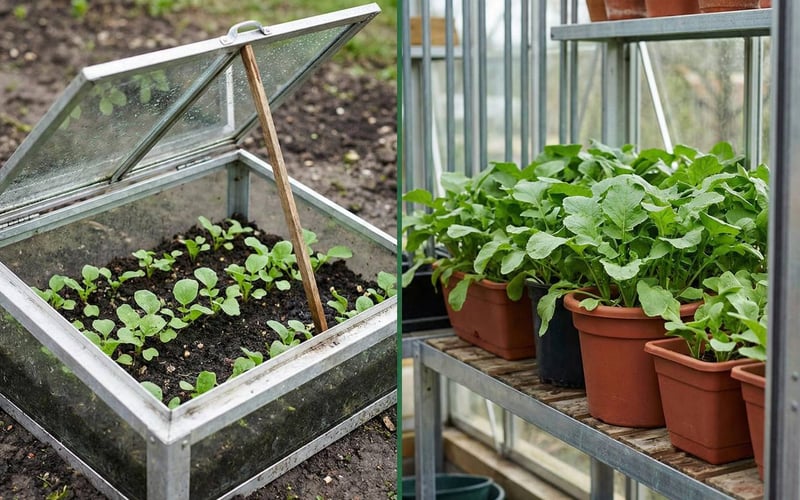
For winter radishes, a cold frame is arguably your best friend. These low structures sit close to the ground, warming the soil and protecting seedlings from wind and snow. Because radishes do not grow very tall, a cold frame provides ample height.
Glass or polycarbonate glazing traps the weak winter sun's heat. It raises the internal temperature just enough to trigger germination. In our tests, soil inside a cold frame can be 3-5°C warmer than the ground outside. That is the difference between life and death for a seed in December.
|
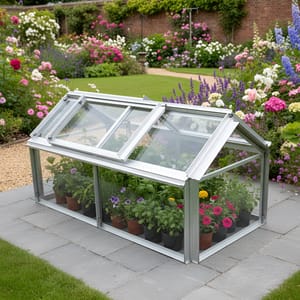
Matt's pick for winter radish growingBest For: winter root vegetables in cold frames Why I Recommend It: I have fitted dozens of these for customers growing winter veg. The 4x2 size fits a few rows of radishes perfectly. The aluminium frame will not rust, and the lid props open for ventilation. Price: £249 |
Small greenhouses
If you do not have a cold frame, a small greenhouse gives better ventilation control. You can also work comfortably out of the rain. In a larger greenhouse, use cloches inside for a "double-glazing" effect during harsh January freezes.
Choosing the right variety
This is where most beginners fail. Do not sow Cherry Belle or standard salad radishes now. They will likely bolt or turn woody. You need specific winter cultivars.
Top picks for UK winter growing
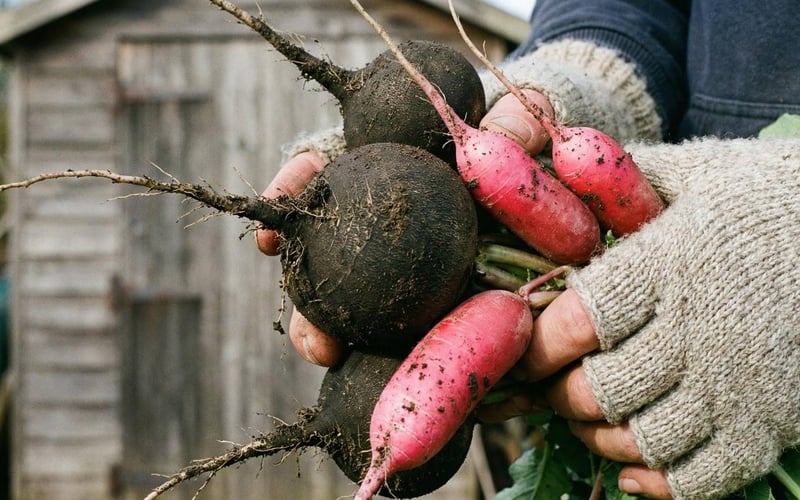
- Black Spanish (Round or Long): These have a tough, charcoal-coloured skin (which you peel) and snow-white flesh. They are incredibly hardy and have a sharp, horseradish-like kick.
- China Rose: A beautiful pink-skinned variety. It is slightly milder than the Black Spanish and adds great colour to winter plates.
- Mooli (Daikon): These long white roots are popular in Asian cooking. They need deep soil, so dig well. They are surprisingly resilient to UK winters if kept frost-free.
Step-by-step: planting your december radishes
We generally tackle this job during the first dry weekend of the month. It fits in perfectly alongside other December gardening jobs like cleaning tools or pruning fruit trees.
1. Prepare the soil
Winter radishes hate compacted soil. If the ground is hard, the roots will fork or stunt.
- Dig Deep: Fork over the soil to a depth of at least 15cm (6 inches).
- Drainage is King: In winter, wet soil is the enemy. Incorporate some horticultural grit or sharp sand to improve drainage.
- No Fresh Manure: Avoid fresh manure. The excess nitrogen encourages leaf growth at the expense of the root and causes forking.
2. Sowing the seeds
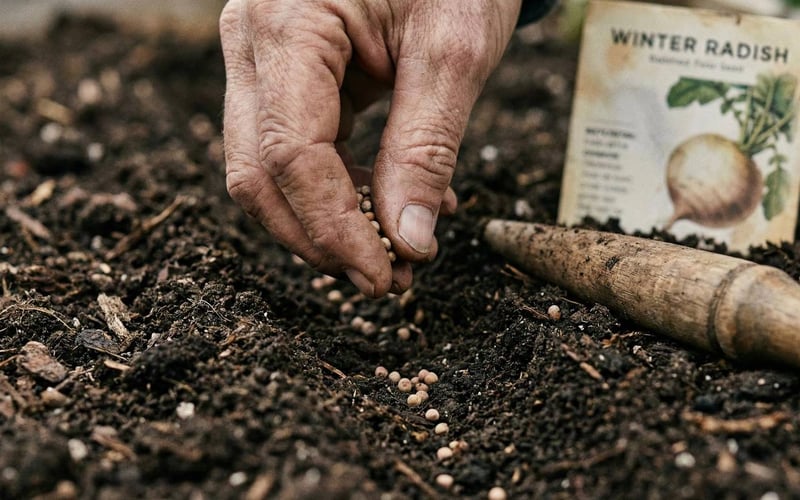
- Spacing: Sow seeds thinly in drills about 1cm deep. Space rows about 15-20cm apart.
- Cover: Cover lightly with soil.
- The Container Option: If your ground is frozen solid, grow in deep containers inside your potting shed or greenhouse. Ensure the pot is at least 20cm deep.
3. Immediate protection
As soon as seeds are in, close the lid of your cold frame or greenhouse door. If a severe frost is forecast after planting, lay horticultural fleece over the soil for a few days. This aids germination.
Winter care: the "less is more" approach
Gardening in winter is less labour-intensive than summer, but it requires more observation.
Watering
You will hardly need to water. In December and January, evaporation rates are low. Check the soil once a week. If it feels dry an inch down, give it a light drink. Overwatering now leads to damping-off disease or rot.
Ventilation
This is critical. On crisp, sunny winter days, open the greenhouse vent or prop the cold frame lid. Stagnant, damp air encourages grey mould (Botrytis). Fresh air keeps the plants healthy.
Thinning out
Once seedlings appear (which may take 2-3 weeks in December cold), thin them out. Aim for a spacing of about 10-15cm between plants. Crowded radishes will not bulb up nicely.
Matt's tip: speed up germination
Place a heated propagator mat under your seed trays inside the cold frame. It raises the soil temperature by another 5-8°C, cutting germination time from three weeks down to about ten days. I use one every December for radishes, carrots, and early lettuce. Once seedlings are through, remove the mat so the roots toughen up in natural cold.
The container method: no garden required
Not everyone has open ground. Winter radishes thrive in pots, making them well suited to patio gardeners or those with paved courtyards.
Grab a deep container (a recycled florist bucket with holes drilled in the bottom works wonders). Fill it with a mix of general-purpose compost and 20% grit. Place the pot against the wall of your house. Bricks release heat absorbed during the day, keeping the pots slightly warmer at night.
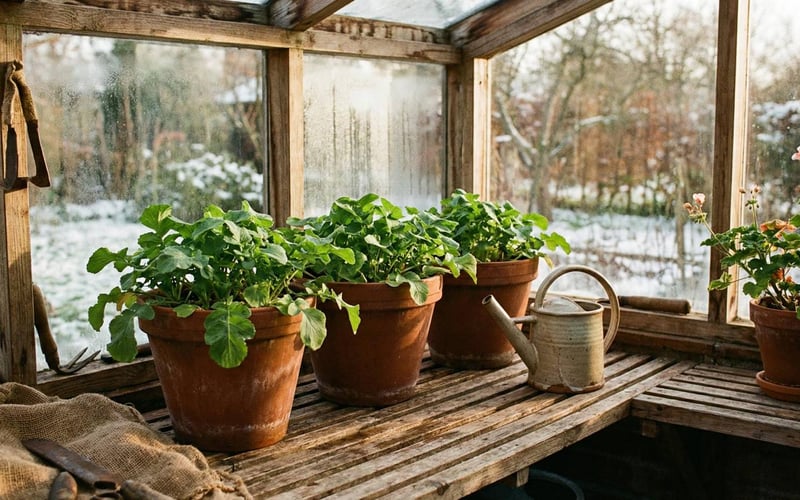
If you have a lean-to greenhouse, growing in pots on the shelving is an excellent use of vertical space. For more on maximising small spaces, check out our guide to growing seeds in a greenhouse.
Harvesting: the february reward
Depending on how cold the winter is, your radishes should be ready to lift from mid-February onwards.
How to tell they are ready
Brush away a little soil from the base of the leaves. You should see the "shoulder" of the root. It should look substantial. Aim for roughly golf-ball size for round varieties, or 2-3cm diameter for long varieties.
Lifting
Do not pull them by the leaves. The foliage can snap off in winter. Use a hand fork to gently lever them out of the ground. The technique is similar to growing carrots, where careful lifting prevents damage.
Storing
If you cannot eat them all at once, lift them anyway before they turn woody. Twist off the foliage (do not cut it, twisting prevents bleeding). Store the roots in a box of damp sand in a cool, dark place like a shed or garage. They will keep for weeks this way.
Make the most of your winter growing season
Planting winter radishes in December might seem against the grain. With the right protection, it bridges the gap between seasons. It keeps your green fingers active and rewards you with flavours no supermarket can match.
Whether you use a cold frame or a small greenhouse, the key is protection from wet and wind. Give them shelter, and they will give you a harvest.
Frequently asked questions
Can I sow radishes in december in the UK?
Yes, but you must use a cold frame, greenhouse, or cloche. Open ground is usually too wet and cold for successful germination in December. Choose winter-specific varieties like Black Spanish or Mooli for the best results.
How long do winter radishes take to grow?
Winter radishes take approximately 8-10 weeks from sowing. Sown in December, they grow slowly due to low light levels. Expect to harvest from mid-to-late February.
Do radishes need a greenhouse in winter?
They do not strictly need a full greenhouse. A cold frame or sturdy fleece tunnel is often sufficient. However, a greenhouse makes managing ventilation and watering much easier during cold snaps.
What is the difference between winter radish and summer radish?
Winter radishes have larger roots, thicker skins, and stronger flavour. They take longer to mature and are much hardier against frost compared to delicate summer salad types. Summer varieties bolt or turn woody in cold conditions.
Why are my winter radishes all leaf and no bulb?
Too much nitrogen, overcrowding, or wrong variety. Avoid fresh manure and ensure you thin seedlings to 10-15cm apart. Planting summer varieties in winter often causes this problem, as they struggle to form roots in short days.
Related articles
- Growing Vegetables in a Greenhouse All Year Round
- Using Raised Beds in Greenhouse Guide
- Winter Greenhouse Care: UK Guide
- Heating a Greenhouse Without Electricity
- How to Heat a Greenhouse
Need growing advice? Email our team at customerservice@greenhousestores.co.uk.