
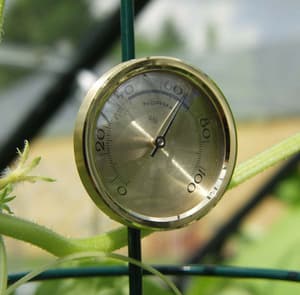
🌡️ About Our Greenhouse Thermometers
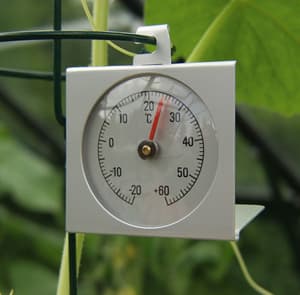
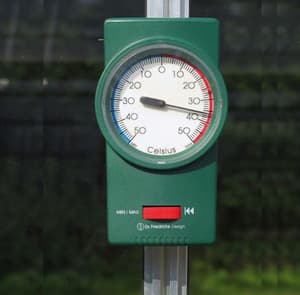
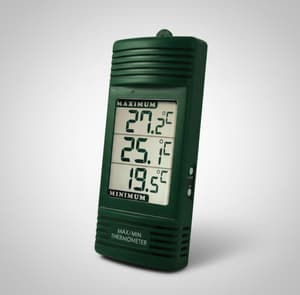
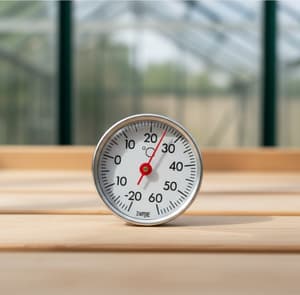
Monitoring temperature and humidity is fundamental to successful greenhouse growing in the UK. Our collection of greenhouse thermometers includes digital and analogue options from Elite and Vitavia, each designed for the unique environment inside your greenhouse. Whether you need a basic Vitavia Max Min Thermometer to track overnight lows or a Digital Max Min Thermometer with memory function, you'll find precision instruments from £24 to £44. All orders include free UK delivery within 5 days, so you can start monitoring conditions immediately.
Max/min thermometers are essential because they record the highest and lowest temperatures while you're away — crucial data for preventing frost damage or heat stress. Digital models offer battery-powered convenience and clear LCD displays, while traditional analogue versions require no batteries and provide reliable readings year after year. For serious propagators, our Vitavia Soil Thermometer measures root zone temperatures, which directly affects seed germination success rates.
How to Choose the Best Greenhouse Thermometer
Start by identifying your primary need. If overnight frost is your concern in an Aluminium Greenhouse or Wooden Greenhouse, a max/min model is non-negotiable — it shows you the coldest point reached during the night so you know whether your Greenhouse Heaters kept temperatures safe. Digital versions often include features like wireless sensors and smartphone alerts, ideal for remote monitoring.
Why Humidity Matters (The Hygrometer Function)
Humidity control is equally important. High humidity (above 80%) creates perfect conditions for Botrytis and fungal diseases, especially in poorly ventilated spaces. Our Vitavia Hygrometer measures both temperature and humidity, helping you decide when to open Automatic Roof Vent Openers or deploy Greenhouse Shading. For comprehensive climate management, pair your thermometer with these systems and additional Greenhouse Accessories.
💡 Placement Tip
Hang your thermometer at plant canopy level, away from direct sunlight. Direct sun exposure can give false readings 5-10°C higher than actual air temperature. Position it centrally for average readings, or near vulnerable plants for targeted monitoring.
Key Features & Benefits
Max/Min Memory Function
Records temperature extremes while you're away. Essential for overnight frost monitoring and validating heating system performance.
Digital Precision
0.1°C accuracy on premium models. LCD displays are easier to read than analogue scales, particularly in low light conditions.
Hygrometer Capability
Measures relative humidity (40-80% is ideal). Prevents fungal outbreaks caused by stagnant, moist air.
Soil Temperature Probes
Direct root zone measurement. Germination fails below 10°C for most vegetables; soil thermometers eliminate guesswork.
Wireless Connectivity
Remote sensors transmit data to indoor displays. Monitor Potting Sheds or distant greenhouses without walking outside.
Digital vs Analogue: Quick Comparison
| Feature | Digital | Analogue |
|---|---|---|
| Accuracy | ±0.1-1°C | ±1-2°C |
| Battery Required | Yes (12-24 months) | No |
| Memory Function | Automatic history | Manual reset required |
| Remote Sensors | Available (wireless) | Not available |
| Price Range | £20-£199 | £15-£35 |
| Best For | Multi-zone monitoring | Single location, traditional reliability |
Temperature & Humidity Management Guide
Understanding Vapour Pressure Deficit (VPD)
Temperature and humidity interact to determine how easily plants can transpire. At 22°C and 60% humidity (ideal for tomatoes), plants regulate water uptake efficiently. The same temperature at 90% humidity restricts transpiration, causing oedema (water-soaked lesions on leaves). This is why measuring both values matters — you're optimizing plant physiology, not just comfort.
Seasonal Temperature Goals for Common Crops:
- Tomatoes, Peppers, Cucumbers: Day 21-27°C, Night 16-18°C, Humidity 60-70%
- Lettuce, Brassicas (Cool Season): Day 10-18°C, Night 5-10°C, Humidity 50-70%
- Overwintering Citrus: Day 10-15°C, Night 5-8°C, Humidity 40-60%
- Seed Propagation: Constant 18-24°C, Humidity 70-80% (reduce after germination)
Troubleshooting & Calibration (FAQ)
-
How do I reset my max/min thermometer?
Press the reset button (usually marked "RESET" or with a circular arrow symbol) after reading your data. On analogue models, use the magnetic slider underneath the casing to pull the min/max indicators back to the current temperature. Reset daily for accurate tracking.
-
Why is my thermometer reading different from the weather forecast?
Weather forecasts show regional averages measured in shaded, open-air conditions. Your greenhouse creates a microclimate that's typically 5-15°C warmer during the day due to solar gain through glazing. This difference is normal and actually demonstrates why monitoring internal conditions is critical.
-
How can I check the accuracy (Ice Water Test)?
Fill a glass with ice and water, stir for 30 seconds. Insert your thermometer probe (or place the unit in the glass for analogue types). It should read 0°C (±1°C). If your digital thermometer shows a consistent +2°C error, mentally adjust readings or contact the manufacturer about recalibration.
-
Where should I position my thermometer for accurate readings?
Hang it at plant canopy height, centrally located, away from direct sunlight and heating vents. Avoid placing it against cold glass or walls, which create localized temperature zones. For propagation benches, use a separate soil thermometer inserted 5cm into your growing medium.
Need Help Choosing?
Every thermometer in this collection is in stock and ready for immediate dispatch. Prices start at £15 for analogue max/min models, rising to £199 for advanced wireless multi-sensor digital systems. Need advice on which model suits your setup?
Call our team on 0800 098 8877 or email sales@greenhousestores.co.uk — we've been helping UK growers monitor greenhouse conditions since 2012.