How to Clean a Greenhouse: Glass, Frame and Floor Guide
A thorough greenhouse clean takes 2-4 hours and should happen at least once a year between October and February. Dirty glass blocks 20-40% of available light depending on severity. After 16 years installing and maintaining greenhouses across the UK, we treat cleaning as the single most effective annual maintenance task. Use diluted Jeyes Fluid (1:20) on internal surfaces, warm soapy water on glass, and a toothbrush inside every aluminium channel. This guide covers glass, polycarbonate, aluminium frames, wooden frames, staging, floors, gutters, and pest prevention.
Key Takeaways
- Clean once a year minimum between October and February when the greenhouse is empty of summer crops
- Dirty glass blocks 20-40% of light — a clean greenhouse can be 3-5°C warmer on a sunny winter day
- Polycarbonate needs different care: soft microfibre cloth only, no solvents, no abrasives, no window cleaner
- Spray inside every aluminium channel with diluted Jeyes Fluid — this is where red spider mite colonies overwinter
- Clean all pots and staging before returning them — old compost harbours vine weevil larvae and disease spores
- Check auto vent cylinders while cleaning — wax cylinders fail after 3-5 years and cost under £50 to replace
Browse our full Greenhouse range →
Installer's Note
We clean greenhouses during every installation and repair job. After 16 years and over 500 greenhouses, the pattern is clear: owners who do one proper annual clean in November get fewer pest problems, better germination rates, and stronger crops all season. The difference in light levels between a clean and neglected greenhouse is visible the moment you step inside. Two hours of work in autumn pays dividends from January right through to October.
Why should you clean your greenhouse?
A dirty greenhouse loses 20-40% of available light, directly reducing plant growth, seed germination, and winter warmth. Algae, moss, bird droppings, and hard water deposits all build up on glass throughout the year. In the UK, winter daylight is already short — as few as 7 hours in December. Every percentage of blocked light matters.
Clean glass also retains heat better. Solar energy passes through clean glass and warms the interior. A dirty pane reflects more sunlight before it enters. In our experience, a clean greenhouse can be 3-5°C warmer on a sunny winter day than a dirty one of the same size. That temperature difference determines whether tender overwintering plants survive.
Cleaning also breaks pest and disease cycles. Red spider mite, whitefly, and scale insects overwinter inside aluminium frame channels. Botrytis and powdery mildew spores settle on interior glass during humid summer months. A proper autumn clean removes these before they cause problems the following spring. For more on winter protection, see our winter greenhouse care guide.
When is the best time to clean a greenhouse?
The best window is October to February, with late November being ideal for most UK growers. Summer crops have finished. Overwintering plants are not yet established. Pick a dry, mild day above 5°C. Cold water on frozen aluminium frames is miserable work and less effective at shifting grime.
We recommend two cleaning sessions per year for best results. A full deep clean in November covers everything — glass, frame, floor, staging, and pest treatment. A lighter glass-only clean in late February restores maximum light just before spring sowing. If you had pest or disease problems during the season, the February clean is especially important.
| Timing | Type of Clean | Focus Areas | Time Needed |
|---|---|---|---|
| Late October - November | Full deep clean | Glass (inside and out), frame channels, floor, staging, gutters, pest treatment | 2-4 hours |
| Late February | Glass-only clean | Exterior glass, overlapping pane joints, roof panels | 45-90 minutes |
| Midsummer (optional) | Quick exterior rinse | Roof panels only — pollen, tree sap, bird droppings | 20-30 minutes |
| After disease outbreak | Emergency disinfection | All internal surfaces, pots, tools, staging | 1-2 hours |
Avoid cleaning in direct sunlight. The solution dries before you rinse it, leaving white streaks that are harder to remove than the original dirt. An overcast morning is ideal. Planning to insulate your greenhouse for winter? Clean first, then fit the bubble wrap.
What tools and products do you need to clean a greenhouse?
Gather everything before you start — hunting for supplies mid-job wastes time and lets cleaning solution dry on glass. Most of what you need is already in the garden shed or kitchen cupboard.
Tools checklist
- Hosepipe with spray attachment — a car-wash brush attachment works well for exterior glass
- Long-handled soft brush or mop — for reaching roof panels from ground level
- Soft sponge (non-scratch) — for washing glass and frame surfaces
- Spray bottle — for applying diluted Jeyes Fluid to internal surfaces
- Squeegee — for streak-free glass finishing
- Old toothbrush or bottle brush — for getting into aluminium channels and glazing bars
- Bucket — two if possible: one for soapy water, one for rinsing
- Microfibre cloths — for drying and polishing glass
- Soft broom — for sweeping down internal walls and floor
- Thin plastic plant label — for cleaning between overlapping glass panes
Cleaning products compared
| Product | Best For | Safe on Glass? | Safe on Polycarbonate? | Safe on Aluminium? | Cost |
|---|---|---|---|---|---|
| Warm water + washing-up liquid | Glass, frames, all-round cleaning | Yes | Yes | Yes | £0.10 per clean |
| Jeyes Fluid (1:20 dilution) | Internal disinfection, pest control | Yes | Use with caution | Rinse immediately | £3-4 per clean |
| White vinegar (1:4 with water) | Hard water deposits, limescale | Yes | Yes (diluted) | Yes | £0.50 per clean |
| Citrox (citric acid based) | Organic-friendly disinfection | Yes | Yes | Yes | £8-12 per bottle |
| Bicarbonate of soda paste | Stubborn algae on glass | Yes | No — too abrasive | Yes | £0.20 per clean |
| Bleach | Not recommended | Technically yes | No | No — corrodes frames | N/A |
| Window cleaner (Windolene) | Not recommended for greenhouses | Yes | No — clouds permanently | Yes | N/A |
| Pressure washer | Not recommended | No — cracks panes | No — strips UV coating | No — blows out glazing clips | N/A |
Matt's Tip: The £4 Product That Does Everything
After 16 years, I always come back to Jeyes Fluid. A single bottle costs about £4 and lasts 3-4 full greenhouse cleans at 1:20 dilution. It kills pest eggs, disinfects against botrytis and mildew, and shifts algae on hard surfaces. I spray it into every aluminium channel, across all staging, and along the floor edges where slugs shelter. The only place I avoid it is directly on polycarbonate panels and plants. For the glass itself, warm soapy water with a squeegee gives a better streak-free result than any expensive specialist cleaner I have tried.
How to clean greenhouse glass: step by step
This method works for both horticultural glass and toughened safety glass. For polycarbonate, see the separate section below. Start with the exterior, then move inside.
Step 1: Clear the exterior (10 minutes)
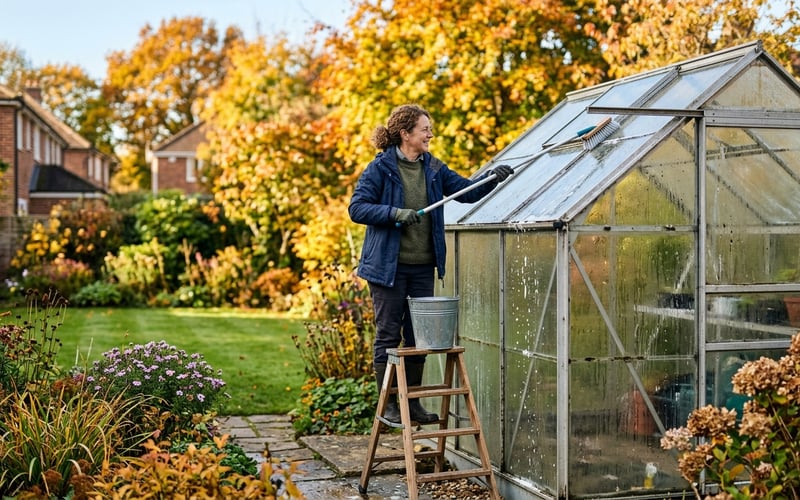
Brush loose leaves, cobwebs, and debris off the glass with a dry soft brush. Pay attention to the overlaps between panes where dirt collects. Clear the gutters of leaves and moss at the same time.
Step 2: Rinse from the top down (5 minutes)
Hose down the entire exterior starting at the roof. Gravity does half the work. This loosens bird droppings, pollen, and surface grime before you scrub.
Step 3: Wash with soapy water (20-30 minutes)
Fill a bucket with warm water and add a few drops of washing-up liquid. Use a soft sponge on side panels and a long-handled brush for the roof. Work in sections of 3-4 panes, scrubbing in circular motions. Do not press hard on horticultural glass — it is only 3mm thick.
Step 4: Rinse before the soap dries (ongoing)
Rinse each section with clean water from the hose before moving to the next. Soap residue left to dry is harder to remove than the original dirt. On a mild day, you have about 5 minutes per section before streaking starts.
Step 5: Clean between overlapping panes (15-20 minutes)
This is the step most people skip. Algae builds up in the 10-15mm overlap between glass panes and wicks moisture into the frame. Slide a thin plastic plant label or strip of microfibre cloth between the panes. Spray soapy water into the gap first on badly clogged overlaps. This single step makes the biggest visual difference.
Step 6: Squeegee for streak-free results (10 minutes)
Starting at the top of each pane, draw the squeegee down in a single stroke. Wipe the blade with a dry cloth between strokes. This removes 95% of the water and prevents drip marks. A 30cm window squeegee from any hardware shop does the job.
View the Vitavia Apollo 6x10 Greenhouse →
How to clean the inside of a greenhouse
The interior clean is more important than the exterior because this is where pests and diseases overwinter. Budget 60-90 minutes for the inside of a standard 6x8ft greenhouse.
Step 1: Empty everything (15-20 minutes)
Remove all pots, trays, tools, bags of compost, and any stored equipment. Take out removable staging and shelving. You need bare surfaces to clean properly. Move plants to a sheltered spot against a house wall. If the day is cool, cover tender plants with fleece.
Step 2: Sweep down (10 minutes)
Use a soft broom to sweep every surface from the roof down. Get into every corner. Remove spider webs, dead leaves, and debris behind where staging sat. Sweep the floor last.
Step 3: Spray with Jeyes Fluid (10-15 minutes)
Fill your spray bottle with diluted Jeyes Fluid (1 part Jeyes to 20 parts water). Spray every internal surface you can reach. Pay special attention to the joints where glass meets frame. These hidden gaps are where red spider mite, whitefly, and scale insects shelter through winter.
Step 4: Clean inside the aluminium channels (15-20 minutes)
This is the most important step of the entire clean. Pop off glazing clips where possible. Use an old toothbrush or bottle brush dipped in Jeyes solution to scrub inside every glazing bar channel. Red spider mite colonies sit dormant in these channels all winter. Thousands of eggs hatch the moment temperatures hit 15°C in spring. Five minutes of extra effort here prevents weeks of pest battles later.
Step 5: Wipe all internal glass (15-20 minutes)
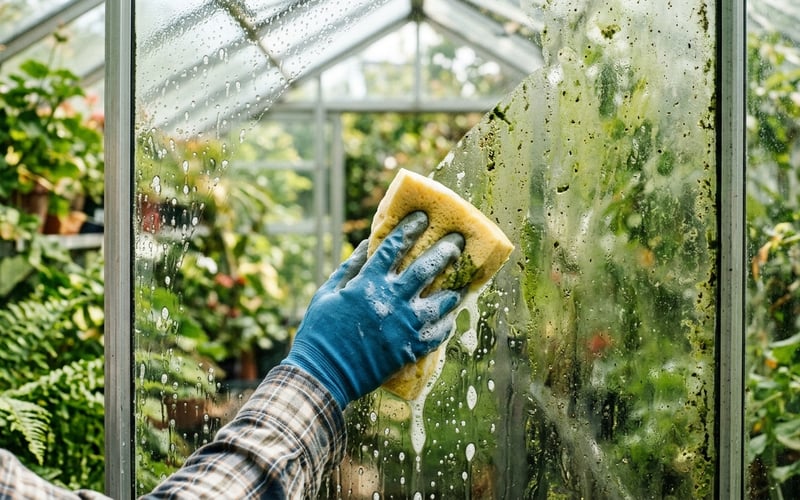
Use a sponge dipped in warm soapy water (not Jeyes) to wipe down all internal glass panels. The inside typically has condensation residue, mould spots, and a thin film of humidity deposits. Work methodically from one end to the other so you do not miss any panels.
Step 6: Rinse and ventilate (5 minutes)
Rinse all surfaces with clean water. Open all vents and the door. Let the greenhouse air out for at least 24 hours before returning plants. This allows any remaining Jeyes Fluid to dissipate.
How to clean polycarbonate greenhouse panels
Polycarbonate scratches more easily than glass and is damaged by solvents, so it needs a completely different approach. Using the wrong products causes permanent clouding that reduces light transmission year after year.
Never use abrasive sponges, scouring pads, window cleaner sprays, bicarbonate of soda paste, or any product containing ammonia or alcohol. These strip the UV-protective coating and scratch the surface. Once scratched, polycarbonate cannot be restored.
| Cleaning Factor | Horticultural / Toughened Glass | Polycarbonate |
|---|---|---|
| Sponge type | Soft sponge (non-scratch) | Microfibre cloth only |
| Cleaning solution | Soapy water, vinegar OK | Soapy water only — no solvents |
| Window cleaner spray | OK on glass | Never — clouds the surface permanently |
| Pressure washer | No — cracks panes | No — strips UV coating |
| Scrubbing pressure | Moderate | Very light — scratches easily |
| Algae in overlaps/channels | Plant label between panes | Bottle brush inside channels, seal ends with aluminium tape |
| Drying method | Squeegee or air dry | Dry microfibre cloth in straight lines only |
For green algae inside twin-wall polycarbonate channels: Remove the panel if possible and flush the channels with a hose. If the panel cannot be removed, use a long thin bottle brush. After cleaning, seal both open ends with aluminium tape. This prevents moisture entering and algae regrowing. Algae inside twin-wall channels is the most common maintenance complaint we hear about polycarbonate greenhouses.
For a full comparison of glazing types, read our glass vs polycarbonate greenhouses guide.
How to clean a greenhouse frame
Aluminium and wooden frames need different treatment. Getting this wrong can cause corrosion or rot that shortens the life of the structure.
Aluminium frames
Wipe down all frame sections with warm soapy water and a soft cloth. Use a toothbrush on joints and corners where algae collects. Rinse with clean water. Aluminium does not rust, but it can develop white oxidation spots if harsh chemicals are left on the surface. Never leave Jeyes Fluid, bleach, or acidic cleaners in contact with aluminium for more than a few minutes.
Check for loose glazing clips while cleaning. Replace any that are cracked or missing. A single missing clip can lead to a pane working loose in strong winds. While you are inspecting the frame, watch for plants that damage greenhouse frames — climbing plants and self-seeded weeds against the base trap moisture and accelerate corrosion.
Wooden frames
Scrub wooden frames with warm soapy water and a stiff brush. Pay attention to joints where moisture collects. Allow the wood to dry completely before applying preservative. Wooden greenhouses need re-treating with preservative every 1-2 years. ThermoWood frames (like Swallow greenhouses) need less frequent treatment due to heat treatment at 200°C during manufacture.
Check for soft spots that indicate rot. Probe suspect areas with a screwdriver. If the tip sinks in easily, the timber is compromised. Small areas of rot can be cut out and filled with exterior wood filler. Larger areas may need section replacement. For a full comparison, see our guide to wooden vs aluminium greenhouses.
Browse our Aluminium Greenhouses →
How to clean greenhouse staging, shelving and pots
Every pot and piece of staging going back into the greenhouse must be clean. Old compost and plant residue harbours disease spores, vine weevil larvae, and slug eggs. Returning dirty equipment into a clean greenhouse defeats the purpose of the entire job.
Soak pots in a bucket of garden disinfectant or a 1:10 white vinegar solution for 20 minutes. Scrub off any algae with a stiff brush and rinse with clean water. Terracotta pots absorb salt deposits — soak these overnight for best results.
Wipe down all staging and shelving with Jeyes solution. Check metal staging for rust spots. A wire brush and a coat of cold galvanising spray stops rust spreading. Check wooden staging for rot in the joints.

|
Matt's Pick: Best Staging for Easy CleaningBest For: Growers who want staging that is simple to remove and scrub during annual cleaning Why I Recommend It: Aluminium staging does not rust, does not rot, and wipes clean in minutes. I have cleaned hundreds of these during greenhouse installs. The slatted design means compost and water drain through instead of pooling. Lifts out in one piece for thorough cleaning underneath. Lasts the lifetime of your greenhouse. Price: £109 |
How to clean greenhouse floors and paths
The floor is where slugs, snails, and vine weevil larvae shelter. Different floor types need different approaches, but the goal is the same: remove all organic debris and kill any pests hiding in cracks.
Concrete or slab floors: Sweep thoroughly. Scrub with a stiff brush and hot soapy water. For stubborn algae, use diluted Jeyes Fluid and scrub with a deck brush. Rinse well. Check for cracks where pests shelter — fill any gaps with mortar.
Gravel floors: Rake out all debris and fallen leaves. If you have had persistent slug problems, remove the top 25mm of gravel and replace it. Pour boiling water over the remaining gravel to kill slug eggs and larvae. Let it drain and dry before replacing staging.
Soil floors: Remove the top 25-50mm of soil and replace with fresh. The top layer harbours the highest concentration of pests, disease spores, and weed seeds. This is particularly important if you grow directly in greenhouse borders. For more on getting the floor right from the start, read our greenhouse base preparation guide.
How to clean greenhouse gutters and downpipes
Blocked gutters cause water overflow that runs down the frame, corrodes joints, and undermines the base. Gutter cleaning takes 10-15 minutes but prevents expensive problems.
Run your hand along the inside length of each gutter to scoop out leaves, moss, and debris. Check that downpipe connections are clear by pouring water into the gutter and watching it drain. A blocked downpipe forces water back over the gutter edge and down the frame.
If you collect rainwater, clean the water butt at the same time. Empty it, scrub the inside with warm soapy water, and rinse. Algae and organic debris in the water butt can introduce disease when you water plants. Reconnect the downpipe and check the seal is watertight.
Pest control during greenhouse cleaning
Annual cleaning is your best form of pest control. Several common greenhouse pests overwinter inside the structure and multiply rapidly once spring temperatures arrive. For a full rundown, see our greenhouse pest control guide.
| Pest | Where It Hides | How to Remove During Cleaning | What Happens If You Miss It |
|---|---|---|---|
| Red spider mite | Inside aluminium glazing bar channels, cracks in frame joints | Spray Jeyes Fluid directly into channels with a toothbrush | Thousands hatch at 15°C. Webs cover plants within weeks |
| Whitefly | Under staging, inside glazing bar channels, on underside of shelving | Spray all hiding spots with Jeyes solution, remove and clean staging | Clouds of whitefly on tomatoes and cucumbers by June |
| Scale insects | On frame joints, on permanent plants (vines, citrus) | Scrub off with a toothbrush dipped in soapy water | Sap-sucking weakens plants, produces sticky honeydew |
| Slugs and snails | Under pots, in corners, beneath staging, inside gravel | Remove everything and pick off. Check under rims of pots | Seedlings eaten overnight in spring |
| Vine weevil larvae | In old compost, pot bases, soil floor | Dispose of old compost. Do not re-use if weevil damage found | Roots eaten, plants collapse without warning |
| Botrytis (grey mould) spores | On interior glass, dead plant material, damp corners | Remove all dead material. Disinfect glass and frame | Grey fuzzy mould on fruit and flowers from first humid day |
Browse Automatic Vent Openers →
What NOT to use when cleaning a greenhouse
These common mistakes cause permanent damage or make the job harder. We see the results of every one of these during installation and repair visits.
- Never use a pressure washer. High pressure cracks horticultural glass panes (only 3mm thick), blows glazing clips out of aluminium frames, and strips the UV coating from polycarbonate. We have replaced dozens of panes after customers used a jet wash. A hosepipe with a brush attachment is safer and just as effective.
- Never use bleach on aluminium frames. Bleach corrodes aluminium, damages rubber seals, and kills any plants inside. It also does not clean glass better than soapy water. If you must disinfect heavily, Jeyes Fluid is formulated for garden use.
- Never use scouring pads or wire wool. These scratch both glass and polycarbonate. Scratched glass diffuses light instead of transmitting it cleanly. Scratched polycarbonate clouds permanently and loses UV protection.
- Never use window cleaner on polycarbonate. Products like Windolene contain solvents that cloud polycarbonate permanently. The damage is irreversible. Stick to warm soapy water and microfibre cloths.
- Never clean in direct sunlight. Solution dries before you rinse it, leaving white streaks that need a second clean to remove. Wait for an overcast day or clean early in the morning.
- Never stand on glazing bars. Aluminium glazing bars are designed to hold glass, not a person's weight. Use a proper stepladder placed outside the greenhouse to reach roof panels.
Matt's Tip: The Glazing Bar Channel Secret
After 16 years of fitting greenhouses, I can tell you the most overlooked spot in any greenhouse clean. Pop off the glazing clips, slide the glass out slightly, and spray Jeyes Fluid right into the aluminium channel. Use a toothbrush to work it into the corners. This is where red spider mite colonies sit dormant all winter. If you skip this one step, thousands of dormant pest eggs hatch the moment temperatures hit 15°C in spring. Five minutes of effort per side saves you weeks of pest battles later. I do this on every greenhouse I service.
How to check auto vents and hardware during cleaning
Annual cleaning is the perfect time to inspect mechanical components. A failed vent opener in June costs you an entire crop to overheating. A broken door catch lets wind damage in during winter storms.
Test each automatic vent opener by holding the wax cylinder in your hands for 30 seconds. You should feel it start to expand from your body heat. If nothing happens, the wax is spent and the vent will not open next summer. Replacement cylinders cost £34 and fit in two minutes.
Check all door rollers and catches. Oil any stiff hinges with light machine oil. Check that louvre vent blades open and close fully. Replace any cracked or broken glass panes now while you can order replacements before spring.
Matt's Installation Warning: Test Before You Need It
I have lost count of the number of calls we get in June from growers who come home to a greenhouse full of wilted plants because the auto vent did not open. The wax cylinder inside the opener has a lifespan of 3-5 years. After that, it stops expanding enough to push the vent open. November is the time to test, not June. Hold the cylinder for 30 seconds. If it does not move, replace it. An Elite replacement cylinder costs £34. A greenhouse full of dead tomato plants is worth a lot more.
Annual greenhouse maintenance checklist
Use this checklist every November to make sure nothing gets missed. Print it and tick off each item. A thorough annual clean and check takes 2-4 hours and prevents problems that cost far more time and money to fix later.
| Task | Time | Products Needed | Priority |
|---|---|---|---|
| Remove all plants, pots, tools, and staging | 15-20 min | None | Essential |
| Sweep down all internal surfaces | 10 min | Soft broom | Essential |
| Spray all internal surfaces with Jeyes Fluid (1:20) | 10-15 min | Spray bottle, Jeyes Fluid | Essential |
| Clean inside all aluminium channels with toothbrush | 15-20 min | Old toothbrush, Jeyes solution | Essential |
| Wash exterior glass from roof down | 20-30 min | Soapy water, long brush, squeegee | Essential |
| Wash interior glass | 15-20 min | Soapy water, sponge | Essential |
| Clean between overlapping glass panes | 15-20 min | Plant label, microfibre strip | High |
| Clean gutters and downpipes | 10-15 min | None | High |
| Clean water butt | 10 min | Soapy water, brush | High |
| Scrub floor (concrete/slab/gravel) | 10-15 min | Stiff brush, hot soapy water | High |
| Soak and scrub all pots | 15-20 min | Vinegar solution or disinfectant | High |
| Clean and inspect staging | 10 min | Jeyes solution, cloth | High |
| Test auto vent openers | 5 min | None | High |
| Check and oil door rollers | 5 min | Light machine oil | Medium |
| Check for cracked/broken panes | 5 min | None | High |
| Check glazing clips are secure | 5 min | Replacement clips if needed | Medium |
| Inspect base for cracks or movement | 5 min | None | Medium |
| Apply wood preservative (wooden frames only) | 30-60 min | Exterior wood preservative | Annual |
| Ventilate for 24 hours before returning plants | Passive | None | Essential |
View the Vitavia Apollo 6x10 Greenhouse →
Why We Take Cleaning Seriously
"Every greenhouse we install gets a full clean before handover. It is the one job that costs almost nothing and makes the biggest difference to the growing season ahead. In 16 years, I have never met a customer who regretted spending two hours cleaning in November. I have met plenty who regretted not doing it when they are fighting red spider mite infestations in July." — Matt W, Greenhouse Stores
Frequently asked questions
What is the best thing to clean a greenhouse with?
Warm water with washing-up liquid for glass and Jeyes Fluid (1:20) for internal disinfection. These two products cover 95% of greenhouse cleaning needs. Fairy or any standard washing-up liquid cuts through algae, bird droppings, and hard water deposits safely. Jeyes Fluid kills pest eggs, mould spores, and bacteria on frames, staging, and floors. The combined cost per annual clean is under £5.
Can I use a pressure washer to clean my greenhouse?
No. A pressure washer cracks glass, blows out glazing clips, and strips polycarbonate UV coating. Horticultural glass is only 3mm thick and cannot withstand jet-wash pressure. We have replaced panes for customers who thought it would save time. Even on the lowest setting, the force pushes water into frame channels and causes internal corrosion. A garden hose with a soft brush attachment provides enough rinsing pressure safely.
How do I clean green algae from inside polycarbonate panels?
Remove the panel and flush the channels with a garden hose. If the panel cannot be removed, use a long thin bottle brush pushed through the twin-wall channels. After cleaning, seal both open ends with aluminium tape to prevent moisture entering and algae regrowing. This is the most common maintenance issue with polycarbonate greenhouses and prevents further buildup for 2-3 years.
Can I use Jeyes Fluid to clean greenhouse glass?
Jeyes Fluid works as a disinfectant but soapy water cleans glass better. Use Jeyes diluted 1:20 on internal frame channels, staging, and floors for pest and disease control. For the glass itself, warm water with a drop of washing-up liquid gives a cleaner, streak-free result. Always rinse aluminium frames immediately if Jeyes Fluid splashes on them to prevent staining.
How often should I clean my greenhouse?
Full deep clean once a year in November and a glass-only clean in late February. The November clean covers everything: glass, frame, floor, staging, gutters, and pest treatment. The February clean restores maximum light before spring sowing. If you had pest or disease problems during the growing season, add an extra internal spray-down in early spring.
Can I use vinegar to clean greenhouse glass?
White vinegar diluted 1:4 with water works well for hard water deposits and limescale. Soak a cloth in undiluted vinegar and hold it against stubborn calcium deposits for 5 minutes. The acid dissolves the mineral without scratching. Then scrub gently with a soft sponge and rinse. Vinegar is safe for both glass and polycarbonate. Do not use malt vinegar as the colour can stain frames.
How long does it take to clean a greenhouse?
A full deep clean of a 6x8ft greenhouse takes 2-4 hours including staging and floor. A glass-only clean takes 45-90 minutes. Larger greenhouses (8x10ft and above) take proportionally longer. The first clean of a neglected greenhouse takes longest. Subsequent annual cleans are faster because there is less buildup to remove. Budget a full morning for your first clean.