What to Grow in a Greenhouse: Beginners Guide
A greenhouse extends the UK growing season by four to six weeks at each end. That means fresh produce from early March through late November. Even an unheated greenhouse protects plants down to about -2°C. This guide covers seven beginner crops: lettuce, tomatoes, herbs, cucumbers, chillies, radishes, and melons. You will also find the practical know-how to get them thriving from your first season.
Key Takeaways
- Seven beginner crops: lettuce, tomatoes, herbs, cucumbers, chillies, radishes, and melons all grow well in a basic unheated greenhouse.
- Extended growing season: a greenhouse adds four to six weeks at each end of the UK growing year.
- Ventilation matters most: opening roof vents and louvre windows prevents overheating above 27°C in summer.
- Quick first harvest: lettuce and radishes produce harvestable leaves or roots within four to six weeks of sowing.
- Staging saves space: aluminium staging shelves let you grow on two levels and keep seedlings at working height.
Installer's Note
We have fitted over 500 greenhouses across the UK since 2012. The most common question customers ask on installation day is "what should I grow first?" This guide is based on what we see working in real gardens, not theory. These are the crops our customers come back and tell us about. They actually produce results in British conditions.
Best plants to grow in a greenhouse for beginners
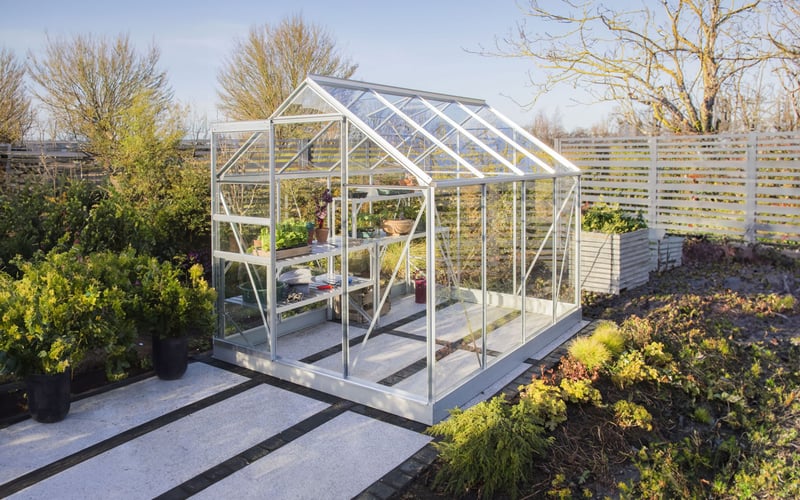
These seven crops are forgiving, productive, and well suited to the UK climate. Start with one or two and add more as your confidence grows. If you are still choosing a greenhouse, our greenhouse buyers guide helps you pick the right size and style.
Lettuce
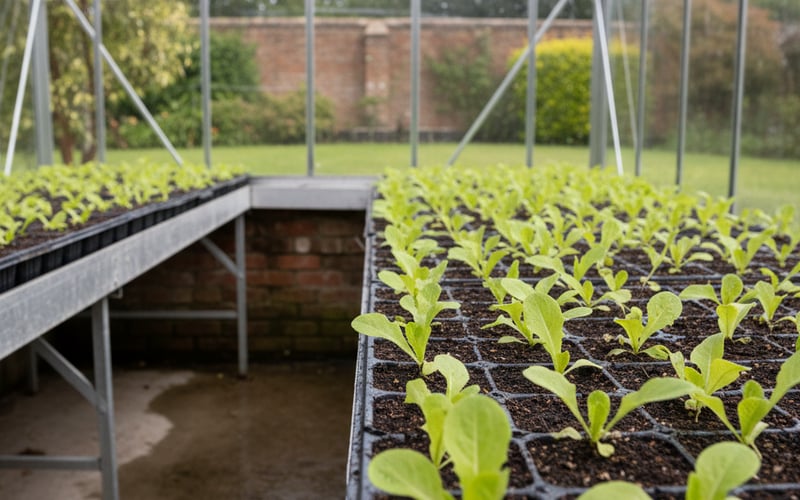
Lettuce is the fastest route to a home-grown harvest. Sow seeds directly into trays or guttering from late February in an unheated greenhouse. Germination takes five to seven days at temperatures as low as 4°C. Cut-and-come-again varieties like Salad Bowl and Lollo Rossa let you harvest outer leaves repeatedly over six to eight weeks.
Space rows 15cm apart and sow a fresh batch every fortnight. This gives you continuous salad from March right through to November. Lettuce bolts quickly above 25°C, so provide shade netting in midsummer and keep soil consistently moist.
Tomatoes
Tomatoes are the classic greenhouse crop and the main reason most people buy a greenhouse in the first place. Sow seeds indoors in March. Transplant into grow bags or 10-litre pots from late April once night temperatures stay above 10°C.
Each plant needs a sturdy cane or string support — cordon varieties reach 1.8m tall by midsummer. Pinch out side shoots weekly to direct energy into fruit production. Feed with a high-potassium tomato feed once the first truss sets. A healthy plant in a greenhouse produces 3kg to 5kg of fruit per season. For a detailed walkthrough, see our guide to growing tomatoes in a greenhouse.
Herbs
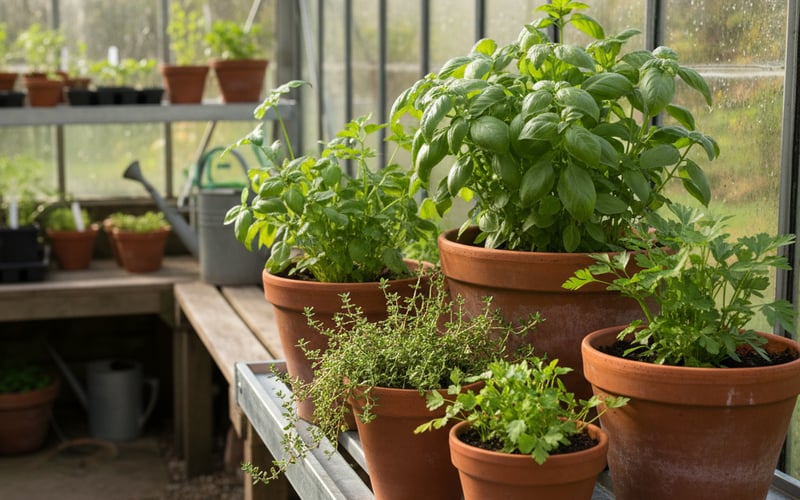
Basil, mint, parsley, and thyme all thrive under glass. Basil is the fussiest — it needs consistent warmth above 15°C and hates cold draughts. Sow basil seeds from April and pinch growing tips regularly to encourage bushy growth.
Mint grows aggressively, so keep it in a separate pot to stop it taking over. Parsley germinates slowly (two to three weeks) but produces leaves for months once established. Thyme prefers free-draining compost and full sun on the staging shelf nearest the door. A single 6×8ft greenhouse produces enough herbs for daily kitchen use throughout the growing season.
Cucumbers
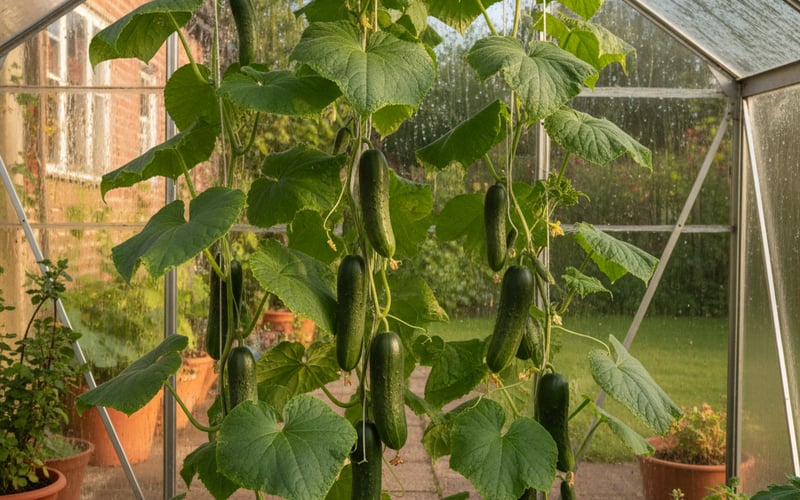
Greenhouse cucumbers produce straighter, smoother fruit than outdoor varieties. Sow seeds on their edge in 9cm pots from mid-April. Transplant once two true leaves appear, spacing plants 45cm apart.
Train them up string trellis tied to the greenhouse ridge bar — this saves floor space and improves air circulation. Mini Munch is an excellent variety for smaller greenhouses as it produces compact fruit on shorter vines. Remove male flowers on all-female varieties to prevent bitter fruit. Water daily in hot weather and feed weekly once fruits start forming. Our cucumber growing guide covers training and feeding in more detail.
Chillies and peppers
Chillies and sweet peppers need a long growing season, which makes them ideal greenhouse candidates. Sow seeds in January or February on a heated propagator set to 25°C. Germination takes one to three weeks depending on variety.
Transplant into final 5-litre pots once the first flowers appear, usually in late May. Chillies and peppers are self-pollinating but benefit from a gentle shake or light tap when in flower. A single healthy plant produces 20 to 40 chillies over the season. Sweet pepper varieties like Bell Boy need slightly more warmth but crop heavily from July to October.
Radishes
Radishes are the quickest crop you can grow under glass. French Breakfast and Cherry Belle varieties go from seed to plate in 25 to 30 days. Sow directly into trays or border soil from February, spacing seeds 2.5cm apart in rows 15cm wide.
They tolerate temperatures down to 2°C, making them perfect for an unheated greenhouse in early spring. Sow small batches every two weeks for a steady supply. Radishes bolt in high heat, so switch to salad leaves from June and resume radish sowings in September.
Melons
Melons are more ambitious but perfectly achievable for a beginner with an established greenhouse routine. Sow seeds in April at 20°C to 25°C. Transplant into grow bags or rich border soil in late May.
Train the main stem up a support and pinch out the growing tip after five leaves to encourage side shoots. Hand-pollinate female flowers by dabbing pollen from a male flower with a soft brush. Female flowers have a small swelling behind the petals. Limit each plant to four fruits for the best size and sweetness. Sweetheart and Alvaro are reliable UK greenhouse varieties. Our melon growing guide covers the full process from seed to harvest.
Starting seeds in a greenhouse
Most greenhouse crops start life in seed trays on a heated propagator or warm windowsill. Use a peat-free seed compost, fill trays to 1cm below the rim, and firm the surface gently. Sow seeds at the depth stated on the packet — a common mistake is sowing too deep.
Water trays from below by standing them in 2cm of water for 20 minutes. This prevents seed disturbance and reduces damping-off disease. Cover trays with a clear propagator lid until germination occurs, then remove the lid to improve airflow.
Label everything with the variety name and sowing date. After two to three weeks, seedlings are ready to prick out into individual 7cm pots. Harden them off on the greenhouse staging for a week before transplanting to their final growing position. For step-by-step sowing techniques, read our guide on starting seeds in a greenhouse.
Ventilation and temperature control
Temperature management is the single biggest factor in greenhouse growing success. Most crops grow best between 18°C and 25°C. Above 27°C, tomato flowers drop without setting fruit and lettuce bolts to seed.
Open roof vents from mid-morning on any day above 15°C outside. Automatic vent openers are a worthwhile investment. They use a wax cylinder that expands with heat. Vents open even when you are out at work. Fit louvre windows low on the side wall to create a chimney effect. Cool air enters at the bottom and hot air exits through the roof.
In winter, an electric fan heater set to 5°C protects tender plants from frost. It keeps energy bills low by only running when needed. Bubble wrap insulation on the inside of the glass reduces heat loss by up to 50%. See our full guide on heating a greenhouse for winter growing options.
Matt's Tip: Start With Easy Wins
When I set up a new greenhouse for customers, I always tell them to plant lettuce and radishes first. They germinate in days and you get your first harvest within four to six weeks. That quick reward keeps you motivated while the slower crops like tomatoes and cucumbers get established. Once you have a few successes under your belt, try something more ambitious like melons or aubergines.
Watering and drainage
Greenhouse plants dry out faster than outdoor ones because rain never reaches them. Water in the morning so foliage dries before nightfall. Wet leaves overnight encourage botrytis and powdery mildew.
Tomatoes and cucumbers in grow bags need watering twice daily in midsummer. Push a finger 2cm into the compost: if it feels dry, water. If it feels damp, leave it. Overwatering causes root rot and is the most common beginner error we see.
Stand pots on capillary matting for a low-maintenance solution. The matting draws water up from a reservoir tray, keeping compost evenly moist. For border-planted crops, lay a soaker hose along the row and connect it to a timer. Ensure every pot has drainage holes and never let containers sit in standing water for more than 30 minutes.
Greenhouse accessories for beginners
The right accessories make growing easier and keep your greenhouse organised. Start with these essentials and add more as you need them.
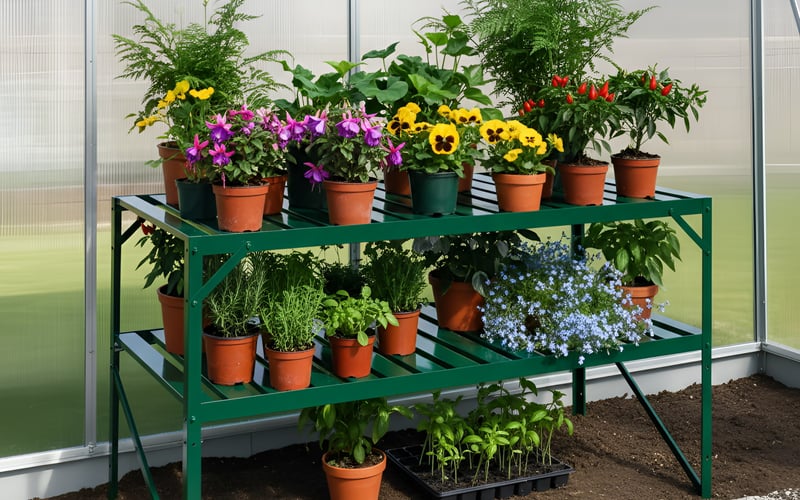
Staging shelves — aluminium staging along one wall holds seed trays, pots, and tools at working height. Slatted shelves drain freely and prevent water pooling. Browse our full range of greenhouse staging to find the right size for your setup.
Max-min thermometer — a basic max-min thermometer costs under £10 and shows you overnight lows and daytime peaks. This data tells you exactly when to start sowing and when frost protection is needed.
Automatic vent opener — fits to roof vents and opens them at a preset temperature. No wiring or batteries required. Essential if you work away from home during the day.
Shade netting — 40% shade cloth over the roof from June to August prevents leaf scorch on tender crops.
See the full selection of greenhouse accessories for propagators, heaters, rainwater kits, and more.
| |
| Matt's Pick for Beginners | |
| Best For | Organising seed trays, pots, and tools in any greenhouse |
| Why I Recommend It | I fit these in nearly every greenhouse installation. The slatted aluminium shelves drain properly so waterlogged trays are never a problem. At 1200mm wide it fits perfectly along one side wall of a 6ft wide greenhouse. The 10-year warranty means it will outlast several seasons of hard use. |
| Price | £109 |
| View Vitavia 2 Tier Green Staging | |
Pest control for greenhouse beginners
The warm, sheltered conditions that help your plants also suit pests. Whitefly, aphids, and red spider mite are the three most common greenhouse problems in the UK.
Whitefly gather on the underside of tomato and cucumber leaves. Hang yellow sticky traps at canopy height to catch adults before they breed. For heavy infestations, introduce Encarsia formosa parasitic wasps — they are available by mail order and work without chemicals.
Aphids cluster on soft new growth and flower buds. A strong jet of water from a hand sprayer dislodges small colonies. Encourage ladybirds by leaving the door open on warm days. Organic insecticidal soap sprays work on contact if numbers build up.
Red spider mite thrives in hot, dry conditions. You will spot fine webbing on leaves before you see the mites themselves. Mist foliage regularly to raise humidity — spider mites hate damp air. The biological control Phytoseiulus persimilis is highly effective once daytime temperatures stay above 16°C.
Good ventilation, prompt removal of dead foliage, and avoiding overcrowding prevent most pest problems before they start.
What to grow each season
A UK greenhouse produces something in every month of the year. This calendar gives you a starting point to plan your sowings.
Late winter (February to March): sow lettuce, radishes, broad beans, and early peas. Start chilli and pepper seeds on a heated propagator. Plant onion sets and shallots in modules.
Spring (April to May): sow tomatoes, cucumbers, courgettes, French beans, and basil. Transplant chillies and peppers into final pots. Harden off hardy seedlings for outdoor planting.
Summer (June to August): harvest tomatoes, cucumbers, chillies, peppers, herbs, and melons. Sow autumn lettuce and pak choi in late August. Keep on top of watering, feeding, and ventilation.
Autumn (September to November): sow winter salads, spinach, and rocket. Plant garlic cloves in modules for spring planting out. Clear spent tomato and cucumber plants and compost the foliage.
Winter (December to January): force rhubarb and chicory in the dark under the staging. Grow microgreens and sprouting seeds on a windowsill propagator. Clean the glass, check seals, and prepare for the next growing season.
Frequently asked questions
What is the easiest thing to grow in a greenhouse?
Lettuce is the easiest greenhouse crop for beginners. It germinates within a week and tolerates temperatures down to 4°C. Expect harvestable leaves in four to six weeks. Sow a small batch every two weeks for a continuous supply from March through November.
Can I grow vegetables in an unheated greenhouse?
Yes, many vegetables thrive in an unheated greenhouse. Lettuce, radishes, spinach, broad beans, peas, and herbs all grow well without heating. An unheated glass greenhouse stays 5°C to 10°C warmer than outside. That protects crops from wind and frost down to about -2°C.
When should I start planting in a greenhouse UK?
Start sowing hardy crops from late February in the UK. Lettuce, radishes, and broad beans handle the cool early-spring temperatures. Wait until April for tender crops like tomatoes and cucumbers. Use a max-min thermometer to check overnight lows stay above freezing before sowing.
How do I keep my greenhouse cool in summer?
Open all vents and the door from mid-morning onwards. Fit automatic vent openers to roof windows so they open even when you are away. Add 40% shade netting over the roof from June to August. Damping down the floor with water in the morning also lowers the air temperature by several degrees through evaporation.
What vegetables can you grow year-round in a greenhouse?
Lettuce, spinach, and herbs grow year-round under glass. Winter salads like lamb's lettuce and rocket tolerate low light and cold temperatures. Microgreens and sprouting seeds produce a harvest in seven to fourteen days even in December. Heated greenhouses extend the range to include tomatoes and peppers through winter, though energy costs are significant.
How often should I water greenhouse plants?
Water most greenhouse plants once daily in summer. Tomatoes and cucumbers in grow bags may need watering twice on hot days. In spring and autumn, every two to three days is usually sufficient. Push a finger 2cm into the compost — if it feels dry, water. Always water in the morning to let foliage dry before nightfall.