A Greenhouse Grower's Guide to Cucumbers
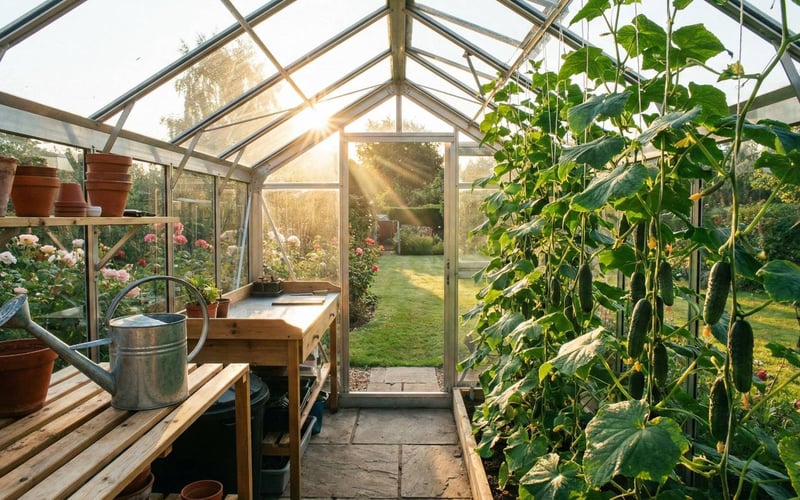
Sow greenhouse cucumbers indoors in April for an unheated greenhouse, using warm conditions for germination. Move plants into their final position when nights are reliably mild. Give each vine support, keep compost evenly moist and follow the seed packet’s advice on male flowers. Harvest fruit at the size recommended for the variety; snack cucumbers and long cucumbers need different picking sizes.
For early heated-greenhouse crops, sowing can begin before April. Most home growers can keep the process simpler by starting later and avoiding cold nights. This guide covers varieties, sowing, support, watering and the flower checks that prevent common mistakes.
Key Takeaways
- Start seeds somewhere warm. Sow indoors in April for an unheated greenhouse; do not assume April greenhouse compost is warm enough to germinate seed.
- Vertical training: Use string or canes to train vines upward to maximise space in smaller structures.
- Watering: keep compost evenly moist without saturating the stem base. Stress can affect fruit quality.
- Check the variety. Follow its flower-removal guidance. Outdoor types can need male flowers for pollination.
- Plan for your season. A later sowing can replace tired plants, but an autumn crop depends on available warmth and light.
Expert Tip
Leave room to reach the vine for watering, training and picking. Check the greenhouse thermometer and ventilation before plants become crowded. A fixed vent count is not a guarantee of suitable growing conditions.
How to Grow Cucumbers in a Greenhouse
Growing your own cucumbers is one of the most rewarding experiences for a UK gardener. The difference between a store-bought cucumber and one picked fresh from your own greenhouse is striking. Home-grown cucumbers are crisp, intensely flavourful, and can be harvested at the perfect size for your needs.
Greenhouse Stores has helped gardeners choose growing space since 2012. For cucumbers, allow room for climbing growth and easy watering. They dislike cold conditions and root disturbance, so plan the final position before sowing.
If you are currently looking at greenhouses for sale or planning your winter maintenance, you are already well prepared. Successful cucumber growing starts with choosing the right variety and preparing your environment before a single seed is sown.
Getting Started: Choosing Your Varieties
Choose a variety recommended for greenhouse growing. Many modern greenhouse varieties are all-female, but some traditional ones also make male flowers. Read the seed packet before deciding which flowers to remove.
Greenhouse vs. Ridge Cucumbers
| Feature | Greenhouse (All-Female F1) | Ridge (Outdoor) |
|---|---|---|
| Skin Texture | Smooth, thin skin | Rough, prickly, thick skin |
| Pollination | Do NOT require pollination | Require insect pollination |
| Male Flowers | Remove immediately (causes bitterness) | Keep them (needed for fruit) |
| Yield | Selected for growing under cover; cropping varies with variety and care. | Selected for outdoor growing; check the individual variety. |
| Best Varieties | Bella F1, Carmen F1, Passandra | Marketmore, Burpless Tasty Green |
Matt's Tip: Start with All-Female Varieties
All-female varieties such as Bella can simplify growing under glass. Check the seed supplier’s advice and watch for any male flowers that appear. Crop size varies with the variety, conditions and care.
Sowing Seeds: Timing is Everything
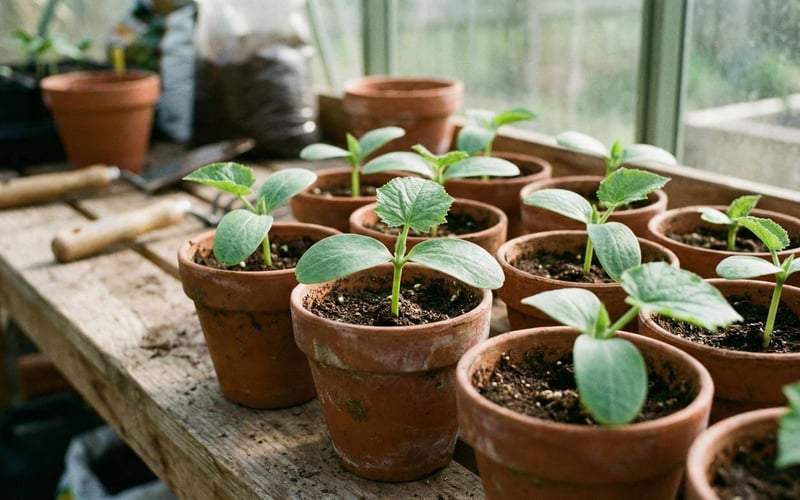
One of the biggest mistakes we see is sowing too early. Cucumbers are tropical plants and they sulk in cold compost.
The Heat vs. Light Balance
Cucumber seed germinates well with warmth around 21°C. Check the seed packet for sowing and planting dates for heated or unheated growing.
- Heated greenhouse or propagator: You can sow as early as mid-February to March. You must be able to maintain that heat 24/7.
- Unheated greenhouse: sow indoors in April, then grow seedlings on in bright, warm conditions. Move them out when the greenhouse stays consistently above 12°C.
How to Sow
- Pot size: Use small 7–9cm pots filled with high-quality seed compost.
- Sowing depth: Plant seeds on their side (not flat) about 1–2cm deep. This prevents water from sitting on the flat seed coat and causing rot.
- Germination: Place in a propagator or on a warm, sunny windowsill. Keep moist but not sodden.
Troubleshooting Leggy Seedlings
Give stretched seedlings brighter light, suitable warmth and gentle support. Avoid disturbing roots unnecessarily. Keep the stem base clear of persistently wet compost; do not automatically bury a cucumber stem deeply as you might a tomato.
The Succession Sowing Secret
A second sowing can replace an ageing plant if enough growing season remains. Read the variety’s sowing window and consider your local autumn temperatures. A July sowing does not guarantee fruit through October in an unheated greenhouse.
Preparing Your Greenhouse Environment
Before you move your precious seedlings into their final home, your greenhouse needs to be ready. Cucumbers thrive in high humidity and consistent warmth. These conditions can be tricky to manage in a standard 8x6 greenhouse.
Soil vs. Containers
While you can grow cucumbers in greenhouse borders, we highly recommend growing them in containers or grow bags.
- Fresh compost: clean containers and fresh growing medium can help avoid problems from previously affected soil. They do not make plants pest-proof.
- Temperature: Pots warm up faster than the ground in spring.
- Drainage: It is easier to ensure the moist but not wet soil conditions cucumbers love.
Use pots that are at least 30cm (12 inches) wide. If using grow bags, plant two cucumbers per bag, not three, to ensure they have enough root space.
Positioning
Cucumbers need light, but scorching direct mid-summer sun can damage the leaves. Position them where they get plenty of light but are shielded from the fiercest midday rays. If you are unsure about the best layout for your structure, our Greenhouse Buyers Guide has useful tips on positioning for light and shade.
If you are growing tomatoes in the same space, read our guide on when to plant tomatoes in an unheated greenhouse to coordinate your planting schedule.
The Male Flower Rule
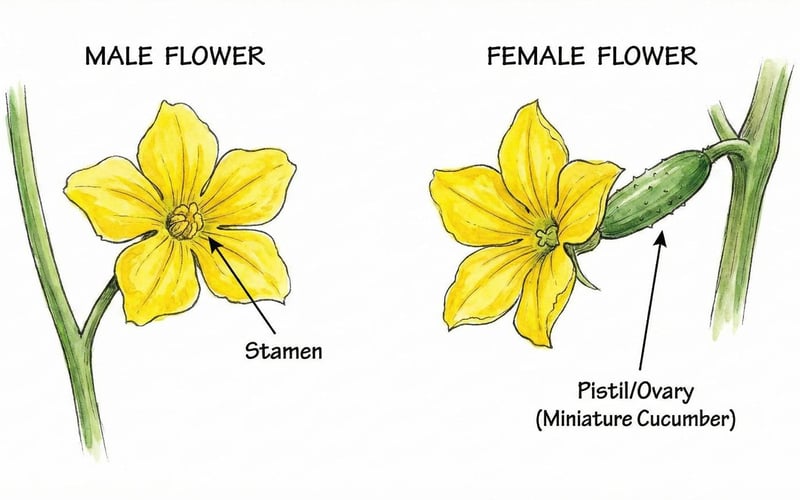
This is the detail that trips up many beginners. Most modern greenhouse cucumbers are parthenocarpic, meaning they produce fruit without pollination.
Check the variety’s instructions. Many greenhouse cucumbers fruit without pollination and need any male flowers removed. Outdoor varieties can need pollination, even when grown under cover.
How to Spot the Difference
- Female flower: Has a tiny, miniature cucumber visible behind the yellow bloom. Keep this.
- Male flower: has a thin stalk without a miniature cucumber. Remove it only when the variety’s guidance requires this.
Action: inspect flowers regularly and follow the variety’s instructions. All-female types can occasionally produce male flowers, so keep checking.
Vertical Training and Pruning
To get the most out of small greenhouses, vertical training is essential. It keeps fruit straight, clean, and saves a large amount of floor space.
The Single Stem Method
- Support: use suitable frame fittings or an independent support that can take mature crop weight. Keep ties loose around stems.
- Twist: As the plant grows, gently twist the main stem around the string.
- Stop: Once the main stem reaches the roof, pinch out the growing tip.
- Side shoots: Pinch out the growing tip of side shoots two leaves beyond a fruit. This focuses the plant's energy on filling the fruit rather than growing more leaves.
Keep trained growth spaced so you can inspect and harvest it. Humidity does not remove the need for ventilation. Our humidity guide explains that balance.
Care and Maintenance: Water and Feed
Watering: The Golden Rules
Cucumbers are thirsty plants, but they are prone to stem rot.
- Target: Water the soil, never the base of the stem. Sink a small plastic pot into the soil next to the plant and water into that instead.
- Consistency: Inconsistent watering causes moisture stress, which leads to bitter fruit. Keep the soil evenly moist.
- Humidity: They love humid air. On hot days, damp down the greenhouse floor by watering the path.
Feeding
Use a suitable high-potash feed once fruiting begins, following its label for timing and dilution.
Companion Planting for Cucumbers
Choose neighbours that leave enough light and root space for the cucumber. Herbs or flowers can share a greenhouse, but companion planting does not guarantee pest control. Avoid treating plant pairings as a substitute for inspecting leaves and dealing with a confirmed pest.
Can you grow tomatoes and cucumbers together?
Yes, tomatoes and cucumbers can share a greenhouse with sensible spacing, watering and ventilation. Neither crop benefits from crowded, persistently wet foliage.
Keep tomatoes well ventilated and protect cucumbers from cold draughts. Small greenhouses will not maintain separate controlled humidity zones. Water each crop appropriately and avoid leaving foliage wet overnight.
Plan plant numbers around the varieties, mature foliage and access path. Train climbing growth on suitable supports. Our tomato growing guide covers care for the other crop.
Troubleshooting Common Problems
Even in a well-maintained greenhouse, issues can arise. Here are the most common problems and how to fix them.
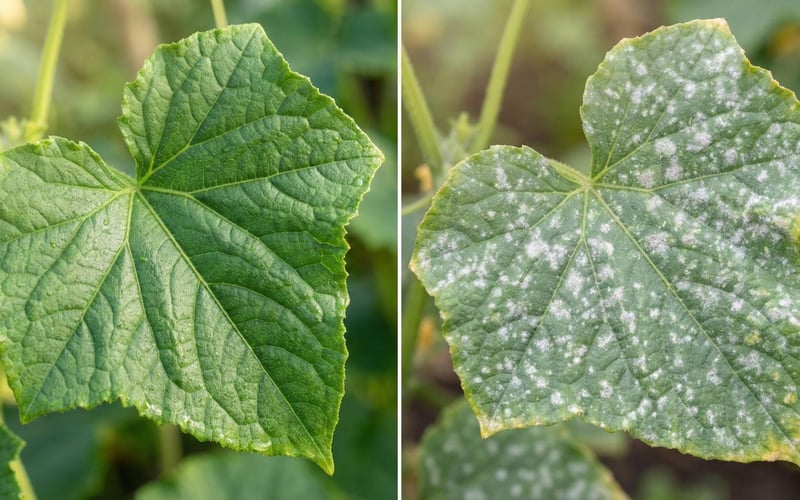
| Problem | Symptom | Cause | Solution |
|---|---|---|---|
| Powdery Mildew | White, dusty coating on leaves | Poor airflow or dry roots | Remove affected leaves, increase ventilation, keep roots moist. |
| Red Spider Mite | Yellow mottling on leaves, fine webbing | Hot, dry air | Confirm spider mites and seek suitable biological control. Improve growing conditions without keeping leaves persistently wet. |
| Bitter Fruit | Unpleasant taste | Water stress or pollination | Keep watering steady and follow the variety’s pollination advice. Do not eat unusually bitter fruit. |
| Yellowing Leaves | Lower leaves turning yellow | Magnesium deficiency or age | Check watering, roots, pests and the pattern of yellowing before treating. Add nutrients only when a deficiency is identified. |
Harvesting: The Size Guide
Harvesting is the best part. Timing is key. Letting cucumbers grow too large is a common mistake. They become bitter and the plant thinks its job is done, stopping production of new fruit.
Harvest at these specific lengths:
- Standard greenhouse (e.g. Bella): 25–30cm (supermarket size).
- Mini or snack (e.g. Passandra, Mini Munch): 10–15cm. Do not let them get larger.
- Ridge or outdoor: 15–20cm. Harvest before they turn yellow.
How to harvest: Always use sharp secateurs or a knife. Pulling the fruit can damage the brittle vines.
Store them in the fridge crisper drawer where they should last 1–2 weeks.
Summary and Next Steps
Choose a suitable variety, support growth and keep checking watering and ventilation. Picking regularly makes the most of your crop; the harvest season depends on warmth, light and variety.
Once your cucumber season winds down in late autumn, plant garlic or overwinter salad crops. This keeps your greenhouse productive through winter.
If you have mastered cucumbers, strawberries make an excellent next crop. They thrive in the same warm, sheltered conditions and fruit earlier under glass than outdoors.
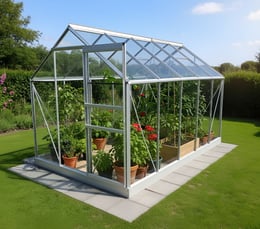
Matt's Pick for Cucumber Growing
Best For: Dedicated cucumber growers who want room for 4-6 plants trained vertically alongside other crops.
Why it may suit: The longer growing space allows room to plan supported crops and an access path. Check the current dimensions, ventilation and base requirements before choosing the greenhouse.
Price: £599
Frequently asked questions
When should I sow greenhouse cucumbers in the UK?
Sow in April for an unheated greenhouse, using indoor warmth. Heated-greenhouse crops can start earlier. Move plants to their final position when greenhouse temperatures are consistently above 12°C.
Do you pinch out side shoots on greenhouse cucumbers?
Follow the training method for your variety. A common method stops side shoots two leaves beyond a fruit. Support the main stem and avoid damaging brittle growth.
How do you identify male and female cucumber flowers?
Female flowers have a tiny cucumber behind the bloom; males do not. Check the seed packet: greenhouse varieties may need male flowers removed, while outdoor types can need them for pollination.
Why are my greenhouse cucumbers bitter?
Stress or unwanted pollination can contribute, depending on the variety. Keep watering steady and follow the flower advice for your seed variety. Do not eat a cucumber that tastes unusually bitter.
What can I plant beside greenhouse cucumbers?
Choose crops that leave enough light, root space and access. Avoid crowding the vines. Companion flowers are not a dependable substitute for pest inspection or appropriate control.
Can tomatoes and cucumbers grow together?
Yes, with suitable spacing, watering and ventilation. Avoid cold draughts over cucumbers and prolonged wet tomato foliage. A small greenhouse will not maintain perfectly separate humidity zones.
Related Articles
- How to Grow Peppers in Your Greenhouse
- How to Grow Strawberries in a Greenhouse
- How to Grow Garlic in a Greenhouse
- What to Grow in a Greenhouse: Beginners Guide
- How to Grow Seeds in a Greenhouse
Questions about growing cucumbers or choosing a greenhouse? Contact our team at info@greenhousestores.co.uk