Garden Room Planning Permission UK 2026: Need It Or Not?
Many garden rooms in England qualify for permitted development, so no planning application is needed. Height, position and intended use determine whether yours qualifies. Building regulations are a separate check, with exemptions for some small detached buildings. This guide explains the main English rules, when local restrictions matter, and what to do if your plans need approval.
Key takeaways
- Most garden rooms in England are permitted development. No planning application needed if you stay within the size, height, and position rules below.
- The 2.5m eaves rule is the one that catches most people out. If any part of the structure sits within 2 metres of any boundary, the maximum overall height is 2.5m. Outside that 2m zone, you can go to 4m with a dual-pitch roof.
- 50% rule. In England, count later extensions and outbuildings against the allowance, excluding the original house.
- Building regulations are separate from planning. Small detached buildings without sleeping accommodation may be exempt. Between 15 and 30 square metres, materials and boundary distance also matter.
- Designated areas have extra restrictions. Conservation areas and National Parks do not automatically rule out permitted development. New outbuildings within a listed building's curtilage need planning permission.
- Plan around the intended use. A quiet home office differs from sleeping accommodation or a business that changes the property's residential character.
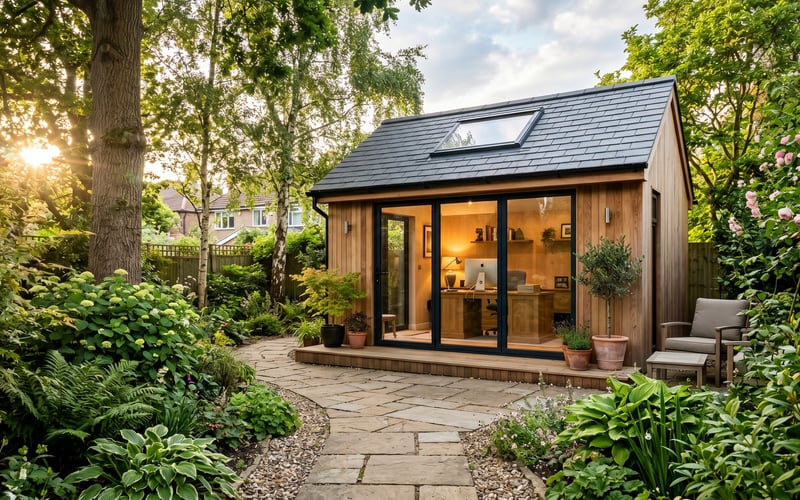
Installer’s Note
Start with the overall height and the distance to your boundaries. These measurements help narrow down suitable models before you order. For a listed property or a designated area, check the local restrictions early. You can then choose a building that suits both your garden and your plans.
The short answer: do you need planning permission?
For most English households building a single garden room in a back garden, no, you do not need planning permission. Garden rooms fall under Class E of the Town and Country Planning (General Permitted Development) (England) Order 2015, which covers “outbuildings incidental to the enjoyment of the dwellinghouse”. This is the same provision that covers sheds, greenhouses, summerhouses, and home gyms.
Permitted development rights apply if all of the following are true:
- The property is a house rather than a flat or maisonette, and relevant permitted development rights are available
- The garden room is single-storey
- Eaves are no higher than 2.5 metres
- Overall height is no more than 4 metres for a dual-pitched roof, or 3 metres for any other roof
- If any part is within 2 metres of a boundary, the entire structure must be no more than 2.5 metres tall
- It is positioned behind the principal elevation (the front face) of the house
- The cumulative footprint, including later extensions and other buildings, meets the 50% limit explained below
- Any extra restrictions for a designated area, planning condition or Article 4 direction are satisfied
- The garden room is not used as a self-contained dwelling, granny annex, or commercial premises
If your design falls outside the permitted development rules, a planning application may be the next step. Scotland, Wales and Northern Ireland have their own rules, so use the guidance for your country.
The eaves and height rules in detail
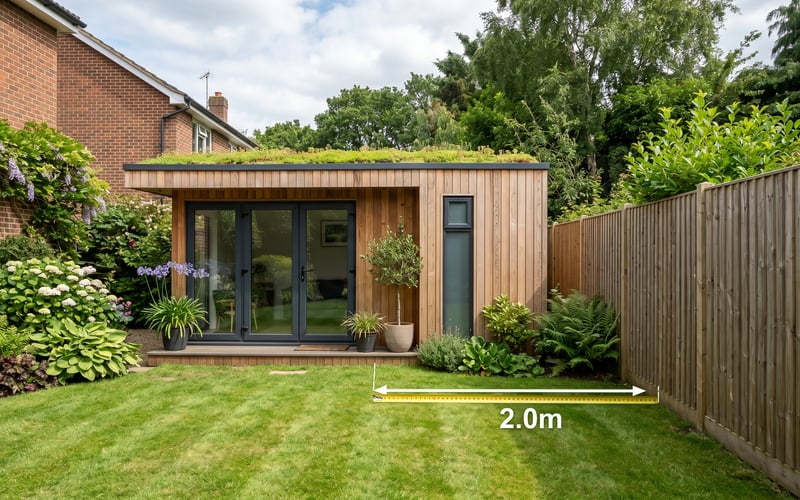
The two-metre boundary rule is the single biggest source of garden-room planning headaches. The rule says: if any part of the garden room sits within 2 metres of any garden boundary, the maximum total height of the structure is 2.5 metres.
For most UK gardens, this means one of two layouts:
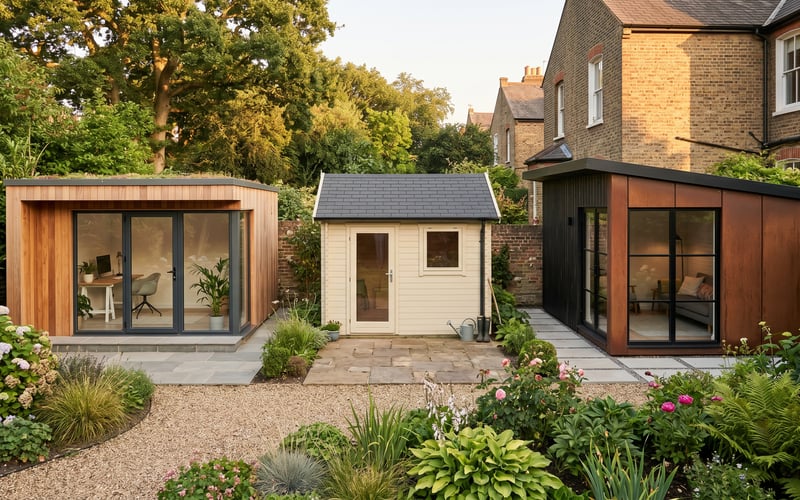
Layout A — pushed against a boundary: The garden room sits within 2m of the fence. Maximum height 2.5m. Suits a flat-roofed cedar or modern minimalist design. Most prefab garden rooms in this size bracket are built to this spec.
Layout B — set back from boundaries: The garden room sits more than 2m from every boundary on all sides. Maximum height 4m if dual-pitched, 3m if anything else. Suits a traditional pitched-roof cabin design or a larger contemporary build.
The 4m dual-pitched height accommodates a fully usable internal ceiling height around 2.4m plus the roof pitch — comparable to a small annex. A 2.5m height accommodates roughly 2.2m of internal ceiling once you allow for the floor and roof build-up.
One detail worth knowing: the height is measured from the highest point of the natural ground level immediately next to the structure. Sloping gardens complicate the math — if the ground rises behind the garden room, the highest point is the back, not the front. Always measure from the higher side.
Where extra planning restrictions apply
Some locations have extra restrictions rather than a blanket ban on garden buildings.
Listed buildings: New outbuildings within their curtilage need planning permission. Listed building consent is a separate question if the work affects the listed building or protected structures.
Conservation areas and other designated land: Class E does not allow outbuildings between a side elevation and the boundary. National Parks, the Broads, National Landscapes and World Heritage Sites also have limits for buildings more than 20m from the house.
Article 4 directions and planning conditions: These can remove particular permitted development rights. Your council can confirm what applies to your address.
The 50% rule and why it bites
The limit counts buildings and extensions together, not just the new garden room.
In England, work out the area within the curtilage excluding the original house. Buildings other than the original house must cover no more than half of that area. Later extensions and existing outbuildings count towards the allowance.
The original house means the house as built, or as it stood on 1 July 1948 if older. A simple sketch of the plot, existing buildings and proposed room makes the calculation easier.
Building regulations: a separate hurdle
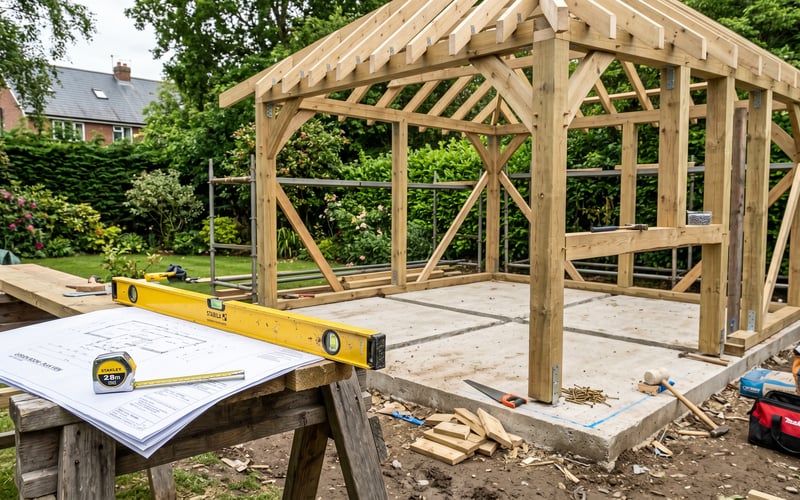
Planning permission and building regulations are two different things. You can be exempt from planning and still need building regs sign-off. Three thresholds matter:
Under 15 square metres: A detached building without sleeping accommodation is generally exempt. Electrical work still has its own requirements.
15-30 square metres: A detached, single-storey building without sleeping accommodation can be exempt. It must be at least 1m from the boundary or built substantially from non-combustible materials.
Above 30 sqm: Always needs building regulations approval, regardless of position or materials.
Building control can explain the approval route for your design and quote the relevant fees. Keep any completion documents with your house records. Planning permission and building regulations approval do different jobs; you may need one without the other.
Garden room uses and how they affect the rules
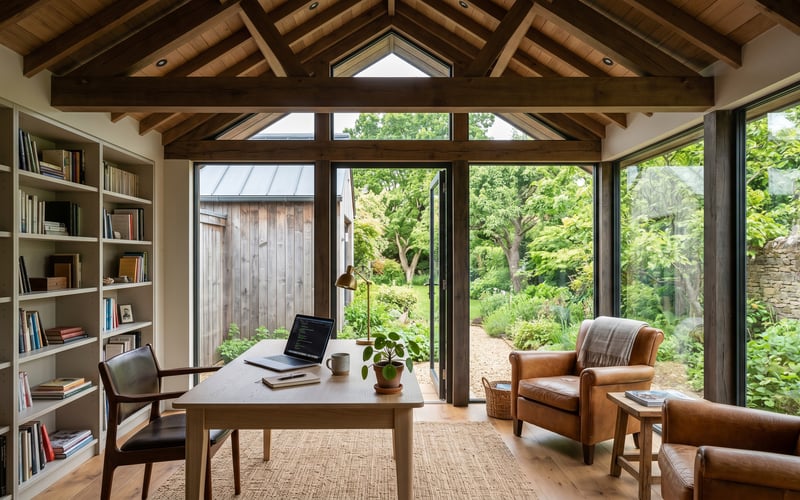
The intended use changes which rules apply. The phrase “incidental to the enjoyment of the dwellinghouse” means the garden room must be ancillary to the main house, not a separate home.
Home office, gym, studio, hobby room: All clearly ancillary. Permitted development applies as long as the size and position rules are met.
Garden bar or guest accommodation: A hobby space can be incidental to the home. Sleeping accommodation needs a separate planning and building-control check; Class E does not provide for primary living accommodation.
Annexe: Discuss the proposed accommodation with the council before choosing a building. Its layout, use and relationship with the main home determine the approval route.
Home business: Working quietly from home does not normally need planning permission. The question is whether activity changes the property's residential character. Regular traffic, noise or deliveries can be relevant.
Holiday accommodation: Do not assume household outbuilding rights cover a separate holiday let. Discuss that use with the council before ordering.
Browse our complete range of garden rooms for sizes and styles suited to all of these uses.
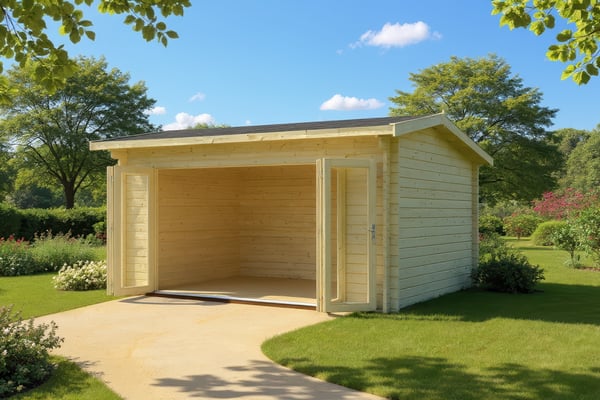
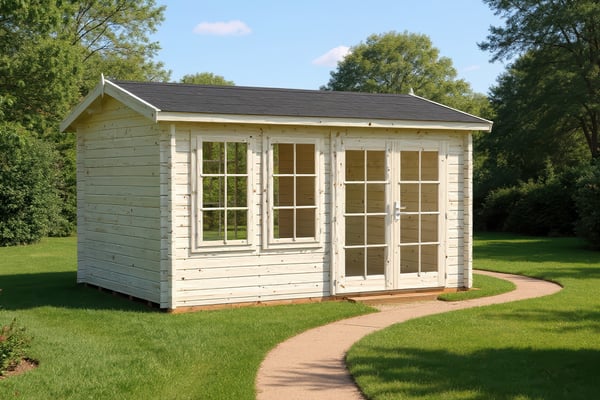
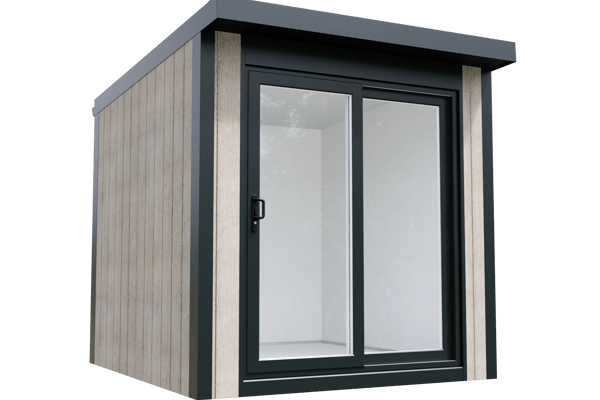
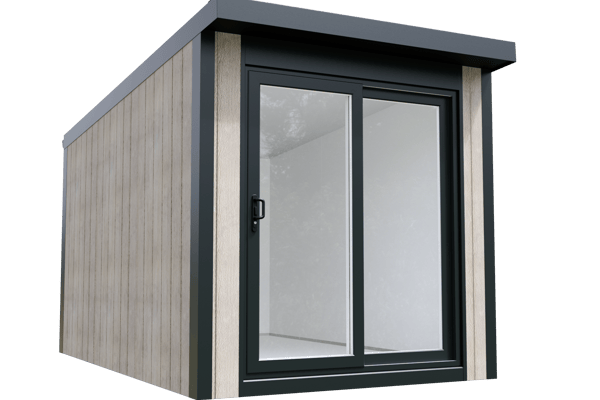
Four garden rooms and cabins we install regularly
These four buildings offer different layouts for a garden office or hobby space. Compare the current dimensions with your proposed position. The model alone does not determine whether a planning application is needed.
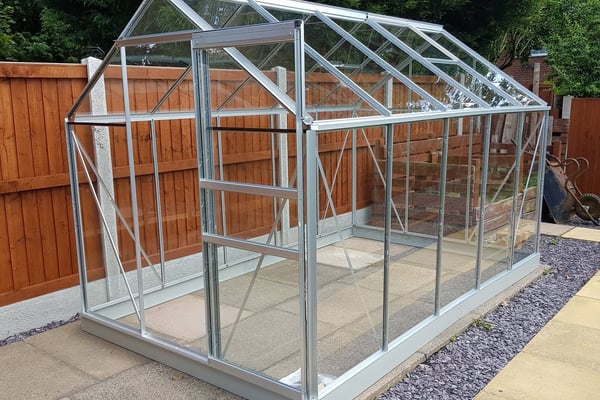
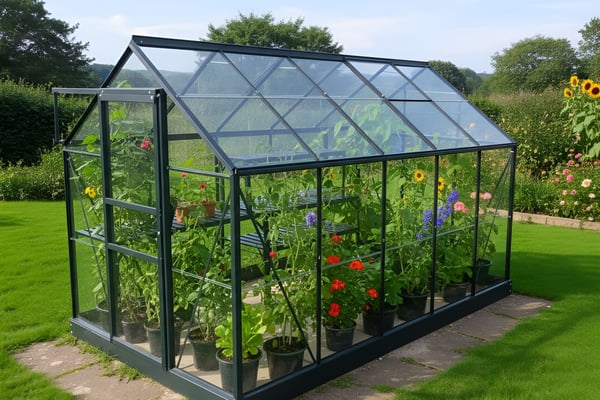
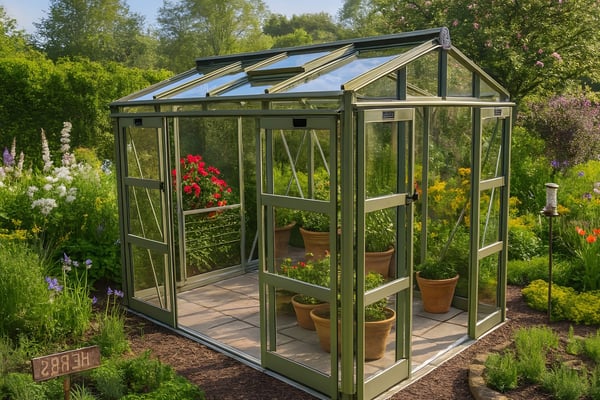
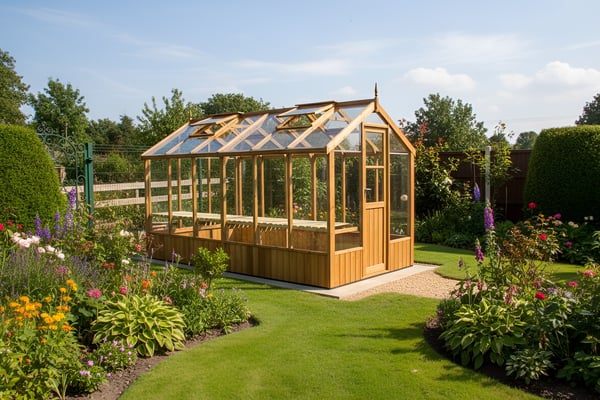
Four greenhouses to pair with your garden room
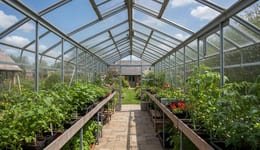
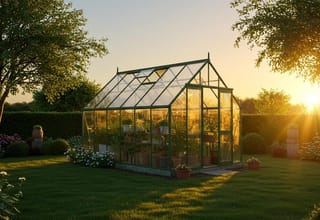
A garden room provides space for work or hobbies; a greenhouse gives plants their own growing area. Plan both footprints together, including them in the relevant outbuilding calculation.
Different UK regions, slightly different rules
The detailed rules above are for England. Use the national guidance for your address:
- Scottish householder permitted development guidance
- Welsh outbuilding planning guidance
- Northern Ireland planning guidance
Boundary limits and designated-area restrictions differ. Your local council can confirm how they apply to your proposed building.
What to do if you need planning permission
A planning application is the route for a design that falls outside permitted development.
- Prepare a site plan and drawings showing the building's size, height and position.
- Use your council's application checklist to see what supporting information is needed.
- Ask about pre-application advice if there is a particular issue with the site.
- Submit the application with the current fee and allow time for consultation and a decision.
Most ordinary applications in England have an eight-week decision target, though some take longer. If permission is refused, the decision letter explains the reasons and your options.
Cost expectations for a UK garden room in 2026
| Size | Internal floor | Spec | Typical cost |
|---|---|---|---|
| Compact | 3x3m (~8 sqm) | Insulated cedar, basic electrics | 11,000-16,000 |
| Standard office | 4x3m (~11 sqm) | Insulated cedar, electrics + heating | 14,000-22,000 |
| Larger studio | 5x4m (~18 sqm) | Insulated cedar, electrics, plumbing | 22,000-32,000 |
| Annex-style | 6x4m (~22 sqm) | Cedar, full kitchenette/bathroom, building regs | 35,000-55,000 |
These figures assume a typical UK garden with reasonable access for delivery, a flat or near-flat site, and standard mains electric within 10 metres. Sloping sites, awkward access, or off-grid locations add 10-30%.
A compact garden-room optionBest for: Households who want a home office, garden bar, or studio that stays inside permitted development. Where to start: The Calmpod 8x8 is a compact insulated option. Confirm the exact model's overall height, including the proposed base, before deciding where to put it. Assess the planning conditions for your property as well as the building dimensions. |
When a lawful development certificate is useful
A Lawful Development Certificate is optional. It gives you a formal decision confirming that a specified proposal is lawful. It can be useful if you want certainty before building or paperwork for a future sale. Check the current fee and required drawings with your council.
Frequently asked questions
Do I need planning permission for a garden room in the UK?
Many garden rooms qualify for permitted development. The detailed rules in this guide cover England. Height, position, use and local restrictions matter. Scotland, Wales and Northern Ireland have separate guidance.
How big can a garden room be without planning permission?
Size depends on the plot, existing buildings and height limits. In England, the 50% calculation excludes the original house but counts later extensions and other buildings. Building regulations are a separate check.
What is the 2-metre boundary rule for garden rooms?
In England, proximity to a boundary limits the overall height. Within 2m of a boundary, the entire building must be no higher than 2.5m under Class E. Other conditions still apply.
Do garden rooms need building regulations approval?
Some small detached garden rooms are exempt. Sleeping accommodation falls outside the small-building exemptions. Between 15 and 30 square metres, the building must also meet the boundary-distance or non-combustible construction condition.
Can I sleep in a garden room?
Sleeping accommodation needs a separate check before you build. Do not assume an occasional guest bed qualifies under the same rules as a hobby room. Discuss the intended use with planning and building control.
Do I need planning permission for a garden office?
A quiet home office can qualify for permitted development. The building must meet the relevant size, position and other conditions. The activity should remain incidental to the home.
Can I run a business from a garden room without planning permission?
Often, if the property remains primarily a home. Traffic, deliveries, staff, noise and the scale of activity affect whether a material change of use occurs. Customer visits alone do not create an automatic rule.
How long does a planning application for a garden room take?
Ordinary applications in England usually have an eight-week decision target. More involved proposals can take longer, so allow time before booking construction.
Do garden rooms add value to a UK house?
A useful garden room may appeal to buyers. The effect on value depends on the property, building and local market. Choose around how you will use the space rather than a promised financial return.