Raised Beds in a Greenhouse: UK Setup and Growing Guide
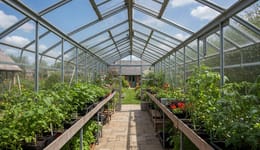
Raised beds in a greenhouse warm soil 3–5°C above ground level, extending the UK growing season by two to three weeks each spring. A 30cm-deep bed suits most vegetables including tomatoes, peppers and cucumbers. Aluminium beds last 25+ years with zero maintenance. Timber beds last 10–15 years. Fill with 60% topsoil, 30% garden compost and 10% perlite. We stock aluminium beds from £174567 and wooden kits from £173950.
Raised beds in a greenhouse warm soil 3–5°C above ground level, extending the UK growing season by two to three weeks each spring. A 30cm-deep bed suits most vegetables including tomatoes, peppers and cucumbers. Aluminium beds last 25+ years with zero maintenance. Timber beds last 10–15 years. Fill with 60% topsoil, 30% garden compost and 10% perlite. We stock aluminium beds from £110 and wooden kits from £119.
Key Takeaways
- Depth matters: 15cm for lettuce and herbs, 20–30cm for tomatoes and peppers, 30–45cm for carrots and parsnips.
- Aluminium beats wood indoors: It will not rot in warm, damp greenhouse air. Our Elite aluminium beds start at £110.
- Size your bed to your greenhouse: A 6×4ft greenhouse fits one 4×2ft bed. An 8×10ft greenhouse fits two beds side by side.
- Soil mix is everything: 60% topsoil, 30% garden compost, 10% perlite gives drainage and nutrients from day one.
- Water daily in summer: Raised beds in greenhouses dry out faster than ground soil. Drip irrigation cuts water use by 30–50%.
- Fill beds cheaply: Use the Hugelkultur method — branches and cardboard on the bottom, compost on top. Saves 40–50% on soil costs.
Installer's Note
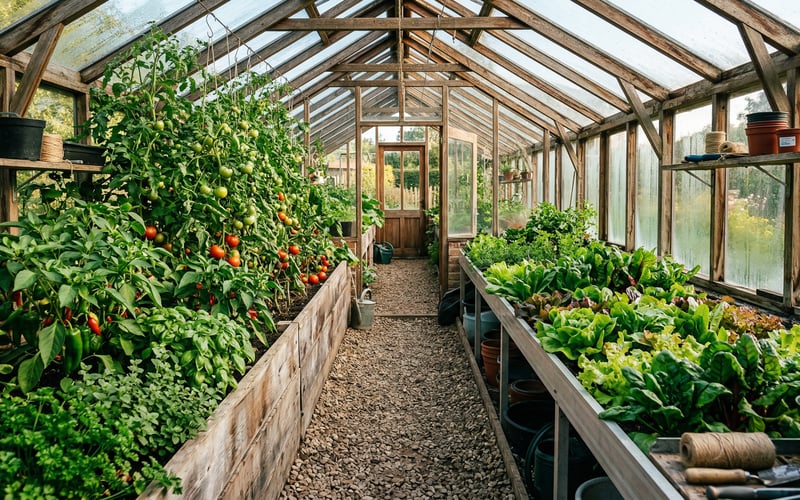
We fit raised beds inside greenhouses every week. The biggest mistake we see is beds that are too wide. If your bed sits against a wall, you can only reach from one side — keep it to 60cm wide. Freestanding beds can go to 120cm because you reach from both sides. We also tell every customer to check the weight. A 4×2ft bed filled with wet soil weighs around 200kg. Make sure your greenhouse base can handle that before you start filling.
Why Use Raised Beds in a Greenhouse?
Raised beds give you full control over soil quality, drainage and root depth inside your greenhouse. Ground soil in most UK gardens is heavy clay or thin chalk. Neither is ideal for greenhouse growing. A raised bed lets you fill with the exact mix your crops need.
The warming effect is the biggest advantage. Soil in a raised bed is exposed to air on all sides, so it heats up faster than ground soil. In our experience, beds run 3–5°C warmer in March and April. That means you can sow tomatoes, peppers and aubergines two to three weeks earlier than growers using ground beds.
Drainage is the second benefit. Greenhouse soil stays wetter than outdoor soil because rain never washes nutrients through. Raised beds drain freely, which reduces root rot and fungal problems. If you are growing vegetables in a greenhouse all year round, good drainage is essential.
The ergonomic benefit matters too. A bed 30–40cm tall saves your back and knees. You spend less time bending, which makes daily watering and harvesting easier.
How Deep Should a Raised Bed Be in a Greenhouse?
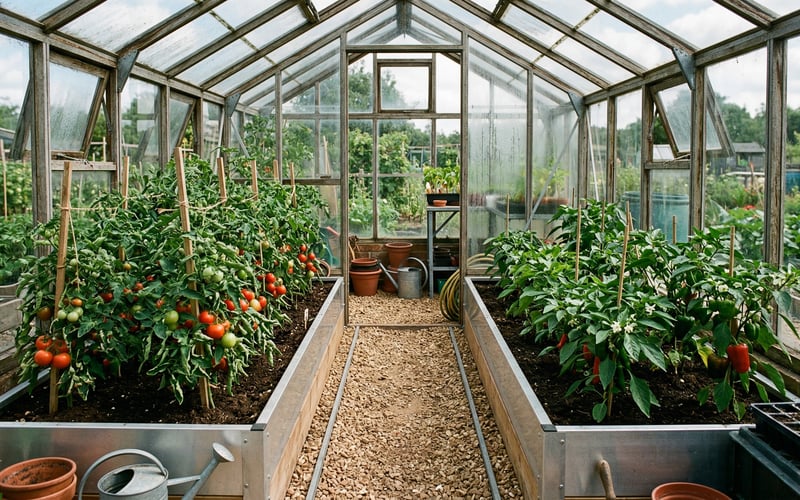
Minimum depth depends entirely on what you grow. Shallow-rooted crops like lettuce, radish and herbs need just 15cm. Most greenhouse staples need 20–30cm. Root vegetables need the full 30–45cm.
| Crop Type | Minimum Depth | Examples |
|---|---|---|
| Leafy greens and herbs | 15cm | Lettuce, basil, coriander, rocket |
| Fruiting vegetables | 20–30cm | Tomatoes, peppers, cucumbers, aubergines |
| Root vegetables | 30–45cm | Carrots, parsnips, beetroot |
| Brassicas | 25–30cm | Broccoli, cauliflower, kale |
| Climbing crops | 25–30cm | Runner beans, peas, cucamelons |
If you grow a mix of crops, 30cm is the safe all-round depth. Every raised bed in our range is at least 25cm deep.
What Material Is Best for Raised Beds Inside a Greenhouse?
Aluminium is the best material for greenhouse raised beds because it will not rot, warp or harbour fungal spores in warm, damp conditions. Timber is cheaper upfront but needs replacing sooner. Galvanised steel sits between the two on price and lifespan.
| Material | Lifespan | Pros | Cons | Our Price Range |
|---|---|---|---|---|
| Aluminium — Matt's Pick | 25+ years | Rot-proof, lightweight, low maintenance | Higher upfront cost | £110–£199 |
| Pressure-treated timber | 10–15 years | Natural look, cheaper upfront | Rots faster in damp conditions | £119–£184 |
| Cedar (untreated) | 15–20 years | Naturally rot-resistant, attractive | Expensive, less common in UK | £200–£400 |
| Galvanised steel | 20+ years | Strong, rot-proof | Heavy, conducts heat and cold | £80–£250 |
Inside a greenhouse, warm damp air accelerates wood decay. We have seen timber beds start to soften after five or six years in a heated greenhouse. Aluminium beds are unaffected. They look the same after a decade as they did on day one. Browse our full range of raised beds and planters to compare materials and sizes.
What Size Raised Bed Fits My Greenhouse?
Your bed layout depends on greenhouse size, but every layout needs a minimum 60cm path for access and airflow. Too many growers fill their greenhouse wall-to-wall and then cannot reach the middle of the bed or walk between rows.
| Greenhouse Size | Recommended Bed Layout | Path Width | Growing Area |
|---|---|---|---|
| 6×4ft (1.8×1.2m) | One 4×2ft bed along one side | 60cm | 0.7m² |
| 6×6ft (1.8×1.8m) | Two 4×2ft beds with central path | 60cm | 1.5m² |
| 6×8ft (1.8×2.4m) | Two 6×2ft beds with central path | 60cm | 2.2m² |
| 8×10ft (2.4×3m) | Two 8×2ft beds with 70cm path | 70cm | 3.0m² |
| 8×12ft (2.4×3.6m) | Two 8×2ft beds plus end bed | 70cm | 4.0m² |
Combine beds with greenhouse staging and shelving along the opposite wall. Beds on one side for deep-rooted crops and staging on the other for seed trays gives you the best use of space.
What Is the Best Soil Mix for Greenhouse Raised Beds?
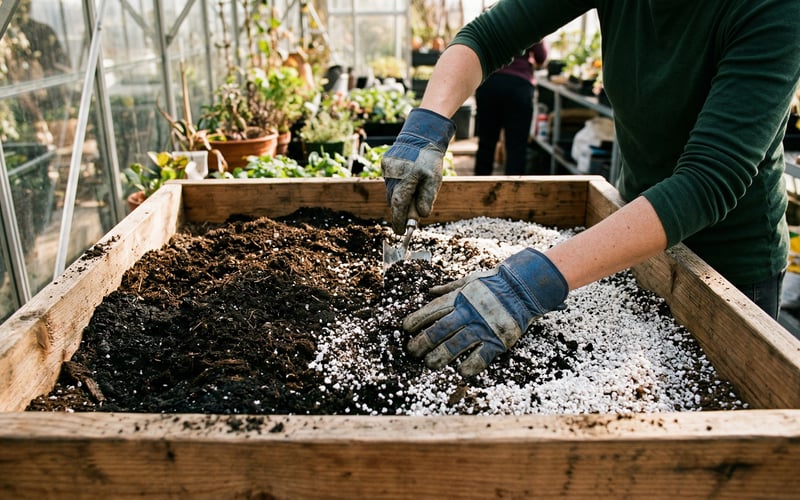
The ideal soil mix for greenhouse raised beds is 60% topsoil, 30% garden compost and 10% perlite or horticultural grit. This gives you the right balance of nutrients, moisture retention and drainage. Skip the peat — peat-free compost works just as well and is better for the environment.
For a 4×2ft bed at 30cm deep, you need roughly 220 litres of mix. That is about five standard 40-litre bags of topsoil, three bags of multi-purpose compost and one bag of perlite. Budget £30–£40 for the fill.
Top up annually. Soil in raised beds compacts and drops 5–10cm per year as organic matter breaks down. Add fresh compost each spring before planting. If you want to understand your existing garden soil type before mixing, test it first.
Are Raised Beds Better Than Growing Bags in a Greenhouse?
Raised beds outperform growing bags for long-term greenhouse growing in every measurable way. Growing bags have their place for single-season crops, but they dry out fast, restrict root growth and create plastic waste each year.
| Factor | Raised Beds | Growing Bags |
|---|---|---|
| Root depth | 15–45cm (you choose) | 10–15cm (fixed) |
| Soil volume per plant | 10–20 litres | 3–5 litres |
| Watering frequency (summer) | Once daily | Twice daily |
| Lifespan | 10–25+ years | One season |
| Annual cost after setup | £0 | £15–£30/year |
| Yield per m² | Higher (deeper roots, bigger plants) | Lower (restricted roots) |
| Waste | None | Plastic bags each year |
Growing bags still make sense for three or four tomato plants over one summer. But if you plan to grow year after year, raised beds pay back within two seasons.
Matt's Tip: Check the Weight First
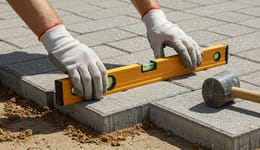
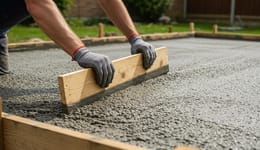
A 4×2ft raised bed filled with damp soil weighs about 200kg. Check your greenhouse base before filling. Concrete and paving slab bases are fine. A thin plastic base panel on soft ground might not cope. If you have a steel base frame on compacted hardcore, that is the setup we recommend for most installations. I have seen one customer crack a thin polycarbonate base panel by filling two large beds without checking first.
What Vegetables Grow Best in Greenhouse Raised Beds?
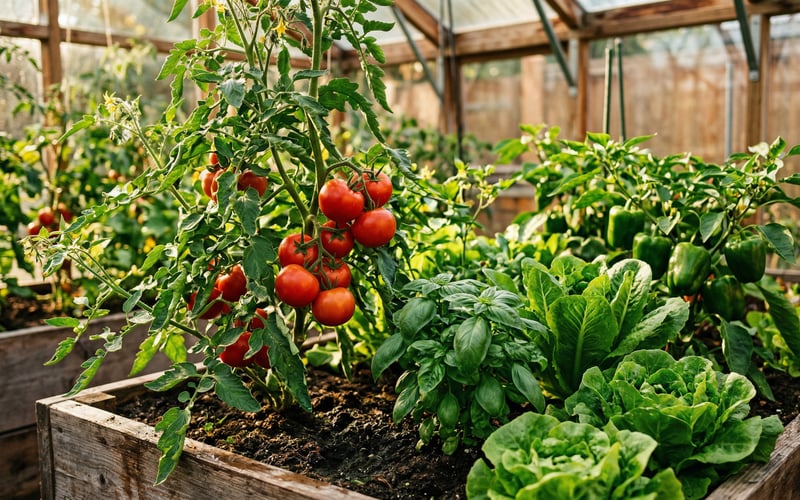
Tomatoes, peppers, cucumbers and aubergines benefit most from greenhouse raised beds in the UK. All four need warm soil, deep roots and consistent moisture — exactly what a raised bed provides.
| Crop | Bed Depth | Sow (in greenhouse) | Harvest | Yield per Plant |
|---|---|---|---|---|
| Tomatoes | 25–30cm | February–March | July–October | 3–5kg |
| Peppers | 20–25cm | February–March | July–October | 1–2kg |
| Cucumbers | 25–30cm | March–April | June–September | 15–20 fruits |
| Aubergines | 25–30cm | February–March | August–October | 4–6 fruits |
| Lettuce | 15cm | Year-round | 4–8 weeks after sowing | 1 head |
| Carrots (short varieties) | 30–35cm | February–July | 10–12 weeks after sowing | 200–300g |
| Chillies | 20–25cm | January–March | July–November | 30–60 fruits |
| Herbs (basil, coriander) | 15cm | March–September | Ongoing | Multiple cuts |
If you grow tomatoes in a greenhouse, raised beds are the single best upgrade you can make. The extra root depth produces stronger plants and heavier crops than pots or growing bags.
Plan your bed layout around companion planting. Basil next to tomatoes repels aphids. Lettuce under taller crops uses shade that would otherwise go to waste.
How Do You Fill Raised Beds Cheaply?
The Hugelkultur method cuts soil costs by 40–50% by filling the bottom half with free materials. Layer branches, twigs and untreated cardboard on the bottom third. Add grass clippings or leaf mould. Fill the top 15–20cm with your soil mix.
The woody material breaks down over two to three years, releasing nutrients and retaining moisture like a sponge. For a 4×2ft bed at 30cm deep, you save £15–£20 on fill compared to bought soil all the way down.
Stick to plain brown cardboard, untreated wood offcuts and garden prunings. Do not use treated timber, coloured cardboard or anything with glue. We grow carrots in raised beds filled this way and get excellent results.
How Often Should You Water Raised Beds in a Greenhouse?
Water greenhouse raised beds every day in summer and every two to three days in spring and autumn. Raised beds dry out faster than ground soil because they drain freely and the greenhouse air draws moisture from all exposed sides.
Morning watering is best. It gives plants time to absorb moisture before the midday heat. Evening watering leaves foliage damp overnight, which encourages botrytis and powdery mildew.
Drip irrigation is worth the investment. A simple drip line costs £15–£30 and cuts water use by 30–50%. It also keeps foliage dry, reducing disease risk. Connect it to a battery timer and your beds water themselves while you are at work.
|
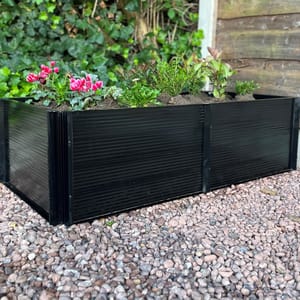
Matt's Pick for Greenhouse Raised BedsBest For: Most greenhouse sizes — fits a 6×8ft or larger with room to walk Why I Recommend It: We fit these every week. The aluminium frame will not rot in greenhouse conditions, and the 2×4ft size is the sweet spot for most growers. 20-year Elite warranty included. Price: £155 |
Frequently Asked Questions
Do raised beds need drainage holes in a greenhouse?
No, bottomless raised beds drain directly into the ground beneath. If your bed has a solid base, drill 10mm holes every 20cm across the bottom. Greenhouse beds need good drainage because the enclosed environment traps moisture. Line solid-based beds with landscape fabric to stop soil washing through while keeping water flow.
Can you put raised beds on a greenhouse base?
Yes, raised beds sit safely on concrete, paving slab and steel base frames. A 4×2ft bed filled with damp soil weighs around 200kg. Concrete and slab bases handle this easily. Thin polycarbonate base panels may flex under the weight. Steel base frames on compacted hardcore are ideal and the setup we recommend.
How much does it cost to set up raised beds in a greenhouse?
Budget £150–£250 for a single aluminium raised bed including soil fill. Our aluminium beds cost £110 to £199 depending on size. Soil fill adds £30–£40 per bed. Wooden kits start at £119. The Hugelkultur fill method cuts soil costs by 40–50%.
How long do wooden raised beds last inside a greenhouse?
Pressure-treated timber beds last 10–15 years outdoors but often less inside a greenhouse. Warm, humid greenhouse air accelerates wood decay. We have seen timber beds soften after five to six years in heated greenhouses. Cedar lasts 15–20 years. Aluminium beds last 25+ years with zero maintenance.
Should I line my raised bed with plastic in a greenhouse?
Line with landscape fabric, not solid plastic. Landscape fabric lets water drain while keeping soil in place. Solid plastic traps water and creates waterlogged roots. If your bed sits on a solid base, fabric lining prevents soil blocking drainage holes. Skip the lining entirely if your bed is bottomless on natural ground.
What height should a raised bed be for easy access?
30–40cm is the best height for most gardeners. This balances root depth with comfortable access and keeps costs reasonable. If you have limited mobility, table beds at 60–80cm height let you garden without bending. Standard 25–30cm beds are deep enough for most vegetables and keep the centre within arm's reach.