August Garden Jobs 2025
August Garden Jobs 2025: The Complete Month-by-Month Gardening Guide
Key Takeaways: August Garden Essentials
- 🍅 Daily Harvest Priority: Check tomatoes, courgettes, beans, and cucumbers daily - regular picking maintains production and prevents waste.
- 💧 Water Smart, Not Hard: Deep, infrequent watering (2-3 times weekly) is more effective than daily light watering. Water early morning or evening to reduce evaporation.
- ✂️ Strategic Pruning Window: August is ideal for summer pruning wisteria, apple trees, and rambling roses - but avoid heavy pruning on most shrubs.
- 🌱 Seed Collection Season: Dry, sunny days are perfect for collecting seeds from aquilegias, sweet peas, and marigolds for next year's garden.
- 🦗 Pest Alert Peak: Monitor closely for blight on tomatoes/potatoes, aphids on all plants, and cabbage white eggs on brassicas - early detection is crucial.
- 📋 Plan While You Play: August's abundance is the perfect time to photograph successful combinations and plan improvements for next year's garden.
- 🥕 Succession Success: Empty beds from harvested crops can be immediately replanted with quick-growing salads and green manures.
- 🌿 Container Care Critical: Potted plants need daily watering and weekly feeding - they're working hardest now and most vulnerable to stress.

August marks the peak of the growing season, offering gardeners the reward of abundant harvests while presenting critical maintenance tasks to prepare for autumn. This comprehensive guide covers everything you need to know about gardening in August 2025, from essential harvesting and watering tasks to strategic planning for next year's garden.

Quick Reference: Priority August Garden Tasks
| Garden Area | Critical Tasks | Timing |
|---|---|---|
| Vegetables | Harvest tomatoes, beans, courgettes daily | Daily |
| Flowers | Deadhead perennials, collect seeds | Weekly |
| Fruit | Net berries, harvest stone fruits | As ripening |
| Lawn | Reduce mowing frequency, raise blade height | Weekly |
| Containers | Daily watering, weekly feeding | Daily/Weekly |
| Greenhouse | Ventilation, pest monitoring, watering | Daily |
| General | Deep watering, pest control, planning | As needed |
Vegetable Garden: August Harvest and Maintenance
Essential Harvesting Tasks
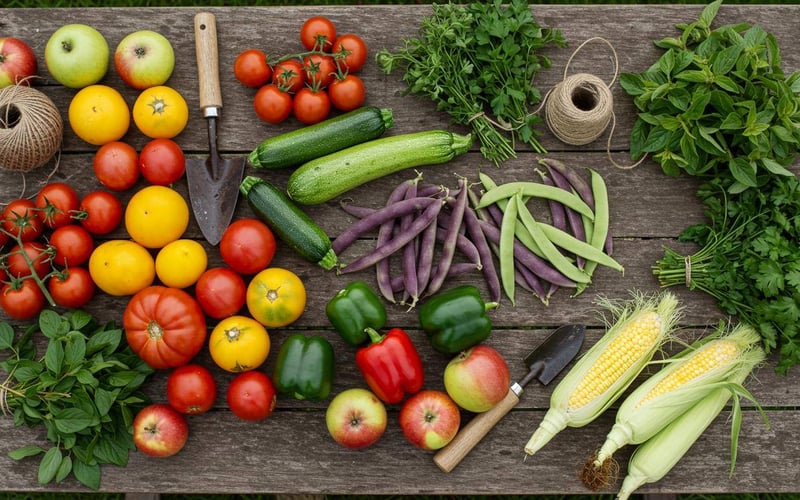
August is harvest season for many vegetables. Regular picking encourages continued production and prevents crops from becoming overripe or going to seed.
Daily Harvest Crops:
- Tomatoes: Pick when fully coloured but still firm
- Courgettes: Harvest when 15-20cm long to prevent marrows
- French & Runner Beans: Pick every 2-3 days to maintain production
- Cucumbers: Cut when 15-25cm long for best flavour
- Peppers & Chillies: Harvest continuously for maximum yield
Weekly Harvest Crops:
- Potatoes: Second earlies and maincrops as foliage dies back
- Onions & Shallots: When foliage yellows and topples over
- Beetroot: When tennis-ball size for best texture
- Carrots: Spring-sown varieties now at peak quality
August Vegetable Tasks Calendar
| Week | Essential Tasks | Sowing Opportunities |
|---|---|---|
| Week 1 | Harvest early potatoes, begin tomato leaf removal | Winter lettuce, rocket, spinach |
| Week 2 | Check for blight, support heavy fruit plants | Corn salad, land cress |
| Week 3 | Begin lifting onions, continue bean harvest | Green manure crops |
| Week 4 | Collect herb seeds, prepare autumn beds | Japanese onions (end of month) |
Watering and Feeding Strategy
High-Priority Watering:
- Tomatoes: Deep water 2-3 times weekly, avoid irregular watering to prevent blossom end rot
- Sweetcorn: Essential during tasselling and grain filling
- Brassicas: Consistent moisture prevents bolting
- Root vegetables: Light, regular watering prevents splitting
Feeding Schedule:
- Fruiting crops (tomatoes, peppers): High-potash feed weekly
- Leafy greens: Balanced liquid feed every 2 weeks
- Root crops: Stop feeding to prevent forking
Flower Garden: Peak Season Management
Deadheading and Maintenance
Regular deadheading keeps flowers blooming into autumn and prevents unwanted self-seeding.
Priority Deadheading:
- Dahlias: Daily removal encourages continuous blooms
- Roses: Cut above first strong five-leaflet leaf
- Annuals: Petunias, marigolds, impatiens for continued flowering
- Perennials: Delphiniums, lupins for potential second flush
August Pruning Tasks
| Plant Type | Pruning Method | Timing |
|---|---|---|
| Wisteria | Cut side shoots to 20cm (5 leaves) | Mid-August |
| Lavender | Light trim after flowering, avoid old wood | After flowering |
| Rambling Roses | Remove 1/3 of flowered stems | After flowering |
| Early-flowering Shrubs | Light shaping, remove spent blooms | As flowers fade |
Seed Collecting Guide
August is prime time for collecting seeds from favourite plants:
Easy Seeds to Collect:
- Aquilegias: Collect when pods turn brown and papery
- Sweet Peas: Allow some pods to mature on plant
- Marigolds: Harvest when flower heads are dry
- Love-in-a-Mist: Distinctive inflated seed pods
- Sunflowers: When back of flower head turns brown
Storage Tips:
- Collect on dry days
- Store in paper envelopes, labelled with date and variety
- Keep in a cool, dry place
- Test germination with a small sample before spring sowing
Fruit Garden: Harvest and Care
Stone Fruit Harvest
August brings the peak harvest for many stone fruits:
Harvest Indicators:
- Plums: Slight give when gently pressed, easy stem removal
- Peaches/Nectarines: Fragrant, soft around stem end
- Apricots: Full colour development, slight softness
- Cherries: Deep colour, sweet taste (taste test required)
Soft Fruit Management
Berry Protection:
- Install netting before fruits colour to prevent bird damage
- Use fine mesh to exclude small birds and wasps
- Remove netting after harvest to allow bird pest control
Raspberry Care:
- Summer varieties: Cut fruited canes to ground after harvest
- Autumn varieties: Leave canes, remove only tips
- Tie new canes to support wires
Fruit Tree Summer Pruning
| Tree Type | Pruning Focus | Method |
|---|---|---|
| Apple | Reduce vigour, improve light penetration | Remove water shoots, shorten laterals |
| Pear | Control growth, encourage fruiting | Similar to apple, more conservative |
| Plum | Maintain shape, avoid over-pruning | Remove crossing branches only |
| Cherry | Minimal intervention | Remove dead/diseased wood only |
Lawn Care in August Heat
Mowing Adjustments
Summer Mowing Strategy:
- Raise cutting height to 4-5cm to help grass cope with heat stress
- Reduce mowing frequency as growth slows
- Never cut more than 1/3 of grass height in a single cut
- Mow in the evening when temperatures are cooler
Watering Guidelines
Effective Lawn Watering:
- Water deeply but infrequently (2-3 times per week maximum)
- Apply 2.5cm (1 inch) of water per session
- Water early morning to reduce evaporation
- Use sprinkler systems if available, ensuring even coverage
Drought Management:
- Allow grass to go dormant rather than light frequent watering
- Don't feed with high-nitrogen fertilisers during heat stress
- Consider drought-tolerant grass seed for autumn renovation
Container and Patio Plants
Daily Care Routine
Watering Protocol:
- Check containers daily, twice daily in extreme heat
- Water until it runs from drainage holes
- Use drip trays in extreme heat to maintain moisture
- Group containers to create a humid microclimate
Feeding Strategy:
- High-potash liquid feed weekly for flowering plants
- Diluted tomato feed with each watering for continuous nutrition
- Reduce feeding as temperatures drop late in the month
Container Plant Maintenance
| Task | Frequency | Method |
|---|---|---|
| Deadheading | Daily | Remove spent blooms to base |
| Pest Check | Every 2-3 days | Look for aphids, whitefly, red spider mite |
| Support | As needed | Stake tall plants, tie in climbers |
| Replacement | Weekly | Replace tired annuals with autumn varieties |
Greenhouse Management
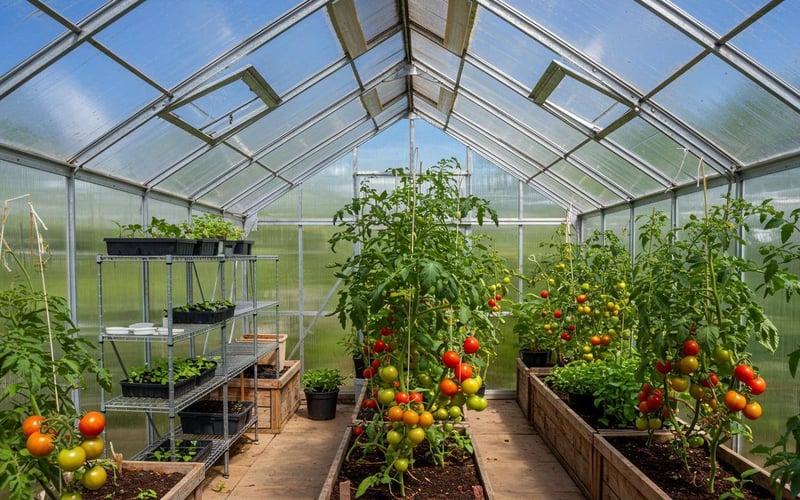
Climate Control
Temperature Management:
- Open vents when the temperature exceeds 25°C (77°F)
- Use shade paint or blinds to prevent overheating
- Damp down floors on hot mornings to increase humidity
- Install automatic vent openers for consistent control
Ventilation Strategy:
- Maintain air circulation to prevent fungal diseases
- Use fan ventilation during still, humid weather
- Keep greenhouse doors open during hot weather
- Install louvre vents for continuous air exchange
Greenhouse Growing Tasks
For comprehensive guidance on year-round greenhouse growing, including winter production techniques, our detailed guide covers everything from heating systems to crop selection.
Crop Management:
- Tomatoes: Remove lower leaves up to the first truss, support heavy trusses
- Cucumbers: Train stems, remove male flowers on female varieties
- Peppers: Support plants, maintain consistent watering
- Aubergines: Limit to 5-6 fruits per plant for best size
If you're new to greenhouse growing, our guide to choosing your first greenhouse helps you select the right size and style for your needs.
Pest and Disease Control
Common August Greenhouse Pests:
| Pest | Signs | Control Method |
|---|---|---|
| Red Spider Mite | Fine webbing, yellowing leaves | Increase humidity, biological control |
| Whitefly | White flies, sticky honeydew | Yellow sticky traps, biological control |
| Aphids | Clusters on shoot tips | Spray with soapy water, biological control |
| Thrips | Silver streaks on leaves | Blue sticky traps, beneficial insects |
General Garden Maintenance
Watering Wisdom
Efficient Watering Practices:
- Water in the early morning or evening to reduce evaporation
- Apply water slowly to allow soil penetration
- Use mulch to retain soil moisture
- Direct water to root zones, not foliage
- Collect rainwater in water butts for dry periods
Water Conservation:
- Install drip irrigation systems for beds and borders
- Use greywater from washing up (avoid detergents on food crops)
- Group plants with similar water needs together
- Apply 5-7cm organic mulch around plants
- Follow Environment Agency water conservation guidelines during drought periods
Pest and Disease Management
August Pest Patrol:
Vegetable Pests:
- Blight: Watch for brown spots on tomato/potato leaves
- Cabbage White: Check brassicas for white butterfly eggs
- Carrot Fly: Use fine mesh barriers around carrots
- Cucumber Beetle: Hand-pick adults, use row covers
For detailed pest identification and organic control methods, the RHS Plant Health portal provides comprehensive guidance on managing garden pests safely and effectively.
Flower Garden Pests:
- Aphids: Blast off with water, encourage ladybirds
- Slugs and Snails: Evening patrols, beer traps, barriers
- Lily Beetle: Hand-pick bright red adults and larvae
- Vine Weevil: Check containers for C-shaped grubs
Composting and Recycling
August Composting Boost:
- Turn compost piles to accelerate decomposition
- Add green materials: grass clippings, vegetable trimmings
- Balance with brown materials: dry leaves, cardboard
- Water compost if dry, cover if too wet
- Use finished compost as mulch around plants
Planning and Preparation for Autumn
Autumn Planning Calendar
| Planning Task | Action Required | Deadline |
|---|---|---|
| Spring Bulb Orders | Choose varieties, calculate quantities | Mid-August |
| Autumn Seed Sowing | Prepare seedbeds, order seeds | End August |
| Tool Maintenance | Clean, sharpen, oil tools | Throughout month |
| Next Year's Vegetables | Plan crop rotation, order catalogues | Late August |
August presents unique opportunities for family gardening activities, with children on school holidays and abundant harvests to share. Consider involving young gardeners in seed collecting and harvest activities.
Documentation Strategy:
- Photograph successful plant combinations
- Note flowering times and durations
- Record harvest quantities and dates
- Document problem areas for improvement
- Create planting maps for reference
Autumn Bulb Planning
Spring Bulb Selection:
- Early bloomers: Crocuses, snowdrops, winter aconites
- Mid-season: Daffodils, tulips, hyacinths
- Late spring: Alliums, camassia, fritillarias
Planting Calculations:
- Allow 50-100 bulbs per square metre for a natural effect
- Order 20% extra for replacements and expansion
- Consider bulb longevity: species tulips vs. hybrid varieties
Regional Considerations
Northern Regions (Scotland, Northern England)
Timing Adjustments:
- Harvest may be 1-2 weeks later than southern regions
- Extend growing season with cloches and fleece
- Focus on cold-hardy varieties for autumn sowing
- Begin preparing for earlier first frost
Southern Regions (South West England, South Coast)
Heat Management:
- Increase watering frequency and volume
- Provide shade for sensitive plants during heat waves
- Take advantage of longer growing season
- Consider Mediterranean plants for dry areas
Urban Gardens
City-Specific Challenges:
- Heat island effect increases watering needs
- Air pollution requires more frequent plant cleaning
- Limited space necessitates container gardening focus
- Balcony gardens need wind protection
Weekly August Garden Calendar
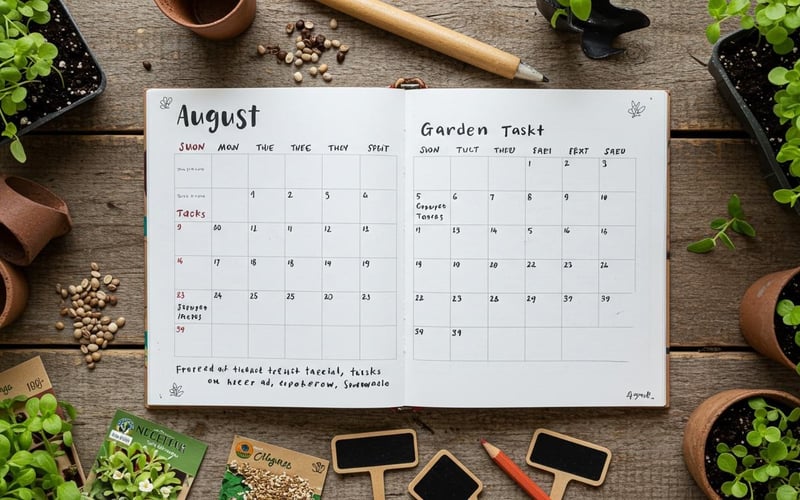
Week 1 (August 1-7)
Priority Tasks:
- Begin daily tomato and courgette harvest
- Check and repair irrigation systems
- Apply mulch to conserve moisture
- Order spring bulbs from catalogues
Sowing Window:
- Winter lettuce varieties
- Rocket and mizuna for autumn harvest
- Green manure for empty beds
Week 2 (August 8-14)
Priority Tasks:
- Summer prune apple and pear trees
- Begin lifting early potatoes
- Deadhead perennials for second flush
- Take softwood cuttings of herbs
Maintenance Focus:
- Pest monitoring and treatment
- Deep watering of established plants
- Greenhouse ventilation management
Week 3 (August 15-21)
Priority Tasks:
- Collect seeds from early-flowering plants
- Begin lifting onions and shallots
- Prune wisteria and rambling roses
- Plan autumn planting schemes
Planning Activities:
- Photograph garden at peak season
- Note successful and unsuccessful plantings
- Research autumn and winter varieties
Week 4 (August 22-31)
Priority Tasks:
- Harvest stone fruits as they ripen
- Begin autumn lawn preparation
- Start hardening off late sowings
- Final summer pruning of fruit trees
Preparation Focus:
- Prepare beds for autumn planting
- Clean and maintain gardening tools
- Order autumn plants and bulbs
Troubleshooting Common August Problems
Watering Issues
Problem: Wilting plants despite regular watering
Solution: Check for root problems, improve drainage, water more deeply but less frequently
Problem: Blossom end rot on tomatoes
Solution: Ensure consistent watering, mulch heavily, check calcium levels
Pest Outbreaks
Problem: Sudden aphid infestation
Solution: Spray with insecticidal soap, encourage beneficial insects, check plant stress factors
Problem: Slugs and snails increasing
Solution: Remove hiding places, use beer traps, apply organic pellets, evening patrols
Plant Health Issues
Problem: Yellowing leaves on container plants
Solution: Check drainage, adjust feeding regime, examine for root bound conditions
Problem: Poor fruit set on vegetables
Solution: Improve pollination, check watering consistency, review feeding programme
August Garden Success Metrics
Track your garden's performance with these key indicators:
Harvest Metrics:
- Daily harvest quantities by crop
- First and last harvest dates
- Overall yield compared to previous years
- Storage and preservation success rates
Plant Health Indicators:
- Pest and disease incidence
- Water usage efficiency
- Fertiliser application effectiveness
- Plant establishment success rates
Planning Achievements:
- Photographs and notes completed
- Orders placed for autumn planting
- Tool maintenance completed
- Next year's plans developed
Conclusion

Building on the groundwork laid in June and May, August represents the culmination of the gardening year, offering abundant rewards while demanding careful attention to detail. Success in August gardening depends on maintaining consistent care routines, staying ahead of pest and disease problems, and planning strategically for the months ahead.
By following this comprehensive guide, you'll maximise your August harvest, maintain plant health through the challenging summer heat, and set the foundation for a successful autumn and next year's growing season. Remember that gardening is both an art and a science – observe your plants closely, adapt these guidelines to your specific conditions, and enjoy the fruits of your labour.
For year-round gardening success, consider our comprehensive guides to other seasonal tasks, including essential winter gardening preparations and early spring planning.
The key to August gardening success lies in balancing immediate needs (harvesting, watering, pest control) with future planning (seed collecting, bulb ordering, next year's garden design). Take time to appreciate your garden at its peak while laying the groundwork for continued success in the seasons to come.
Frequently Asked Questions
-
How often should I water my garden in August?
Water deeply 2-3 times per week rather than daily shallow watering. Container plants need daily attention, while established garden plants benefit from thorough weekly watering. Always water early morning or evening to minimise evaporation.
-
When should I harvest tomatoes for the best flavour?
Pick tomatoes when they're fully coloured but still firm to the touch. They should come away easily from the vine. Green tomatoes can ripen indoors on a sunny windowsill, but vine-ripened fruit has superior flavour.
-
Is it too late to sow vegetables in August?
Not at all! August is perfect for sowing quick-growing crops like rocket, lettuce, radishes, and spinach for autumn harvest. You can also sow green manures in empty beds and plant Japanese onion sets late in the month.
-
Why are my container plants wilting despite daily watering?
This usually indicates the plants are pot-bound, the compost has become hydrophobic, or drainage is poor. Check if water runs straight through - if so, soak pots in a water tray. Consider repotting if roots are circling the pot base.
-
Should I feed my lawn in August?
Avoid high-nitrogen lawn feeds in August as they promote soft growth vulnerable to autumn weather. Instead, focus on proper mowing height (4-5cm) and deep watering if necessary. Save feeding for early autumn.
-
How do I know if my plants have blight?
Look for brown or black patches on leaves, often with a white fuzzy growth underneath. On tomatoes, you'll see dark patches on fruit. Remove affected plants immediately and destroy them - don't compost them.
-
Can I take cuttings in August heat?
Yes, but choose early morning when plants are fully hydrated. Take softwood cuttings from herbs like lavender and rosemary. Keep cuttings moist and in bright, indirect light until rooted.
-
When should I start planning for autumn planting?
Start now! Order spring bulbs by mid-August for autumn planting. Plan crop rotations and order seed catalogues. Take photos and notes of what's working well in your current garden layout.
-
How do I prevent my greenhouse from overheating?
Open all vents when the temperature exceeds 25°C (77°F), use shade paint or blinds, damp down floors on hot mornings, and keep doors open during heat waves. Install automatic vent openers for consistent temperature control. For optimal greenhouse cultivation techniques, including soil preparation and pest management, refer to our guide on creating the perfect greenhouse environment.
-
What's the most important August garden task if I only have limited time?
Consistent watering is crucial - everything else depends on plants staying healthy and hydrated. If you can only do one thing, establish an effective watering routine and stick to it throughout the month.