The Complete Guide to Creating Your Perfect Herb Garden
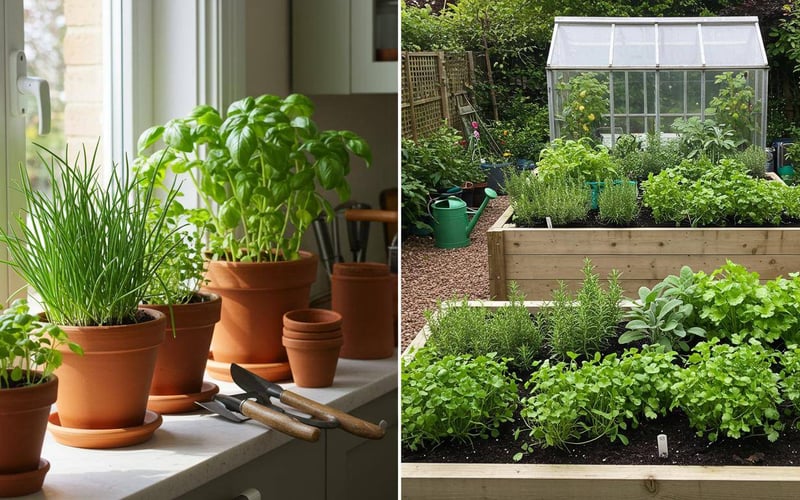
A UK herb garden needs 6-8 hours of daily sunlight, well-draining soil, and containers at least 150mm deep. Start with hardy varieties like chives, thyme and rosemary that survive British winters, then add tender annuals like basil once soil temperatures reach 15°C in late May. Group herbs by water needs: Mediterranean herbs (rosemary, sage, oregano) in gritty free-draining mix, leafy annuals (basil, parsley, coriander) in richer compost.
Key Takeaways
- Start with easy herbs: Begin with hardy varieties like chives, parsley, and basil before expanding to more challenging plants.
- Location is crucial: Most herbs need 6-8 hours of direct sunlight daily and well-draining soil.
- Container versatility: Herb gardens thrive in raised beds, planters, window boxes, and vertical displays.
- Family grouping: Understanding herb families (Lamiaceae, Apiaceae, Asteraceae, Allium) helps with companion planting.
- Regular harvesting: Frequent picking encourages bushier growth and prevents plants going to seed.
- Drainage is essential: Most herbs prefer slightly dry conditions over waterlogged soil.
- Year-round growing: Combine indoor and outdoor spaces for continuous herb production.
- Health benefits: Studies demonstrate that gardening provides substantial mental and physical health benefits.
Matt's Tip: Start Small and Build Up
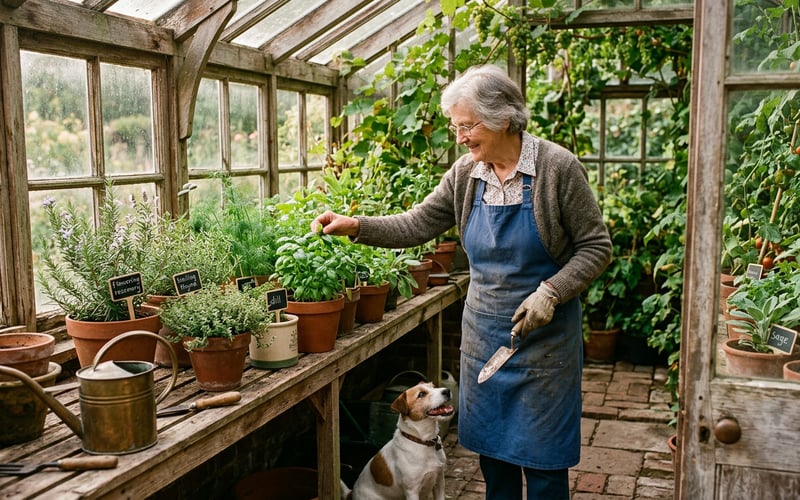
I always tell first-time herb growers the same thing: start with three pots on a sunny windowsill. Chives, flat-leaf parsley and thyme. They're almost impossible to kill, they cost pennies to grow, and you'll actually use them every week. Once those three are thriving, add basil in summer and rosemary outdoors. I've seen too many people buy ten different herbs in one go, get overwhelmed, and give up by July.
Indoor Herb Garden
Creating an indoor herb garden offers the perfect solution for year-round fresh herbs, especially during Britain's colder months when outdoor growing becomes challenging. Research indicates that indoor plants can improve productivity, lower blood pressure, and enhance overall wellbeing.
Selecting the Perfect Indoor Location
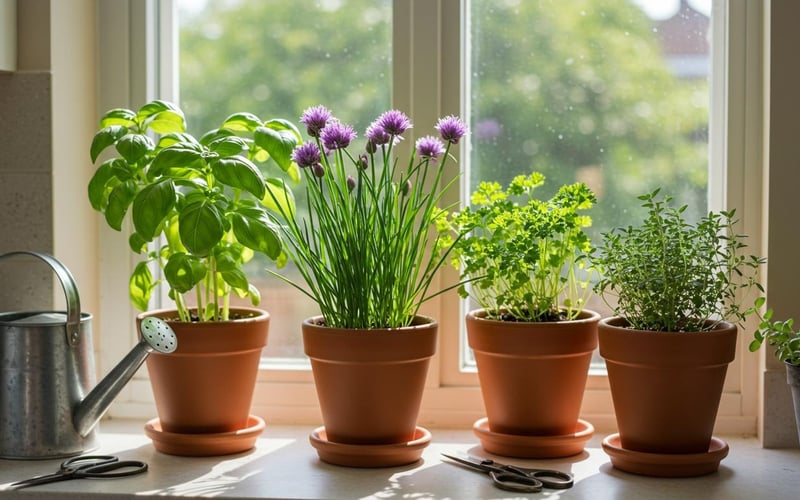
Your indoor herb garden needs a south-facing window that receives at least 4-6 hours of direct sunlight daily. If natural light is limited, supplement with LED grow lights positioned 12-18 inches above your plants. The kitchen windowsill remains the most popular choice, providing convenient access whilst cooking.
East-facing windows work well for herbs that prefer morning sun, whilst west-facing locations suit heat-loving varieties like basil. Avoid north-facing windows unless you're growing shade-tolerant herbs like parsley or chives.
Best Herbs for Indoor Growing
Basil
Thrives on sunny windowsills and provides continuous harvests when regularly pinched. Sweet basil, purple basil, and Thai basil all perform excellently indoors.
Chives
Tolerate lower light conditions and can be harvested year-round. Their purple flowers are edible and add colour to your indoor garden.
Parsley
Both flat-leaf and curly types grow well in partial shade and cooler indoor temperatures. Start from seed for best results.
Coriander (Cilantro)
Prefers cooler conditions, making it ideal for indoor cultivation where you can control temperature.
Thyme
Has a compact growth habit perfect for small containers; trailing varieties work excellently in hanging planters.
Indoor Growing Success Tips
Use containers with drainage holes and place saucers underneath to protect surfaces. Choose high-quality potting mix rather than garden soil, which can become compacted in containers. Rotate plants weekly to ensure even growth, and pinch flowers to encourage leaf production.
If you're starting herbs from seed, a warm windowsill or propagator gives the best germination rates.
Consider using a mini greenhouse to extend your indoor growing season and protect tender seedlings during germination.
Herb Garden Ideas
Transform your growing space with creative herb garden ideas that combine functionality with visual appeal. British gardeners spend approximately £8 billion annually on garden products, reflecting our passion for beautiful, productive outdoor spaces.
Themed Garden Concepts
Mediterranean Garden
Combine rosemary, thyme, oregano, sage, and lavender in a sunny, well-drained area. These herbs share similar growing requirements and create a cohesive, aromatic display that transports you to the Mediterranean coast.
Culinary Essentials
Position kitchen favourites like basil, parsley, coriander, chives, and dill closest to your kitchen door. This practical arrangement ensures fresh herbs are always within reach during meal preparation.
Tea Garden
Plant chamomile, lemon balm, anise hyssop, and various mints for a soothing collection. Include calendula for its beautiful flowers and gentle flavour that complements herbal teas perfectly.
Design Layouts That Work
Spiral Design
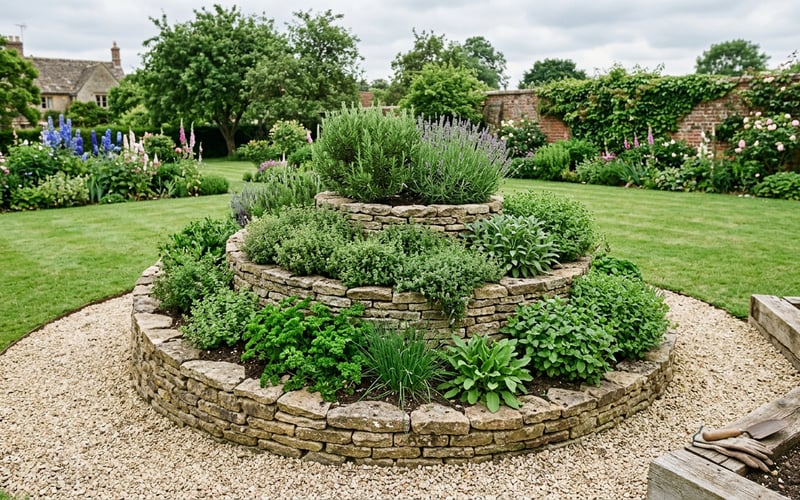
Create height variation by building a spiral raised bed, placing taller herbs like rosemary at the centre and cascading down to low-growing thyme and creeping varieties.
Cartwheel Layout
Divide a circular bed into wedge-shaped sections, each dedicated to herbs with similar requirements. This classic design provides excellent organisation and creates a stunning focal point.
Colour-Coordinated Planting
Group herbs by foliage colour - silver-leaved lavender and sage, purple-tinted basils, golden oregano, and deep green parsley create striking visual contrasts whilst maintaining practical growing zones.
Herb Garden Planter
Selecting the right herb garden planter directly impacts your herbs' success. The container choice affects drainage, root development, and overall plant health, making it crucial to match your planter to your herbs' specific needs.
Material Considerations
Terracotta and Clay
These breathable materials allow soil to dry between waterings, preventing root rot in Mediterranean herbs. The porous nature helps regulate moisture naturally, though they require more frequent watering in hot weather.
Plastic and Resin
Lightweight and affordable options that retain moisture well - perfect for herbs requiring consistent hydration. Choose UV-resistant varieties to prevent degradation in direct sunlight.
Wooden Planters
Cedar and oak provide excellent insulation for roots whilst offering attractive natural appearance. Ensure the wood is treated for outdoor use or line with plastic to prevent rot.
Metal Containers
Galvanised steel and powder-coated aluminium offer durability and contemporary aesthetics. Consider that metal can heat up significantly in direct sun, potentially affecting root temperature.
Size and Drainage Requirements
Most herbs require containers at least 6-8 inches deep, though deep-rooted varieties like rosemary need 12+ inches. Width matters more than depth for herbs with spreading root systems like thyme and oregano.
Enriching your potting mix with used coffee grounds adds nitrogen and improves soil structure for leafy herbs like basil and parsley.
Drainage remains absolutely critical - ensure containers have multiple drainage holes and use crocks or gravel at the bottom to prevent waterlogging. Poor drainage kills more herbs than any other factor.
|
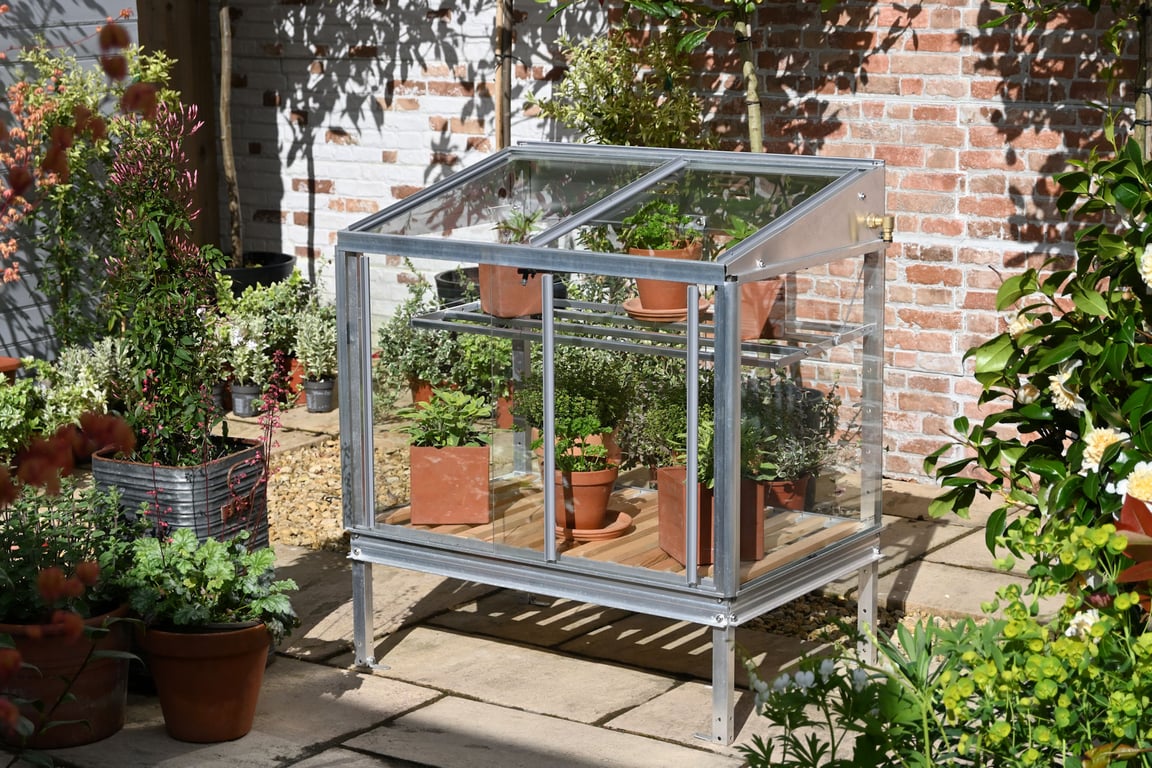
Matt's Pick for Herb GrowingBest For: Small gardens and patios where you want year-round herb production Why I Recommend It: I've fitted dozens of these and they're brilliant for herbs. The self-ventilating design draws cool air through the base and out through the roof slats, so your herbs never overheat. Compact enough for any patio but tall enough for rosemary. Price: £419 |
Outdoor Herb Garden
An outdoor herb garden offers unlimited growing potential and allows you to cultivate larger quantities of herbs than indoor spaces permit. Studies show that 77% of people with gardens use them as relaxation spaces, with herb gardens providing both practical and therapeutic benefits.
Site Selection Essentials
Choose the sunniest available location that receives 6-8 hours of direct sunlight daily. South-facing slopes or areas protected from strong winds provide ideal conditions for most herbs.
Consider proximity to your kitchen - whilst not essential, convenient access encourages regular use and harvesting. Avoid low-lying areas where water collects, as most herbs prefer well-drained conditions.
Observe your garden throughout the day to identify microclimates. Areas near walls or fences may be warmer and more sheltered, perfect for tender herbs like basil. For more on finding the ideal spot, see our guide on the best position for a greenhouse in your garden.
Soil Preparation
Most herbs prefer slightly alkaline, well-draining soil with pH between 6.0-7.0. Heavy clay soils need amendment with sand, grit, or compost to improve drainage.
Mediterranean herbs thrive in poor soil, so avoid over-fertilising. Instead, focus on improving soil structure and drainage. Adding horticultural grit or sharp sand works excellently for herbs like rosemary, thyme, and oregano.
Annual herbs like basil and coriander appreciate richer soil with more organic matter. Create separate areas or use different soil mixes to accommodate varying requirements.
Seasonal Considerations
Plan your outdoor herb garden for year-round interest. Hardy perennials like rosemary, thyme, and sage provide structure throughout winter, whilst annuals like basil add summer colour and flavour.
Protect tender herbs with cloches or small greenhouse structures during cold spells. This extends the growing season and protects valuable plants from frost damage.
Herb Garden Plants
Understanding herb garden plants and their families helps create successful companion plantings whilst avoiding problematic combinations. Botanical families share similar growing requirements and often benefit each other when planted together.
Herb Plant List in the Lamiaceae Family
Rosemary (Rosmarinus officinalis)
A woody perennial requiring excellent drainage and full sun. Varieties range from upright types reaching 6 feet to prostrate forms perfect for containers.
Thyme (Thymus vulgaris)
Low-growing perennial excellent for edging paths or filling gaps between stones. Common thyme, lemon thyme, and creeping thyme each offer unique flavours.
Sage (Salvia officinalis)
Attractive perennial with grey-green leaves and purple flowers. Purple sage and golden sage add colour variation whilst maintaining the classic sage flavour.
Oregano (Origanum vulgare)
Spreading perennial that can become invasive if not controlled. Greek oregano offers the strongest flavour for cooking.
Marjoram (Origanum majorana)
Sweet marjoram provides a milder flavour than oregano and prefers slightly more protection from harsh weather.
Winter Savoury (Satureja montana)
Hardy perennial with needle-like leaves and white flowers. More robust than summer savoury with a stronger, more peppery flavour.
Summer Savoury (Satureja hortensis)
Annual herb with a delicate flavour perfect for bean dishes. Sow seeds directly in spring for best results.
Lavender (Lavandula angustifolia)
Aromatic perennial valued for its flowers and fragrance. English lavender proves most hardy in British conditions.
Anise Hyssop (Agastache foeniculum)
Tall perennial with liquorice-scented leaves and purple flower spikes that attract beneficial insects.
Basil (Ocimum basilicum)
Tender annual requiring warm conditions and protection from wind. Sweet basil, purple basil, and Thai basil each offer distinct flavours.
Lemon Balm (Melissa officinalis)
Vigorous perennial that can spread aggressively. Grow in containers to control spread, or dedicate a specific area where it can naturalise.
Herb Plant List in the Apiaceae Family
Coriander / Cilantro (Coriandrum sativum)
Fast-growing annual that bolts quickly in hot weather. Succession plant every 2-3 weeks for continuous harvest.
Dill (Anethum graveolens)
Tall annual with feathery foliage and umbrella-shaped flower heads. Both leaves and seeds are used in cooking.
Parsley (Petroselinum crispum)
Biennial grown as annual. Flat-leaf (Italian) parsley offers stronger flavour, whilst curly parsley provides attractive garnish.
Herb Plant List in the Asteraceae Family
Chamomile (Matricaria chamomilla)
Annual with small daisy-like flowers used for tea. German chamomile grows taller than Roman chamomile.
Calendula (Calendula officinalis)
Hardy annual with bright orange or yellow flowers. Petals are edible and add colour to salads.
Marigold (Tagetes species)
Though not a true herb, French and English marigolds provide pest control benefits and edible flowers.
Herb Plant List in the Onion Family
Chives (Allium schoenoprasum): Hardy perennial forming grass-like clumps with purple flowers. Both leaves and flowers are edible with a mild onion flavour.
Watch out for greenfly on soft-leaved herbs like basil and parsley. Our guide to destroying greenfly covers organic methods that are safe to use on edible plants.
Herb Garden Kit
A well-chosen herb garden kit provides everything needed to start your herb-growing journey successfully. Quality kits include seeds or plants, containers, growing medium, and detailed instructions tailored for beginners.
Essential Kit Components
Look for kits containing high-quality seeds from reputable suppliers, appropriate containers with drainage holes, and suitable growing medium. The best kits include plant labels, watering instructions, and harvesting guidance.
Avoid kits with generic or unlabelled seeds, as these often have poor germination rates. Quality suppliers provide variety-specific growing instructions and expected harvest times.
Beginner-Friendly Kit Options
Start with kits featuring easy-to-grow herbs like basil, chives, and parsley. These forgiving plants tolerate minor mistakes whilst you develop your growing skills. If you're new to growing altogether, our beginner's guide to greenhouse growing covers the fundamentals.
Progressive kits allow you to add more challenging herbs once you've mastered the basics. Look for expandable systems that accommodate additional plants as your confidence grows.
Consider indoor/outdoor combination kits that provide options for year-round growing. These typically include both tender and hardy herbs suitable for different seasons and locations.
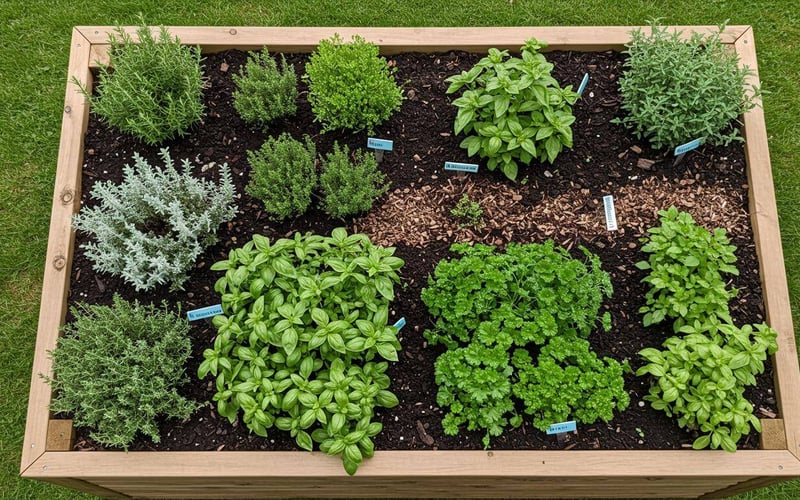
Grow Herbs in Raised Beds
Grow herbs in raised beds offers numerous advantages, including improved drainage, easier access, and better soil control. Professional gardeners report that raised beds can increase yields whilst reducing maintenance requirements.
Raised Bed Advantages
Raised beds warm up faster in spring, extending the growing season for heat-loving herbs. The improved drainage prevents waterlogged conditions that can kill Mediterranean herbs like rosemary and thyme.
Better soil control allows you to create specific growing conditions for different herb families. Mediterranean herbs can have gritty, well-draining soil, whilst leafy herbs receive richer, more moisture-retentive mixes.
Easier access reduces strain on your back and knees, making maintenance more enjoyable. The defined boundaries also create organised, professional-looking garden spaces.
Optimal Raised Bed Dimensions
Beds should be narrow enough to reach the centre without stepping inside - typically 3-4 feet wide. Length can vary based on available space, though 8 feet provides ample growing area without becoming unwieldy.
Height depends on your herbs' root systems and drainage needs. Mediterranean herbs thrive in 8-12 inch beds, whilst deep-rooted herbs like lovage need 18+ inches.
Raised Bed Soil Mix
Create custom soil blends for different herb families. Mediterranean herbs need sharp-draining mix with added grit or sand, whilst annual herbs prefer richer soil with compost.
A general mix of 40% topsoil, 30% compost, and 30% sharp sand or grit works well for most herbs. Adjust ratios based on specific plant requirements.
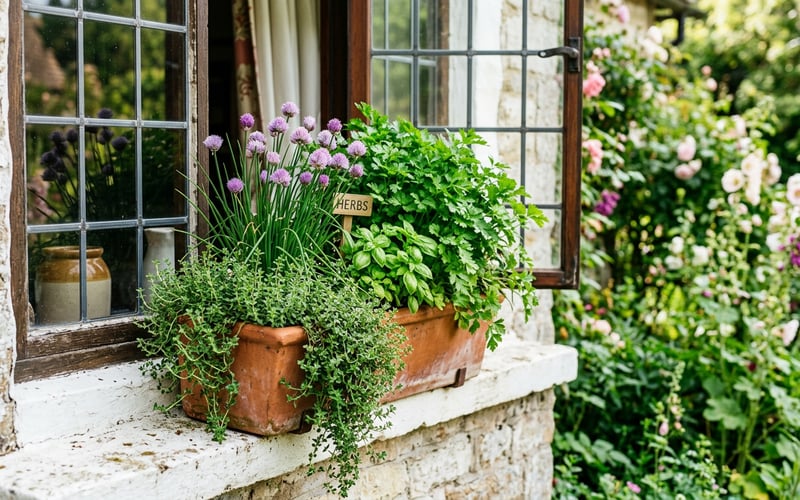
Plant Herbs in Window Boxes
Plant herbs in window boxes maximises growing space whilst keeping herbs conveniently close to your kitchen. Window boxes work particularly well for smaller herbs and those requiring easy access for frequent harvesting.
Window Box Selection
Choose boxes at least 6-8 inches deep and 24+ inches long for adequate root space. Ensure drainage holes are present and consider boxes with attached saucers to protect windowsills.
Materials matter - terracotta breathes well but requires frequent watering, whilst plastic retains moisture longer. Metal boxes heat up quickly, potentially damaging roots in direct sun.
Herb Selection for Window Boxes
Compact herbs work best in confined spaces. Chives, thyme, oregano, and small basil varieties thrive in window boxes. Avoid large herbs like rosemary unless using dwarf varieties.
Trailing herbs like oregano and thyme can cascade attractively over box edges, creating vertical interest whilst maximising growing space.
Consider succession planting fast-growing herbs like coriander and basil to ensure continuous harvests throughout the season.
Window Box Maintenance
Window boxes dry out faster than ground-level plantings, requiring more frequent watering. Check soil moisture daily during hot weather, watering when the top inch feels dry.
Regular feeding becomes essential in confined spaces. Use diluted liquid fertiliser every 2-3 weeks during growing season to maintain healthy growth.
Create a Patio Display
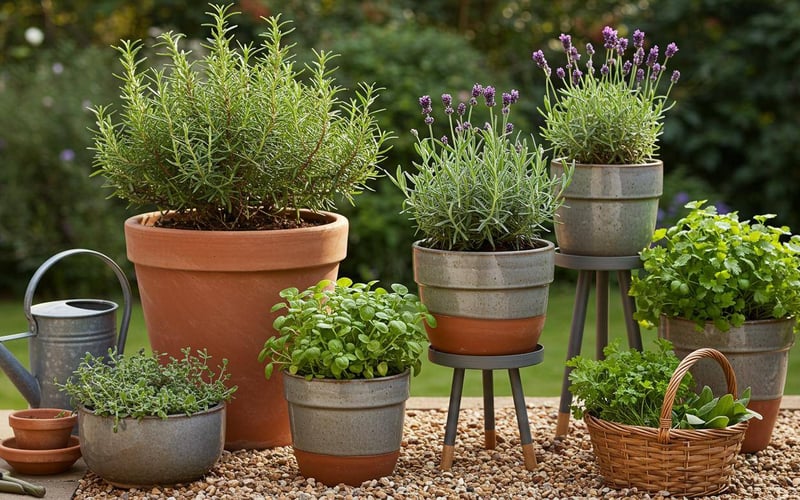
Create a patio display transforms hard surfaces into productive herb gardens using containers, vertical elements, and creative arrangements. Patio herb gardens offer flexibility and allow you to move plants to optimal positions as seasons change.
Patio Design Principles
Group containers in odd numbers for visual appeal, varying heights and textures to create interest. Use large containers as anchors, surrounding them with smaller pots for layered effect.
Consider sun patterns throughout the day, positioning heat-loving herbs where they'll receive maximum light whilst providing some shade for delicate varieties.
Incorporate seating areas where you can enjoy herbs' fragrances whilst relaxing. Position aromatic herbs like lavender and rosemary near seating for maximum sensory impact.
Container Selection for Patios
Mix materials and sizes for visual interest - combine terracotta, glazed ceramic, and metal containers in complementary colours. Ensure all containers have adequate drainage.
Large containers provide better root space and require less frequent watering than small pots. They also create more impressive displays and support larger herb varieties.
Consider mobility - add wheels or plant stands to heavy containers, allowing you to rearrange displays seasonally or move tender plants to protected areas.
Seasonal Patio Management
Protect tender herbs during winter by moving containers to sheltered locations or wrapping them with horticultural fleece. Wall mounted greenhouse structures provide excellent protection for valuable plants.
Refresh displays seasonally by replacing annual herbs and adding seasonal colour with flowering herbs like calendula and chamomile.
DIY Herb Garden Sign
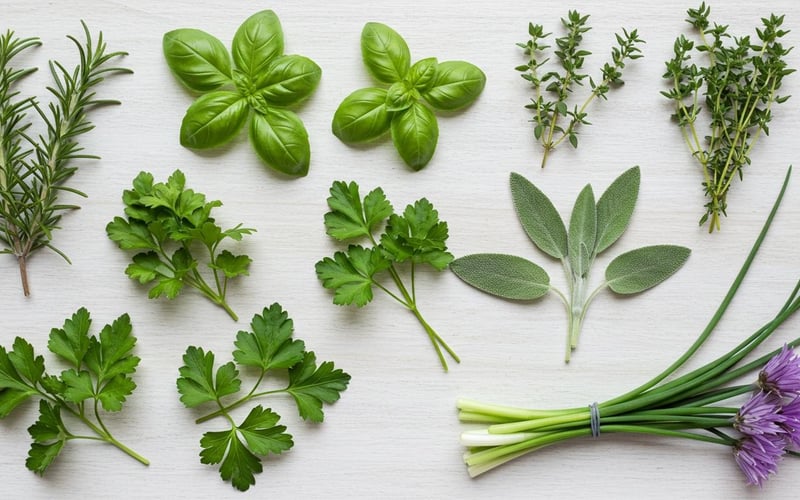
A DIY herb garden sign adds charm whilst helping identify different herbs, especially important when growing multiple varieties that may look similar when young. Creative signage also personalises your garden space and can become attractive garden features.
Sign Materials and Design
Weather-resistant materials work best for outdoor signs. Cedar, slate, metal, and treated wood all withstand British weather conditions. Avoid untreated wood which will deteriorate quickly.
Consider readability from typical viewing distances. Use clear, simple fonts that remain legible after weathering. Contrasting colours ensure visibility in various lighting conditions.
Creative Sign Ideas
Repurpose everyday items into charming herb markers. Old spoons, wine corks, painted stones, and ceramic shards can all become unique plant labels.
Chalkboard signs allow seasonal updates and variety changes. Wooden stakes with chalkboard paint provide rustic charm whilst maintaining functionality.
Sign Placement Strategy
Position signs where they're easily readable without obscuring plants. Front-edge placement works well for low-growing herbs, whilst taller herbs can accommodate signs at various heights.
Consider growth patterns when placing permanent signs. Fast-growing herbs may obscure static markers, requiring adjustable or moveable signage systems.
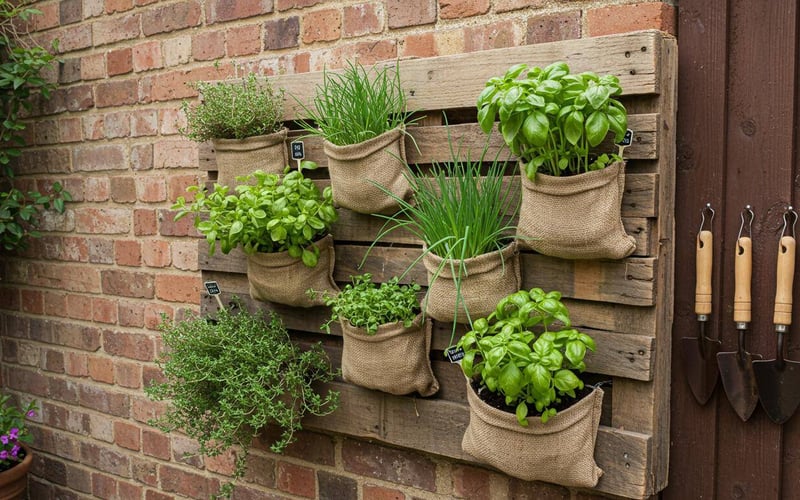
Plant a Vertical Herb Garden
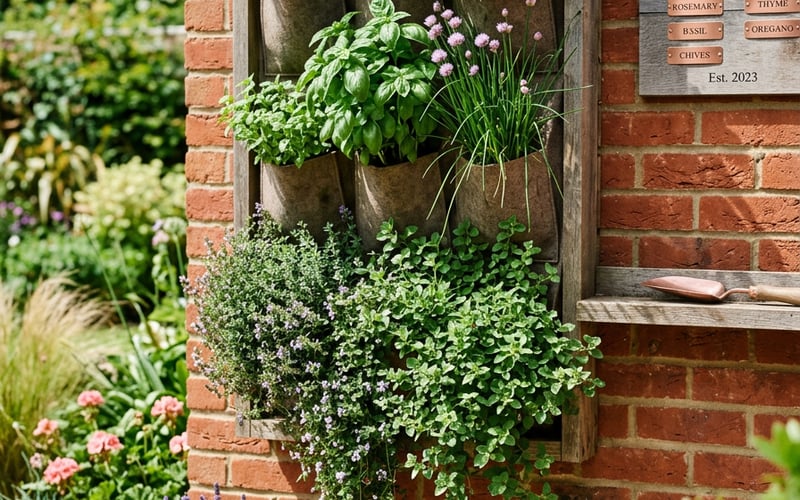
Plant a vertical herb garden maximises limited space whilst creating striking visual displays. Vertical growing suits balconies, small patios, and areas where ground space is restricted but wall space is available.
Vertical Growing Systems
Purpose-built vertical planters offer multiple pockets for individual herbs. Look for systems with good drainage and adequate soil capacity for healthy root development.
DIY options include repurposed pallets, shoe organisers, and stacked containers. Ensure whatever system you choose provides adequate drainage and structural stability.
Herb Selection for Vertical Growing
Choose herbs suited to confined spaces and varying light levels. Upper sections receive more light and suit sun-loving herbs, whilst lower areas accommodate shade-tolerant varieties.
Trailing herbs like thyme and oregano work excellently in vertical systems, cascading naturally whilst conserving space. Compact herbs like chives and parsley fit perfectly in pocket planters.
Vertical Garden Maintenance
Vertical systems dry out faster than ground-level plantings. Install drip irrigation or hand-water carefully to ensure even moisture distribution throughout the system.
Support structures must be adequate for fully loaded systems. Soil and water add significant weight - ensure walls and supports can handle the load safely.
Terracotta Tiered Herb Pot
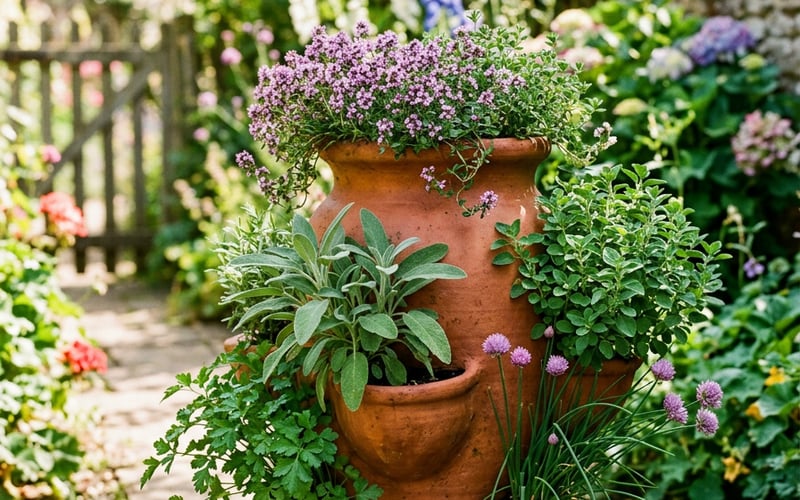
A terracotta tiered herb pot creates an attractive vertical growing system whilst maintaining the traditional charm of terracotta containers. These multi-level planters maximise growing space in small areas whilst providing excellent drainage for Mediterranean herbs.
Benefits of Tiered Systems
Tiered pots allow you to grow multiple herbs in a compact footprint, perfect for patios, balconies, or small garden spaces. The natural drainage from upper to lower tiers suits herbs that prefer varying moisture levels.
Different tiers can accommodate herbs with different requirements - Mediterranean herbs in upper, drier sections, and moisture-loving herbs in lower tiers where water naturally collects.
Plant Selection for Tiered Pots
Place trailing herbs like thyme and oregano in upper tiers where they can cascade naturally. Use middle tiers for compact herbs like chives and parsley, whilst lower tiers suit herbs requiring more moisture.
Avoid placing aggressive spreaders like mint in tiered systems unless contained within individual sections. Instead, choose well-behaved herbs that won't overwhelm neighbouring plants.
Maintenance Considerations
Terracotta dries out faster than other materials, requiring more frequent watering during hot weather. The tiered structure means upper levels dry out first, requiring careful monitoring.
Position tiered pots where they receive adequate sunlight but are protected from strong winds that can topple tall structures. Ensure the base is stable and level before planting.
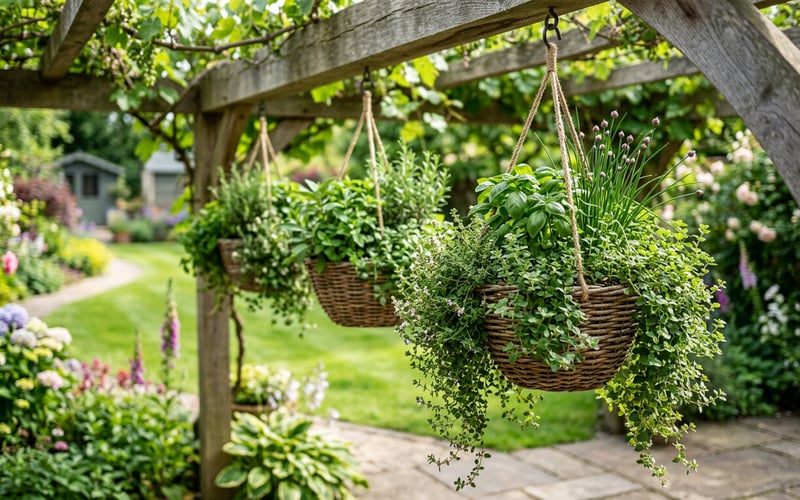
Utilise Hanging Planters
Utilise hanging planters to maximise growing space whilst creating attractive displays at eye level. Hanging herb gardens work particularly well for trailing varieties and compact herbs that don't require deep root space.
Selecting Appropriate Herbs
Trailing herbs excel in hanging planters - thyme, oregano, and trailing rosemary create beautiful cascading displays whilst remaining easily harvestable. Compact herbs like chives and small basil varieties also perform well.
Avoid heavy, large herbs that can make planters unwieldy or cause structural problems. Choose herbs that stay relatively compact and don't require frequent repotting.
Hanging System Considerations
Ensure hanging points can support the full weight of saturated soil and mature plants. Use strong brackets and hardware rated for outdoor use and changing weather conditions.
Position hanging planters where they receive adequate light but won't obstruct pathways or create hazards. Consider how mature plants will affect light reaching plants below.
Maintenance and Watering
Hanging planters dry out faster than ground-level containers, requiring more frequent watering. Use lightweight, moisture-retentive potting mixes to reduce watering frequency.
Install pulley systems or adjustable hangers for easy access during maintenance and harvesting. This prevents the need for ladders or difficult reaching positions.
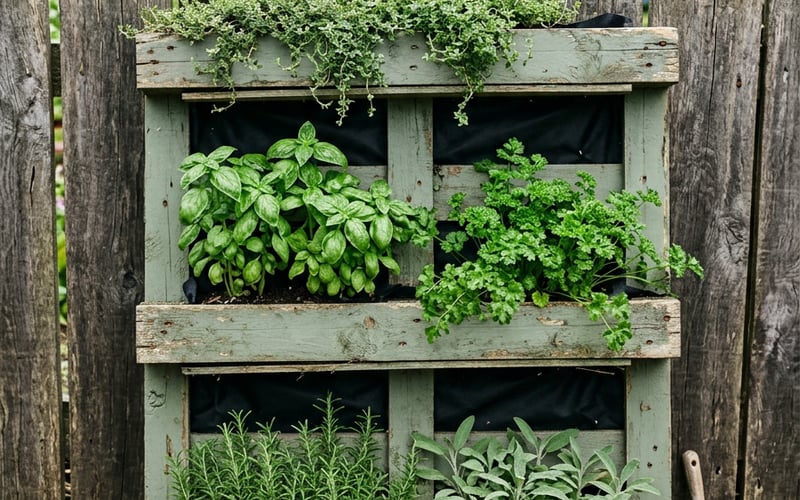
Vertical Pallet Garden
A vertical pallet garden provides an affordable, eco-friendly way to create substantial herb growing space using reclaimed materials. Pallet gardens suit DIY enthusiasts and those wanting to maximise vertical growing potential.
Pallet Selection and Preparation
Choose heat-treated (HT stamped) pallets rather than chemically treated ones for food safety. Sand rough surfaces and treat with food-safe wood preservative if desired.
Line pallet backs with landscape fabric or plastic sheeting to contain soil whilst allowing drainage. Create planting pockets by stapling fabric between slats.
Herb Layout in Pallet Gardens
Plant larger herbs like rosemary and sage in bottom pockets where they have more root space. Use middle sections for medium herbs like basil and parsley, reserving top pockets for trailing varieties.
Consider mature plant sizes when spacing herbs within pockets. Overcrowding leads to competition and poor growth, whilst adequate spacing allows proper air circulation.
Installation and Maintenance
Secure pallet gardens firmly to walls or fences using appropriate fixings for the wall type. Ensure the structure can support the full weight of soil and mature plants.
Water pallet gardens carefully to ensure even distribution throughout all planting pockets. Top pockets may need more frequent watering as water drains downward through the system.
Frequently Asked Questions
What is the best layout for an herb garden?
A simple rectangular raised bed (4x8 feet) works best for beginners. It allows easy access to all plants from both sides. Divide the space by herb families - Mediterranean herbs in the driest, sunniest section, annual herbs where you can provide richer soil and more water. Cartwheel designs create attractive focal points whilst separating herbs by requirements.
What herbs cannot be planted next to each other?
Fennel inhibits most other plants and must be grown separately. Mint spreads aggressively and can overwhelm neighbouring plants. Rue can inhibit growth of nearby herbs. Generally, keep vigorous spreaders like mint, lemon balm, and oregano in containers or dedicated areas to prevent them taking over your garden.
What time of year to start an herb garden?
Hardy perennials like rosemary and thyme can be planted from March to May. Annual herbs like basil require warm soil and should be planted after the last frost, typically late May to June. Start seeds indoors 6-8 weeks before outdoor planting. Autumn planting (September-October) allows perennials to establish before winter, leading to stronger growth the following year.
How to plan an herb garden for beginners?
Start small with 4-6 easy herbs you actually use in cooking. Choose a sunny location with good drainage. Begin with hardy perennials like chives, thyme, and rosemary, adding annual herbs like basil and parsley once you're confident. Group herbs by water and soil requirements. Plan for year-round interest by including both evergreen and deciduous herbs.
What is the easiest herb to grow?
Chives rank as the easiest herb for beginners in the UK. They're virtually indestructible, tolerate poor soil and irregular watering, and produce harvests within weeks of planting. Chives are perennial, returning each year with minimal care. They tolerate partial shade, resist pests and diseases, and their purple flowers are edible and attractive.
What herbs grow well together in the same container in the UK?
Rosemary, thyme, sage, and oregano thrive together in large containers. They share similar needs for excellent drainage and full sun. Annual herb combinations work well too: basil, parsley, and coriander can share containers if you provide adequate water and nutrients. Avoid mixing vigorous spreaders like mint with other herbs unless in very large containers.
Related Articles
- How to Grow Garlic in a Greenhouse
- Growing Tomatoes in a Greenhouse
- 6 Essential Greenhouse Growing Tips for Beginners
- How to Grow Carrots: The Ultimate UK Guide
- Overwintering Plants: UK Frost Protection Guide
Ready to start your herb garden journey? Explore our range of greenhouse accessories and growing solutions to create the perfect environment for your herbs. From beginner-friendly starter kits to professional growing systems, Greenhouse Stores provides everything you need for herb garden success.