Autumn Gardening Jobs UK: Complete Checklist from Greenhouse Experts
Autumn is when you either set your garden up for a strong spring or spend March fixing everything you ignored in October. The window between September and November is when the real work happens: greenhouse insulation, bulb planting, lawn repair, pruning, and getting tender plants under cover before the first frost. In most of the UK, that first frost arrives between mid-October and early November. After that, your options narrow fast.
Key Takeaways
- First frost hits most UK gardens between mid-October and early November. Everything frost-tender needs to be under cover or lifted before then.
- Autumn is the single most important season for greenhouse maintenance. Clean the glass, insulate with bubble wrap, and install a heater before temperatures drop below 5C.
- Plant spring bulbs from September to November. Daffodils and tulips need 12-16 weeks of cold to flower properly.
- Scarify and aerate your lawn before soil temperature drops below 6C in late October. After that, the grass stops recovering.
Installer's Note
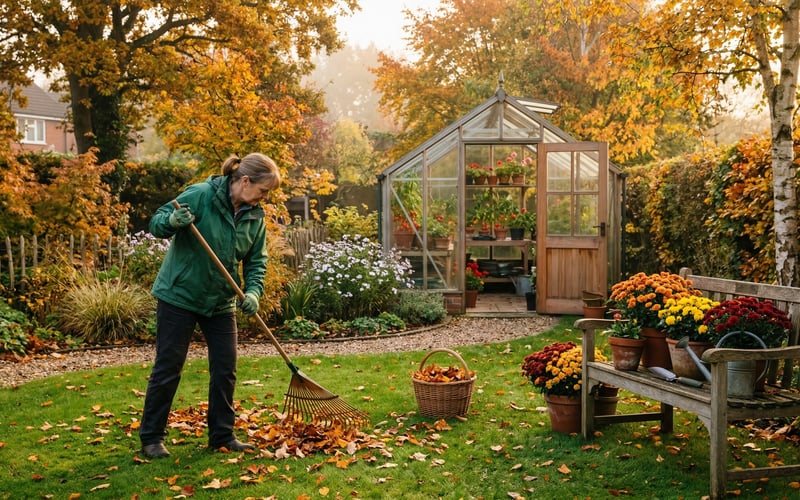
I get more calls in October than any other month. Half are people who left greenhouse prep too late and now have a cracked pane from the first gale, or a heater that won't start because it sat in the shed all summer without a test run. The other half are new greenhouse owners who bought in spring and have no idea what to do now the temperature is dropping. This guide covers every autumn job I do in my own garden and the ones I tell every customer to do before winter arrives.
Autumn is when you either set your garden up for a strong spring or spend March fixing everything you ignored in October. The window between September and November is when the real work happens: greenhouse insulation, bulb planting, lawn repair, pruning, and getting tender plants under cover before the first frost. In most of the UK, that first frost arrives between mid-October and early November. After that, your options narrow fast.
This guide covers every autumn gardening job worth doing, in the order you should do them. Greenhouse owners get their own section because autumn prep is the difference between a productive winter greenhouse and an expensive cold box full of dead plants.
When does autumn gardening start in the UK?
The calendar says September, but your garden says earlier. By late August, day length is already shortening and soil temperature starts to drop. You've got early September to late November, with October being the busiest month by far.
Timing depends on where you live. Gardens in southern England get their first frost 2-3 weeks later than gardens in northern Scotland. The RHS records show average first frost dates of late October for the south, early October for the Midlands, and late September for the Scottish Highlands. Plan your jobs around your local first frost date, not the calendar.
Prepare your greenhouse for winter
If you own a greenhouse, this is the most important autumn job you'll do. An unheated, uninsulated greenhouse only stays 2-3C warmer than outside. That is not enough to protect tender plants from a hard frost. With bubble wrap insulation and a small heater, you can keep the internal temperature above 5C all winter, which is enough to overwinter pelargoniums, fuchsias, citrus, and most Mediterranean herbs.
Start by giving the greenhouse a thorough clean. Algae and dirt on the glass cuts light transmission by up to 40% over a season, and autumn is the last chance to clean before low winter light makes every photon count. Wash every pane inside and out, scrub the frame with warm soapy water, and check the glazing seals for gaps.
Next, insulate with bubble wrap. Horticultural bubble wrap reduces heat loss by up to 50%. Clip it to the inside of the glazing bars using purpose-made clips. Leave a 25mm air gap between the wrap and the glass. That trapped air layer is what does most of the insulating. The Elite Bubble Plastic kit comes with 30 lining hooks and enough wrap for a 6x8 greenhouse.
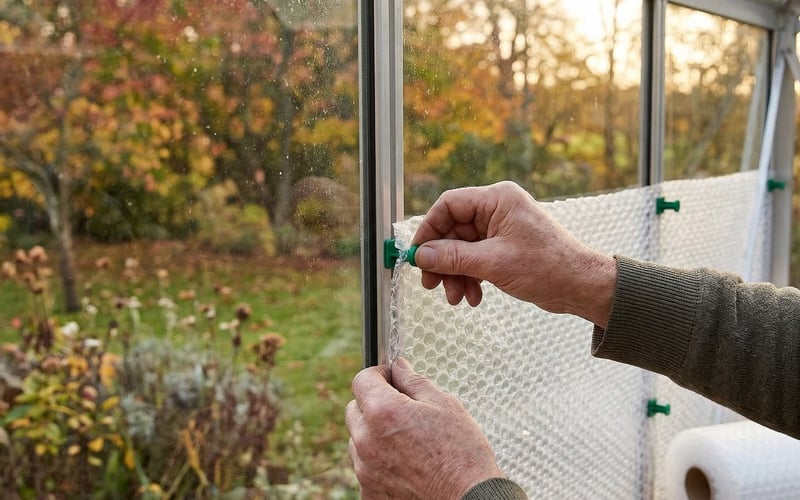
Shop the Elite Bubble Wrap Insulation Kit →
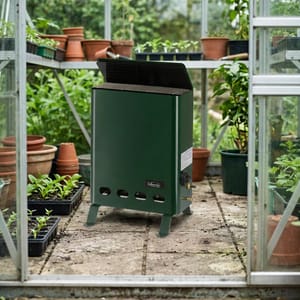
Finally, install a heater and test it before you need it. A 2kW propane heater keeps a 6x8 greenhouse above 5C in most UK winters. Run it for an hour in October to check the ignition and thermostat work. I have seen too many people discover a faulty heater on the night of the first hard frost, by which time it's too late.
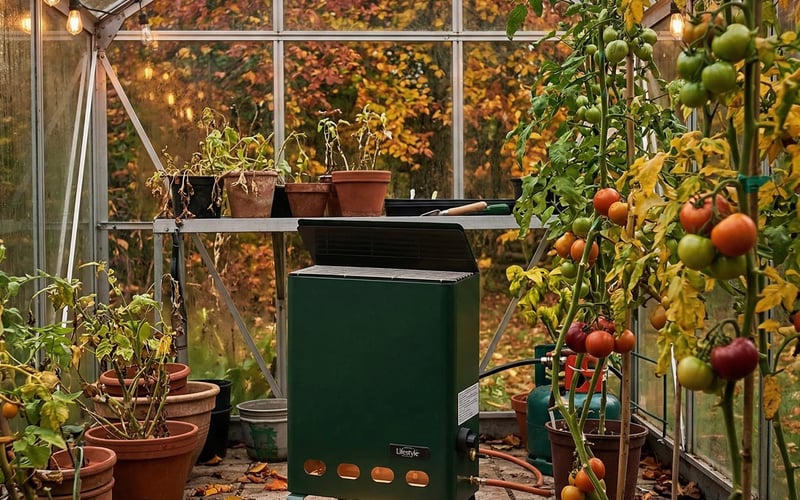
Shop the Eden 2kW Greenhouse Heater →
Matt's Tip: The Thermometer Test
Hang a max-min thermometer in your greenhouse from October onwards and check it every morning. If the overnight minimum regularly drops below 5C and you have tender plants inside, your insulation isn't enough or your heater needs turning up. The Vitavia Max Min Thermometer costs £30 and tells you exactly what happened overnight. I check mine every morning with my first cup of tea.
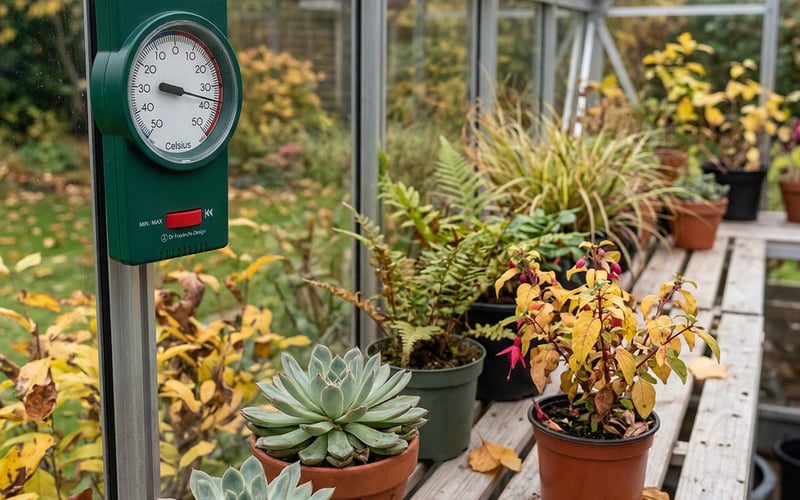
Shop the Vitavia Max Min Thermometer →
|
Matt's Pick for Autumn Greenhouse HeatingBest For: Keeping a 6x8 greenhouse frost-free all winter Why I Recommend It: 2kW output with a thermostat that holds temperature without wasting gas. ODS safety valve shuts it off if oxygen drops. Comes with hose and regulator, so there's nothing extra to buy. I've used these in display greenhouses for years. Price: £140 |
Lift and protect tender plants
Anything that won't survive below 0C needs to come inside before the first frost. That means pelargoniums, fuchsias, dahlias, cannas, begonias, and any citrus or olive trees in pots.
Dahlias and cannas: cut back the foliage after the first light frost blackens the leaves, lift the tubers, brush off excess soil, and store them in barely-damp compost in a frost-free shed or greenhouse. Label everything. You will forget which variety is which by March.
Pelargoniums and fuchsias: move pots into the greenhouse or a bright porch. Cut pelargoniums back by a third to reduce water loss. Fuchsias can be cut hard to 15cm and stored in a dark frost-free spot until spring. Our overwintering plants guide covers the full process for 20+ species.
Plants too large to move, like established fig trees or tree ferns, need wrapping. Use horticultural fleece wound around the crown and trunk, secured with string. A layer of dry straw inside the fleece adds extra insulation. Unwrap on mild days to prevent mould.
Plant spring bulbs
September to November is bulb planting season. Daffodils go in first (September-October), followed by tulips last (November, after soil temperatures drop below 10C). Tulips planted too early are prone to tulip fire, a fungal disease that thrives in warm soil.
Plant all bulbs at a depth of roughly three times the bulb's height. A 5cm daffodil bulb goes 15cm deep. Use a bulb planter rather than a trowel for speed and consistent depth. In heavy clay soil, add a handful of grit beneath each bulb to improve drainage and prevent rotting.
The best bulbs for UK gardens: daffodils (Narcissus), tulips, crocus, hyacinths, alliums, and snowdrops. Snowdrops establish best planted "in the green" (while still in leaf) in late winter, but dry bulbs planted in autumn work too. For greenhouse growers, garlic cloves go in from October to December for an early summer harvest.
Autumn lawn care
Autumn is the best time to fix lawn problems because grass roots are still active while weed growth slows. You have roughly six weeks from mid-September to late October before soil temperature drops below 6C and root activity stalls.
Scarify first. A spring-tine rake or powered scarifier pulls out the layer of dead grass and moss (thatch) that builds up over summer. Thatch thicker than 1cm blocks water and air from reaching the roots. Scarify on a dry day when the grass is slightly damp. The lawn will look terrible afterwards. It recovers within 3-4 weeks. Read our scarification timing guide for more detail.
After scarifying, aerate by pushing a garden fork 10-15cm into the soil every 15cm across the lawn. This relieves compaction from summer foot traffic and improves drainage before winter rain arrives. On heavy clay, fill the holes with sharp sand to keep them open.
Apply an autumn lawn feed (high in potassium, low in nitrogen) to harden the grass for winter. Do not use spring/summer feed in autumn. The high nitrogen promotes soft growth that is vulnerable to frost and disease.
Prune and tidy
Autumn pruning is selective, not wholesale. Prune these now:
- Rambling roses after they finish flowering. Remove flowered stems and tie in new growth.
- Deciduous hedges (beech, hornbeam, hawthorn) for a final tidy before winter.
- Summer-fruiting raspberries: cut fruited canes to ground level, tie in new canes.
- Blackcurrants: remove a third of the oldest wood to promote new productive stems.
Do not prune these in autumn:
- Hydrangeas: leave old flower heads on as frost protection for the buds beneath.
- Spring-flowering shrubs (forsythia, philadelphus): prune immediately after flowering, not now.
- Stone fruit (cherry, plum, damson): prune in summer only to avoid silver leaf disease.
Tidy borders by cutting back spent perennials, but leave some seed heads for birds and leave hollow stems for overwintering insects. A tidy garden is not the same as a sterile one.
Clear beds and improve the soil
Pull out spent summer crops (courgettes, beans, tomatoes). Compost healthy material. Burn or bin anything showing signs of disease, especially tomato plants with blight. Do not compost blighted material.
Spread a 5-10cm layer of well-rotted manure or homemade compost over bare beds. Don't dig it in. Let the worms pull it down over winter. By spring, your soil structure will be better than if you'd double-dug the whole plot.
If you have empty beds that won't be planted until spring, sow a green manure (field beans, phacelia, or grazing rye). Green manures suppress weeds and prevent nutrient leaching over winter. Dig them in before planting in spring and they add organic matter to the soil too.
Harvest and store
Most root vegetables (carrots, parsnips, beetroot) can stay in the ground through autumn with a straw mulch over the top to prevent frost damage. Parsnips actually taste better after a frost converts their starches to sugars.
Pumpkins and winter squash: harvest before the first hard frost. Cut with a length of stem attached, cure in the sun for 10 days (or a warm room if weather is poor), then store in a cool dry place at 10-15C. Properly cured squash keeps for 3-6 months.
Apples and pears: pick when they separate easily from the tree with a gentle twist. Store only perfect, undamaged fruit. Wrap individually in newspaper and keep in single layers in a cool, dark, well-ventilated spot. Check stored fruit monthly and remove any showing rot.
Look after wildlife
This is the time to set up your garden for wildlife. Leave a pile of logs and leaves in a quiet corner for hedgehogs to hibernate in. Clean out nest boxes so birds have dry roosting spots through winter. Stock bird feeders with high-energy food (sunflower hearts, suet, peanuts).
Leave some areas of the garden deliberately untidy. Dead stems, leaf piles, and standing seedheads shelter overwintering insects including ladybirds and lacewings, which are your best pest controllers come spring. Every ladybird that survives winter in your garden is one that eats aphids on your roses in June.
Autumn job checklist by month
| Month | Top Jobs | Greenhouse Jobs |
|---|---|---|
| September | Scarify lawn, plant daffodil bulbs, divide perennials, sow green manure, harvest apples | Ventilate on sunny days, reduce watering, take cuttings of tender perennials |
| October | Plant tulip bulbs, lift dahlias after first frost, prune rambling roses, aerate lawn, spread compost on beds | Clean glass, install bubble wrap insulation, test heater, bring in tender plants |
| November | Plant bare-root trees and hedging, final hedge trim, clear fallen leaves, protect fig trees with fleece | Reduce watering to minimum, ventilate briefly on dry days, check thermometer overnight lows |
Greenhouse autumn prep comparison
| Task | When | Why | Product | Cost |
|---|---|---|---|---|
| Insulate with bubble wrap ★ | October | Cuts heat loss by up to 50% | Elite Bubble Plastic Kit | £79 |
| Install heater | October | Keeps temperature above 5C frost-free | Eden 2kW Greenhouse Heater | £140 |
| Fit thermometer | October | Monitors overnight lows for frost risk | Vitavia Max Min Thermometer | £30 |
| Clean glass | September-October | Restores up to 40% lost light transmission | Warm water + washing-up liquid | Free |
| Check seals and vents | October | Prevents draughts and water ingress | Visual inspection | Free |
If you don't have a greenhouse yet, autumn is a good time to think about one. Browse our greenhouses and you'll be set up before next spring. Even an unheated house gives you 6-8 weeks of extra growing at each end of the season. For more on winter greenhouse care, read our detailed guide.
Frequently asked questions
When should I start autumn gardening jobs in the UK?
Start in early September and work through to late November. The busiest period is October, when most time-sensitive jobs overlap: bulb planting, lawn care, greenhouse insulation, and lifting tender plants. Your local first frost date sets the deadline for frost-sensitive tasks. Southern England averages late October; the Scottish Highlands can see frost in late September.
What is the most important autumn greenhouse job?
Insulating with bubble wrap is the single highest-impact job. It cuts heat loss by up to 50% and costs under £80 for a full kit. Without insulation, even a heated greenhouse wastes most of its energy through the glass. Clean the glass first so insulation doesn't trap dirt against the panes, then clip the wrap in place using glazing bar clips. The whole job takes about an hour for a 6x8 greenhouse.
Can I still plant bulbs in November?
Yes, November is actually the best month for tulips. Tulips prefer cold soil (below 10C) and planting them in warm September soil increases the risk of tulip fire disease. Daffodils, crocus, and hyacinths are best planted in September-October but will still perform if planted up to December. The only bulb you should never plant late is a snowdrop, which establishes best planted in the green in February.
Should I cut back perennials in autumn?
Cut back spent perennials but leave some seed heads and hollow stems. Dead stems provide overwintering habitat for beneficial insects, and seed heads feed birds through winter. Cut back anything that looks diseased or rotten, as leaving it can spread problems. Ornamental grasses should be left until late February, as their winter structure looks good and the foliage protects the crown from frost.
How do I protect tender plants from frost?
Move pot plants into a greenhouse, cold frame, or frost-free shed before the first frost. Dahlias and cannas should be lifted, dried, and stored in barely-damp compost. Plants too large to move can be wrapped in horticultural fleece. Read our frost protection guide for a full species-by-species breakdown.
Do I need to ventilate my greenhouse in autumn?
Yes, ventilate on dry days to prevent humidity building up. Open one or two vents for a couple of hours around midday when it's not raining or windy. High humidity in an enclosed greenhouse causes grey mould (botrytis), which thrives from October onwards as temperatures drop and condensation increases. Our greenhouse pest control guide covers mould prevention in detail.