Call : 0800 098 8877

Blog

£50 OFF Everything!

Use code XMAS50 at checkout min order £999 (Everything)

The Complete UK Guide to November Gardening Jobs

Written by Matt W on 28th Oct 2025 | Greenhouse and Growing Advice | 20+ Years Experience

💡 November is one of the most important months in the gardening calendar. What you do now directly affects how well your garden survives winter and how early it bursts into life next spring.

November feels like the garden is finally slowing down. The days are short, frosts are appearing on car windscreens, and you are probably spending more time in front of the fire than digging in the borders. But here is the truth: November is actually one of the most important months in the gardening calendar. What you do now directly affects how well your garden survives winter and how early it bursts into life next spring.

This is not about desperate last-minute tasks. November is about working with the season, not against it. The soil is still warm enough for roots to establish, but plants are dormant so they will not be stressed by moving or pruning. Wildlife needs your help. And yes, there is genuine satisfaction in tidying up before the hard frosts arrive.

This guide covers every job you need to do this month, broken down into practical sections. You will know exactly what to protect, what to plant, what to prune, and what mistakes could cost you plants or money.

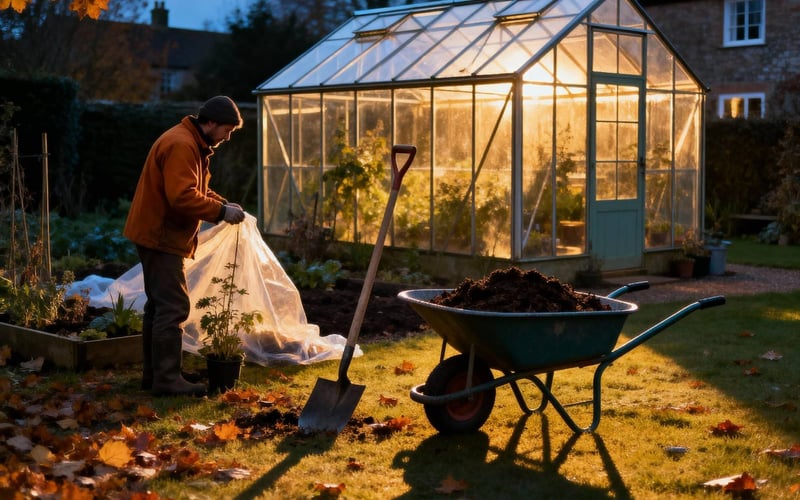
November garden jobs UK showing gardener protecting plants from frost with fleece and mulch in autumn cottage garden

Your Top 5 November Garden Priorities

✅ Key Priorities

  • Protect – Insulate all tender plants and containers from frost and waterlogging damage.
  • Plant – Get spring bulbs, garlic, and bare-root plants (roses, trees, hedging) in the ground now while soil is workable.
  • Clear – Rake fallen leaves from lawns and ponds, then turn them into valuable leaf mould for free soil improver.
  • Prune – Tackle dormant pruning on apple and pear trees, and cut back roses by one-third to prevent wind-rock damage.
  • Prepare – Clean greenhouse glass to maximise winter light, and service garden tools before storing them away.

❄️ 1. How to Protect Tender Plants From Frost in November

Frost and waterlogging are the two biggest threats to your garden this month. A single hard frost can kill plants that would otherwise survive winter with a bit of protection. Waterlogged pots freeze solid and crack. The good news? Protecting plants takes an afternoon and costs very little.

Insulating Pots and Containers

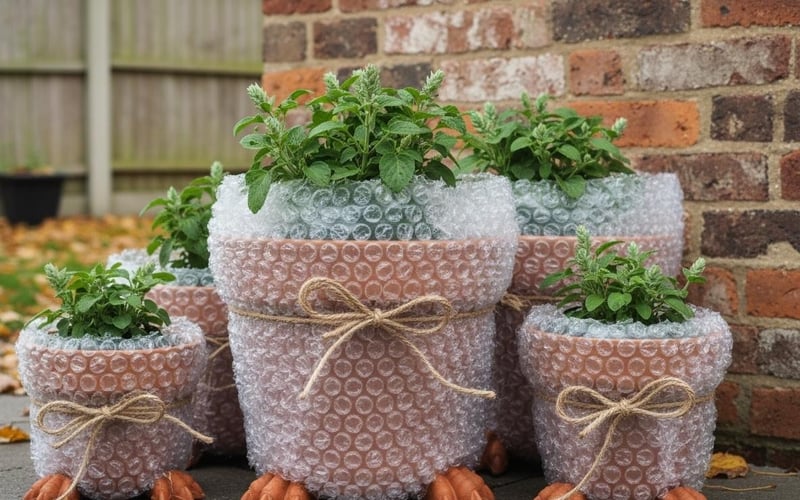
Terracotta pots wrapped in bubble wrap and lifted on pot feet for winter frost protection in UK garden

Container plants are especially vulnerable because their roots are exposed to freezing temperatures from all sides. Here is how to protect them:

  • Move pots against a house wall – The bricks store heat during the day and release it at night. South-facing walls are best, but any sheltered spot works.
  • Wrap pots in bubble wrap or hessian – Wrap around the outside of the pot (not the plant) and secure with garden twine. Bubble wrap is brilliant because the air pockets insulate against cold. One layer reduces heat loss by approximately 30–40%.
  • Lift containers onto pot feet – This is critical. Pots sitting directly on the ground become waterlogged, and when that water freezes, it expands and cracks the pot. Pot feet (or bricks, tiles, bits of wood) lift pots 2–3cm off the ground so excess water drains away.
  • Group pots together – Clustering pots creates a microclimate. The plants protect each other from wind, and the combined mass holds heat better than individual pots.

Protecting Plants in the Ground

  • Tender perennials like dahlias: You have two choices. Lift the tubers after the first frost blackens the foliage, brush off soil, and store them in barely moist compost in a frost-free shed. Or leave them in the ground and cover with a 15–20cm layer of dry mulch (straw, bark chips, or compost). The mulch acts like a duvet and prevents the soil from freezing solid. Dahlias can survive temperatures down to −5°C to −7°C if well mulched.
  • Exotic plants like tree ferns and bananas: Wrap the crown (the growing point at the top) with dry straw, then wrap the whole thing in horticultural fleece. Secure with twine. This creates an insulated chamber that can keep the crown 5–8°C warmer than ambient temperature.
  • Recently planted shrubs: They do not have established root systems yet, so they are more vulnerable to frost heave (where freezing and thawing pushes roots out of the soil). Apply a 10cm mulch layer around the base (not touching the stem) to insulate roots and stabilise soil temperature.

💡 Pro tip: Insulate the pot and the plant. The biggest mistake is only wrapping fleece around the leaves of a potted plant. This does nothing to stop the roots from freezing. First, insulate the pot (with bubble wrap or hessian), then, if the plant itself is tender, gently wrap the foliage with horticultural fleece, leaving the top open for air circulation. Trapped moisture causes rot.


🌷 2. Planting in November: What to Plant Now

November is perfect for planting. The soil is still warm from summer (typically 8–12°C at root depth), which encourages roots to establish before winter. But plants are dormant, so they will not put energy into leafy growth that frost would kill. Think of it as letting them sneak into position while they are asleep.

Planting Tulip Bulbs (The Perfect Time)

November is the ideal month to plant tulip bulbs. Tulips actually need a cold period to flower properly, and planting them in November (rather than September or October) means they spend less time in warm, damp soil where fungal diseases like Tulip Fire can take hold.

How to plant tulips:

  • Dig a hole 15–20cm deep (three times the height of the bulb)
  • Plant pointy end up, flat end down
  • Space bulbs 10–15cm apart
  • Add a handful of horticultural grit in heavy clay soil to improve drainage
  • Backfill and firm gently

💡 Pro tip: Plant tulips in odd-numbered groups (5, 7, 9 bulbs) for the most natural look. Avoid planting in straight rows unless you are creating a formal display. Expect to plant approximately 50–80 bulbs per square metre for a full display. That is about 200–300 bulbs for a typical 4m² flower bed.

How to Plant Bare-Root Roses in November

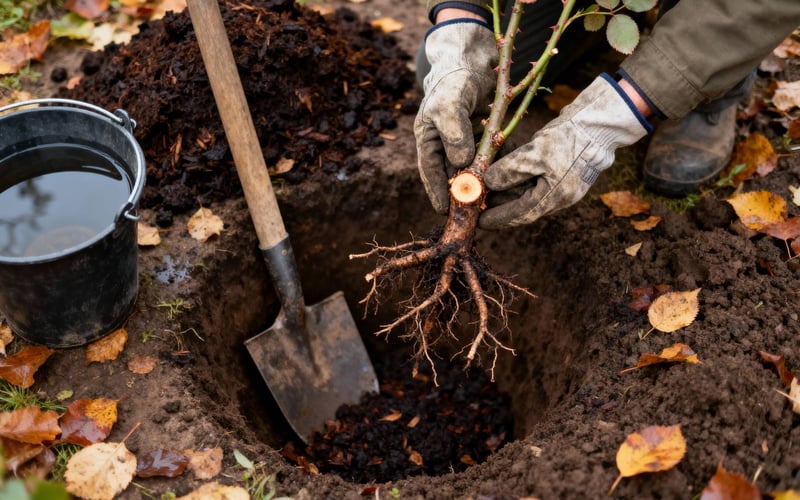
Bare root rose being planted in November showing correct planting depth with graft union at soil level

Bare-root roses look like dead sticks when they arrive. Brown stems, no leaves, exposed roots – they do not look promising. But bare-root plants are cheaper (typically 30–50% less than potted roses), establish faster (because roots grow directly into garden soil, not circling around a pot), and suffer less transplant shock (they are already dormant).

November is prime bare-root planting season. Here is exactly how to do it:

  • Step 1: Hydrate the roots – Soak the entire root system in a bucket of water for 1–2 hours (maximum 24 hours). This rehydrates the roots and helps them recover from being out of the ground.
  • Step 2: Dig the right hole – Make it wide enough that roots can spread out naturally without bending, and deep enough that the “graft union” (the lumpy bit where the rose variety is grafted onto the rootstock) sits at or just below soil level. This is critical – if the union is too high, frost will damage it. If it is too deep, the rootstock (not the variety you bought) may send up shoots.
  • Step 3: Prepare the planting hole – Fork over the bottom of the hole to break up compaction. Mix in 2–3 handfuls of well-rotted manure or compost. Roses are hungry plants and this gives them a slow-release nutrient boost.
  • Step 4: Plant properly – Create a small mound of soil in the centre of the hole. Spread the rose roots over this mound (it prevents roots from bunching up at the bottom). Hold the rose at the correct depth and backfill with soil, firming gently every few centimetres to eliminate air pockets. Do not stamp hard – you will compact the soil.
  • Step 5: Water and mulch – Water in thoroughly (a full watering can, even if the soil is already damp). This settles soil around roots and establishes good contact. Then apply a 5–7cm layer of mulch around the base (keep it 5cm away from the stem to prevent rot). The mulch insulates roots and suppresses weeds.

What you can expect: Bare-root roses planted in November will establish roots over winter and start growing in March–April, typically flowering by June. That is 2–3 weeks earlier than potted roses planted in spring.

What to Plant in the Vegetable Patch

  • Garlic – Plant individual cloves 15cm apart, 2–3cm deep, pointy end up. Choose a spot in full sun with good drainage. Garlic needs a cold period (below 10°C) to form proper bulbs, so November planting is perfect. Harvest June–July. Popular UK varieties: ‘Solent Wight’ (hardneck, large cloves), ‘Caulk Wight’ (softneck, stores well).
  • Broad beans – In milder southern areas, sow hardy varieties like ‘Aquadulce Claudia’ now for an early May–June harvest. Sow 5cm deep, 20cm apart. Broad beans fix nitrogen in the soil, which benefits whatever you plant there next season.
  • Bare-root fruit – Plant apple trees, pear trees, plum trees, and currant bushes now. Bare-root fruit trees are sold on dwarfing, semi-dwarfing, or vigorous rootstocks. For small gardens, choose MM106 (apples) or Quince A (pears) – these keep trees at 2.5–3.5m height and they start fruiting within 2–3 years.

🍂 3. Garden Tidy Up & Maintenance Jobs

November is your last chance to clear up before winter proper arrives. This is not about making everything immaculate – wildlife needs some mess for shelter – but there are specific tasks that prevent problems.

How to Make Leaf Mould (Free Black Gold)

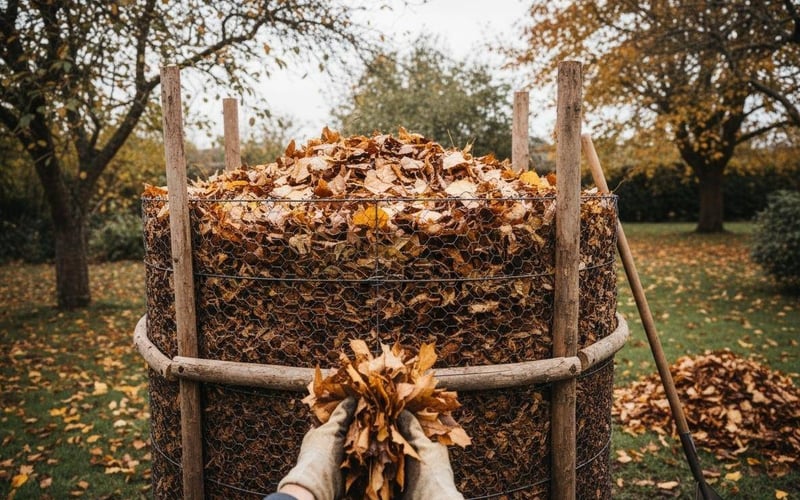
Making leaf mould from autumn leaves in wire cage showing sustainable gardening practice UK

Fallen leaves are not rubbish. They are free organic matter that turns into leaf mould, one of the best soil conditioners you can get. Leaf mould improves soil structure, increases water retention by 20–30%, and costs absolutely nothing to make.

💡 Why you need to rake leaves: Thick layers of wet leaves on lawns block light and air, creating perfect conditions for fungal diseases like Snow Mould. Leaves in ponds decompose and release toxic gases that kill fish. So raking is not optional.

How to make leaf mould:

The quick method: Mow over leaves on the lawn. The mower chops them into small pieces that decompose faster. Collect the chopped leaves in the grass box and pile them in a corner, chicken-wire cage, or black bin bags (pierce holes for air).

The slow method: Rake whole leaves and pile them in a wire cage made from chicken wire and four stakes. Wet the pile if it is dry. Leave it alone.

Timeline: Leaf mould takes 1–2 years to fully break down into a dark, crumbly soil improver that smells like forest floor. You can use partially decomposed leaf mould after 6–12 months as a mulch (it is not fine enough to mix into potting compost yet, but it works brilliantly as a surface layer).

💡 Pro tip: Oak and beech leaves make the best leaf mould because they are low in nitrogen and break down slowly into a fine texture. Horse chestnut and sycamore leaves take longer (18–24 months).

How to Look After Your Lawn in November

  • DO: Give a final cut on a high setting – If the weather is mild and grass is still growing, cut it one last time. Set mower blades to 5cm height (much higher than summer). This prevents grass from becoming too long and matting under snow or frost, which causes brown patches in spring. Only cut when grass is dry and frost-free.
  • DO: Aerate compacted areas – Push a garden fork 10–15cm deep every 10cm across compacted patches (usually high-traffic areas like paths across the lawn or under the washing line). This improves drainage and allows air to reach grassroots. Reduces waterlogging by approximately 40–50%.
  • DON'T: Walk on frosty or waterlogged grass – Frozen grass blades are brittle and snap when you step on them, leaving black footprints that will not recover until spring. Waterlogged soil compacts when you walk on it, which suffocates roots and creates bare patches. Wait until the frost melts or soil firms up.

What to Do in the Greenhouse in November

Your greenhouse becomes a survival chamber in winter. Plants inside need maximum light but minimum dampness. Here is how to prepare it:

  • Clean the glass – Dirty glass blocks up to 20–30% of light. In winter, when days are short and light is weak, that is a big problem. Wash inside and outside with warm water and washing-up liquid. Use a long-handled brush for the roof. Clean glass can raise internal temperature by 2–3°C on sunny days.
  • Disinfect staging and pots – Pests and diseases overwinter in cracks and crevices. Scrub staging with diluted disinfectant (Jeyes Fluid or greenhouse disinfectant). Clean or throw away old pots.
  • Ventilate on clear days – Open vents and doors on dry, sunny days to prevent damp air from settling. Damp + cold = botrytis (grey mould). Aim to ventilate for 1–2 hours midday when temperature inside rises above 7°C.
  • Insulate if you are heating – Bubble wrap fixed to the inside of the greenhouse with clips or tape creates an insulating air gap. This can halve your heating costs. Reduces heat loss by approximately 40–50% and cuts heating bills by £15–30 per month if you are running an electric heater.

🥕 4. The Vegetable Patch & Fruit Garden

November is harvest month for winter veg and pruning month for fruit trees. Get these jobs done now and you will enjoy better crops next year.

What to Harvest Now

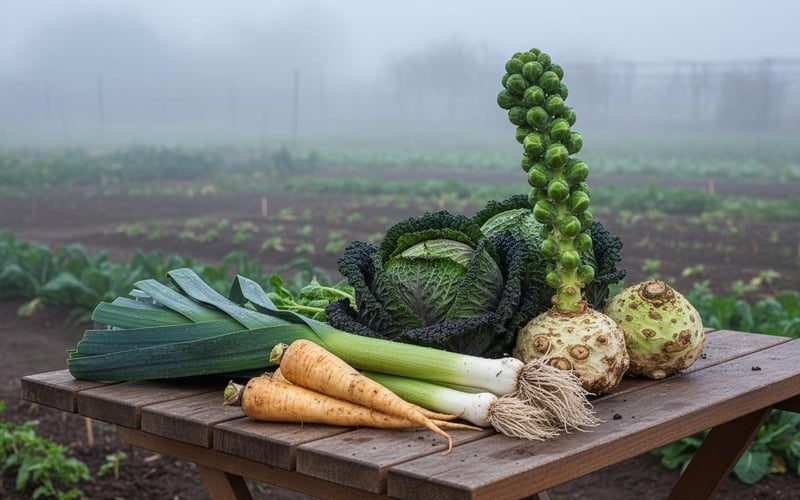
November vegetable harvest UK featuring fresh leeks, parsnips, Brussels sprouts and winter cabbage
  • Leeks – Lift as needed throughout winter. Leeks actually improve in flavour after frost because cold converts starches to sugars. Can withstand temperatures down to −10°C.
  • Parsnips – Leave in the ground until after the first hard frost. Frost improves their flavour by breaking down starches into natural sugars. Dig them up when you are ready to use them – they store better in the ground than in a shed.
  • Brussels sprouts – Start harvesting from the bottom of the stem upwards. Sprouts are ready when they are firm and about 2–3cm diameter. Like parsnips, cold weather improves their taste.
  • Celeriac – Harvest now and store in slightly damp sand in a frost-free shed. Or leave in the ground and mulch heavily to protect from hard frosts.
  • Winter cabbage – Cut when heads are firm. Varieties like ‘January King’ can stand in the ground until February–March.

What Fruit Trees to Prune in November

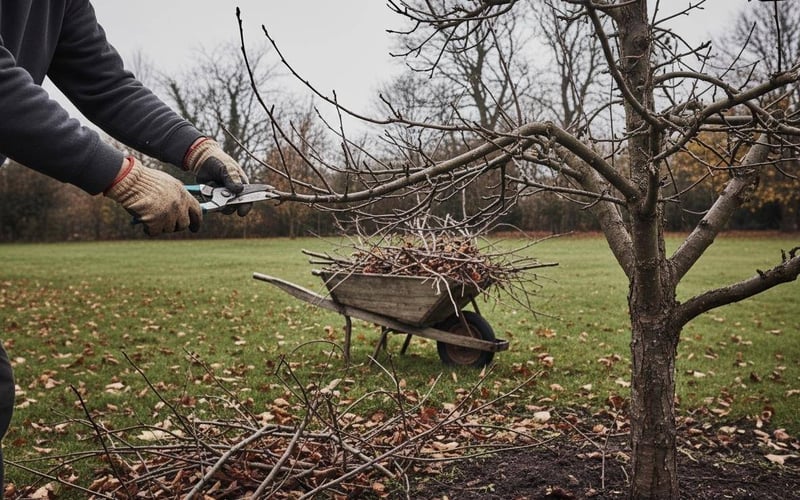
Winter pruning apple tree in November showing proper dormant season cutting technique for UK gardens

⚠️ Critical: Stone fruits (plums, cherries) must never be pruned in winter because open wounds let in Silver Leaf disease. Pome fruits (apples, pears) are safe to prune now.

Fruit Type Prune in November? Why?
Apple Trees Yes Dormant now. Prune to an open “goblet” shape (removes crossing branches, opens up centre for air and light). Stimulates strong growth next spring.
Pear Trees Yes Same as apples. Pears also fruit on older wood (spurs), so do not remove all the short, stubby branches.
Plum Trees NO (Critical) Never prune stone fruit in winter. Open wounds allow Silver Leaf disease spores to infect the tree. Prune in summer (June–August) when sap is flowing and wounds heal fast.
Cherry Trees NO (Critical) Same as plums. Summer pruning only.
Currants & Gooseberries Yes Prune out old wood (dark, thick stems) to encourage new, fruiting wood. Remove up to one-third of old stems annually.

Pruning Roses in November

Prune bush roses back by one-third now to reduce “wind-rock.” This is when strong winter gales rock tall rose bushes back and forth, which loosens roots and creates air pockets around the base. Loose roots = dead rose.

  • Cut stems back to 60–75cm height (about knee height).
  • Make clean cuts 5mm above an outward-facing bud at a 45‑degree angle.
  • This is not your main prune (that happens in February–March) – this is damage prevention.

💡 Pro tip: Climbing roses and rambling roses should not be pruned in November. Leave them until spring when you can see which stems survived winter.


🦔 5. Caring for Garden Wildlife

Your garden is a survival habitat for wildlife in November. Food is scarce, water freezes overnight, and shelter is critical. These jobs take minutes but save lives.

Helping Birds

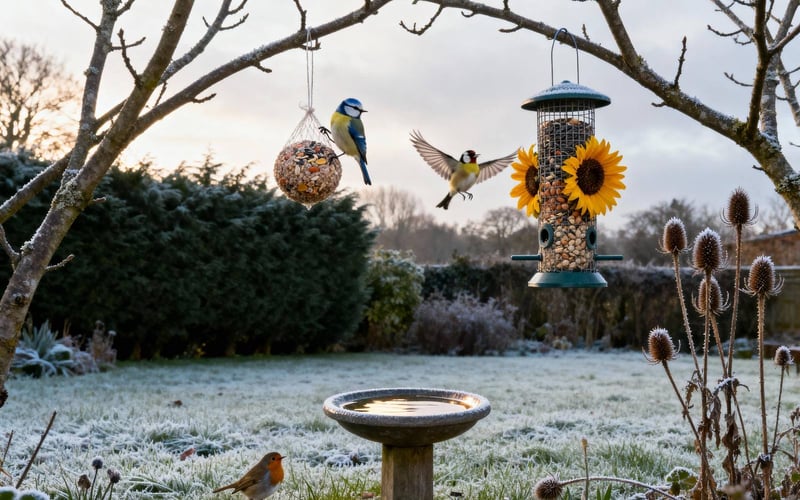
Feeding garden birds in November showing filled bird feeders and bird bath for UK wildlife care
  • Clean all feeders and bird baths – Dirty feeders spread disease. Scrub feeders with hot water and disinfectant every 2–3 weeks. Clean bird baths daily in freezing weather to remove ice and debris.
  • Provide high-energy food – Birds need fat and protein to survive cold nights. Feed sunflower hearts (high in oil and protein), fat balls, nyjer seeds for finches, and mealworms. A single Blue Tit needs to eat 30% of its body weight daily in winter just to survive overnight cold.
  • Ensure fresh, ice-free water – Birds need water for drinking and bathing (clean feathers insulate better). Break ice on bird baths every morning or install a small floating ball to slow ice formation. Never add salt or glycerine – it is toxic.

Helping Mammals & Insects

⚠️ CRITICAL SAFETY: Always check bonfires for hedgehogs before lighting. Hedgehogs hibernate in piles of leaves, logs, and garden waste. Dismantle and rebuild bonfires on the day you are burning them, or build fires on open ground away from cover.

  • Create a log pile – Stack logs in a shady corner for beetles, amphibians, and hibernating insects. Ideally use a mix of wood types and sizes. Leave undisturbed year-round.
  • Leave seed heads standing – Do not cut down all your perennials. Seed heads from teasels, sunflowers, coneflowers, and rudbeckias provide winter food for finches and other seed-eating birds. Plus, they look beautiful covered in frost.

❌ 6. Common November Gardening Mistakes (And How to Avoid Them)

These mistakes are easy to make and expensive to fix. Learn from other people's experience.

Mistake 1: Pruning Stone Fruit

Plums, cherries, damsons, gages, and apricots must never be pruned in autumn or winter. Open wounds allow Silver Leaf disease spores to enter. This fungal disease causes branches to die back and can kill the whole tree within 2–3 years. There is no cure.

How to avoid it: Prune stone fruit only in summer (June–August) when sap is flowing fast and wounds heal quickly. Mark stone fruit trees with coloured tape now so you do not accidentally prune them.

Mistake 2: Walking on Frosty Grass

Frozen grass blades snap like glass when you step on them. The result is black footprints that will not recover until spring when grass grows again. Each footprint is a patch of dead grass.

How to avoid it: Look at the lawn before walking on it. If there is frost, wait until midday when it has melted. Use paths instead.

Mistake 3: Forgetting About Pots

Pots left sitting directly on the ground become waterlogged. When that water freezes, it expands by approximately 9% and cracks the pot from the inside. Terracotta and ceramic pots are especially vulnerable because they are porous.

How to avoid it: Lift every single pot onto pot feet, bricks, or tiles. Do it once now and save money replacing cracked pots in spring. A £30 glazed pot can crack in a single night of −5°C temperatures if it is waterlogged.

Mistake 4: Tidying Too Much

Removing all stems, seed heads, and leaves robs wildlife of essential winter shelter and food. Hollow stems house overwintering ladybirds, lacewings, and solitary bees. Leaf litter shelters hedgehogs, frogs, and ground beetles.

How to avoid it: Leave some mess. Cut perennials back by half (not right to the ground). Leave one area completely wild over winter. Create habitat piles with twigs, leaves, and logs in shady corners.

Mistake 5: Not Cleaning Tools

Putting tools away dirty causes rust (which shortens tool life by years) and spreads disease from one plant to another. Soil on spades and forks can harbour fungal spores and pest eggs.

How to avoid it: Clean tools now before storing them for winter. Scrub off soil with a wire brush, wash with warm soapy water, dry thoroughly, then wipe metal parts with an oily rag. Takes 15 minutes and adds 5–10 years to tool life.


Frequently Asked Questions

  • What is the most important gardening job in November?

    Protecting tender plants and pots from frost damage. A single night of −5°C can kill unprotected plants worth hundreds of pounds. Wrapping pots, insulating crowns, and moving containers to sheltered spots takes one afternoon and costs under £20 in bubble wrap and fleece.

  • Can you still plant bulbs in November?

    Yes. November is actually the ideal month for tulips because colder soil temperatures (typically 8–12°C) reduce fungal disease risk. You can plant daffodils, crocuses, alliums, and hyacinths until December as long as soil is not frozen solid or waterlogged.

  • Is it too late to plant bare-root roses in November?

    No. November is prime time for bare-root planting. Roses planted now establish roots over winter and start growing earlier in spring than container-grown roses planted in March–April. You can plant bare-root stock anytime from November through March when soil is workable.

  • Should I cut back perennials in November?

    Only cut back half of them. Leave some standing for wildlife shelter and winter structure. Perennials with hollow stems (like ornamental grasses and umbellifer seed heads) house overwintering insects. Cut back plants that have collapsed into a slimy mess or are disease-prone, but leave sturdy seed heads and evergreen foliage.

  • What vegetables can you still plant in November?

    Garlic (cloves planted now harvest in June–July), broad beans in mild areas (for May harvest), and bare-root fruit trees and bushes. You can also sow green manures like field beans or winter tares to improve soil structure and prevent nutrient leaching over winter.

  • How do you protect plants from frost without a greenhouse?

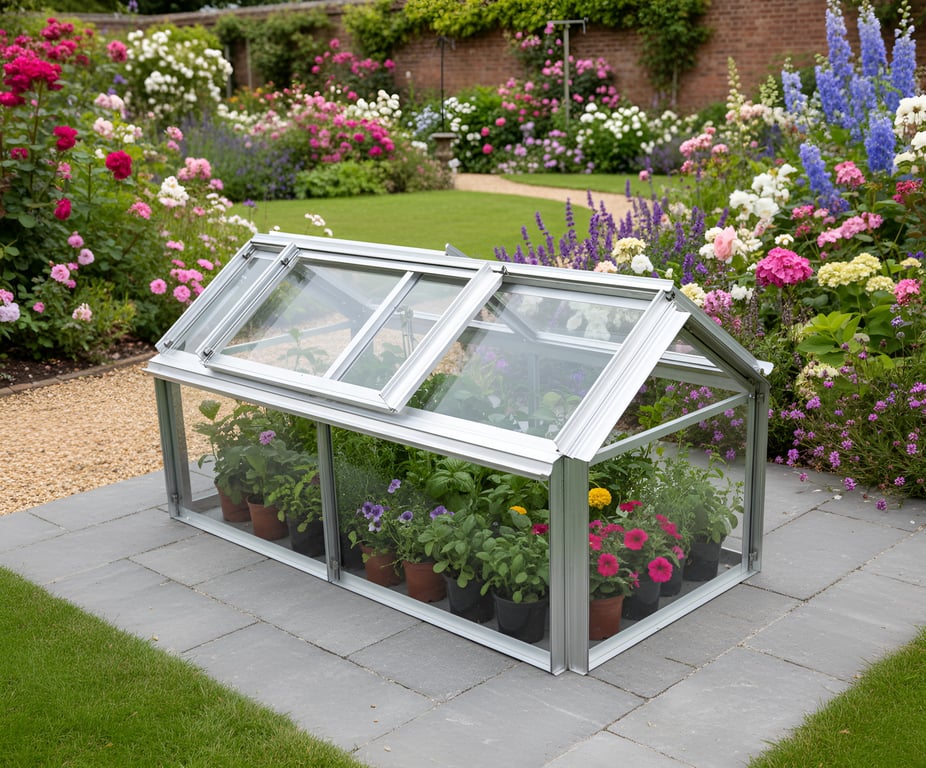
    Move pots against house walls, wrap pots (not plants) in bubble wrap, lift pots onto pot feet for drainage, mulch tender plants with 15–20cm of straw or compost, wrap exotic plant crowns with straw and fleece, and cover vulnerable plants with cloches or fleece on frosty nights.

  • Can you prune fruit trees in November?

    Yes for apples, pears, currants, and gooseberries. Absolutely NO for plums, cherries, or any stone fruit – winter pruning opens wounds that let in Silver Leaf disease. Stone fruits must only be pruned in summer (June–August) when wounds heal fast.

  • What should I do with fallen leaves?

    Make leaf mould. Rake leaves off lawns (to prevent fungal disease) and out of ponds (decomposing leaves release toxic gases). Pile leaves in chicken-wire cages or pierce holes in black bin bags and leave for 12–24 months to decompose into excellent soil conditioner.


Conclusion: Your Garden Is Ready for Winter

✅ You have protected plants from frost, got bulbs and bare-roots in the ground, made leaf mould from fallen leaves, pruned fruit trees properly, and helped wildlife prepare for the cold months ahead. Your November work sets up your garden for a healthy, early spring.

The beauty of November gardening is that you are working with the season's natural rhythm. Everything you have done this month – planting dormant roses, protecting pots, clearing leaves, feeding birds – builds resilience into your garden. Come March, when neighbours are still planting and worrying about late frosts, your garden will already be established and growing.

What is your number one November garden job? Is there a task you always skip or one you never miss? Share your experience in the comments below – we would love to hear what works in your garden.


Author: Matt Wood
Credentials: 20+ years greenhouse and garden growing experience, leading UK greenhouse specialist
Last Updated: October 28, 2025

Related Articles:

Shop Winter Garden Essentials:

About the Author

Matt W has worked in the greenhouse and garden buildings industry for over 20 years. As part of the Greenhouse Stores team since our founding in 2012, he combines hands-on growing experience with in-depth product knowledge to help customers choose the right structures for their needs.