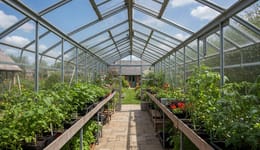
Greenhouse Ventilation Guide: Vents, Fans and Preventing Overheating
More greenhouse plants die from overheating than from cold in the UK. On a sunny day with outside temperatures of 25C, an unventilated greenhouse reaches 35-45C within hours. At 27C, plant tissue starts to suffer. At 35C, tomato pollen becomes nonviable and fruit set stops completely. By 40C, most greenhouse crops sustain permanent damage. Ventilation is not optional. It is the difference between a productive greenhouse and an expensive glass shed full of wilted plants.
Key Takeaways
- An unventilated greenhouse can hit 50C on a sunny UK day. Plant damage starts at 27C and tomato pollen dies at 35C.
- The RHS recommends vent area equal to 20% of floor area. Most hobby greenhouses ship with far less than this.
- Automatic vent openers use a wax cylinder that needs no electricity. They cost from £46 and are the single best upgrade you can make.
- Combine roof vents, louvre vents, damping down, and shading to keep summer temperatures below 27C.
Installer's Note
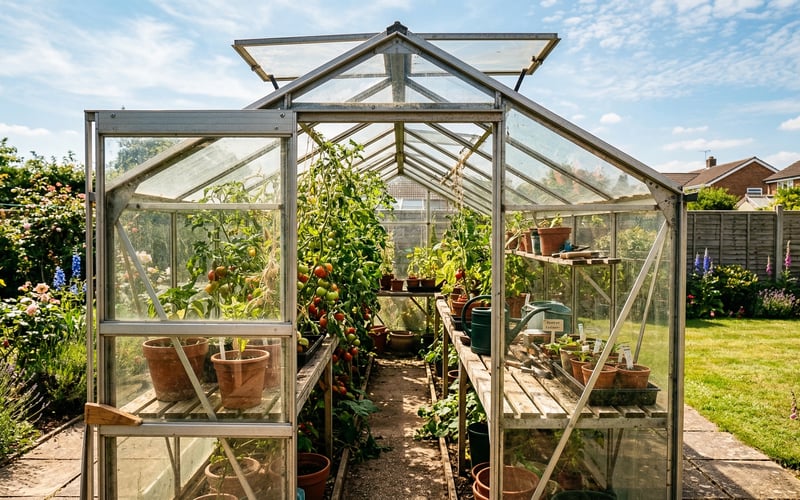
I fit auto-vent openers on every greenhouse we install. Every single one. In 16 years of greenhouse installations across the UK, the number one problem I see is overheating. People spend £1,500 on a greenhouse, fill it with tomato plants, then lose the entire crop in July because they were at work when the temperature hit 40C inside. A £46 auto-vent opener would have saved the lot. If you only buy one accessory, make it this.
More greenhouse plants die from overheating than from cold in the UK. On a sunny day with outside temperatures of 25C, an unventilated greenhouse reaches 35-45C within hours. At 27C, plant tissue starts to suffer. At 35C, tomato pollen becomes nonviable and fruit set stops completely. By 40C, most greenhouse crops sustain permanent damage. Ventilation is not optional. It is the difference between a productive greenhouse and an expensive glass shed full of wilted plants.
This guide covers every ventilation method available, with specific temperatures, vent sizing rules, and the products we fit on our own installations. The same principles apply to a 6x4 as to a 12x8.
Why greenhouses overheat so quickly
Glass traps solar radiation. Short-wave light passes through, warms the surfaces inside, and re-radiates as long-wave infrared that the glass blocks from escaping. On a still day, this raises internal temperature by 20-30C above outside air within 2-3 hours. A 20C spring morning becomes a 45C oven by noon if every vent and door is shut.
The problem is worse in smaller greenhouses. A 6x4 has a higher ratio of glass surface to floor area than a 10x12. It heats up faster and has fewer vents to release that heat. If your greenhouse came with a single roof vent, that is almost certainly not enough.
UK summers are getting hotter. 2025 was the warmest summer on record. 2022 saw the first 40C+ reading in the UK (40.3C at Coningsby). The days of a British greenhouse being "too cold" are long gone for half the year.
How much ventilation does your greenhouse actually need?
The RHS recommends that your total vent opening should equal 20% of the greenhouse floor area. That is one square metre of vent for every five square metres of floor. In a 6x8 greenhouse (4.5 square metres of floor), you need roughly 0.9 square metres of vent opening. Most 6x8 greenhouses come with a single roof vent of about 0.3 square metres. That is a third of what you need.
This is why adding extra roof vents, louvre vents, or both makes such a noticeable difference. One additional roof vent on the opposite side of the ridge, plus a louvre vent low on the sidewall, gets most 6x8 greenhouses close to the 20% target.
| Greenhouse Size | Floor Area | 20% Vent Target | Typical Factory Vents | Extra Vents Needed |
|---|---|---|---|---|
| 6x4 ft | 2.2 m² | 0.44 m² | 1 roof vent (~0.25 m²) | 1 louvre vent |
| 6x8 ft | 4.5 m² | 0.9 m² | 1 roof vent (~0.3 m²) | 1 roof vent + 1 louvre |
| 8x10 ft | 7.4 m² | 1.48 m² | 2 roof vents (~0.6 m²) | 1-2 louvre vents |
| 8x12 ft | 8.9 m² | 1.78 m² | 2 roof vents (~0.6 m²) | 2 louvre vents |
If you can't add extra vents, propping the door open gives you a second large opening. But a door is at floor level, not at the ridge where hot air collects. It helps, but it's no substitute for proper ridge ventilation.
Roof vents: where the hot air actually escapes
Hot air rises. That is the entire principle behind greenhouse ventilation. Roof vents at the ridge let the hottest air escape by convection, pulling cooler air in through the door, louvres, or gaps at the base. This is called the stack effect, and it works without fans or electricity.
Ideally you want roof vents on both sides of the ridge. Air enters through the windward side and exits the leeward side, regardless of wind direction. When we install greenhouses, we always recommend fitting the maximum number of roof vents the frame supports.
A roof vent should open to roughly 55 degrees. Most greenhouse roof vents have a stay arm that limits opening to prevent wind damage. If you leave vents fully open in high winds, the stay arm takes the force. Check the stay bolts annually, as they loosen over time. We see this on about one in four greenhouses during servicing.
Automatic vent openers: fit and forget
An auto-vent opener is a small device that bolts to the roof vent frame. Inside is a sealed tube of mineral wax. As the temperature rises, the wax expands and pushes a piston that opens the vent. When the temperature drops, the wax contracts and a spring closes it again. No electricity needed, no wiring, nothing to plug in.
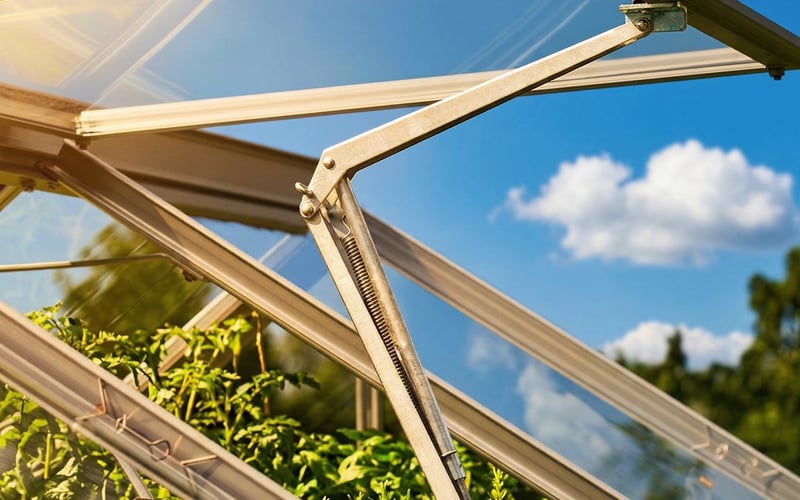
Shop the Vitavia Auto Vent Opener →
The Vitavia auto-vent opener starts opening at around 16C and is fully open by 25C. The Bayliss models are adjustable from 12-25C. Most growers set theirs to start opening at 16-18C, which keeps the greenhouse comfortably below 27C on most days.
One thing to know: auto-vents respond slowly. The wax takes 15-20 minutes to expand enough to start moving the piston. On a fast-heating spring morning, the greenhouse can overshoot before the vent is fully open. The RHS recommends supplementing auto-vents with manual opening on very hot days. But for the 90% of the time when you're at work or away, they stop your plants cooking while you're out.
We stock auto-vent openers from £46 for the Vitavia model up to £89 for the Bayliss MK7 with hydraulic damper. The Bayliss MK7 is worth the extra if you have a heavy vent panel or live in a windy area, as the damper prevents the vent slamming shut in gusts.
Matt's Tip: Disconnect Auto-Vents Before Storms
When a storm is forecast, unclip the auto-vent cylinder from the arm. Takes ten seconds. If you leave it connected and the wind catches an open vent, the force can bend the piston rod or crack the wax tube. I keep a spare cylinder in the greenhouse for exactly this reason. Replacements cost £29-49 depending on the model, but it's easier to just unclip before bad weather.
|
Matt's Pick for Greenhouse VentilationBest For: Any greenhouse with a standard aluminium roof vent Why I Recommend It: I fit these on every installation. They work, they last, and they save more plants than any other single accessory. The wax cylinder mechanism has been around for decades because nothing beats it for reliability. Price: £46 |
Louvre vents: cool air in at ground level
A louvre vent is a set of angled glass blades fitted low in the sidewall. Cool air enters at ground level, pushes the warm air up and out through the roof vents above. You get a chimney effect that moves air through the whole greenhouse, top to bottom.
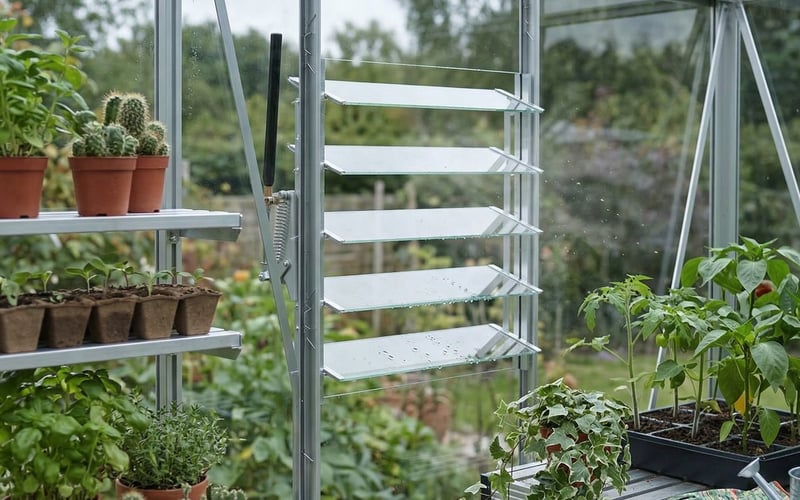
Shop the Vitavia 5 Blade Louvre Vent →
Position louvre vents on the side facing the prevailing wind (usually south-west in the UK). Wind pushes fresh air through the louvres and up through the greenhouse. On still days, the temperature difference alone drives the airflow.
The downside: louvres are hard to draught-proof in winter. The blades never seal completely, so you lose some heat on cold nights. If you only grow in spring and summer, this doesn't matter. If you overwinter tender plants, consider removing the louvre blades in November and replacing them with a solid glass panel, or sealing the gaps with draught-strip tape.
We sell louvre window vents from £60 for the Vitavia 5-blade model. Automatic louvre openers are also available from £49 if you want the same hands-free operation as your roof vent.
When to open everything: seasonal ventilation
Ventilation isn't the same all year round. Here's what we do in our own greenhouses, season by season.
Spring (March to May)
Open roof vents on sunny mornings. Close them by mid-afternoon if frost is forecast overnight. Watch out for late frosts in April, which can catch you out if you leave vents wide open. This is the trickiest season because temperatures can swing 15C between midday and midnight. Auto-vents earn their money in spring more than any other time of year.
Summer (June to August)
Open everything. Roof vents, louvre vents, doors. On nights above 15C, leave the door open overnight too (fit a mesh screen to keep out cats and foxes). Damp down the floor 2-3 times a day with a watering can. If temperatures still exceed 27C, add shading. When we set up a new greenhouse in summer, we tell customers to treat it like a house with no air conditioning. You wouldn't sit in a sealed glass box at midday. Neither should your tomatoes.
Autumn (September to November)
Wind things down gradually. Close vents earlier in the afternoon. Take shading off by late September so plants get full light as days shorten. If you start seeing condensation on the glass in the morning, that's humidity building up overnight. Crack a roof vent the next day to flush out the damp air.
Winter (December to February)
Still ventilate. Open one vent by an inch or two around midday for a couple of hours on dry days. Never in wind or heavy rain. The goal is to exchange damp stale air for dry cold air. Humidity is the biggest enemy in a winter greenhouse, not cold. Grey mould (botrytis) thrives when humidity sits above 70% in still air. Read our grey mould prevention guide for more on this.
Damping down: free cooling on hot days
Damping down means wetting the greenhouse floor with water. As the water evaporates, it absorbs heat from the air and cools it. The RHS recommends damping down at least three times a day in bright sunny weather: morning, midday, and late afternoon.
Wet the floor and the path only. Never wet the plants. Water on foliage in a hot greenhouse causes scorch marks, and damp leaves overnight invite fungal disease. Use a watering can and splash the concrete, gravel, or paving. On a 30C day, damping down can reduce air temperature by 3-5C.
Bonus: red spider mite hates humidity. Damping down is one of the best non-chemical controls for spider mite, which thrives in hot, dry conditions. If you're growing cucumbers or aubergines, both of which are spider mite magnets, damp down daily through summer. Our pest control guide covers spider mite in detail.
Buy a thermometer (you'll be glad you did)
Without one, you're guessing. And guessing usually means finding out too late that yesterday hit 42C and your cucumber plants are cooked.
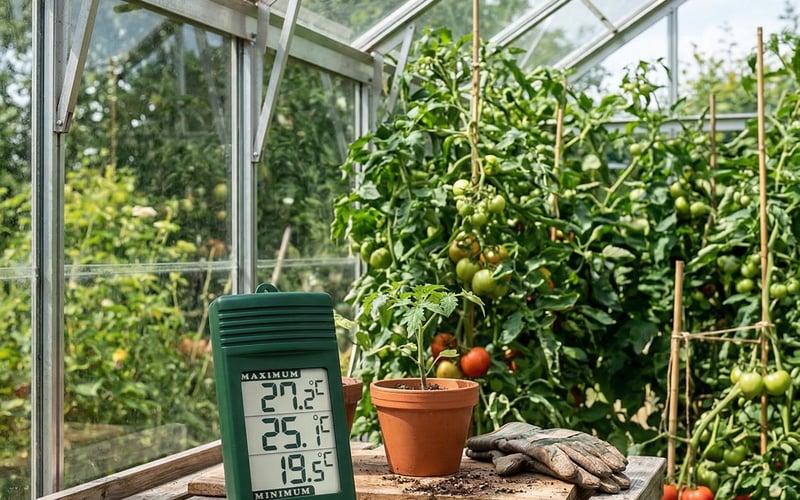
Shop the Elite ETI Digital Thermometer →
A max-min thermometer or digital thermometer tells you the highest and lowest temperature in the last 24 hours. Check it every morning. If the max regularly exceeds 30C, you need more ventilation or shading. If it's hitting 35C+, you're losing fruit set on your tomatoes. The Elite ETI Digital Thermometer costs £44 and shows current, max, and min readings at a glance.
What happens when temperatures get too high
| Temperature | What happens |
|---|---|
| 18-25C | Ideal range for most greenhouse crops |
| 27C | Plant stress begins. Lettuce and herbs start to wilt |
| 30C | Seedlings suffer. Growth slows across most crops |
| 32C | Leafy greens bolt. Pepper flowers drop |
| 35C | Tomato pollen dies. 50% viability loss. Fruit set stops |
| 40C+ | Permanent damage within hours. Leaf scorch and plant death |
The 35C threshold matters most for tomato growers. Research from Purdue University showed that 3+ hours above 35C on two consecutive days causes complete failure of fruit set. Your tomato plants look fine, the flowers are there, but no fruit forms. Growers often don't realise overheating was the cause until weeks later when the trusses are bare.
Auto-vent opener comparison
| Model | Opens At | Max Lift Weight | Max Opening | Price | Best For |
|---|---|---|---|---|---|
| Vitavia Auto Vent ★ | ~16C | 5.5 kg | 30 cm | £46 | Standard Vitavia/Halls greenhouses |
| Elite Auto Vent | ~16C | 5.5 kg | 30 cm | £59 | Elite greenhouses |
| Palram Canopia Auto Vent | ~16C | 7 kg | 30 cm | £55 | Palram/Canopia greenhouses |
| Bayliss XL | 13-18C (adj.) | 5.5 kg | 30 cm | £67 | Adjustable temperature control |
| Bayliss MK7 | 12-25C (adj.) | 6 kg | 30 cm | £89 | Heavy vents, windy locations (hydraulic damper) |
The Vitavia auto-vent opener at £46 fits the most popular greenhouse brand in the UK and does everything most growers need. If you have an Elite greenhouse, use the Elite version for a perfect fit. The Bayliss MK7 is the one I recommend for exposed sites or greenhouses with heavy toughened glass vent panels, because the hydraulic damper stops the vent slamming in gusts.
Frequently asked questions
Should I leave my greenhouse door open in summer?
Yes, leave the door open all day and on warm nights above 15C. The door provides a large opening at ground level that pulls cool air through the greenhouse. Fit a mesh screen across the doorway if cats, foxes, or pigeons are a problem in your area. Close the door before sunset on cooler evenings to retain stored heat.
How do automatic vent openers work?
A wax cylinder expands with heat and pushes a piston that opens the vent. No electricity, batteries, or wiring needed. The wax starts expanding at around 13-18C depending on the model. When the air cools, the wax contracts and a spring pulls the vent closed. The cylinders last 3-5 years before needing replacement. Our accessories guide covers what to buy first.
How many vents does a 6x8 greenhouse need?
At least two roof vents and one louvre vent for a 6x8 greenhouse. The RHS recommends vent area equal to 20% of floor area. A 6x8 greenhouse has roughly 4.5 square metres of floor, so you need about 0.9 square metres of vent opening. Most 6x8 greenhouses ship with one roof vent, which is less than half the recommended amount.
What temperature is too hot for a greenhouse?
Plant damage starts at 27C and becomes severe above 35C. Tomato pollen dies at 35C, stopping fruit production entirely. Lettuce bolts above 30C. Most greenhouse crops thrive between 18-25C. If your thermometer regularly shows temperatures above 30C, add more ventilation or shading. Our greenhouse setup guide covers positioning for cooler temperatures.
Do I need a fan in my greenhouse?
Most hobby greenhouses don't need a fan if ventilation is adequate. Fans are useful in large greenhouses (over 10x12 ft) or where natural airflow is blocked by nearby walls or fences. A fan rated at the cubic footage of your greenhouse (length x width x height in feet) provides one complete air change per minute. For a 6x8 ft greenhouse with 5 ft eaves, that is about 240 CFM.
Should I ventilate my greenhouse in winter?
Yes, open a vent by 1-2 inches on dry days for about two hours around midday. Winter ventilation flushes out humid air that causes grey mould and other fungal diseases. Cold dry air is better for plants than warm damp air. Never ventilate in wind, rain, or when frost is imminent. Close vents before mid-afternoon to retain warmth. Read our heating without electricity guide for winter temperature management.