Essential Greenhouse Accessories: What You Actually Need
The most useful greenhouse accessories solve the problems you actually have: overheating, awkward working space and plants drying out. Start with a thermometer and a workable ventilation routine. Add an automatic opener if you cannot be there, then staging if you raise seedlings. Heating, lighting and irrigation can all be useful, but their value depends on what you grow and when.
Key Takeaways
- Check what comes with the greenhouse before buying extras.
- Automatic openers help, but they cannot guarantee a safe temperature in a heatwave.
- Plan staging around the space your mature plants need.
- Buy heating or lighting for a defined growing task and check its running cost.
Installer's Note
Check the vent and greenhouse model before ordering an opener. Roof vents and louvres use different mechanisms. The right accessory should fit properly without improvised brackets or a vent that binds as it opens.
1. Automatic vent opener
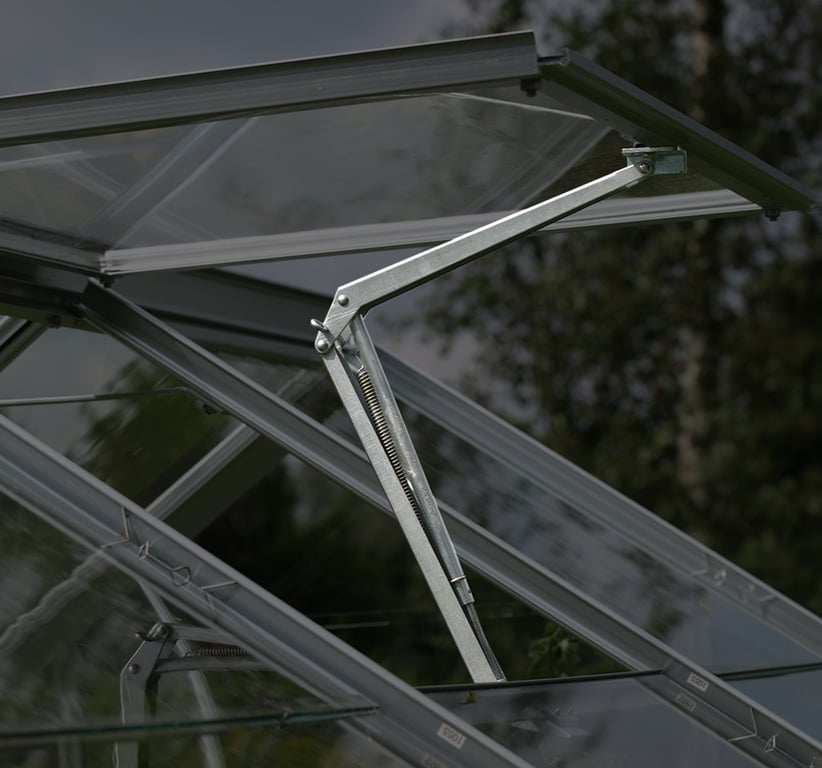
Shop the Vitavia Automatic Roof Vent Opener
An automatic opener helps release heat while you are away. A temperature-sensitive cylinder operates the vent without mains electricity. Opening temperatures, lift capacity and mounting points vary between models.
Fit one to each suitable vent you want to automate, following the manufacturer's instructions. The number of vents needed depends on their opening area, the greenhouse and its position. Check the maximum temperature afterwards; an opener is not a guarantee against overheating.
Vitavia Automatic Roof Vent Opener costs £46 and is specified for Vitavia greenhouses. Our ventilation guide explains how roof openings and lower air inlets work together.
2. Staging that leaves room to grow
Staging brings small pots to a convenient working height. It is useful for seed sowing and potting on, but you may need very little if you only grow tall crops in floor-level containers.
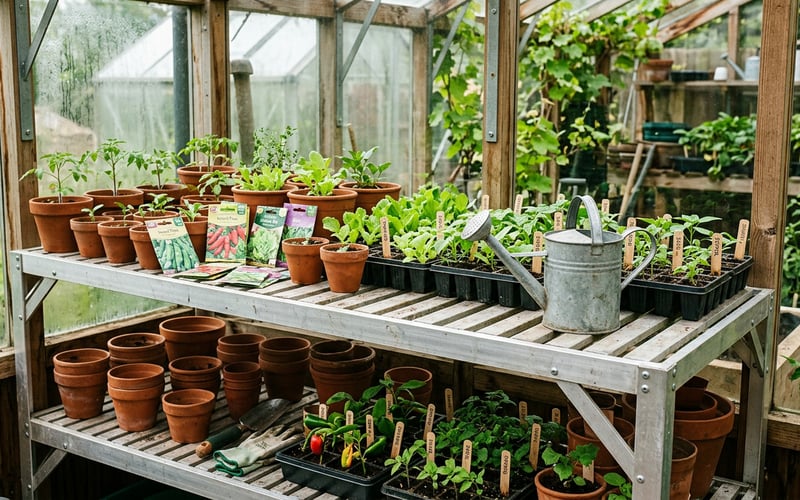
Start on one side when mixing seedlings with tomatoes or cucumbers. Measure the bench, aisle and door clearance before ordering. Vitavia 2 Tier Silver Staging is one option at £99. Our staging and shelving guide covers sizes and safe loading.
3. A maximum-minimum thermometer

A maximum-minimum thermometer shows what happened between visits. Put it near plant height, shaded from direct sunlight, and read the placement instructions. Check and reset the stored extremes regularly.
Vitavia Thermometer costs £24. A separate hygrometer measures humidity; do not assume every digital thermometer includes that function. The greenhouse humidity guide explains how to use both readings.
4. Shading for hot spells
Use shading when ventilation and adequate watering cannot keep plants comfortable. Match its density to the plants and the available light. Permanent heavy shade can hold back a crop during dull weather.
External shade can stop some solar heat reaching the glazing, but it must be secured safely and leave vents free. Follow the panel manufacturer's advice before applying shading paint to plastic glazing. Our shading guide compares the practical options.
5. Capillary matting for suitable pots
Capillary matting can keep compatible pots supplied with water from a reservoir. It works best when the pot bases make good contact and the compost draws water upwards.
Test it with your actual trays before relying on it for a holiday. It does not suit every container or crop. Keep the mat clean, follow the supplier's setup, and check that roots are not left waterlogged.
6. A propagator when seeds need warmth
A heated propagator warms a small growing area, making it useful for seeds that need more heat than a spring greenhouse provides. Follow the temperature on the seed packet and check that the unit controls temperature rather than simply supplying constant heat.
Once seedlings emerge, light matters as much as warmth. Remove covers as directed and give plants space. Our seed-sowing guide explains the next steps.
7. A heater for plants that need protection
A heater is useful when the plants you want to keep need a minimum temperature your greenhouse cannot maintain. An unheated greenhouse can approach the outdoor temperature overnight, even after a sunny day.
Choose a greenhouse-rated heater with suitable temperature control. Running cost depends on its power, thermostat setting, weather, insulation and electricity tariff. There is no reliable promise of frost protection for a few pence each night.

Eden 2KW Greenhouse Heater is an option at £140. Check the greenhouse size and electrical requirements before buying.
8. Watering equipment for time away
Irrigation is useful if pots dry out before you can return. Gravity-fed, mains-pressure and pumped systems have different supply requirements. Match the system to the containers and available water source.
Run it while you are still at home. Check the wettest and driest pots, inspect drippers for blockages, and arrange a backup visit. Our watering and irrigation guide helps you choose a suitable setup.
Which accessories can wait?
Grow lights can help early propagation or selected overwintering tasks. They are not automatically necessary for a normal spring-to-autumn crop, and an ordinary room light is not automatically an equivalent substitute. See our grow-light guide before buying.
Smart irrigation, premium benches and extra shelving can also be worthwhile. Decide what problem each purchase solves. If your existing watering routine works and you have comfortable bench space, there is no need to replace them.
Matt's Tip: Spend in stages
Use the greenhouse for a few weeks before buying every accessory. You will soon find out whether you need more bench space, better ventilation or help with watering. That makes the next purchase much easier to judge.
What should you buy first?
| Your plan | First addition to consider | Check before buying |
|---|---|---|
| Away during sunny days | Compatible automatic vent opener | Vent fit, weight and available opening |
| Raising seedlings | Staging and a thermometer | Light, working height and summer crop space |
| Overwintering tender plants | Temperature monitoring, then suitable protection | The plants' minimum temperature |
| Regular time away | A tested watering system | Water source, capacity and a backup plan |
Browse our greenhouse accessories when you know which job needs solving. Prices on individual product pages update with the current range.
Frequently asked questions
What accessories do I need for a new greenhouse?
Start with temperature monitoring and a reliable way to ventilate. Add staging for seedlings and potting, then choose watering or protection equipment around your crops and routine.
How many automatic vent openers do I need?
Fit one to each compatible vent you want to automate. The required ventilation depends on opening area and greenhouse conditions, not floor size alone.
Do I need a greenhouse heater?
Only when your plants need temperatures the greenhouse cannot maintain. An unheated greenhouse can approach outdoor temperatures overnight, so check actual lows before relying on it for tender plants.
Is a greenhouse thermometer worth buying?
Yes, it helps you see daytime peaks and overnight lows. Put it out of direct sun near the plants and check the stored extremes regularly.
Should I buy greenhouse grow lights?
Buy lights when a specific growing task needs more usable light. Early propagation and selected overwintering tasks may benefit; ordinary summer growing often does not need them.