Controlling Grey Mould in the Greenhouse
Grey mould (Botrytis cinerea) is the most common fungal disease in UK greenhouses. It thrives when humidity rises above 70% and air circulation drops. The fungus attacks tomatoes, cucumbers, strawberries, grapes, and lettuce. There is no chemical cure available to home growers. Prevention relies on daily ventilation, correct watering technique, and removing dead plant material before spores can spread.
Key Takeaways
- Grey mould spores are always present in the air. They only infect plants when humidity stays above 70% for extended periods.
- The fungus enters through wounds, dead tissue, and flower petals. Removing dying material daily is your best defence.
- Morning watering at soil level keeps foliage dry. Wet leaves overnight are a guaranteed infection trigger.
- Gentle background heat from a greenhouse heaters keeps air above the dew point. This stops the condensation that botrytis needs.
- There are no fungicide sprays licensed for amateur use against botrytis. Hygiene and ventilation are the only reliable controls.
Installer's Note
I have fitted greenhouses for customers across the UK since 2007. The single biggest complaint I hear from growers is grey mould wiping out their tomato crop in late summer. Almost every time, the cause is the same: not enough ventilation. I have seen 8x6 greenhouses lose an entire tomato crop because the owner kept the door and vents shut. If you take one thing from this article, make it this: open your vents every single day, even in winter. A cold dry greenhouse grows healthier plants than a warm damp one.
What Is Grey Mould (Botrytis)?
Grey mould is caused by the fungus Botrytis cinerea. It is one of the most widespread plant pathogens in the world. The fungus produces millions of microscopic spores that float through the air. These spores land on plant surfaces and wait for the right conditions.
Botrytis needs three things to infect a plant: moisture on the surface, a point of entry, and still air. The entry point is usually damaged tissue, a pruning wound, a fading petal, or a dead leaf. Once established, the fungus produces a distinctive fuzzy grey coating. This coating is the fruiting body releasing fresh spores.
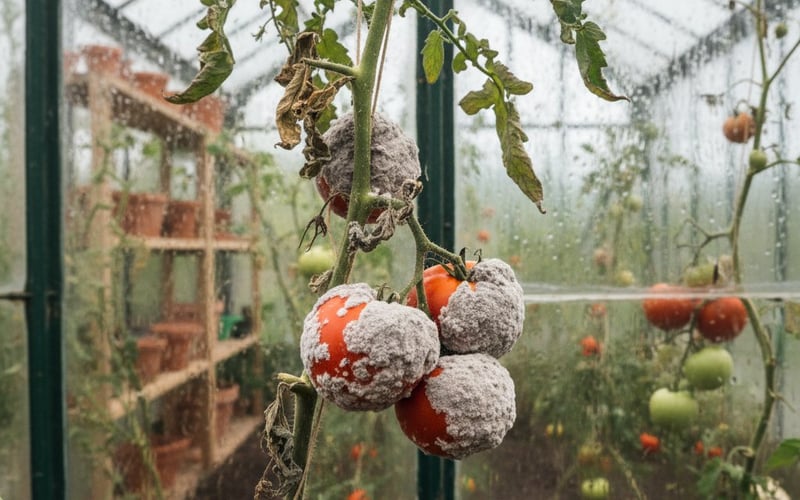
Inside a greenhouse, conditions are often perfect for botrytis. Warm air holds more moisture. When that air cools at night, humidity rises sharply. Water condenses on plant leaves, glass panels, and fruit. The fungus activates and begins to spread. In severe cases, an entire crop can be lost within a week.
The lifecycle is fast. Spores germinate within 4 to 8 hours on wet tissue. Visible grey mould appears within 48 to 72 hours. A single infected tomato can release enough spores to contaminate an entire greenhouse. This is why early detection and removal are critical.
Which Greenhouse Plants Are Most at Risk?
Almost any greenhouse plant can develop grey mould. However, some crops are far more susceptible than others. Fleshy fruits and soft-stemmed plants provide ideal conditions for the fungus to establish.
| Plant | Risk Level | Most Vulnerable Part | Peak Risk Period |
|---|---|---|---|
| Tomatoes | Very High | Fruit, stems at pruning wounds | August to October |
| Cucumbers | Very High | Fruit ends, damaged leaves | July to September |
| Strawberries | Very High | Ripening fruit touching soil | June to August |
| Grapes | High | Bunches (tight clusters trap moisture) | September to October |
| Lettuce | High | Outer leaves near soil level | Year-round under glass |
| Courgettes | High | Flower ends and damaged skin | July to September |
| Peppers | Moderate | Stem joints and ageing fruit | August to October |
| Ornamental plants | Moderate | Fading flower heads and petals | Spring and autumn |
Tomatoes are the worst affected crop in UK greenhouses. The combination of dense foliage, high watering needs, and pruning wounds makes them a perfect target. If you are growing grapes under glass, tight bunches create pockets of still, humid air where botrytis thrives. Thinning grape bunches in late summer reduces this risk significantly.
How to Prevent Grey Mould in a Greenhouse
Prevention is the only reliable strategy. Once grey mould has taken hold, you cannot cure it with sprays or treatments. You can only remove infected material and improve conditions. The good news: prevention is straightforward.
Ventilate Every Day
Open your roof vents and door every morning. Even in winter, open vents for at least two hours during the driest part of the day. Moving air prevents moisture from settling on plant surfaces. If your greenhouse has roof vents, fit automatic vent openers so ventilation happens even when you are not there.

Automatic vent openers use a wax cylinder that expands with heat. They open the vent when the temperature rises above a set point. This is one of the cheapest and most effective upgrades you can make. I fit them on almost every greenhouse installation.
Space Plants Correctly
Overcrowding is one of the main triggers for botrytis. When plants are packed tightly, air cannot circulate between them. Humidity builds in the canopy. Dead leaves and fruit get trapped and go unnoticed.
Tomato plants should be at least 45 cm apart. Remove lower leaves as the plant grows taller. This opens up the base of the plant to airflow. For cucumber plants, train stems vertically and remove side shoots regularly. When growing seeds and young seedlings, avoid sowing too thickly. Thin seedlings early to prevent damp, overcrowded conditions.
Water at Soil Level in the Morning
Never water from above. Overhead watering wets the foliage and creates exactly the surface moisture botrytis needs. Water at soil level using a can with a narrow spout or a drip line. A bottle funnel pushed into the compost also works well.
Water in the morning so any splashed moisture dries during the warmest part of the day. Evening watering leaves plants damp overnight. Overnight is when humidity peaks and botrytis spores germinate.
Remove Dead Material Daily
Walk through your greenhouse every day during the growing season. Pick off yellowing leaves, fading flower petals, and any fruit showing soft spots. Do not drop this material on the greenhouse floor. Bag it and remove it from the greenhouse completely.
Botrytis feeds on dead and dying tissue. A single rotting tomato left on the soil surface can produce enough spores to infect healthy plants nearby. This daily hygiene check takes five minutes and prevents most infections before they start.
Clean Your Greenhouse Every Year
At the end of each growing season, strip the greenhouse completely. Remove all plants, pots, and soil. Wash the glass or polycarbonate panels inside and out. Scrub the frame with a mild disinfectant solution. Botrytis spores overwinter on greenhouse structures, old plant debris, and dirty pots. A thorough annual clean breaks the cycle. For a full walkthrough, read our guide on how to prepare your greenhouse for spring.
How to Treat Grey Mould When It Appears
If you spot grey mould, act immediately. The fungus spreads fast and there is no spray that will cure an established infection. Your response should be physical removal followed by environmental correction.
Remove All Infected Material
Cut away infected stems, leaves, and fruit. Cut at least 5 cm below the visible infection. This ensures you remove fungal tissue that has not yet produced the grey coating. Place all infected material straight into a sealed bag. Do not put it on the compost heap. Botrytis spores survive composting temperatures.
After handling infected plants, wash your hands and sterilise your secateurs with a cloth soaked in methylated spirits. Dirty tools spread spores between plants.
Improve Airflow Immediately
Open every vent and the door. If the greenhouse is overcrowded, remove some plants entirely to create space. A small electric fan positioned low in the greenhouse helps circulate air around plant bases where humidity peaks.
Milk Spray
A solution of 1 part semi-skimmed milk to 9 parts water can reduce fungal spore germination on healthy foliage. This is not a cure. It is a preventive measure to protect plants that have not yet been infected. Spray in the morning so foliage dries quickly.
Bicarbonate Spray
Dissolve one tablespoon of sodium bicarbonate in 4.5 litres of water. Add a few drops of washing-up liquid to help the solution stick to leaves. Spray onto healthy plants as a preventive. The alkaline surface discourages spore germination. Again, this does not cure an existing infection.
Does Greenhouse Heating Help Prevent Botrytis?
Yes. Gentle background heat is one of the most effective ways to prevent grey mould. The key is not warmth itself but what heat does to humidity.
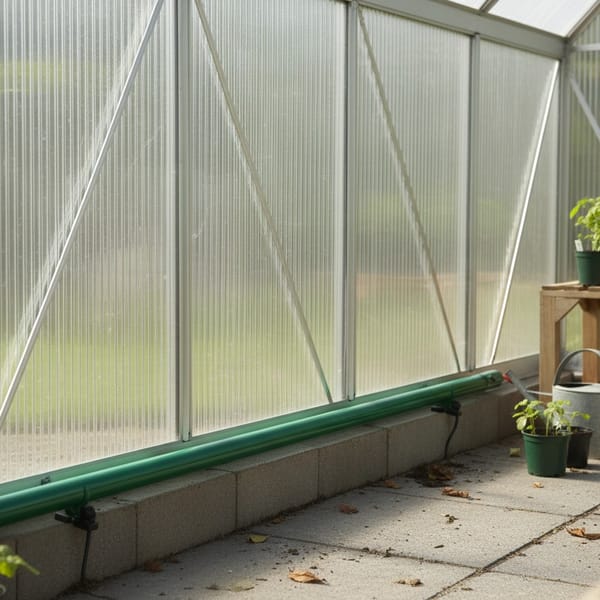
When air temperature drops at night, the air can hold less moisture. Water condenses on cold surfaces: glass panels, metal frames, and plant leaves. This condensation is exactly what botrytis needs. A small heater running on a low setting keeps the air temperature above the dew point. The air stays drier. Condensation does not form. Spores cannot germinate.
You do not need a powerful heater. A tube heater rated at 45 to 80 watts per foot of length is enough for most hobby greenhouses. The goal is not to heat the greenhouse to summer temperatures. You simply need to raise the air temperature by 3 to 5 degrees above the point where condensation forms.
Matt's Tip: Watering Technique
I have seen more grey mould caused by bad watering than any other single factor. Here is what I do in my own greenhouse. I water first thing in the morning, always at soil level, never over the leaves. I cut the bottom off a plastic bottle and turn it upside down. Then I push the neck into the compost next to each tomato plant. I fill the bottle and let it drain slowly into the root zone. The soil gets thoroughly soaked and the foliage stays completely dry. This one change eliminated grey mould from my tomato crop three years running.
|
Matt's Pick for Preventing Condensation & BotrytisBest For: Keeping greenhouse air above the dew point on cold nights Why I Recommend It: I fit these in most of my greenhouse installations. The gentle background heat stops condensation forming on the glass and on your plants overnight. It does not cook your plants or run up a huge electricity bill. Just enough warmth to keep the air moving and the surfaces dry. Price: £75 |
Frequently Asked Questions
Can grey mould spread between greenhouse plants?
Yes, botrytis spreads rapidly between plants via airborne spores. A single infected tomato can release millions of spores into the air. These spores land on nearby plants and germinate within hours if the surface is wet. This is why immediate removal of any infected material is so important. Sealing infected tissue in a bag before removing it from the greenhouse prevents spores being disturbed and scattered during handling.
Should I leave greenhouse vents open in winter to prevent botrytis?
Yes, open vents for at least two hours on dry days, even in winter. Cold air holds less moisture than warm air. Letting cold dry air in during midday flushes out the humidity that built up overnight. Close vents before the temperature drops in late afternoon to retain some warmth. Combining winter ventilation with a low-wattage tube heater gives the best results against botrytis in the colder months.
Is grey mould harmful to humans?
Grey mould is not considered harmful to healthy adults. Botrytis cinerea is not a human pathogen and does not cause infection in people. However, handling large quantities of mouldy plant material can trigger allergic reactions in sensitive individuals. People with asthma or respiratory conditions should wear a dust mask when clearing heavily infected plants. Always wash your hands after handling mouldy material.
What temperature kills botrytis spores?
Botrytis spores are killed at sustained temperatures above 40 degrees Celsius. In practice, a greenhouse in full summer sun can reach these temperatures. However, so can your plants, so deliberate heat treatment is not a viable control method for a planted greenhouse. The more practical approach is to deny the spores moisture. Keeping relative humidity below 70% prevents germination regardless of temperature. A thermostat-controlled heater set to activate at 5 degrees Celsius effectively prevents the condensation that spores need.
Can I use fungicide on grey mould in a greenhouse?
No fungicides are approved for amateur use against botrytis in the UK. Commercial growers have access to professional-grade products, but these are not available to home gardeners. The fungicides that were previously sold for garden use have been withdrawn. Your only tools are cultural controls: ventilation, hygiene, correct watering, and plant spacing. These methods are highly effective when applied consistently. Most experienced growers find they do not need chemical intervention at all.
Related Articles
- Greenhouse Pest Control Guide UK
- How to Clean a Greenhouse: Step-by-Step
- Growing Tomatoes in a Greenhouse
- How to Grow Strawberries in a Greenhouse
- Winter Greenhouse Care: UK Guide
Need advice on preventing grey mould? Our team has been fitting and advising on greenhouses since 2007. Email us at team@greenhousestores.co.uk.