A Complete Guide to Roses
Roses thrive in UK gardens with the right care schedule. Plant bare-root roses from November to March and container roses year-round. Prune in late February to March when buds swell. Feed three times yearly: early spring, late spring, and mid-summer. Stop feeding by mid-August to prepare for winter dormancy. A greenhouse extends the growing season, letting you root cuttings 6-8 weeks earlier and overwinter tender varieties safely.
Roses thrive in UK gardens with the right care schedule. Plant bare-root roses from November to March and container roses year-round. Prune in late February to March when buds swell. Feed three times yearly: early spring, late spring, and mid-summer. Stop feeding by mid-August to prepare for winter dormancy. A greenhouse extends the growing season, letting you root cuttings 6-8 weeks earlier and overwinter tender varieties safely.
Key Takeaways
- Pruning window: Late February to March in the UK, just as buds begin to swell
- Feeding schedule: Three feeds per year — early spring, late spring, and mid-summer (stop by mid-August)
- Sun and water: Minimum 6 hours direct sun daily, deep watering of 25-50mm weekly at the base
- Beginner picks: Knock Out, Flower Carpet, and Easy Elegance roses need the least fuss
- Greenhouse growing: Root cuttings under glass from September, overwinter tender varieties frost-free
- Disease prevention: Good airflow, proper spacing, and clearing fallen leaves stops 90% of common problems
Installer's Note
We fit greenhouses for a living, but we grow roses in them too. Over 14 years of installing glasshouses across the UK, we have seen hundreds of customers use their greenhouses to start rose cuttings, overwinter tender climbers, and bring on bare-root stock weeks ahead of schedule. Everything in this guide comes from what we have seen work in real gardens, not textbook theory.
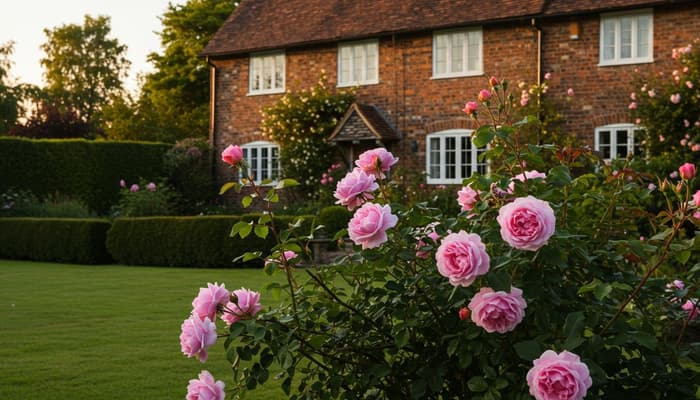
Roses are the backbone of the British garden. From climbing varieties scrambling over an arch to compact patio roses in pots, they reward attention with months of colour and scent. This guide covers everything UK gardeners need: when to plant, how to prune, feeding schedules by month, pest prevention, and a section on using your greenhouse to get ahead of the season.
When to plant roses in the UK
Planting time depends on whether you are buying bare-root or container-grown stock. Get this right and your roses establish faster with stronger root systems.
Bare-root roses are dormant plants sold without soil. Plant them from November through to March while the ground is workable. They cost 30-40% less than potted equivalents and establish quickly because the roots grow directly into native soil. February and March are the sweet spot for most UK regions.
Container-grown roses can go in any time the ground is not frozen or waterlogged. Autumn planting (September to November) gives roots time to settle before winter. Spring planting works well too, but you will need to water more through the first summer.
Regional planting guide
| Region | Bare-root window | Best container planting |
|---|---|---|
| Southern England | November – early March | September – May |
| Midlands | November – mid-March | October – April |
| Northern England | December – late March | October – April |
| Scotland | December – early April | October – April |
If you are starting plants from seed in a greenhouse, you can get bare-root roses potted up under glass 4-6 weeks before outdoor planting. This gives them a head start on root growth before they go into their permanent position.
How to care for roses for beginners
New rose growers should start with disease-resistant varieties and master five basics: sun, water, feed, prune, and mulch. Get these right and everything else follows.
Best roses for beginners in the UK

- Knock Out roses: Bloom continuously from May to first frost. Almost immune to black spot.
- Flower Carpet roses: Ground-covering habit, tough as nails, and self-cleaning (no deadheading needed).
- Easy Elegance roses: Classic hybrid tea looks with modern disease resistance bred in.
- David Austin shrub roses: Old-fashioned scent and form. Try Olivia Rose Austin or Roald Dahl for UK gardens.
Five-step beginner care routine
- Sun: Plant where roses get at least 6 hours of direct sunlight. Morning sun is best because it dries dew from leaves, reducing fungal disease.
- Water: Give 25-50mm of water weekly at the base, not over the leaves. One deep soak beats three shallow sprinkles.
- Feed: Apply a balanced rose fertiliser in early spring when new growth reaches 50mm. Repeat in late spring and mid-summer.
- Prune: Cut dead, damaged, or crossing stems in late February to March. Cut to an outward-facing bud at a 45-degree angle.
- Mulch: Spread 50-75mm of bark mulch or well-rotted compost around the base, keeping it 50mm away from the stem.
Common beginner mistakes
- Planting too close: Bush roses need 600-900mm apart. Climbers need 1.8-2.4m between plants.
- Shallow watering: Quick daily sprinkles encourage surface roots that dry out fast. Water deeply, less often.
- Overfeeding: More fertiliser does not mean more flowers. Follow the packet dose exactly.
- Ignoring fallen leaves: Black spot spores overwinter on fallen foliage. Clear it all in autumn.
When to prune roses in the UK
Pruning at the right time is the single biggest factor in rose performance. Prune too early and frost damages new growth. Prune too late and you lose weeks of flowering.
UK pruning calendar by region
| Region | Main prune | Sign to look for |
|---|---|---|
| Southern England | Late February – early March | Buds swelling, forsythia flowering |
| Midlands | Early to mid-March | Buds swelling on lower stems |
| Northern England | Mid to late March | Buds just starting to move |
| Scotland | Late March – early April | First daffodils open |

Pruning by rose type
Hybrid teas and floribundas: Cut back to 150-200mm above ground in late winter. Remove all dead, diseased, or crossing branches. Aim for an open vase shape with 4-5 strong outward-facing stems.
Climbing roses: In late winter, tie in new long canes horizontally and cut side shoots back to 2-3 buds. Only remove one old main cane per year to keep the plant producing.
Shrub and David Austin roses: Remove the top third of growth in late winter. Thin out congested centres to improve airflow. These roses flower on both old and new wood, so light pruning works best.
Rambling roses: Prune immediately after flowering in late summer, not in winter. Cut out flowered stems at the base and tie in new growth.
How to feed roses in the UK
UK roses need three main feeds per year. The mild, damp climate means roses start growing earlier than in continental Europe, so timing matters.
UK rose feeding calendar
- Late March / early April: First feed as new growth appears. Use a balanced granular rose fertiliser (NPK 6-8-4 or similar). Scatter around the base and water in.
- Late May / early June: Second feed just before or during the first flush of flowers. Liquid feeds work well here for a quick boost.
- Late July: Final feed of the season. Use a potassium-rich fertiliser (tomato feed works) to harden growth before winter.
- Mid-August onwards: No more feeding. Let the plant wind down naturally for dormancy.
Matt's Tip: Coffee Grounds for Roses
I scatter used coffee grounds around the base of our test roses every spring. They add nitrogen slowly as they break down and improve soil structure. Do not pile them on thick — a thin 5mm layer worked into the top 25mm of soil is plenty. Our coffee grounds guide covers the full method.
Feeding roses in pots
Container roses need more frequent feeding than garden roses because nutrients wash through the limited compost volume. Apply slow-release granules in March and August. Supplement with liquid rose feed every two weeks from May through July. Always water thoroughly before feeding to prevent root burn.
When to stop feeding roses in the UK
Stop all nitrogen-rich feeding by mid-August in most of the UK. Northern England and Scotland should stop by late July. Late feeding pushes soft new growth that gets killed by the first frost, weakening the whole plant. After the last feed, you can apply a light potassium-rich tonic (dilute tomato feed) to toughen stems, but nothing with high nitrogen.
How to grow roses in a greenhouse
This is where we bring something most rose guides miss. A greenhouse gives you control over temperature, humidity, and timing that open-garden growing cannot match. We have seen customers across the UK use their glasshouses to propagate, overwinter, and force roses with brilliant results.
Starting rose cuttings under glass
Take semi-ripe cuttings in September from healthy current-year growth. Cut 200mm stems just below a leaf node, remove lower leaves, dip in rooting hormone, and push into pots of 50:50 perlite and compost. Place on the greenhouse staging where temperatures stay above 10°C. By February, most cuttings will have rooted and can be potted on.
A heated propagator speeds this up. Even an unheated greenhouse gives cuttings 6-8 weeks' advantage over outdoor propagation because it shields them from wind, rain, and hard frost.
Overwintering tender roses
Tender climbing roses, standard (tree) roses, and newly planted bare-root stock benefit from winter protection under glass. Move container roses into an unheated greenhouse from November. Keep the compost barely moist — not wet, not bone dry. Our overwintering guide covers frost protection in detail.
If temperatures drop below -5°C, a greenhouse tube heater set to a 2°C frost-stat will protect tender varieties without running up a huge energy bill.
Forcing roses for early blooms
Bring potted hybrid tea roses into a heated greenhouse from late January. Maintain 12-15°C daytime temperatures and good ventilation. With 6+ hours of daylight (supplement with grow lights in January), you can have blooms by late March — a full two months before outdoor roses flower.

|
Matt's Pick for Rose GrowingBest For: Propagating cuttings, overwintering tender varieties, forcing early blooms Why I Recommend It: The 6x6 Venus gives enough bench space for 30+ rose pots plus room to work. The single sliding door and roof vent keep airflow moving, which roses love. Price: £449 |
Season-by-season rose care outdoors
Once you know the rhythm of the year, rose care becomes second nature. Here is what to do each season in the UK.
Spring (March – May)
- Remove any winter protection once hard frosts pass
- Complete main pruning before new growth extends beyond 50mm
- Apply first granular feed when new leaves reach 50mm
- Inspect for aphids on new growth — blast off with a hose before reaching for sprays
- Mulch with 50-75mm of bark or compost after the soil warms
Summer (June – August)
- Deadhead spent blooms to encourage repeat flowering (cut back to a strong outward-facing bud with 5 leaflets)
- Water deeply during dry spells — 25-50mm per week at the base
- Apply second liquid feed in early June
- Watch for black spot, powdery mildew, and rust. Remove affected leaves promptly. Our pest control guide covers organic and chemical treatments.
- Tie in new climbing rose shoots while they are flexible
Autumn (September – November)
- Stop deadheading from late September to let rose hips form (food for birds and a signal for dormancy)
- Clear all fallen leaves to break the disease cycle
- Lightly trim tall stems to prevent wind rock damage, but save hard pruning for late winter
- Plant bare-root roses from November onwards
- Apply a thick mulch of well-rotted manure around established plants
Winter (December – February)
- Protect newly planted and standard roses with fleece or straw mounding in hard frost areas
- Check ties on climbing roses — winter gales can rip unsecured canes off walls
- Order bare-root roses from specialist nurseries while selection is best
- Plan any garden redesign — winter is the time to move established roses if needed
- Service secateurs and loppers ready for February pruning

Rose care reference chart
| Care task | Spring | Summer | Autumn | Winter |
|---|---|---|---|---|
| Watering | Start regular deep watering | 25-50mm weekly in dry spells | Reduce as temperatures cool | Minimal; only if dry and mild |
| Feeding | First granular feed (March/April) | Liquid feed (June) + final feed (July) | No feeding | No feeding; mulch with manure |
| Pruning | Main structural prune (Feb/Mar) | Deadheading + light shaping | Trim tall stems against wind rock | Remove storm-damaged wood only |
| Pest control | Aphid watch on new growth | Black spot, mildew, rust checks | Clear fallen leaves | Plan next year's strategy |
| Mulching | 50-75mm bark/compost after pruning | Top up if levels drop | Thick manure mulch for winter | Protective straw in cold areas |
How to keep cut roses fresh in a vase
Cut roses from the garden can last 7-12 days indoors with the right preparation. The secret is in the cutting and the water.
Cutting and conditioning
- Cut roses early morning or late evening when stems are fully hydrated
- Choose buds that are just starting to open — tight buds may not open indoors, fully open blooms will not last
- Use sharp, clean secateurs. Cut at a 45-degree angle to maximise water uptake.
- Plunge stems immediately into a bucket of lukewarm water
- Remove all leaves that would sit below the waterline (they rot and breed bacteria)
Vase care tips
- Clean the vase thoroughly with hot water and a drop of bleach before filling
- Use lukewarm water — not cold — with commercial flower food or a DIY mix: 1 teaspoon sugar, half a teaspoon of bleach, and 2 teaspoons of lemon juice per litre
- Re-cut stems underwater every 2-3 days and change the water completely
- Keep away from direct sun, radiators, and ripening fruit (ethylene gas from fruit ages flowers faster)
- Overnight trick: Move the vase to a cool room (10-12°C) overnight to extend vase life by 2-3 days
What not to plant near roses
Some plants compete aggressively with roses for water, nutrients, and space. Others share diseases. Here is what to avoid and what works well as a companion.
Plants to avoid near roses
- Other Rosaceae family members (apples, pears, raspberries, hawthorn) — they share diseases including black spot and rust
- Aggressive spreaders (mint, bamboo, Japanese anemones) — they will outcompete roses for root space
- Deep-rooted trees (sycamore, ash, beech) — they drain moisture and nutrients from the top 300mm of soil where rose roots feed
- Brassicas (cabbage, broccoli) — some research suggests they inhibit rose growth through chemical root interaction
Good companion plants for roses
- Lavender: Repels aphids and attracts pollinators. Our lavender growing guide covers varieties and placement.
- Alliums: Their sulphur compounds deter aphids and rose beetles
- Catmint (Nepeta): Dense ground cover that suppresses weeds and attracts beneficial insects
- Salvias: Strong scent confuses rose pests and adds colour contrast
- Geraniums (hardy cranesbill): Low-growing ground cover that keeps soil cool and moist around rose roots
Frequently asked questions
What is the best month to plant roses in the UK?
February and March are the best months for planting bare-root roses in the UK. Bare-root stock should go in between November and March while dormant, but late winter gives the ideal balance: the soil is workable, hard frosts are ending, and roots establish quickly before spring growth. Container-grown roses can be planted from September through May, with autumn planting giving them time to settle before summer heat.
When should I prune roses in the UK?
Prune roses in late February to March when buds begin to swell. In southern England, this is often late February. The Midlands suit early to mid-March. Northern England and Scotland should wait until mid to late March. Look for buds swelling on the lower stems as your cue. Climbing roses that flower on old wood should be pruned after flowering in late summer instead.
How often should I feed roses in the UK?
Feed roses three times per year: early spring, late spring, and mid-summer. The first feed (late March or early April) uses granular rose fertiliser as new growth appears. The second feed (late May or early June) gives a liquid boost before the main flowering. The third feed (late July) uses potassium-rich fertiliser to harden growth for winter. Stop all feeding by mid-August.
Can I grow roses in a greenhouse?
Yes, greenhouses are excellent for propagating, overwintering, and forcing roses. Take semi-ripe cuttings in September and root them on greenhouse staging through winter. Move tender container roses under glass from November to protect them from hard frost. For early blooms, bring potted hybrid teas into a heated greenhouse from late January and maintain 12-15°C. Browse our full range of greenhouses if you are looking for a growing space.
What does Epsom salt do for roses?
Epsom salt provides magnesium, which promotes greener foliage and better flowering. Magnesium is a core component of chlorophyll. Dissolve 1 tablespoon per 4.5 litres of water and apply monthly during the growing season, or scatter 1-2 tablespoons around each plant in spring. It is most effective where a soil test confirms magnesium deficiency. Epsom salt supplements regular feeding but does not replace it.
When should I stop feeding roses in the UK?
Stop all rose feeding by mid-August to prepare plants for winter dormancy. In northern England and Scotland, stop by late July. Late feeding encourages soft new growth that gets killed by the first frost, weakening the whole plant. After the final feed, you can apply a dilute potassium-rich tonic (half-strength tomato feed) to toughen stems, but avoid anything with high nitrogen content.
What should you not plant near roses?
Avoid planting mint, bamboo, and other Rosaceae family members near roses. Rosaceae relatives (apples, pears, raspberries) share diseases including black spot and rust. Aggressive spreaders like mint and bamboo outcompete rose roots. Deep-rooted trees drain moisture from the top 300mm of soil where roses feed. Instead, choose companion plants like lavender, alliums, catmint, and salvias that repel pests and attract pollinators.