Companion Planting in a Greenhouse: What Grows Well Together
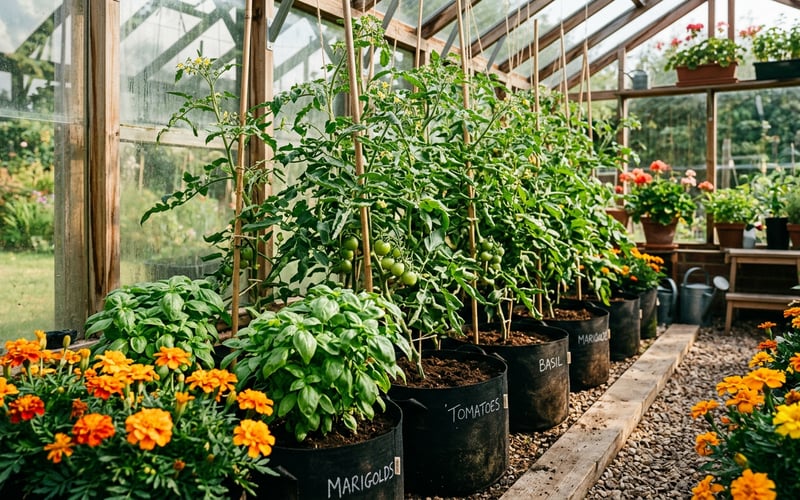
Companion planting in a greenhouse pairs crops that benefit each other through pest deterrence, pollination support or shared growing conditions. The best greenhouse pairings include tomatoes with basil (reduces whitefly by releasing volatile compounds), lettuce under tall crops for shade, and French marigolds alongside any nightshade family plant. In a UK greenhouse where space is tight, choosing the right neighbours means fewer pests and better harvests from the same square footage.
Companion planting in a greenhouse pairs crops that benefit each other through pest deterrence, pollination support or shared growing conditions. The best greenhouse pairings include tomatoes with basil (reduces whitefly by releasing volatile compounds), lettuce under tall crops for shade, and French marigolds alongside any nightshade family plant. In a UK greenhouse where space is tight, choosing the right neighbours means fewer pests and better harvests from the same square footage.
Key Takeaways
- Basil next to tomatoes reduces whitefly and primes the tomato plant's wound defence through volatile chemical signalling (Yoshida et al., 2024).
- French marigolds release limonene, which deters glasshouse whitefly. Newcastle University confirmed this in a 2019 greenhouse trial published in PLOS ONE.
- Never grow fennel in the greenhouse with other crops. It releases chemicals that inhibit the growth of tomatoes, peppers and most vegetables.
- Tomatoes and cucumbers need separating because cucumbers want high humidity and tomatoes want dry air. Use a polythene divider if growing both.
- Lettuce and radishes grow well under taller crops, using ground space that would otherwise be bare soil.
Expert Tip
I started putting basil next to our greenhouse tomatoes about eight years ago, after a customer swore it cut her whitefly problem in half. I was sceptical. But I tried it the following spring, and the sticky traps near the basil plants caught noticeably fewer whitefly than the ones at the far end without it. I have planted basil alongside tomatoes in every greenhouse we have on display since then. It is not magic, and it will not replace good ventilation and hygiene, but it costs nothing and it works.
Why does companion planting work in a greenhouse?
Companion planting works through three main mechanisms, as outlined by the RHS. First, some plants release airborne chemicals that repel specific pests. Basil produces volatile oils including linalool and estragole that confuse whitefly, while French marigolds release limonene, a natural insect deterrent. Second, certain flowering plants attract predatory insects like hoverflies and lacewings that eat aphids and other greenhouse pests.
Third, companion planting makes efficient use of space. Tall crops like tomatoes and peppers create shade beneath them. Low-growing crops like lettuce and radishes thrive in that partial shade, producing a second harvest from ground that would otherwise sit empty. In a greenhouse where every square metre matters, that extra yield adds up fast. Our greenhouse pest control guide covers the full range of biological and chemical pest management options.
Best companion planting combinations for a greenhouse
These pairings are based on published research, RHS guidance and years of observation in our own greenhouses. Not every combination has rigorous scientific evidence behind it, but the ones listed here have either research backing or strong anecdotal support from experienced UK growers.
Tomatoes and basil
This is the most studied greenhouse companion pairing. A 2024 study in Plant Cell Reports found that basil volatiles prime the tomato plant's wound response by activating jasmonic acid and MAPK signalling pathways. In practical terms, tomato plants grown next to basil mounted a faster defence against caterpillar feeding. Plant one basil plant between every two tomato plants in the same grow bag or border. Both need similar temperatures (18-25°C) and regular watering. Our tomato growing guide covers feeding and training.
Tomatoes and french marigolds
Newcastle University published a study in PLOS ONE (2019) confirming that French marigolds (Tagetes patula) deter glasshouse whitefly through the release of airborne limonene. The researchers found that limonene dispensers placed among tomato plants were even more effective than the marigolds themselves. Plant French marigolds at the base of each tomato plant or at the ends of staging. They need direct light, so place them on the sunny side. Tagetes patula is the species you want, not African marigolds (Tagetes erecta), which are too tall for greenhouse use.
Cucumbers and dill
Dill flowers attract hoverflies and lacewings, both of which feed on aphids. Sow dill seeds between cucumber plants in late April. The dill germinates quickly and flowers within 8-10 weeks, providing a steady supply of beneficial insects through the main growing season. One important note: dill works well with cucumbers but should not be planted near tomatoes. Dill can cross-pollinate with fennel and may inhibit tomato growth. Keep these two separate in your greenhouse layout. See our cucumber growing guide for more on spacing and training.
Peppers, chillies and basil
Peppers and chillies are in the same family as tomatoes (Solanaceae) and benefit from basil in the same way. The volatile oils confuse whitefly and aphids, and basil is said to improve the flavour of neighbouring crops, though this is harder to prove scientifically. Plant basil in the same grow bag as your peppers. Both prefer warm, well-drained conditions and similar feeding schedules. Avoid overwatering the basil, as it rots quickly in waterlogged compost.
Lettuce under tomatoes
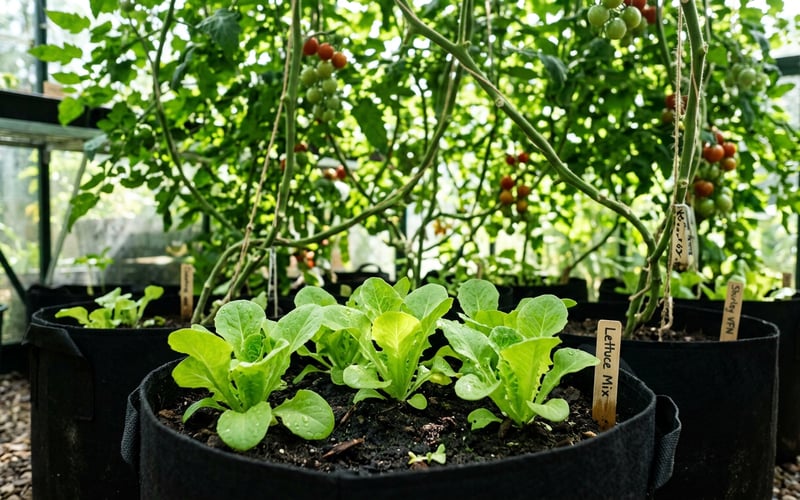
Lettuce bolts (runs to seed) in hot, direct sun. The shade cast by mature tomato plants keeps lettuce cool enough to produce leaves rather than flowers. Sow lettuce seed directly into the soil or grow bags around the base of tomato plants from April onwards. Harvest outer leaves while the lettuce is still growing. You will get 4-6 weeks of cropping before the tomato canopy gets too dense. This is classic intercropping and it works in any greenhouse. Our lettuce growing guide covers varieties and sowing times.
Strawberries and chives
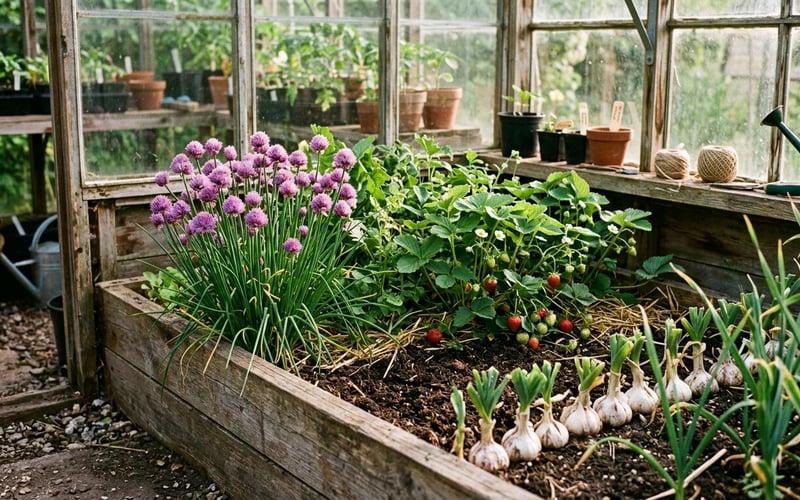
Chives (Allium schoenoprasum) produce sulphur compounds that repel aphids. Plant chives around the edges of strawberry beds or at the ends of strawberry rows on staging. Chives are perennial, so they come back each year without replanting. They also flower in May and June, attracting pollinating insects into the greenhouse at exactly the time your strawberries need pollination. Cut the chive flowers after they fade to prevent self-seeding.
|
Elite roots and shoots 2x2 raised bedBest For: Growing strawberries with chive and garlic companions in a dedicated bed Why It Works: A 2x2ft raised bed fits inside most greenhouses against a side wall. Plant strawberries in the centre, chives around the edges and garlic at the corners. The raised height also keeps slugs away from your fruit. Price: £110 |
Matt's Tip: The One Plant I Always Grow
French marigolds. I grow a tray of Tagetes patula from seed every March and tuck them into every spare gap once the greenhouse is planted up. They cost almost nothing, they flower for months, and the whitefly difference is real. I put two at the base of every tomato plant and a handful along the front of the staging. When customers visit our display greenhouses, they always ask why we grow flowers inside. It is not decoration. It is pest control.
Greenhouse companion planting chart
This table shows the best and worst neighbours for common greenhouse crops. Use it when planning your planting layout.
| Main crop | Good companions | Bad companions | Why it works |
|---|---|---|---|
| Tomatoes | Basil, French marigolds, lettuce, parsley | Fennel, dill, brassicas | Basil and marigolds deter whitefly. Lettuce uses shade. |
| Cucumbers | Dill, lettuce, radishes, beans | Sage, most aromatic herbs | Dill attracts hoverflies. Beans fix nitrogen. |
| Peppers and chillies | Basil, French marigolds, carrots | Fennel, kohlrabi | Same benefits as tomatoes (same plant family). |
| Lettuce | Chives, garlic, radishes, strawberries | Celery, parsley (in quantity) | Alliums repel aphids. Radishes mark rows. |
| Strawberries | Chives, garlic, lettuce, borage | Brassicas, fennel | Chives deter aphids. Borage attracts pollinators. |
| Herbs (basil, dill, parsley) | Tomatoes, peppers, cucumbers | Fennel, rue | Herbs deter pests from main crops. |
| Aubergines | Basil, French marigolds, peppers | Fennel | Same family as tomatoes, same companion benefits. |
Which plants should not grow together in a greenhouse?
Some combinations cause real problems in a greenhouse. Knowing what to separate is as important as knowing what to pair.
Fennel near anything
Fennel (Foeniculum vulgare) is allelopathic. It releases chemicals from its roots and foliage that inhibit the growth of most vegetables, especially tomatoes, peppers, aubergines and beans. Never grow fennel inside a greenhouse. If you want to grow fennel, put it outside in a separate bed at least 2 metres from the greenhouse. This is one companion planting rule that has strong scientific backing.
Tomatoes and cucumbers (without separation)
Tomatoes prefer dry air with good ventilation. Cucumbers want high humidity (80%+) and warmth. Growing both in the same open greenhouse creates problems: the humidity cucumbers need encourages botrytis (grey mould) on tomatoes, and the ventilation tomatoes need dries out cucumber leaves. If you must grow both, hang a polythene sheet across the middle. Put cucumbers at the back, away from the door, and tomatoes at the front where air flows freely. Damp down the cucumber end twice daily.
Dill near tomatoes
Despite both being common greenhouse plants, dill can inhibit tomato growth. Dill also cross-pollinates with fennel if both are present. Keep dill with your cucumbers and away from the tomato end of the greenhouse. This is easy to manage if you use the polythene partition described above.
How to arrange companion plants in a greenhouse
A typical 6x8ft greenhouse gives you roughly 4.5 square metres of growing space. That is enough for companion planting if you plan the layout carefully.
Ground level
Grow your main crops (tomatoes, cucumbers, peppers) in grow bags or border soil along both sides. Tuck companion herbs (basil, chives, parsley) into the same grow bags or in 15cm pots pushed against the base of the main plants. Sow lettuce or radishes directly into any bare soil between grow bags. French marigolds go at the end of each row.
Staging level
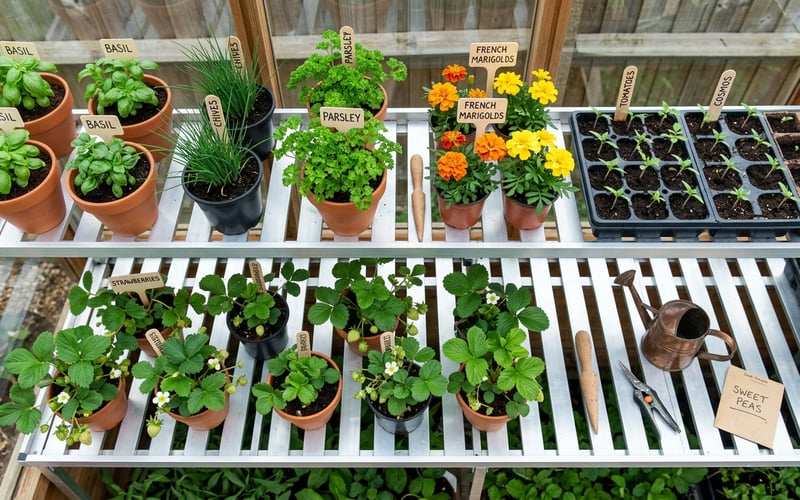
Use greenhouse staging for seed trays, herb pots and strawberry containers. Staging at 750mm height brings herbs and small crops to a comfortable working level. A two-tier unit gives you an upper shelf for seed germination and a lower shelf for established herb pots. Prices start at £79 for a basic aluminium unit.
|
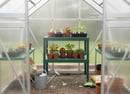
Palram canopia 2 tier stagingBest For: Organising companion herbs, seed trays and small pots at working height Why It Works: Two tiers give you a top shelf for seed germination and a lower shelf for established basil, chives and marigold pots. Aluminium frame fits most 6ft and 8ft greenhouses. Price: £79 |
|
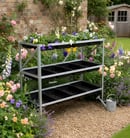
Elite 3 tier 12 seed tray frameBest For: Starting companion plants from seed in March before planting out Why It Works: Holds 12 seed trays across 3 tiers. Start your French marigolds, basil and dill seeds indoors, then move them into the greenhouse once night temperatures hold above 10°C. Price: £129 |
Vertical space
Train cucumbers, beans and tomatoes up canes or strings from the greenhouse ridge. This keeps the floor clear for ground-level companions. In raised beds, you can grow root crops like carrots alongside alliums (garlic, chives, shallots) which repel carrot root fly. A 4x2ft raised bed fits neatly inside most greenhouses.
|
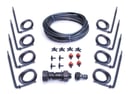
Matt's pick for companion plantingBest For: Consistent watering across mixed plantings Why I Recommend It: When you grow multiple crops together, their watering needs overlap but are not identical. A drip kit lets me set individual drippers at different flow rates for tomatoes, herbs and salads in the same bed. Price: £45 |
Frequently asked questions
Does companion planting actually work in a greenhouse?
Yes, and some pairings have peer-reviewed research behind them. Newcastle University proved in 2019 that French marigolds deter glasshouse whitefly through limonene release (PLOS ONE). A 2024 study in Plant Cell Reports showed basil volatiles prime tomato wound defences. The RHS acknowledges that while not all companion planting claims are scientifically proven, there are no disadvantages to using it alongside other pest management methods.
Can I grow tomatoes and basil in the same grow bag?
Yes, plant one basil between every two tomato plants. Both prefer temperatures of 18-25°C and regular watering. Basil is a lighter feeder than tomatoes, so it will not compete for nutrients. Pinch out basil flower stems to keep the plant bushy and producing the volatile oils that deter whitefly. Replace basil plants in late summer if they become woody.
Should I grow tomatoes and cucumbers together?
They can share a greenhouse if you separate them with a polythene partition. Cucumbers need high humidity (80%+) and tomatoes need dry, well-ventilated air. Without separation, the humidity cucumbers require encourages botrytis on tomato plants. Put cucumbers at the back, away from the door, and damp down their end twice daily. Tomatoes go near the door for airflow.
What should I never plant next to tomatoes?
Fennel, dill and brassicas should be kept away from tomatoes. Fennel is allelopathic and inhibits tomato growth through root chemicals. Dill may also inhibit tomatoes and cross-pollinates with fennel. Brassicas (cabbage, broccoli, kale) compete heavily for nutrients and attract different pests. Potatoes are in the same family as tomatoes and share blight, so avoid growing them in the same greenhouse space.
How many French marigolds do I need per tomato plant?
Two French marigolds per tomato plant is a good starting ratio. Place them at the base of each tomato, where they get enough light to flower. The key is continuous flowering, because that is when marigolds release the most limonene. Deadhead spent flowers regularly. Sow marigold seeds in March under cover and plant out once night temperatures stay above 10°C, usually late May in most of the UK.
Does garlic really repel pests in a greenhouse?
Garlic releases sulphur compounds that deter aphids, whitefly and some fungal diseases. Plant garlic cloves around the edges of beds or in pots on staging. Garlic is a slow grower (plant October-November, harvest June-July), so it works best as a perennial border plant rather than a quick companion fix. Chives offer similar pest-deterrent benefits and are easier to manage. Our garlic growing guide covers the full process.
When should I start companion planting in my greenhouse?
Sow French marigolds and basil in March, 6-8 weeks before planting out. This gives them time to establish before your main crops go in during late April and May. Lettuce and radishes can be direct-sown between main crop plants from April. Chives are perennial and should be planted in autumn or early spring. Plan your companion layout at the same time as your main crop layout so you know what goes where.