March Gardening Jobs: UK Checklist 2026
March 2026 is when the growing season properly starts. Soil temperatures rise above 6°C in most regions by mid-March, which means hardy crops will germinate outdoors. Under glass, you can sow tomatoes, peppers, and aubergines. Direct-sow broad beans and peas outside, and start dahlia tubers in pots. A greenhouse gives you a 4-6 week head start on outdoor sowers. By the equinox on 20 March 2026, day length hits 12 hours, enough light for seedlings to grow strongly.
Key Takeaways
- Sow under glass: Tomatoes, peppers, aubergines, cucumbers, and courgettes from early March.
- Direct sow outdoors: Broad beans, peas, parsnips, and early potatoes from mid-March.
- Greenhouse prep: Clean glazing, check vents, and replace cracked panes before the growing season.
- Lawn care: First light cut at 40mm once grass is actively growing.
- Frost watch: March nights can still drop to -5°C, keep fleece handy for tender seedlings.
Expert Tip
March is our busiest month for greenhouse enquiries. Everyone wants to get growing. The single best thing you can do this month is clean your greenhouse properly. Dirty glass blocks up to 40% of light. We see it on every spring callout. Five minutes with soapy water and a long-handled brush makes more difference than any gadget you can buy.
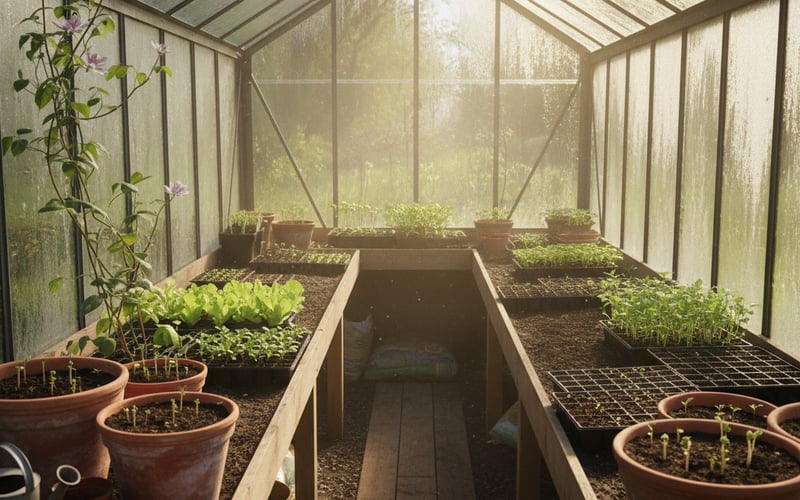
March sits between winter and spring. Get the timing right and you set yourself up for a good year. Get it wrong, and a late frost wipes out weeks of effort. Here is every job worth doing this month.
What to sow in march
A greenhouse or even a bright windowsill makes a huge difference in March. Outdoor soil is still cold, but a heated propagator at 18-21°C gives tender crops the warmth they need to germinate.
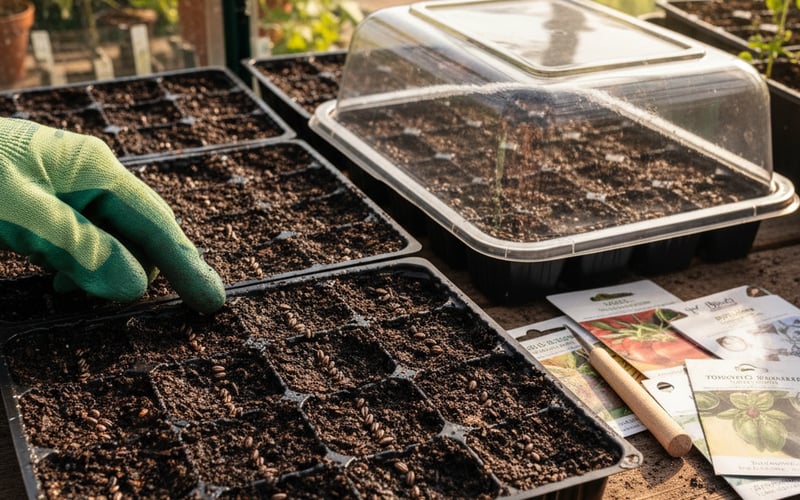
Under glass (greenhouse or windowsill)
- Tomatoes, Sow in 7cm pots from early March. Germination takes 7-14 days at 18°C. We recommend sowing indoors rather than direct into greenhouse borders at this stage. See our guide to growing tomatoes in a greenhouse for the full method.
- Peppers and chillies, These need a long season. Sow now for fruit from July onwards. Keep the propagator at 21°C for best germination rates.
- Aubergines, Similar to peppers. Sow early March and pot on once the first true leaves appear.
- Cucumbers, Sow from mid-March in individual 9cm pots. They resent root disturbance, so avoid pricking out.
- Courgettes and squash, Sow on their sides to prevent the flat seed from rotting. One seed per 9cm pot, 18°C.
- Sweet peas, If you did not autumn-sow, March is your last chance for a good June display.
For a full month-by-month calendar, see our seed sowing month by month guide.
Direct sow outdoors (from mid-march)
- Broad beans, Sow 5cm deep, 23cm apart in double rows. Aquadulce Claudia and The Sutton are reliable March varieties.
- Peas, Early varieties like Kelvedon Wonder can go in from mid-March under cloches if your soil drains well.
- Parsnips, Sow fresh seed every year. Parsnip seed loses viability quickly. Sow 1cm deep in drills 30cm apart.
- Spinach and chard, Both tolerate cool soil. Sow in succession every 3 weeks for a continuous harvest.
- Onion sets, Push sets into prepared soil so the tip just shows. Space 10cm apart in rows 30cm apart.
March sowing schedule at a glance
| Crop | Where to Sow | When in March | Temperature | Spacing / Notes |
|---|---|---|---|---|
| Tomatoes | Under glass | Early March | 18°C | 7cm pots, 7-14 days to germinate |
| Peppers & chillies | Under glass | Early March | 21°C | Long season, sow now for July fruit |
| Aubergines | Under glass | Early March | 21°C | Pot on at first true leaves |
| Cucumbers | Under glass | Mid-March | 18°C | 9cm pots, no pricking out |
| Courgettes & squash | Under glass | Mid-March | 18°C | Sow on side, one per 9cm pot |
| Sweet peas | Under glass | Early March | 15°C | Last chance for June display |
| Broad beans | Outdoors | Mid-March | 6°C+ soil | 5cm deep, 23cm apart, double rows |
| Peas | Outdoors (cloches) | Mid-March | 6°C+ soil | Kelvedon Wonder, well-drained soil |
| Parsnips | Outdoors | Mid-March | 6°C+ soil | 1cm deep, 30cm row spacing, fresh seed |
| Spinach & chard | Outdoors | Mid-March | 6°C+ soil | Succession sow every 3 weeks |
| Onion sets | Outdoors | Mid-March | 6°C+ soil | 10cm apart, 30cm rows, tip showing |
| Lettuce | Under glass | Early March | 15°C | Cut-and-come-again, harvest in 4-5 weeks |
| Leeks | Under glass | Early March | 15°C | Modules, 6-8 weeks to transplant size |
| First early potatoes | Outdoors | Mid-March | 6°C+ soil | 12cm deep, 30cm apart, chit first |
Tip: If you are sowing under glass, ventilate on sunny days. March sunshine through greenhouse glass can push temperatures above 30°C by midday, which scorches young seedlings.
Read our greenhouse pest control guide to stay ahead of early-season pests.
Flowers and bulbs for march

March is when the garden starts to show real colour. Snowdrops finish, crocuses peak, and daffodils take over. Here is what to plant and maintain.
Plant Now
- Dahlia tubers, Start in pots under glass from mid-March. Place tubers in damp compost with the crown just above the surface. Do not plant outdoors until late May.
- Lily bulbs, Plant 15cm deep in pots or borders. They need good drainage, so add grit to heavy soil.
- Hardy annuals, Calendula, cornflowers, and nigella can be direct-sown into prepared beds from late March.
- Sweet peas, Transplant autumn-sown plants once they have 4-6 pairs of leaves. Pinch out the growing tip to encourage bushy growth.
Maintenance Jobs
- Divide perennials, Hostas, hemerocallis, and asters all benefit from division every 3-4 years. Lift, split with a sharp spade, and replant immediately.
- Prune roses, Hybrid teas and floribundas should be pruned in March. Cut to an outward-facing bud, 15-20cm above ground level.
- Cut back ornamental grasses, Remove last year's growth to 10cm above the crown before new shoots appear.
- Feed borders, Apply a general-purpose fertiliser like fish, blood, and bone at 70g per square metre.
Fruit and vegetable jobs
March is planting season for fruit crops. It is also your last chance to get bare-root trees in before they break dormancy.
Fruit
- Plant bare-root fruit trees, The window closes in late March. Get apple, pear, and plum trees in the ground while they are still dormant.
- Plant raspberry canes, Summer-fruiting varieties go in now. Space 45cm apart and cut back to 25cm after planting.
- Mulch fruit bushes, A 7cm layer of well-rotted compost around blackcurrants, gooseberries, and blueberries suppresses weeds and retains moisture.
- Start strawberry runners, Pot up any runners saved from last year. Place in the greenhouse for early fruit from May.
Vegetables
- Chit seed potatoes, If you have not started, chit immediately. Place tubers in egg boxes in a cool, light spot. Plant first earlies from mid-March.
- Prepare beds, Fork over winter-dug beds and rake to a fine tilth. Avoid walking on wet soil as this compacts the structure.
- Start leeks, Sow in modules under glass. They take 6-8 weeks to reach transplanting size.
- Sow lettuce, A heated greenhouse lets you sow cut-and-come-again lettuce from early March. First harvest in 4-5 weeks.
Greenhouse maintenance and preparation
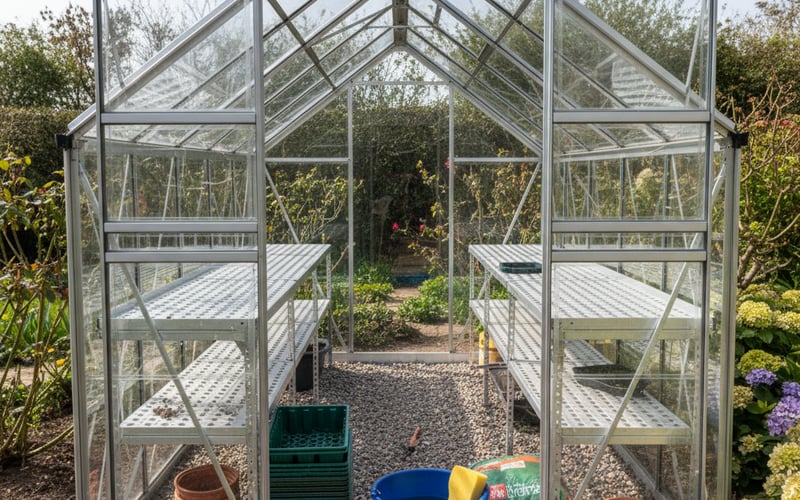
Before things get busy, March is the time to sort your greenhouse out. A clean greenhouse lets in more light and carries fewer pests into the new season.
Cleaning
- Wash the glazing, Dirty glass reduces light by up to 40%. Use warm soapy water inside and out. A long-handled brush reaches the roof panels without needing a ladder.
- Scrub the frame, Algae and moss build up over winter, especially on aluminium frames. A stiff brush and diluted Jeyes Fluid work well. Rinse thoroughly before bringing plants back in.
- Disinfect staging and shelving, Remove everything and scrub with a garden disinfectant. This kills overwintering pests like red spider mite eggs and whitefly pupae.
Our guide to cleaning greenhouse glass has the full method.
Repairs and checks
- Replace cracked panes, Winter storms often crack or shift glazing panels. Check every pane and replace any damaged glass before the season starts.
- Test automatic vents, Wax-cylinder vent openers need replacing every 3-5 years. Test them on a warm day to make sure they open fully. A stuck vent in June can kill a greenhouse full of plants within hours.
- Check the door seal, Gaps let in cold draughts and pests. Replace worn rubber seals or use draught-excluding foam tape.
- Service the heater, If you use a greenhouse heater, clean it, check the fuel supply, and test it now. March nights still drop below freezing in most of the UK.
Need a full spring clean checklist? See our guide to preparing your greenhouse for spring.
Setting up for the season
- Install a max-min thermometer, Knowing your overnight lows helps you decide when to sow tender crops. Aim for consistent overnight minimums above 5°C before sowing cucumbers and courgettes.
- Add bubble wrap insulation, Horticultural bubble wrap on the north-facing side cuts heat loss by up to 50%. See our greenhouse insulation guide for more options.
- Set up a watering system, Capillary matting or drip irrigation saves time once the greenhouse fills with seedlings.
Matt's Tip: Don't Sow Too Early
I see it every year. People sow tomatoes in the first week of March. They end up with leggy, weak plants by April because light levels are still low. Wait until mid-March at the earliest. A stocky plant sown on 15 March will outperform a leggy one sown on 1 March every single time. Patience pays off.
Matt's pick for march greenhouse setup

|
Matt's Pick: Bulldog 4 Tier Staging Best for: Getting your March seed trays organised with maximum growing space Why I recommend it: Four tiers of slatted staging hold 20+ seed trays without taking up floor area. We install these in most greenhouses we fit. Powder-coated aluminium frame needs no maintenance. Fits any greenhouse 6ft wide or larger. Price: £89 View the Bulldog 4 Tier Staging |
Lawn and garden tidying
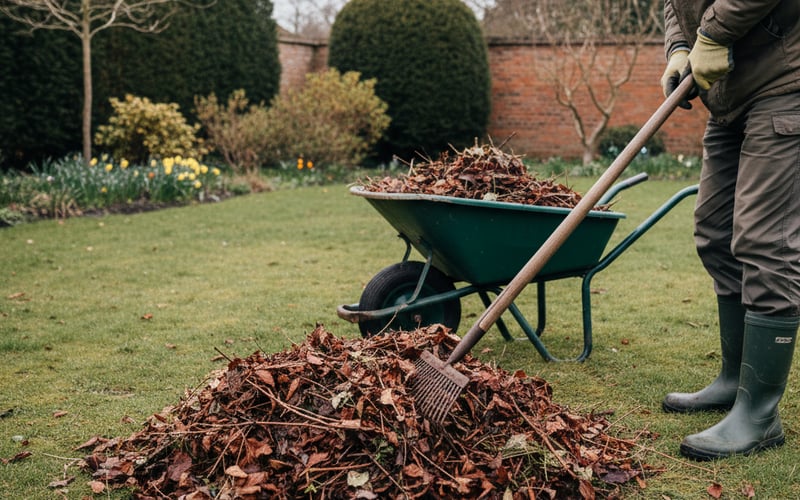
The lawn wakes up in March. By the end of the month, you should see visible growth in most parts of the UK.
Lawn Care
- First cut, Set the mower to its highest setting (40mm minimum) for the first cut. Never remove more than one-third of the blade length in a single cut.
- Repair bare patches, Rake out dead grass, fork the soil, and overseed. Cover with a thin layer of compost and keep moist.
- Apply a spring feed, A high-nitrogen lawn feed from mid-March encourages green-up. Follow the packet rate exactly, too much scorches the grass.
- Aerate compacted areas, Push a garden fork in 10cm deep at 15cm intervals. Focus on waterlogged or heavily trodden patches.
General Tidying
- Clear winter debris, Remove fallen branches, dead leaves, and any protective mulch. Plants that no longer need winter cover will thank you.
- Edge borders, A clean edge between lawn and beds makes an immediate difference to how the garden looks.
- Repair fences and paths, Fix storm damage before climbing plants start growing through fence panels.
- Clean water butts, Empty, scrub, and reconnect water butts ready for spring rain collection.
- Set up compost bins, March grass clippings and garden waste kick-start a new compost heap. Mix green waste with cardboard for the best results.
Frequently asked questions
When should I start sowing seeds in March?
Start tender crops under glass from early March. Tomatoes, peppers, and aubergines need a heated propagator at 18-21°C. Hardy crops like broad beans and peas can go directly outdoors from mid-March once the soil reaches 6°C. Use a soil thermometer to check before sowing.
Is it too early to plant potatoes in March?
No, mid-March is ideal for first earlies. Chit your seed potatoes for 4-6 weeks before planting. Plant tubers 12cm deep and 30cm apart in trenches. Cover with soil and mound up as the shoots emerge. In frost-prone areas, protect emerging foliage with fleece.
How do I prepare my greenhouse for spring?
Clean all glazing, frame, and staging thoroughly. Wash glass with soapy water to restore light levels. Dirty glass blocks up to 40% of sunlight. Test automatic vents, replace cracked panes, and check door seals. A clean greenhouse reduces pest and disease carry-over from winter.
What temperature should a greenhouse be in March?
Aim for 10-15°C during the day and above 5°C overnight. A heated greenhouse set to a minimum of 7°C overnight lets you sow most crops safely. Unheated greenhouses still give a 4-6 week head start over outdoor sowing. Avoid sowing tender crops like cucumbers until overnight temperatures stay above 10°C.
Can I mow my lawn in March?
Yes, once the grass is actively growing. Set the mower to its highest setting, at least 40mm, for the first cut. Only mow when the ground is dry enough that your feet do not leave marks. Never remove more than one-third of the grass blade length at once.
Should I prune roses in March?
Yes, March is the best month for pruning most roses. Hybrid tea and floribunda roses should be cut back to 15-20cm above ground level. Cut just above an outward-facing bud at a 45-degree angle. Remove any dead, diseased, or crossing stems first. Climbing roses only need side shoots shortened.