Should a Greenhouse Be Watertight?
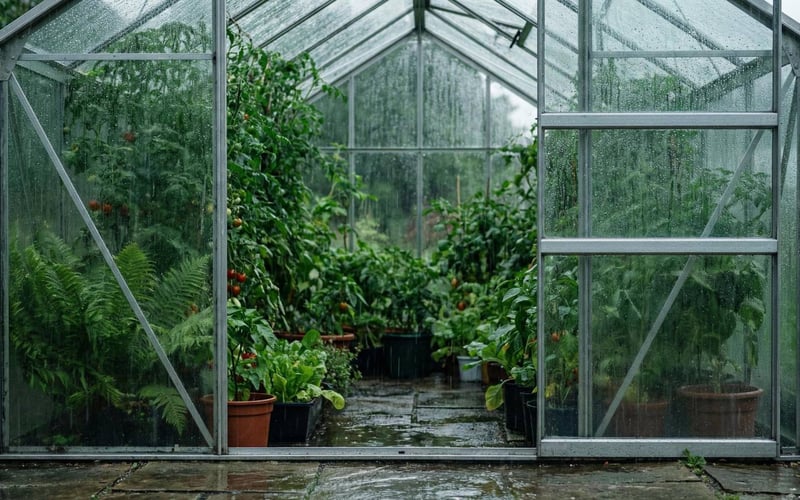
No greenhouse is designed to be fully watertight. A small amount of airflow through glazing overlaps prevents condensation build-up and fungal disease. Normal water ingress during heavy rain is a few drips where panes overlap. Persistent leaks at the ridge, eaves or base indicate failed seals that need replacing. Silicone sealant lasts 3-5 years on greenhouse joints. We reseal greenhouses as part of our maintenance service and stock replacement rubber strips for all major brands.
A greenhouse should be water-resistant, not watertight. Well-fitted aluminium greenhouses shed 95-98% of rainfall through overlapping glass panes, rubber gaskets, and proper glazing clips. The remaining 2-5% enters through condensation, capillary action between panes, and storm-driven rain. This is normal and necessary. Sealing a greenhouse completely with silicone traps humidity inside, accelerates grey mould, and makes future glass replacement extremely difficult.
Key Takeaways
- Greenhouses are designed to be water-resistant, not watertight. A small amount of water ingress is normal and expected.
- Never use silicone sealant on greenhouse glass. It traps moisture, encourages mould, and makes glass replacement a nightmare.
- Leave a drainage gap between the base plinth and the ground. Water from internal watering and condensation must be able to escape.
- Replace rubber glazing seals every 15-20 years. Hardened or cracked seals are the most common cause of preventable leaks.
- Toughened glass greenhouses leak less than horticultural glass models because each opening uses a single pane with no overlaps.
Installer's Note
I have lost count of the greenhouses I have visited where the owner has siliconed every glass joint. It always starts the same way. A bit of dripping during heavy rain, a quick tube of bathroom sealant. Two years later the entire structure is a humidity box with black mould. The worst case I saw was a 10x8 where every single pane had been siliconed in place. The owner needed four panes replaced after a storm. We chiselled out every bead of silicone. Three panes cracked during removal because the sealant had bonded to the glass. That was a £300 repair that should have been a 20-minute job.
Should a Greenhouse Be Completely Sealed?
No. A greenhouse is designed to resist water, not to be airtight. The aluminium frame, rubber gaskets, and glazing clips work together to shed the vast majority of rainfall. In normal conditions, a properly glazed greenhouse will keep out 95-98% of rain.
The remaining 2-5% enters through three predictable routes. Condensation forms on the inside of the glass and drips down. Capillary action draws water between overlapping panes during prolonged rain. Storm-driven rain can be forced through tiny gaps by high wind pressure.
All three of these are normal. They are part of how the structure breathes. A greenhouse needs constant air exchange to regulate temperature, manage humidity, and keep plants healthy. If you install automatic vent openers, they will help manage this airflow throughout the day without manual intervention.
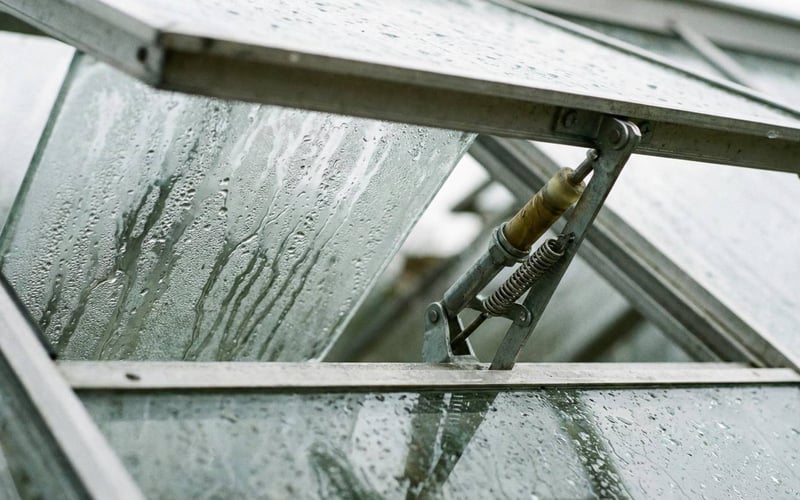
Sealing every gap creates a closed environment where humidity builds rapidly. In summer, temperatures inside a sealed greenhouse can exceed 50°C. In winter, trapped moisture condenses on every cold surface and encourages fungal growth. The greenhouse is not broken when a small amount of water gets in. It is working as intended.
Why You Should Never Use Silicone Sealant on a Greenhouse
Silicone sealant is the single most common mistake greenhouse owners make. It seems logical. You see a drip, you reach for a tube of sealant, and you run a bead along the glass joint. The drip stops. Problem solved. Except the real problems are just beginning.
It Traps Humidity Inside the Frame
Silicone creates an airtight bond between the glass and the aluminium glazing bar. This prevents the natural micro-ventilation that occurs through tiny gaps in the glazing system. Humidity that would normally escape through these gaps instead builds up inside the greenhouse. Relative humidity can stay above 85% for days. That is exactly the condition grey mould and damping-off disease thrive in.
It Makes Glass Replacement Extremely Difficult
Greenhouse glass breaks. Footballs, falling branches, hailstones, and thermal stress all cause cracks and fractures. In a normally glazed greenhouse, replacing a pane takes 10-15 minutes. You slide out the clips, lift the old pane, drop in the new one, and refit the clips.
With silicone, that same job takes an hour or more. The sealant bonds to both the glass and the aluminium channel. Pulling the pane out risks cracking adjacent panes. Scraping dried silicone from the glazing bar channel is tedious and often damages the anodised finish. Every bead of silicone you apply today is a maintenance problem you are creating for the future.
It Voids Some Manufacturer Warranties
Several greenhouse manufacturers explicitly state that applying silicone sealant to the glazing system voids the frame warranty. The glazing system is engineered to allow controlled movement. Glass expands and contracts with temperature. The rubber gaskets and clips accommodate this movement. Silicone prevents it, which can lead to stress fractures in the glass and distortion of the glazing bars.
If drips concern you during heavy rain, check and replace the rubber gaskets. Tighten the glazing clips. Ensure overlapping panes are seated properly. These are the solutions the manufacturer designed into the system.
Should You Seal Around the Greenhouse Base?
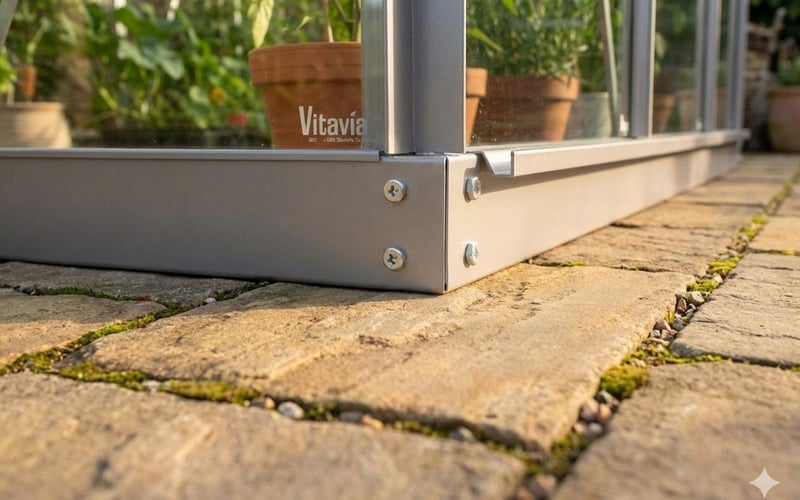
No. The gap between the greenhouse base plinth and the ground surface must remain open. This is a drainage gap, not a defect.
When you water your plants, the excess water needs somewhere to go. In a greenhouse on concrete or paving slabs, water runs off the staging and flows towards the edges. If you have sealed the base with cement, expanding foam, or silicone, that water pools inside the greenhouse. Standing water corrodes the base frame, encourages algae, and creates a breeding ground for slugs and fungus gnats.
The ideal base setup has a slight fall of around 5-10mm across the width of the greenhouse. This directs water towards one side where it drains through the base plinth gap. When laying a concrete or paving slab base, build this slope in from the start. Retrofitting drainage to a flat base is far more work.
Some owners seal the base to keep out mice, rats, or slugs. A better solution is fine galvanised mesh (6mm gauge) fitted along the inside of the base plinth. This blocks pests while still allowing water to drain freely.
What Counts as Normal Water Entry?
Not every drip means something is wrong. The table below separates normal water behaviour from signs that need attention.
| Scenario | Normal or Problem? | What to Do |
|---|---|---|
| Water droplets forming on inside of glass on cold mornings | Normal — condensation | Open a vent to improve airflow. This is standard greenhouse behaviour. |
| Light dripping from roof bars during heavy, sustained rain | Normal — capillary action between overlapping panes | No action needed unless dripping onto sensitive plants. Move plants or add a drip tray. |
| Water spray entering through vents during wind-driven storms | Normal — storm ingress | Close vents during severe weather if using manual openers. |
| Steady drip from a single point on the roof even in light rain | Problem — failed seal or displaced clip | Check the rubber gasket and glazing clip at that joint. Replace if worn or missing. |
| Water running down the inside of the end wall | Problem — poorly seated pane or missing seal | Remove the pane, check the gasket, reseat on fresh rubber strip. |
| Pooling water on the greenhouse floor after rain (no watering) | Problem — blocked gutter or sealed base preventing drainage | Clear gutters, check downpipes, and ensure the base gap is not blocked. |
If condensation is a persistent issue in winter, consider heating a greenhouse with a paraffin heater. A small amount of heat reduces the temperature differential between the glass and the inside air, which cuts condensation significantly.
How to Fix Greenhouse Leaks Without Sealant
Every leak in an aluminium greenhouse has a mechanical cause. The fix is always mechanical too. Here are the five checks to work through, in order.
1. Check and Replace Rubber Glazing Seals
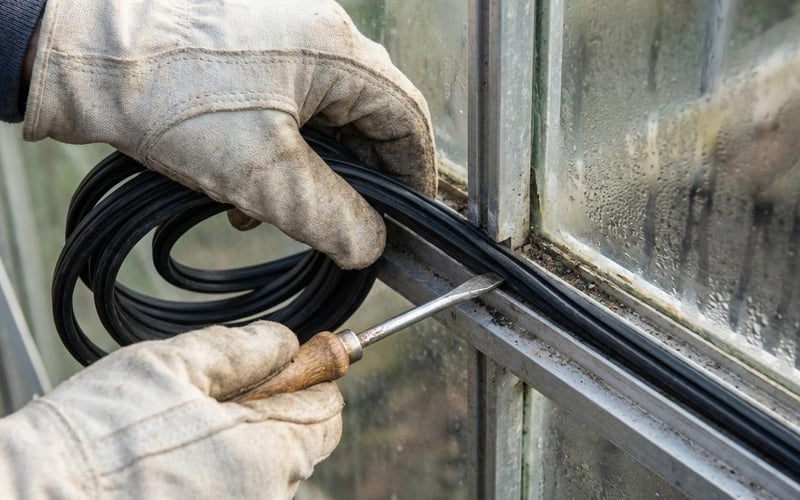
Rubber gaskets are the primary weather seal between the glass and the aluminium glazing bar. Over time, UV exposure and temperature cycling cause the rubber to harden, shrink, and crack. Most greenhouse rubber seals last 15-20 years before they need replacing.
Replacement strip is available from most greenhouse manufacturers and from our greenhouse accessories range. You cut it to length, press it into the channel, and refit the glass. The whole job takes a few hours for a 6x8 greenhouse.
2. Tighten or Replace Glazing Clips
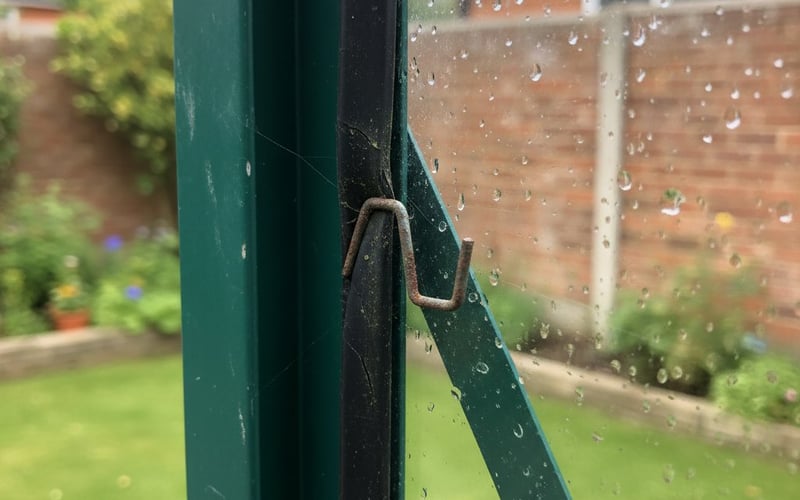
W-clips and Z-clips hold the glass firmly against the rubber gasket. If clips have sprung, bent, or fallen out, the glass can shift slightly and open a gap. Walk around the greenhouse and press each pane gently. If it moves, the clip needs tightening or replacing. Clip packs are inexpensive and specific to each manufacturer.
3. Clear Gutters and Downpipes
Blocked gutters cause water to overflow and run down the outside of the greenhouse walls. This water finds its way in through any available gap. Leaves, moss, and bird debris are the usual culprits. Clean gutters at least twice a year, in spring and autumn, as part of your routine when you prepare your greenhouse for spring.
4. Rebed Glass on Horticultural Glazing Putty
Older greenhouses and wooden-framed models use putty rather than rubber gaskets. Putty dries out and cracks over 10-15 years. Remove the old putty with a putty knife. Lay a fresh bed of linseed oil glazing putty, press the glass in, and smooth the bead. This is the same technique used on traditional window glazing.
5. Check Overlapping Pane Alignment
Horticultural glass greenhouses use small panes that overlap each other by 10-15mm. If a pane has slipped sideways, the overlap narrows and water can wick through by capillary action. Slide the pane back into position and secure it with a clip. The overlap should be consistent along its full length.
Does Toughened Glass Leak Less Than Horticultural Glass?
Yes, and significantly so. The reason comes down to the number of joints in the glazing system.
A horticultural glass greenhouse uses small panes (typically 610mm x 610mm) that overlap each other from ridge to eave. A standard 6x8 greenhouse might have 40-50 individual panes, each with overlapping edges where capillary seepage can occur. Every overlap is a potential water entry point.
A toughened glass greenhouse uses a single full-length pane for each opening. That same 6x8 greenhouse might have 18-22 panes. There are no overlaps. Each pane sits in its own rubber-gasketed channel with clips holding it in place. The only potential entry points are the gasket edges, which are far fewer and easier to maintain.
Toughened glass also has smoother, more consistent edges than cut horticultural glass. The rubber gasket makes better contact along the full pane length, creating a more effective weather seal. If minimising water ingress is a priority, toughened glass is the better choice.
Matt's Tip: The Pencil Test
Here is a quick way to check if your rubber seals need replacing. Take a standard graphite pencil and run the tip firmly along the exposed edge of a rubber gasket. If the pencil leaves a shiny mark and the rubber feels hard, the material has perished. Fresh rubber will feel slightly soft and springy, and the pencil will not leave a visible mark. I do this test on every greenhouse I service. It takes 30 seconds and tells you whether the seals have five years left or need replacing now. Pay particular attention to south-facing roof panes. These get the most UV exposure and their seals always perish first.
|
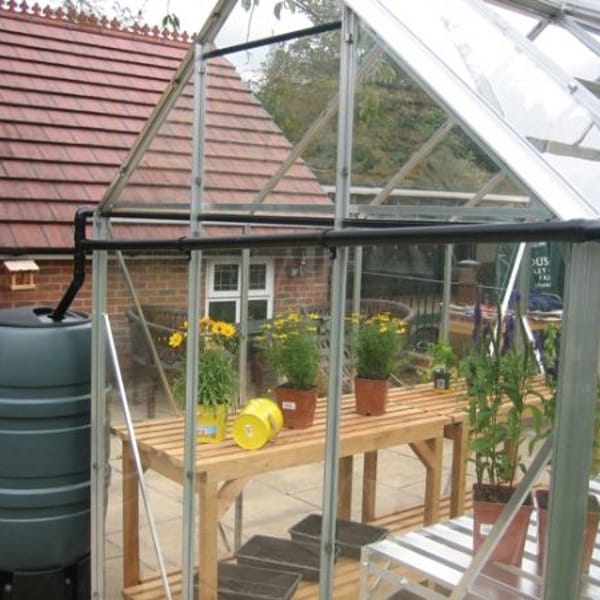
Matt's Pick for Managing Greenhouse RainwaterBest For: Channelling gutter runoff into a water butt instead of pooling at the base Why I Recommend It: Half the base-pooling problems I see come from gutters dumping water right next to the frame. This kit routes everything into a water butt, so you get free irrigation water and a dry base. I fit these on almost every installation now. Price: £75 |
Frequently Asked Questions
Can I use silicone sealant on my greenhouse?
No. Silicone sealant should never be applied to greenhouse glass joints. It traps humidity inside the frame, which encourages grey mould and fungal disease. It also bonds the glass permanently to the aluminium channel. When a pane eventually needs replacing, the silicone makes removal extremely difficult. Adjacent panes often crack during the process. The correct weather seal is the rubber gasket system supplied by the manufacturer, combined with properly fitted glazing clips.
Why is water dripping inside my greenhouse?
Water dripping inside is usually condensation, not a leak. When warm, moist air inside the greenhouse meets the cold glass surface, water vapour condenses into droplets. This happens most frequently on cold mornings and in winter. Opening a roof vent for 15-20 minutes in the morning allows the moist air to escape and reduces dripping. If the drip comes from a single point during rain, check the rubber gasket and glazing clip at that joint.
How often should greenhouse rubber seals be replaced?
Greenhouse rubber seals typically last 15-20 years. UV radiation and repeated heating and cooling cycles cause the rubber to harden, shrink, and eventually crack. South-facing roof seals degrade fastest because they receive the most direct sunlight. You can test seal condition by pressing a pencil tip against the rubber. If it feels hard and the pencil leaves a shiny mark, the seal has perished and needs replacing.
Should I seal the gap between my greenhouse base and the ground?
No. The gap between the base plinth and ground is for drainage. When you water plants inside the greenhouse, excess water needs to escape. If the base is sealed with cement, foam, or sealant, water pools on the floor. Standing water causes base frame corrosion, algae growth, and attracts slugs. To block pests, fit fine galvanised mesh (6mm gauge) along the inside of the base instead.
Is it normal for rain to get into a greenhouse?
Yes. A small amount of rain entry is completely normal. Greenhouses are water-resistant, not watertight. During heavy or wind-driven rain, water can enter through capillary action between overlapping panes. Roof vent edges are another entry point. A well-maintained greenhouse will shed 95-98% of rainfall. The remaining 2-5% is expected and does not indicate a fault with the structure.
Does a greenhouse need ventilation holes?
Yes. Greenhouses need ventilation to regulate temperature and humidity. Most greenhouses have roof vents and sometimes louvre vents in the side panels. These allow hot, humid air to escape and fresh air to enter. Without ventilation, summer temperatures can exceed 50°C inside, which kills most plants. In winter, poor ventilation traps moisture and promotes fungal diseases like grey mould and botrytis.
Related Articles
- Glass vs Polycarbonate Greenhouses
- Greenhouse Wind Damage Guide
- How to Clean a Greenhouse: Step-by-Step
- How to Build a Concrete Base for a Greenhouse
- 5 Plants That Damage Greenhouse Frames
Need advice on greenhouse maintenance? Our team has been fitting and advising on greenhouses since 2012. Email us at team@greenhousestores.co.uk.