5 Plants That Damage Greenhouse Frames
Five common garden plants can physically damage a greenhouse frame: wisteria, ivy, fig trees, grapevines, and running bamboo. Wisteria stems bend aluminium glazing bars within two seasons. Ivy roots push glass from frames. Fig roots lift entire bases. A mature grapevine adds 30-50kg to roof bars. Running bamboo rhizomes pierce concrete. All five are manageable with the right containment.
Key Takeaways
- Wisteria and ivy cause mechanical damage to glazing bars and seals
- Fig tree roots can lift your greenhouse base and knock the frame out of square
- A mature grapevine weighs 30-50kg, too heavy for standard roof bars
- Running bamboo rhizomes pierce concrete and damp-proof membranes
- Keep a 50cm clear zone around the greenhouse perimeter
Installer's Note
We get called out to fix greenhouse frames damaged by plants more often than you'd think. It's rarely storm damage. It's usually a vine left unchecked for a couple of years, or ivy that's crept around the back. The fixes aren't cheap either. A warped glazing bar means new glass, new seals, and sometimes a new bar section. Five minutes of pruning saves hundreds of pounds.
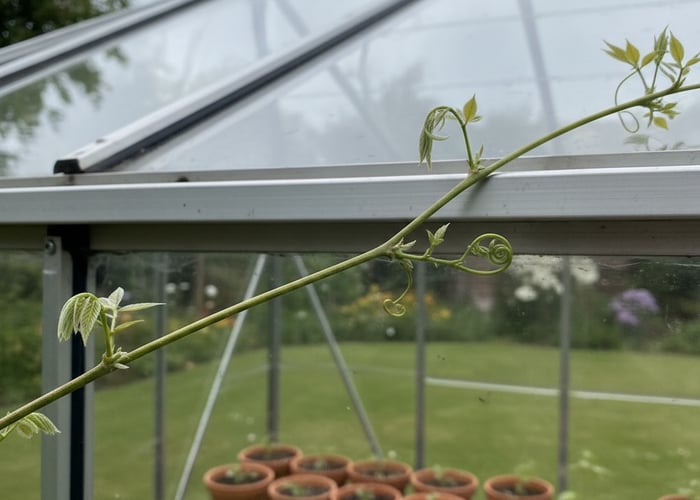
Why some plants are a risk to your greenhouse
Not every plant is safe to grow near or inside a greenhouse. Some species grow fast enough to move glazing bars, warp aluminium, or lift foundations.
The damage is usually slow and invisible at first. By the time you notice a sticking door or cracked glass, the frame may already be out of square. Catching these plants early is the cheapest fix.
1. Wisteria and vigorous climbers
Wisteria is a strangler vine. Its woody stems thicken fast. If they weave through your glazing bars or under the eaves, they can pop glass out of the frame.
The risk: A thickening wisteria trunk bends aluminium bars and breaks the watertight seal between glass and frame. We've seen bars bent 10-15mm out of line within two growing seasons.
How to prevent it: Grow wisteria in a large container and never let tendrils touch the frame. Prune weekly during the growing season, not just in winter. If you want climbers inside, use a freestanding wire frame anchored to the ground, not the greenhouse structure.
Seals already compromised? Our guide to whether a greenhouse should be watertight explains what to check.
2. common ivy (hedera helix)
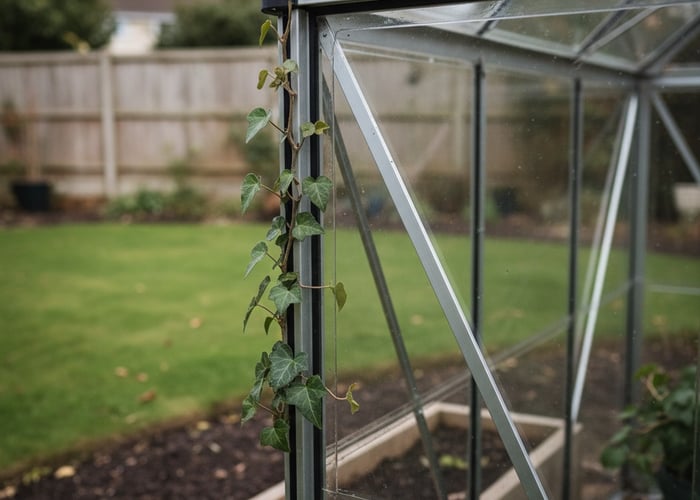
Ivy is one of the most destructive plants for greenhouse frames. The aerial roots find gaps between glass and frame that are invisible to the eye.
The risk: As roots expand, they push glazing away from the frame. On wooden greenhouses like the Swallow range, ivy traps moisture against timber. That causes rot, even in heat-treated ThermoWood.
How to prevent it: Keep a 50cm clear zone of bare ground around your greenhouse. Check the back and sides monthly, ivy grows fastest where nobody looks. Pull it off while the stems are still green and thin.
3. fig trees (ficus carica)
Fig trees are popular inside greenhouses for an early start to the season. The problem is underground. Fig roots are aggressive and spread far wider than the canopy above.
The risk: Roots growing under the base cill can lift the entire structure. The frame goes out of square. Doors stop sliding. Glass cracks under uneven pressure. We've attended callouts where a fig planted 1m from the base has shifted the frame 20mm.
How to prevent it: Always grow figs in large pots or root-restriction pits lined with paving slabs. Never plant directly into the ground within 2m of your greenhouse base.
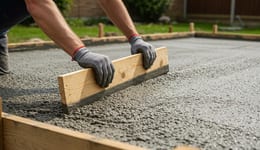
A solid base prevents root problems. Our greenhouse base preparation guide covers concrete, slab, and gravel options.
Matt's Tip: Check Your Base First
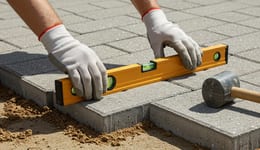
Sliding doors suddenly sticking? Glass developing a stress crack? Check the base before anything else. Roots can exert tonnes of pressure. Put a spirit level on your base cill. If it's not perfectly flat, you likely have root invasion or ground movement. Fixing it early saves the entire frame from permanent warping.
4. heavy grapevines (vitis vinifera)
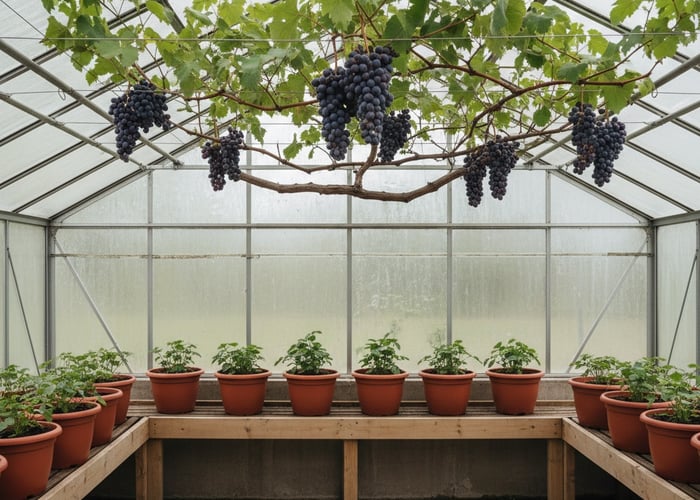
Grapevines are greenhouse staples, but their weight is underestimated. A mature vine laden with fruit weighs 30-50kg.
The risk: Supporting a heavy vine from roof bars without a wire system bows the rafters. Budget greenhouses with thin T-section bars are most vulnerable. The Elite Titan range uses thicker box-section aluminium that handles the load far better.
How to prevent it: Install a dedicated internal wire system. Anchor it to the main structural corner posts, not the glazing bars. For serious fruit growing, choose a heavy-duty frame from the start.
Growing grapes inside? Our greenhouse grape growing guide covers training and support systems.
5. Bamboo (running varieties)
Running bamboo is often planted as screening near greenhouses. It's one of the worst choices you can make.
The risk: Sharp rhizomes pierce damp-proof membranes and concrete floors. They emerge inside the greenhouse and push against the base frame. Once running bamboo reaches your foundation, removal is expensive.
How to prevent it: Only plant clumping varieties near greenhouses. Even then, install a professional-grade root barrier to at least 60cm depth.
“We see more frames damaged by plants than by storms. A wisteria left for two summers can bend bars that took 25 years of wind without moving. Five minutes of pruning each week is the cheapest greenhouse insurance there is.”
, Matt, Co-Founder of Greenhouse Stores
Matt's pick for vigorous growers
|
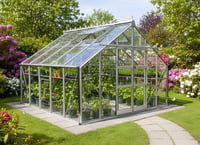
Matt's Pick: Elite Titan 1000 Best for: Growers who want to train grapevines, climbing beans, and heavy crops inside Why I recommend it: The Titan uses box-section aluminium, not T-section. It handles the weight of a mature grapevine without bowing. Core-Vect technology keeps the frame rigid even with 50kg+ hanging from the roof. We fit these for serious fruit growers who don't want to worry about structural damage. Price: From £2,879 View the Elite Titan 1000 |
Frequently asked questions
Can wisteria damage a greenhouse frame?
Yes, wisteria stems bend aluminium glazing bars within two seasons. The woody trunks thicken fast and exert enough mechanical pressure to pop glass from frames. Grow wisteria in containers and prune weekly during the growing season to keep tendrils away from the structure.
How far should plants be from a greenhouse?
Keep a 50cm clear zone of bare ground around the perimeter. This prevents ivy roots, bamboo rhizomes, and spreading tree roots from reaching the base. For fig trees and running bamboo, increase this to at least 2m.
Can I grow grapevines inside a greenhouse safely?
Yes, but support the vine from a wire system, not the roof bars. A mature grapevine weighs 30-50kg. Anchor wires to the main corner posts rather than glazing bars. Choose a heavy-duty frame like the Elite Titan if you plan to grow grapes long-term.
What type of bamboo is safe near a greenhouse?
Only clumping bamboo varieties are safe near greenhouses. Running bamboo sends out rhizomes that pierce concrete and damp-proof membranes. Even with clumping varieties, install a root barrier to 60cm depth as a precaution.
How do I know if plant roots are damaging my greenhouse base?
Check for sticking doors and stress cracks in the glass. Put a spirit level on your base cill. If it reads off-level, roots or ground movement may be pushing the frame out of square. Catch it early before the frame warps permanently.