25 Unusual Things to Grow in a Greenhouse
A greenhouse lets you grow 25+ unusual crops in the UK that would fail outdoors, including lemongrass, ginger, turmeric, peanuts, sweet potatoes, passion fruit and Cape gooseberries. Most need minimum temperatures of 10-15°C and consistent warmth above 20°C during the growing season. A heated greenhouse extends the range further to include coffee plants, vanilla orchids and dwarf citrus trees. Growing exotics uses the same infrastructure as standard greenhouse crops.
This guide covers 25 unusual plants you can grow in a UK greenhouse. From beginner-friendly cucamelons and loofah gourds to expert-level vanilla orchids and pineapples, we cover growing temperatures from 8–30°C. Each entry includes difficulty ratings, seasonal timings, and tips from our fitting team. We have installed greenhouses for exotic growers across the UK for many years.
Key Takeaways
- Best for beginners: Cucamelons, loofah gourds, and passionflower
- Highest impact: Pineapples, vanilla orchids, and carnivorous plants
- Year-round producers: Tea plants, microgreens, and dwarf citrus trees
- Space-efficient choices: Vertical climbing beans, wall-mounted air plants
- Winter specialities: Forced bulbs, cold-tolerant succulents, and winter herbs
Expert Tip
We have fitted greenhouses for customers growing everything from banana plants to vanilla orchids. A bigger greenhouse gives you room to create separate microclimates. Polycarbonate glazing retains heat better than glass for tropical species. For heat-loving exotics, we recommend a large greenhouse with 8×10ft of floor space or more.
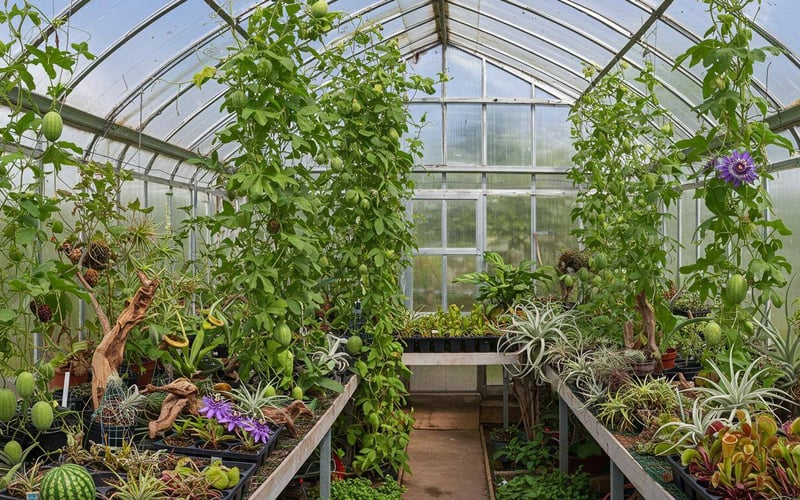
Your greenhouse can grow far more than tomatoes and lettuce. From fruit that looks like tiny watermelons to plants that eat insects, these 25 unusual options will surprise visitors. You will get harvests you cannot buy in shops.
Why Grow Unusual Plants in Your Greenhouse?
Growing exotic plants in your greenhouse has real benefits.
You will create more biodiversity, which helps your whole growing space stay healthy. Unique harvests give you ingredients that shops simply do not sell. Year-round interest keeps your greenhouse productive through all seasons. Conversation starters make your greenhouse the most interesting place visitors want to see.
Unusual plants often fetch better prices if you sell surplus at local markets.
Getting Your Greenhouse Ready for Exotic Plants
Before we look at our list, make sure your greenhouse can handle different growing needs.
Temperature Control: You need both heating and ventilation. Keep temperatures steady between 10–30°C. Most exotic plants hate sudden temperature swings.
Humidity Management: Automatic misting systems or humidity trays help maintain 60–80% relative humidity. A digital hygrometer will tell you exactly what is happening. Read our guide to humidity management for more detail.
Better Lighting: LED grow lights help during UK winters. Position them 300–600mm above plants. Closer for weaker lights, further for stronger ones.
Water Quality: Many exotic plants prefer rainwater or filtered water over hard tap water. Set up collection systems or use filters.
The Complete List: 25 Unusual Greenhouse Plants
1. Cucamelons (Mouse Melons)
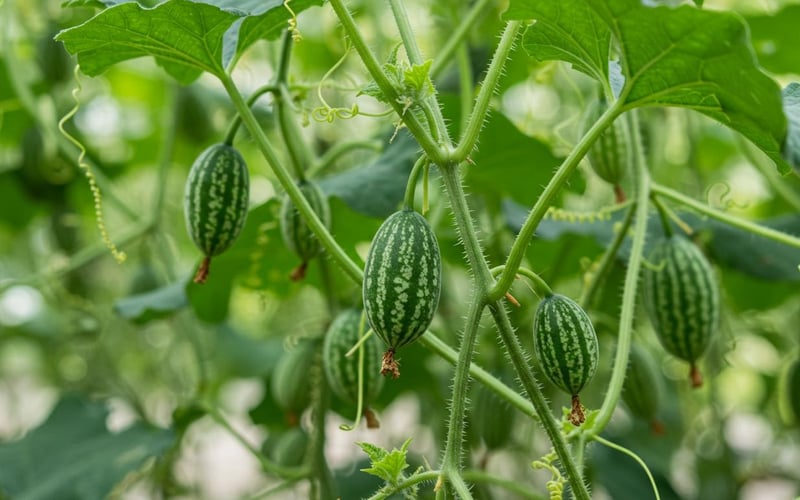
Scientific Name: Melothria scabra | Difficulty: Beginner | Season: April to October
These grape-sized fruits look like miniature watermelons. They taste refreshing with a slightly tangy kick. Cucamelons climb happily on supports. They produce loads of fruit all summer long.
Growing Tips: Plant seeds in late April after the last frost. Give them sturdy trellises as vines can reach 3 metres. Pick fruits when marble-sized for the best flavour.
Culinary Uses: These miniature fruits work brilliantly in gin and tonics. They add crunch to summer salads. Pickle them with dill and garlic for unique cocktail garnishes.

2. Loofah Gourds (Natural Sponges)
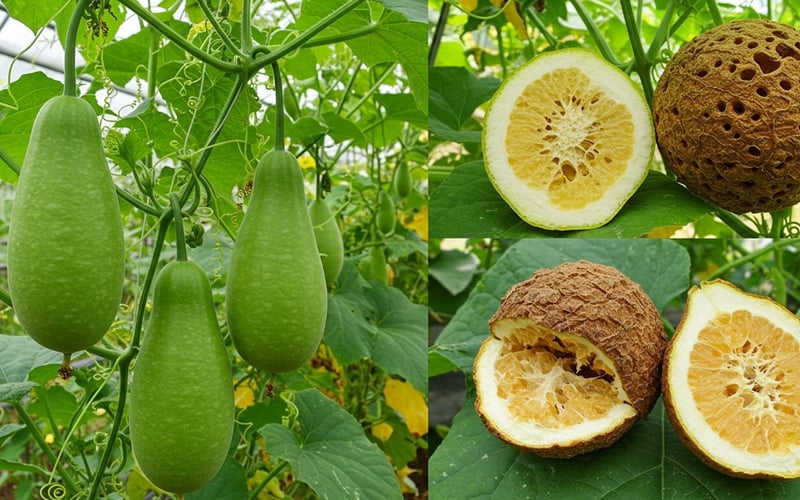
Scientific Name: Luffa cylindrica | Difficulty: Intermediate | Season: May to October
The natural sponge is actually a vegetable. It is related to cucumbers and squashes. Eat the young fruit like courgette. Let mature fruits dry on the vine and you get bathroom sponges.
Growing Tips: Start seeds indoors in March. Move them to your greenhouse in May. These are vigorous climbers that need strong supports and steady moisture.
3. Tea Plants (Camellia sinensis)
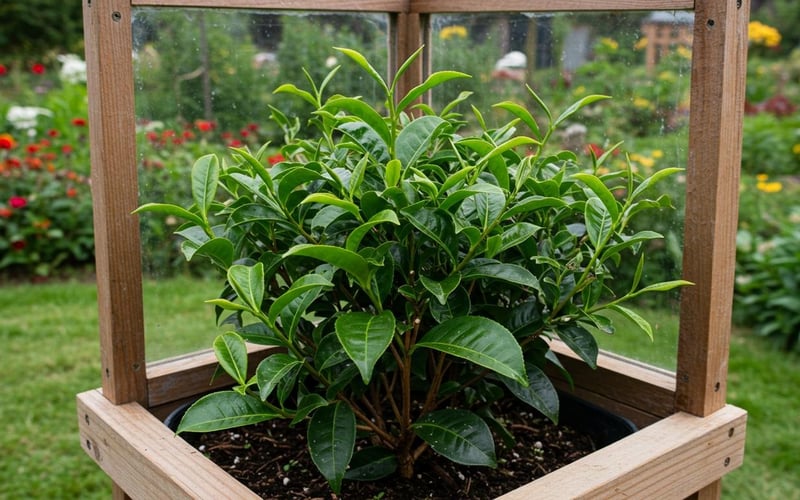
Scientific Name: Camellia sinensis | Difficulty: Intermediate | Season: Year-round
Tea plants love the warm, sunny conditions a greenhouse provides. Pick young leaves for making your own black, green, or white teas.
Growing Tips: Keep soil slightly acidic at pH 6.0–6.5. Do not let it dry out. Young plants take 3–4 years before you can harvest. They will keep producing for decades with good care.
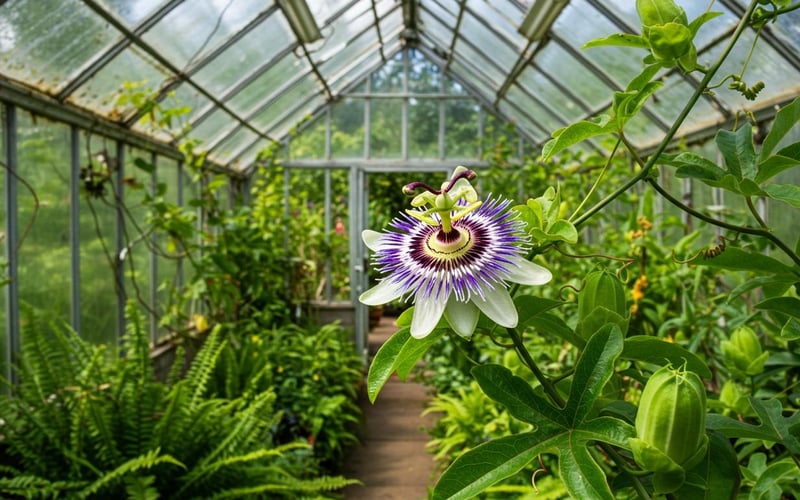
4. Tropical Passionflower
Scientific Name: Passiflora species | Difficulty: Intermediate | Season: April to October
Some passionflower varieties handle UK outdoor conditions. The tropical ones need greenhouse protection to fruit properly. Their complex flowers are unlike anything else in the plant kingdom.
Growing Tips: Give them alkaline, well-draining soil and strong climbing supports. Train the vines regularly so they do not tangle and block flowers. If you enjoy growing peppers, passionflowers thrive in the same warm conditions.
Historical Note: Spanish missionaries named passionflower for its resemblance to the Crucifixion. The corona represents the crown of thorns. Five stamens stand for Christ's wounds. Three styles represent the nails.
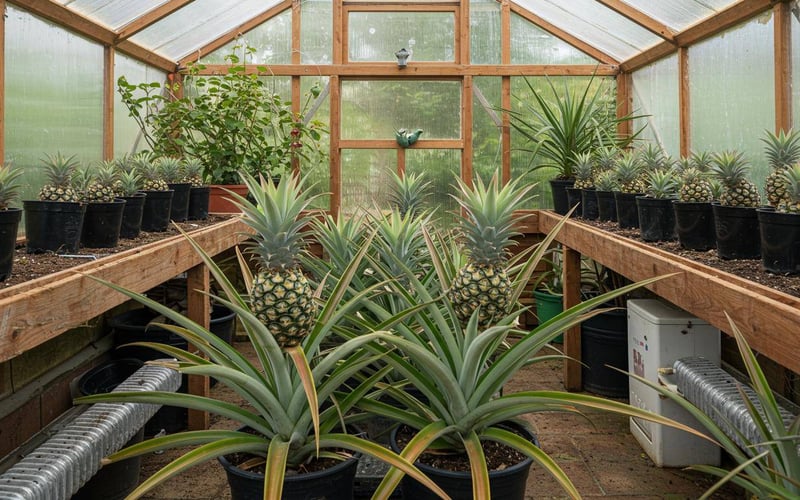
5. Pineapples
Scientific Name: Ananas comosus | Difficulty: Advanced | Season: Year-round
You can grow pineapples in UK greenhouses. They get bigger in a greenhouse than in pots on a windowsill. Starting from shop-bought crowns, pineapples take 18–24 months to fruit. They make amazing focal points.
Growing Tips: Plant crowns in well-draining, slightly acidic compost. Keep temperatures above 18°C. Give them bright light all year for the best growth.
Historical Note: In 18th-century Britain, pineapples were powerful status symbols. Wealthy families rented them for dinner parties as centrepieces. They returned them uneaten the next day.
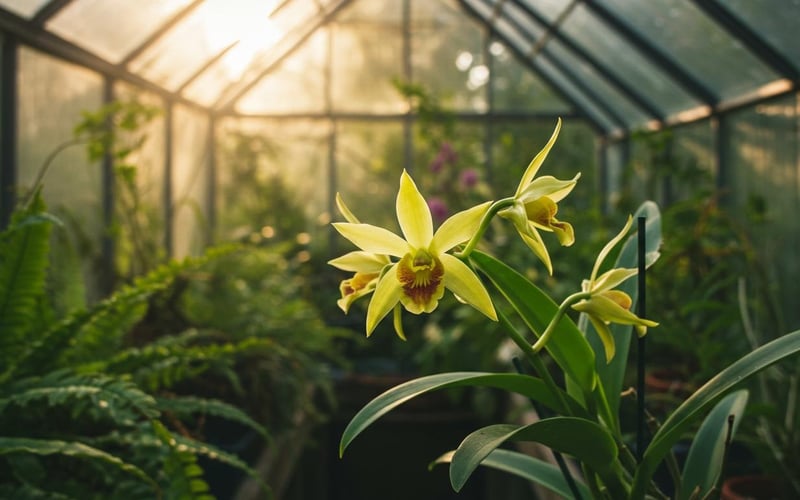
6. Vanilla Orchids
Scientific Name: Vanilla planifolia | Difficulty: Expert | Season: Year-round
Vanilla is a climbing orchid that thrives in tropical conditions. Keep your greenhouse moist and warm. Hand-pollination is required for pod production. If you enjoy growing orchids, vanilla is the ultimate challenge.
Growing Tips: Maintain 85% humidity and temperatures between 18–29°C. Provide climbing supports. Flowering begins after 2–3 years of patient growth.
Historical Note: Vanilla was sacred to the Aztecs, who believed it was a gift from the gods. Only royalty could enjoy chocolate flavoured with vanilla beans.
7. Wasabi (Japanese Horseradish)
Scientific Name: Wasabia japonica | Difficulty: Advanced | Season: Year-round
This delicious root gives a delightful flavour kick to your cooking. It grows well at 8–20°C in cool but humid conditions. Keep it out of direct sunlight.
Growing Tips: Grow in shadier greenhouse areas with consistent moisture. Ensure excellent drainage. Harvest rhizomes after 2 years for authentic wasabi paste.
Historical Note: Authentic wasabi was so prized in feudal Japan that samurai guarded the farms. Theft was punishable by death. Its antimicrobial properties made it essential for safe raw fish eating.
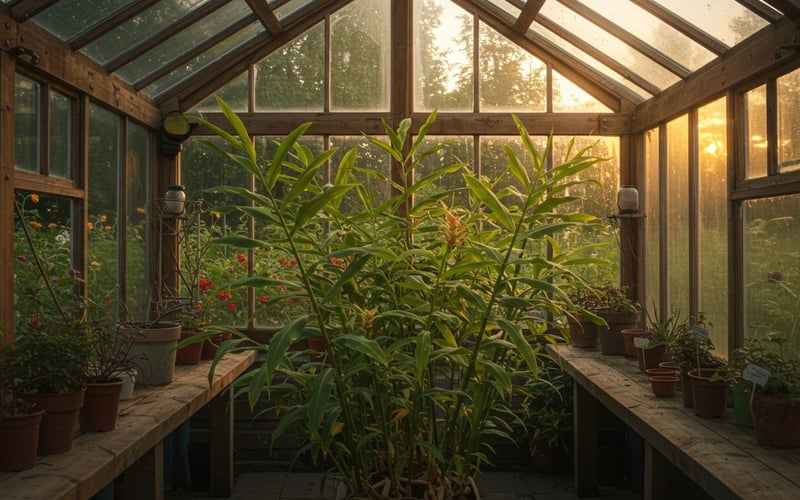
8. Ginger Root
Scientific Name: Zingiber officinale | Difficulty: Beginner | Season: March to October
Ginger is relatively easy to grow in your greenhouse. Start with a root from the supermarket. Choose one with multiple "eyes" that can become shoots. Our full guide to growing ginger in a greenhouse covers everything in detail.
Growing Tips: Start with organic supermarket ginger. Plant in shallow containers. Maintain warm, humid conditions for rapid growth.
Culinary Uses: Fresh greenhouse ginger makes exceptional crystallised ginger. It creates spicy ginger beer and aromatic curry pastes far better than shop-bought.
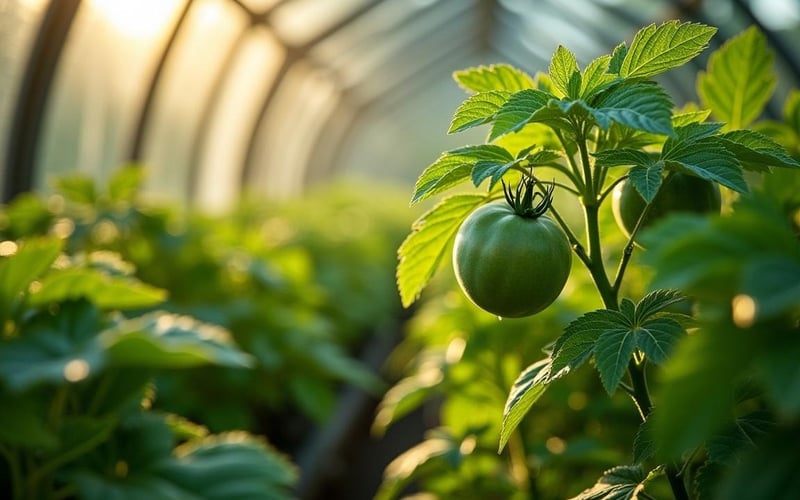
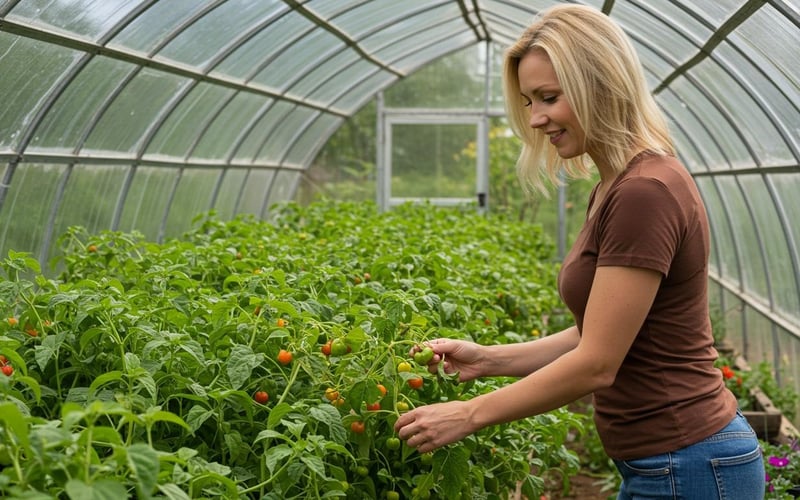
9. Tomatillos
Scientific Name: Physalis philadelphica | Difficulty: Beginner | Season: April to October
Tomatillos are a savoury fruit related to the tomato. They are native to Mexico. They make delicious sauces and salsas. Their papery husks make them distinctive and attractive plants.
Growing Tips: Plant multiple varieties for cross-pollination. Allow space for their sprawling growth habit. Harvest when fruits fill their husks completely.
Culinary Uses: Roast tomatillos with garlic and peppers for authentic salsa verde. Use them raw in refreshing summer gazpacho with cucumber and herbs.
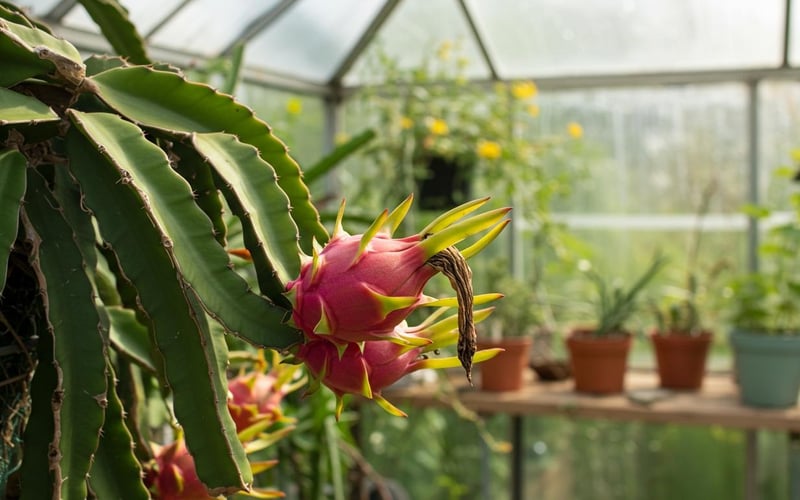
10. Dragon Fruit Cactus
Scientific Name: Hylocereus undatus | Difficulty: Intermediate | Season: Year-round
This exotic climbing cactus produces large white flowers that open at night. Pink or yellow fruits follow, covered in distinctive scales. Dragon fruit needs a tall greenhouse to reach its potential.
Growing Tips: Provide strong climbing supports. Mature plants can reach 6 metres. Maintain warm temperatures and good drainage. Allow soil to dry between waterings.
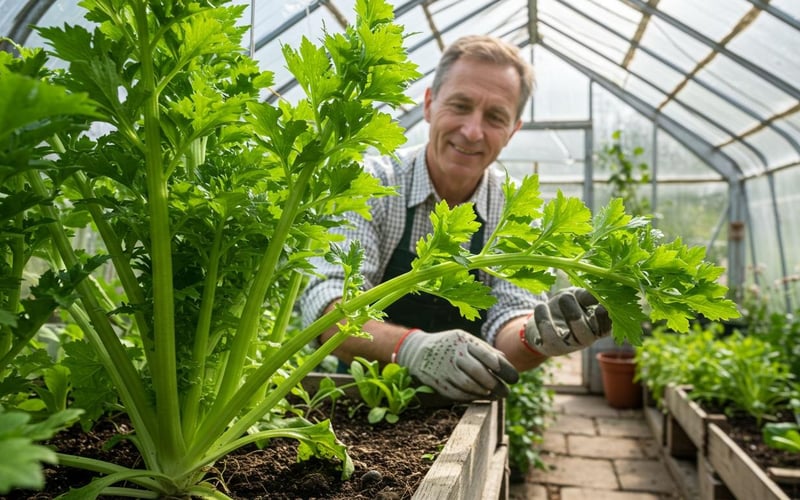
11. Celtuce (Stem Lettuce)
Scientific Name: Lactuca sativa var. asparagina | Difficulty: Beginner | Season: March to November
Celtuce offers a unique twist on lettuce. While the leaves are edible, the thick crunchy stem is the prized harvest. It provides an asparagus-like flavour and texture.
Growing Tips: Sow successively every 3 weeks for continuous harvest. Allow plants to bolt for stem development. Harvest when stems reach pencil thickness.
Culinary Uses: Celtuce stems can be stir-fried like asparagus. Slice them raw into salads for crunch. Pickle them in rice vinegar for an Asian-inspired condiment.
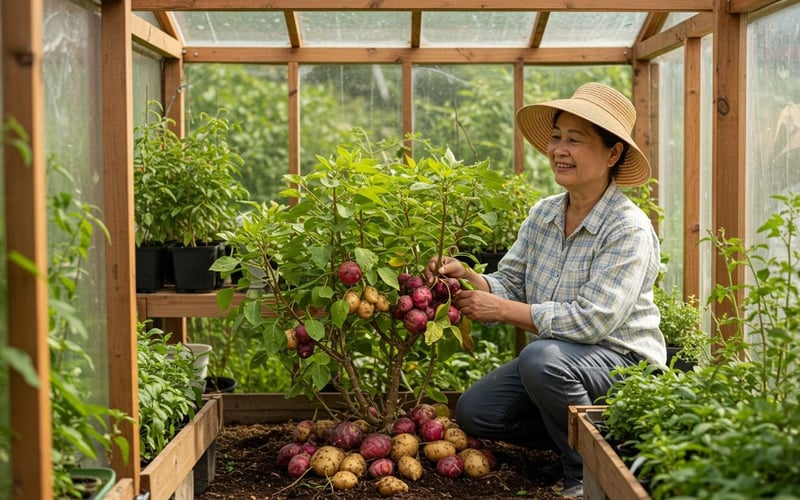
12. Oca (New Zealand Yam)
Scientific Name: Oxalis tuberosa | Difficulty: Intermediate | Season: March to November
This South American root vegetable produces colourful tubers in red, purple, yellow, and white. It offers a tangy, potato-like flavour.
Growing Tips: Plant tubers after the last frost in raised beds within your greenhouse. Harvest after foliage dies back. Leave tubers in sun for several days to sweeten.
13. Salsify (Oyster Plant)
Scientific Name: Tragopogon porrifolius | Difficulty: Beginner | Season: March to December
This unusual root vegetable develops distinctive purple flowers. It produces long white roots with a subtle oyster-like flavour. Gourmet cooks prize it highly.
Growing Tips: Sow seeds directly in deep containers. Roots can extend 30cm. Harvest after the first frost for best flavour. Leave flowers for ornamental seed heads.
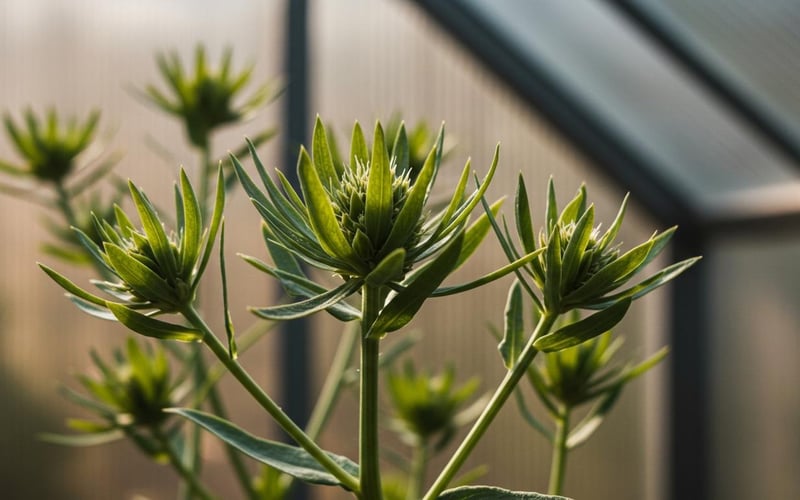
14. Yardlong Beans (Snake Beans)
Scientific Name: Vigna unguiculata subsp. sesquipedalis | Difficulty: Beginner | Season: May to October
These remarkable beans can grow up to 60cm long. They provide excellent vertical growing opportunities in compact greenhouse spaces.
Growing Tips: Harvest when young and tender at 30–45cm length. That gives you the best eating quality. Train them up sturdy supports to maximise your growing area.
Culinary Uses: Stir-fry young yardlong beans whole. Cut them into segments for curries. Pickle them for crunchy condiments. They pair brilliantly with fermented black beans and garlic.
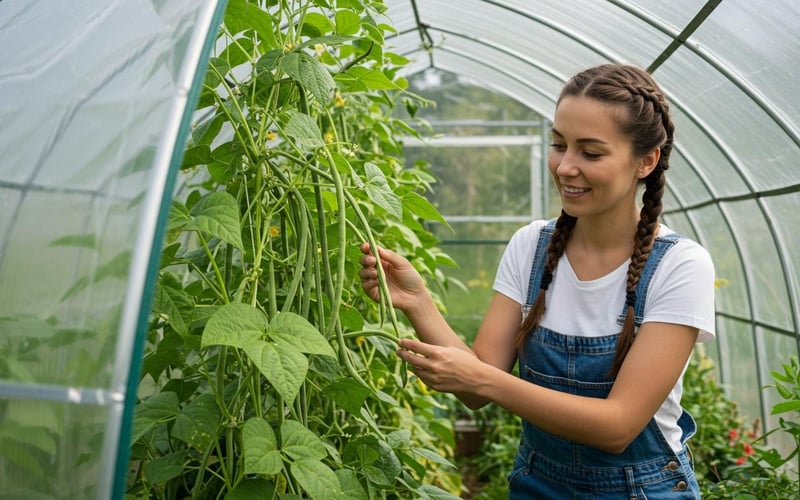
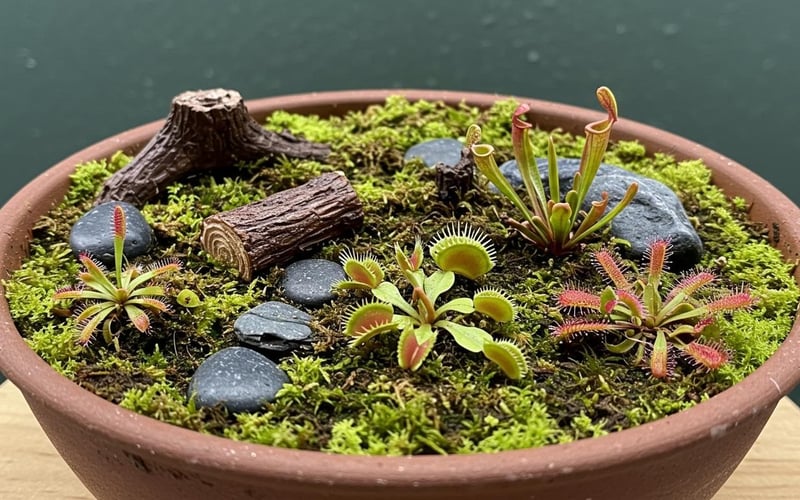
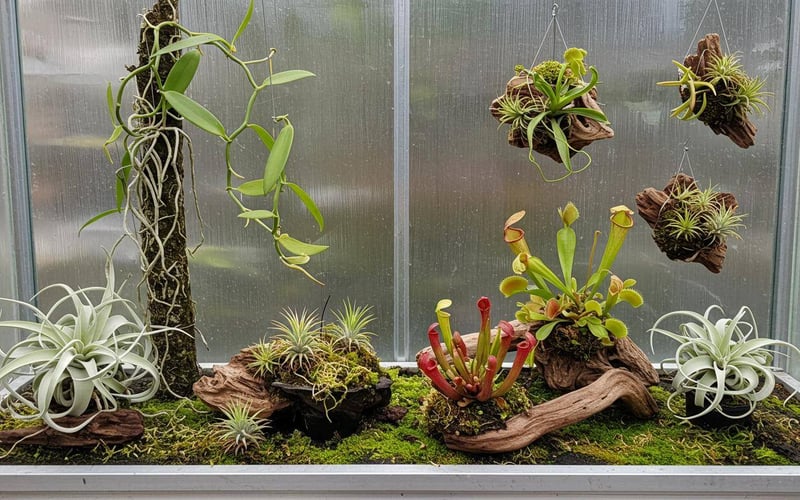
15. Carnivorous Plants Collection
Scientific Name: Various species | Difficulty: Intermediate | Season: Year-round
Carnivorous plants are eye-catching and endlessly fascinating. They are a great way to engage children in gardening. Kids love watching Venus flytraps snap shut on insects.
Popular Varieties: Venus flytraps (Dionaea muscipula), pitcher plants (Sarracenia), sundews (Drosera), and cobra plants (Darlingtonia californica).
Growing Tips: Use rainwater or distilled water exclusively. Plant in sphagnum moss or specialised carnivorous plant compost. Maintain high humidity and bright light.
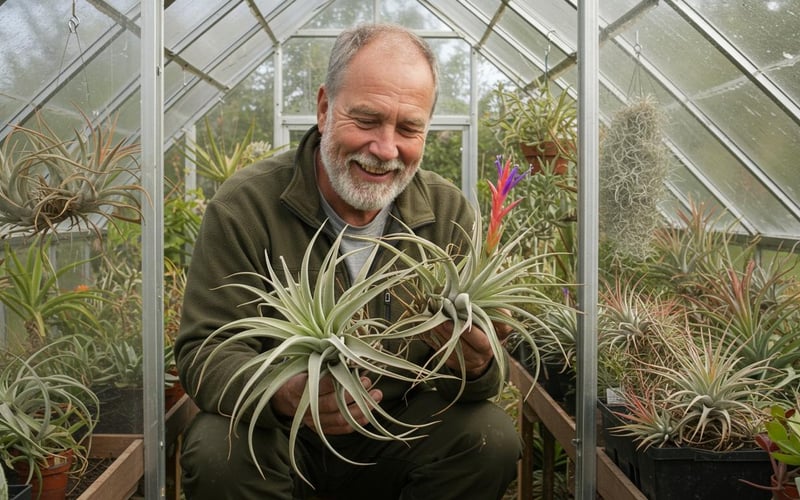
16. Air Plants (Tillandsia)
Scientific Name: Tillandsia species | Difficulty: Beginner | Season: Year-round
These fascinating epiphytes need no soil at all. They create living art installations. They also help purify greenhouse air.
Growing Tips: Mount on driftwood or wire frames. Mist 2–3 times weekly. Ensure good air circulation. Bright, indirect light produces the best colouration.
17. Ice Plants (Crystalline Flowers)
Scientific Name: Delosperma species | Difficulty: Beginner | Season: Year-round
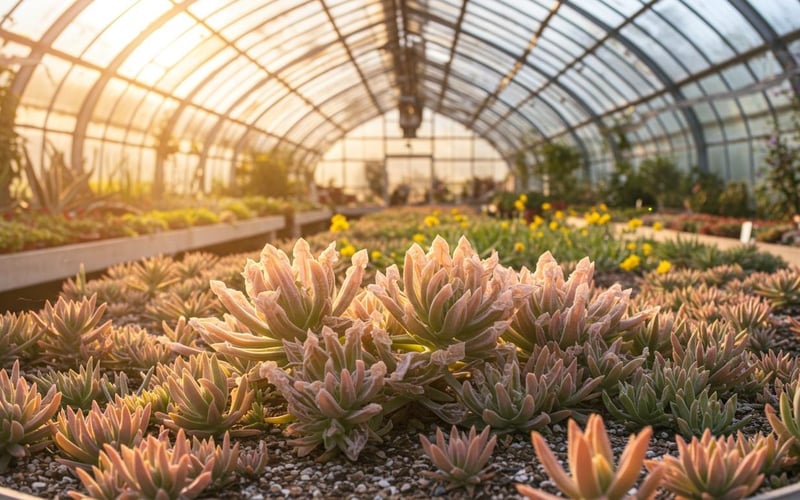
These drought-tolerant succulents produce jewel-like flowers. Their crystalline leaves store water, creating a sparkling effect. See our greenhouse succulents guide for more growing tips.
Growing Tips: Provide excellent drainage and intense light. Allow soil to dry completely between waterings. They are perfect for greenhouse windowsills and hanging baskets.
18. Banana Plants
Scientific Name: Musa species | Difficulty: Intermediate | Season: Year-round
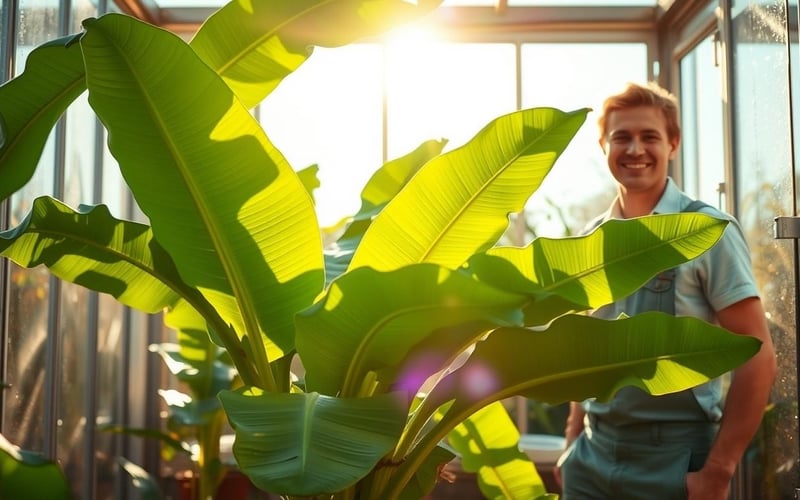
Dwarf banana varieties can fruit in large greenhouse containers. They bring tropical atmosphere and potential harvests. You need ceiling height of at least 2.5 metres for dwarf varieties.
Growing Tips: Choose dwarf cultivars like Super Dwarf Cavendish for container growing. Maintain warm temperatures and high humidity for fruit production.
19. Coffee Plants
Scientific Name: Coffea arabica | Difficulty: Intermediate | Season: Year-round
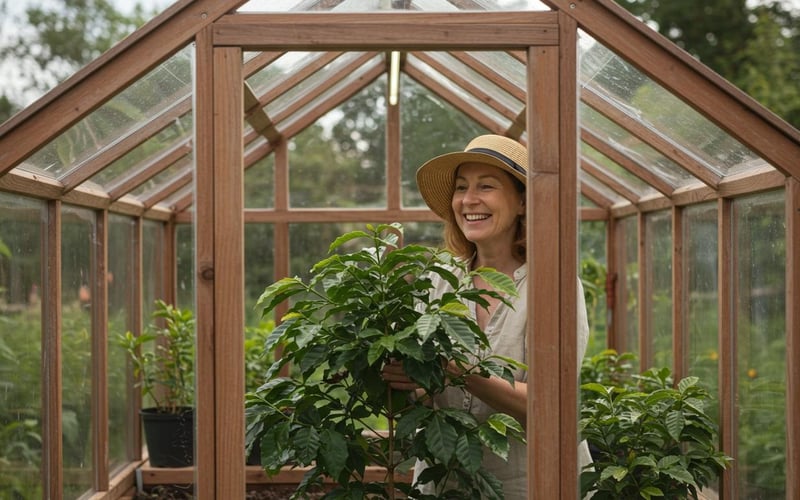
Growing your own coffee beans is possible in greenhouse conditions. Plants produce fragrant white flowers followed by red berries. A wooden greenhouse gives a warm, natural environment that coffee plants respond well to.
Growing Tips: Maintain consistent moisture and filtered light. Plants need 3–4 years to begin fruiting. They prefer slightly acidic soil conditions.
Processing: Remove the pulp, ferment, wash, and roast for artisanal coffee. Even small harvests create meaningful personal blends.
20. Stevia (Natural Sweetener)
Scientific Name: Stevia rebaudiana | Difficulty: Beginner | Season: April to October
This natural sweetener plant produces leaves 30 times sweeter than sugar. It offers a homegrown alternative to processed sweeteners.
Growing Tips: Pinch flowers to encourage leaf production. Harvest leaves before flowering for maximum sweetness.
Culinary Uses: Dry stevia leaves to create homemade natural sweetener for teas. Infuse vodka with fresh leaves for naturally sweet cocktail syrups.
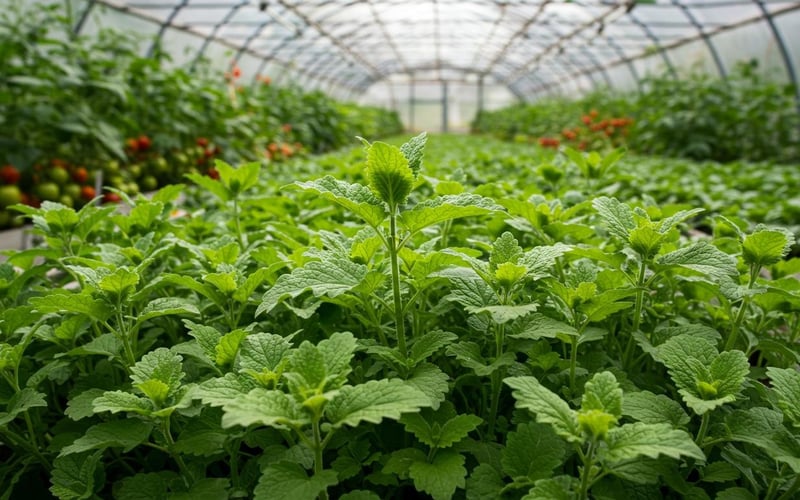
21. Lemon Balm and Exotic Herbs
Scientific Name: Melissa officinalis and others | Difficulty: Beginner | Season: Year-round
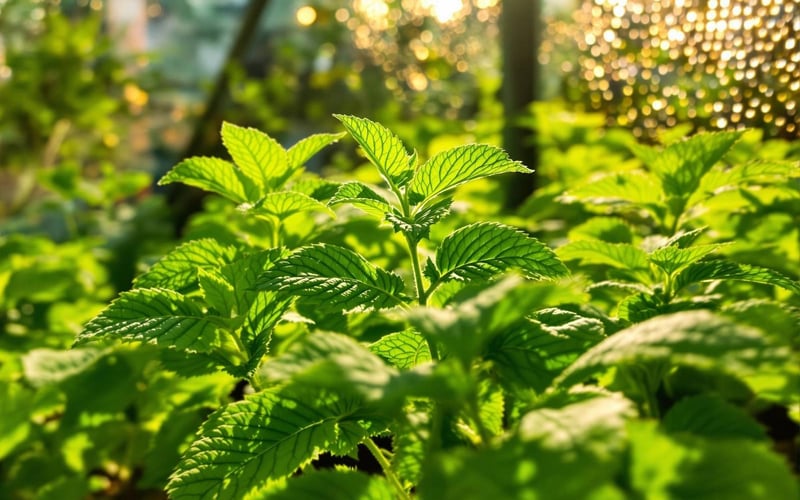
Beyond common herbs, grow exotic varieties like chocolate mint, pineapple sage, and Vietnamese coriander. Our guide to growing herbs in a greenhouse covers the basics well.
Growing Tips: Succession-plant herbs every 4 weeks for continuous harvest. Many exotic herbs prefer partial shade and consistent moisture.
22. Hardy Hibiscus
Scientific Name: Hibiscus rosa-sinensis | Difficulty: Beginner | Season: Year-round
Chinese Hibiscus produces very large but delicate-looking flowers. Ruffled and frilly petals surround prominent stamens. Colours include red, magenta, pastel pink, and mellow orange.
Growing Tips: Provide bright light and consistent moisture during the growing season. Reduce watering in winter. Maintain temperatures above 10°C.

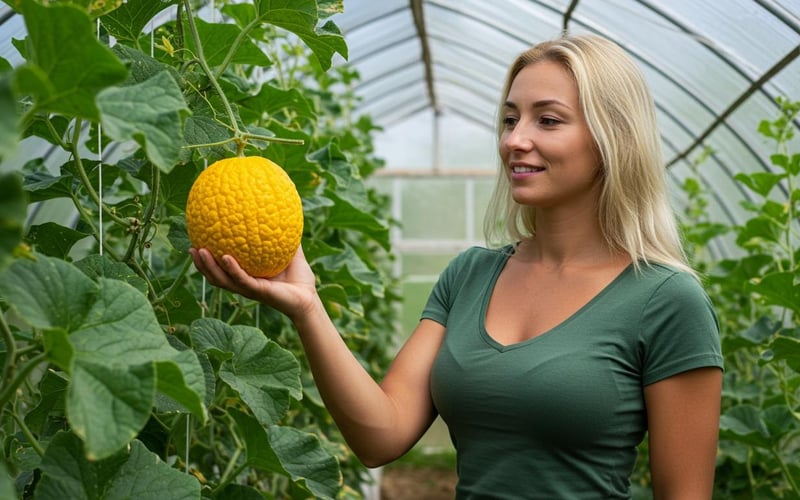
23. Exotic Melons
Scientific Name: Cucumis melo varieties | Difficulty: Intermediate | Season: May to September
Greenhouses offer the ideal warm, humid environment for growing melons. Try unusual varieties like Armenian cucumber melons or Japanese crown melons. These are near-impossible to grow outdoors in the UK.
Growing Tips: Provide strong supports for climbing varieties. Hand-pollinate flowers for reliable fruit set in enclosed greenhouse environments.
24. Miracle Berry
Scientific Name: Synsepalum dulcificum | Difficulty: Advanced | Season: Year-round
This remarkable plant produces berries that alter taste perception. Sour foods taste sweet for up to an hour after eating one. It is a guaranteed conversation starter at dinner parties.
Growing Tips: Requires acidic soil at pH 4.5–5.5 and consistent warmth. Young plants take 3–4 years to fruit. They are fascinating conversation pieces in the meantime.
25. Sensitive Plant (Touch-Me-Not)
Scientific Name: Mimosa pudica | Difficulty: Beginner | Season: Year-round
This is possibly the shyest member of the plant kingdom. It has bright green pinnate leaves. Touch them and all the leaves close inward in unison. It is perfect for getting children interested in gardening.
Growing Tips: Maintain warm temperatures and bright light. The leaf movement response to touch fascinates visitors of all ages.
Cultural Note: Mimosa pudica is called "Lajjalu" in Sanskrit, meaning "shy one." Hindu traditions say the plant teaches humility and sensitivity to our environment.
Seasonal Growing Calendar
Spring (March–May)
- Start from seed: Cucamelons, loofah, tomatillos, celtuce, salsify
- Plant outdoors: Hardy herbs, oca tubers after last frost
- Propagate: Ginger rhizomes, banana plant divisions
Summer (June–August)
- Peak harvest: Cucamelons, young loofah, herbs, melons
- Maintenance: Train climbing plants, hand-pollinate melons
- Start: Late summer herbs, air plant displays
Autumn (September–November)
- Harvest: Mature ginger, oca tubers, dried loofah
- Prepare: Winter protection for tender perennials
- Plant: Spring flowering bulbs for forcing
Winter (December–February)
- Maintain: Tropical plants with supplemental heat and light
- Plan: Next year's exotic plant choices and greenhouse upgrades
- Enjoy: Forced bulbs, winter herbs, preserved harvests
Making the Most of Your Space
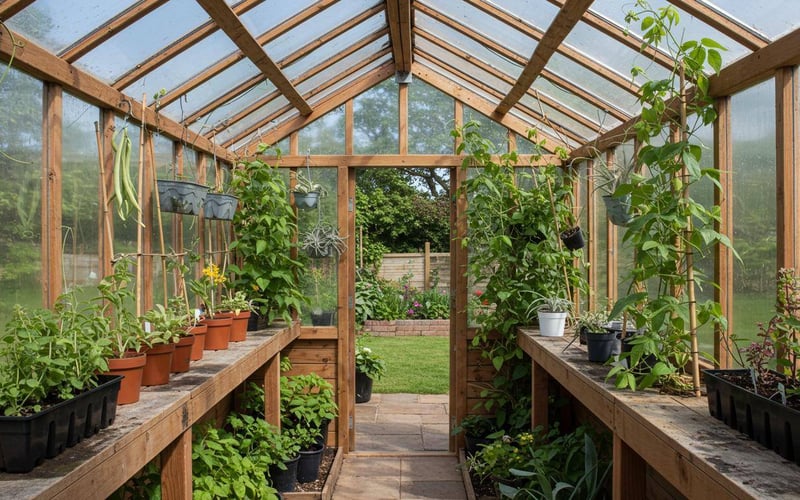
Growing Upwards: Use your greenhouse height with climbing plants like yardlong beans, loofah, and passionflower. Install sturdy supports that reach right up to the roof.
Succession Planting: Stagger sowings of quick-growing crops like herbs and celtuce every 3–4 weeks. You will have fresh harvests all season long.
Mix and Match: Combine plants with different needs. Grow shade-loving wasabi under tall climbing beans. Stick air plants on unused wall spaces.
Moveable Containers: Wheeled plant stands let you move large containers for the best conditions. This is especially useful as seasons change.
Winter Growing Ideas
Turn your greenhouse into a productive winter space with these cold-season options.
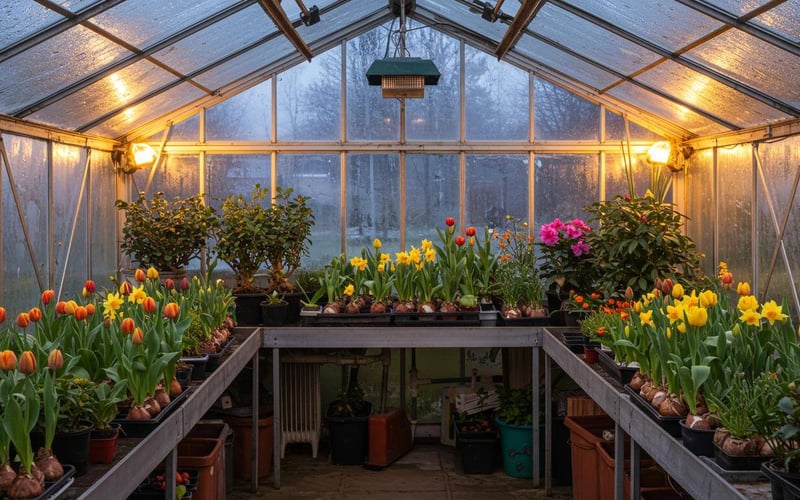
Forced Bulbs: Pre-cooled tulips, daffodils, and hyacinths give you colour during the darkest months. Plant in November for blooms from January to March.
Winter Herbs: Hardy varieties like winter savory, rosemary, and thyme keep producing. They thrive when your garden beds are frozen solid. If you enjoy growing chillies, overwintered plants produce earlier crops the following year.
Microgreens: Fast-growing shoots give you fresh nutrition in just 7–14 days. Try radish, beet, and sunflower varieties.
Cold-Frame Crops: Mâche (corn salad), winter purslane, and land cress do well in unheated greenhouse sections.
Common Problems and How to Fix Them
Pest Issues: Enclosed greenhouse spaces can harbour pests. Bring in beneficial insects like predatory mites. Keep air moving well to prevent infestations. Our pest control guide covers every common greenhouse pest.
Disease Prevention: Give plants enough space and avoid overhead watering. This prevents fungal diseases. Remove any affected plant material straight away.
Climate Control: Automated systems work better than manual management. This matters most when growing many different species together.
Pollination: Many fruiting plants need hand-pollination in greenhouses. Learn the right techniques for each crop type. A small paintbrush works well for most flowers.
Looking After Your Greenhouse All Year
Daily: Check temperature, humidity, and watering needs. Look for pest and disease signs during regular walks through.
Weekly: Harvest ready crops. Train climbing plants. Adjust ventilation based on the weather.
Monthly: Apply fertilisers. Prune overgrown plants. Clean greenhouse glass for maximum light.
Seasonal: Deep clean the greenhouse structure. Service heating systems. Plan crop rotations for better soil health.
A potting shed alongside your greenhouse gives you storage and workspace for year-round exotic growing.
Matt's Tip: Start Small and Expand
I always tell customers to start with 3–4 easy exotic plants first. Cucamelons, ginger, and air plants barely need any special equipment. Once you have those growing well, invest in a heater and misting system for the tropical species. The biggest mistake I see is buying a banana plant and vanilla orchid on day one. New growers then struggle with humidity and temperature. Build your confidence first. The advanced plants will still be there when you are ready.
|
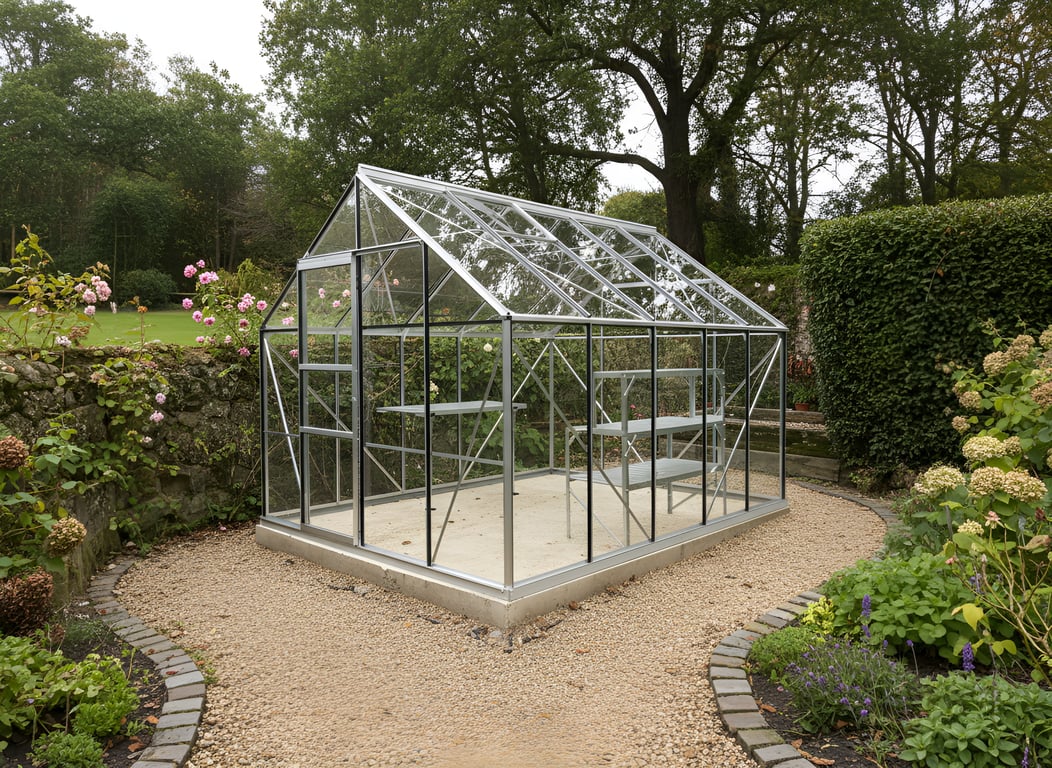
Matt's Pick for Exotic Plant GrowingBest For: Growing multiple exotic species with room for microclimates Why I Recommend It: The 8×10ft floor space gives you room for climbers, ground crops, and a staging area. The ridge height handles banana plants and dragon fruit without cramping. The wide door makes moving large containers in and out easy, which matters when you are overwintering tender plants. Price: £845 |
Frequently Asked Questions
What cannot be grown in a greenhouse?
Plants needing cold stratification or wind pollination struggle most. Many fruit trees require prolonged cold to set fruit. Very large trees outgrow any greenhouse quickly. Crops relying on specific wild pollinators may fail to fruit in enclosed spaces.
What can I grow in a greenhouse all year round in the UK?
Herbs, leafy greens, succulents, and tropical houseplants grow year-round. Dwarf citrus trees, air plants, and tea plants all thrive through winter. With supplemental heating, add hibiscus, banana plants, and coffee to your year-round collection.
What is the most profitable thing to grow in a greenhouse?
Microgreens, speciality herbs, and cut flowers offer the best returns. They grow fast and command premium prices at farmers' markets. Consider local demand and your production capacity when choosing profitable crops.
What grows fast in a greenhouse?
Microgreens are ready in just 7–14 days from sowing. Lettuce and leafy greens take 4–6 weeks. Radishes are ready in 3–4 weeks. Most herbs go from seed to harvest in 4–8 weeks.
What unusual things can I grow in a greenhouse in winter?
Forced bulbs, cold-hardy herbs, and winter salads all thrive. Sprouting vegetables and tropical plants that cannot survive UK winters outdoors also do well. A heated greenhouse opens up many more possibilities for exotic species.
How much space do I need for exotic greenhouse growing?
Even a small 6×4ft greenhouse can fit several unusual crops. Use vertical growing and succession planting to maximise your space. For serious exotic growing with microclimates, an 8×10ft or larger greenhouse gives you the best results.