How to Grow Orchids In Your Greenhouse
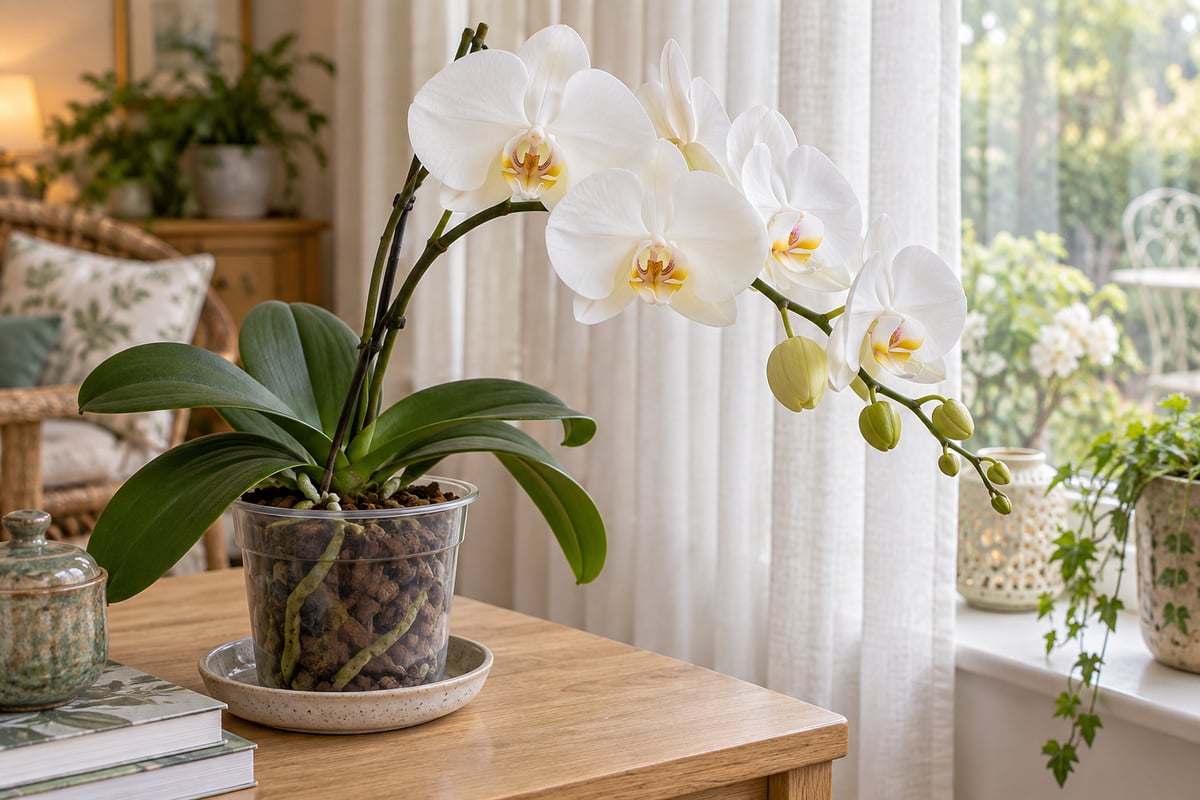
Growing orchids in a UK greenhouse starts with choosing plants that suit the temperatures you can maintain. A moth orchid needs warmth all year; a cooler-growing orchid has different needs. Good light, suitable compost and careful watering matter too. For a few moth orchids, a warm room indoors may be simpler than heating a greenhouse through winter. Build the collection around your available space and conditions.
Key Takeaways
- Identify each orchid before choosing a winter temperature. Moth orchids need consistently warm conditions; a mixed collection may need separate spaces.
- Balance humidity with airflow. Do not keep foliage constantly wet or leave pots standing in water.
- Use a potting medium suited to the orchid. A ready-made bark-based orchid compost suits common moth orchids.
- Keep pots accessible for checking roots, watering and spotting pests. Do not crowd every shelf.
- Check the heater's output and your electricity tariff. A thermostat reduces running time, not the price of each powered-on hour.
- Ventilate according to the weather without chilling tender plants. Insulation alone cannot guarantee frost protection.
Expert Tip
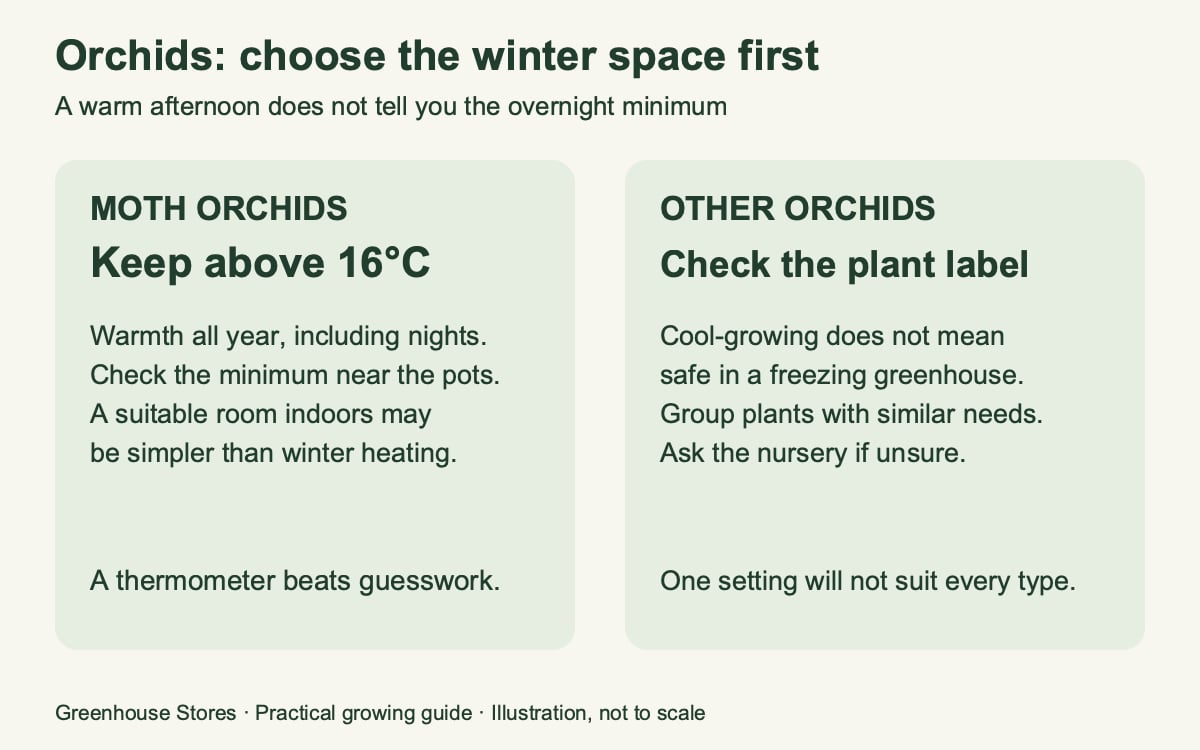
Check your greenhouse's overnight minimum before moving orchids into it. A warm afternoon tells you very little about the coldest part of the night. If only one or two plants need tropical warmth, keeping them indoors can be the sensible choice.
What temperature do orchids need in a greenhouse?
There is no single temperature setting for all orchids. Check the plant label or ask the nursery for its minimum and seasonal needs. Keep moth orchids above 16C. Do not lower a whole collection to suit a cooler-growing plant.
| Orchid | What to check | Practical choice |
|---|---|---|
| Phalaenopsis (moth orchid) | Consistent warmth, including overnight | A reliably heated space, or a suitable room indoors |
| Cymbidium | The hybrid's cool-season requirements and frost protection | A cooler space may suit it better than the moth-orchid bench |
| Dendrobium and other varied groups | The exact plant's temperature, light and rest requirements | Do not choose care from the genus name alone |
Group plants with similar needs. A compromise setting may be too cold for one and too warm for another.
A max-min thermometer is not optional — it is the single most important tool for orchid growing. The Vitavia Max-Min Thermometer (£30) records the highest and lowest temperatures over 24 hours so you can check that your heater is doing its job overnight.
How much humidity do orchids need?
Humidity needs vary between orchids and growing spaces. Look at the plant's care instructions rather than trying to keep every greenhouse at one fixed percentage. Condensation and damp flowers are reasons to check ventilation, not to add more mist.
A tray of damp pebbles beneath a pot can help the immediate surroundings. Keep the pot base above the water and clean the tray regularly. It will not reliably humidify a whole greenhouse. Our humidity guide explains the wider balance.
Expert Tip: avoid constantly wet surfaces
Be cautious about wetting floors. Keep walkways safe and water away from electrical equipment. If leaves remain wet for hours, rethink the routine. A hygrometer can help you observe changes, but healthy roots and leaves matter more than chasing a number.
What is the best potting mix for greenhouse orchids?
For common moth orchids, use a suitable bark-based orchid compost rather than garden soil. Different orchids need different moisture levels, so a fixed homemade recipe is not suitable for the whole collection. Buy a mix labelled for your type of orchid if you are unsure.
| Potting check | What to look for |
|---|---|
| Medium | Suited to the orchid, not ordinary garden soil for a moth orchid |
| Drainage | Open holes; no trapped water in an outer decorative pot |
| Condition | Replace broken-down medium when it stays excessively wet |
Repot when the medium has broken down or the plant needs it, using guidance for that orchid. Gently remove spent medium and dead roots with clean tools. Avoid putting a small root system into a very large pot. Do not cut off firm, healthy aerial roots simply because they sit outside the container.
What size greenhouse do you need for orchids?
Start with the space the mature plants need, not a fixed number of orchids per greenhouse size. Leaves and flower spikes need room. You also need access for watering, a safe heater position if used, and space to handle a pot without knocking neighbouring plants.
| Before choosing a greenhouse | Measure or check |
|---|---|
| Collection | Mature leaf spread, flower height and room between plants |
| Working space | A clear path and somewhere to lift out and repot a plant |
| Winter conditions | Required temperature, heat loss and a safe power supply |
A small collection does not automatically require a greenhouse. For expansion, browse our small greenhouses, then sketch the staging and walkway at scale. Check how much winter heating the intended collection will need before ordering.
Why should you raise orchids off the ground?
Staging makes orchids easier to inspect and water. Temperatures can differ across a greenhouse, but the floor is not always a fixed number of degrees colder. Put a minimum-maximum thermometer near the plants and check suspected cold spots. Keep pots away from direct heater airflow.
Choose stable staging with enough room around the pots. Lower shelves may receive much less light, so do not assume two tiers double the space for orchids. Our staging and shelving guide helps with layout and access.
How do you control light for greenhouse orchids?
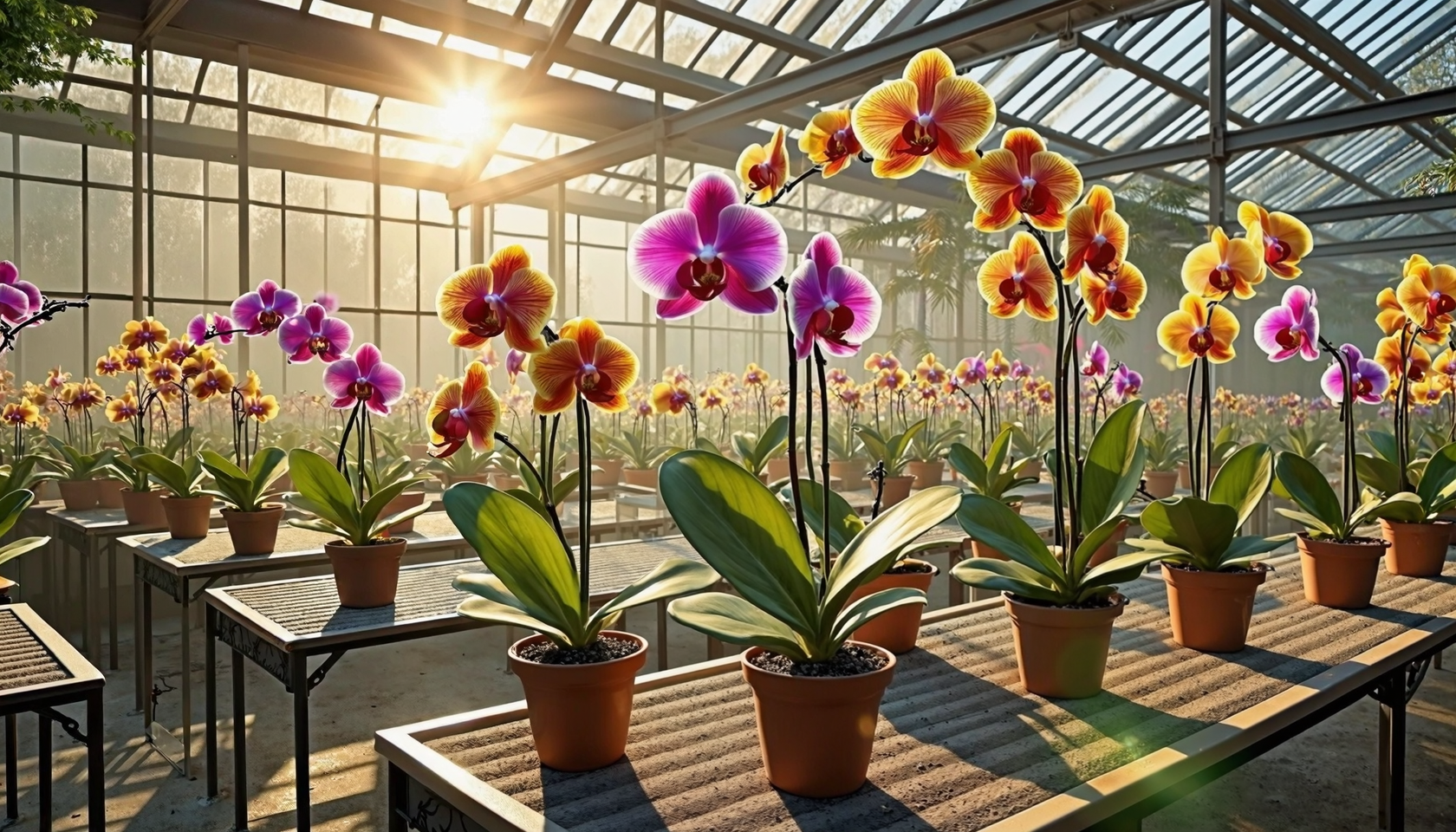
Match the light to the orchid. Moth orchids prefer bright light without strong direct sun, while some other orchids need brighter conditions. Check the bench on sunny days, especially when moving plants from indoors. Our greenhouse shading guide explains the options.
Adjust shading as the season changes rather than following fixed dates. Too much shade in winter can limit growth. Ventilation and shading do different jobs: a shaded greenhouse can still overheat. Move an affected plant out of harsh sun while you check the cause of leaf damage.
How do you water orchids in a greenhouse?
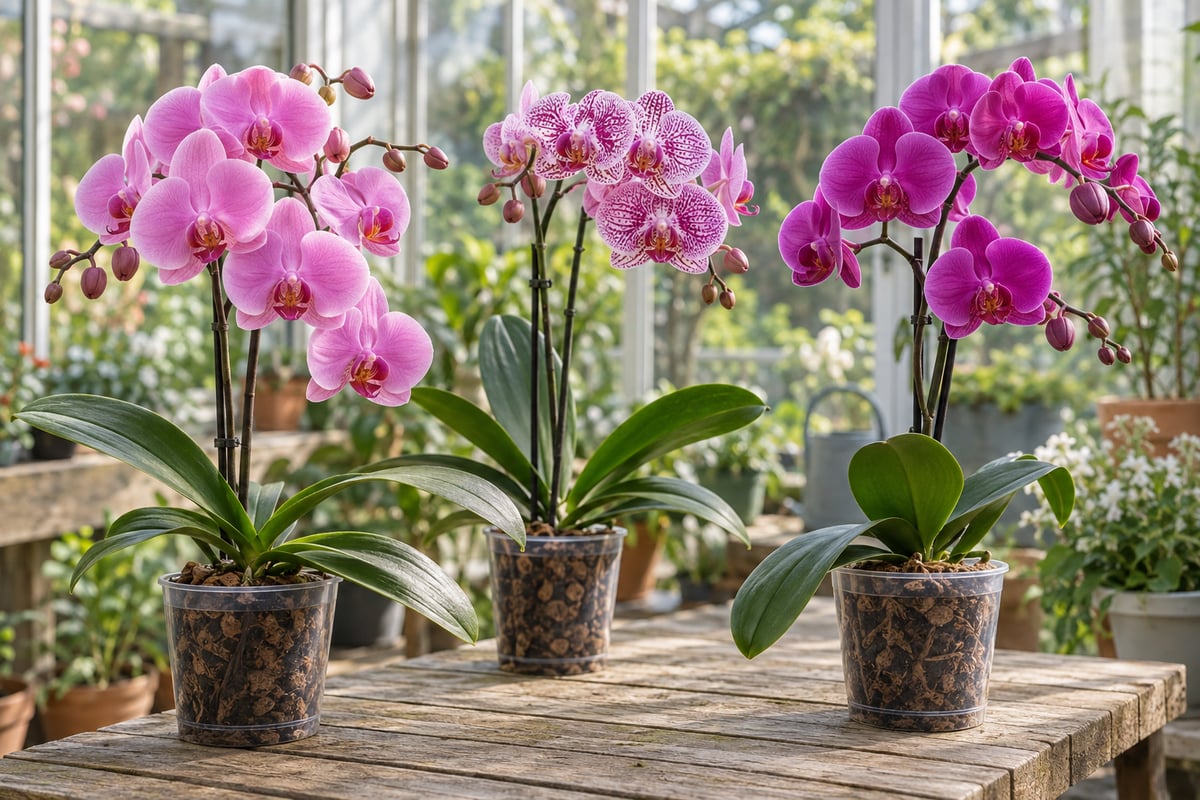
Check the pot and growing medium before watering. For a moth orchid, let the bark lose excess moisture between waterings without leaving the roots bone dry. Water thoroughly when needed and allow it to drain. A small warm pot may dry faster than a large cool one, so a fixed calendar is unreliable.
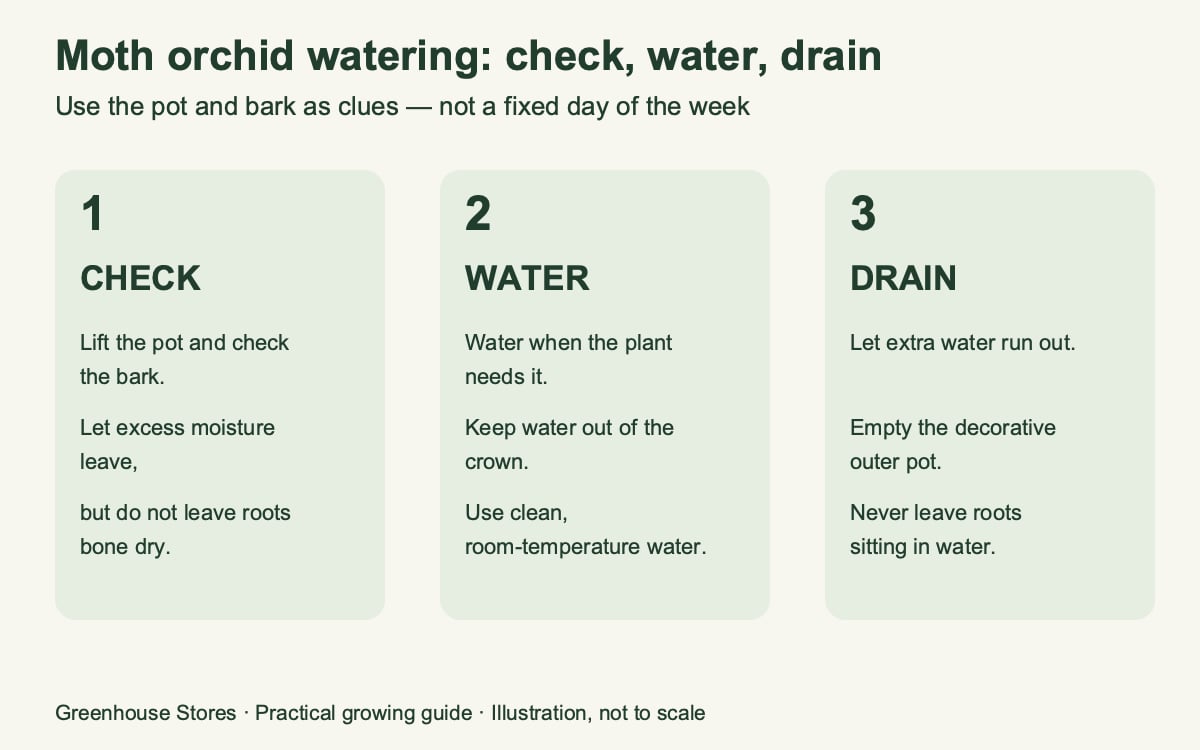
Use water at a suitable room temperature and avoid leaving it trapped in a moth orchid's leaf crown. Empty decorative outer pots after watering. Rainwater can be useful in hard-water areas if collected and stored cleanly. Do not share dirty soak water between plants.
How do you avoid common orchid problems?
Start with the roots, growing conditions and a close inspection of the plant. Similar-looking symptoms can have different causes. Separate a plant with suspected pests before returning it to a crowded bench.
| Problem | Signs | Cause | Fix |
|---|---|---|---|
| Root trouble | Soft or collapsing roots | Persistently wet or degraded medium may contribute | Inspect the roots and repot if necessary; correct the watering problem |
| Grey mould | Mould on damaged flowers or foliage | Damp conditions and poor airflow | Remove affected material and improve conditions without chilling plants |
| Bud drop | Buds fall before opening | Several possible stresses | Check temperature changes, watering and recent moves |
| Thrips | Streaking or damage with tiny insects present | Infestation | Isolate, identify and seek a suitable biological or authorised treatment |
| Scale insects | Attached bumps, sometimes with sticky deposits | Infestation | Isolate and remove small numbers carefully; inspect repeatedly |
| Possible sun damage | Bleached or brown patches on exposed leaves | Strong light or heat may contribute | Move out of harsh sun and check other possible causes |
Do not spray orchids with homemade neem mixtures or methylated spirit. If treatment is needed, use a UK-authorised product whose label covers the intended use. Check orchid suitability and compatibility with any biological controls. Our pest guide can help with identification.
How do you get orchids to bloom again?
Flowering depends on the orchid, its maturity and its growing conditions. Some respond to seasonal temperature changes, but a universal 5-8C night drop is not a safe instruction. Keep warm orchids above their safe minimum and ask the nursery about the particular plant if it repeatedly fails to flower.
Feed according to the plant's growth and the fertiliser label. Do not assume every orchid stops growing on the same winter date. A healthy moth orchid may flower again from a green spike; a spent brown spike can be removed. Other orchids need different pruning, so identify the plant first.
How do you care for greenhouse orchids in winter?
Decide where each orchid will spend winter before cold nights arrive. A few simple checks are more useful than trying to manage every plant on the same schedule:
- Check insulation. It can reduce heat loss, but also cuts light and does not guarantee a frost-free space. See how to insulate a greenhouse.
- Match heating to the plants. Check the overnight minimum at plant height, away from the heater itself.
- Check before watering. Cooler, slower-growing plants often need less water. Do not leave actively growing orchids dry just because it is winter.
- Ventilate carefully. Use suitable mild periods and avoid cold draughts across tender plants.
- Review feeding. Follow the plant's growth and the fertiliser directions, rather than a blanket stop date.
- Have a cold-weather plan. Know which plants you can bring indoors if heating fails. Test equipment before relying on it.
For the full winter greenhouse care strategy, read our winter greenhouse care guide. For heating options and running costs, see how much does it cost to heat a greenhouse.
Browse our current greenhouse heaters. Check fuel type, ventilation, clearances and output against your greenhouse and plants before choosing.
Frequently asked questions
Can you grow orchids in an unheated greenhouse in the UK?
An unheated greenhouse is not reliable winter accommodation for tender orchids. Some cooler-growing orchids suit lower temperatures, but still need protection appropriate to the exact plant. Moth orchids need a consistently warm space.
How often should you water orchids in a greenhouse?
Water when the plant and potting medium need it, not on fixed dates. Check moisture and pot weight, water thoroughly when appropriate, then drain. Different orchids need different drying intervals.
What is the best orchid for beginners in a greenhouse?
A moth orchid is approachable if you can provide warmth all year. A warm room may be easier than a greenhouse in winter. Choose the growing space first, then an orchid that suits it.
Do orchids need direct sunlight in a greenhouse?
It depends on the orchid, but strong sun can damage moth-orchid leaves. Give moth orchids bright, filtered light and adjust shading to actual conditions. Other orchids may need more light.
How do you increase humidity for orchids in a greenhouse?
Damp pebble trays can help locally, provided pots stay above the water. Keep trays clean and maintain airflow. Do not expect a tray to raise a whole greenhouse by a fixed percentage.
What temperature should a greenhouse be for orchids in winter?
Use the minimum temperature required by your most sensitive orchid. Moth orchids need to stay above 16C. Keep incompatible warm- and cool-growing plants in separate suitable spaces.