How to Grow Melons in Your Greenhouse
You can grow melons in a UK greenhouse without turning it into a tropical hothouse. Choose an early variety, raise the seedlings in warmth and wait for settled conditions before planting. Give each plant room, keep the compost evenly moist and help pollination if insects are scarce. The extra job is supporting developing fruit: a climbing vine needs a separate sling beneath each melon.
Key takeaways
- Start with an early melon variety rather than a long-season supermarket type.
- Young plants need warm nights as well as sunny days.
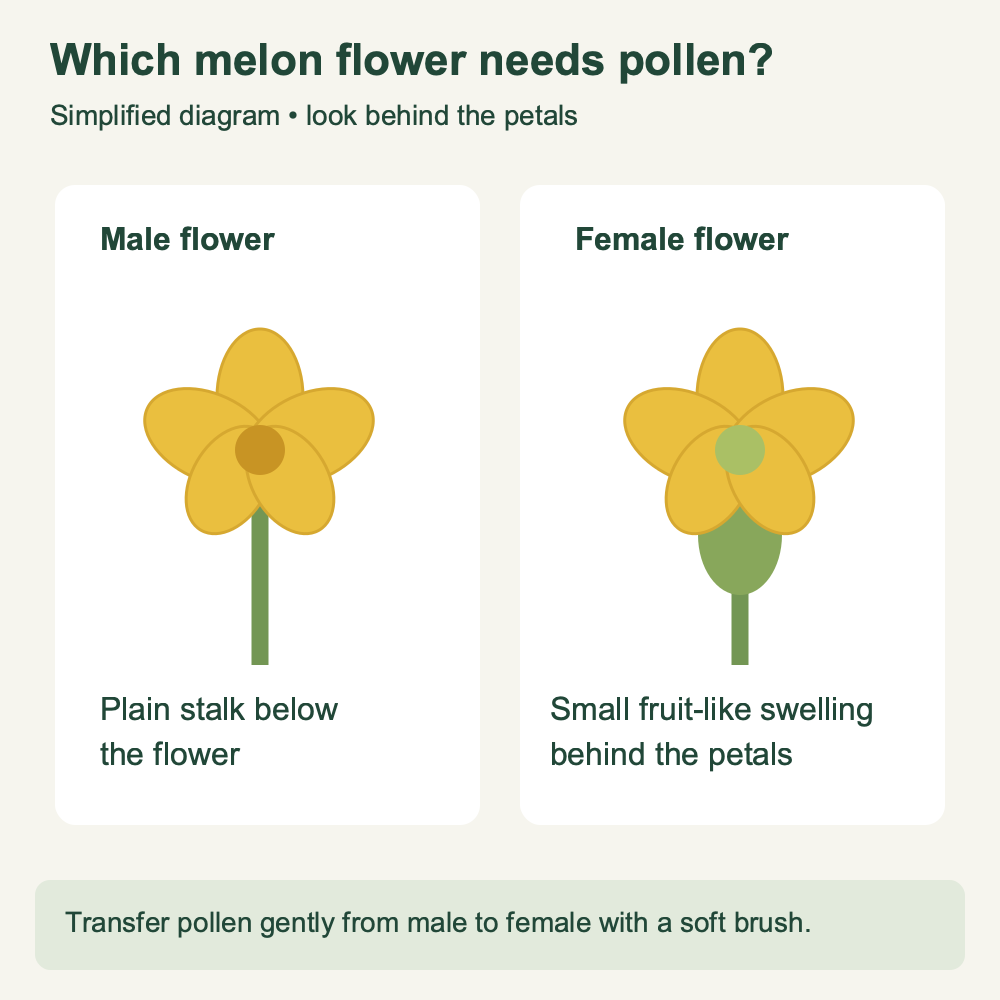
- Female flowers have a small swelling behind the petals; male flowers do not.
- Keep moisture steady while fruit develops, then reduce watering as it ripens.
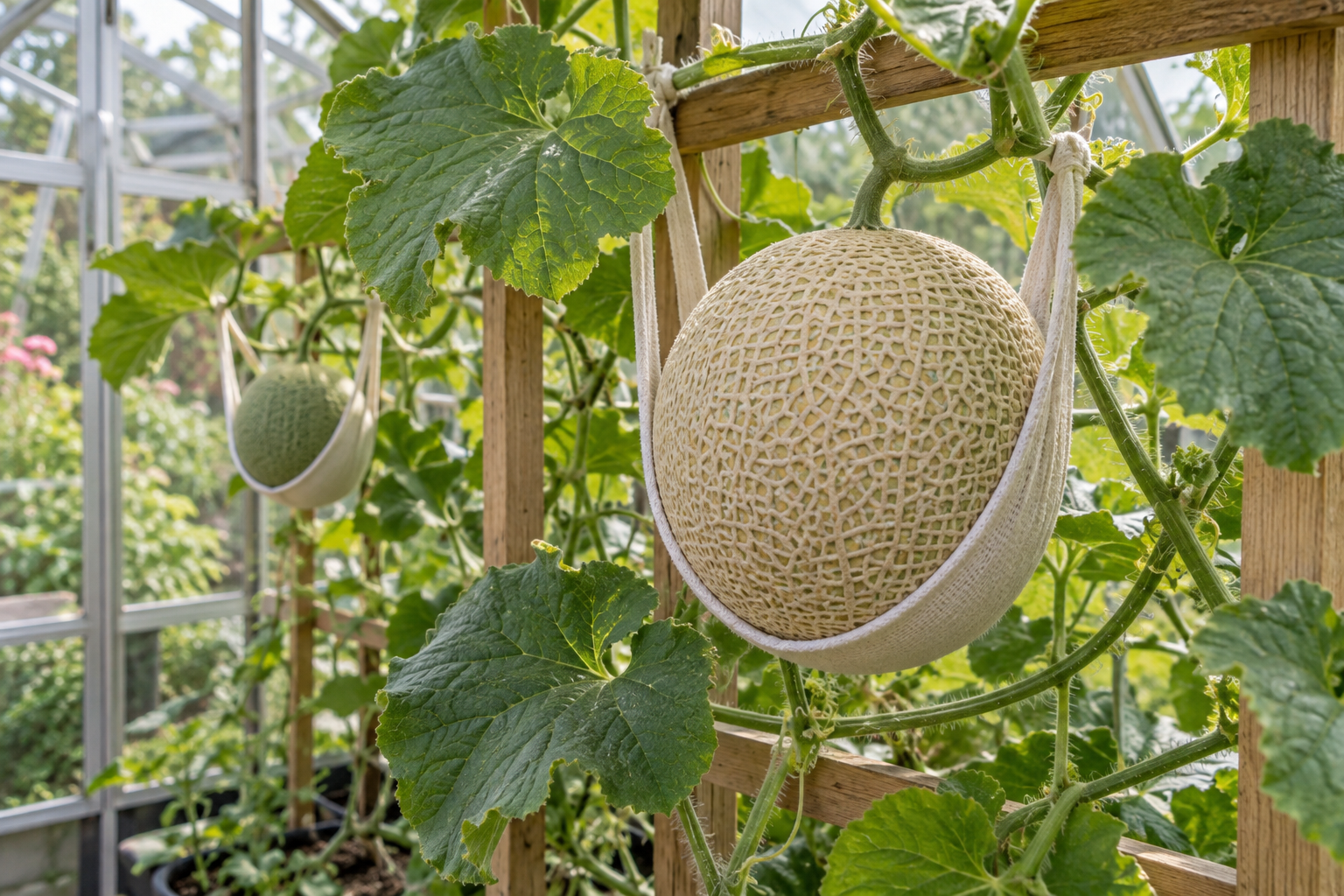
- Support hanging melons without putting their weight on the fruit stalk.
Expert tip
A small number of healthy plants is a better first attempt than a crowded row. Leave enough space to reach the flowers and check the fruit. Melon leaves can quickly hide what is happening underneath.
When should you sow melon seeds in the UK?
Mid-April to mid-May is a useful starting window for many home growers. Follow the variety's packet and consider where the seedlings will live afterwards.
Sow into individual pots of seed compost in a warm propagator or suitable indoor spot. Germination needs warmth; an unheated greenhouse alone may still be too cold. Aim for 18–21°C for germination, checking your seed packet.
Once shoots appear, give them good light and room to develop. Pot on gently before they become rootbound. Do not move a healthy young melon into a cold frame simply because it has produced its first leaves. A warm afternoon tells you little about the overnight minimum.
Which melon varieties suit greenhouse growing?
Choose a variety described as early and suitable for UK protected growing. That is more useful than picking the largest fruit pictured on a packet.
'Ogen', 'Alvaro' and 'Emir' are options worth comparing with your seed supplier. Check the final plant size and training advice as well as flavour. A compact plant and a vigorous climber can require quite different amounts of space.
Do not read a “days to maturity” number as a guaranteed interval from sowing. Suppliers may count from transplanting, and cool weather can delay the crop. Treat late summer as a likely harvest period, then judge the fruit itself. One successful early variety is enough for a first season.
How do you prepare a greenhouse for melons?
Make room for the mature plant before planting the seedling. You need access for watering, tying in shoots and reaching flowers.
For containers, a pot around 40cm wide and deep gives a single plant useful root space. Use suitable peat-free potting compost and drainage holes. A standard growbag is not an invitation to squeeze in several large melon plants; check its instructions and the available compost volume.
In a border, choose fertile, well-drained soil and incorporate well-rotted organic matter where needed. Do not automatically add lime or sulphur to chase a very narrow pH target. If the ground stays waterlogged, resolve that problem before planting.
Fit supports while access is easy. Mature vines and fruit are heavy, so use a suitable supporting structure. Do not assume a light lining clip, vent arm or roof pane can carry the crop. Our greenhouse raised-bed guide helps with the growing-space layout.
When can melon plants go into the greenhouse?
Plant when the greenhouse is reliably warm enough overnight, not on a fixed date. Late May or June is often more realistic than an early spring move.
Check a minimum thermometer where the plants will stand. Wait until temperatures are reliably above roughly 12–15°C. Keep plants indoors or provide suitable protection if a cold spell arrives.
An unheated greenhouse can produce melons in a favourable summer. It cannot guarantee a crop in every location or season. A heater is not automatically necessary, but warmth at germination does not remove the need to protect the growing plant.
How should you train and support melon plants?
Climbing plants save floor space but need regular attention. Tie the main shoot to its support loosely, allowing room for the stem to thicken.
Keep useful side shoots because these can carry female flowers. Do not treat a melon like a cordon tomato and remove every side shoot. Follow the training method recommended for your variety. Once fruit has set, shorten overlong fruiting side shoots beyond the fruit, leaving healthy leaves to support growth.
Thin an overloaded plant rather than expecting every flower to become a ripe melon. Four to six fruit may suit a vigorous greenhouse plant, but a weaker one should carry fewer. The crop's condition matters more than hitting a target.
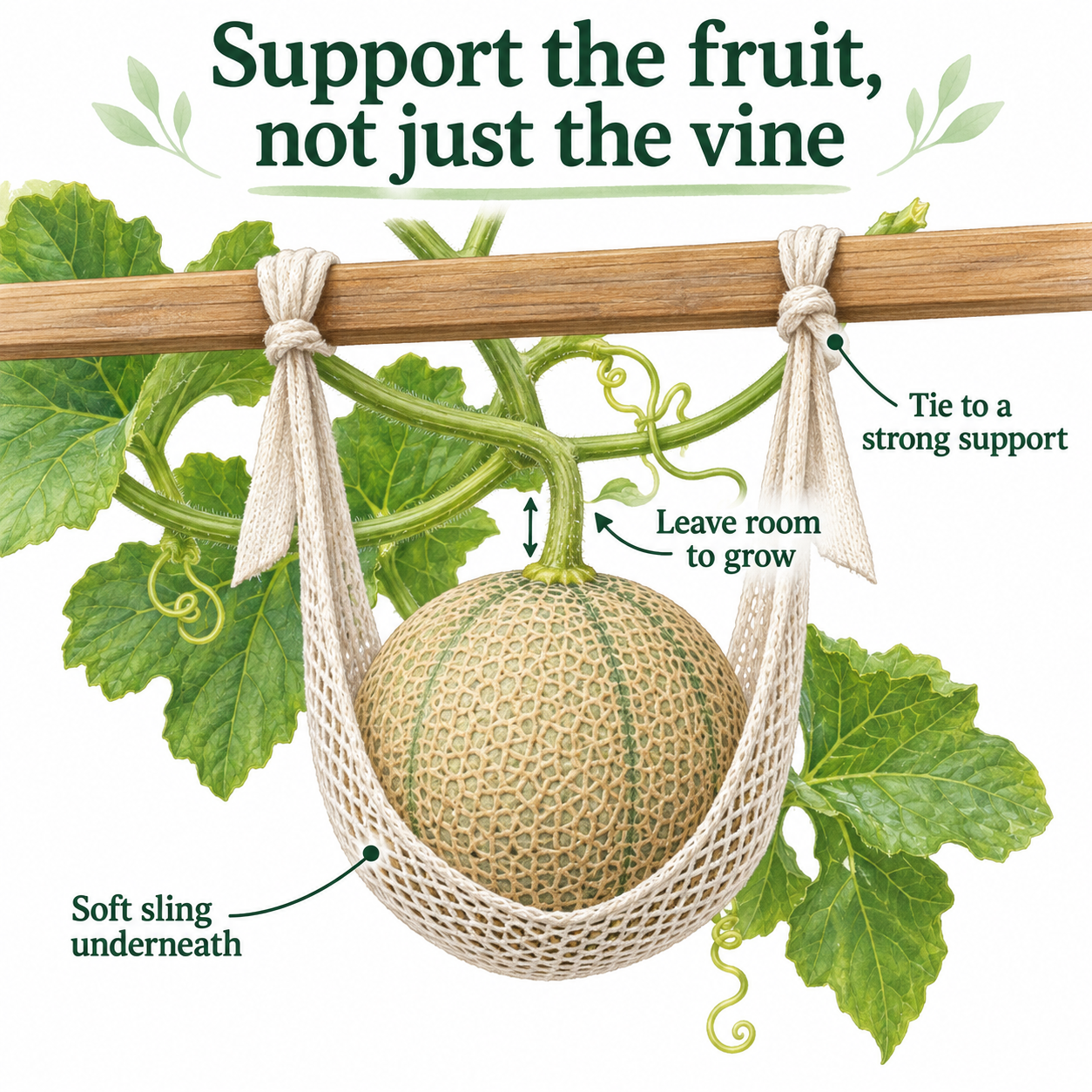
Check slings as the melons swell. A tight knot around a stalk is not a fruit support. For trailing plants, keep developing fruit away from wet soil with a clean, dry support beneath it.
How do you pollinate greenhouse melons?
Look behind the petals to identify a female flower. The small swelling is the developing fruit; a male flower sits on a plain stalk.
When both flower types are open, use a soft brush to transfer pollen from the male flower's centre to the female centre. Work gently. You can also use a freshly opened male flower after removing its petals.
Allow pollinating insects access when conditions permit. If fruitlets yellow and drop, poor pollination is one possible cause, but cold, excessive heat and plant stress can also contribute. Check the growing conditions rather than repeating pollination alone.
Keep the flowering side shoots and check whether your melon flowers need hand pollination.
How much water and feed do melons need?
Keep the compost evenly moist while plants grow and fruit swells. A large plant in a pot can need checking daily during hot weather.
Water the compost rather than routinely wetting foliage. Let excess water drain, then check again before adding more. There is no dependable “two litres every three days” rule for every pot, plant and greenhouse.
Use an appropriate liquid feed according to its label, moving to a high-potassium feed as fruit develops. Do not double the concentration to speed the crop up. As fruit ripens and the plant starts to decline, reduce watering and stop feeding. Avoid sudden drought while fruit is still actively developing.
Our watering and irrigation guide explains how to check a setup before leaving it unattended.
What problems should you watch for?
Inspect leaf undersides and young shoots during your watering rounds. Early signs are easier to deal with than a heavy infestation.
Fine webbing and leaf speckling can suggest spider mites. White insects rising when leaves are disturbed may be whitefly. Identify the problem before buying a treatment; our greenhouse pest guide is a useful starting point.
Space plants and ventilate to avoid a crowded, stagnant canopy. Remove badly affected or decaying material carefully. Do not reach automatically for a sulphur spray: any pesticide must be authorised for the crop and use, and applied exactly as labelled.
How do you know when a melon is ripe?
Use the variety's ripening signs rather than a tapping test alone. Many dessert melons become fragrant and change skin colour; some develop a crack where the stalk joins.
Check fruit regularly once those changes begin. Not every type detaches in the same way, so do not pull hard at an attached melon. Support it while cutting if necessary.
A disappointing first fruit does not mean you need a more expensive greenhouse. Look at variety choice, light, growing time and watering first. Keep a note of when you sowed and harvested; that gives you a useful starting point for next year.
A greenhouse layout with room to work
Choose growing space around access and support, not a promised melon yield. The Venus 6200 below illustrates a longer footprint with space to plan a clear working path.
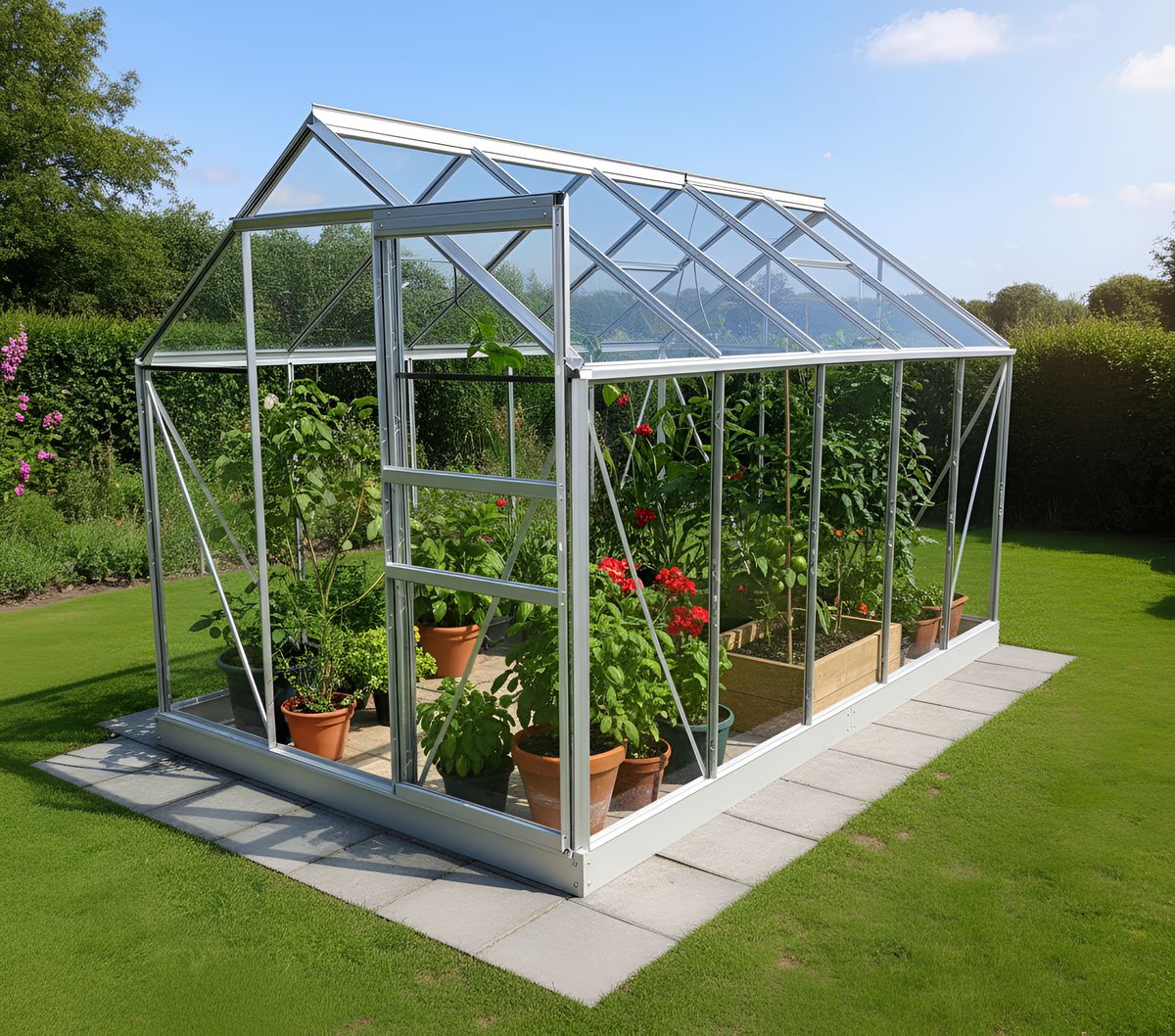
Current price: £699. Check the product page for the available options and fitting details.
The pictured model uses toughened glass. Neither the frame size nor the glazing guarantees warmth overnight. Check your site, ventilation and crop-support arrangement before deciding whether it suits you.
Matt's tip: leave yourself a way in
Before planting, imagine the leaves at full size and put a watering can beside each final planting position. If you cannot reach it without stepping across another pot, change the layout now.
Frequently asked questions
Can you grow melons in an unheated greenhouse in the UK?
Yes, with a suitable early variety and a warm growing season. Raise seedlings in warmth and wait for reliably mild nights before planting. A crop is not guaranteed in every location or summer.
When should I sow melon seeds?
Mid-April to mid-May suits many UK home growers. Check the seed packet and make sure you have somewhere warm and bright for the seedlings afterwards.
Do greenhouse melons need hand pollination?
They may need help if pollinating insects are scarce. Transfer pollen gently from an open male flower to a female flower. The female has a small swelling behind its petals.
How many melons should I leave on each plant?
Match the crop load to the plant’s vigour. Four to six fruit may suit a strong greenhouse plant, but weaker plants should carry fewer. This is a management guide, not a harvest guarantee.
How do I know when a melon is ripe?
Check the variety’s colour, fragrance and stalk changes. Many dessert melons become fragrant or crack slightly near the stalk. Do not rely on a hollow tapping sound alone.