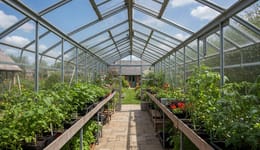
Growing Vegetables in a Greenhouse All Year Round
A greenhouse can provide harvests across the year if you choose crops for each season. Summer suits tomatoes and cucumbers; established hardy salads can supply winter pickings. An unheated greenhouse still gets cold, and growth slows as daylight falls. Plan winter crops before summer ones finish, then adapt this calendar to your local weather, varieties and available space.
Key Takeaways
- Plan for seasonal harvests. Year-round growing does not mean every crop grows in every month.
- Small greenhouses can be productive too. Match the number of plants to the available space and light.
- Hardy winter salads may grow without heating. Tender plants need their own temperature protection.
- Keep soil and containers healthy. Crop rotation helps where practical, but cannot prevent every disease.
- Ventilate when conditions allow. Protect tender plants from frost as well as overheating.
- Sow small batches to fill gaps. Adjust the interval to the crop, variety and season.
Expert Tip
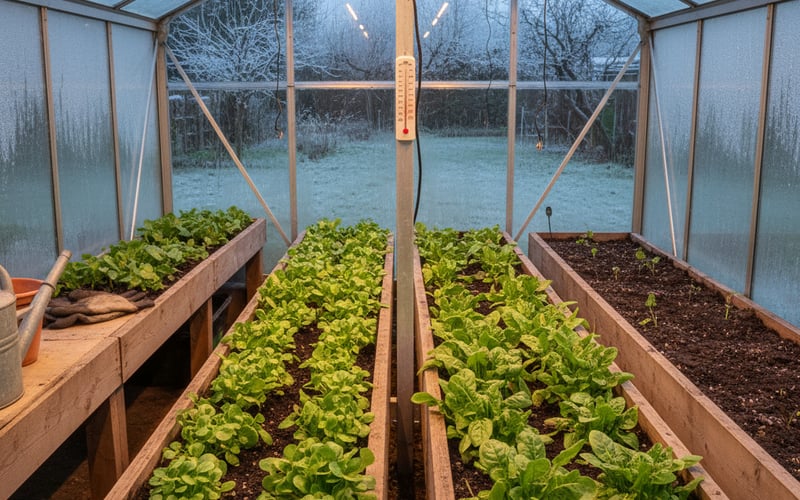
Start planning winter salads while your summer crops are still growing. A few young plants in modules can be ready when a border becomes free. Waiting until the darkest weeks makes establishment much harder.
Why grow vegetables in a greenhouse year-round?
Shelter gives you more control over the growing season. You can start suitable crops earlier and protect later harvests from poor weather. The extra growing time varies with your location, crop and whether you provide heat.
Choose vegetables you enjoy eating and can harvest regularly. Salad leaves, herbs and ripe tomatoes make practical use of limited space. Our beginners guide helps you choose a manageable first crop.
Glass protects plants from heavy rain and wind. It can improve conditions for tender summer crops, but it does not guarantee a particular yield.
Aubergines, peppers, chillies and melons appreciate warm, sheltered conditions. Success depends on variety, local weather and growing care. Keep them protected from cold nights.
Choosing a greenhouse for year-round growing
There is no minimum greenhouse size for year-round growing. A small structure can hold winter salad pots after summer crops finish. Choose a layout with room to reach, water and harvest everything.
More space gives you flexibility, particularly when raising seedlings alongside established plants. Mark out pots, staging and the path before deciding how many crops will fit.
Toughened glass is chosen for its breakage characteristics, not better insulation than ordinary glass of the same thickness. Twin-wall polycarbonate can improve insulation, with light transmission varying by product. Compare the glazing specification as well as the frame in our greenhouse range.
Provide ventilation suitable for the greenhouse and its crops. Automatic openers help manage rising temperatures, but check their operation and opening range. Sunny spring days can overheat seedlings even when nights remain cold.
A potting shed can provide a separate workspace, but it is not automatically frost-free. Tender seedlings still need suitable warmth and light.
| |
| Matt's Pick for Year-Round Growing | |
| Best For | Year-round vegetable growing in a mid-size garden |
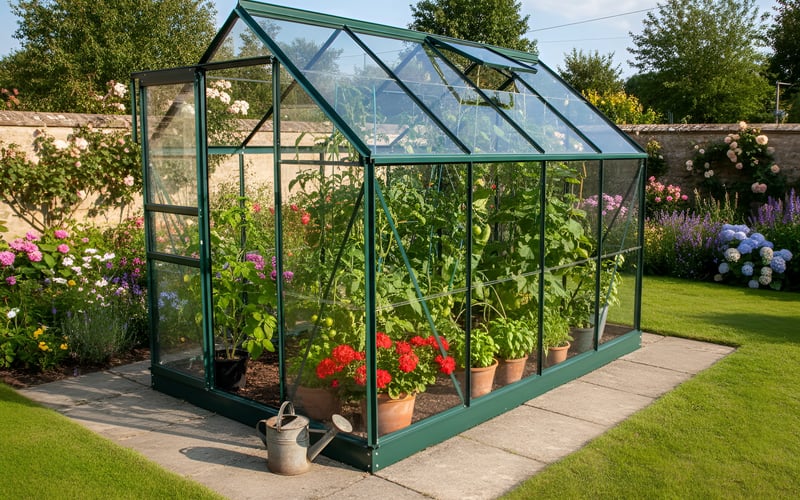
| Why I Recommend It | The Venus 5000 offers space for a manageable mix of pots and staging. Check its dimensions against your layout. Toughened glass is a safety choice, not extra insulation. |
| Price | £649 |
| View Vitavia Venus 5000 8x6 Green | |
What to grow each season
Use the seasonal table as a planning guide, not a set of fixed sowing dates. Follow variety instructions and local conditions. Northern, shaded and exposed gardens may need later spring starts.
| Season | Sow Dates | Crops | Key Tasks |
|---|---|---|---|
| Spring (Mar–May) | Tomatoes: mid-March Cucumbers: early April Peppers: late February Salads: every 3 weeks from February |
Tomatoes, peppers, cucumbers, radishes, lettuce, spinach, spring onions, broad beans (started Jan) | Harden off seedlings for outdoor planting. Increase ventilation as temperatures rise. Begin liquid feeding tomatoes once flowers set. |
| Summer (Jun–Aug) | Aubergines: already growing from April sowing French beans: June Autumn salads: late July Kale: July |
Tomatoes, cucumbers, aubergines, chillies, melons, basil, climbing French beans | Ventilate daily. Damp down paths on hot afternoons. Remove tomato side shoots weekly. Harvest regularly to encourage more fruit. |
| Autumn (Sep–Nov) | Winter lettuce: September Pak choi: September Lamb's lettuce: October Spinach: September |
Winter lettuce, pak choi, lamb's lettuce, rocket, chard, perpetual spinach, coriander | Clear spent summer crops. Clean glass inside and out. Insulate with bubble wrap from late October. Reduce watering frequency. |
| Winter (Dec–Feb) | Early broad beans: January Early peas: February First lettuce: late February Onion sets: February |
Lamb's lettuce, winter purslane, mizuna, mibuna, claytonia, microgreens, forced rhubarb | Check insulation. Water sparingly on mild mornings only. Start planning spring sowings. Order seeds in January. |
Make small repeat sowings of suitable salads while conditions allow. Leave space for winter plants before removing the final summer crops. Expect much slower regrowth in winter.
Temperature control through the year
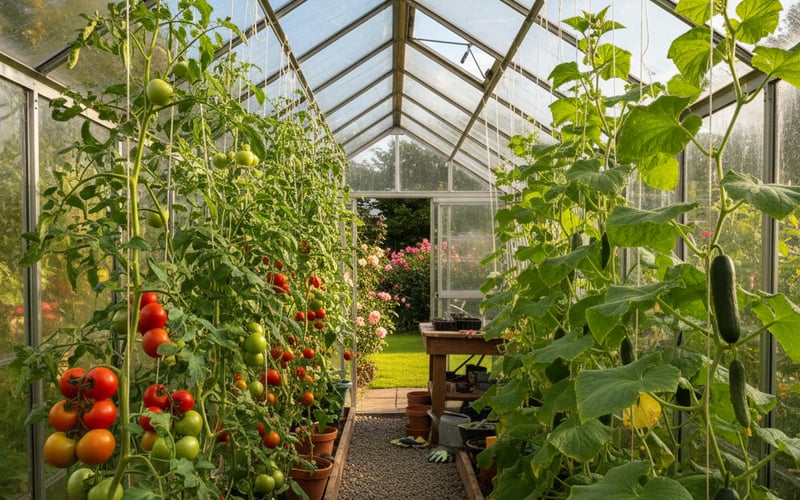
Temperature management is the single biggest factor in year-round greenhouse success. Get it right and crops thrive. Get it wrong and you lose plants to heat stress in summer or frost damage in winter.
| Crop group | Temperature approach |
|---|---|
| Hardy winter salads | Choose winter varieties and protect during severe cold. Growth slows in low light. |
| Tender summer crops | Provide suitable warmth; avoid cold nights and overheating. |
| Overwintered tender plants | Check the minimum temperature for each plant. One heater setting cannot suit everything. |
Winter: An unheated greenhouse can approach outdoor temperatures overnight. Established hardy crops may cope, while tender plants need protection suited to their minimum temperature. A 5°C setting does not suit every tender crop. Our heating guide covers the options.
Spring: Watch for cold nights and sunny-day overheating. Keep tender seedlings protected and ventilate as temperatures rise. Balance insulation against the light your plants need.
Summer: Open suitable vents and use shading where necessary. Check plants more often during hot weather. Avoid leaving the greenhouse closed while you are away.
Autumn: Clear finished crops and clean glazing so winter plants receive as much light as possible. Ventilate during suitable weather and reduce watering as growth slows.
Expert Tip: protect a smaller space
If only a few plants need heat, consider protecting that smaller area rather than heating every bed. Keep insulation clear of heaters and follow equipment instructions. Hardy salads may need only an extra fleece layer during cold spells, depending on variety and conditions.
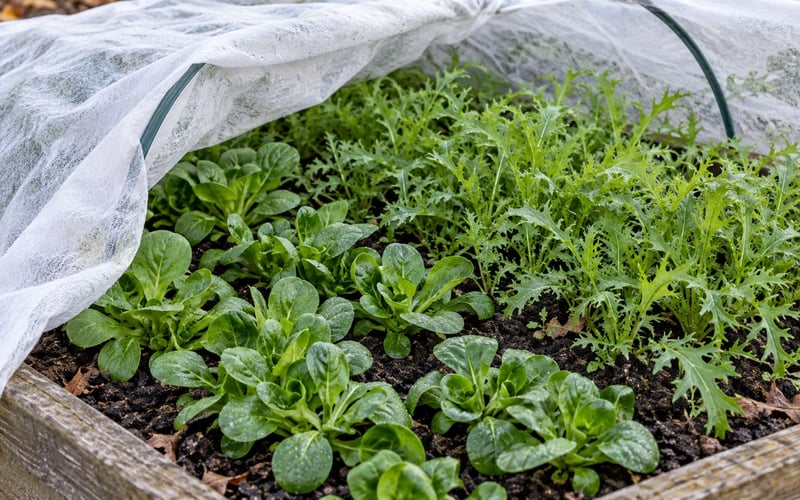
Illustrative image: fleece on hoops gives established winter salads an extra layer of protection. Ventilate and check plants beneath it.
Pest control through the seasons
A warm, sheltered greenhouse is perfect for plants. Unfortunately, pests agree. The good news is that most greenhouse pests are easy to manage if you catch them early and act fast.
| Pest | Useful signs | First steps |
|---|---|---|
| Aphids | Clusters on young shoots and sticky foliage | Inspect new growth and remove small colonies where practical. |
| Whitefly | Small white insects beneath leaves | Check leaf undersides and consider suitable biological control. |
| Red spider mite | Pale stippling and fine webbing | Confirm identification before choosing treatment. |
| Slugs and snails | Slime trails and chewed leaves | Inspect hiding places and protect vulnerable seedlings. |
| Vine weevil | Notched leaves or root damage | Check pots and choose controls for the identified pest and conditions. |
Prevention beats cure every time. Check plants weekly. Remove dead leaves and spent crops promptly. Keep the area around the greenhouse clear of weeds and debris where pests overwinter. A thorough end-of-season clean makes a real difference. Our guide to cleaning your greenhouse covers the full process.
Soil health and crop rotation
Greenhouse soil works harder than outdoor soil. You are cropping the same small area intensively, year after year. Without proper management, nutrients deplete and soil-borne diseases build up.
Rotate crop families where you have enough space. Tomatoes and peppers belong to the same family; cucumbers and squashes belong to another. Repeated cropping in a small greenhouse needs particular attention to hygiene and soil condition.
Add suitable organic matter to beds and remove diseased plant material. Do not routinely strip out the topsoil as a pest cure. Persistent soil-borne problems need identification before deciding whether soil replacement is worthwhile.
Containers let you replace spent growing media and separate crops more easily. They do not eliminate pests or disease. Clean reusable pots and choose container sizes suited to mature plants.
Test soil before adding lime. The correct amount depends on the result, soil type and crop. Follow the product instructions rather than adding an arbitrary handful.
Plan your greenhouse crops around the changing seasons.
Frequently asked questions
Can I grow vegetables all year round in a greenhouse?
Yes, seasonal crops can provide harvests across the year. Winter success depends on hardy varieties established before light levels fall. Growth and picking slow during cold, dark weather.
What vegetables grow best in a greenhouse?
Tomatoes, cucumbers, peppers and salads are useful greenhouse choices. Match them to the season and space available. Grow what you enjoy eating rather than trying to fit everything in.
Can you grow tomatoes all year round in a greenhouse?
Year-round tomatoes need conditions most home greenhouses do not provide. Winter production requires suitable heat and supplementary light. For most home growers, summer tomatoes followed by hardy salads is more practical.
What can I grow in an unheated greenhouse in winter?
Established winter salads are useful crops for an unheated greenhouse. Try suitable varieties of lamb's lettuce, mizuna and winter purslane. Follow their sowing instructions and protect during severe cold; one frost limit does not apply to every plant.
How do I keep my greenhouse productive in winter?
Establish hardy crops before the coldest, darkest weeks. Keep glazing clean, check moisture before watering and ventilate during suitable weather. Fleece can provide extra protection during cold spells.
Is it cheaper to grow your own vegetables in a greenhouse?
It can save money, but savings depend on what you grow and spend. Seeds, compost, water and any heating all count. Choose crops you regularly eat and avoid expensive winter heating simply to chase a saving.