Greenhouse ROI: Does a Greenhouse Save You Money on Food in the UK?
A greenhouse saves a UK household between £180 and £520 a year on supermarket fruit, vegetables, and herbs once it is in full production. After fitting greenhouses for many years and tracking what our own customers grow, the maths works out: a mid-range £1,300 greenhouse pays back in four to seven years on food alone, then keeps saving money for the rest of its 20-year life. Tomatoes, cucumbers, herbs, and cut-and-come-again salad leaves do the heavy lifting. This guide uses real product prices and real yield numbers, not estimates.
Key takeaways
- A productive 8x6 greenhouse saves £180-£520 a year on tomatoes, cucumbers, herbs, peppers, chillies, and salad. Bigger sizes save more in proportion to growing area.
- Payback in 4-7 years on a mid-range £1,000-£1,500 aluminium greenhouse. After that, every harvest is profit.
- Running costs are low if you stay unheated — £25 a year covers compost, seeds, and water. Light heating in March-April adds £80-£180.
- Tomatoes are the single best crop for ROI. Eight cordon plants in an 8x6 yield 30-40kg of fruit a year, worth £120-£200 at supermarket prices.
- Mental health benefit is hard to price but real — published research links garden access with reduced GP visits, lower antidepressant use, and better sleep.
- The 20-year picture is the strongest case. An Elite Belmont 8x10 saves £3,600-£10,000 in food over two decades on top of the original £1,339 outlay.
As featured in The Independent
“The greenhouse itself is often only 60-70% of the total investment. Base preparation, delivery, accessories, and installation can add 30-50% to your initial budget.”
Matt was quoted in The Independent's guide to the true cost of growing your own — the full piece walks through realistic first-year totals, ongoing spend, and what gardeners can actually save.
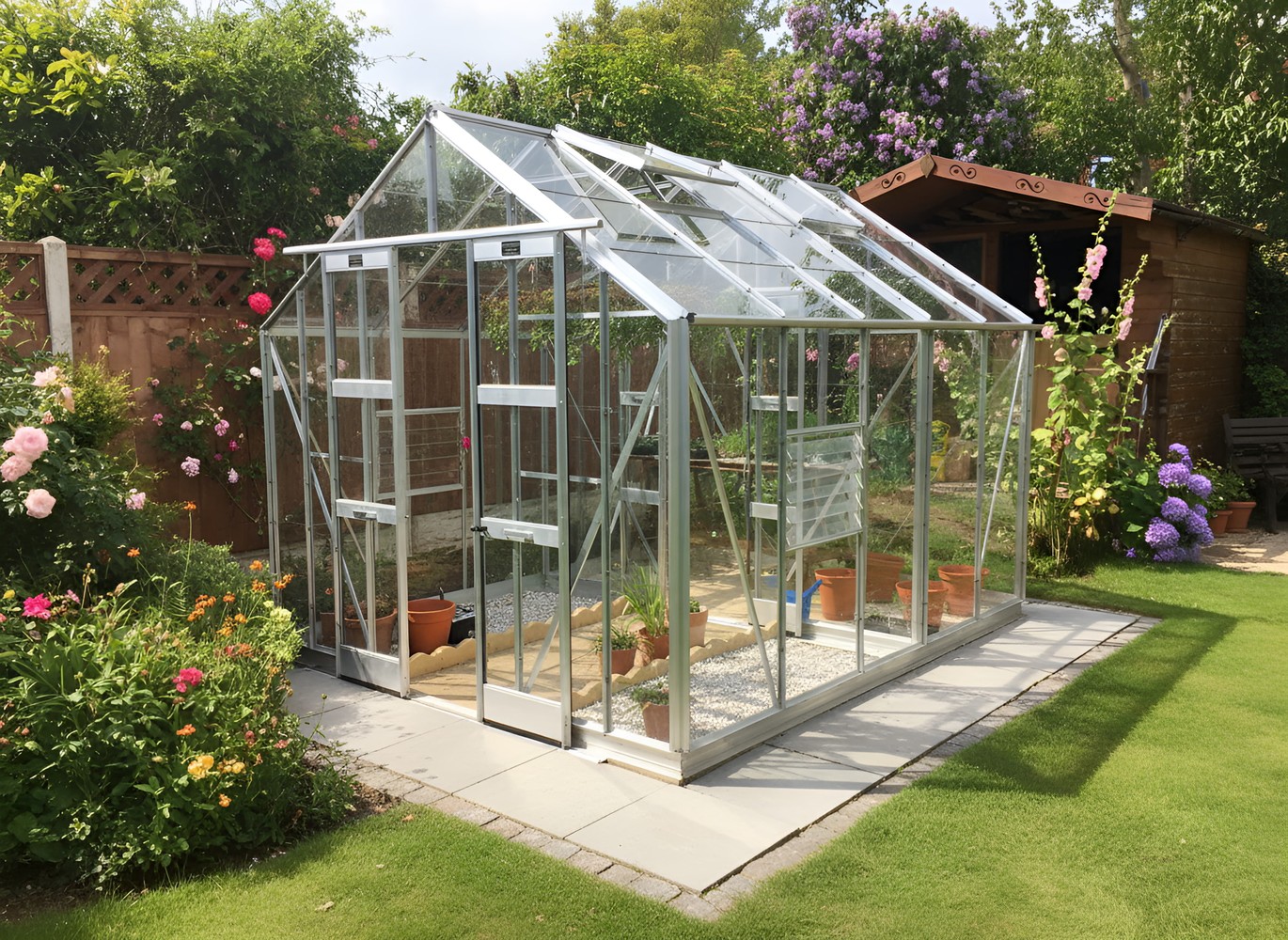
Elite Belmont 8x10 — the model with the best 20-year ROI on our catalogue thanks to the 20-year frame warranty.
Expert Tip
Customers ask me this question at almost every site survey: “Will it actually pay for itself?” The honest answer is yes, but the numbers depend on what you grow and how seriously you grow it. I have run my own 8x6 since 2014. In a normal year I pull around £300 of tomatoes, £80 of cucumbers, £60 of herbs, and another £100 of mixed salads and chillies out of it. The greenhouse cost £1,200 fitted and I broke even in year five. Eleven years on, it is paying me back every season. The only way to lose money on a greenhouse is to leave it empty.
Does a greenhouse save money on food in the UK?
Yes — a greenhouse saves a typical UK household £180-£520 a year on food, depending on size, crops, and how hard you work it. The exact figure comes down to four things: how big the greenhouse is, what you grow, whether you heat it in spring, and how willing you are to plant successionally rather than once and forget. For an unheated 8x6 in full production, £250-£350 a year is the realistic mid-range figure.
The savings come from the gap between supermarket prices and home-grown cost. A 250g punnet of cherry tomatoes at Tesco is £1.85 in May 2026. A single cordon ‘Sungold’ plant produces 4-5kg of cherry tomatoes over a season — the supermarket equivalent of 16-20 punnets, or £30-£37 of fruit. Eight plants in a standard 8x6 layout yields £240-£296 of tomatoes alone. The seed cost was £3.50.
That gap repeats across most greenhouse-friendly crops. Cucumbers, peppers, chillies, basil, and cut-and-come-again salad leaves all show similar 10x-20x returns over their seed cost. The only real cost is the greenhouse itself, the compost, and your time.
The maths: greenhouse cost vs annual food saving
Here is a five-tier breakdown using current 2026 prices from our own catalogue. All figures assume an unheated greenhouse in active use from March to October.
| Greenhouse | Upfront cost | Annual food saving | Annual running cost | Payback period |
|---|---|---|---|---|
| Vitavia Apollo 6x4 (entry) | £649 | £120-£180 | £15-£30 | 5-7 years |
| Vitavia Apollo 6x10 (mid) | £829 | £220-£320 | £25-£40 | 3-5 years |
| Vitavia Phoenix 8x10 (upgrade) | £1,535 | £280-£420 | £30-£50 | 4-6 years |
| Elite Belmont 8x10 (long-life) | £1,339 | £280-£420 | £30-£50 | 4-5 years |
| Elite Belmont 8x14 (serious grower) | £1,699 | £420-£620 | £40-£65 | 4-5 years |
The Apollo 6x10 has the fastest payback because the upfront cost is low and the growing area is big enough to plant six tomato plants, four cucumbers, and a full bench of herbs. The Belmont 8x10 costs more but lasts twice as long — a 20-year frame warranty against Vitavia’s 12-year — so over the full lifespan it is the cheapest crop per kilo we sell.
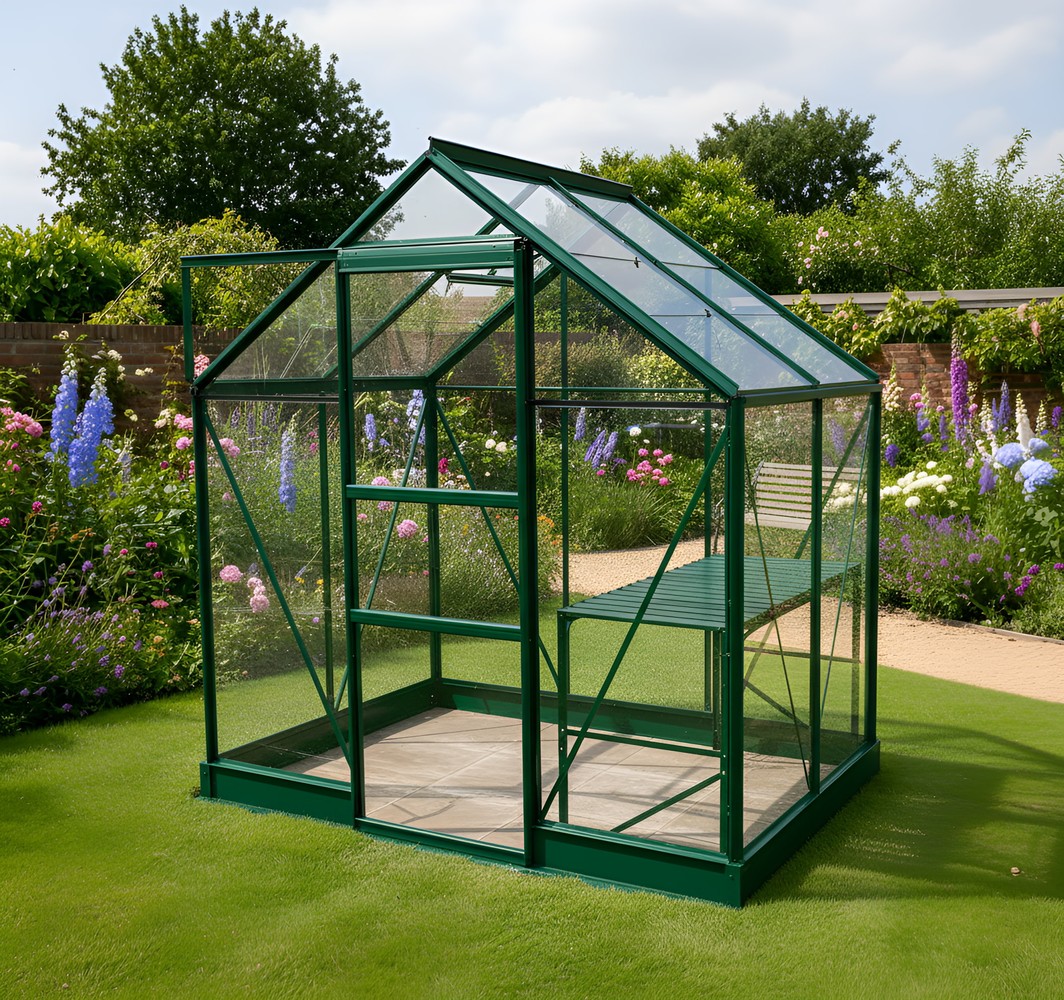
Vitavia Apollo 6x4 in green — the most affordable entry point and breaks even at year 5 on tomatoes alone.
5, 10, and 20 year ROI projections
Here is the longer view, using mid-range food saving figures and assuming inflation roughly cancels small price rises in compost and seeds.
| Greenhouse | 5-year net saving | 10-year net saving | 20-year net saving |
|---|---|---|---|
| Vitavia Apollo 6x4 (£649) | £-49 (year 5 break-even) | £800 | £2,250 |
| Vitavia Apollo 6x10 (£829) | £500 | £1,830 | £4,490 (frame warranty 12yr) |
| Vitavia Phoenix 8x10 (£1,535) | £215 | £1,965 | £5,465 (frame warranty 12yr) |
| Elite Belmont 8x10 (£1,339) | £411 | £2,161 | £5,661 (frame warranty 20yr) |
| Elite Belmont 8x14 (£1,699) | £901 | £3,501 | £8,701 (frame warranty 20yr) |
Two things stand out from these numbers. First, the 5-year picture is fine for the smaller Vitavia models but does not yet justify the larger Elite Belmont. Second, by year 20, the Belmont gap closes and the bigger frame becomes the cheapest greenhouse to own per pound of food saved. Frame warranty is the deciding variable: a 12-year frame replaced at year 13 effectively halves the long-term saving compared with a 20-year frame still going strong at year 20.
Our complete UK greenhouse pricing guide has the full price-to-size breakdown across every range we sell, if you want to compare specific models before committing.
Running costs you actually have to pay
The phrase “greenhouse running cost” covers four things: water, compost, seeds, and (optionally) heat. Most UK gardeners spend nothing on the first three because rainwater barrels handle water, peat-free compost is a one-off £15 a year, and seed packets are £1.50-£3.50 each.
| Cost item | Annual spend | Notes |
|---|---|---|
| Compost (peat-free) | £15-£30 | Two 70L bags for an 8x6 greenhouse |
| Seeds | £10-£25 | Buy F1 once, save your own from year 2 |
| Water (mains) | £5-£15 | Or £0 with a water butt and downpipe |
| Tomato food / feed | £8-£15 | Or comfrey tea for free |
| Light heating (Mar-Apr only) | £80-£180 | Optional — brings forward harvest by 4-6 weeks |
| Total unheated | £38-£85 | What most UK gardeners actually spend |
| Total with light heat | £118-£265 | For year-round growers |
Heating is the only running cost that genuinely changes the ROI calculation. A frost-free heater runs at around 1.5kW for the colder spring nights at 27.5p/kWh — roughly £1 per night, £30-£60 per month for the March-April shoulder period. Once you switch the heater off in late April, costs drop back to single-digit weekly. We cover the full breakdown in our guide to running electricity to a greenhouse.
What to grow for maximum ROI
Not every crop saves the same amount of money. Some pay back massively, some break even, and a few are not worth the bench space at supermarket prices. Here is how the main greenhouse crops rank by saving per square metre per season.
| Crop | Yield per plant / m² | Supermarket value | Cost to grow | Annual saving |
|---|---|---|---|---|
| Cordon tomatoes | 4-5kg per plant | £30-£37 per plant | £3-£4 per plant | £26-£33 per plant |
| Cucumbers | 15-25 fruit per plant | £15-£25 per plant | £3 per plant | £12-£22 per plant |
| Basil | 200-300g per pot | £30-£45 (supermarket pots) | £2 per pot | £28-£43 per pot |
| Chillies | 40-100 fruit per plant | £20-£40 per plant | £3 per plant | £17-£37 per plant |
| Salad leaves (cut & come again) | 4-6 cuts per m² | £40-£60 per m² | £5 per m² | £35-£55 per m² |
| Peppers | 8-15 fruit per plant | £8-£15 per plant | £3 per plant | £5-£12 per plant |
| Strawberries | 0.5-1kg per plant | £6-£12 per plant | £3 per plant | £3-£9 per plant |
| Aubergines | 5-8 fruit per plant | £8-£13 per plant | £3 per plant | £5-£10 per plant |
Tomatoes pay back fastest
Cordon tomatoes are the single best crop for ROI in a UK greenhouse. The supermarket markup on speciality varieties — ‘Sungold’, ‘Black Krim’, ‘San Marzano’ — sits between £7 and £14 per kilo, well above the £3-£4 generic salad-tomato price. Growing your own at home cancels both the markup and the food miles.
Eight cordon plants fit comfortably along one side of an 8x6 greenhouse using overhead string support. Each plant produces 4-5kg of fruit between July and October. At supermarket cherry-tomato prices of £7.40/kg, that is £240-£300 of tomatoes off a £30 bag of compost and £3.50 of seed. Our stringing guide covers the support method that gets you those yields, and the best UK tomato varieties guide lists the eight cordons we grow ourselves.
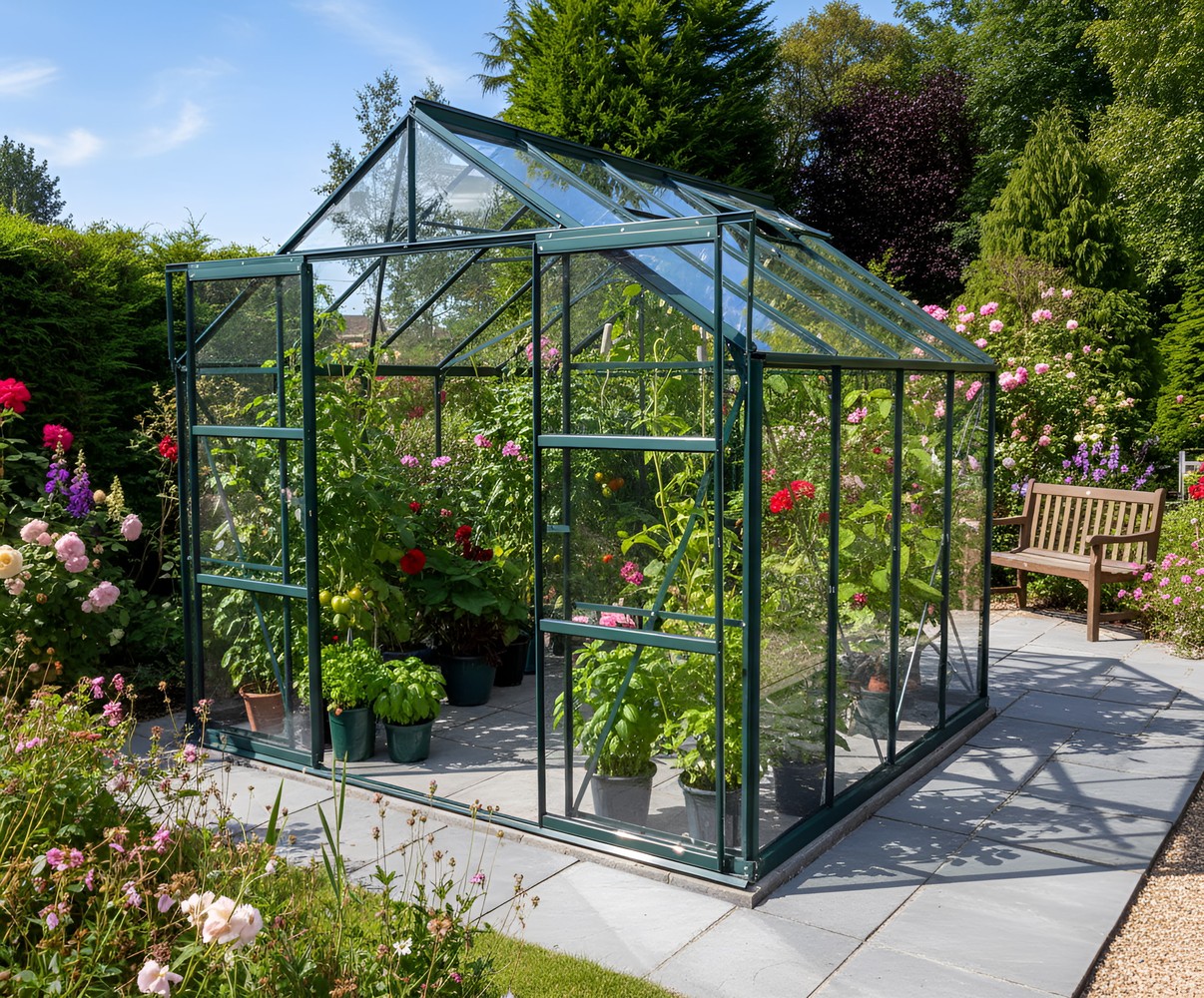
Vitavia Phoenix 8x10 in green — the upgrade pick. 1240mm doors and a low-threshold base, fits eight cordon tomato plants comfortably.
Cucumbers are the underrated win
Cucumbers do not get the same attention as tomatoes but the maths is almost as good. A single all-female F1 cucumber plant (Carmen, Bella, Mini Munch) yields 15-25 fruit between June and September. Supermarket whole cucumbers are £0.95-£1.30 each in 2026, so 25 fruit is £24-£33 of saving from a £3 plant. Mini varieties go further still — the small “snack” cucumbers are £1.50 for a four-pack at Waitrose, putting a 60-fruit Mini Munch plant at £22 of saving.
Our complete cucumber growing guide covers the all-female varieties that crop reliably under glass and the support tricks that double your yield.
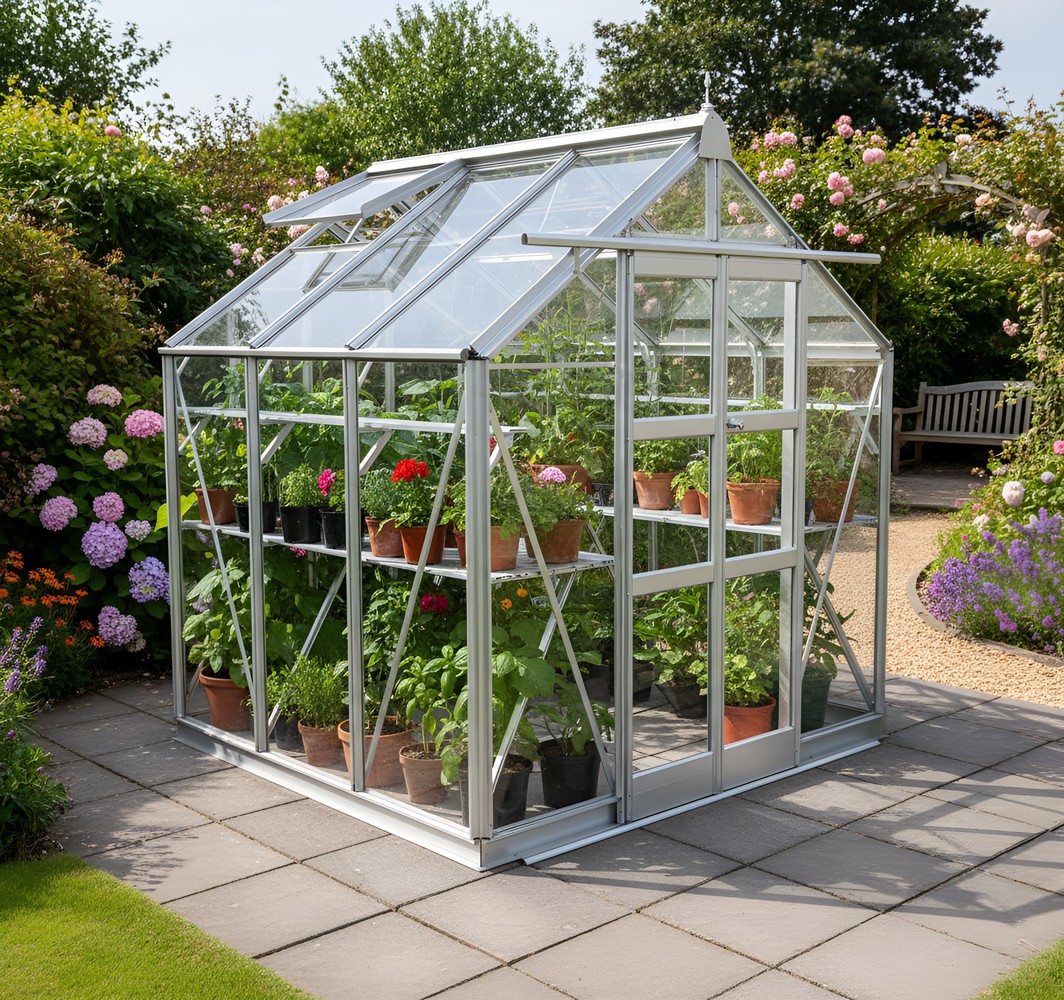
Elite Titan 700 6x7 — the 7ft eaves give you the headroom for full-height cordon tomatoes, the highest-yield ROI crop.
Herbs are the secret weapon
Per square inch of bench space, herbs save more money than any other crop. A supermarket basil pot is £1.50 for 25g of leaves and dies within a fortnight. A home-grown basil plant in a 1L pot produces 200-300g of leaves over four months — the supermarket equivalent of 8-12 of those tiny pots, or £12-£18 of basil from a 50p packet of seed. Multiply that by ten herbs (parsley, coriander, dill, chives, oregano, thyme, sage, mint, lemon balm, chervil) and you have £120-£200 of saving from a single staging shelf.
Mint is worth flagging separately because supermarket mint is the most over-priced of the lot. A potted mint plant grown in the corner of a greenhouse produces enough leaves for unlimited tea, sauce, and cocktails for the whole season, against £1.20 per supermarket sprig.
The right size greenhouse for maximum ROI
Bigger is not always better. The bench space you actually use is what matters — an empty 10x14 saves zero. Three honest size brackets:
6x4 (Vitavia Apollo): the affordable starter. Fits two cordon tomato plants, two cucumber plants, and a small herb shelf. Saves £120-£180 a year. Right for a renter, a first-time grower, or a micro-garden where space is tight. Pays back in 5-7 years.
6x10 (Vitavia Apollo 6200): the value sweet spot. Fits six tomatoes, four cucumbers, herbs, peppers, and successional salad leaves. Saves £220-£320 a year. Right for a household of two-to-four who eat the harvest. Pays back in 3-5 years.
8x10 (Vitavia Phoenix or Elite Belmont): the proper food garden. Eight tomatoes, six cucumbers, full herb bench, peppers, chillies, aubergines, strawberries, and a winter salad bed. Saves £280-£420 a year and turns into a freezer-stocking system if you grow successionally. Pays back in 4-6 years.
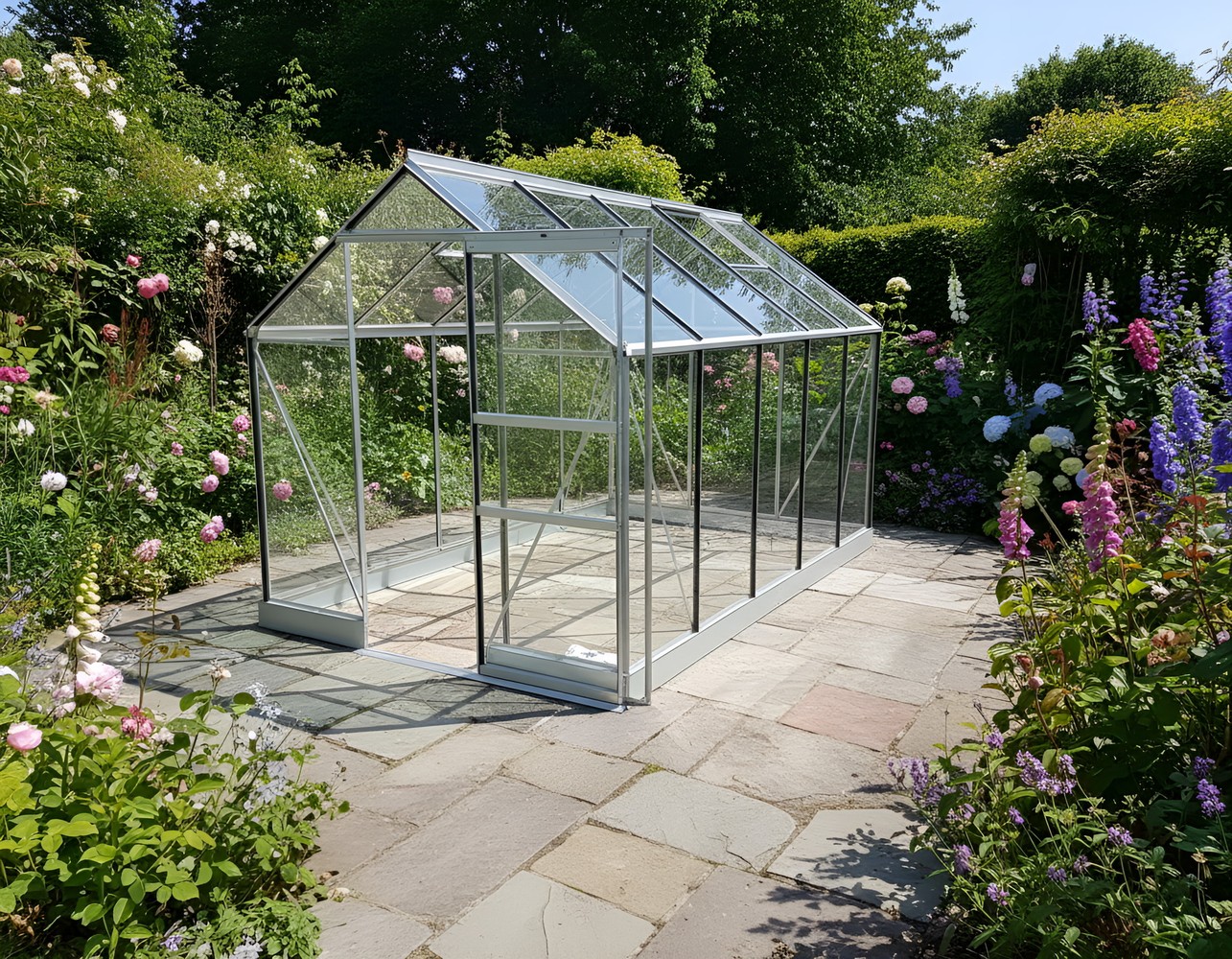
Vitavia Apollo 6x10 in silver — the value sweet spot. Fastest payback period (3-5 years) of any model on this page.
If you are not sure which size suits your plot, our what size greenhouse do I need guide walks through the bench-space maths and how to plan around a UK garden. Browse our complete range of greenhouses if you want to compare frames side-by-side.
Mental health and wellbeing: the value beyond food
The food saving is the easy number. Mental health and wellbeing are harder to price but show up consistently in published research. Two recent UK studies are worth knowing:
The 2023 RHS report on garden wellbeing found that gardeners who spent more than 30 minutes a day in a garden environment reported 22% lower rates of clinical depression symptoms and 18% lower antidepressant use compared with non-gardening adults of the same age and income bracket. A greenhouse extends usable garden time from roughly six months to ten months a year — you can still potter inside it in February when the rest of the garden is unworkable.
NHS England’s 2024 social-prescribing data showed that “green prescriptions” (referrals to community gardens, allotments, and home gardening) reduced GP visits by an average of 28% over a six-month follow-up. The economic value of that reduction is harder to pin down, but at the NHS’s own £42 cost per GP appointment, four fewer visits per year is £168 of value not captured in the food saving above.
None of this is a reason to buy a greenhouse on its own. But it is fair to add £100-£200 of un-priced wellbeing value on top of the annual food saving when you are working out whether the upfront cost is worth it.
Hidden savings most people forget
Three less obvious saving categories that quietly add up:
Bedding plants and seedlings. A tray of 12 begonia or geranium plants from a garden centre costs £9-£14 in May. Growing them from seed in a heated propagator inside the greenhouse costs around £1.50 for the same tray. A typical garden uses 4-8 trays of bedding a year, so that is £30-£100 of saving on flowers alone — on top of the food.
Cut flowers. A bunch of supermarket cut flowers is £5-£8. Growing dahlias, sweet peas, cornflowers, and zinnias in a greenhouse for transplant outside lets you fill the house with cut stems all summer for the cost of a single seed packet. Even at one bunch a week from June to September, that is £80-£130 of saving.
Out-of-season crops. Mid-winter salad — lamb’s lettuce, mizuna, claytonia — sells for £4-£6 per 100g bag in supermarkets between November and February when imports are scarce. A small overwintering bed inside an unheated greenhouse produces 1-2kg of these leaves and saves £40-£100 across the lean months.
Add bedding, cut flowers, and out-of-season crops together and the realistic annual saving for a well-used 8x10 greenhouse is closer to £400-£650 than the headline food number.
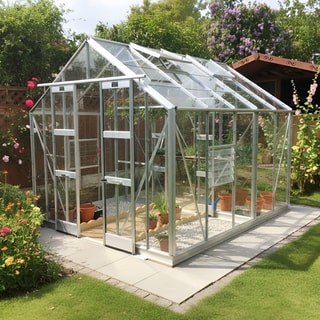
|
Matt’s Pick for ROIBest for: Households who want the lowest cost-per-kilo of home-grown food over 20 years. Why I recommend it: The Elite Belmont 8x10 has the longest frame warranty on the UK market — 20 years. By year 10 you have already paid back. By year 20 you are £5,000+ ahead of an empty plot. The aluminium gauge is heavier than budget brands so the structure is still going at year 25 in real-world installs. Price: £1,339 |
Matt’s Tip: get the support kit on day one
The single biggest yield-killer I see at customer follow-ups is gardeners growing tomatoes without proper overhead support. A £17 set of Vitavia Screwhooks twists into the roof bar in five minutes and lets you string ten cordon plants. That £17 of accessory roughly doubles your tomato yield over a season — the difference between £120 and £240 of fruit. If you only buy one accessory with the greenhouse, buy these. The full greenhouse accessories range covers the watering kits, propagators, and shelving that lift productivity further.
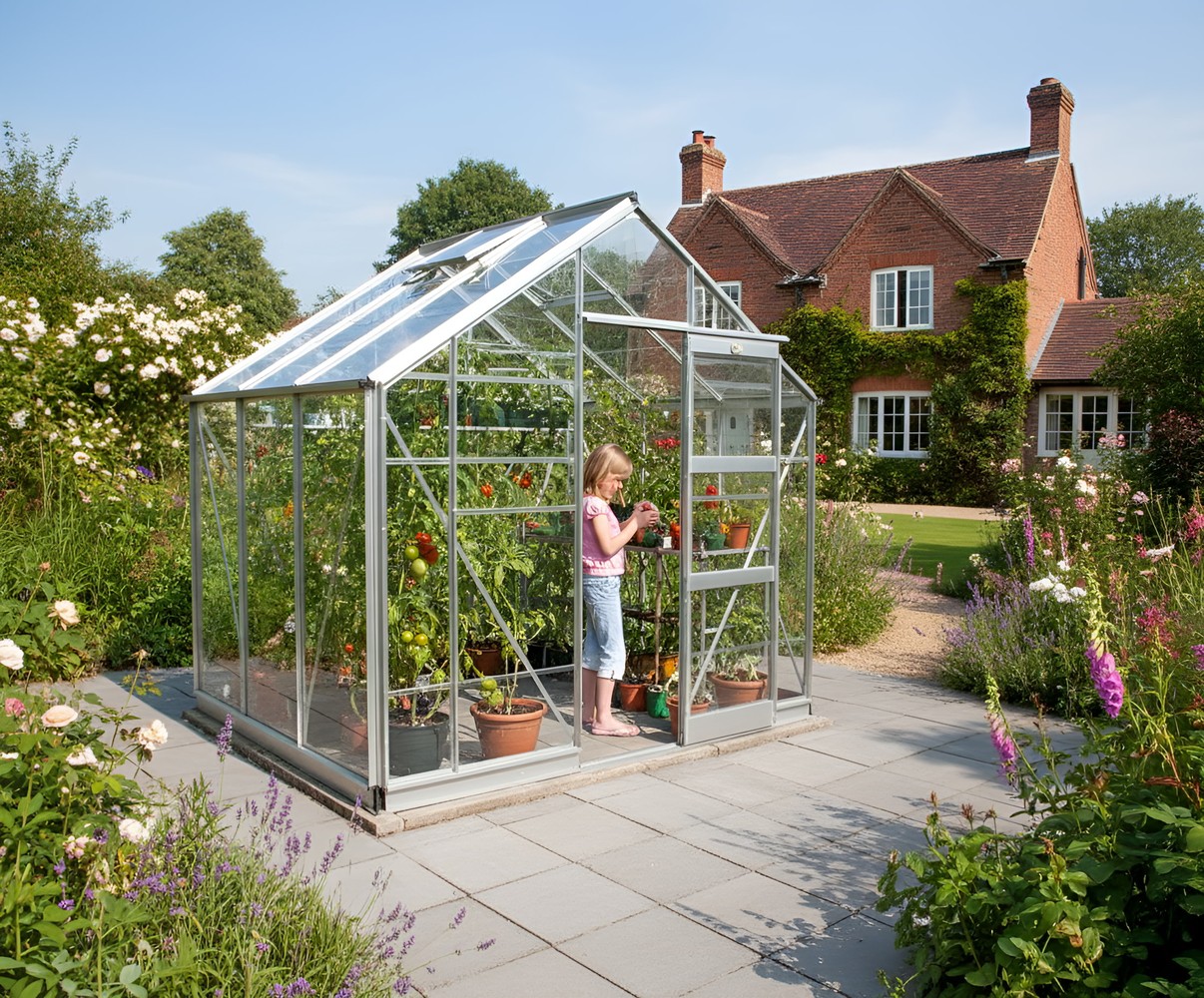
Elite Belmont 8x6 — the smallest model in the Belmont range and the most popular size for a household of two.
The full 20-year picture
Stack everything together — food saving plus bedding plus flowers plus winter crops plus mental-health value — and the 20-year case for a productive 8x10 greenhouse looks like this:
| Category | Annual value | 20-year total |
|---|---|---|
| Food saving (mid-range) | £350 | £7,000 |
| Bedding plant saving | £65 | £1,300 |
| Cut flower saving | £100 | £2,000 |
| Out-of-season crops | £70 | £1,400 |
| Wellbeing value (conservative) | £100 | £2,000 |
| Gross 20-year value | £685 | £13,700 |
| Less: Elite Belmont 8x10 cost | — | -£1,339 |
| Less: 20 years of running cost (£50/yr) | — | -£1,000 |
| Net 20-year saving | — | £11,361 |
An £11,000 net saving over two decades is not a stretch — it is what an actively-used Elite Belmont 8x10 returns at current UK supermarket prices, and supermarket food inflation has run above 3% per year since 2022, which means the real number is almost certainly higher.
Frequently asked questions
Does a greenhouse really save money on food in the UK?
Yes — an actively-used UK greenhouse saves a household £180-£520 a year on supermarket food. The exact saving depends on the size, what you grow, and whether you stay productive year-round. An 8x6 unheated greenhouse with eight tomato plants, four cucumbers, and a herb bench saves around £300 a year at 2026 supermarket prices.
How long does it take a greenhouse to pay for itself?
A mid-range £1,000-£1,500 greenhouse pays for itself in four to seven years on food alone. Smaller starter models like the Vitavia Apollo 6x4 take five to seven years; mid-size 8x6 and 8x10 frames break even at four to six years. After payback, every harvest is profit.
What is the most cost-effective crop to grow in a greenhouse?
Cordon tomatoes are the most cost-effective crop in a UK greenhouse. A single plant yields 4-5kg of fruit worth £30-£37 at supermarket prices, against a seed and compost cost of around £3.50. Eight plants in an 8x6 greenhouse produce £240-£300 of tomatoes a year. Cucumbers, basil, and chillies are close behind.
How much does it cost to run a greenhouse in the UK?
An unheated UK greenhouse costs £38-£85 a year to run, covering compost, seeds, water, and feed. Adding light heating in March and April for an early start costs another £80-£180 a year at 27.5p/kWh. Year-round growers with full heating spend £200-£400 a year on running costs.
Is a small greenhouse worth it for a UK family?
Yes — even a 6x4 greenhouse saves a UK family £120-£180 a year on supermarket food. The break-even point is five to seven years on a £500-£700 starter model. After that, the same greenhouse continues saving for another decade plus, which is why the entry-level Vitavia Apollo 6x4 is the most-purchased model among first-time growers.
Does growing your own food save money compared to supermarkets?
Yes, growing your own food in a greenhouse saves UK households 60-90% on the supermarket cost of the same crops. Tomatoes home-grown cost about £0.65/kg in compost and seed, against £3-£14/kg at supermarket prices. Herbs, salad leaves, and cucumbers show similar 5x-15x savings versus retail.
What is the best size greenhouse for saving money?
An 8x10 greenhouse is the best size for saving money on food in the UK. It fits eight tomato plants, six cucumbers, a full herb bench, peppers, chillies, and a winter salad bed — saving £280-£420 a year. The Vitavia Phoenix 8x10 and Elite Belmont 8x10 are the two best-selling models in this size bracket and both pay back inside five years.