Best Greenhouse Tomato Varieties UK: 8 Proven Picks for 2026
The best greenhouse tomato varieties for UK growers are Sungold, Shirley, Gardener's Delight, Moneymaker, and Ailsa Craig. Cordon varieties outperform bush types under glass. They use vertical space and produce 3-5kg per plant. Cherry types like Sungold ripen fastest in an unheated greenhouse. Beefsteak varieties like Marmande need warmth above 18°C at night. Sow seed in February or March at 20°C.
Key takeaways
- Sungold is the best-tasting cherry tomato for greenhouses. It holds an RHS Award of Garden Merit and wins blind taste tests consistently.
- Shirley is the safest choice for unheated greenhouses. It crops early, resists disease, and tolerates cool nights better than most varieties.
- Cordon varieties produce 3-5kg per plant in a greenhouse. They use vertical space far more efficiently than bush types.
- Keep daytime temperature between 21-24°C and nighttime between 15-18°C. Above 30°C, pollen becomes sterile and flowers drop.
- Feed weekly with high-potash liquid fertiliser once the first truss sets fruit. Tomato feed makes a measurable difference to yield.
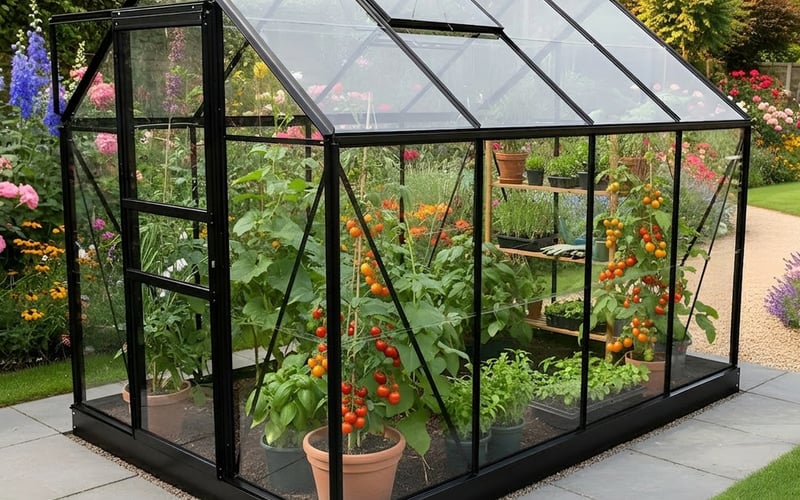
Shop the Vitavia Venus 5000 8x6 Black Greenhouse →
Expert Tip
We've fitted thousands of greenhouses over many years. The customers who grow the best tomatoes all do the same things. They pick cordon varieties, keep on top of side shoots, and fit an automatic vent opener. Temperature control is what catches most people out. A greenhouse hits 40°C on a sunny May morning. That kills pollen stone dead.
What type of tomato grows best in a greenhouse?
Cordon (indeterminate) varieties are the best choice for greenhouse growing. They grow as a single stem trained up a string or cane. They reach 1.8-2.5m tall and produce fruit over a much longer season than bush types.
Bush (determinate) varieties stop growing at 45-100cm and fruit all at once. They suit outdoor growing and hanging baskets but waste the vertical space a greenhouse offers. In our experience, cordon types outyield bush types by roughly 3:1 under glass.
Within cordon varieties, there are three main fruit types worth growing:
- Cherry tomatoes, small, sweet fruits that ripen fastest. Best for salads and snacking.
- Classic salad tomatoes, medium-sized, round fruits for slicing. The all-rounders.
- Beefsteak tomatoes, large, meaty fruits for sandwiches and cooking. Need more heat than other types.
Best cherry tomatoes for greenhouses
Sungold (RHS AGM)
The sweetest greenhouse tomato you can grow. Sungold produces masses of orange cherry fruits from July through to October. It holds the RHS Award of Garden Merit and consistently wins taste comparisons against every other cherry variety. The thin skin splits easily if watering is uneven, so keep moisture steady. Expect 4-5kg per plant in a good year. Grows to 2m and needs strong support.
Gardener's delight
A reliable red cherry that has been a UK favourite for decades. Slightly larger fruits than Sungold with a tangy-sweet flavour. Vigorous and prolific, producing long trusses of 10-15 fruits each. It performs well in both heated and unheated greenhouses. Height reaches 1.5-1.8m. One of the best varieties for a first-time grower because it forgives inconsistent watering better than most cherry types.
Rosada (RHS AGM)
A plum-shaped cherry with outstanding sweetness. Rosada holds an RHS Award of Garden Merit. It produces elongated fruits with thick flesh and fewer seeds than round cherries. The flavour intensifies as fruits darken from orange to deep red. Excellent disease resistance. Grows to 2m. The plum shape makes it a better cooking tomato than Sungold. Still sweet enough to eat raw.
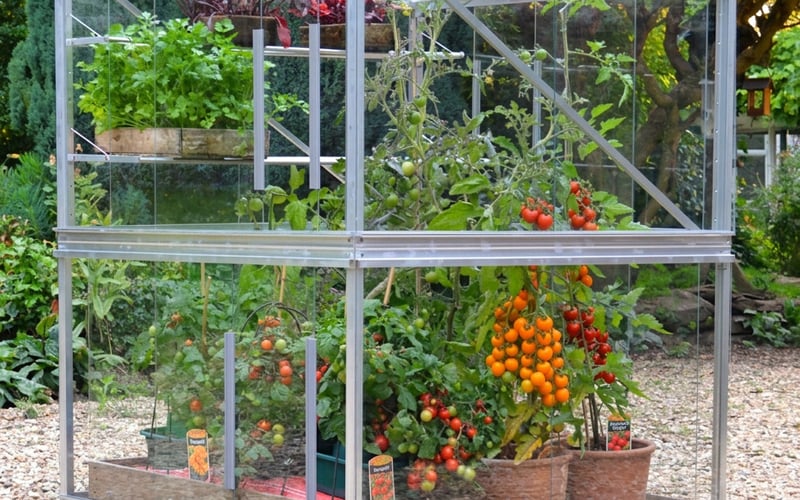
Shop the Access Double Tomato Greenhouse →
Best salad tomatoes for greenhouses
Shirley (RHS AGM)
The safest choice for an unheated UK greenhouse. Shirley crops earlier than most varieties, tolerates cool spring nights, and shrugs off tobacco mosaic virus and greenback. It produces medium-sized, round, red fruits with a balanced flavour. Not the most exciting tomato for flavour, but the reliability is unmatched. We always recommend Shirley to customers who have bought a greenhouse and want a guaranteed first crop.
Ailsa craig
A heritage variety with over 100 years of UK growing history. Ailsa Craig produces thin-skinned, flavour-packed fruits that taste markedly better than supermarket tomatoes. Medium-sized, round, and deep red when ripe. It is less disease-resistant than modern varieties like Shirley, but the flavour makes it worth the extra attention. Grows to 1.5m. A true connoisseur's tomato.
Moneymaker
The classic UK greenhouse tomato. Moneymaker produces uniform, round, red fruits in huge quantities even in poor summers. Flavour sits between Shirley (mild) and Ailsa Craig (rich), a solid all-rounder that works for sandwiches, salads, and cooking. Grows to 2m. The name reflects its reputation: this variety delivers a reliable return for minimal effort. It has been the go-to recommendation in British gardening for over 50 years.
Best beefsteak tomatoes for greenhouses
Marmande (RHS AGM)
The most reliable beefsteak for UK greenhouses. Marmande produces large, ribbed, meaty fruits weighing 150-250g each. The flavour is rich and full-bodied, making it the best variety for thick sandwich slices and slow-roasted tomato dishes. It holds the RHS Award of Garden Merit. Shorter than most cordons at 60-90cm, so it suits a smaller greenhouse. Needs consistent warmth, night temperature below 15°C reduces fruit set.
Costoluto fiorentino
An Italian heirloom beefsteak with deeply ribbed, misshapen fruits and extraordinary flavour. Each fruit weighs 200-350g. The irregular shape puts off supermarkets but not home growers who care about taste. It makes the best tomato sauce you will ever eat. Grows to 1.5m. Needs a heated greenhouse or very sheltered position because it is less cold-tolerant than UK-bred varieties.
| Variety | Type | Fruit size | Yield per plant | RHS AGM | Best for |
|---|---|---|---|---|---|
| Sungold | Cherry | 15-20g | 4-5kg | Yes | Sweetest flavour |
| Gardener's Delight | Cherry | 20-30g | 3-4kg | No | Reliable first choice |
| Rosada | Cherry plum | 20-25g | 3-4kg | Yes | Sweet + cookable |
| Shirley | Salad | 70-100g | 3-5kg | Yes | Unheated greenhouse |
| Ailsa Craig | Salad | 80-120g | 3-4kg | No | Best flavour (salad) |
| Moneymaker | Salad | 80-100g | 4-5kg | No | Heaviest yield |
| Marmande | Beefsteak | 150-250g | 3-4kg | Yes | Best beefsteak |
| Costoluto Fiorentino | Beefsteak | 200-350g | 2-3kg | No | Sauce + cooking |
Matt's pick: Sungold for flavour, Shirley for reliability, Marmande for beefsteak. Shown rows are our top recommendation in each category.
How many tomato plants fit in a greenhouse?
Space cordon tomato plants 45-60cm apart in a greenhouse. A standard 6x8ft greenhouse fits 10-12 cordon plants comfortably, producing 30-50kg of tomatoes per season. A smaller 6x4ft greenhouse fits 5-6 plants. Leave paths clear for access and air circulation, overcrowding causes humidity build-up and encourages blight.
Grow in 30-45cm pots or growbags placed along the back and side walls. Ring culture is the most productive method we've seen. Bottomless pots sit on a gravel tray. Roots access both the feeding pot and the moisture reservoir below.
For the right greenhouse size, see our guide on what size greenhouse you need.
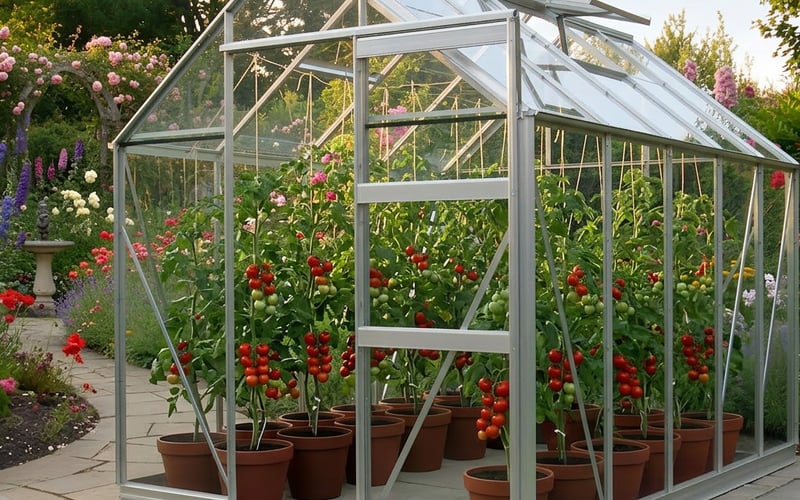
Shop the Elite High Eave 6x10 Greenhouse →
Growing tips for greenhouse tomatoes
Temperature control is everything
Tomatoes set fruit best between 21-24°C during the day and 15-18°C at night. Above 30°C, pollen becomes sterile and flowers drop without setting. Below 10°C, growth stalls. An automatic roof vent opener is the single most useful accessory for tomato growers. It opens as temperature rises and closes as it drops, even when you're not there. We fit them on every greenhouse installation and they cost from £55. For more on keeping temperature right, read our greenhouse ventilation guide.
Watering and feeding
Water at the base of the plant every morning in summer. Evening watering in a closed greenhouse raises humidity and invites fungal disease. Inconsistent watering causes fruit splitting, especially in thin-skinned cherry varieties like Sungold. Our greenhouse watering guide covers manual and automatic systems in detail.
Start feeding with a high-potash liquid fertiliser (tomato feed) once the first truss sets fruit. Feed every 7 days. Potash drives fruit production. Nitrogen feeds leaf growth, which is not what you want once flowers appear.
Training and side shoots
Remove side shoots weekly. Side shoots grow from the junction between the main stem and each leaf. Pinch them out when they are 2-3cm long. Leaving them creates bushy growth that diverts energy from fruit production. Stop the main stem at 5-6 trusses (late August in an unheated greenhouse) by pinching out the growing tip. This directs remaining energy into ripening existing fruit before autumn.
Matt's tip: pollination
Greenhouses don't have wind. That means pollination doesn't happen as easily as it does outdoors. Tap the flower trusses gently every day around midday when the air is warm and dry. This shakes pollen loose and massively improves fruit set. I've seen customers double their yield just by doing this one thing consistently.
Best greenhouse for growing tomatoes
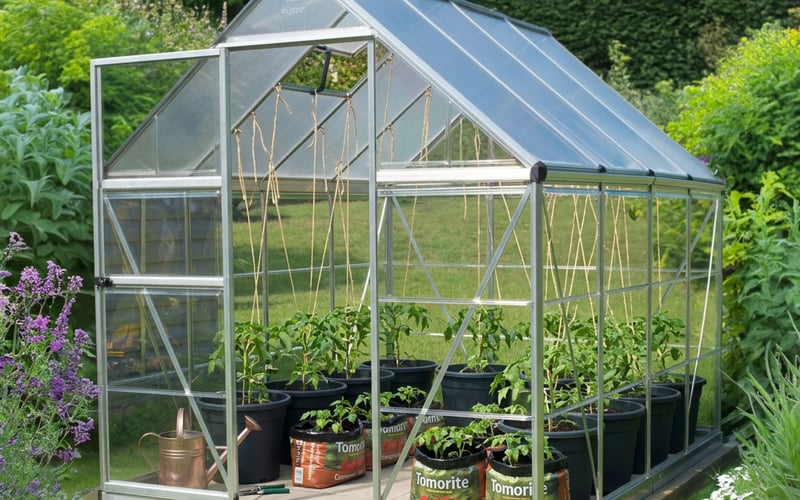
Any greenhouse with good headroom and ventilation grows tomatoes well. Height matters because cordon varieties reach 2m or more. The Elite High Eave range gives extra room to work and train plants. Glass transmits more light than polycarbonate, which benefits ripening. See our glass vs polycarbonate comparison.
A 6x8ft greenhouse is the sweet spot for most tomato growers. It fits 10-12 plants plus staging for seed trays. Browse our full range of aluminium greenhouses to find the right size.
Shop the Palram Hybrid 6x8 Greenhouse →
When to sow greenhouse tomatoes in the UK
Sow seed in late February or March at 18-21°C. Use a heated propagator or warm windowsill. Germination takes 7-10 days. Transplant seedlings into 9cm pots when they have two true leaves. Grow on at 15-18°C with good light. Plant into final positions from late April (heated) or mid-May (unheated).
For a month-by-month schedule, see our guide on growing tomatoes in a greenhouse. Planning what to sow alongside? Our companion planting guide covers what grows well together under glass.
Matt's Pick for Growing Tomatoes
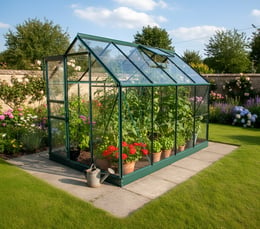
Best For: growing a strong crop of greenhouse tomato varieties trained up strings.
Why I Recommend It: An 8x6 Venus gives room for six to eight tomato plants. The green powder-coated frame blends into the garden, and horticultural glass keeps the cost down while letting in plenty of light. It is the size I fit most for keen tomato growers.
Price: £540
Frequently asked questions
What is the best tasting tomato to grow in a greenhouse?
Sungold is the best tasting greenhouse tomato. It holds the RHS Award of Garden Merit and consistently wins blind taste tests against other cherry varieties. The orange fruits are intensely sweet with low acidity. For larger fruits with outstanding flavour, try Ailsa Craig (salad) or Costoluto Fiorentino (beefsteak).
How many tomato plants can I fit in a 6x8 greenhouse?
A 6x8ft greenhouse fits 10-12 cordon tomato plants. Space them 45-60cm apart along the back and side walls. Leave a central path for access. This produces 30-50kg of tomatoes per season depending on variety and growing conditions. Overcrowding reduces air circulation and increases disease risk.
Can I grow tomatoes in an unheated greenhouse?
Yes, most tomato varieties grow well in an unheated greenhouse. Shirley is the best choice because it tolerates cool nights and crops early. Sow in March, plant out in mid-May once frost risk passes. An unheated greenhouse gives tomatoes 3-5°C of protection. That extends the season by 4-6 weeks at each end.
Should I grow cordon or bush tomatoes in a greenhouse?
Cordon varieties are better for greenhouses. They grow vertically on a single stem, making full use of greenhouse height. Bush varieties waste the overhead space and produce all their fruit at once. Cordon types crop continuously from July to October, giving a longer harvest with higher total yield.
Why are my greenhouse tomato flowers dropping off?
Flower drop is usually caused by high temperature. Above 30°C, tomato pollen becomes sterile and flowers fall without setting fruit. Fit an automatic vent opener to prevent overheating. Poor pollination also causes drop, tap flower trusses gently at midday to shake pollen loose. Inconsistent watering is the third most common cause.