How to Keep Rats Out of Your Greenhouse and Shed
Rats enter greenhouses and sheds through gaps as small as 20mm, usually at ground level where timber meets base or where door sweeps have worn. In sixteen years of installs we've retrofitted rat-proofing on over 100 greenhouses and the fix is always the same three things: 6mm galvanised mesh under the base perimeter, a properly fitted door draught excluder, and sealing any glazing or cladding gaps at the ridge and eaves. This guide covers inspection, exclusion, and humane control for UK greenhouses and garden sheds.
Key Takeaways
- Rats need a 20mm gap. Most greenhouse access points are at ground level where timber base meets soil or paving.
- Mesh under the base at install. 6mm galvanised mesh stapled to the underside of a timber plinth stops burrowing.
- Door seals stop 95% of entries. A worn or absent draught excluder is the single biggest entry point on most UK greenhouses.
- Detection is droppings, not sightings. Rats are nocturnal; 6-8mm dark pellets on staging confirm presence.
- Never block a single hole. Rats follow known routes; sealing without an alternative forces new damage elsewhere.
- Humane methods work when paired with exclusion. Bait or traps alone fail if the rat pathway stays open.
Installer's Note
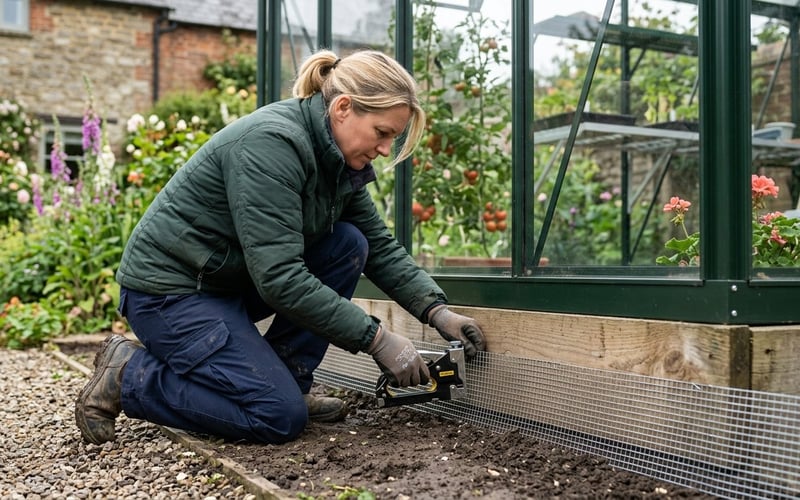
When customers call us about rat damage, nine times out of ten the entry point is under a rotting timber plinth or through a split door sweep. Most people try to solve it with poison or traps, which catches individuals but doesn't stop the colony coming back. The fix is exclusion: close the access, then deal with any rats already inside. I've retrofitted 6mm galvanised mesh under dozens of bases over the years — it adds 2 hours to an install but eliminates the single biggest rat entry route permanently.
How do rats get into a greenhouse?
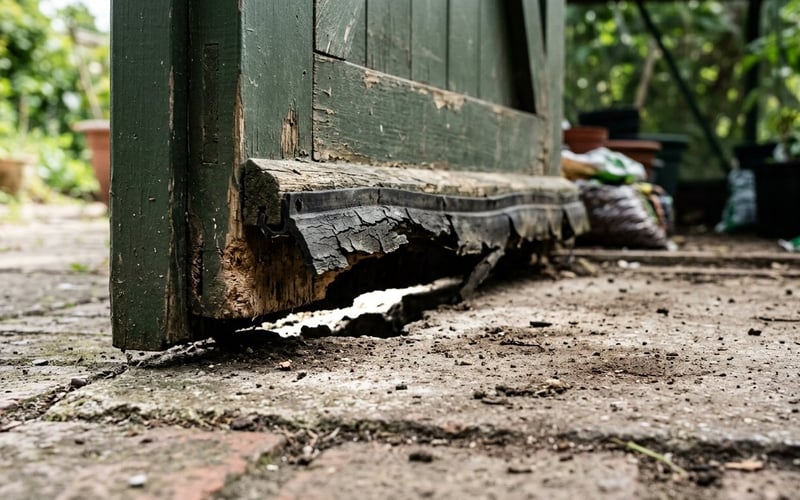
Rats enter through three main routes in UK greenhouses. First, under the base: any gap between the plinth and the ground wider than 20mm allows a juvenile rat straight in. Timber plinths that have rotted or sunk unevenly are the worst offenders. Second, door sweeps: the rubber or bristle strip at the bottom of a greenhouse door wears in 2-5 years and leaves a gap. Third, glazing seals: damaged roof or eave seals on older aluminium greenhouses create 15-30mm gaps rats use as climbing routes.
A mature brown rat (Rattus norvegicus) can squeeze through a 20mm round hole. Juveniles need 15mm. Any gap that a £2 coin can pass through is a rat entry point.
Signs of rats in your greenhouse or shed
Rats are nocturnal and avoid humans, so sightings are rare. Look for indirect evidence during morning inspections:
- Droppings — 6-8mm dark pellets on staging, benches, or floor corners. Fresh droppings are shiny and soft; old ones are matte and crumbly.
- Runs — flattened patches along walls and base edges where rats walk repeatedly. Often greasy where fur contacts the surface.
- Gnaw marks — 2mm-wide tooth marks on timber, plastic seed trays, and fruit. Rats chew constantly to file their teeth.
- Nests — shredded insulation, newspaper, or bubble wrap gathered behind pots, compost bags, or under staging.
- Chewed wiring — stripped insulation on greenhouse electrics. This is a fire risk and needs fixing before any other treatment.
Video: rat-proofing inspection walkthrough
Rat-proofing the base: exclusion at install
The single most effective rat-proofing measure is 6mm galvanised wire mesh fitted to the underside of the base plinth at installation. We staple a 400mm-wide strip around the inside perimeter with the outer edge turned down 50mm into the ground. Rats dig to 40cm, so the mesh needs to sit at least that deep.
For an existing greenhouse with a rat problem, retrofitting is harder but doable. Lift the greenhouse 10-20cm with timber blocks, slide mesh under the perimeter, staple in place, and lower the greenhouse back onto its original footings. Two people, half a day. See our concrete base guide for the permanent solution — concrete pads with integrated mesh give zero entry from below.
Door seals: the biggest single entry point
Every greenhouse I've inspected where rats have got in had a failed door seal. The rubber or bristle excluder strip on the bottom of the door lasts 2-5 years before sunlight degradation or impact damage creates gaps. Check by closing the door in daylight and looking for any light leaking through underneath — if you see light, a rat can fit.
Replacement is a 10-minute job on most greenhouse doors. The Elite Draught Excluder (£26) fits most Elite and compatible 8-10mm door tracks. Also helps with heat retention in winter — dual benefit.
Sealing the frame and glazing
On older aluminium greenhouses, check for gaps where glazing rubber has shrunk or cracked, particularly at the ridge and along the eaves. Rats climb bamboo canes, water butts, and adjacent fences to reach roof level and exploit any gap wider than 15mm. Replace perished glazing gaskets with new sections — most manufacturers sell replacement kits for under £50.
Wooden greenhouses have different weaknesses: check corner joints for rot, any missing putty around old glazing, and gaps where timber has shrunk seasonally.
Humane control methods
Exclusion stops new rats getting in; humane control deals with any already inside. Several methods work well in greenhouse settings:
- Live-capture traps — baited with peanut butter or chocolate. Check daily; hold captured rats briefly then release at least 3 miles away (UK wildlife legislation note: released rats must go somewhere they are not a pest species problem).
- Break-back traps — instant-kill, positioned along runs against walls. The most effective single-rat control if you're willing to use lethal methods.
- Strong-scent deterrents — peppermint oil on cotton balls, cloves, or cayenne pepper near suspected entry points. Short-term effect (2-4 weeks) but helps while exclusion work is underway.
- Natural predators — a cat or owl nesting nearby. Less reliable in suburban settings.
Matt's Tip: why poison is my last resort
I don't recommend rodenticides in greenhouses. First, secondary poisoning — predators like owls, foxes, and domestic cats eat poisoned rats and suffer slow deaths. Second, a poisoned rat often dies inside the structure in an inaccessible spot, creating a fly and odour problem for weeks. Exclusion plus snap traps clears a greenhouse infestation more reliably and with less collateral damage. If you must use bait, use it outside the greenhouse, in a locked bait station, operated by a pest-control professional.
Matt's Pick: the part most rat-proofing projects miss
| Matt's Pick for greenhouse rat-proofing | |
| Best for | Any greenhouse owner with worn, cracked, or missing door sweeps — the single biggest rat entry point |
| Why I recommend it | The Elite Draught Excluder is what we fit on every rat-proofing job after the under-base mesh is in. Solid silicone seal in a PVC channel, lasts 8-10 years outdoors, and fits 8-10mm door tracks on every Elite greenhouse and most Vitavia equivalents. Cheap, quick, and closes the hole 95% of rats actually use. |
| Price | From £26 |
| Link | View the Elite Draught Excluder |
Rat-proofing garden sheds
Sheds suffer the same entry points as greenhouses but with one extra problem: timber floors sitting directly on soil. Rats burrow from below, chew through cladding, and nest in stored tools and compost. Prevention is the same principle — exclude from below and seal all gaps.
For new sheds, insist on a concrete or raised timber base with integrated wire mesh. For existing sheds, lift the shed onto 100mm timber blocks so the floor sits clear of the ground. This single change prevents most rat access. Close any holes in cladding with 6mm mesh backed with timber or metal plate. Do not use expanding foam — rats chew straight through it.
When to call a pest control professional
Most greenhouse rat problems can be handled by the owner with exclusion work and traps. Call a BPCA-registered pest controller if:
- You see rats in daylight (indicates a large colony)
- You find multiple nests in separate locations
- Droppings accumulate faster than you can clear them
- Wiring damage is present (safety risk)
- The infestation has persisted through 4+ weeks of trapping
Professional control runs £150-£300 for a typical UK domestic job. Most professionals will advise on exclusion work as part of the service, not just treatment.
Frequently asked questions
How do rats get into greenhouses?
Rats enter greenhouses through three main routes: gaps under the base plinth, worn door draught excluders, and damaged glazing seals at the ridge or eaves. Any gap wider than 20mm allows a mature rat in. Juveniles fit through 15mm. Most entry happens at ground level under timber plinths that have rotted or settled unevenly. A door with a failed sweep is the second biggest entry point on most UK greenhouses.
How do I stop rats getting under my greenhouse base?
Fit 6mm galvanised wire mesh under the base plinth. For a new install, staple a 400mm-wide strip around the inside perimeter with the outer edge turned down 50mm into the ground. For an existing greenhouse, lift the structure 10-20cm on timber blocks, slide mesh underneath, then lower back. Rats dig to 40cm so mesh must extend at least that deep. Concrete bases with integrated mesh are the permanent solution.
Do rats chew through greenhouse bubble wrap insulation?
Yes, rats shred bubble wrap for nesting material. Any rat in a greenhouse will find insulated areas and build a nest behind the bubble wrap. Check behind insulated panels monthly during winter — shredded wrap or mouse-sized holes in the polythene are the tell. Replace damaged sections and seal entry points before re-installing insulation, or the problem repeats.
What does rat damage look like in a greenhouse?
Look for 6-8mm dark droppings on staging, 2mm-wide tooth marks on timber and plastic, shredded insulation or compost bags, chewed wiring, and flattened greasy runs along walls. Morning inspections catch fresh evidence before the rat returns the following night. Chewed wiring is a fire risk and should be isolated immediately. Gnawed fruit or vegetables indicate established residents, not just passing visitors.
Are rat poisons safe to use in a greenhouse?
No, I don't recommend rodenticides inside a greenhouse. Poisoned rats often die in inaccessible voids creating fly and odour problems. Secondary poisoning affects owls, cats, and foxes that eat poisoned rats. Exclusion (mesh and door seals) plus snap traps clears infestations more reliably without these side effects. If bait is essential, use locked tamper-proof stations outside the greenhouse, operated by a BPCA-registered professional.
Can rats damage a greenhouse structure?
Yes, rats cause three types of structural damage. They gnaw timber frames and door sweeps, creating entry points that worsen over time. They strip electrical insulation which creates fire risk. They nest in insulation and bubble wrap, compromising winter heating performance. Left untreated for 6+ months, damage can require replacement parts running £50-£200 for seals, wiring, and sections of cladding.
How much does rat-proofing a greenhouse cost?
DIY rat-proofing runs £40-£100 for a standard 6x8 greenhouse. That covers a roll of 6mm galvanised mesh (£20-£30), a replacement door excluder (£20-£30), and replacement glazing seals if needed. Professional retrofit including labour runs £150-£300. Compared to ongoing damage repair and trap costs, exclusion is the cheaper long-term option every time.