Greenhouse Shading Guide: When, Why and Which Method to Use
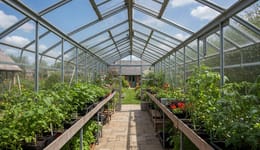
Greenhouse shading prevents the crop damage that starts at 27°C and the pollen death that occurs at 35°C. After 16 years installing greenhouses across the UK, we have tested every shading method available. Shading paint costs £5-10 per season. Internal shade netting costs £14-99 depending on size. Purpose-made curtain shading from Vitavia costs £36. The right method depends on your greenhouse type, budget and how hands-on you want to be.
Key Takeaways
- An unshaded greenhouse can reach 50°C on a sunny UK day. Plant tissue damage starts at 27°C and tomato pollen dies at 35°C.
- External shading is 20-30% more effective than internal shading because it blocks heat before it enters the glass.
- Shading paint (Coolglass or Varishade) is the cheapest option at £5-10 per season but cannot be adjusted day to day.
- The Elite Netting Kit at £99 includes 30 clips and covers most standard greenhouses in under 30 minutes.
- Shading and ventilation must work together. Open all vents before adding shading. Shade alone is not enough.
- Apply shading from late April in southern England. Remove it by late September to maximise autumn light.
Installer's Note
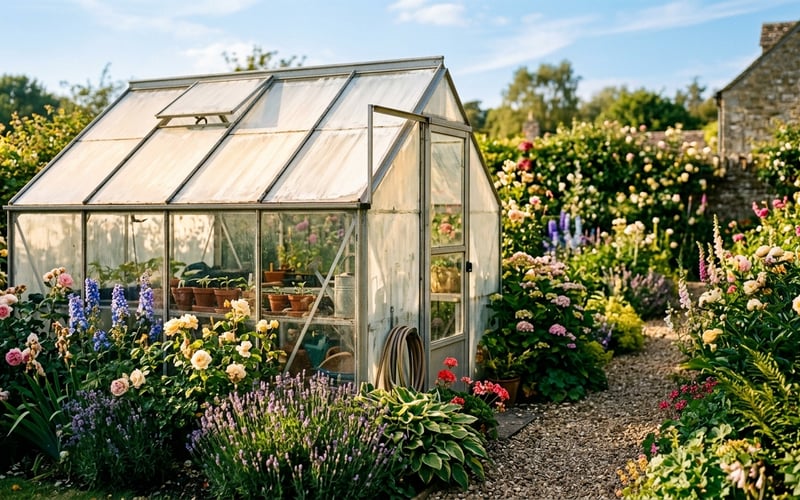
After fitting greenhouses for 16 years, I have seen more plants killed by overheating in June than by frost in January. Customers call us in a panic when their tomatoes drop flowers and their cucumbers wilt. The answer is almost always the same: no shading and not enough ventilation. A £5 tin of shading paint and an open door would have saved the crop. I now tell every customer at installation: budget for shading before you budget for heating.
Why Does a Greenhouse Need Shading?
Glass magnifies the sun's energy. On a still, sunny day with an outside temperature of just 22°C, an unventilated greenhouse reaches 40-50°C within two hours. Even with all vents open, internal temperatures often exceed 30°C during a UK summer heatwave.
The RHS recommends keeping greenhouse temperatures below 27°C for most crops. Above this threshold, plant growth slows. At 30°C, many plants stop growing entirely. At 35°C, tomato pollen becomes sterile and fruit set stops. At 40°C, permanent cell damage occurs in most greenhouse crops.
Shading works by reflecting or absorbing solar radiation before it heats the air inside. External shading is 20-30% more effective than internal shading because it stops the heat before it passes through the glass. Internal shading still helps by diffusing direct sunlight and reducing leaf scorch, but the heat is already inside the greenhouse.
Beyond temperature control, shading prevents leaf scorch on tender crops like aubergines, cucumbers and peppers. It also reduces water loss from the soil and from plant leaves, meaning you water less often during hot spells.
| Temperature | What Happens | Crops Affected |
|---|---|---|
| 25-27°C | Growth rate slows, stress begins | Lettuce, spinach, peas |
| 27-30°C | Many plants stop active growth | Most salad crops, herbs |
| 30-35°C | Leaf scorch, blossom drop, wilting | Tomatoes, peppers, beans |
| 35-40°C | Pollen dies, fruit set stops completely | Tomatoes, aubergines, courgettes |
| 40°C+ | Permanent cell damage, plant death | All greenhouse crops |
What Are the Main Greenhouse Shading Methods?
There are five practical ways to shade a greenhouse in the UK. Each has a different cost, level of effectiveness and ease of use. The table below compares them at a glance before we cover each method in detail.
| Method | Cost | Shade Level | Adjustable? | Best For | Lifespan |
|---|---|---|---|---|---|
| Shading Paint | £5-10/season | 40-60% | No (seasonal) | Budget-conscious growers | One season |
| External Netting | £10-30 | 40-70% | Yes (with effort) | Allotments, temporary use | 2-3 seasons |
| Internal Netting | £14-99 | 40-50% | Yes (clips on/off) | Aluminium greenhouses | 3-5 seasons |
| Curtain Shading | £36-52 | 50-60% | Yes (daily) | Anyone wanting daily control | 5+ seasons |
| Natural Shading | Free-£20 | Variable | Seasonal (natural) | South-facing greenhouses | Permanent |
How Does Greenhouse Shading Paint Work?
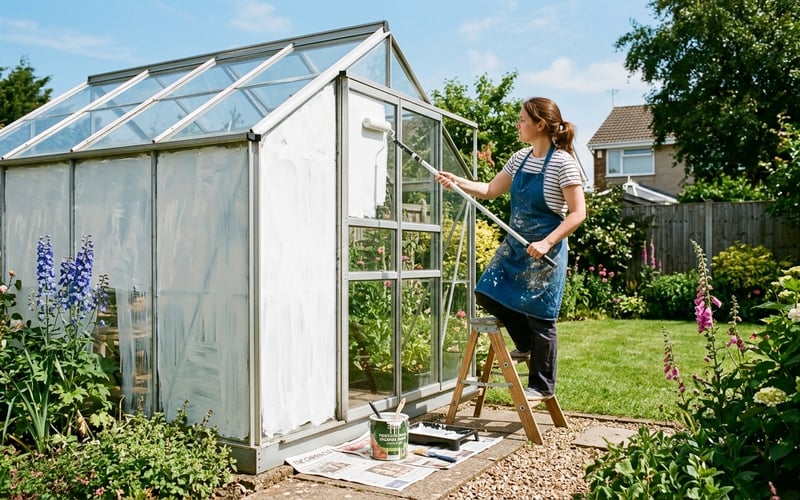
Shading paint is the oldest and cheapest method. You dilute the paint in water and brush or roll it onto the outside of the glass in late spring. It dries to a white or semi-transparent film that reflects sunlight away from the greenhouse.
The most well-known product is Coolglass (formerly by Bayer, now harder to source). Coolglass is 95% titanium dioxide. It has a useful feature: it turns translucent when wet. On rainy, overcast days the film clears and lets more light through. As it dries in the sun, it goes white again and blocks the heat.
Alternatives include Varishade (a green-tinted formula that looks more natural), Coo-Var W454 Glass Shading Paint and Thorndown Peelable Glass Paint. All work on the same principle. Expect to pay £5-10 for enough to coat a standard 6x8 greenhouse.
How to apply shading paint
- Clean the glass first. Dirty glass reduces adhesion and creates streaks.
- Dilute the paint according to the instructions. Thinner for spring, thicker for midsummer.
- Apply with a large brush, roller or garden sprayer. Work from the ridge down.
- For roof panels, use a long-handled roller or a clean mop. Never lean a ladder against greenhouse glass.
- Apply in dry weather. The paint needs 2-4 hours to cure.
- In autumn (late September to early October), scrub it off with a stiff brush and warm water.
Matt's Tip: Two-Coat Strategy
I apply a thin first coat in late April and add a second thicker coat in June when the sun is at its strongest. This gives lighter shading in spring when crops still need maximum light for early growth, then heavier shading through the hottest months. It takes 20 minutes each time on a standard 6x8.
Pros: Cheapest option. Self-adjusting in rain (Coolglass). Easy to apply. Works on any greenhouse.
Cons: Cannot be adjusted day to day. Hard to apply safely to large greenhouse roofs. Needs scrubbing off each autumn. Reduces light even on overcast summer days (except Coolglass).
Is Shade Netting Better Than Paint for a Greenhouse?
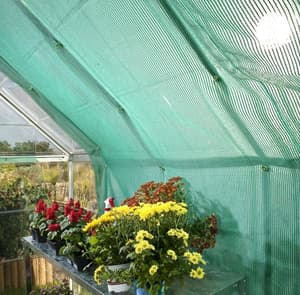
Shade netting gives you more control than paint. You can drape it over the outside, clip it inside or remove it entirely on cloudy days. Netting comes in different shade percentages, typically 40%, 50% or 70%.
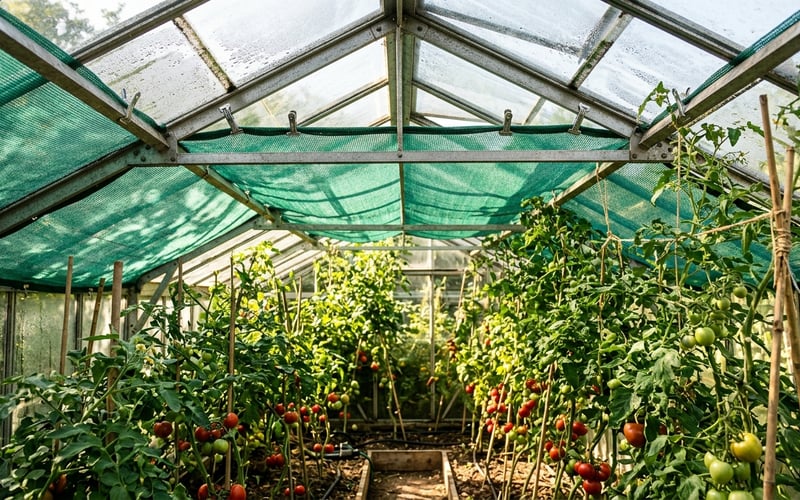
External netting is the more effective option. It blocks solar radiation before it hits the glass, keeping the greenhouse 5-8°C cooler than internal netting alone. The downside: it can blow off in strong winds unless properly secured with clips or weights. It can also obstruct automatic roof vents if not positioned carefully.
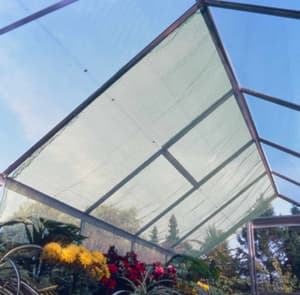
Internal netting is neater, tidier and wind-proof. The Elite Netting Kit (20ft x 6ft) at £99 comes with 30 lining hook clips that slot into standard 25mm aluminium glazing bar channels. Installation takes under 30 minutes. The UV-stabilised mesh reduces solar gain by up to 50% while maintaining airflow.
For a budget option, green shade netting from garden centres costs £10-15 for a 2m x 5m roll. Secure it with clip-on greenhouse clips or even clothes pegs. It does the job on allotments where appearance matters less.
Which shade percentage should you choose?
| Shade % | Light Blocked | Best For | Not Suitable For |
|---|---|---|---|
| 30-40% | Moderate | Tomatoes, peppers, aubergines | Orchids, ferns |
| 50% | Half | General mixed greenhouse crops | Sun-loving cacti, succulents |
| 70% | Heavy | Shade-loving plants, orchids, propagation | Fruiting vegetables, tomatoes |
|
Matt's Pick for Internal ShadingBest For: Elite greenhouse owners who want a professional clip-on shading system Why I Recommend It: The 30 lining hooks clip into Elite glazing bars in seconds. No drilling, no fuss. Same clips hold bubble wrap in winter, so you get year-round use. Price: £99 |
Do Greenhouse Blinds and Curtain Shading Work?
Purpose-made blinds and curtain shading give you the most control. You pull them across on sunny mornings and push them back on cloudy afternoons. No other method offers this level of daily adjustment.
The Vitavia Curtain Shading measures 1830mm x 2590mm and fits internally using screwhooks. At £36, it covers the roof area of most standard Vitavia and Halls greenhouses. The rot-proof, UV-stabilised fabric diffuses direct sunlight rather than blocking it entirely. Your plants still get the light they need for photosynthesis while staying protected from scorch.
The Palram Canopia Shade Kit at £52 clips directly onto the narrower 16mm polycarbonate glazing bars that standard aluminium shading will not fit. It measures 240cm x 265cm and installs in about ten minutes.
Internal blinds are slightly less effective at cooling than external methods because the sunlight has already passed through the glass. However, they have a bonus benefit: in winter, they provide a layer of insulation that keeps heat inside the greenhouse overnight. This makes them a genuine year-round investment.
Shop Vitavia Curtain Shading →
Can You Use Natural Shading for a Greenhouse?
Deciduous trees and climbing plants provide free, self-regulating shading. They leaf out in spring when shading is needed and drop their leaves in autumn when you want maximum light. No painting, no clips, no annual removal.
Plant a deciduous tree 3-4 metres south of your greenhouse. Silver birch, rowan and ornamental cherry are good choices because they cast dappled shade rather than dense shadow. Avoid large forest trees like oak or beech that will eventually overshadow the entire garden.
Climbing plants trained over the south-facing side of the greenhouse work well too. Grape vines are the classic choice. They shade the glass in summer and drop their leaves completely by November. A vine planted outside the greenhouse and trained up a wire frame gives excellent shade without taking up any growing space inside.
Be careful with placement. Tree roots can undermine greenhouse bases if planted too close. Keep trees at least 3 metres from the foundations. Climbing plants grown directly on the greenhouse frame can trap moisture against the metalwork and promote corrosion on steel-framed models.
Matt's Installation Tip
When positioning a new greenhouse, think about summer shading before you lay the base. A south-facing greenhouse gets the most light in winter but the most heat in summer. If you have a choice, position the greenhouse so that a wall, fence or existing tree gives afternoon shade on the south-west side. This reduces the worst of the summer heat without sacrificing morning light. Read our full greenhouse ventilation guide for more on managing temperature.
When Should You Shade a Greenhouse? Month-by-Month Calendar
Timing depends on your location and what you grow. Southern England needs shading earlier than Scotland. The calendar below is a guide for most of England and Wales. Adjust by 2-3 weeks later for northern England and Scotland.
| Month | Action | Why |
|---|---|---|
| January-February | No shading needed | Maximum light needed for seed germination and overwintering crops |
| March | Monitor temperatures on sunny days | Temperatures can spike above 30°C in a south-facing greenhouse by late March |
| April | Apply first light coat of shading paint or install netting | Sun angle increases. Young seedlings are vulnerable to scorch |
| May | Full shading in place. Check all vents are working | Longer days and higher sun angle. Tomato plants need protection |
| June-July | Maximum shading. Apply second coat of paint if needed | Peak sun intensity. Unshaded greenhouses regularly exceed 40°C |
| August | Maintain shading. Start monitoring for reduced light | Days shorten. Some crops may need less shade for ripening |
| September | Remove shading paint. Pull back netting or blinds | Light levels drop. Crops need every photon for final ripening |
| October-December | No shading. Clean glass for maximum winter light | Short days. Store netting and clips for next season |
Which Greenhouse Crops Need the Most Shade?
Not all plants need the same level of shade. Fruiting crops like tomatoes need strong light to ripen but will scorch and drop flowers above 35°C. Leafy crops like lettuce bolt in high temperatures and need earlier, heavier shading.
| Crop | Ideal Temp Range | Shade Needed | Shade Percentage |
|---|---|---|---|
| Tomatoes | 20-27°C | Light to moderate | 30-40% |
| Cucumbers | 20-25°C | Moderate | 40-50% |
| Peppers & Chillies | 21-27°C | Light to moderate | 30-40% |
| Aubergines | 22-28°C | Light | 30% |
| Lettuce & Salads | 15-20°C | Heavy in summer | 50-70% |
| Orchids | 18-24°C | Heavy year-round | 60-70% |
| Cacti & Succulents | 20-35°C | Minimal | 0-20% |
| Propagation (cuttings) | 18-22°C | Heavy | 60-70% |
How Much Does Greenhouse Shading Cost?
Shading is one of the cheapest investments you can make in your greenhouse. Even the most expensive purpose-made system pays for itself in the first season if it saves a crop of tomatoes worth £50-100 from heat damage.
| Product | Price | Covers | Annual Cost | Lifespan |
|---|---|---|---|---|
| Shading paint (Coolglass/Varishade) | £5-10 | 6x8 greenhouse | £5-10 | 1 season |
| Budget shade netting (2m x 5m) | £10-15 | 6x8 roof | £5-8 | 2-3 seasons |
| Elite Shading Clips (10 pack) | £22 | Clips for netting/insulation | £4-5 | 5+ seasons |
| Vitavia Curtain Shading | £36 | 1830mm x 2590mm | £7-12 | 5+ seasons |
| Palram Canopia Shade Kit | £52 | 240cm x 265cm | £10-17 | 3-5 seasons |
| Elite Netting Kit (20ft x 6ft + 30 clips) | £99 | Most Elite greenhouses | £20-33 | 3-5 seasons |
How Do Shading and Ventilation Work Together?
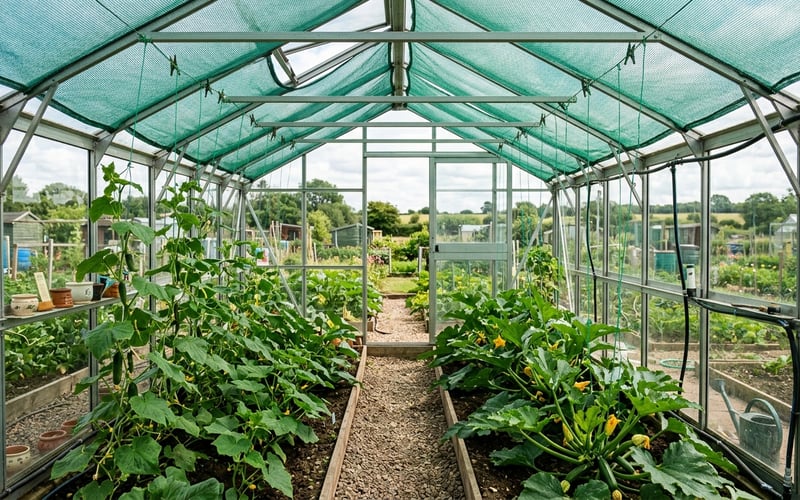
Shading alone is not enough to control greenhouse temperatures. Ventilation must come first. The RHS recommends that vent area should equal at least 20% of the floor area. Most hobby greenhouses ship with far less than this.
The correct approach is to open all vents and doors first, then add shading on top. Shading reduces the solar energy entering the greenhouse by 30-70%. Ventilation removes the hot air that builds up inside. Together, they can keep a greenhouse 15-20°C cooler than an unshaded, unventilated greenhouse on the same day.
Automatic vent openers are essential if you are not home during the day. A wax cylinder opener costs £30-60 and starts opening at around 13°C. They need no electricity. We fit them on every greenhouse we install and recommend them to every customer. Read our full ventilation guide for sizing calculations.
Damping down (wetting the greenhouse floor 2-3 times on hot days) provides extra cooling through evaporation. Combined with shading and ventilation, damping down is the third leg of summer temperature management. Our watering and irrigation guide covers this in detail.
Why We Recommend Combining Methods
"After 16 years fitting greenhouses, I have never met a single customer who regretted buying shading. I have met hundreds who regretted not having it. The best setup is automatic vent openers to handle temperature spikes when you are out, shade netting or curtain shading for daily control, and a tin of shading paint as cheap insurance for the roof. Total outlay: under £150. That protects crops worth far more over a growing season." — Matt W, Greenhouse Stores
How to Choose the Right Shading for Your Greenhouse
Your choice depends on four factors: your greenhouse brand, your budget, how hands-on you want to be and what you grow.
If you have an Elite greenhouse: The Elite Netting Kit is the obvious choice. The clips are designed specifically for Elite's 25mm glazing bar channels. The same clips hold bubble wrap insulation in winter, giving you a year-round system from one set of fittings.
If you have a Vitavia or Halls greenhouse: The Vitavia Curtain Shading at £36 hangs from screwhooks and gives you daily control. Pull it across when the sun is out, push it back on cloudy days.
If you have a Palram Canopia greenhouse: The Palram Shade Kit at £52 is the only shade cloth that clips to the narrower polycarbonate bars. Standard aluminium clips do not fit.
If you want the cheapest option: A tin of shading paint at £5-10 works on any greenhouse regardless of brand, size or glazing type.
Greenhouse Shading FAQ
What is the best shading for a greenhouse?
Internal curtain or netting shading with clips gives the best balance of cost and daily control. External shading blocks 20-30% more heat than internal methods, but purpose-made clip-on systems like the Elite Netting Kit or Vitavia Curtain Shading are easier to fit, adjust and store. For the cheapest option, shading paint works on any greenhouse and costs under £10 per season. Most experienced growers use a combination: paint on the roof for consistent base-level shading, plus netting or curtains on the sides for daily adjustment.
When should I shade my greenhouse in the UK?
Start shading from late April in southern England and early May further north. Monitor your greenhouse thermometer from March onwards. When internal temperatures regularly exceed 27°C on sunny days, it is time to add shading. Remove all shading by late September to give crops maximum light for autumn ripening. In particularly hot summers, you may need shading from early April through to mid-October.
Should I shade the inside or outside of my greenhouse?
External shading is 20-30% more effective because it blocks solar heat before it enters the glass. However, external shading is harder to secure against wind and can obstruct automatic roof vent openers. Internal shading is easier to install, adjust and remove. For most hobby greenhouses, internal shading with good ventilation is the practical choice. If you can manage external netting securely, it gives the best cooling performance.
What percentage shade cloth is best for a greenhouse?
40-50% shade cloth suits most UK greenhouse growers. Tomatoes, peppers and aubergines thrive at 30-40% shade. Cucumbers prefer 40-50%. Lettuce and salad crops need 50-70% in midsummer. Orchids and propagation cuttings need 60-70%. If you grow a mix of crops, 50% is the best all-round compromise. You can always add a second layer in specific areas for shade-loving plants.
Does greenhouse shading paint wash off in the rain?
Quality shading paints are shower-resistant and stay on through normal UK rain. Coolglass turns translucent when wet but does not wash off. It needs scrubbing with a stiff brush and warm water to remove in autumn. Cheaper products may wash off in heavy rain, which means reapplication but also means easier removal. Budget shading paint typically lasts 4-7 months before it needs renewing.
Can I shade a polycarbonate greenhouse?
Yes. Polycarbonate greenhouses need shading just as much as glass models. Twin-wall polycarbonate diffuses light naturally but does not stop heat build-up. The Palram Canopia Shade Kit at £52 is designed specifically for polycarbonate glazing bars. You can also use shading paint on polycarbonate, though some brands may stain the plastic permanently. Test a small area first. Internal netting clipped to the frame is the safest option for polycarbonate houses.
How do I stop my greenhouse overheating without shading?
Open all vents and doors, damp down the floor and use automatic vent openers. Ventilation alone can reduce temperatures by 5-10°C. Damping down (wetting the floor 2-3 times daily) provides evaporative cooling. However, on days above 30°C outside, ventilation alone is rarely sufficient for a glass greenhouse. Most growers find they need at least some shading from May to September. An automatic vent opener at £30-60 is the essential first step.
Related Reading
- Greenhouse Ventilation Guide: Vents, Fans and Preventing Overheating
- Greenhouse Watering & Irrigation Guide: Manual vs Automatic Systems
- How Much Does It Cost to Heat a Greenhouse? UK Running Costs 2026
- Best Greenhouse Tomato Varieties UK: 8 Proven Picks for 2026
- Glass vs Polycarbonate Greenhouses: Which?